Translated material
Oldsmobile Hurstolds
In the Muscle CAR era, a fierce struggle was going on among car concerns and in 1964 Oldsmobile was the first to “roll out” the market response to the successful Pontiac GTO. The company introduced the 4-4-2 options package, which included the most powerful engine at that time-the 330th V8 with a capacity of 310 hp, reinforced springs, a transverse stabilizer, a double air purge and other equipment, as on police equipment. The package also included a 4-chamber carburetor, a 4-speed manual transmission and a double exhaust system, which eventually gave the name 4-4-2. The package was available to all the average-sized Oldsmobile models (including 4-door sedans)-from a cheap F-85 to luxury Cutlass, with which it is mainly associated, recalling the Muscle Car era. Since 1965, the package has become available only for 2-door F-85 and Cutlass. The old 330s were replaced with new 400-cubic, with a capacity of 345 forces and the name 4-4-2 are now deciphered as follows: the 400th engine, a 4-chamber carburetor and a double exhaust system. Wide tires and nameplate "442" were added. Critics recognized 4-4-2 the best and balanced in all respects by a package in the era of the “muscles of Kars”.
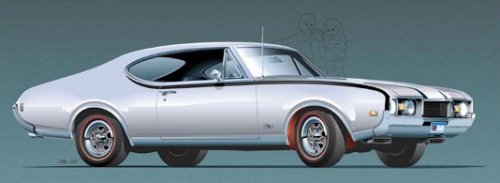
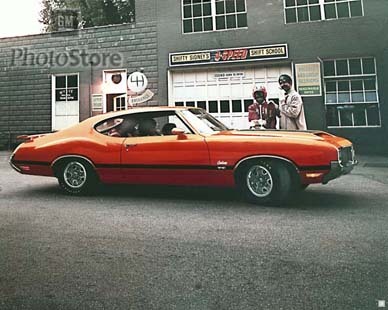
In 1966, all medium-sized Olds cars received new bodies and motors, and the F-85 and Cutlass models received a more “muscular” appearance and inclined rear window. Then a 3-carburetor engine was represented, for which the W-30 package in turn was available. Critics again recognized 4-4-2 most balanced Muscle Car. Since 1967, 4-4-2 was available only for Cutlass, combining comfort and the best technical achievements of the concern. In 1968, 4-4-2 became an independent model, but was still based on the mid-size platform of Oldsmobile A-Body. The engines remained almost the same, but Hurst/Olds was represented for enthusiasts, it was a joint project by Oldsmobile and George Hurst - the most respected person in the field of automobile transmission. A 455-cow V8 from the Oldsmobile Toronado was put under the hood, equipped with a modern air cooling system, an automatic gearbox, designed for a large torque. The modification was available only in the colors of “Peruvian silver” with black thin stripes on the sides and hood. In total, 515 copies were collected this year and in our time they are very much appreciated among collectors.
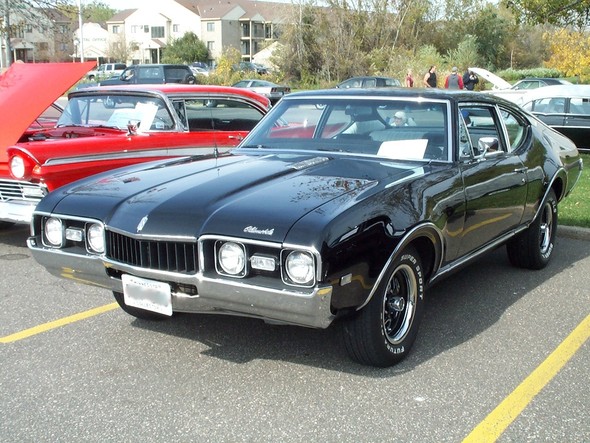
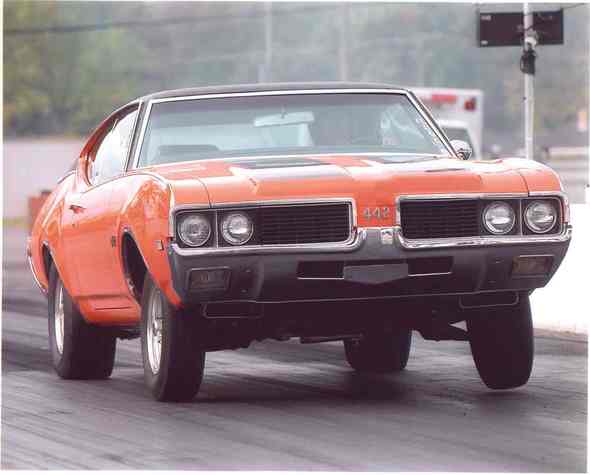
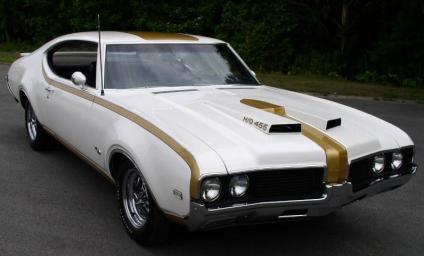
In 1969, the model received a more aggressive appearance due to the new radiator grille. Several “W-type” options appeared with the same air cooling system. The Hurst/Olds version with a white body and gold stripes and a slightly lowered in power 455-cubic V8 was also available. The next year was remembered by the ban on the General Motors concern for the installation of more than 400 cubic inches in medium -sized car engines. But Olds, like other units of the concern, bypassed this ban on the release of Hurst/Olds modification in 1968 and 1969. In 1970, for all 4-4-2 models, a top 455-cubic V8 with a capacity of 370 hp was available. The Hurst/Olds modification itself has disappeared from the line until 1972. The W-30 packages were remembered by the balanced 455 V8 engines, the release of low resistance (direct-flow), a fiberglass hood with two air intakes and improved sound insulation. A new option was also presented - Rallye 350, distinguished by the bright yellow body of the body and wheels. Under the hood stood the 350th V8 with a capacity of 310 forces.
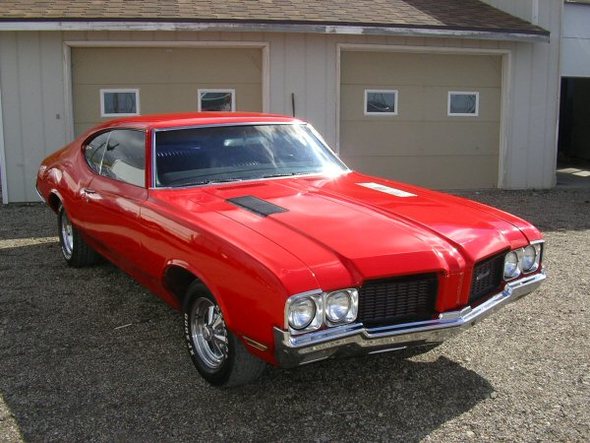
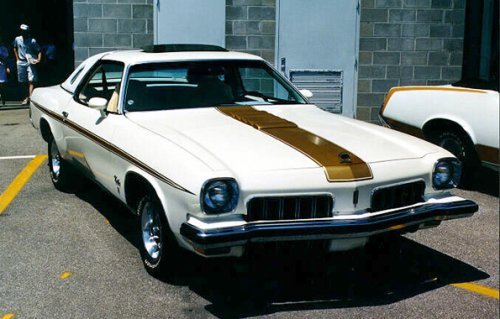
The end of the Muscle Car era came in 1971, but lasted a few more years. Of course, Oldsmobile 4-4-2 was no exception, GM ordered that all the engines work on unhealthy fuel, which sharply lowered the power. Modifications W-31 and Rallye 350 disappeared, as the option, the W-30 package was available. In 1972, 4-4-2 ceased to be an independent model and again became an option for all Cutlass with the V8 engine. The package included a reinforced suspension, special wheels and a couple of little things. There was a W-30 with air induction, Hurst/Olds returned, or rather its name and coloring. These cars did not surprise anyone with an engineering space and did not cause admiration. The next year was the last for many Muscle Car, including Cutlass. The design was completely new - European and not “muscular”, only the front grid was preserved. The 4-4-2 package was listed under the W-29 index and was available only on Cutlass and the Cutlass S compartment, and included the same options as last year. Hurst/Olds was available in two colors and with a vinyl roof, but under the hood there was a deformed 455th, issuing 250 hp, which fell in power all subsequent years.