
Translated material
Paul Brown
From April 19 to 22, Moscow will host a series of master classes in Paul Brown “Secrets of Mastery: Nuances and Shades”
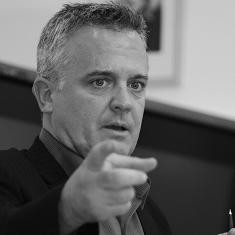
"Cynics and posers, out of the profession!"
In October 2009, the Cinemotion_lab, together with the New York Academy of Cinema, organized a series of master classes in Paul Brown-screenwriter and producer of the cult series "Secret Materials" (X-Files) and "Quantum Leap" (Quantum Leap). Paul introduced the audience to the concepts of the “hero of the hero” and “the path of the heroine” and proposed his approach to the “anatomy of the stage”. In an interview with Cinemotion_lab, he explains the ideas raised at these seminars.
---
Sinemotion_lab: Paul, you were a screenwriter of several cult series, including “Secret Materials”. Please tell us how working on the series usually begins? Do you come up with an idea for the plot or get a task from the producer?
Paul Brown: In different ways. Sometimes you come with your own idea and discuss it with a group of scriptwriters and producers who work on the series. A peculiar brain storm occurs. You record the sequence of events for cards in size 9 × 13cm and place them on the board. It’s easier to “see” the story. Then you begin to experiment: what will happen if you delete this card, and move that? It is necessary to decide which events to add, and which to get rid of in order to reduce the plot to 22 cards. The first of them is always a teaser, a bright provoking incident. The latter is the final, for the final. There are 20 cards left, 5 for each of the four acts of a standard half -hour series. The information on them must be reduced to three words. For example: "The aliens abduct Scully." As a result, the main rotary points of history that convey the “external” events of the series remain on the cards. The “internal” event series - the development of heroes - remains behind the scenes. To come up with it is the main task of the screenwriter.
CL: How many times on average the series scenario is corresponding?
PB: Usually you have to write from three to five drafts.
CL: What is the value of work on “secret materials” for you?
PB: Basically, I perceived it as honeing of skill. In a sense, I did not feel a deep emotional connection with the material. On the one hand, I worked at the 20th Century Fox film studio - this is a very beautiful place, old buildings - and I liked to feel involved in this legendary studio where the history of the movie was created. On the other hand, there was winter, a cold Saturday night, and heating broke in my office. I was completely alone and wrote a terrible story about ghosts. To create such stories, you have to go to the darkest corners of your soul. And I wondered: do I want such a life? Of course, anyone who works in the industry will tell you: "Be glad that you have this work." But I decided for myself that I no longer want to constantly work on television. I understood that night that I am much more interested in making films and independent projects.
CL: While you were busy with such large projects as “Secret Materials”, “Star Track: Voyager” (Star Trek: Voyager) or “Quantum jump”, did you manage to work in parallel on something else?
PB: Yes, in Hollywood this is considered the norm. Sometimes I worked on three projects at once. I had to literally burst into pieces. Once I wrote at the same time the series for Paramount, a television movie for NBC and worked on a pilot for 20th Century Fox with producers who shot the Chicago blockbuster (Chicago). These were people who received more than one Oscar over their lives. And now, one fine day, I ran into them in a restaurant. They did not suspect that I was working on several projects, and only knew that I was writing for them a pilot, to which I was taken for six weeks. The fourth week was already going on, but I have not written a line yet. Not because I am a bad screenwriter or an unreliable person, I just had a catastrophically lacking in this. In general, they come to me: “How are you? How is our pilot? " I answer: "Great, just wonderful!" A couple of days after that, two other projects were completed, and I worked for another two weeks eighteen hours a day to pass the pilot on time. And the producers liked him. If you are a demanded author, you have to work in this mode almost all the time.
CL: Are there always pilots of new series to order? Or do some scriptwriters create them in their free time on their own initiative?
PB: Most of the scriptwriters who work on television in the evenings come up with their own shows. This is a common practice. Because, even if you have a lot of orders, you still dream that you will have your own series. If you are the author of the idea, then you have more chances to become his chief screenwriter and producer - and this is very profitable. Otherwise, you may find yourself in a situation where you are constantly littered with work. This is a huge drawback of the profession of a screenwriter in Hollywood: you write seven days a week. On Monday, you come to the office, and the secretary does not ask: "How did you rest on the weekend?" She asks: "How did you work?" Some scriptwriters turn into real trudol robots, and it suits them quite. But I know what is behind this behavior: they work non-stop in order not to feel and forget about their problems. It seems to me that many thus hide from some deep internal injury, preferring to work, and not live.
CL: But there is an opinion that each screenwriter should have some kind of psychological trauma?
PB: Absolutely. I knew the author, whom the producer fired with the words: "You are not enough" sick. " I am not saying that all the scriptwriters are “sick”. But I think that there is a share of truth in this statement. Writing scripts should not be a compensation for the psychological trauma of the author. But it, of course, helps to better understand the life and actions of people, look deep into. If you write for the sake of masochistic pleasure, without a desire to really understand yourself, then this is a waste of time. With such work, internal trauma can only aggravate over time. Recently, I ran into the author with whom we worked together several years ago - he turned into a walking ghost. As if work pulled out all the juices out of it. He said that he no longer writes anything original, works only to order. And you can create to order only within the framework of someone else's idea of how the film should look. Your own imagination and creative potential remain not in demand.
CL: What books do you recommend to read to each screenwriter?
PB: Among the others, you need to read: “Anatomy of history” by John Truby, “The Way of the Herome” by Morin Murdok and the “Inner History” of the Gift Marx. John Truby clearly talks about the obligatory elements of the script structure. Dara Marx - about the topic, that is, about what you want to say by your film. She does not work on the script at all the way I do. I start with the heroes, and she is starting from the idea that she wants to convey to the viewer. Dara illustrates this with the example of the film "Society of Dead Poets" (Dead Poets Society). Two ideas, two values systems come into conflict here. One of them is expressed by the motto of Carpe Diem - "Catch the moment, live now." The second idea: act carefully, adapt, and then you can achieve everything you want. The author structured the story in such a way that the viewer leaves the cinema, inspired by the idea of Carpe Diem. This is the theme of the film. Dara Marx says: Whatever you want to see in the finale, start the film with the opposite. The viewer will believe in the veracity of the world of freedom only if you first show the world of slavery, where everything is infected with falsehood. Thus, at the beginning of the film, you say a problem that should be solved by the end. Then you create characters. In the Society of Dead Poets, these are young guys, students of a prestigious school who are inspired by false values. Their parents say: in order to achieve love and success, you must become a doctor, lawyer or banker, be a conservative and do what is right. This becomes Achilles fifth heroes, their deadly flaw. And then the character of Robin Williams appears, who carries a new ideology: live now, have your own point of view, and do not repeat the judgments of your parents. Thus, the main elements of the structure of the film are the topic, a deadly flaw and the internal problem that the heroes need to be solved.
CL: What are the features of your approach to history: from the character - to the idea?
PB: This is perhaps a more difficult path, many screenwriters try to use it and come to a dead end. They come up with wonderful heroes, write sparkling dialogs, but in the end they get a story about anything. Therefore, by building the plot, it is important to constantly check yourself. Let's say you need to decide whether you started the script correctly. Let's take a look at the first frame from the film “Little Miss Sunshine): a girl with glasses enthusiastically watches the Miss America contest on TV. This scene shows us that the girl lives in a world where the main value is victory. According to the author, this is a sore system. He criticizes American obsession with success. The whole film the heroine wears glasses. Only in the end she removes them and, like her father, sees the world with new eyes. Thus, the final determines the theme of the film: we must get pleasure from life and be true to yourself. The second topic, the theme of the father: you need to live in such a way as to succeed and not be a loser, - suffers a complete collapse. If in the first frame the girl was dancing and having fun, that would be a mistake. Because you already show what you want to achieve at the end. The first frame is always the opposite of the final. Summarizing what was said: you can write a whole film, understand what you actually wanted to tell them, and this will allow you to edit the script.
CL: Where do you find prototypes for your characters?
PB: I try to be open to the new one. I do not guess in advance what impressions I want to get, and then they themselves find me. For example, here, in Moscow, one of my translators was a novice screenwriter. She wanted to write, but did not know what. Once we talked, and it turned out that she has an incredible personal story in which she did not see anything special. And it seemed to me a great idea for the film. Now she just should have enough courage to write a script, but this is the next problem. I am sure that only one percent of people is able to go to the end. It also is the difficulty that when you write a very personal story, your internal protective mechanism is activated. You want to avoid pain, and your ego instantly finds the reason why you can abandon your plan. Often exactly what protects us from pain, inhibits the realization of our creative potential.
CL: What were your impressions of communicating with the Russians? Do you think your ideas have fallen here on fertile soil?
PB: Today I had lunch in one cafe and talked with the young guys who were sitting nearby. It turned out that they are studying at the Moscow Art Theater School. I was impressed because I know how many Stanislavsky and Chekhov mean for the American theater. And when I told these guys that I act here with lectures on scenario skills, they also revived: “Great!” And only one older woman who was in this company said: “Your theories will never work here. They will not change how a movie is being made here ... ”I did not believe my ears. I felt sorry for her. Because I spoke in Moscow a total of 700 people, and all of them were burning with the desire to study.
CL: But what this woman was talking about, unfortunately, is partly true. So far, few Russian filmmakers see the point of studying with Western masters. Maybe you know how to convince them?
PB: The Americans studied with Stanislavsky! Stella Adler specially came to Russia to deal with him. She wanted to understand why in the performances with which the Moscow Art Theater came to New York, one could see the level of truth to which the American theater was still very far away at that time. Therefore, having mastered the method of Stanislavsky, she returned to America and taught him a whole generation of actors, among whom were, for example, Marlon Brando and my teacher Larry Moss, who then transmitted his knowledge to me. That is, that I teach today, in a sense, comes from Russia. And it is surprising that the information that came through generations of teachers from Stanislavsky himself is not in demand here. This is a denial of your own heritage!
CL: The books that you recommended have not yet been published in Russian translation. What about those who do not know English?
PB: Everyone who wants to study can unite with others and study these books in special courses or seminars. People can do great things together. In fact, the terminology of these books should become part of the language of each screenwriter, because it is used all over the world. For example, there are 50 different ways to force the viewer to empathize with his hero. But most people do not have a sufficient understanding of the very idea of empathy. The hero can be an unpleasant type, but the viewer will still want to watch him if he is intrigued. And some authors have a disgust, as soon as you begin to talk with them about the structure. At the same time, if you ask them: "What is your script about?" “They will give you some cynical story, remotely similar to Tarantino films.” Their protective mechanism is trying to disguise the lack of talent, experience or discipline necessary in order to study and develop further. They have no creative curiosity. But there is a lot of arrogance, which is most outraged by me.
CL: Will the scriptwriter help the analysis of popular films?
PB: Of course. So you can learn a lot. For example, “The Bourne Identity): This film gives an idea of all the elements of the“ Hero Way ”that John Trubi lists. It also has what I call the “internal journey of the hero” or “the road of feelings”, namely: the stages of the internal development of the hero-male. In many ways, they echo with the stages of the development of female characters analyzed by Maurin Murdok in her book “The Way of the Herome”. Murdok explains that if the heroine decides to change something in her life, she usually abandons her femininity in order to become stronger. But, having achieved her goal, she again tries to find her true “I” - to find in herself a lost ability to love, sympathy and humanity. I noticed that in most high-quality films, a man-man often passes a similar cycle of internal development. At the beginning of the journey, he refuses all the “female” in himself, thus protecting himself from his own feelings. The reason for this is usually the same psychological trauma. The hero becomes exaggerated with courageous, ceases to empathize with others and, as a result, falls into emotional isolation. At a certain moment, he succeeds in the outside world, but turns out to be cut off from what makes him a person. Therefore, at the end of the path, the hero must again find a balance between masculinity and the ability to feel. After all, people who have no feelings become monsters. And the movie is actually always about love, humanity and empathy ... Therefore, I am so surprised by the behavior of directors and screenwriters who flaunt their “steepness”. If they are attracted to “coolness” in this profession, it is better for them to try themselves in some other craft. Make machine guns, for example, or go to serve in special forces ...
CL: Probably, this can explain the grandiose failures of films, the directors and scriptwriters of which are too fond of self -love?
PB: Of course! It seems to me that such people simply compensate for their own problems. They like to command and revel in their ego, and this few can find a response in the soul. The real movie is about people whose protective mechanism is completely destroyed. The hero’s path is the story of his transformation. The hero must come to the understanding that life is more than his ego or his personal small needs. Life is about being useful to humanity and people next to you ... There is some kind of irony that people who want to be directors become monsters. How can they tell a good story then? Look at Michael Bay or Quentin Tarantino. They lost themselves on the way, and their stories suffered from this. After their films, people leave the cinema and share their impressions: “The test shootout, a cool explosion ...” But they say those who are stuck in the infantile phase of development: they do not read anything, do not understand art, they have no idea about true values ... My acting teacher Larry Moss, a real guru, who led to the Oscars Leonardo Dikaprio, Hilary SUNK, Juliette Binosh, constantly exposes the cult of "steepness". Many young stars are now obsessed with the desire to look “cool”. At the same time, the “steepness” is to feel nothing, to be indifferent, arrogant, to lie and “get into a pose”. When I see how such people give interviews, or when I see their work, it seems to me that this is all a continuous poserity. From them I can’t learn anything new about life ... I know, I got carried away, but I can talk about it endlessly, it is very upsetting me.
CL: We share your feelings. Ведь и в России культ «крутизны» набрал чудовищные обороты.
ПБ: Знаете, что я думаю о таких людях? Что они все позеры. Когда я вижу человека, который кичится собственной «крутизной», я знаю, что передо мной всего лишь маска. А за ней кто-то прячется от собственных страхов и психологических травм. И я просто думаю: Бог им в помощь... Я всю жизнь живу в Голливуде, в Лос-Анджелесе, и я видел стольких людей, которые поднимались и падали, были в моде один день и забыты на следующий. Это все настолько скучно... Так что если начинающий сценарист говорит: «Я не хочу учиться», для меня это звучит как: «Мне вообще не нужно образование». А как я могу уважать человека, который не хочет развиваться? Знаете, я ремесленник. Я преподаю то, чему меня научили мастера, я передаю информацию дальше. И я знаю точно, что единственный способ стать мастером — это продолжать учиться и никогда не останавливаться на достигнутом. Мои преподаватели давали классы пять дней в неделю, они любили своих студентов и сами чему-то у них учились... Пожалуйста, не вычеркивайте ничего из того, что я сказал, чтобы кого-то не обидеть. Я предпочитаю выводить людей из себя. Так, чтобы они подумали: «Я этому чуваку не верю. Лучше уж я сам прочитаю пару книг».
CL: Давайте вернемся к понятию «Призрак героя». Какую роль он играет в структуре истории?
ПБ: Моя теория состоит в том, что наше бессознательное преследует нас в виде призрака, который портит нам жизнь. Поэтому в сценарии призрак всплывает в самом начале истории, создавая провоцирующий инцидент. Герой должен встретиться со своим призраком лицом к лицу, сражаться и победить — или сдаться. Поэтому провоцирующий инцидент во многом обусловлен нашим бессознательным. Мы не просто попадаем в какую-то историю — мы сами ее создаем или привлекаем. Обычно этого не пишут в учебниках по сценарному мастерству. Но если вы читали, например, книгу «Секрет» (The Secret) о законе притяжения — в ней красной нитью проходит идея, что вы в какой-то мере сами создаете свою реальность. Я уверен, что все мы имеем склонность притягивать по жизни одни и те же проблемы. Как женщина, которая стала когда-то жертвой насилия, будет привлекать к себе агрессивных мужчин, а жестокие мужчины будут привлекать женщин, которые чувствуют себя жертвами. Фрейд называл это «вынужденным повторением» (repetition compulsion): если в вашей жизни было насилие, вы будете пытаться вновь воспроизвести подобные ситуации и ощущения, потому что они вам хорошо знакомы, понятны и на каком-то извращенном уровне вы с ними смирились. Но в то же время вы чувствуете потребность все исправить. Так что, если вы хотите создать глубокую историю, вы должны придумать своему герою травму в прошлом, призрака в настоящем, а также смертельный изъян, который будет его способом справиться с ними. И тогда провоцирующий инцидент становится естественной частью истории — герой сам привлекает его, для того чтобы освободиться в итоге от своего призрака и измениться.
CL: А в реальной жизни эта теория работает?
ПБ: Да, конечно. Многие из тех, кто были на моих семинарах в Москве, удивлялись: «Надо же, я только что понял, что у меня тоже есть призрак!» — и спрашивали, как от него можно избавиться. Но от призрака нельзя избавиться. Надо просто признать его существование и перестать разыгрывать сценарий, который он вам навязывает. И когда вы начнете больше разбираться в своем призраке и в собственной травме, они потеряют свою силу над вами. Писательский труд в этом смысле приносит большую пользу. Нет гарантии, что ваш сценарий будет реализован, но вы всегда можете использовать его как инструмент самопознания. А значит, у того, что вы пишете, будет смысл, и ваша работа окажется важной не только для вас, но и для других. Так что всем, кто не хочет учиться, я говорю: «Смотрите внутрь себя!» Эти люди, конечно, придумают в ответ какую-нибудь систему защиты: «Это глупо, это не нужно, это все слишком западное...» Но, как правило, за такими отговорками стоит только страх, что их история окажется никому не интересна или слишком болезненна для них самих. А этого не надо бояться. Я убежден, что именно те вещи, которые люди пытаются скрыть, и делают их на самом деле прекрасными. Личная драма, боль, внутренняя уязвимость — вот что делает человека неповторимым, а вовсе не его маска... Знаете, когда та девушка-переводчик, о которой я вам говорил, рассказала мне свою историю, она стала просто... сияющей, ее внутренняя красота прорвалась наружу. Но она считала, что ее жизнь не интересна. А ведь в результате может получиться потрясающий фильм, который будет сделан в России, но затронет души людей в любом уголке планеты. Потому что это универсальная история.
CL: Значит, вы считаете, что искренний рассказ о личном опыте позволяет создать универсальную историю?
ПБ: Кто-то может сказать, что «Маленькая мисс Счастье» — это маленький глупый фильм. Но многим оказалась близка его тема: «Человек нуждается в том, чтобы его любили, таким, какой он есть — это его фундаментальная потребность». Кто из нас не мечтал о том, чтобы родители любили его, независимо от того, будет ли он успешным в их понимании или нет? Секрет «Маленькой мисс Счастье» во внутренней истории, которая не лежит на поверхности, но, тем не менее, отозвалась в сердцах людей по всему миру. Во время своих семинаров в Москве я много говорил о том, что у каждого человека есть призрак и смертельный изъян, который не позволяет ему признать и изучить собственные проблемы. И о том, что у каждого есть желания, направленные вовне. Это то, чего хочет наше эго: мы хотим быть успешными, мы хотим новую машину, хотим этого человека, эту вещь... Но что нам на самом деле нужно? В последний день занятий ко мне подошла одна женщина и сказала: «Я хочу поблагодарить вас, вы изменили мою жизнь!» Я подумал, что она шутит. Но она продолжала: «Когда вы говорили о личной мифологии человека и о “сказках”, которые мы сами себе рассказываем, я поняла, что они у меня тоже есть, я просто не отдавала себе в этом отчета». То есть эта женщина считала, что живет в реальном мире, и только теперь поняла, что значительная часть этой реальности была лишь проекцией ее представлений о ней. Она продолжала переживать события прошлого, и была уверена, что это и есть ее настоящее. Более того, она сама помогала создавать эти переживания, привлекая в свою жизнь определенный тип людей, — как будто играла по чьему-то сценарию. Для нее было откровением, что теперь она может сказать: «Я больше не хочу таких людей в своей жизни, я больше не хочу таких переживаний, я могу принять на себя ответственность за свою собственную реальность».
CL: Другими словами, все в наших руках?
ПБ: Я не сошел с ума, я не утверждаю, что человек целиком и полностью управляет своей жизнью. Но я уверен, что вы можете отказаться от своей старой истории и начать новую. И если говорить о российском кино и телевидении... да, существует старый порядок вещей, но уже сам факт, что вы пригласили меня сюда, свидетельствует о том, что вы готовы создавать новую историю. Точно так же, как когда-то идеи Станиславского попали в Америку и определили новые принципы работы с актерами. Вы сейчас делаете очень важное дело, вы говорите: «Мы знаем, что в мире есть необходимая нам информация, давайте ее добудем!» Если вы будете продолжать в том же духе, вы создадите новую реальность. И на этом пути вам наверняка удастся привлечь немало единомышленников — вот, что по-настоящему замечательно!
---
О том, что такое трехактная структура и как писать диалоги уже очень много сказано и написано. Но существуют такие тонкости, о которых сложно найти информацию даже в учебниках по сценарному мастерству. Cinemotion_lab совместно с New York Film Academy представляют третью серию мастер-классов Пола Брауна в Москве , посвященную детальному разбору приемов, которые позволят вам выйти на новый уровень при создании сценария.