
Translated material
They reached the authoritarianism
In the Democracy Index rating, Russia rolled over the past year at 10 positions, being in 117th place of 167 possible, moving from the category of “hybrid” modes to full authoritarianism.
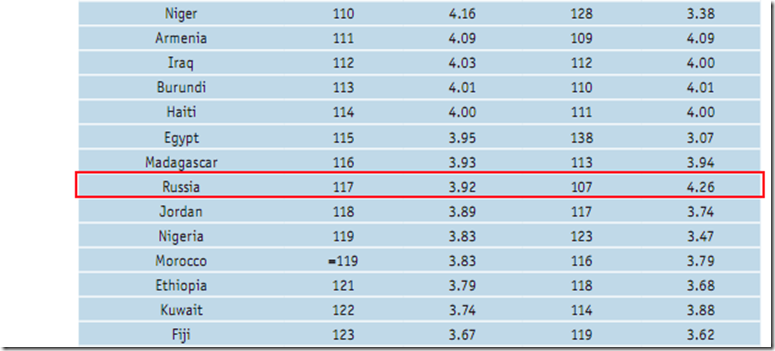
The reasons listed in the report are long known. Democratic procedures are formally on the spot, but in fact, the Potemkin democracy is built, in which the Duma turned into a stamping apparatus, in which “there is no place for discussions”, the governors are appointed and removed directly, and the elections of mayors are everywhere canceled. The largest media are controlled by the state. Human rights organizations are subjected to pressure (especially vividly on the example of “votes”). The participation of the state in the economy has increased. The elections to the State Duma on December 4 were falsified.
But all these problems were earlier and fade in comparison with the main event of the past year. Putin’s decision to return to the presidential chair is called cynical and is obviously the main reason for the fall in the ranking. Thanks to the efforts of his little assistant, who increased the presidential powers to 6 years, Putin expects to return to the Kremlin until 2024. And the system in which one person is at the top of the power of the quarter century cannot be called democratic even with many reservations, because the main task of democracy (regular rotation of power) in such conditions is not performed in principle.
Authoritarianism, I note, can be different. There is no democracy in China, in this rating it is far behind Russia. Another thing is that Chinese officials understand the need to rotate power and it occurs even without elections. And now the highest Chinese leadership is preparing for the next transfer of power in 2012-2013. The new generation of politicians. Yes, successors, but according to the law, without criminal pseudo elections in which the whole country is held by idiots. At the same time, the Chinese bureaucracy is far ahead of Russia in terms of management.
Although China suffers from corruption a little less than Russia, authoritarian regimes, as practice shows, can also cope with this problem, there would be a desire. The authoritarian Singapore, with proper management, managed to become the most uncorrived country in the world. The authoritarian Georgia (albeit with a positive trend) managed to create a copy of the American police, totally eradicating bribery in it. Many authoritarian countries, including just listed, have managed to create favorable conditions for business, increase the level of protection of private property.
But our domestic authoritarianism has collected all the worst of the possible: neither compliance with laws, nor rights and freedoms, nor honest elections, nor the fight against corruption, nor a normal police, nor the protection of private property, nor the rotation of the authorities. Our authoritarianism is not only criminal, but also absolutely ineffective.
It is also interesting that despite the fact that democracy never existed in Russia, this concept is so much discredited today that in polls most respondents do not express support for this form of government.