
Translated material
"Past"
The hero of Bernal , a low-sympathetic, battered man named Rimini (here someone cleverly spent parallels with Fellini, but please spare me) earns a quiet and modest existence, earned as a translator. Just as quietly and modestly, he breaks up with his faithful ( Kosairo ), with whom he lived happy, but it seems to be some kind of too quiet and modest, twelve years. And I would be glad the guy would be quietly and modestly starting life with a clean one, the devil would have chosen her, sheet, but only the former lover shows some kind of obsession that was unusual for her: he calls a hundred times a day, and the answering machine clogs, and writes idiotic letters, and generally appears at the most unnecessary time in the most unnecessary place. The psychopathic former wife is the very past, from which neither in the new house, nor in the new family, nor even in prison it is possible to hide.
The author of the original source, a writer named Alan Pauls , is such an Argentinean Milan Kunder, poeticly telling different psychopathologies of everyday life. Nobody read this very source from us (because no one translated), therefore, here, do not blame him, Comrade Babenko will have to judge him by his film interpretation. Well, so the novel itself seems to be solid: here, as expected, from the standard everyday situation they draw the necessary high-pair conclusions about the endless past and the transient future, about love and indifference and about everything related. All this existentialism transfers from the book to the screen Babenko very carefully and, apparently, because of this zeal, does not notice the fundamental punctures point blank.
Firstly, in the film with the name “Past” to make the central symbol of this very past the old photographs is like saying with a smart look that the time is a river (we have been suffering from this recently). Such an clumsy symbolism, especially closer to the finale, is unforgivable here, and the cherished original idea is depressed to ugliness.
Secondly, the “past” destroys this epigonian desire to seem art house. The art house in the understanding of Babenko is when they smoke one after another, they don’t joke at all, but they cry a lot and every ten minutes they regularly show boobs. The director of the director, thus, is fully revealed in the heroine of Ana Celentano, a crazy aunt who masturbates, peeping at young lovers.
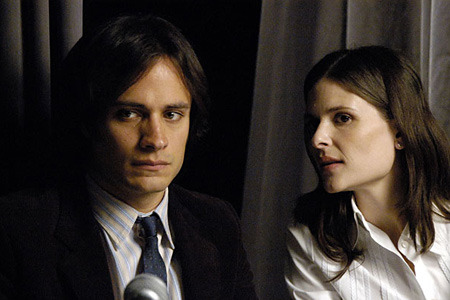
The third and last are the very crazy aunts. I don’t know about the painful, apparently, the past of the very director Babenko, but in the era of the equality of sexes, the decision to show a woman as a clinically ill, unsettled and generally rather vile creature is not so wrong (although, of course, it is wrong), but finally exterminates everything for the sake of, I dare to hope, the film was overtaken. It turns out that seemingly smart guys gathered, they wanted, damn it, to talk about the arrangement of life, about non-community, but here someone (presumably the director) shouted: “Babs are bitch!”. And everyone supported.
And the fact that the past never lets go is already convincingly shown by Ford Coppila thirty years ago. And believe me, watching on this occasion on Italian mafiosi is much more pleasant than on Argentine reflexive translators.