
Translated material
From hell to hell
Moody Book: Evgenia Nekrasov "Sestromes"
The permanent author of Gorky Vasily Vladimir carefully monitors reviews of the most important domestic and translated news and once a week presents to your attention a digest under the cutting book. Today we will talk about the collection of stories by Evgenia Nekrasova "Sistemams". 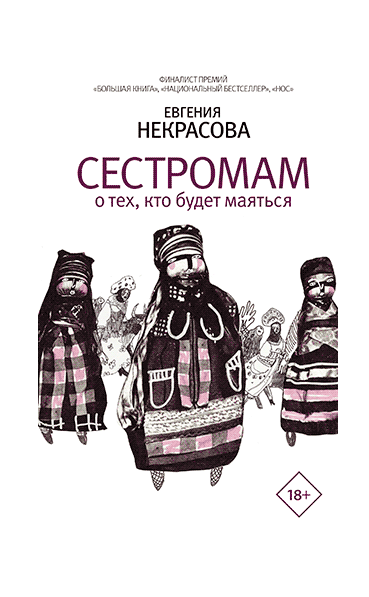 Evgenia Nekrasova. Sisters. M.: AST. Elena Shubina, 2019 Elena Shubina
The Tenitolkay word “sisters” went for a walk along the rune in 2014, when the play of the same name Evgenia Nekrasova was nominated for the competition of young drama “Lyubimovka” . A year later, the story on which the play was founded was published in the journal "Banner". In general, the story could end with this: the domestic book market hardly digest works of small and medium forms. But the unexpected thing happened: in 2018, Evgenia Nekrasova’s novel “Kalechina-Malychina” entered the short lines of the “nose”, “National bestseller” and “Big Book”, received a good PR, and the publishers started up-there are no doubt that now the writer will be printed until at least the minimum demand is preserved (here is the answer to the Sacramental question “Why do you even have the answer to the Sacramental question Need these awards?! ”). Another thing is amazing: the collection with a great rise was met by the press, usually also preferring novels. Book observers note the writer's tendency to folklore motives, compare her style with the style of Alexei Remizov, Andrei Platonov and Pavel Pepperstein, try to find the main unifying motive in the stories collected under this cover, and at the same time note the atmosphere of everyday horror, permeating the texts from the beginning to the end. It is strange that so far the word “horror” and a comparison with Stephen King have never been sounded - presumably this is the case of the near future.
Andrei Myagkov in the review “The Essence of Beauty” (“Russian Newspaper”) mentions the book “Sestrons” primarily as an example of the non -trivial collection of “Little Prose”:
“In any self -respecting book list - and our right - at least one collection of stories must be made out. Small prose is too often branded by the “writer's draft” so as not to try to restore justice - so we are all the heart to those who at the fair face the book “Sisters” face to face, simply open it on any page and read it. <...> Although someone will surely start about folklore removing redundancy and Platonic inertness, Nekrasova, no doubt, has his own voice. <...> Maybe not always pleasant, but the necessary reading is a great example of how small prose knows how to talk about modern pains is much more intelligible than most thick novels. ”
Mikhail Visel in a review of “5 books for the cold August. The choice of chief editor ” (“ Year of literature ”) recalls that the author of the collection“ Sistema ”is far from a debutant, but a mature storyteller who has been continuing the classical literary tradition for several years:
“Kalechina-Malychina, Evgenia Nekrasova, made a little shock effect on the reading public because she, this very audience, took her as a debut romance of a hitherto unknown author. But in reality, not only scenario work preceded a small novel, but also a rather large case of stories, partly submitted to the Lyceum Award, where Eugene in 2017, the first year of the prize, entered the three laureates. These (and others) stories that have now been published by a separate book not only allow you to trace, “where did you come from” a terrible fairy tale about the girl and Kikimor (the time for scientists for dissertations on the work of Nekrasova is clearly ahead), but, more essential, introduces a new original storyteller into the Russian literature, in both senses of the master of entertaining history (a scenario is felt) and a scenario) and a scenari a literary story, who speaks of the traditions of the literary tale of a hundred years ago - Remizov, Zamyatin, and Molodina. And the name of the final book of the phantasmagoric story - “Unhappy Moscow” - directly refers to Platonov. Although its content is not addressed to him, but to us - today's ... "
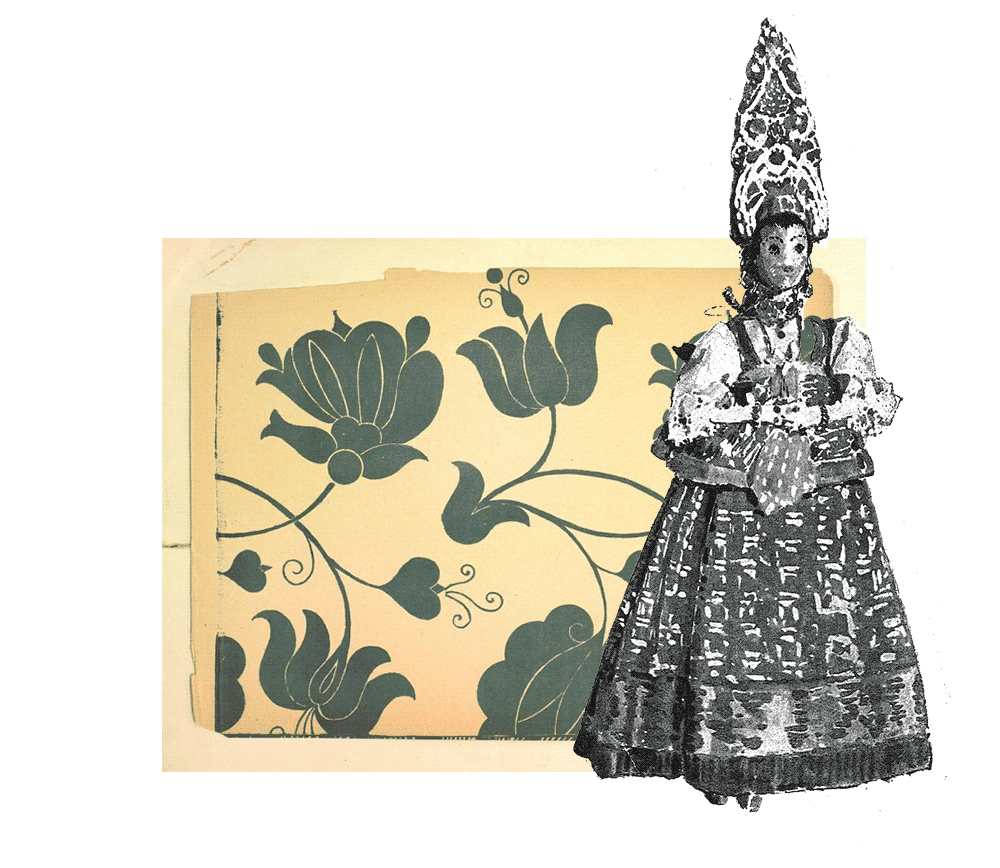 Daria Efremova in the review “Love, Kura-Gril and mysticism in the minibus ” (newspaper “Culture”) compares the prose of Nekrasova with the “Mythogenic Love of Cast” Pavel Pepperstein and for some reason recalls “New Realism”:
“The bright debut of Evgenia Nekrasova with the cycle of the stories“ Unhappy Moscow ”and the novel“ Kalechina-Malychina ”<...> allowed reviewers to immediately talk about copyright handwriting. <...> In the new collection to Sestrges, the author offers an equally impressive literary game: as if we had penetrated into the depths of the “fatal” and “magically vicious” Olya Meshcherskaya, the heroine of “light breath”, and would look through it through the mixing reality and the sarcastic grotesque of Alexei Remizov, adding a growing degree agony of the “cynics” of Mariengof. <...> The sophisticated taste, passion for the experiment, the bold handling of the images of the mass poll and folklore material, and most importantly, the attempt to create mythopoetics of today - such an optics allows you to compare Evgeny Nekrasov with Pavel Pepperstein, the author of the cult postmodern novel “Mythogenic Love of Cast”. But if the author of “MLK” deliberately avoids moral assessments (one of the key concepts of his philosophical discourse “diet”-“di-ethical” contemplation), then Nekrasova is unlikely to strive for meta-proposition. The homelessness of the described world hits the ground. <...> According to all the canons of new realism, a character rolling on an inclined plane should not have caused sympathy, but for some reason we empathize with Nekrasova ... "
Alexandra Guseva in the review of “Russian prose: Evgenia Nekrasova, Vladimir Aristov, Stella Pondon and Julia Govorova” (“We read together”) calls the main theme of “Sisters” Escape, release from the shackles:
“Find it, start, flush out of the“ small, toy Adka ”and spread wings, akin to a miracle full-bird, is one of the key motives of this collection. However, not everyone will be able to get closer to “all -world love” and freedom. So, “walking from the soul”, the main character of the story to the “sisters” falls into an immense emptiness, in which there is no place for “naturalness” - it seems, the main condition for salvation in this world. Overcoming dispersion and returning to the “maternal language”, to the origins <...> seem to become “antidot” of any of the injuries; The long -awaited remission for those who are guilty.
Insist on the folklore tradition and everyday uneven speech, the prose of Nekrasova is a dense, homogeneous “substance”. Just as the conspiracies are weaving in the novel “Voyokha”, the writer creates the canvas of the text: consonant words fill the cavities, echo each other and enhance the hypnotic rhythm in which the heroes live ... ”
Maria Lebedeva in the review “Do not say“ hell ”, they say“ here ”” (“reading”), on the contrary, the main property of prose Evgenia Nekrasova considers intermediate, uncertainty, borderline:
“The main feature of the Nekrasov world is the existence on the border, its shameful, as in a dream, uncertainty and undeveloped. The frozen in the intermediate stage is potentially capable of being both of them, but in reality it risen restlessly at the junction of concepts. <...> The world of the borderlands, as in fairy tales and conspiracies, consoles itself with an imaginary specificity; The fact that the desired needle is in the egg, and the egg in the duck gives the illusion of reliability. <...>
Turning to a fairy -tale, conspiracy recitative, Nekrasova uses this language not at all in order to lead from reality and allow to perceive the terrible in a softer form. This is not even a mythological rethinking of realities. Brownies, Kikimory, Gamayun and others like them organically fit into a broken reality (for evil spirits there is even their own social network, and indeed there are no harm from them: the devils, and they are only lazy - people redid it all for them). And violence took root just as organically - in fact no less unnatural than Kikimora with a devil ... "
 Artem Roganov in a review of “6 books of the season: what kind of non -literary literature pleased us the past summer” (“I want to read”) tells how the theme of everyday horror unites in the texts of Nekrasova with folklore motives:
“Stories from the new collection of the finalist of the Big Book Prize Evgenia Nekrasova combines attention to the private, everyday life of people, where one way or another, also everyday, but severe horror appears. <...> Salvation for the heroes caught by the revived nightmares is most often flight and/or a miracle. But even when a miracle happens, it is perceived anyway as a metaphor for madness or a desperate feat. Such allegory makes stories similar to myths, if we keep in mind that the myth is an encrypted reality. In addition to people, the world of Evgenia Nekrasova is inhabited by barely visible cruel gods, whose mercy and rage is not amenable to simple human logic. In fact, this is nature itself, the earth - sometimes it saves a person, gives him an extra couple of hands, and sometimes, on the contrary, as if taking revenge for a self -willed, evil freedom, as in the title story to Sistemams.
The effect of the tragedy of an inconspicuous, private life is achieved not so much by folklore-mythological motifs, but by means of language, although one often merges with the other. Thick metaphors show the world that has not been seen from a human point of view, and in this sense Evgeny Nekrasov, of course, is not in vain compared with Platonov. The catch of such a technique - in a low form you quickly get used to it, and therefore get tired. And already in the middle of the book it begins to seem that we are talking again and again about the same story, only now submitted from another angle. But each story separately is a fresh and curious word about a man not “small”, but in a good sense “average”, and, it seems, to be “average” in our time is really scary ... ”
Sergey Lebedenko in the material “Books of Augustus: Light touching hard and gloomy” (“Literary”) reflects on what role in the prose of Evgenia Nekrasova is played by a fantastic element:
“There are two types of writers: those who write about the surrounding reality, and those who come up with their world. And for a long time it was believed that the first type of writers is fair to call realists, and the second - science fiction writers. It seems that a writer introducing a fantastic element into the text is still customary to look obliquely: they say, an escapist. Evgenia Nekrasova, back in the recent Kalechina, proved that introducing a fantastic element into prose about modernity means to open her pain points, turn to them face, and not turn her back at all.
In the collection of Sestrges, this surreal opening goes to a new level: the author does not just introduce a fantastic element, but redraws the textual reality so that its dark, unpainted sides reaches with disgusting cadars. The distinctive, completely poetic language of Nekrasova, inspired by Platonov and folk tales and legends, serves not only to create the mood and atmosphere of stories, but also that cadaurus in the form of domestic rapists, scammers, bureaucrats and simply lost people at least in the text were defeated.
As a result, the Heroes of Nekrasova, the creatures are weak, but freedom-loving, break through the claustrophobic, sticky and unfriendly reality somewhere in the air, to where they will not be tied by a vow of silence or strong shackles of co-dependence ... ”
Finally, Yegor Mikhailov in the article “That's why it is scary: what the stories are Kristen Rupenyan and Evgenia Nekrasova” (“Poster-Daily”) compares the collections of two writers and comes to the conclusion that the prose of Nekrasova is partly owed to the Russian “actual news agenda”:
“Nekrasova does not spare the reader, rather treats him with the compassion of a doctor in a children's clinic: strokes the head, will quietly distract, and when the patient hesitates, there is a syringe with a vaccine ready.
In Rupens, stories about external monsters turn out to be stories about internal (and vice versa) - the same can be said about Nekrasova. In the first story, guilt accepts the image of a completely material sloppy worm, wrapping his neck of the protagonist - a Lobov metaphor, but the writer manages to cope with her. <...>
At the same time, reading the Nekrasova collection is noticeably more difficult. Where Rupenyan is armed with saving black humor and a branded ironic grin, Nekrasov is much more serious and a little more sentimental. Well, the scene, of course, is important. Placing the action of his stories not in conditional space, but in recognizable Russia in 2019, Nekrasova automatically connects them with the news feed.
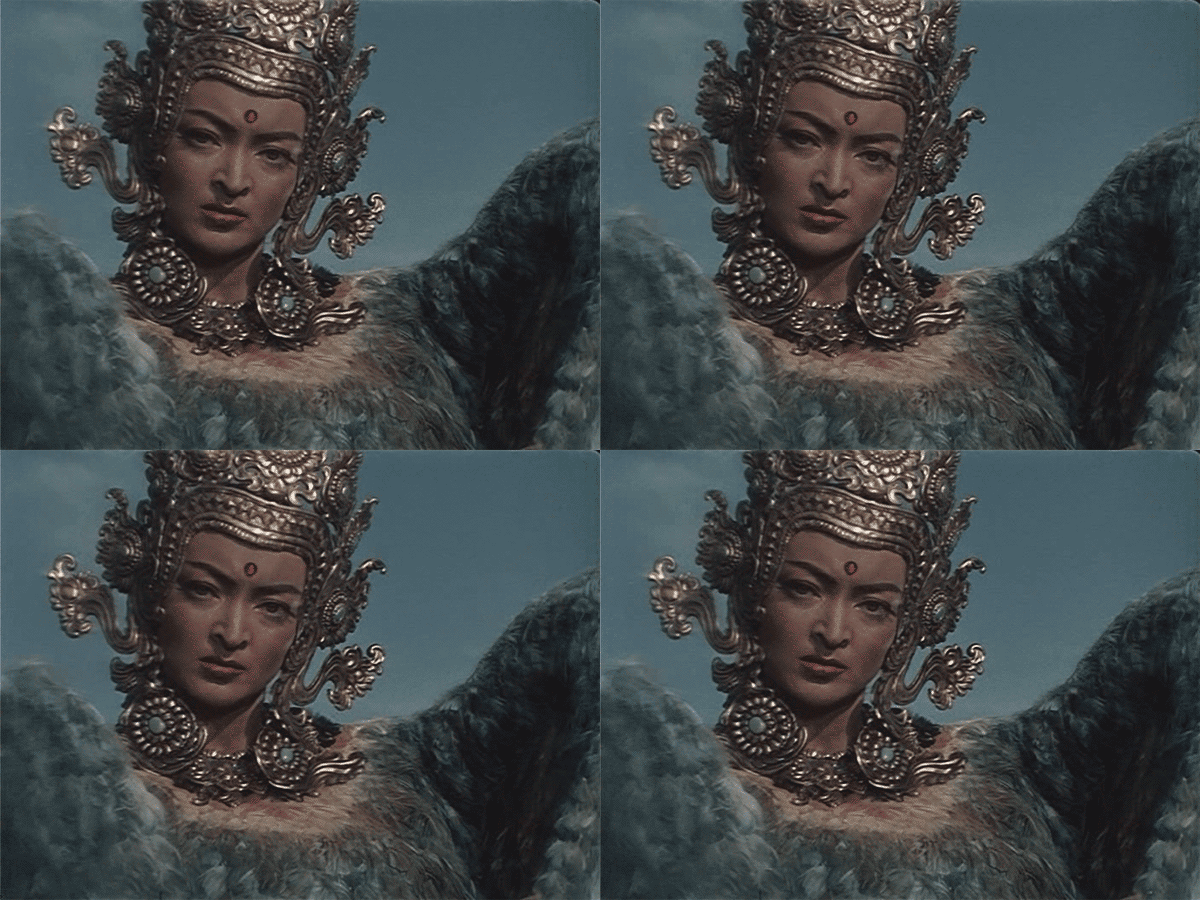
It is not surprising that the best story of the collection is a Lakshmi, hiding closer to the end. <...> Fortunately, the heroine of the story lives in the same half-magic world as Katya from the Kalechina-Malychina (they echo, for example, the word “frequent”, which are called children here). In the absence of legislation, which fights domestic violence, she has to defend herself, literally growing new limbs and turning into a multi -war goddess. So Nekrasova’s prose grows up new limbs to learn to talk on topics that few people know how to talk about in Russia: homemade violence, fear, death. It turns out a book that will help to find a new language for discussing them. ”