
Translated material
Favorite Perito Books about the Balkans
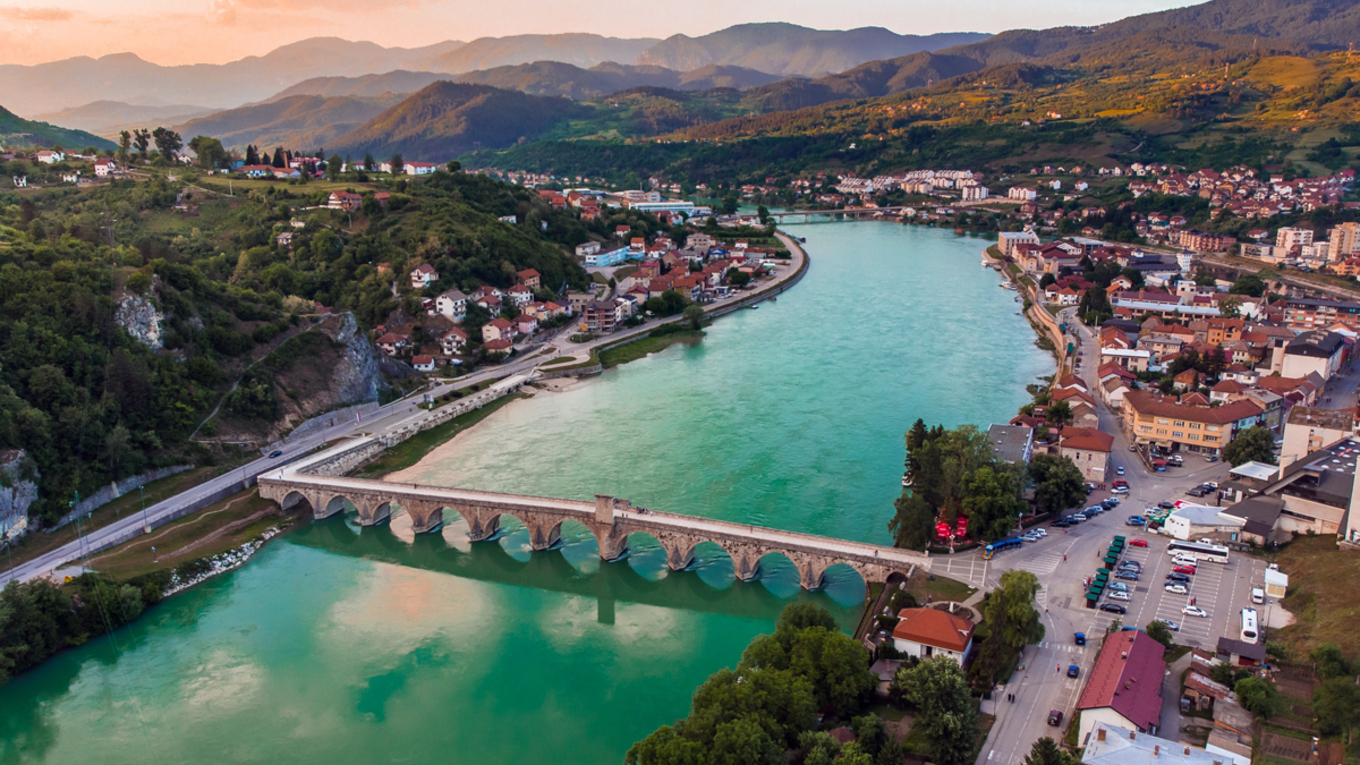
What to read about the most mysterious and unusual region of continental Europe
Fiction is an important and powerful source of inspiration for the editorial office of Perito. Before any big trip, we try to read several famous books related to the places where we will go. This not only fuels interest in the future journey, but also makes it possible to plunge into local culture, characters and historical events, which means that understand the context and look at the future direction a little deeper.
The theme of this book collection is the Balkans. This is a special and very important region for us. For years we went there on travel, and subsequently even lived in Montenegro and Serbia for a whole year. During this time, we were still convinced that life here is surprisingly complex and original. The heritage of the Ottoman Empire, the communist greatness of Yugoslavia and the terrible war in the 1990s, the neighborhood of Catholic, Muslim and Orthodox religions, the most important geographical location and many other factors fell into such a huge and complex ball that, in my opinion, even the locals themselves are not fully recognized.
And all this difficult story is adjacent to the light and cheerful disposition of local peoples, so loving Mirak-simple and second happiness from something good and very simple, for example, from a five-minute break in work, sunny day, cup of coffee and cigarettes. And in order to look at this amazing Balkan life at least one eye, you need to read something from our list.
Just in case, we will agree on what the Balkans are in our understanding. These are the following countries: Albania, Bosnia and Herzegovin, Bulgaria, Greece, Kosovo, Macedonia, Romania, Serbia, Croatia and Montenegro, as well as small parts of Italy, Slovenia and Turkey.
Milorad Pavich, "Biography of Belgrade"
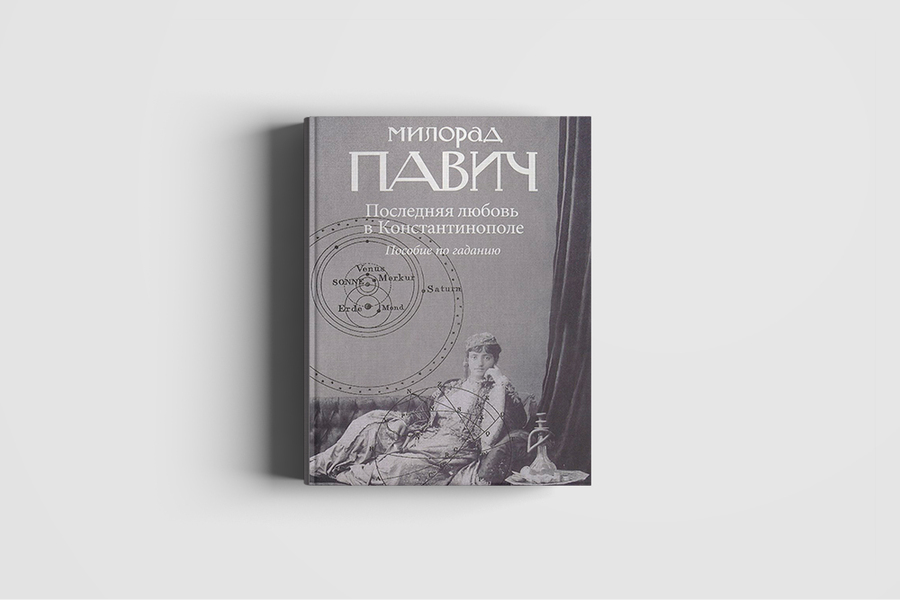
It is the most logical to start the list from the most famous Serbian writer in Russia - Milorad Pavich. His books “The Last Love in Constantinople” and “Building of Belgrade” came across to me in the first courses of the institute and were very sunk into my heart. Light, mystical, often with a nonlinear plot, novels were first perceived as a curious fairy tale, but gradually the details associated with the life of the entire Balkan region began to loom in them: traditions, historical events, Ottoman influence, theology and, of course, local folklore.
Quote: “In a huge city built on three seas and four winds, on two continents and over the green glass of the Bosphorus, they arrived in early autumn. Nights, like socks, turned inside out in their house above the water, a house from which sailing ships and winds could be considered and from which they often went to the embankment to buy aromatic oils. Erisen really liked this, and at every opportunity she went into a small shop in the middle of Misir-Bazar, facing a golden horn, drinking white tea with hash and see how children catch fish on a bare hook without a bait. There were so many fish in that place that only time to pull out. In this shop, they met a wonderful little man with a rope instead of a collar on a shirt, about whom they were told that he had Serbian blood, but Turkish faith. This man went down once a month through the dripali chairs to the golden horn and went into the shop to buy fragrant oils. With the seller, he always started the same conversation, as if he had read the same prayer.
“He was once a mason,” the seller told them, “and now he is sick with a strange disease: in his dreams, time flows much faster than in reality, so he manages to live at least ten years every night.” Therefore, no one in Constantinople, even the oldest people, knows how old he is. Maybe he himself does not know this. ”
Ivo Andrich, "Bridge on Drin"
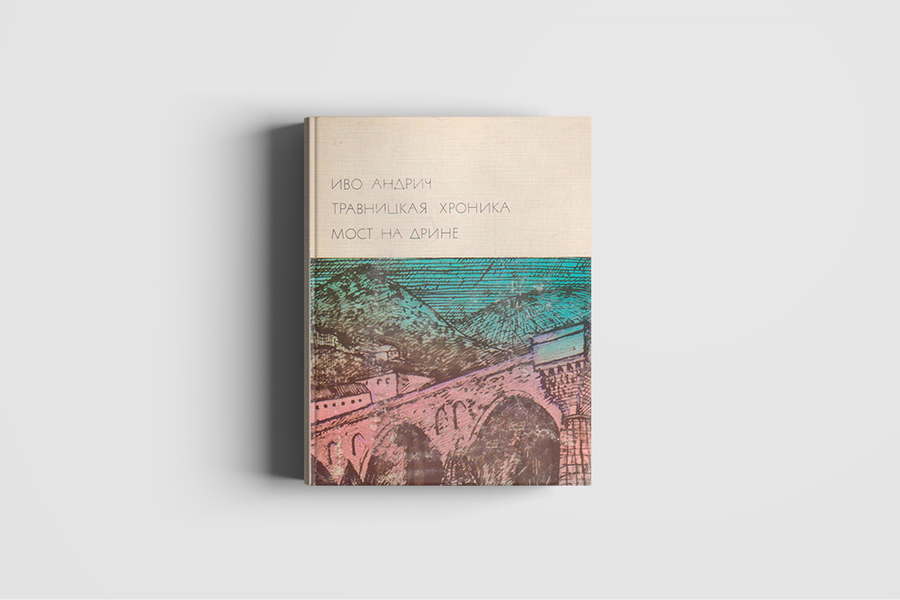
This book is the most important for me in today's list. It was thanks to her that I irrevocably fell in love and accepted the Balkans. The main character of this novel is the bridge in the Bosnian city of Vsevgrad. Around him, Andrich is building the whole narrative: he talks in detail about what the city and its inhabitants lived for 400 years, from the time of the heyday of the Ottoman Empire until the beginning of the 20th century, when, after the murder of the Archduke Franz Ferdinand, the First World War began in Sarajevo. Separately, in the novel, the story of the customer of the bridge-Mehmed-Pasha Sokolovich stands out. During the Ottoman Empire, the Vassal regions were supposed to pay tribute to children who were given to the service. This is exactly what happened with Mehmed Pasha-he left for Turkey as a child. He dreamed of building a bridge over a stormy and rebellious river Drina in his native places and, becoming a great vizier, carried it out in his native places. By the way, for this novel, Ivo Andrich even received the Nobel Prize in 1961.
Quote: “On that November day, a black -haired boy of about ten from the high -mountain village of Sokolovich looked silently in one of the many label baskets and looked around with dry eyes. Clutching a small crooked knife in his cunning, reddened hand, he absentmindedly stricting the rim of his dummy basket, but at the same time looked around. He remembered the rocky shore, overgrown with rare, exposed, dull-gray rockets, ugly ferryman and a dilapidated, blown by drafts, braided in a web mill, in which they had to go to the expectation while everyone was crossing the muddy drin, announced by the croaking of the raven.
And as a physical pain somewhere in him, with a black tip at times piercing his chest for a moment, a difference of it in half, he made a memory of this place, where the road ended and where a nagging sense of longing and hopelessness, as it were, was condensed and settled on the stony banks of the river, the crossing of which is difficult, the road and risky. At this naked and painful point of the poor and meager mountain region of poverty and squalor manifested itself in all his undisguised obviousness, and the person, stopped by the insurmountable superiority of the elements, shameful in his weakness, had to see his own and universal helplessness and backwardness. All this responded in him by a sense of almost physical torment, which remained in the boy from that November day and later he had never left him at all, although his fate soon changed, just as his faith, name and fatherland changed. ”
Vladislav Bayats, "Hamam Balkaniy"
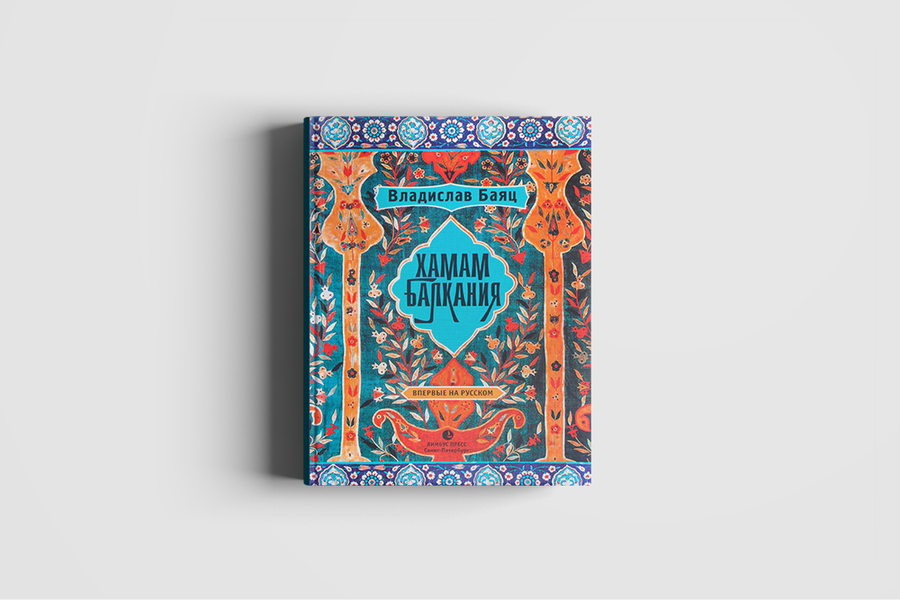
The latest and most relevant work in our current selection. The author of this book is a modern Serbian writer and poet Vladislav Bayats. In fact, the “hammam of the Balkani” is devoted to two things: the personalities of the great Mehmed Pasha and reflection on the topic of historical memory and literature in general. Especially in the book, the volumetric dialogs of Mehmed Pasha (Serb) with the great architect of the Ottoman Empire Sinan (Turkom) and the dialogues of the author (Serb) and his close friend of the writer Orhan Pamuka (Turk) are noteworthy. Such an endless dialogue and the dispute about the great, which is very interesting to read.
Quote: “In the chapter I, I compared our behavior with Orhan Pamuk with the behavior of children who exchange portraits of their favorite football players. I gave such a comparison about our mutual boasting of those who have more detailed information about the general Turkish-serbic past.
Such a comparison seemed to me a good illustration, because I remembered how we, in the late sixties, being children, on the Belgrade bridge of my poor childhood (it was then Yugoslavia to get rid of the poverty of classical socialism and began to enter the phase of the movement of non -alignment and the blatative adoption of capitalist standards), exchanged pictures of famous football players that we collected in their albums dedicated to the world championships. In addition to classical exchange, we used the famous game in popping, with the help of which in the sports, in a duel we conquered individual pictures from opponents. A similar process somehow delayed us into history more actively. It seemed to us that by our dexterity we influence the result, so that it becomes not only the result of chance or luck. I remember that no one was traded in these pictures, money was not mentioned as a category, and even more so was not used. It was enough to send the album filled to the alternative to the organizer of the lottery and try his own happiness by extracting a note with the name of the winner from the rotating drum. ”
Theater Obracht, "Wife Tiger"

The novel of an American writer who emigrated from Yugoslavia to the United States in her youth. In the center of the plot is the story of a female doctor who travels in the 2000s in the destroyed war of Bosnia and Serbia. During this trip, the heroine thinks a lot about the history of her family and the country, especially about her grandfather - a man who has influenced her more strongly. The most interesting line of the novel begins here - the amazing and even mystical adventures of a young man - a doctor, a tiger and an immortal person.
Quote: “People must have seen how he walked through the streets, but after the bombing just experienced he did not perceive him as a tiger, but rather as someone’s joke, crazy obsession or religious hallucination. A huge beast silently, with smooth jumps moved along the alleys and the streets of the old city of Belgrade past coffee houses and bakery with knocked out doors, trams entered right into broken windows. The tiger fled along the tram tracks on the hill, jumped over the fallen wagons, diverse under the fallen electric wires, which hung with shreds and blackened through the whole city, recalling the carbonized tropical vines.
By the time the tiger reached the Knez Petrov, the robbers were already shocked on the boulevard. People did not pay attention to the tiger, passed him, walked next to him or parallel to him on the other side of the street. They dragged fur coats, bags with flour and sugar, all kinds of electric appliances, chandeliers, water taps, tables, legs from chairs, carpets, clearly corroded from the walls of ancient Turkish houses destroyed by bombing. The tiger, however, also did not pay much attention to people. ”
Robert Kaplan, “Balkan ghosts. A piercing journey through history "
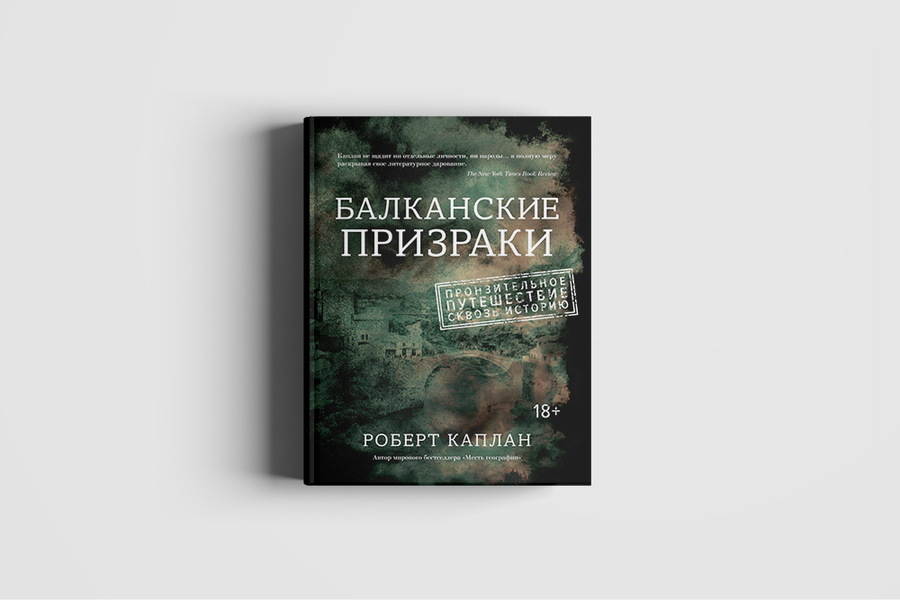
I learned about the book of Robert Kaplan from the deceased great magazine Prime Russian Magazine (in one of the numbers there was just an interview with him ). Kaplan spent a lot of time in the Balkans, working as a journalist in Greece. During the working trips, he visited almost all regions and talked with many different people, starting with local farmers and ending with politicians and journalists. According to the results of these trips, the book “Balkan Ghosts” turned out to be a kind of manual for those who are little familiar with the historical and religious context of the entire Balkan region, but want to understand this issue. In my opinion, the book is excessively politicized and in some matters too one -sided, but it will definitely be useful and interesting for those who are interested in this topic.
Quote: “On the back seats of the bus going south of Zagreb, Albanians crowded around me with eyes affected by trachoma. They had shabby pants with pins in those places where fasteners are usually located. They were Muslims, but from all carried a fume. Even in the most universally recognized secular Islamic countries, this is very rare. As everywhere in Yugoslavia, here at every step pornographic magazines and everywhere from cheap transistors to the full volume sounds Western rock and roll. A dispute began for a place. Two men began to scream at each other. I'm already used to this. Then they began to push, and it would have reached a fight if others had not intervened. I have never seen this in the Muslim world, where almost all violence is a political sense. Suddenly I felt anxious. I never experienced such a feeling among Muslims, with the exception of the territories of military operations.
The first greetings of the prominent were many wooden stalls, illuminated by sodium lamps and clung to the walls of block multi -apartment buildings, like drunken, on pits of the hills slopes. Coal dust, mixing with the smells of cement and garbage dumps, scored his nostrils. I remembered the dusty, liver color of the suburbs of Ankara and Istanbul. Primetina seemed to the belch of not only the Turkish past, but also the Turkish present. A serpentine bus rose to the top of the next hill. The neck of a beer bottle sticking out of my neighbor’s pocket crushed me in the back. A new house -building project appeared: a mishmash of brown brick, glass and tiles used to decorate the facades.
The Grand Hotel Protina, the highest skyscraper of the city, had a proud five stars under the roof. The elevator reminded me of the painted graffiti toilet booth. The lock in the door of my room was broken. Inside, the smell of the previous guest - deodorant and smoke of cigarettes without a filter was preserved. The gall green carpet is dotted with countless spots. Despite the button phone, all the calls from the hotel passed through the operator, who stuck the pins with wires into an old wooden box. The communist government of Yugoslavia equipped the hotel with three restaurants. Each hall with a capacity of a couple of hundred people had its own orchestra and the same menu. All three were empty. The waiters and orchestrants sat on long couchs, smoked and were annoyed at the sight of each visitor. ”
Eugene Rogan, “The fall of the Ottoman Empire. First World War in the Middle East, 1914–1920 "
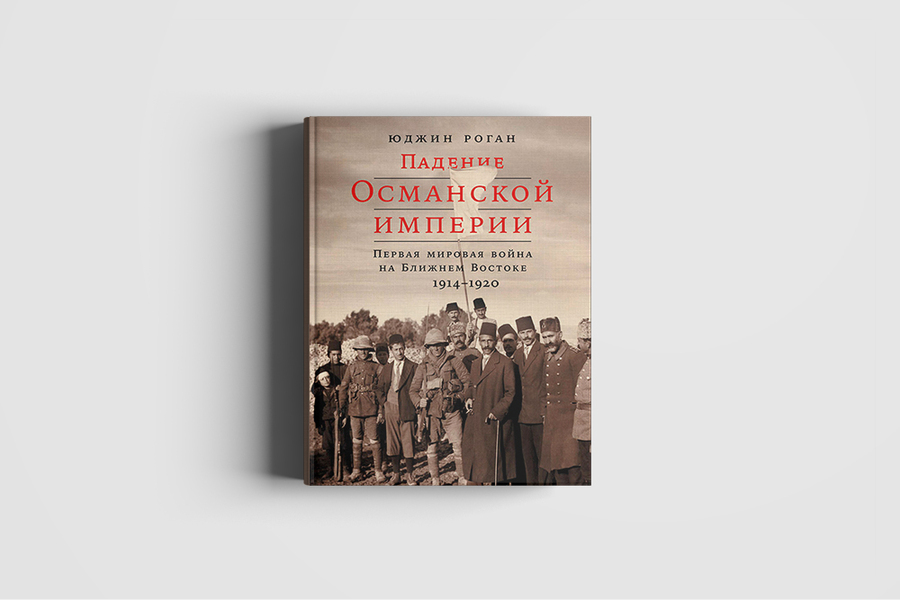
And this is already non-fiction. The ascent of youngsters, endless wars with neighbors, genocide of the Armenian people, declared “jihad” during the First World War and the fall of empires - the book of Eugene Rogan significantly expands the horizons and understanding of the Balkans, the Middle East and the relations of the countries of the region with the West. Plus, the episodic appearance of Mustafa Kemal and Thomas Lawrence-different cult characters of the XX century.
Quote: “In addition to its role, the head of the Ottoman state, the Sultan also wore the title of Caliph, or the spiritual leader of the world Muslim community. The Germans wanted to play at the religious enthusiasm of 12 million Egyptian Muslims, as well as millions of Muslims in the British and French colonies in Asia and Africa, in order to weaken the powers of the Entente from the inside. The attack on Egypt along with the declaration of jihad, or the “Holy War of Muslims against the infidels,” could provoke an uprising among the troubled population of Egypt and undermine the positions of the British - at least German strategists suggested that.
John Bacon's popular novel “Green Mantle”, first published in 1916, struck the imagination of Europeans with a description of the hidden power of Islamic fanaticism. “Islam is the faith of warriors, and today, as in previous times, the imams are on the minbar with the Qur'an in one hand and a naked sword in the other,” Sir Walter Bulliant, a spy in the novel of Blya, said with admiration. “Imagine that there is a certain ark of the covenant that is able to infect the last Muslim peasant in the most distant village with dreams of play.”
This fictitious conversation in the novel of Blya took place within the walls of the Ministry of Foreign Affairs at the end of 1915, but in those days similar conversations really sounded in government offices in Berlin. Such views were called “Islamic politics”, and many Germans were sure that it was through the “Islamic policy” that the Ottoman Empire was able to bring the greatest benefits to Germany in this war. ”
Goran Voinovich, "Chefura!"
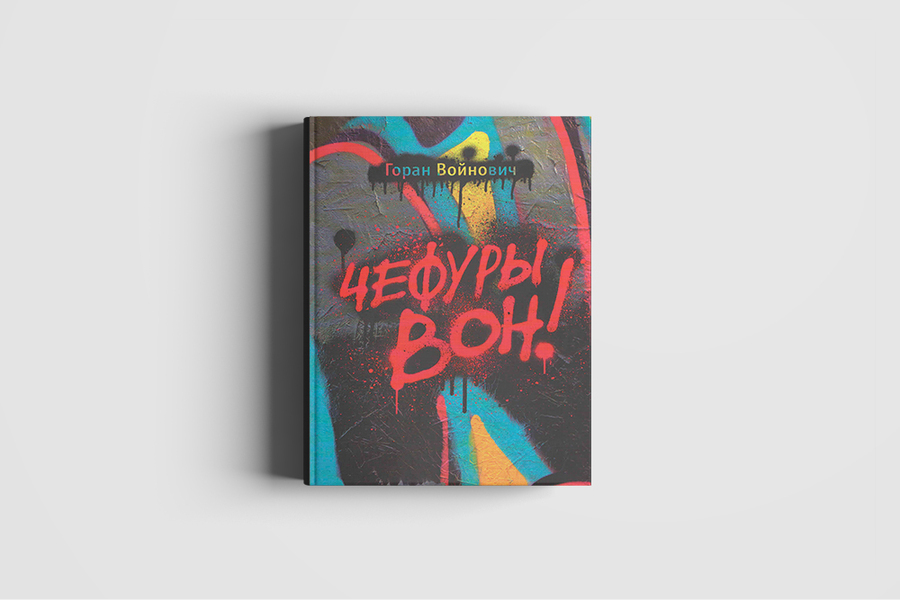
The life story of teenagers in a gloomy suburb of Ljubljana - fuzhins. Such migrants from the countries of the former Yugoslavia in successful Slovenia are contemptuously called Chefura. The book is a selection of ridiculous, cute and sad stories, each of which begins with the question of “why”: why is communism not yet died, why we ended up in a police station or why there is no thin hole in the fuzhins than the “Kuban”. Personal is interspersed with public, the Balkans of the past - with Europe of the present.
Quote: “Sitting in the yard in front of the entrance is our, Fuzhinsky, a national sport. So, probably, in many areas it happens, but on the fujs is the most favorite thing. And what to do? The apartments are tiny, the families are large, everyone is gnawing with each other, the eternal strain with money. The TV is one at all, here are the homemade and they go endlessly, they download the rights to whom to watch it.
The lucky man will settle on the sofa and drives along the channels, and the rest can rest. If the mother of Mexican soap looks - the dad straight into the drinking establishment, if the dad hangs on Pink TV, “24 hours”, or not to tear him away from “friction”, the mother drinks coffee with her girlfriend. And young animals are always in the flight, in any situation. There is no computer - sit in the yard. Although Chefura is not at all according to computers. Playstyishn is still wherever it went, and there to write programs, hacking is not ours, Chefurov, business. And somewhere, someone once said that the computers from the computers have one harm, they don’t buy.
So hang out in the yard, shake the air - we pour it out of empty in empty, as they say. Then we decide for three days that it is cooler: Merce from the German conveyor or Ferrari, who was manually collected? The conveyor is against the person. Not a topic - a song! Сюда и Терминатора приплетешь, и Робокопа, и Шумахера, и дядю Ади — Эмира, что на заводе в Германии мерины клепает, и какого-то Деянова френда, который феррари в Италии тестирует, а потом и „Ювентус“ вспомнишь, и „Баварию“, и свитер, бабушкой Ацо, Стоядинкой, связанный, и пуловер от Армани…
И по кругу, по кругу… А там смотришь — предки, все вымотанные, с работы плетутся, мелюзга из школы, телка с телевидения — та, что на восьмом этаже живет, — каблучками цокает и так задницей виляет, что глаз не оторвать, а потом шея болит каждый раз… Пялимся на секси-мамочку Божо: все думаем, сколько ей лет — сорок или fifty? Шушкич-алкаш с одиннадцатого этажа ползет… Однажды так нажрался, что в чужую многоэтажку поперся, чуть дверь в подъезде не выломал… Дворник Владо тут как тут, вякает чего-то там… получит у меня когда-нибудь».