
Translated material
So the world will end
Poetry as the key to "Interstellar", "1917" and other films of 2010s
Any poem that sounds in a particular film is multi -digit (that is why it is poetry), but at the same time gives a certain key to it. There are many classic examples: Samuel Kolridge in Citizen Kane, Arseny Tarkovsky in the Mirror, William Blake in the Dead - but in our time the directors successfully continue to use this spectacular technique. At the request of Gorky, Alexei Filippov recalls paintings with poetic quotes that were released in the 2010s, and explains how they work there.Redyard Kipling and Edward Lear in the film "1917" (2019)
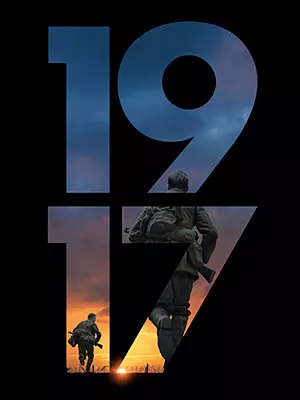 In the military drama of Sam Mendes “1917”, dedicated to the British army in hell of the First World War, there are a couple of poetic episodes. Sending two corporals with a dangerous task to the advanced General Erinmore (Colin Fert) quotes the “winners” (1888) Redyard Kipling. Later - finding himself in a destroyed bombing city and meeting a Frenchwoman with a baby - the surviving Corporal Skofield (George McCay) sings like a cradle of Edward Lira “Dong with a Lanter on the nose” (1877). By the way, the surname of the second corporal of the Blake who went on a dangerous path.
It is easier to start with the poem of Lear-one of the founders of the poetry of the nonsense (Nonsense Verse), who in 1846 published a collection of absurd Limerns called "The Book of Nonsens". Lewis Carroll continued in many ways in “Alice in Wonderland” (1865) and in Alice in the Zlavslavra (1872), and the poetry of nonsense became an extremely popular format of children's reading. Corporal Skofield is likely to reflexively addresses the poem about Dong: most likely, in childhood he read him before bedtime - or he himself hummed him like a young father. In a situation of constant danger, he tries to demonstrate peaceful intentions with the help of a certain universal experience for the European: not through a specific poetic plot, but through a recognizable lullary melody.
At the same time, “Dong with a lantern in the nose” describes the situation that is consonant with the macabra that is around around: “When the uninocrated grambuli boron is embraced by darkness and mere pitch ...” (Per. G. Kruzhkova). And the reading of these lines is of a ranting nature for the young corporal, which ended up in the bee of war - events of the same absurd as the quasi -ide plots of Lyr. In essence, if you sprinkle Carollah here, Scofield is the same Alice in the after -a -grade, who meets the charismatic characters of a distorted strange world. They represent the highest military ranks, and their famous British actors play - Colin Fert, Mark Strong, Andrew Scott and Benedict Cumberbatch. The universality of the lullaby melodic is a bridge to Kipling’s poem, which is not least known precisely by the fabulous almanac “The Book of the Jungle” (1893).
At the same time, 1917 was shot in several long plans, which is why the effect of the continuity of what is happening arises (although there are both obvious and inconspicuous gluing in the narrative). Such an illusory unity is unlikely to convey the tempo of the military operation itself or act as a report from a foam, showing the front through the eyes of Scofield. Moreover, the Roger Dikins camera constantly inflams over the battlefield, demonstrating the distance with what he sees and experiences a young corporal.
This duality is the conceptual solution of the film, which is trying to link the personal experience of Scofild, written off from the grandfather of the director, with a certain universal British code. Therefore, all the faces and quotes arising in the frame are associated with the Makhina’s English heritage: from Cumberbatch, who played Sherlock and a number of Shakespearean heroes, to the poetry of Kipling and the trenches of the First World War, who responded in the “hobbit” of Tolkien (Cumberbatch played in the film adaptation of Peter Jackson).
 Colin Fert in the film "1917"
In the context of “1917”, the choice of “winners” of Kipling for the role of a kind of epigraph is symbolic and problematic. Kipling, who had made a brilliant career (from a child prodigy to the legislator of literary mods), became one of the literary synonyms of the British Empire in seventy years. With all the ensuing consequences. In journalism, there is a chauvinist, a supporter of colonial policy and a frantic stands, who was strictly passing through the Irish, Buram, Canadians who were striving for independence, and at the same time Germans with the Bolsheviks. In the works - an incomparably more balanced and wise author, saddened by both the return of soldiers from the front of the First World War to the insignificance, and the tricks of brutal fellows, who did not prevent any honor from abandoning the pregnant girl. (After the First World War, there was no institution of heroism yet, the soldiers did not receive any regalia and were forced to integrate into peaceful life from scratch; the heroes “They will never become older” by Peter Jackson, the Installation Doc about that war.)
The “winners”, in which the phrase “will rather reach the one who goes alone” (per. E. Ermakova), not only turn out to be a spoiler by the first third of the film, but also describe the disunity that a person faces in the face of death. All or nothing, pan or disappeared. As a result, the metaphysical truth of life comes to the forefront, although against the background the British heritage rises, which continues in a single survivor. Scofield travels between the titans-generations and collides with the induration soldiers, echoes of colonial policy. In a sense, this is the Odyssey on the flashes of the national myth in the abyss of war. And the fourth-fourth of Kipling mentioned in addition to the best describes why this plot is universal only partially, as well as nonsense.
Thomas Sterns Eliot in the "wounds" (2019)
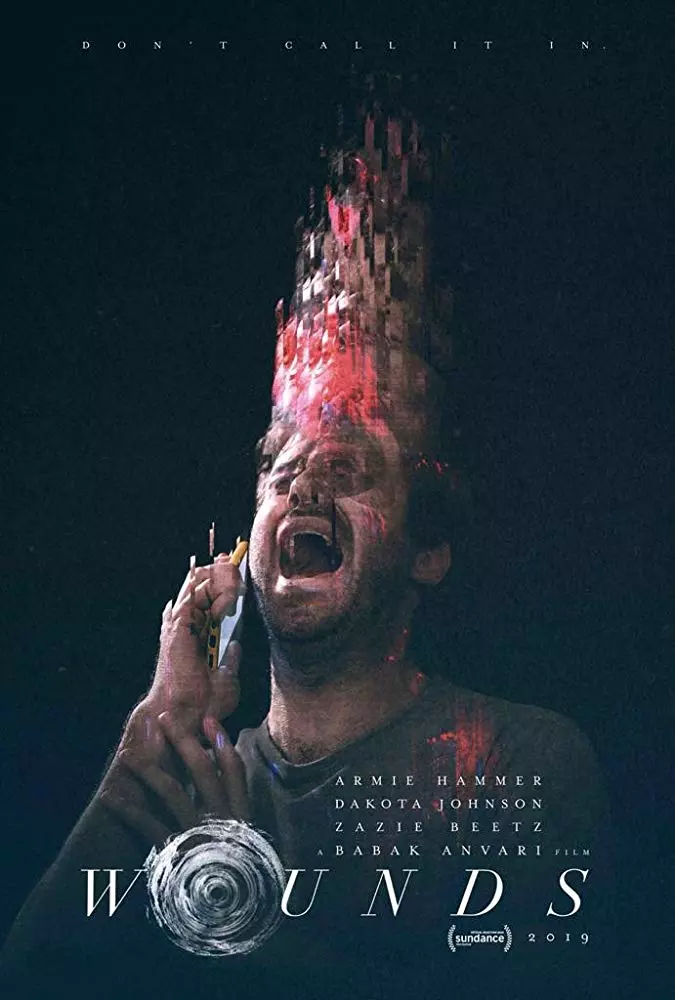 The textbook poem of the modernist Eliot “Hall People” - perhaps the most cited work of the 20th century - occurs in the English -language debut of the Iranian director Babak Anvari in passing. Carrie (Dakota Johnson) - the girl of the protagonist, the negligent bartender Will (Army Hammer) - writes an essay on the “Range and Functions of Allusions in T. S. Eliot”. The range and functions of allusions are also important in the film itself, which begins with another monumental reference - an epigraph to the “wounds” is a fragment from the “heart of darkness” (1902) of Joseph Conrad. The proximity of two English -speaking giants is intensified by the fact that Francis Ford Coppola in the Apocalypse today not only uses the plot canvas of Roman Konrad, but also the problems of Eliot, emphasizing this with a scene when Marlon Brando quotes “hollow people”. By the way, the epigraph to the Mistah Kurtz IS Dead poem is inspired precisely by the “heart of darkness”, and the Hollow People finale also sounds in the “Tales of the South” (2006) Richard Kelly (with a small correction - the world there ends with an “explosion”, and not a “fastener”).
So, "wounds", hollow people and the range of allusions. In the film, Anvari also has the third important artistic guideline - “Meloing” (1966) of Antonioni, whose poster hangs in Will in the apartment in the most prominent place. Many films of Antonioni are devoted to the brokenness of human communication and alienation (“Adventure”, “Night” and “Eclipse” are formed in the trilogy of the same name). Anva seems to create a nesting doll from forms of existential despair of the 20th century: the foundations were embedded in the (anti -) colonial plot of Konrad, after the First World War, they gained the outlines of the gutted metaphysically “hollow people”, and after the Second World War came to the point of even more point alienation: not between states, cultures or a person and higher matters, but between individual individuals.

As in the debut “In the Shadow”, whose events unfolded in Tehran against the backdrop of the Iraq-Iraq war, in the “wounds” is an anvar focused on one person who cannot integrate into any of the deceptively saving communities. Will threw the university (and, unlike Carrie, did not fit into the academic community); By the age of 30, I could not professionally be realized, chose the indelible work of the bartender, which allows you to drink, chat, flirt and have a feeling of rich life; Will is not immersed in personal relationships - his half -column with Carrie is functional, and passion in a young man boils to the former (Zazy Bitz). All three works that are most important for the “wounds” are layered on each other. As in “photoevelopment”, Will discovers something thanks to the modernized gaze: at Antonioni, the photographer examined the corpse in the bushes in the picture, at the anvar - the bartender hears by telephone the excessive howls. Like Eliot, a poet of lost generations, Will is not equipped with an internal content that can give his existence a fundamental meaning. And like Konrad, the openness of a person with darkness - it will certainly attract this darkness. With this epigraph, the director not only gives a frontal hint, but also the assembly point, at which the central one - in every sense - is the place Eliot’s poem with its prophetic whip final:
“So the world will end
So the world will end
So the world will end
Just not an explosion, but a chip. ”
(Per. Viktor Toporov)
John Donn in the film "The World is full of secrets" (2018)
The experimental film by Graham Swan “The World of the Complete Secrets” talks about a group of high school students, who in 1996 gathered in the evening at one of them at home and began to tell each other terrible stories. About the death of women at all times - from persecution of Christians to the Second World War and the end of the 20th century. In the frame, most of the time the storyteller is close -up, the dream Tremor of the narrative is not violated by the assembly glue. The story itself about schoolgirls is probably told by one of them: the voice behind the scenes reports that at the end of three out of five high school students they will be killed. Before the inevitable denouement, one of the girls reads the "Vespers of St. Lucia" by John Donna. The sound of other people's steps. Titras.

The poem of the frontman of metaphysic poets is a core and intonation metronome of the film. Swan shows a person’s relationship with a retold plot: one girl sets out the story distantly, the other is terrified by the victim, the third involuntarily infects the excitement of the killer. The same unsteady line exists between the poet and the lyrical hero, and in the case of Donne and Vespers, it is probably an autobiographical character. In addition, St. Lucius Day is December 13 - the darkest day of the year, and her martyrdom fits into the corps of the murders mentioned in the film. Finally, a mix of lyrical and metaphysical experiences, characteristic of Donna's poetry, exhaustively describes the terror of the film. His concern to Svito from the Sinefilian nervousness of the 1990s, which is layered on the horrors of centuries, starting from the zero year. That’s why the “world is full of secrets” looks like a film equally about the 20th century, as well as about the XVII or I. Its agent is not time, but sluggish chaos, embarrassing human souls:
“... about remember how
We sobbed! - From tears
The universal flood was seething. And in chaos
We both turned, a little question
I touched us - external. And in separation hour -
We were corpses, losing our souls. ”
(Per. D. Shchedrovitsky)
William Butler Yates in the first season of “left” (2014)
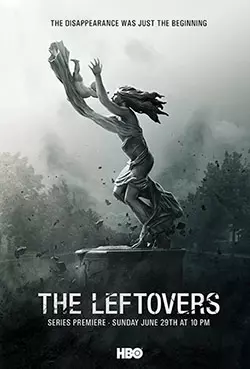 The cunning show of Damon Lindelof, one of the showranders “survived”, was made in the manner “nothing incomprehensible” and very reluctantly parted with its secrets. As some poets or artists, the series was recognized only after the end (in the third season), but even at the equator he remained irritably impenetrable. On October 14, 2011, 2 % of the population disappeared on Earth - people simply evaporated, mysteriously leaving their homes, shops and even traveling cars. The world was covered by a cap of sorrows, which was manifested in his own way: someone is trying to live further, someone hit religion, others find new saints and Messiah, the organization of the “guilty” does not allow others to forget what happened and silently reminds every day about the tragedy. The central hero of the show is the sheriff Garvie (Justin Theru), whose family fell apart due to different philosophies of sorrow; He is trying to ignore the inner experience and maintain order in the city. In the second season, the head of the local branch of the "guit of" Patty (Anne Daud) quotes him "He calms his beloved" (1899) Yates.
 Patty Levin (Anne Daud)
The poetry of the Irish Nobeliat, carried away by spiritualism and occult practices, not only spectacularly sounds in the final of the first season, but also sets the coordinates of attitude. The secular and even scientific views on the world lost their influence because of an inexplicable event-and humanity turned to esoteric, religious searches. The disappearance of loved ones convinced some people in the existence of providence, and also gave a feeling of an impending end of the world. Ghostly horses from the poem “He calms your beloved” rhymes with the riders of the apocalypse, whose number is equal to four, according to Yates, the protective mechanisms of a person: “On the futility of sleep, desire and all hopes and dreams!” (per. G. Kruzhkova).
Garvi, who has long been mystical signs, at the end of the season finds a semblance of balance - in the novel with Nora Derst (Carrie Kun), in which her husband and two children disappeared. Their joint traumatic experience and the heating environment leave only one way out - to enjoy the genuine fragile silence in each other's arms:
“Darling, close your eyes, let your heart knock
Above mine, and my hair is in a wave to my chest,
In order to drown at least for an hour, inhale their silence -
Far from those shaggy hryvnias and roar of hooves. ”
For the mystifier and inventor of Lindelof, these intonation and mood are characteristic, it seems, in all projects (compare at least with the recent “guardians”), but it is precisely in “abandoned” and precisely the words of Jates, perhaps he demonstrated his attitude in full growth.
Dylan Thomas in Interstellar (2014)
 It was exactly by the centenary of the Welsh poet Dylan Thomas, in 2014, a biographical film about him “Lighting the Stars” was released-about how the literary critic Brinnin (Elijah Wood) arranged a trip of the ever-drunk Thomas (Selin Jones) in the USA in the 1950s. Then the poem “Do not go rash into darkness” (1947) sounded under the pompous roar of Hans Zimmer in the “Interstellar” Christopher Nolan. Apparently, historically it happened that Thomas’s poetry attracted films about space: in 2002, Stephen Sodelberg quit in “Solaris” “and death remains unwilling” (1933). Nolan, perhaps, attracted the line with a “meteorite possession of the lights” (joke).
If the Eliot became an epigraph for the plots of atomicity and total emptiness, and Yates became a conductor of laconic esoteric sensation, then Thomas inspired the old-like sentimental hope in the middle of the reflections of cosmic horror (“Night of all nights”, per. V. Belowie). In this capacity, he became the anthem of the megalomanian project by Christopher Nolan - an Englishman who already received American citizenship - about how the climatic collapse covered the Earth, but humanity found in space (and in fact in its hearts) the answer to the question of how to survive, not to let go of his light.
Almost all topics of Dylan Thomas encoded almost all the topics of Dylan Thomas: the struggle of civilization with the inevitable darkness of oblivion, and the inexorable fluidity of the time (“death goes to it”), and the attempt of humanity to “grab the sun” (in this case, the sun -like black hole, as well as use the hidden potential of gravity). Sortering to the situation of despair, from existential to a little more domestic, Thomas describes the script for the change of optics: against the absorbing, suction power of darkness - radiation rage of light. In "Interstellar" the salvation of mankind is also the insight of forms and phenomena, which do not exist in the usual linear order. Overcoming the usual forms and views on the world literally changes the space, which has turned for people to the future into Krendel from the "beginning" (2010). The darkness of the black hole did not suck the protagonist (Matthew McConahi), and the light (including its own) helped to overcome the main challenge of mankind with incredible heroism. And even see a daughter, who has lost the "live greens of her youth."
Boris Pasternak in "It is hard to be a god" (2013)
 The idea of the farewell Opus Magnum of the domestic titan of Alexei German arose four years after the publication of the story of the Strugatsky brothers, back in 1968 (but then the Prague Spring happened). The director returned to him in the 1980s (but he was ahead of the Federal Republic of Germany), and the third approach happened in the late 1990s-after the cool criticism of "Khrustalev, car!" At the Cannes Film Festival. Then a decade of filming and for several years of the post -production - work on the voice of the film after the death of the director was finished by his son.
The removal of the plan from the 1960s is important: the third script German and Svetlana Karmalit already wrote “based on” the novel by the Strugatsky brothers, which was generally lucky with adaptations over the original text (“Stalker”). Germanovsky polyphony and thick everyday life not only grinded the “adventure” plot, but also pulled out the remains of sixties idealism, which in the plots of the Strugatsky got along with an outrageous idea of the world and the tootiness of the characters. Therefore, the choice of the cited poem is so sniper is accurate. The earthly Rumata Earthly Rumat (Leonid Yarmolnik), who found herself in an ever -medieval state, believes less and less in victory over the “gray” and grayness - and more and more in divine fire and zeroing.
For Herman, whose career was in an endless struggle, Russia and its industry turned exactly the same Arcanar, where the intellectual utopia of the 1960s sounds perverted echo. Румата довольно внезапно посреди брейгельской зимы цитирует «Гамлета» (1946) Бориса Пастернака — еще одного Нобелевского лауреата, который в конце 1950-х — начале 1960-х стал синонимом неприкаянной и гонимой культурности.
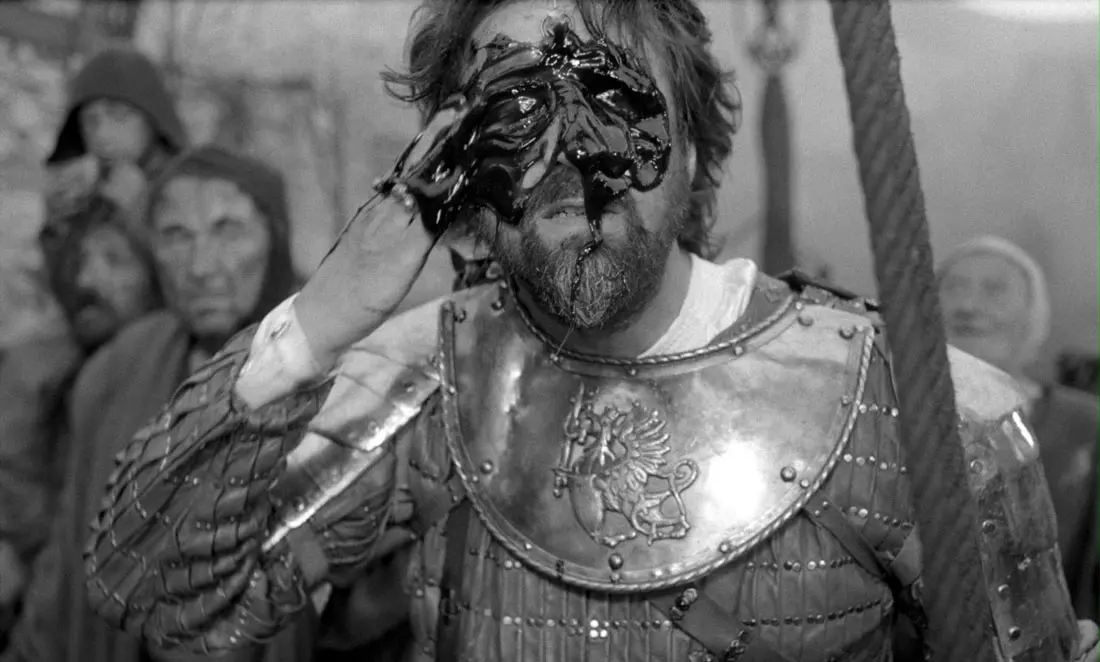
Тут важно вспомнить, что две предыдущие картины Германа — «Мой друг Иван Лапшин» (1984) и «Хрусталев, машину!» (1998), — где сформировался его уникальный густой киноязык, несут автобиографический отпечаток. «Лапшин» и вовсе экранизация (опять же очень вольная) одноименного романа отца-писателя, верившего в социалистическое будущее и «город-сад». Герман рассматривает идею советской утопии с отрезвляющей дистанции, но с исключительной теплотой ко всем персонажам. Годы спустя он абсолютно пессимистичен, и напевный монолог о затихшем гуле и неотвратимом конце пути равно применимы к ситуациям как Руматы, так и Германа. «Трудно быть Богом» показывает, «что случилось на моем веку» и как «все тонет в фарисействе» не только в густо детализированном макабре Арканара, но и в отечественной культуре. В ней не просто пионерская адвенчура обращается контактом с ужасами человеческой природы, но и сама позитивно заряженная цивилизация расслаивается, распадается, оказывается беззащитной и бесполезной. Это противостояние одиночки со всем миром, исполненное авторской усталости от вечной войны, очень емко, пускай и будто бы прямолинейно, звучит в финале:
«Жизнь прожить — не поле перейти».