
Translated material
Fear against cancer
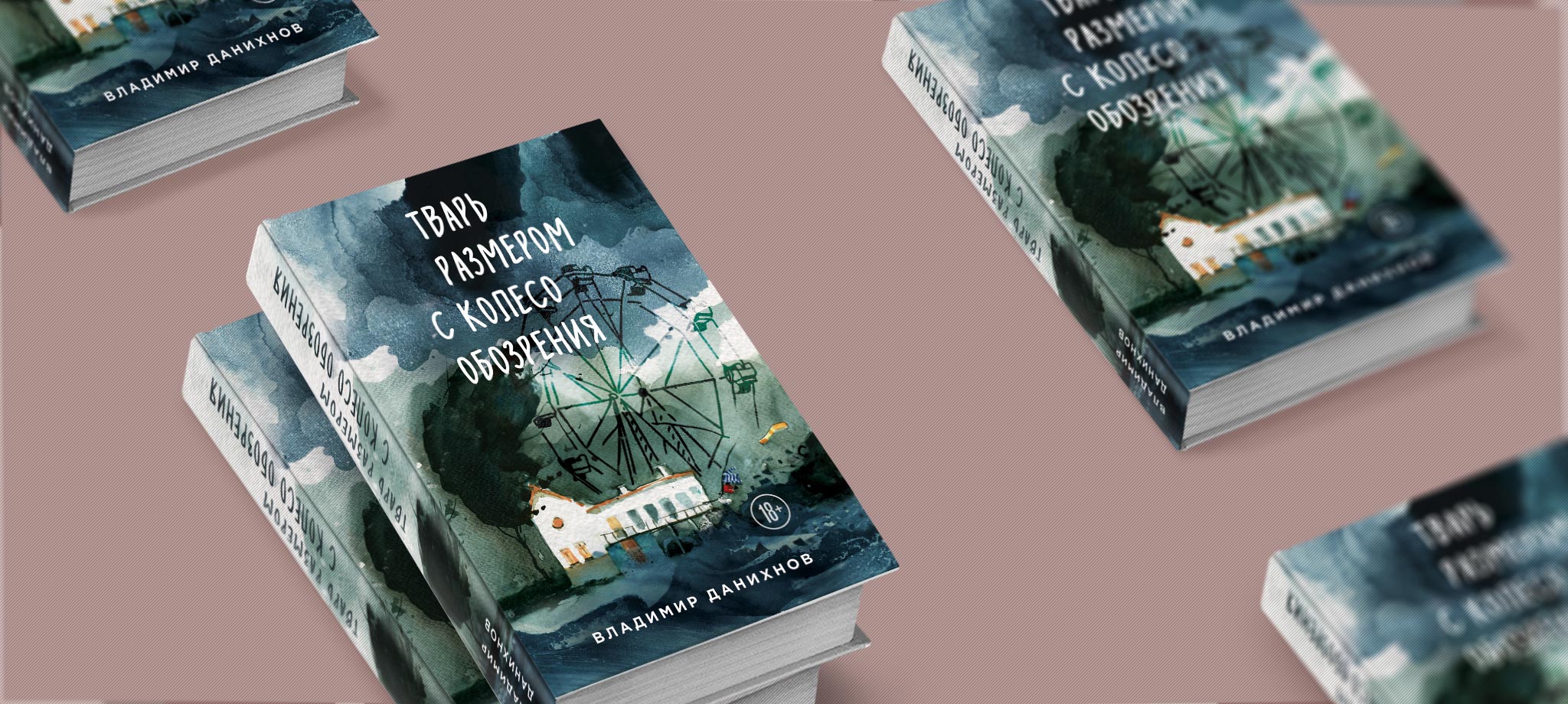
In the novel by Vladimir Danyanov, “Creator the size of a Ferris wheel” behind a documentary story about the fate of a cancer patient in Russia lies a different, much more interesting plot
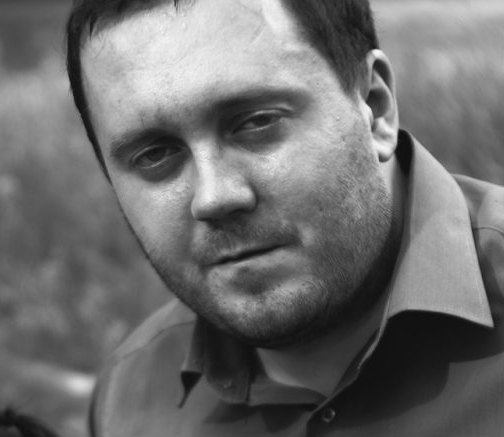 Vladimir Danynov Photo: Eksmo Publishing House
Vladimir Dannanov is a science fiction writer. In 2008, he became the laureate of the Prize of the European Society of Science Fiction, and already in 2014 with the novel “Lullaby” he fell into the short list of “Russian Boker”. And he could have become his laureate-according to the stories from behind the curtains: of the five members of the jury, three voted for Danianov’s novel, but the last two were categorically against his award, and as a result, another writer won. Shortly after the “Buker”, Dannov’s rare type of cancer was diagnosed, and then the whole literary community raised him funds for treatment, quite comparable to one and a half million of the neutralized bonus.
All this - both the Booker and the Cancer - is described in the new book of Danyanov, the novel "Creature the size of the Ferris wheel." The novel was released in early 2018, and by all initial signs it is an autobiography.
“June 22 is a special day” - Dannanov begins his story. Because, he continues, it was on this day in 2015 that he was cut out a malignant tumor. Together with the eye. “The doctor later showed a photograph: a lump of disgusting rubbish and nearby - for comparison - my left eye. The eye was smaller. "
It seems that we can already imagine what will happen next: a detailed documentary story about the author’s illness. And the novel on the first hundred pages is fully consistent with readers: there are doctors, cabinets, hospitals. The author treats Cancer almost without fear, even with some curiosity: “In a sense, I am now a researcher of those forbidden edges that not all fall into my age; And even more so, not everyone can think soberly in this situation. ” He describes his disease with the impassivity of the researcher. The reader, of course, will flinch somewhere, but in general, even in the most alarming and unpleasant places, we know that the end of this story is still happy, the author managed to return from this journey to describe it.
Which, in general, is important - in principle, we have a bad thing with documentary books about the present, and “bad”, especially illness or personal tragedy, and completely fall under a public ban. You can talk about your own troubles in Russia only like this: not allowing feelings to penetrate into the cold halls of the mind, turning yourself into an object of observation. And the text of Danynov never sounds a complaint or a story about suffering. His stoic calm in the face of the disease and even the opportunity to preserve the irony, discussing with his wife that if he suddenly dies during the operation, then “you and I will never have it again,” is one of the reasons why the book can be read and as a persistence textbook. He is not going to die here - as he does not plan to turn his illness into the plot or even victory over cancer. Behind the documentary story about the fate of a cancer patient in Russia lies another, much more interesting plot.
In one of the episodes of the book, the author’s wife, Yana, offers to write him a novel about cancer-something bright, spiritual, which would give people hope. The author resists: where he is and where is hope. Moreover, the disease itself, he says, is not particularly interested in.
The disease is boring, it is household hell, ordinary, "I'm interested in deep hell"With a dozen pages later, the author gives his wife to read the first pages of the future book, asking: "Will they read something?" “I don't know,” she replies. “People are scared about cancer.” She is right, of course. Cancer for most of us exists outside of life experience, this is an area of unknown horror, it is where we would prefer not even to look. Dannov’s book is quite understandable and humanly describes this dark and unknown: the reader is carried out here according to operations and irradiation, so that they all begin to seem slightly less unknown and terrible. Danjanov generally has a stunning flair on commonplace, in his laconic presentation, any image appears to be clear, acquaintances.
You get used to cancer here, you enter it into the coordinates of the everyday world, and it is really almost not terrible, well, it is unpleasant perhaps, yes. The author fantasizes in one paragraph as illness and death can unite people and "social equality can only be achieved in general dying." Until we got a ticket with the final date, none of us is ready to merge with others in the process of collective dying. However, Danovinov describes many cases of good from strangers: how even literary enemies send him money for treatment, as with him affection and amiable doctors and nurses, and other, almost strangers. So, something is still united by something people. And this "something" is much stronger than a banal fear of illness. There is another horror, infernal, and now it is really "common to all." It was then that the "creature" appears.
The creature the size of the Ferris wheel is not a poetic image of cancer, as one might think, but a black figure that pursues the author from childhood, from the moment adult boys scared three -year -old Volodya living in the basement with a phantom. Not yet knowing any Jean Mare, the child imagines some otherworldly horror, a long, thin black shadow and lives, peering it in the darkness of the night. The shadow returns from long -standing children's nightmares, when the author, as an adult, decides to go to the study of Rostov's abandoned spaces. This begins as a study for the future book: “I like abandoned kindergartens, in which the eternal quiet hour, dead churches and villages, overgrown with a rebellion and oatmeal came that germinate through the rusty flesh of cars. I like the dying of the nineties and zero, ”but develops into something more than just walking along the catacombs. Together with friends, the author turns a journey through "abandonment" into a real hobby. They walk around the emergency house, so hastily abandoned by the inhabitants that there were traces of their recent stay, along flooded bomb shelters abandoned dolphinaries. And in all these places they find various artifacts: broken watches that heroes here for a long time and even somewhat comically photograph as a symbol of frozen time, a mysterious look of a casket or children's drawings. For example, this: a boy on the shore, a woman extends to him disproportionately to long arms, and in her mouth in her mouth with diligent children's handwriting, in print letters are bred: “Do not be afraid”.
In the same place, in abandonment, the hero again meets the creature, which now literally breathes in his back. Moreover, now it seems that others can see it - the further in the text than the creature becomes tangible, and now it already speaks, gives gifts, pulls its excessively long hands in the very heart of life.
What is this creature? At first, the author seems to be just a fictional fear, "which is necessary to fill the void of the fees of the present." And, of course, this is bread for a fantasy writer who understands more about irrational fears than any psychoanalyst. In the end, we are talking about the guys who are here in order to have fun, they play lavcraft in the tables, and the weekend is carried out as rinses of abandonment. The creature leaves when the disease becomes more serious and dangerous-it means that you can imagine it something like a substitute for fear that appears from natural need to tickle his nerves.
But the more we find out where the creatures grow from the creatures and where her hands stretch, the more important it becomes in the text. As a result, when the author goes into a stable remission to the final (only a couple of months after the release of the book it turns out that the tumor actually continued to grow), his book will already be about the struggle not with cancer, but with this irrational, grandi hell inside himself. What scares us more of our own death: the ghosts of the past, the disorder of the present and the cosmic future, knocking on the door with a knock or immensely terrible or immensely beautiful. A person is able to experience real fear only by meting with the infinite nothing within himself.
“People are scared about cancer,” said Jan Dannova’s wife. He wrote a novel about the fact that, unlike cancer, lives in each of us - about fear. This exit from everyday horror to existential can also be considered a victory over cancer. We seem to tell him: I'm not afraid of you, because from now on I am afraid of something much larger and more terrible. But Dannanov did something more important than the book about the victory over cancer-he felt for the origins of our fears in our own collective memory, in our own public spaces. We cannot defeat irrational horror - it will always return with a new, even more force. But we can look into his heart. And, knowing him, to know himself.
Books oncology