Translated material
The power of the numbers
To the question of modern forms of acting art
And problems of identity in the era of high technology
The history of culture is the story of incessant crushing. In the hands of a primitive man, a stone was even a weapon, at least a dining room. But we have separately rifles and a separate fork. Of course, you can kill with a fork if you wish, but its main function is still different. It is impossible to say about the stone which of its numerous functions is the main one.
The history of culture is the history of an ongoing compound. The computer on which this text is printed can lose films and music and make a bunch of different things. It is impossible to say which of its functions is the main one about him, like a stone.
The processes of parallel breakdown and synthesis proceed in all areas of culture - not only material. Throwing copies into the image of the animal on the wall of the cave was both with an honing of the throw and a manifestation of faith. Although in our time it is difficult to imagine more distant areas than physical education and religion. And on the other hand, the Orgy of the Radical Art Group “War” under the slogan “Fuck for the heir to the bear!”, Wound on the eve of the presidential election in the Timiryazevo Museum in the hall with a stuffed bear, is this a statement on the anger of the day or an artistic action?
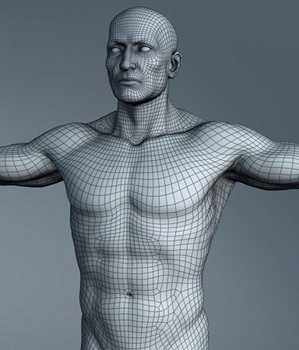
Only very few things in the world avoided the influence of these two processes. But they are becoming smaller and less. For millennia, the acting apparatus of external expressive means was one. He was divided into components only speculatively. The first “fell” - after the invention of the means of the analogue recording of the sound. Then came the turn of plastics and facial expressions-with the advent of Motion-Capture technology (transferring a change in spatial characteristics from sensors on the body and face to the corresponding markers of the three-dimensional model). The possibility of alienating the appearance of the actor from him became available only recently-thanks to the constantly growing computing power of computers and 3D scanners. Although, if you create a virtual cast from a person, it is almost no difficult to make this copy is completely identical to the original, is still a problem. It is enclosed in textures - the textures of human skin cannot yet be 100% reproduced. The body in 3D is only a combination of mathematically described curves, albeit very numerous and complex. But with what it is covered, everything is not so simple, but this is a matter of time. In general, the assertion that the entire arsenal of the external expressive funds of the actor can be transferred to Noli and one, which it is convenient to edit and combine with other nols and one will not be a stretch.
There are no cases when there are only fixing external expressive means, but there is no alienation from their carrier and connecting with other, possibly with qualitatively different elements - that is, for example, a radio theater and ordinary cinema remain with brackets. However, about the movie, some clarifications should be made: everyone saw many Hollywood films, but did everyone hear real voices, say, Bruce Willis or Nicole Kidman? Of course, when dubbing, the voices are most appropriate for the original, but still these are Russian voices alien to American actors, perceived, nevertheless, when viewed as belonging to the heroes played by them. You can avoid such production costs only by buying a DVD with the original sound path. Some art house tapes are released with subtitles, which in France, however, is practiced in relation to almost all films-even blockbusters. Replacing one of the components of the acting on the local analogue in accordance with distribution needs - there is no such problem there. Another point is connected with the voice acting-sometimes the directors themselves invite other people to the tone studio than those that were on the site. The reasons can be as aesthetic order - a different voice is required for the created image; and non -aesthetic - conflict with the performer.
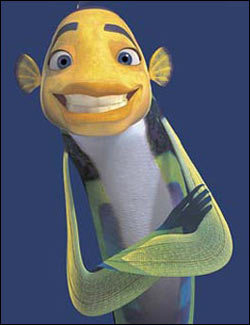
Most of all with voice acting as an act of alienation and synthesizing, the animation and industry of computer and video games are associated. In the first version, artistic successes happen more often and they are larger than in the second - it is understandable, because animation is not to the extent that electronic entertainment is focused on the interpretation, and even more years. Some examples of connecting the actor’s voice and a drawn character can be called outstanding at all - one cat Matroskin is worth it! In modern animated ribbons, Woj-Casting stands in one of the first places. There is an economic explanation for this - the viewer will be more willing to go to the voices of famous actors; And art-the desire to make cartoon heroes more alive. Often, the characters are made in the calculation of those people who will then be voiced: in the “Shrek” Eddie Murphy, a comedian with a suspended tongue, perfectly fits the image of an annoying, talkative donkey, and Macho Antonio Banderas, under the image of a cat-in-sapogs, a kind of zorro in a miniature with a wild Spanish accent (which is, of course, a huge share irony, since the last film version of the adventures of the Mexican Robin Hood is precisely with Banderas in the title role). Sometimes the characters are given a partial portrait similarity with the actors who are voicing (Oscar and Don Lino from the “Underwater Brother”, a gabal carcoon and venerable sharks with a mole on the cheek-Will Smith and Robert de Niro), or even based on animation on their facial expressions, copied by Motion-Capture (the same A donkey-Merphy and a cat-Banderaras).
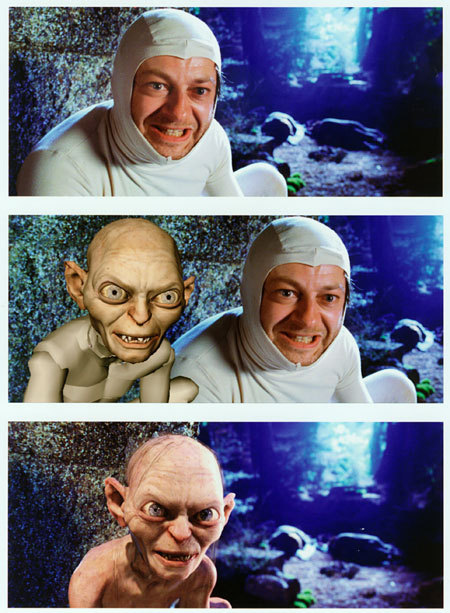
Motion-Capture is used everywhere-cinema, animation, games. Most often, its use is only applied in nature - to make sure that three -dimensional models created on the computer move naturally. I recall an episode from a documentary about how the series of Air Force “Walks with dinosaurs” was shot: a man hung with sensors, leaning on two mops under his armpits, will somehow spite the knees forward-so they an abstracted the movement of Pterodaktil, creatures born, and not crawl. But there is its own artistic peak here-the Gollum-Magagol from the movie trilogy of Peter Jackson “The Lord of the Rings”. The English actor Andy Serkis gave this character plastic, facial expressions and voice. The tandem of the actor and computer scientists showed the world a vile, reptileing something suffering from a split personality - vile Gollum wants to kill Frodo in order to get “his lovely” back, and the cowardly Saeagol swells to the current owner of the Ring of Eminence. As a reaction on the professional community, a wave of hot controversy swept about where the border between graphics and acting, was actively discussed, the possibility of a Serkis to navigate the Oscar for the role of the second plan-however, the Academy ruled that the work he did is still not suitable for the necessary criteria. But, as they say, the precedent was created. Andy himself in this matter applies to David Lynch’s film “Man-Slon” about Joseph Merric, whose whole body is so terribly disfigured by the disease that he can hardly take him as a person. Grim occupied 12 hours every day. John Hart was nominated for an Oscar for the main role. Serkis offers to treat the works of computer scientists as a cyber make, also a kind of makeup.
I wonder if they will ever give an Oscar to actors who pass not only their plastic, facial expressions, voice, but also appearance to computer images? In 2004, Robert Zemeckis “Polar Express”, a Christmas fairy tale about how several children go to meet Santa Claus, was released. In it, Tom Hanks played five small roles. The digitization of the appearance of the actors is usually used to solve the most spectacular scenes in blockbusters, but so that the whole tape was built on this - this was not there before. A similar approach provides the director and the entire creative group with unprecedented freedom - absolutely any element lends itself to complete editing (makeup, lighting, angle, situation, etc., so on), the need for crossing here is initially excluded. The additional convenience lies in the fact that when creating a film, in principle, you can not leave the walls of a relatively small pavilion. In 2007, Zemeckis released Beowulf, made according to the same principles, but technically much more perfect than his predecessor. In the film adaptation of the Anglo -Saxon legendary poem about the exploits of the hero of the same name, among other role, Angelina Jolie, Anthony Hopkins and John Malkovich performed. The next 3D-release of the director will be the “Holy Story” planned for 2009 by Dickens, in which Jim Kerry will play the Black Right of Scrooja at different ages and ghosts visiting him. Over time, similar paintings will come out more - for example, James Cameron’s projects “Avatar” and “Battle Angel” are preparing in 3D.
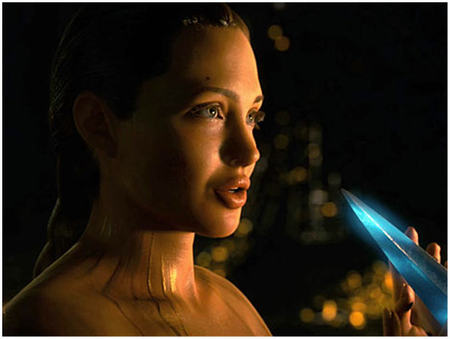
Both the “Polar Express” and “Beowulf” could be seen both in the usual and in the stereo-cinema. The second option is preferable, because it is more spectacular - special glasses make it possible to achieve the effect of pseudo -pushing into what is happening. It seems, with further development - and most importantly - the spread of virtual reality technologies, on their basis, digital cinema will “frave” with computer games. For it is really strongly in it an entertaining beginning. And the installation on the fact that going to 3D films is better in IMAX than in the nearest multiplex also indicates this. Although there is a possibility that the attraction of the use of virtual reality will be overcome-it exists in the electronic entertainment industry-let it and very thin-a layer of art house (recall the crazy Japanese Locoroco toy for PSP).
The popularization of virtual reality, however, keeps many dangers for actors, and for all public people in principle. Since three -dimensional models and animation of plastic and facial expressions are a type of digital information that can be copied and edited, including illegally. How do you like, say, such a picture: a private striptease of Monica Bellucci? The animated three-dimensional model of some professional, combined with the face of an Italian actress, “pulled out” from a 3D film with her participation. Although the face may not even be stolen, but manually modeled. Of course, the relevant legislation will appear that regulates the issues of identical property, but the music from the cinema cannot be downloaded from the Internet according to copyrights, but still downloaded. The appearance of media certificates (all, without exception-now live, future and already dead) will finally cease to belong to them-now it is replicated and used for their own purposes without their consent.
It would be stupid to say that the new forms of existing acting will replace the old ones - for this it is necessary that 3D completely absorb the entire space of culture. And this, hardly, will someday happen-after all, contrary to the manifesto of the beginning of the 20th century, the cinema did not kill the theater. The two -dimensional plane of the screen and the voluminous stage site do not mutually exclusive each other - the first in no way evolutionarily no higher than the second, since they have different nature. So virtual reality - only a folding medium, a new channel for transmitting the text (in the broad sense of the word); And whether it is possible to create works of art within its framework, time will tell. Cinema, with its origin, was also perceived only as fun. Obviously one thing - a 3D person will never be completely equal to a person in reality. There are things that are unrealistic. Or is it unreal? Matrix has you.