
Translated material
The exploits of Alexander Nevsky
How the Russian state defeated Russian religiosity
The "line" continues to deal with the traditions of Russian holiness. Search in them reasons for non -violent principles of Russian life. This text is about Alexander Nevsky. Whose holiness symbolizes Russian imperial power and confrontation of Western aggression.The exploits of Alexander Nevsky
When we are talking about the traditions of Russian militarism, the figure of Alexander Nevsky inevitably arises in front of us: a warrior and commander, who defeated the Army of the Swedes on the Neva, and then defeated the Mighty Army of the Livonian knights on the lake of Lake. And precisely as a hero-hero and the defender of the Fatherland from Western Invasions, he became one of the most popular Russian saints, deeply rooted in Russian spiritual culture.
If we talk about history, then a lot of questions arise to the legendary image of Alexander Nevsky. Whether there was generally a Neva battle, who and why Alexander defeated there, is not very clear. In the Swedish sources, this battle is not mentioned, and literally a few years later the Swedes build a Swedish fortress on the site of this battle , the Swedish fortress located on the cape when Okhta fell into the Neva (now Krasnogvardeiskaya Square of St. Petersburg). , and not far from the fortress of Vyborg.
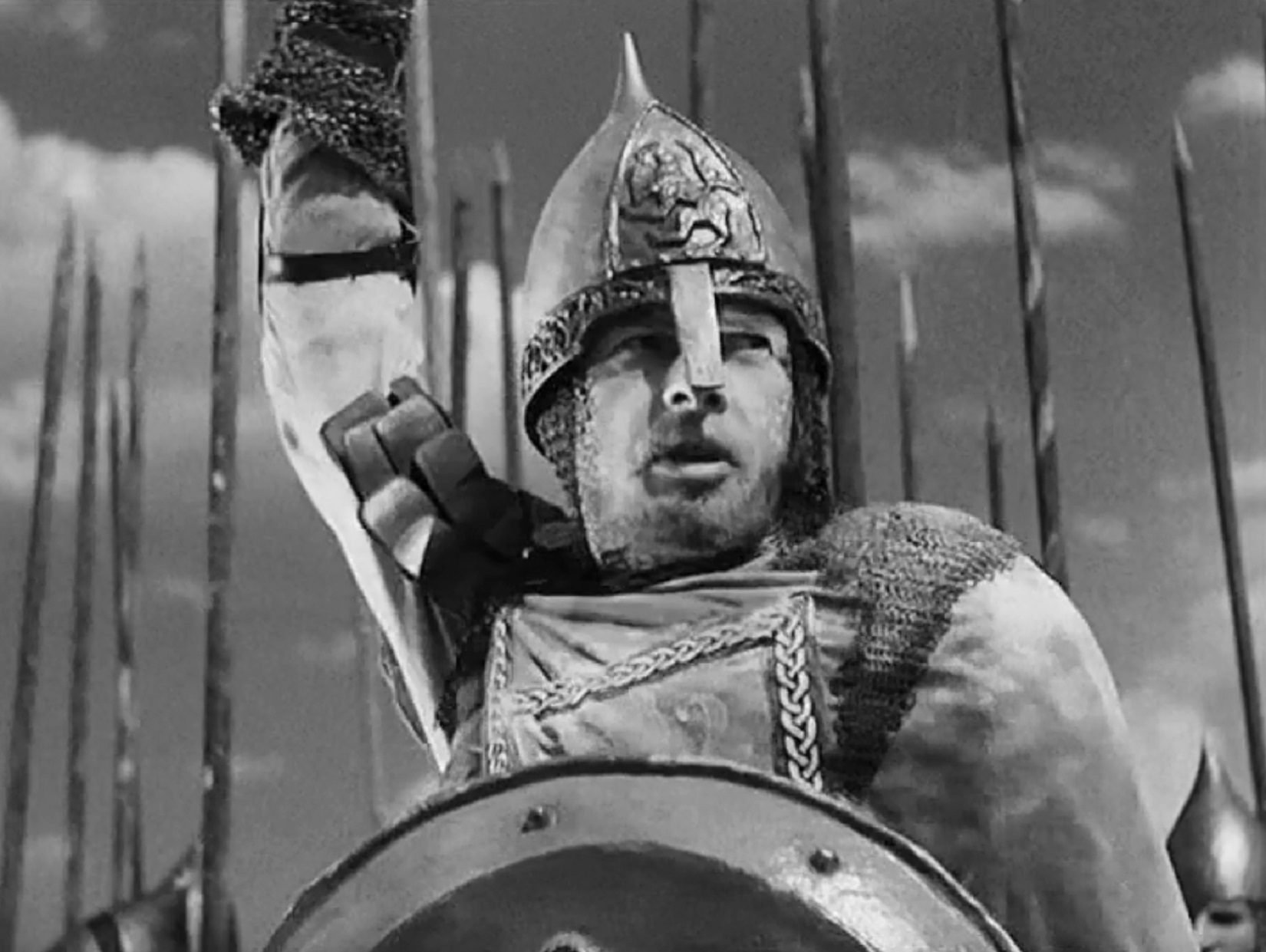
The battle on Lake Peipsi is also little like pictures from the film by Sergey Eisenstein. Alexander, at the head of the Novgorod army, is going on a trip to Pskov. Pskov at this time concludes an agreement with the Order of the Swordschers on Protection from Novgorod, and there is a small detachment of 30 knights. The knights attacked the army of Alexander Nevsky, and they were forced to retreat on the ice of Lake Peipsi. There was a battle in which luck accompanied Alexander. According to the "Livonian Rhyme Chronicle", twenty knights died in this battle and six were captured. And nowhere, by the way, it is not mentioned that one of the knights drowned.
And most importantly - the history of the exploits of Alexander Nevsky actually occurs against the backdrop of the ruin and conquest of the Russian principalities Batu. That is, the great defender of the Russian land fights in some insignificant battles, while Rus' is defeated and enslaved by the Mongols. Moreover, Alexander Nevsky himself plays an important role in this enslavement. He is one of the Batu residents in his struggle for power in the Horde and control over Russian lands. And it is precisely as the Batu protein that he receives a label of a khane label - this is a written document confirming the will of Kagan. In ancient Rus', he gave the prince the right to manage the lands and the share from the collected tribute. on the great reign in Vladimir.
The spiritual symbol of Russian militarism?
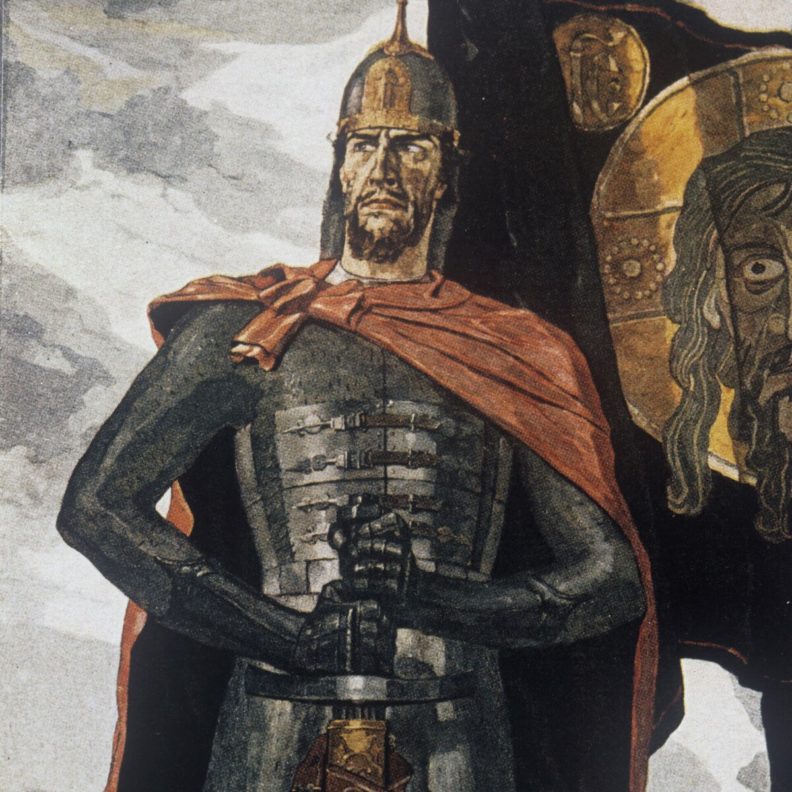
But this is a story. And what about his role as a spiritual symbol of militarism and the most important Russian saint? It seems to be impossible to challenge him. If you do not take Nikolai the Wonderworker, then by the number of dedicated temples, Alexander Nevsky is ahead of all other saints. And his images in armor, with a sword and a banner of a banner - a religious or heraldic banner used during hostilities seem to be an absolutely natural attribute of the Russian Orthodox tradition.
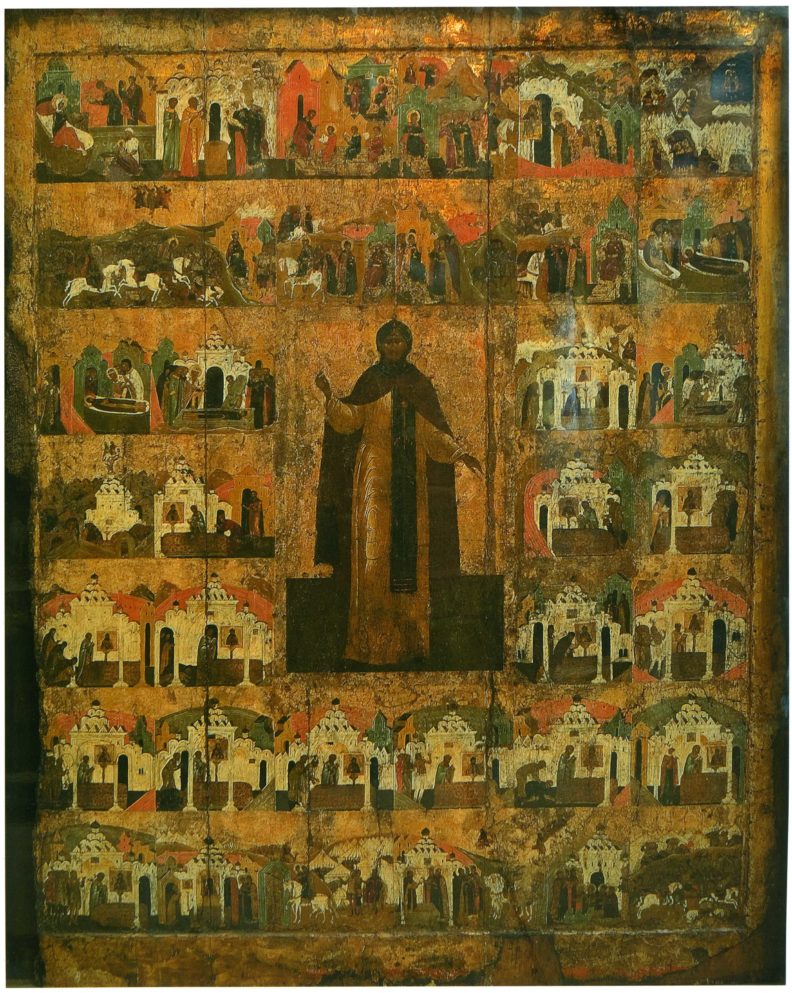
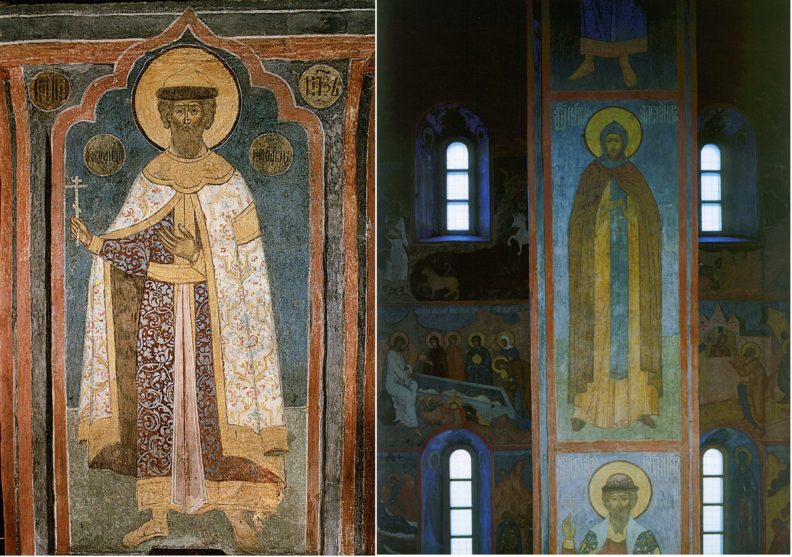
However, if you understand the history of the holiness of Alexander, it will be found that almost all the temples of Alexander Nevsky were built and consecrated in the second half of the 19th century or at the beginning of the twentieth century (as well as now, already in Putin's Russia). The same with icons. On a few old icons and frescoes, Alexander Nevsky was depicted either in the monk’s robe, or in princely vestments and there is nothing militant in him.
The history of his holiness is really ancient, but it is fundamentally not militaristic. She became one as a result of pressure from state propaganda. Moreover, this propaganda had to overcome the powerful resistance of the Christian idea of good, evil and holiness. Both church and folk-religious.
They began to read the saints of Alexander Nevsky almost immediately after his death in Vladimir, where he reigned in the last years of his life. But this veneration was local and local and based on its restorative and pacifying activity, the adoption of the monastic schema of the schema - a solemn oath (vow) of Orthodox monks to observe especially strict ascetic rules of behavior. .
The life of Aleksandra Nevsky has reached us in many lists and a minimum of 13 editions. The first edition was written by witnesses of the last years of his life (the prince died in 1263) and the board in Vladimir. Of course, it says about his military exploits in Novgorod, but the emphasis is on his Vladimir-Suzdal reign, as well as death and burial. Much has been said about his meekness and intercession before the Tatars, about his restorative and peaceful activity. And the main event was the scene with a “permits” - a sheet with a prayer that is put in the hand of the dead as a sign of the remission of sins. When, during the burial of Alexander, the Metropolitan approached the coffin to put a letter, the prince held out his hand to meet.
Alexander Nevsky and the statement of the Russian autocracy
For almost 300 years, the veneration of St. Alexander did not go beyond Vladimir. But in 1547, Metropolitan Macarius realized his grandiose project: he crowned the kingdom of the 17-year-old Grand Duke of Moscow Ivan Vasilievich.
In the same year, Macarius convened a cathedral for the canonization of new Russian saints and ordering the veneration of the old ones. And for the Metropolitan, the canonization of Alexander Nevsky as the founder of the Moscow branch of Rurikovich, who has now become royal, turned out to be very important. His holiness was supposed to give weight to the status of a new Russian sovereign and sanctify the very idea of the transition from princely to tsarist power.
After this cathedral, edited by Makarii, great-mini-mini are created-a set of lives of saints revered in the Russian Church. The life of Alexander Nevsky was also included here.
And then the political and religious narratives collided. It was important Macarius and his ideology of the Russian kingdom that Life emphasizes Alexander’s imperious dignity and his concern for the interests of the “granted state”. Monachi authors focused on God's love, “monastic life” and humility, which he filled at the end of his life: “The soon dreaming of myrian contempt: wealth, Blgorod and Slava.”
Macarius, dissatisfied with the resulting result, orders another life of Alexander Nevsky, but already in the steppe book - this is a set of Russian history since ancient times, written for Ivan the Terrible. This is precisely the image of Alexander Nevsky as an autocratic ruler and a noble warrior.
A characteristic reflection of this confrontation was the painting in the Archangel Cathedral of the Kremlin, where Alexander Nevsky is depicted twice: in the southwestern pillar-in princely robe. And in the northwest pillar-in the monastic.
However, no matter what Metropolitan Macarius would think, Tsar Ivan the Terrible himself saw in the autocratic idea the possibilities of undivided power and realized it through terror and oprichnina. And he found a religious justification of his actions in the Old Testament and prophecies about the Apocopalipsis. So Alexander Nevsky, although he became a general authorized saint, was not in demand in this capacity.
In the Russian religious tradition-both monastic and folk-the image of the Holy Prince-warrior, the champion of the Russian state and its defender from Western invasions, was not in demand. And all attempts somehow to use it stumbled upon the alienity of this idea to both Russian Orthodoxy and folk aspirations. Monasty - yes, miraculous - yes, and the rest of the rest was never found a full place in Russian life.
Holy Defenders of the Russian land
Well, who is the defender and the patron of the Russian land, if not to the Holy Woline? Who is not the glorified winner of her enemies? The thing is that in the Russian religious tradition, not a banal tradition of perception of protection and patronage has developed at all. Moreover, she was rooted not only at the level of the monastic elite, but also in the popular consciousness.
We have already written about the holy mentors of Boris and Gleb, whose feat of abandonment of violence made them the main holy patrons of Russia and Russian people.
And there was, of course, the Virgin.
The holiday of the Virgin of the Virgin is one of the most important and revered in Russian Orthodoxy. Nowhere else it has such a meaning and importance. The story of how the Virgin Mary during an enemy attack on Constantinople appeared in the Vlacheern Church and unfolded her cover (a scarf that is covered with his head) to protect the city and its inhabitants, became for Russian people the most important religious revelation. Revelation of protection and patronage.
Pokrov - a light fabric removed from the head of the Virgin and spread over the world and people - turned out to be that understandable and literally tangible metaphor, reflecting the most important thing for a Russian person in the Christian idea. Mercy and intercession.
From historical documents it is not clear who attacked Constantinople during this miracle. However, in Russian documents and Russian tradition, these enemies were just Russian troops. But the fact that the enemies were Russians did not prevent the Russians from perceiving this holiday and this patronage as the highest and most significant.
The empire makes a response blow
At the beginning of the 18th century, the big policy of the Russian state again intervened in the history of the holiness of Alexander Nevsky. Peter the Great began the radical reconstruction of Russian life, subordinating it to the dominant state and its institutions. And he needed his pantheon of saints corresponding to this idea. Alexander Nevsky from the steppe book approached this role perfectly. The autocratic ruler, warrior, winner. Moreover, the winning not someone, but the Swedes. And not somewhere, but here on the Neva, on the site of the new capital of Russia, just built by Peter.
Peter builds the Alexander Nevsky Lavra, where in 1724 he solemnly tolerates the relics of Alexander Nevsky, which were stored in the Christmas monastery in Vladimir. But even Peter’s iron will was not enough to spread the idea of state-myilitarian holiness.
The resistance of the Orthodox faith and popular religiosity was enough to delay the creation of a pseudo of the national cult for 150 years. But the pressure of the imperial idea grew, and in the middle of the 19th century there was a breakthrough.
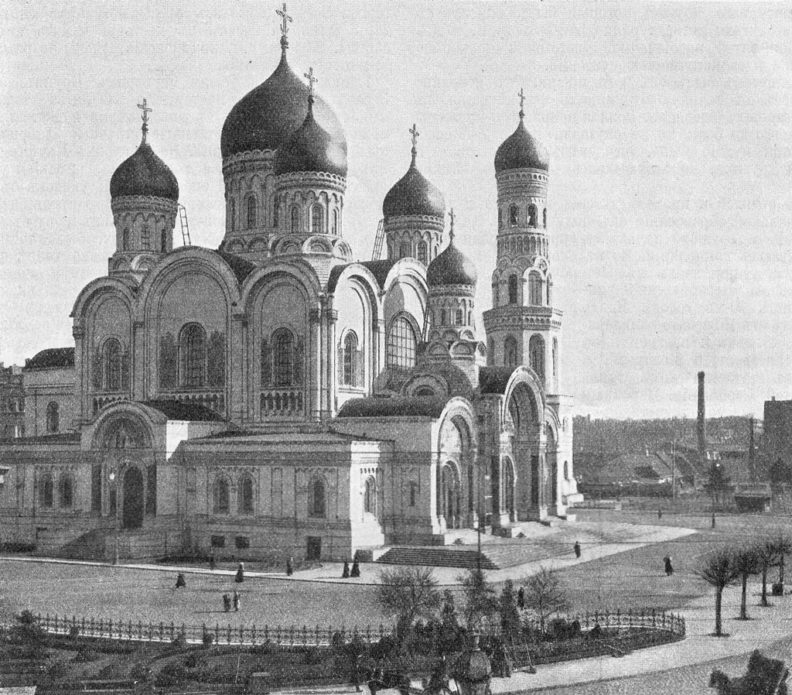
Alexander Nevsky perfectly led into the logic “Orthodoxy, autocracy, nationality” and became the official saint of the Russian state. Just from this moment, temples are being built everywhere in his honor. Most often, these are huge, pompous temples on the national outskirts of the empire - a symbol of its power. Then his iconographic image changes beyond recognition. He is no longer a monk. Now he is in armor, and in his hand he has a sword and a banner.
The cult of St. Alexander Nevsky reached the climax at the beginning of the twentieth century, but neither the Russian state nor the Russian world from collapse. When everything is good and a lot of money, such symbols of imperial power work perfectly, but they are completely useless when the world cracks at the seams.
Behind the cult of Alexander Nevsky, in the interpretation of state Orthodoxy, there was no and is not worth anything but the designation of imperial power. And therefore, it is not surprising that all these pompous temples in his honor lead the list of destroyed and destroyed after 1917.
Andrey Gromov