
Translated material
The temple is inherited
On Friday, at the 77th year of his life, Dmitry Butyrin died-the famous St. Petersburg architect-restorer, chairman of the Council for the architectural and historical heritage of the Union of Architects, chairman of the restorers section. He was ill for a long time, almost did not leave the house, and the doctors could not diagnose him ...
Memory of architect Dmitry Butyrin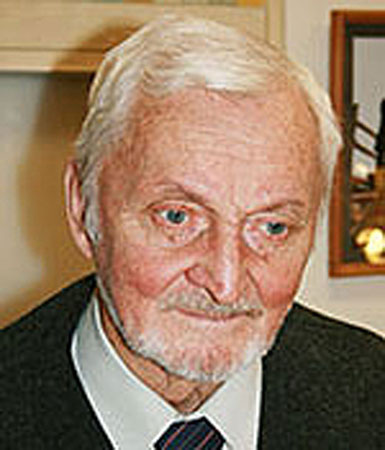
Traditional words about the departed man “irreparable loss” - in this case, are not just appropriate, absolutely necessary: Dmitry Alexandrovich was one of the most persistent, fearless and wise defenders of historical Petersburg, in the ranks of which a tragic void formed.
He was the author of the project for the reconstruction of the temple in Sennaya Square, believing that this ancient square must have a dominant. This work was mobile for about forty years (!), From the beginning of the 70s, his project was supported by the public (about 15 thousand signatures were collected that were transferred to the administration)-but, as Butyrin himself sadly stated, "there was no goodwill in the leadership of the city and there were no sponsors, because they are now thinking only about money."
He worked on the interiors of the Yusupov Palace and recreated the temple of the Intercession (house church on the third floor). He tried to achieve the reconstruction of the Church of the Holy Trinity on Troitskaya Square. He defended from the crazy “reconstruction” to the 5-star hotel the famous house with the Lions on Isaakievskaya Square, openly calling the destruction of its interiors “a crime against culture, not only Russian, but also European”, but what was happening “a real murder of an object”, and accused Kogip of “serving the interests of higher officials”.
He was against the demolition of the stadium named after S. M. Kirov, whose preservation was unsuccessfully defended with his colleagues. He called the Dominica Perrault project “Marinka-2” “Marinka-2” project. Finally, he opposed the “Okhta Center”, calling the idea of erecting a 400-meter tower “an absolutely illiterate solution not based on any urban planning concept” and “a tombstone of the city”. Since 2006, Butyrin has always been part of the initiative groups that sought a referendum on Okhta Center, and was very worried that this initiative could not be implemented ...
Dmitry Butyrin has repeatedly said that “a real war has been declared the historical center” and that “there is almost no area in the center, wherever they erected any monster, with a violation of existing regulations and norms.” He called the Smolny policy “an unbridled desire to increase the investment attractiveness of the city,” which led to “absolutely uncontrolled, like an electron flow that escaped to freedom, invasion of investors into the city.” And these investors, he said, "the least in the soul of the desire to maintain the most valuable development of the city, they see only the money that they will receive as a result of their activities." And in the fall of 2007, speaking on the first march for the preservation of St. Petersburg, Butyrin cited an impressive comparison: in the whole war on Nevsky Prospekt, only two houses were destroyed, and in recent years - six. And if you count, together with the buildings entering the avenue, then ten ...
“Dmitry Aleksandrovich belonged to the cohort of the old Leningrad Restoration School,” says Mikhail Milchik, deputy director of the Research Institute of Special Projectives, a member of the Council on Historical and Cultural Heritage. - He was probably the “last of the Mogikan” of this school, the achievements of which are especially great in the period when they restored the destroyed during the war. He was a very modest person, but at the same time he was distinguished by his amazing firmness and uncompromisingness when defending his position. He always sought to get as close as possible to the true appearance of the restored monument. At the same time, he always advocated for reconstruction on a purely documentary, scientific basis. Such was his position when he worked on the Great Menshikovsky Palace in Oranienbaum, when he achieved the recreation of the church on Troitskaya Square, when he - without any orders and money - worked on the reconstruction of the temple in the Admiralty Plant, built in memory of the dead sailors. He put a lot of effort into this project and achieved a result, although only the chapel was set in this place. His conviction often could not be realized and ran into misunderstanding. And his unwillingness to go to the steps that would take his projects passed, his life made very difficult ...
“Dmitry Alexandrovich was a wonderful architect-restorer in love with his own business,” says Alexander Margolis, co-chair of the St. Petersburg branch of the St. Petersburg branch. - Everything that happened to the city and its monuments, he perceived as an event of his personal life. He was the author of many projects to recreate historical monuments, and he treated this not as a craft, but as a work of his life, vocation and civic duty at the same time. And he was ready to defend his point of view to the end. And he was a wonderful comrade, for many years he worked with us in the Presidium of the St. Petersburg branch of the Vopiyk and was literally the soul of our corporation. This is a huge loss for the cultural life of not only St. Petersburg, but also Russia.
Farewell to Dmitry Butyrin is taking place today at 12.00 in the Smolensk church on Vasilyevsky Island.
Boris Vishnevsky