
Translated material
House of friends
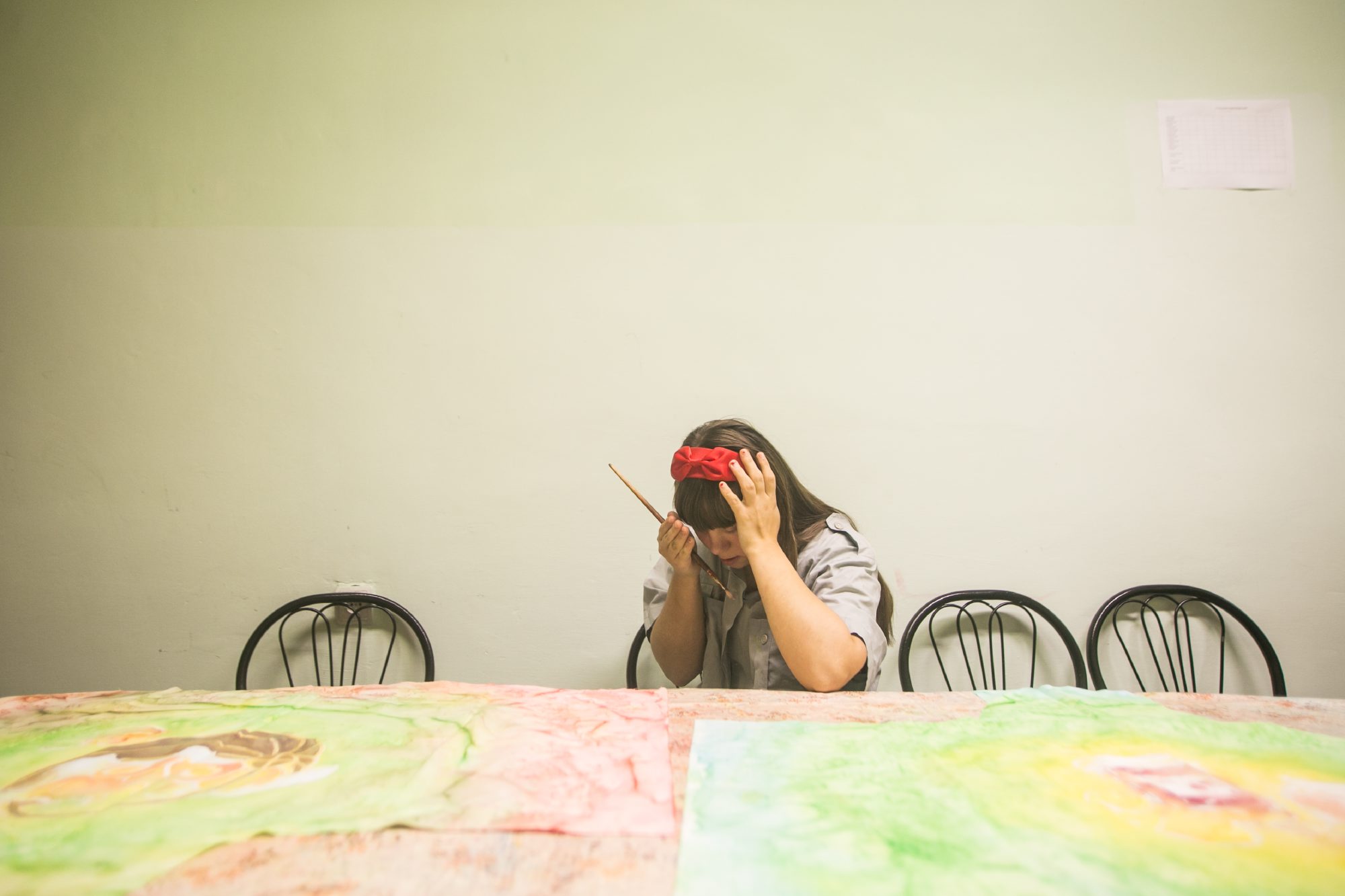
Natasha really wants to play with friends, but she has no friends, and there is nowhere to play with them
Help hope to helpFind Natasha’s five -story building is not easy. In the sleeping areas of Irkutsk, houses are often placed without any logic, like cubes abandoned by a child-the 282nd is almost a kilometer of the 284th, between the 258th and 260s. You have to climb the numerous stairs, go down along narrow slippery paths, bypass the broken playgrounds: the urban environment is clearly not the main concern of local authorities. The dark entrance, the third floor, a cramped clean two-room apartment: a carpet on the floor in the living room, a wall with a TV and a music center, a small kitchen with a view of the same five-story buildings, the end of September, but the snow is about to snow. “Come on, go soon,” Nathan Mom Olga fusses: you can’t stand barefoot in the rustle in the hallway, they are afraid of infections here, each cold is fraught with serious consequences.
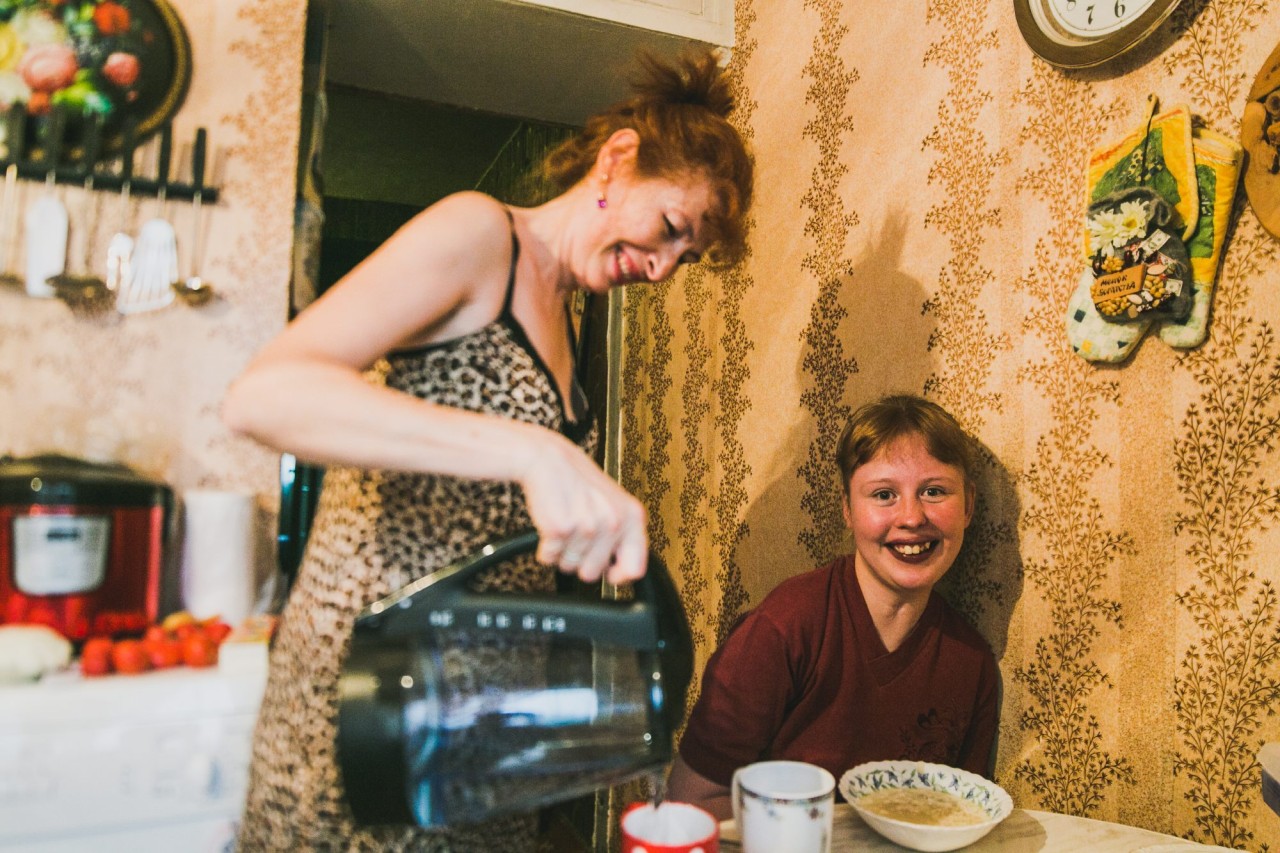
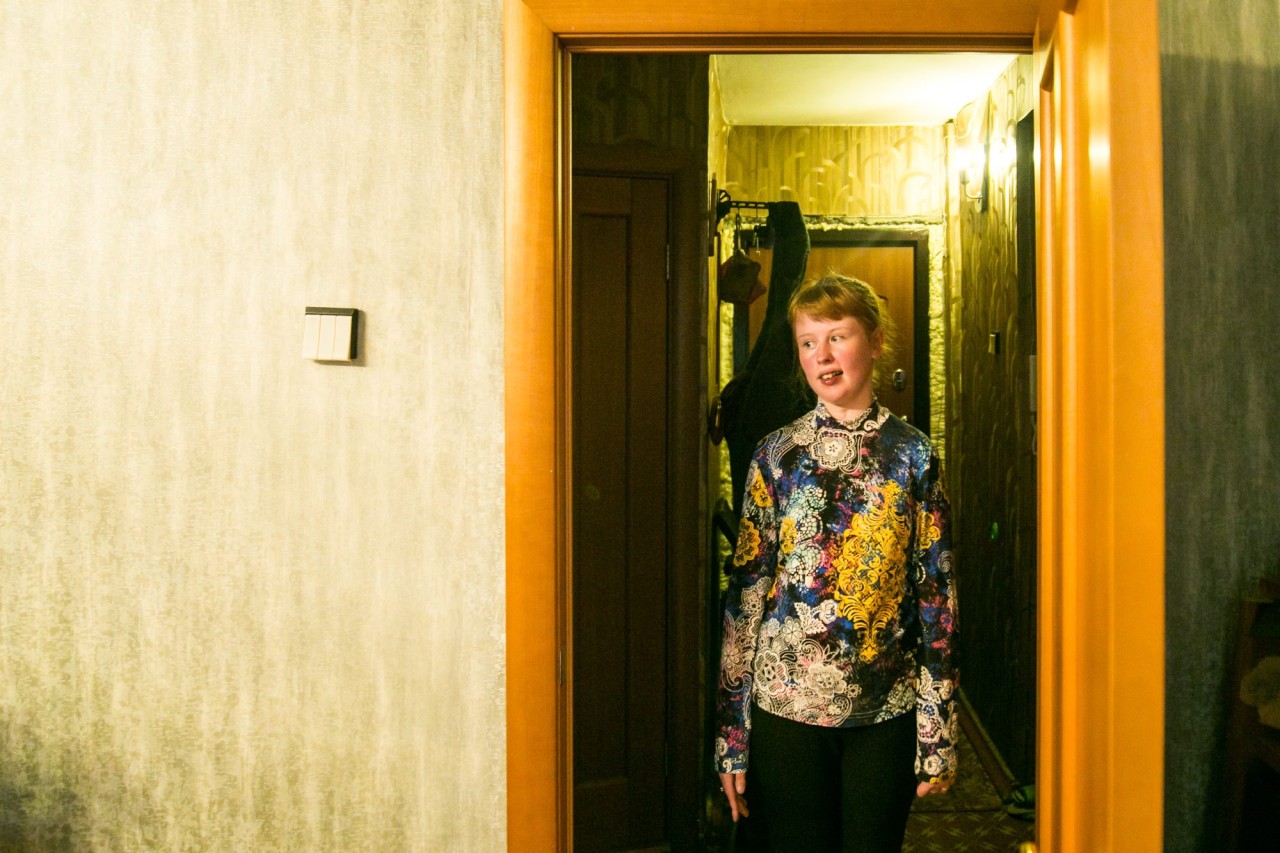
Natasha has breakfast. At first she scares, freezes with a spoon of oatmeal in her hand, looks crazy. “This is nothing, we are afraid of doctors,” Olga explains. - Tusya, eat. It's just to talk. ” Natasha carefully studies me, begins to slowly draw porridge. She looks 14 years old, although in fact there are 20. Long blond braids, full lips, chubby cheeks, large surprised eyes, Natasha is a classic type of Russian beauty from films about the war. Natasha has a severe form of mental retardation. All of her skewed a little, she moves with difficulty and almost does not speak, gives out laryngeal sounds, which the mother perfectly understands. There is no difference by a newcomer between “yes” and “tea”, for Olga the difference is obvious.
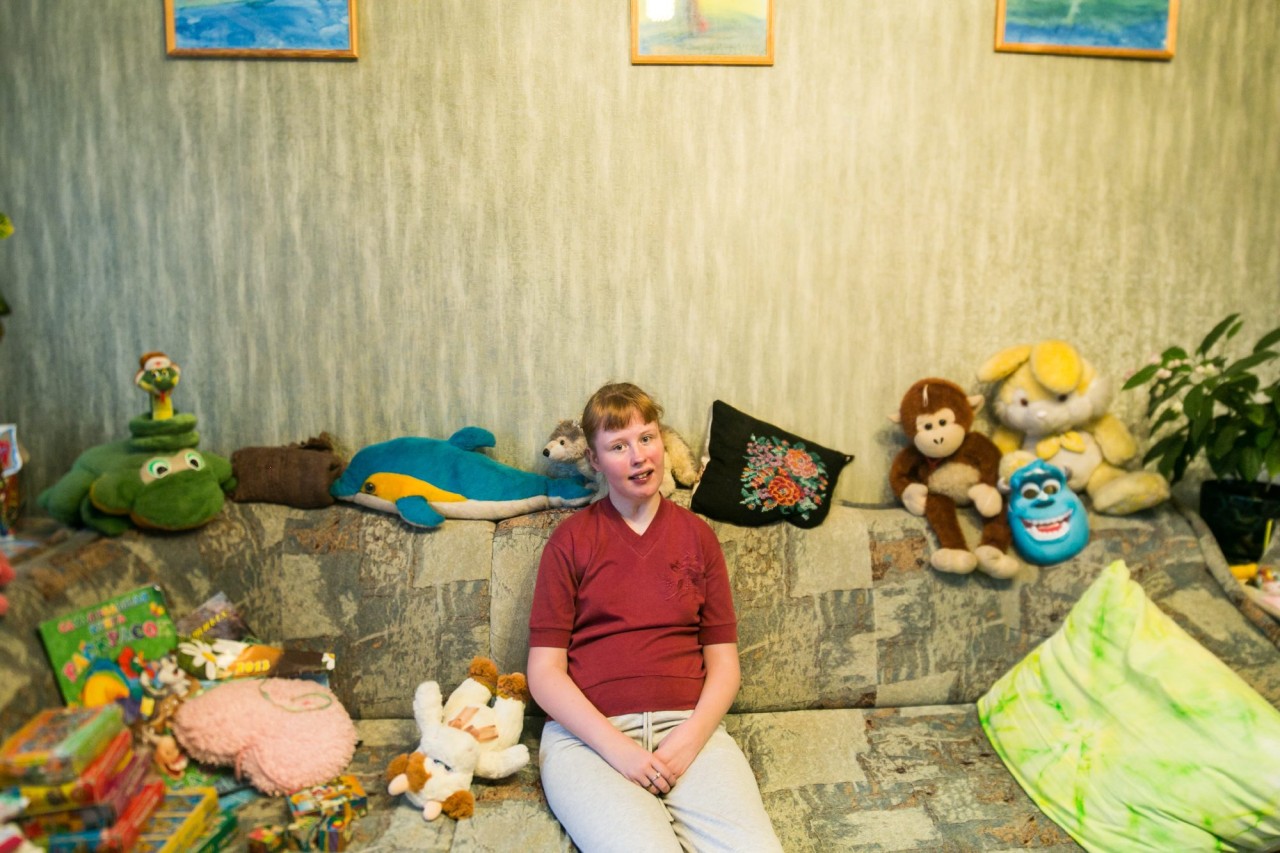 Natasha and her toys.
They called the doctor, he pushed the medicine, and with him a blood clot, which after some time reached Natasha's head Twisting this quote was born Natasha with a normal child, although not quite healthy. The heart disease demanded surgery, the girl was taken to Novosibirsk, operated on, a year later. The repeated operation was not very successful, I had to redo it - my mother and daughter spent eight months in the hospital. For a month, dad came to them, who then still lived in the family. After the second operation, in order to avoid the load on the heart, Natasha was laid on the artificial ventilation of the lungs, leaving the probe in the inguinal zone through which the medicines were administered - the girl began to end the endocarditis, the inflammatory process in the heart, had to constantly knock down the temperature, which was held for several months. One day, the nurse could not administer the drug - the probe clogged. They called the doctor, he pushed the medicine, and with him a blood clot, which after some time reached Natasha’s head. “I came to feed her, and she was all twisted on the left side,” recalls Nathan Mom. - It turned out - a stroke. Then it was necessary to simply change the probe, and not use gross power. And most importantly, I stood nearby, but then I did not understand anything in medicine, I was bad! ” I had to learn to hold the head again, crawl, everything after birth, only the girl began to walk only by four years. I began to walk, but very shaky: you will touch it - it will fall. And once it fell, the result is a second stroke, this time the right hemisphere. I survived this time, but to speak, run, play like the rest of the children, Natasha will never be able to. It was then that the father, whom Natasha still remembers, left-likes to turn over family albums, review the videos. “It is necessary to love someone, she no longer has anyone,” Olga sighs.
Life with a disabled child in Russia is a struggle for survival and the fight against the system. There are correctional kindergartens in Irkutsk, but they haven’t taken Natasha until seven years: vaccinations are contraindicated for her. Olga could not work, it was impossible to leave the child alone, they lived for modest alimony geophysics and a disability pension (today it is about 13 thousand rubles). You need to pay the rent and buy medicines: Natasha needs steroids, you can take free in the clinic, but they often do not happen, and Russian substitutes are prescribed, from which the girl has a stomach hurt. Import drugs are an order of magnitude more expensive. At the age of seven, we still agreed on kindergarten, but after a couple of years Natasha fell with a heavy cold, an endocarditis, a complication of her heart, and since 2007 the girl has been sitting at home. Olga, an engineer-designer, got a half-part at the design bureau-this is another 5600 rubles a month. He runs from work: and what would fall again, and after all, she fell more than once, moving around the apartment, broke her hand, leg, but did without more serious consequences.
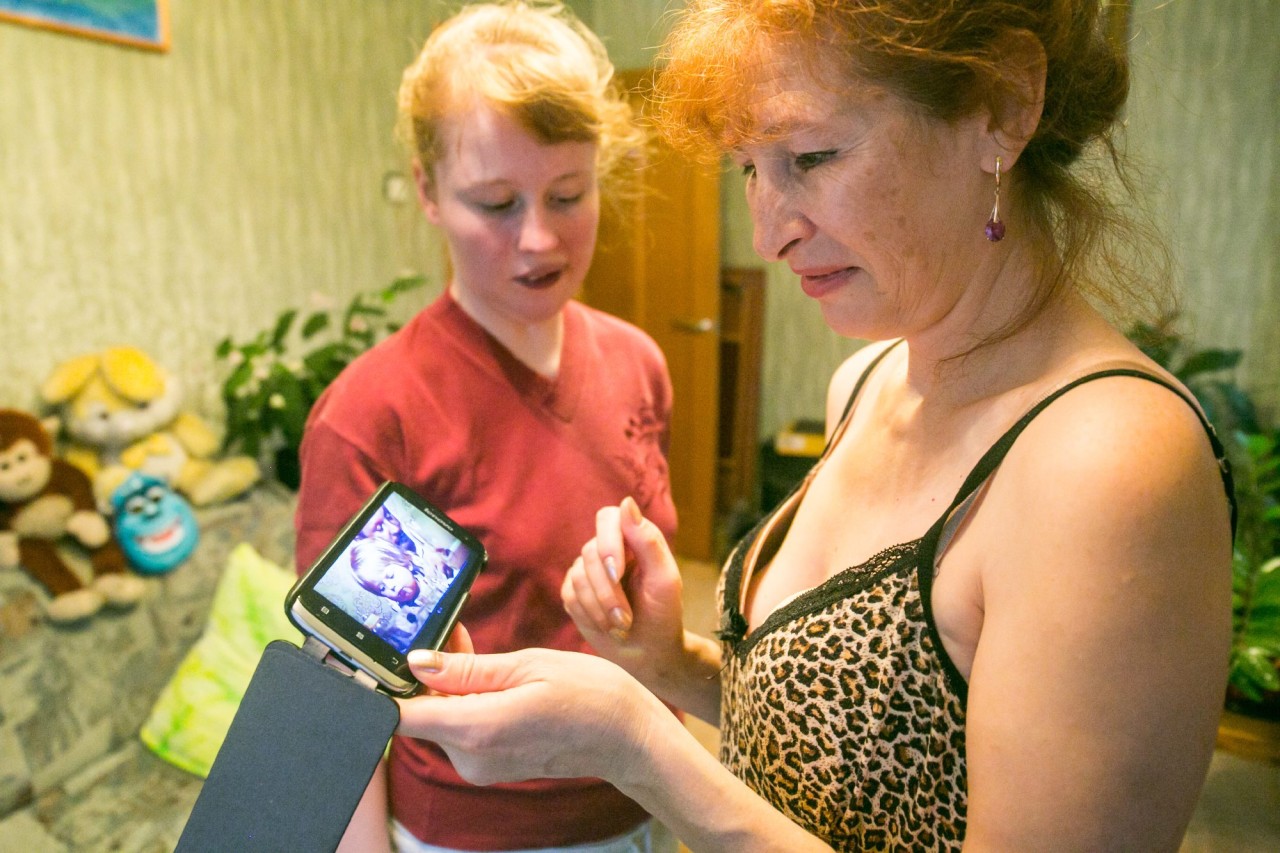
Natasha loves music, especially Alsu and Jasmine, delighted with musicals in the Irkutsk Musical Theater. When mom talks about the theater, the girl's eyes light up, she mumbles something. “Yes, let's go to the theater. We’ll go by car, yes, ”Mom translates. At home, Natasha watches Soviet cartoons, plays computer games and collects puzzles. She collects herself, without mom's help. We go to the living room, where Olga proudly demonstrates the achievements of his daughter: “Sets of a thousand puzzles are difficult for us, but 260-300, we are easily.” Princesses, “Bremen musicians”, animals. “Even this is how we can,” Olga boasts, pulling out a box on which myriads of multi -colored fish are drawn. “Not immediately, of course, in a few days. She will get it, then she will do something else, then she will look at the TV and return again. ”
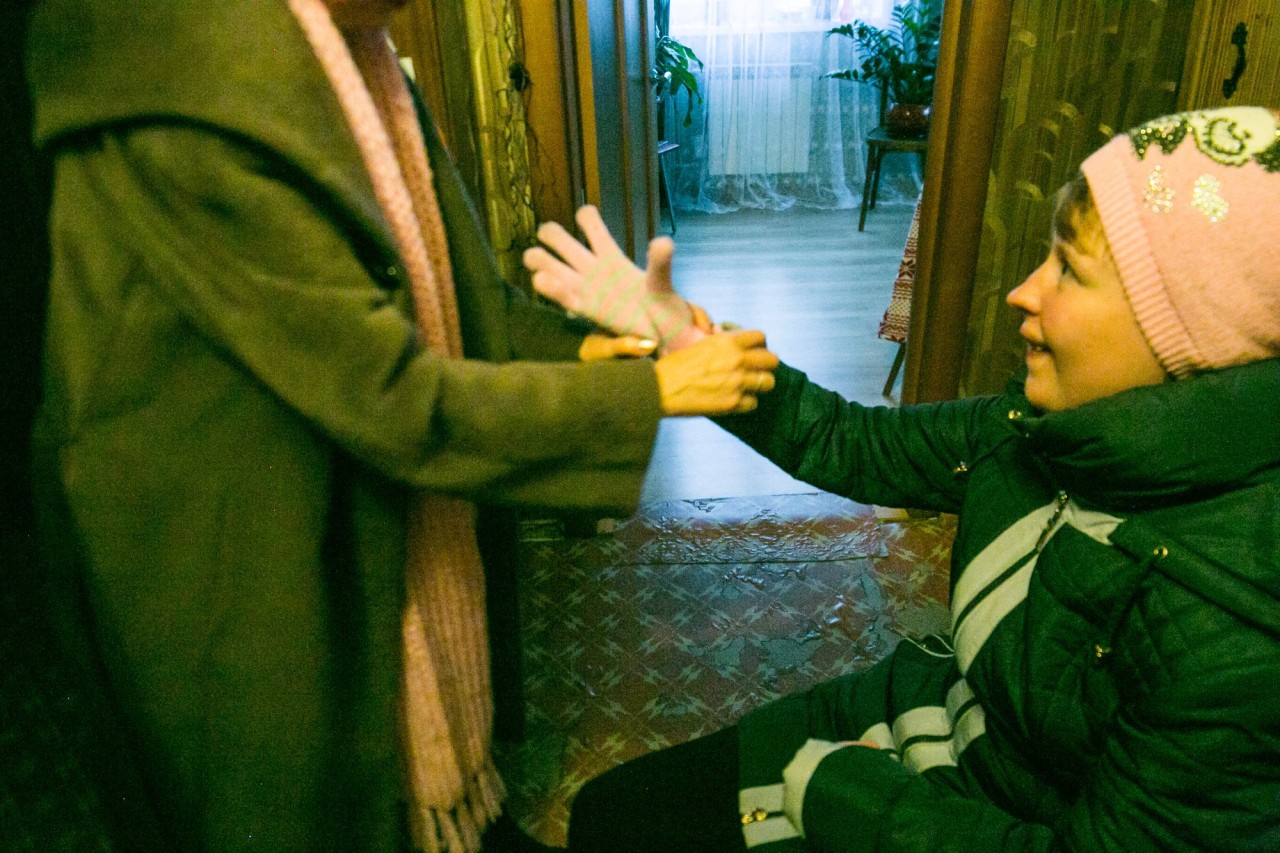
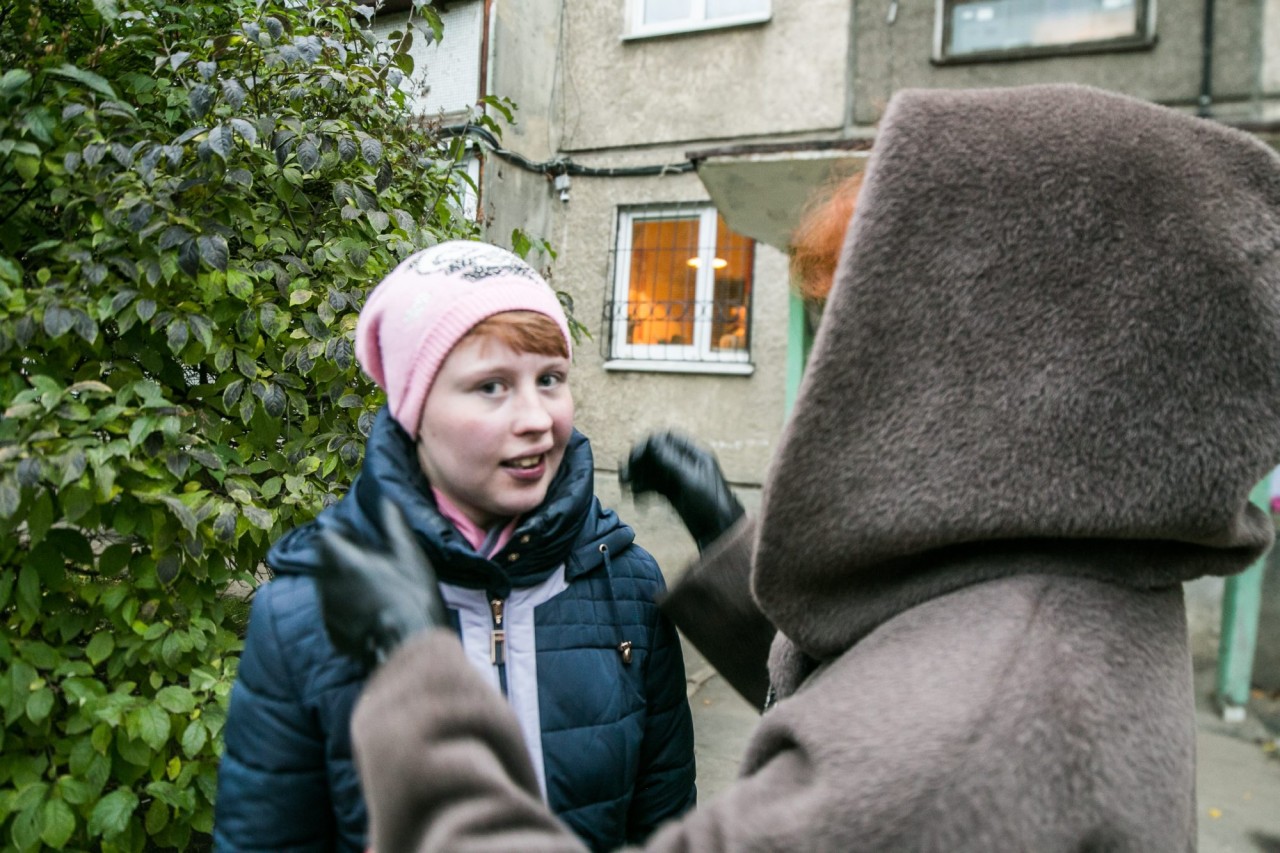
Natasha is not aware of her dissimilarity to others, one problem: she is a sociable girl, she is sad at home alone Natasha herself, like many mentally retarded children, does not realize this quote from this quote , she does not realize her dissimilarity to others, one problem: she is a sociable girl, she is sad at home alone. When it goes for a walk to the playground, she takes toys with them: other children come up, she gives them to play, smiles, watches them. And now, having put up to me, she got up, staggering in the room and returned with a plush cow, put her on the table, smiled at her, stroked her head, set about the cabbage pie. Hearing that my mother is talking about walking, Natasha again gives out sounds meaningless for me. "Yes, Tusya, I will go to work, return and go for a walk." Natasha smiles, suddenly holds out twisted, twisted fingers with teenage burrs. “Yes, yes, and we make up your nails. We make up with varnish, yes. It will be beautiful. " Walk is a serious event. Dress - 20 minutes, Natasha herself does not know how to dress. Go down from the third floor - another 15 minutes with a vacation on the stairwells. In winter, it quickly freezes, because blood circulation is disturbed, it is too hot in summer - again the load on the heart. She can’t walk for a long time, her mother carries her in a stroller-according to the very potholes, by which a healthy person is not easy to pass. When he walks, the most interesting thing is to meet friends, invite or go to visit. But only now the children of the Olgin's friends grew up, and they are not interested in Natasha. They will meet in the yard, chat for five minutes and disperse. “And Natasha often has a hysteria, she begins to scream throughout the street, it is impossible to stop her. This is the worst. I understand what she needs, but I can’t give it, ”says Olga. -She suffers from a shortage of communication, rejoices at the holidays, guests, sits listening to what adults talk about, sometimes she begins to tell something. Someone understands her, someone is not. But it doesn’t matter to her, the main thing is to be near people. ” Then pigeons sit on the tide of the windows, begin to coo. “Gu-gu-guuuuu,” Natasha pulls. “Yes, Tusya, Guli flew in. We love animals. We had both a cat and a dog, but we often lie in hospitals, and there is no one to leave with. ”
"Mom, I'm at work"
Natasha’s friends, however, have, although it does not come out often to see them. In 2008, a group of initiative mothers opened in Irkutsk a center for adults with mental retardation - "Hope". There are a variety of diagnoses and a variety of ages, the oldest ward, Maxim, 36 years old. All of them were faced with the fact that if there are correctional kindergartens and schools for children with disabilities, even if they take it not everyone there, then after reaching the age of 18, the state from such people is being completely inhibited, they are doomed to sit at home, often in the poor, from most families, fathers have long left, and mothers, like Olga, cannot work.
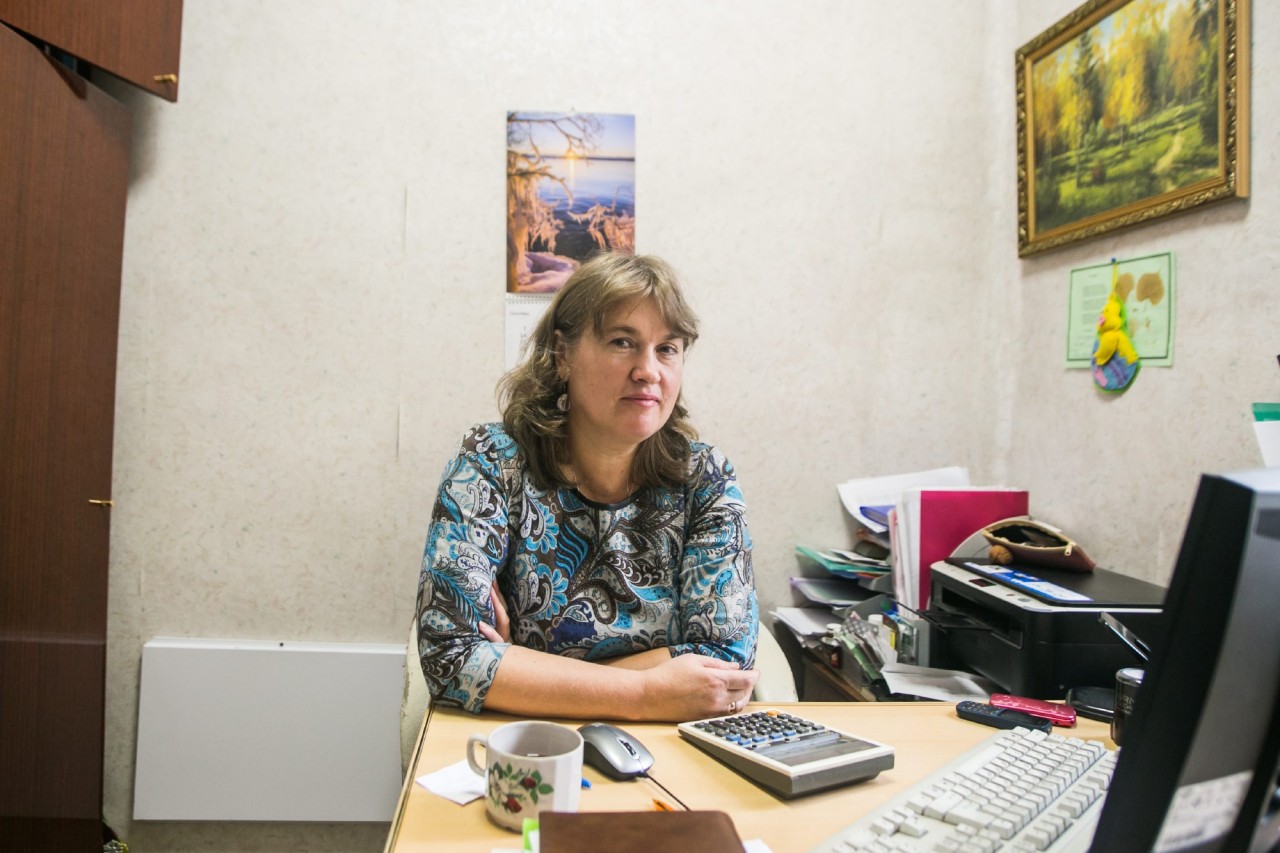 Tatyana Fedorova at the workplace. Photo: Anton Klimov for TD
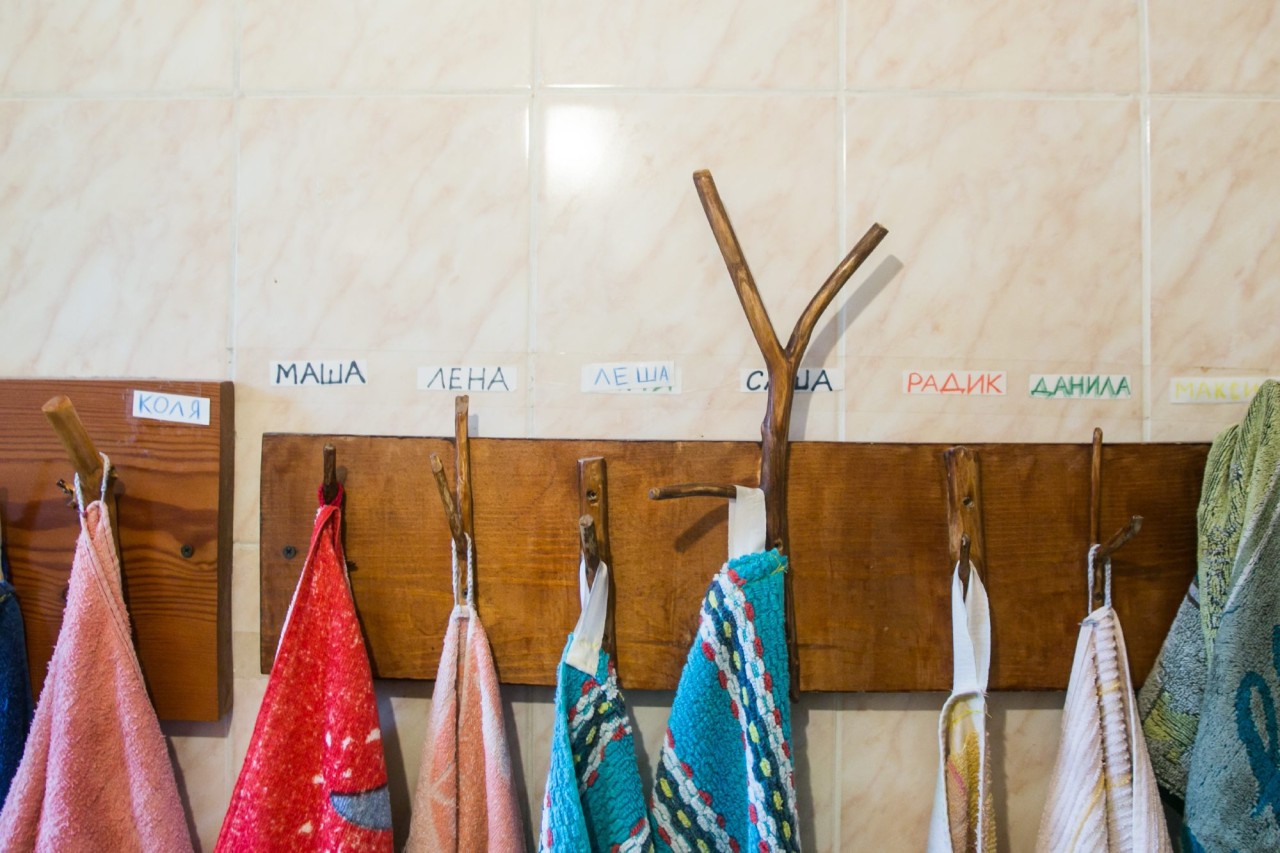
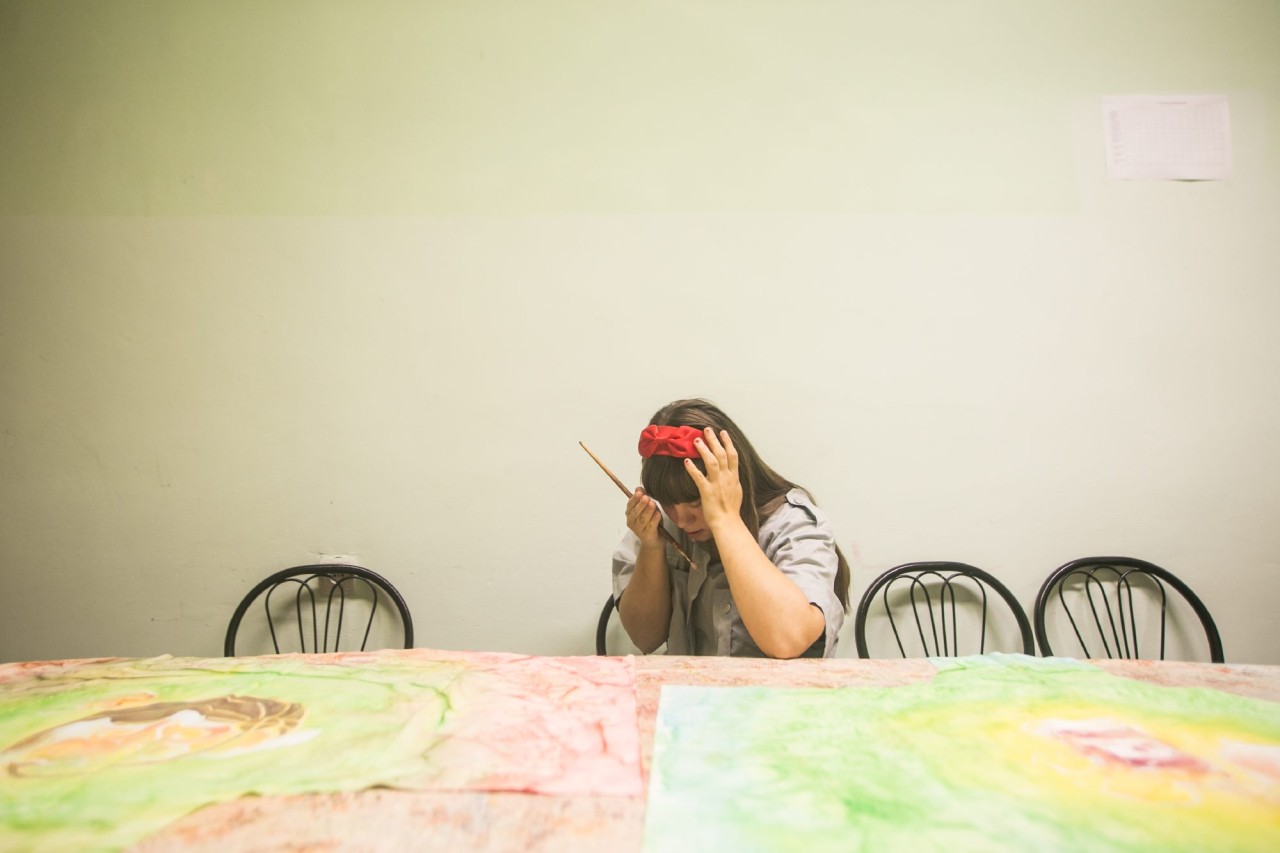
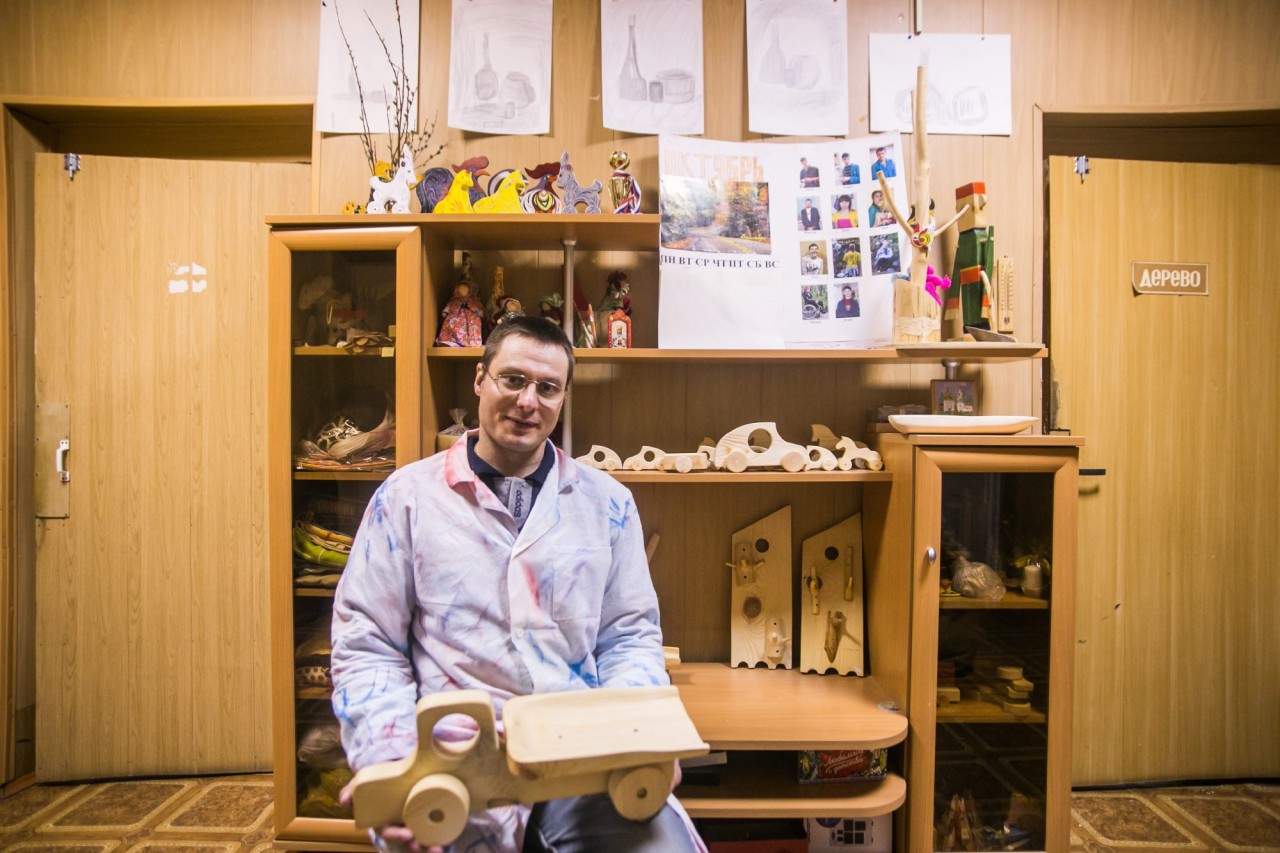
In "Nadezhda" there are so far 11 "children" and seven teachers, but this is not a school at all. “Mom, I'm at work,” Maxim reports on the phone. “We taught them that they are adults and go to work, like everyone else,” explains Tatyana Fedorova, her son Danil, an autist, also goes to “Hope”. Here everyone has their own occupation. Radik sheathes the woolen ball with threads, Nastya embroiders on the hoops, Maxim, Sasha and Sergey sit in the woodworking workshop and polish the sandpaper with sandpaper, the blanks cut out of the tree: it turns out cars, buses, and pyramids. Maxim can make a car in a couple of days, Sasha is required for the same month, he goes into the corridor with me, demonstrates his last craft and reports that Maxim is his best friend, but they quarreled because Maxim was offended that Sasha was not calling him. 24-year-old Sasha is Oligofren, it is also difficult to understand at first, but he is very talkative, so you quickly get used to and listen to the tigers in the circus, about the girl Masha from the same “Hope”, about how he went to the concert of his beloved Gregory Leps, but left-because of too loud music the ears fell ill. “I will sue him. I’ll write a statement to the police. I will kill this Leps. I will sue him. I love his songs. I will sue him, ”Sasha shakes his fists, but he laughs at the same time“ he is a very kind, responsive boy, he is not going to kill anyone, he simply expresses his emotions with the help of words heard on the street.
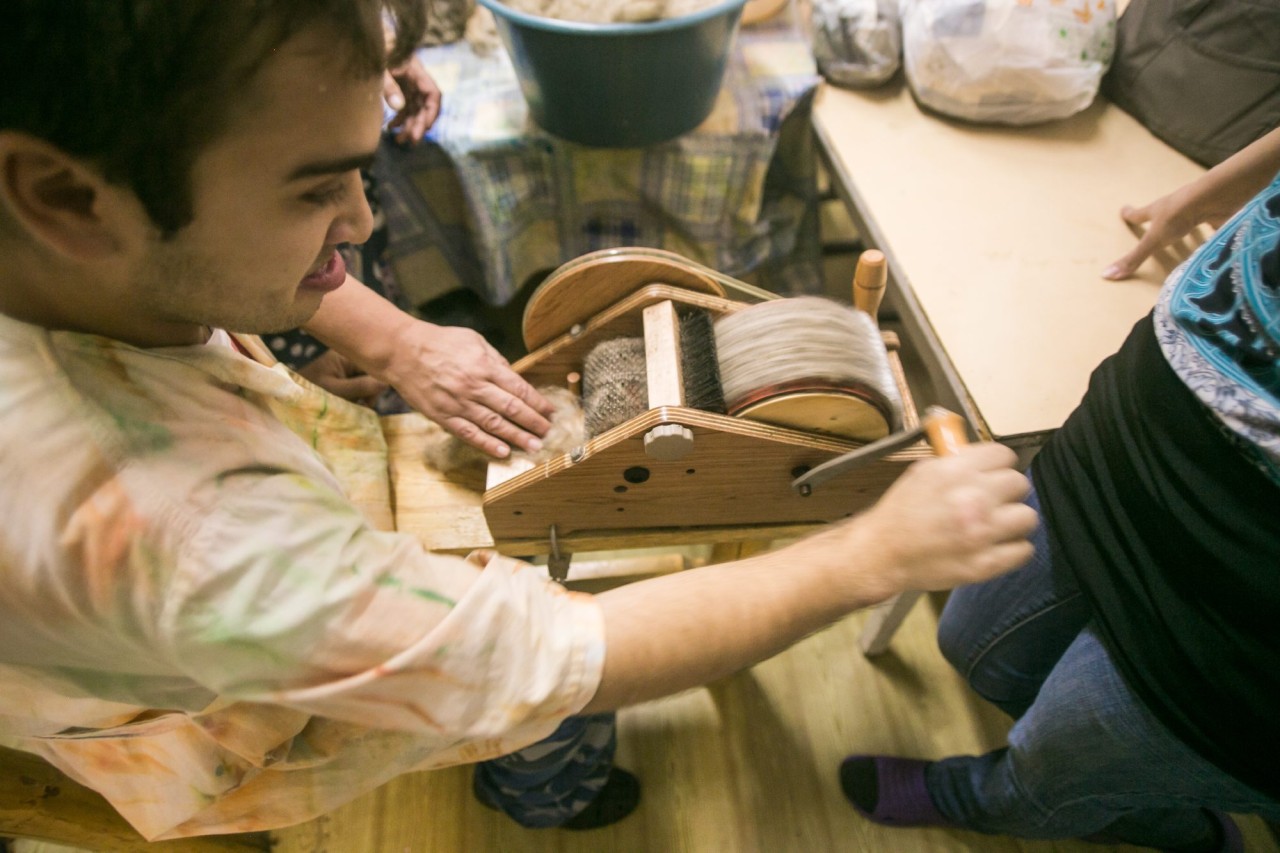
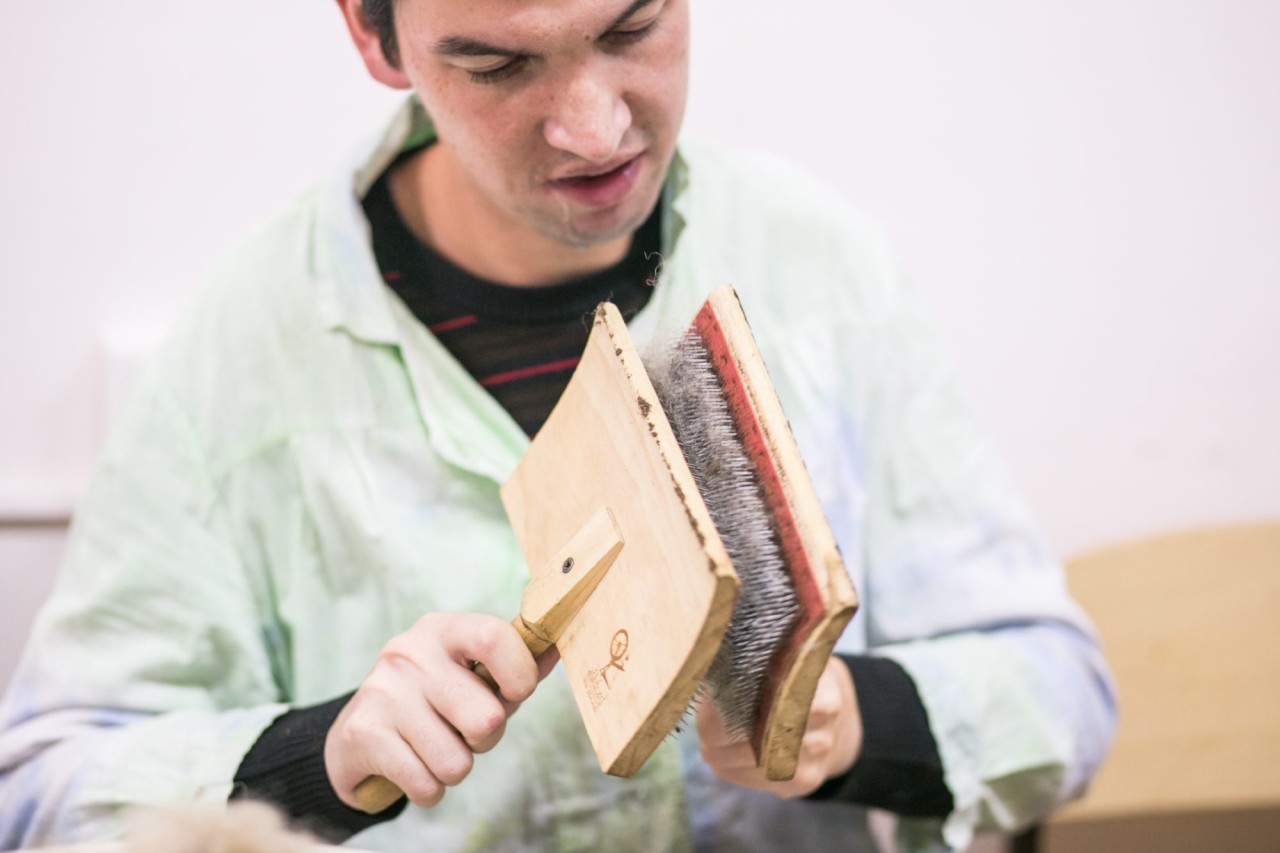
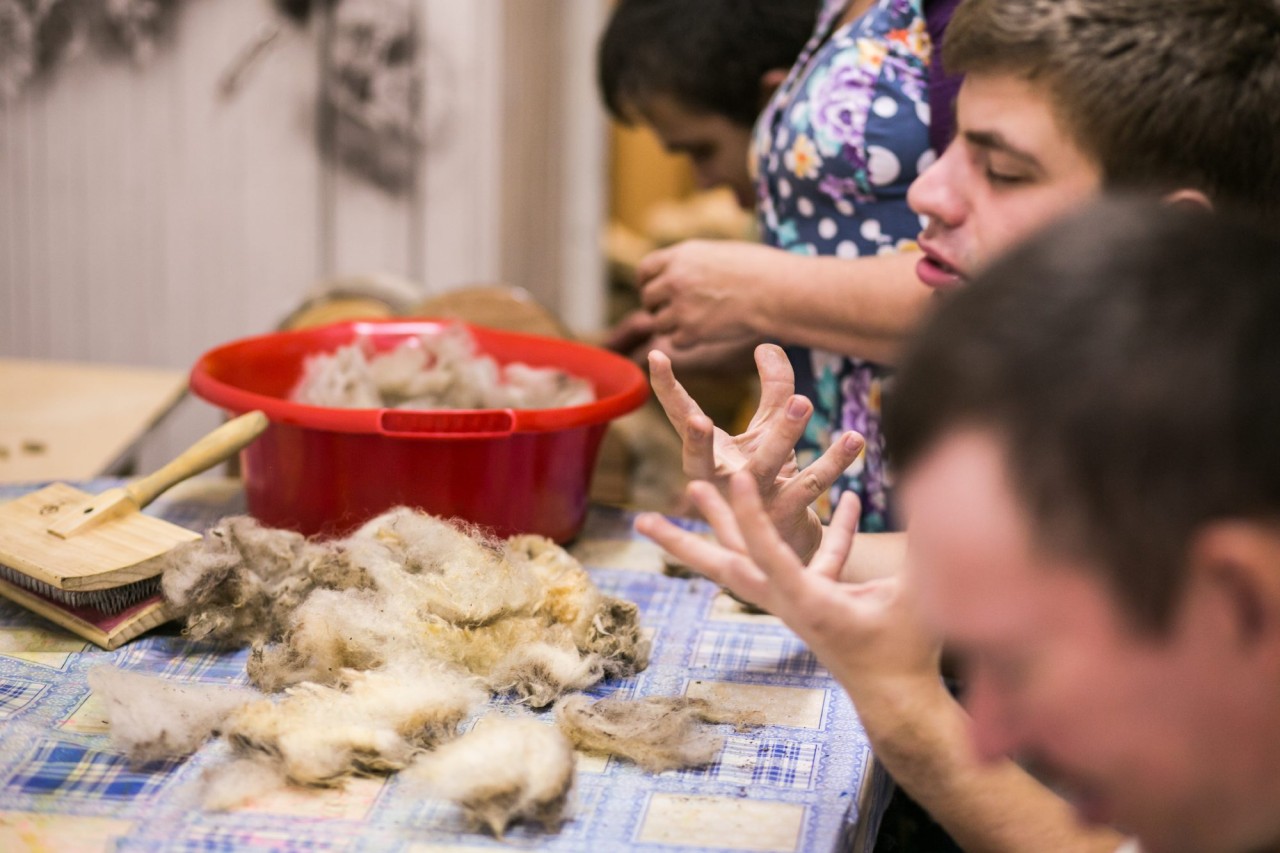
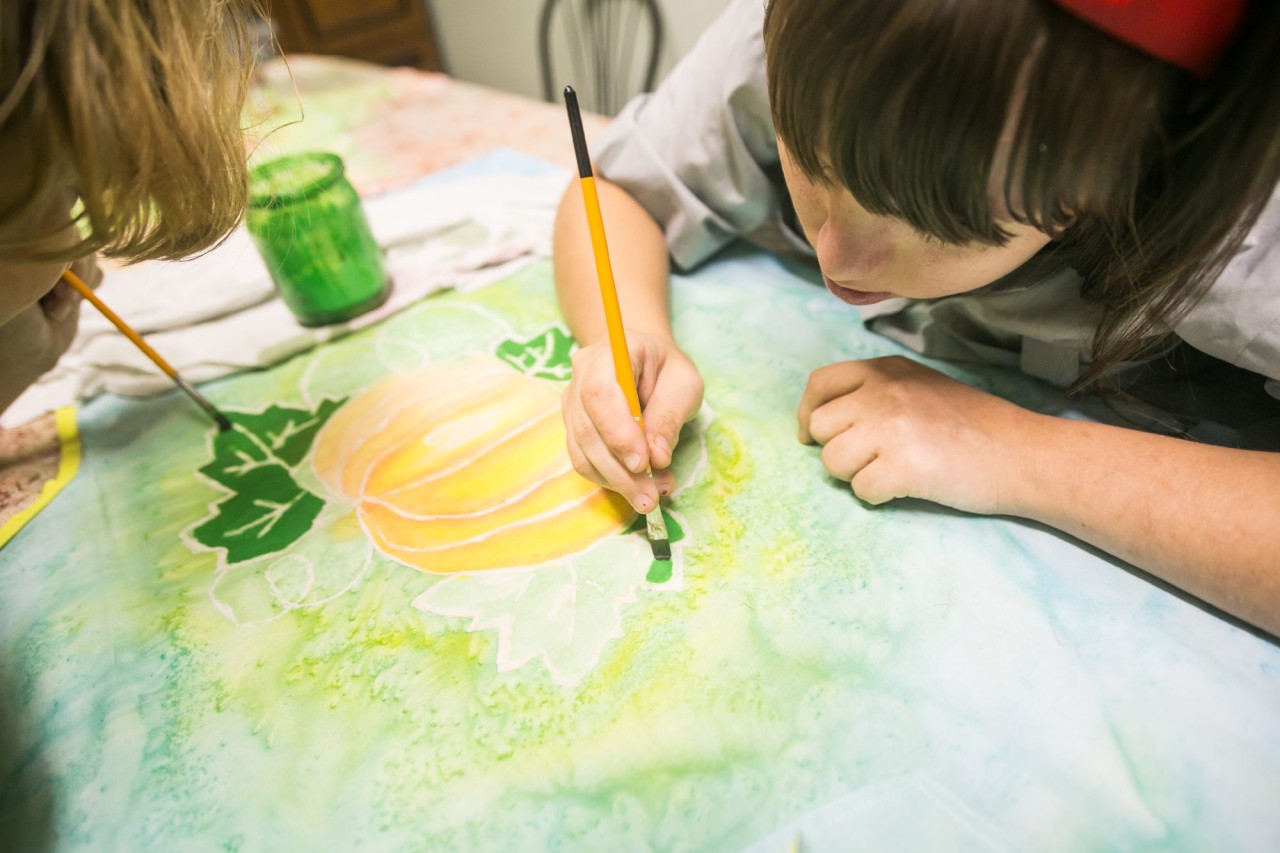
And in the kitchen in full swing is a cook: Lena rubs carrots, her teacher Irina Chuprunova helps her, for lunch today pea soup and pizza. Cooking is also part of the training, girls have cooking on Wednesdays, the guys on Fridays. “Of course, they themselves can’t do anything completely,” says Irina. - All crafts are joint work with the teacher. But they know what borsch consists of, what products should be bought in the store, how to handle dishes. ” On Wednesdays in “Hoping”, felting - students do rugs and woolen things, every day after lunch - printing - make cards, notebooks, sell them then at fairs, give veterans. In the summer, trips to nature are arranged, in winter - holidays along with students of the local pedagogical institute, future defectologists. Olga and Natasha go to summer camps.
“Hope” for her “workers” is not only the opportunity to develop fine motor skills with sandpaper in their hands and a respite for parents who can earn fruit. This is the door to the rich life of adults. Go to work, study, make friends, fall in love, rejoice at successes and experience failures, laugh, cry, communicate with other "Nastavinians" and with peers from a pedagogical institute. What hundreds of other people locked in apartments are deprived of, what Natasha is so lacking is there for her in “hope” there is no place for her, and she cannot go here: the center is located in the basement of an old wooden house, everywhere there is crowded, ladder and threshold, and you won’t approach the building in a stroller.
The house that built
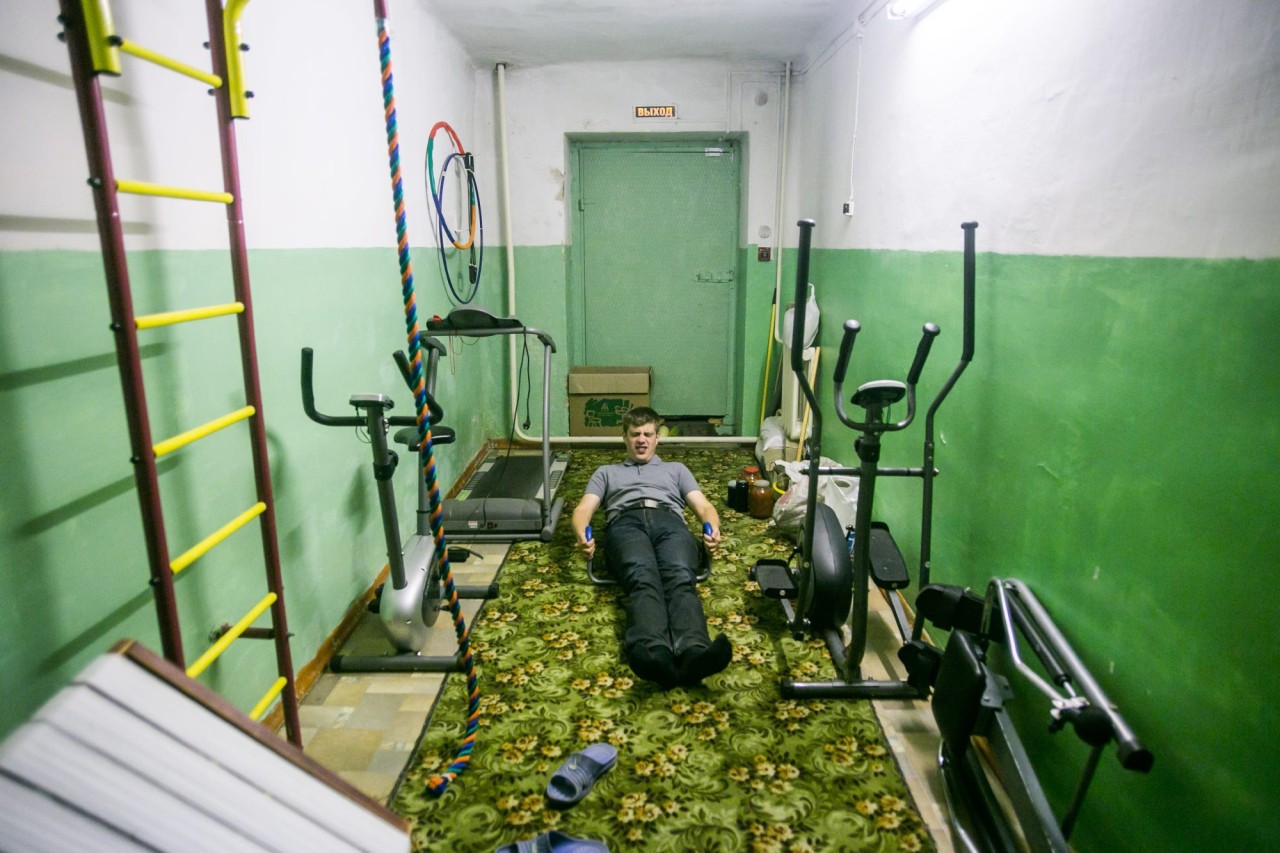
In order to accept Natasha and other guys, mothers from Hope decided to build a new center. For a long time they knocked out the ground on a neighboring street, issued permits, collected the world with the world for construction - the facility was already completed by 60%, if a little more, it will be possible to enter in a year. Tatyana Fedorova and I are going to inspect a new two -story building with an elegant blue roof. There will be ramps for strollers, special devices for visually impaired and hard of hearing, a garden, a greenhouse and a sports ground. “All according to the standards for boarding schools,” says Tatyana and complains that the city does not take any participation in the life of “hopes”, they cannot even make the sidewalk, so they have to walk along a broken road, dodging passing cars. In addition to the existing workshops, Tatyana plans to make candles and garage: the guys like to delve into old cars, but so far there is nowhere to do it.
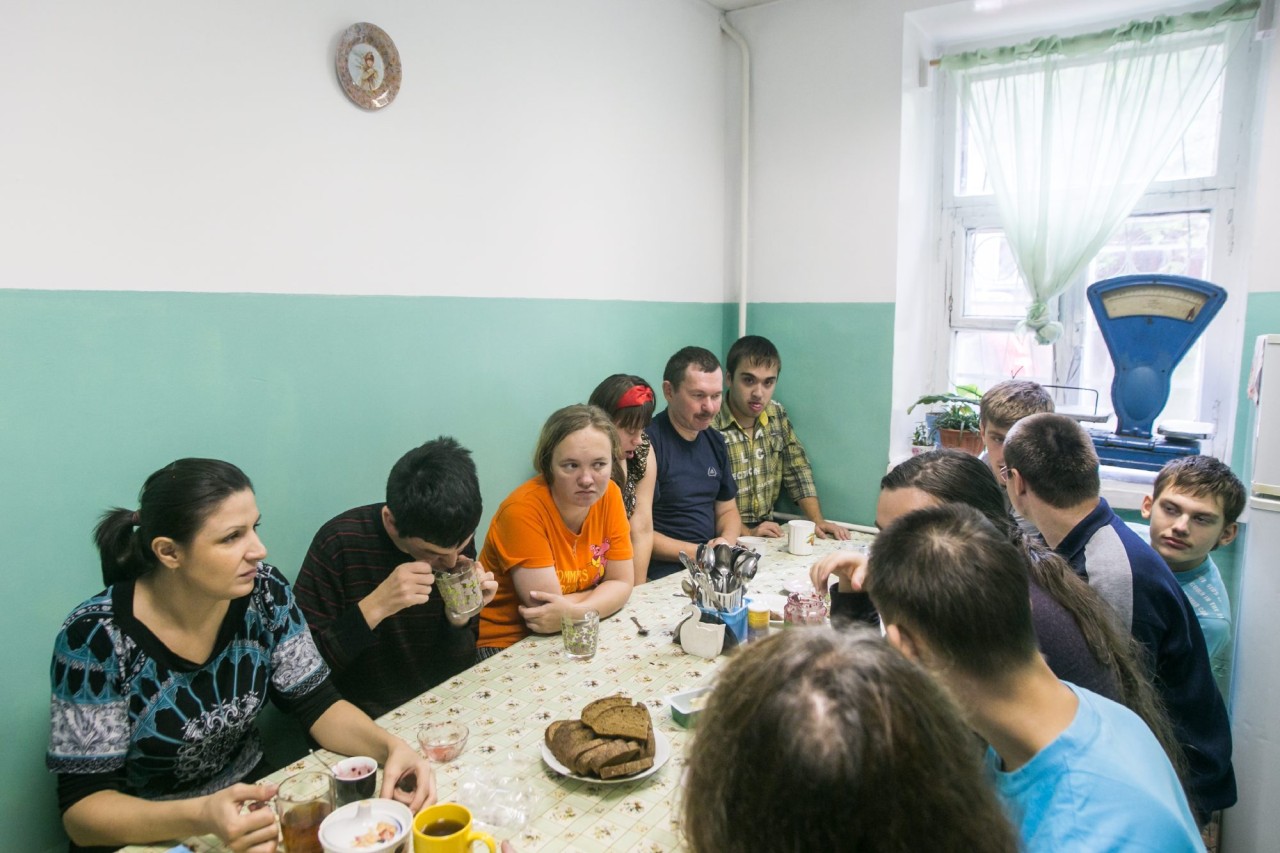
Both teachers and children live a dream of a new house. We are returning, lunch has already been covered in the kitchen, everyone sat down in a family at a large long table.
“I think we need to have chickens,” says Nastya. - And a goat.
- That's how we fantasize, Tatyana laughs. - They wanted a flower garden, and now a goat.
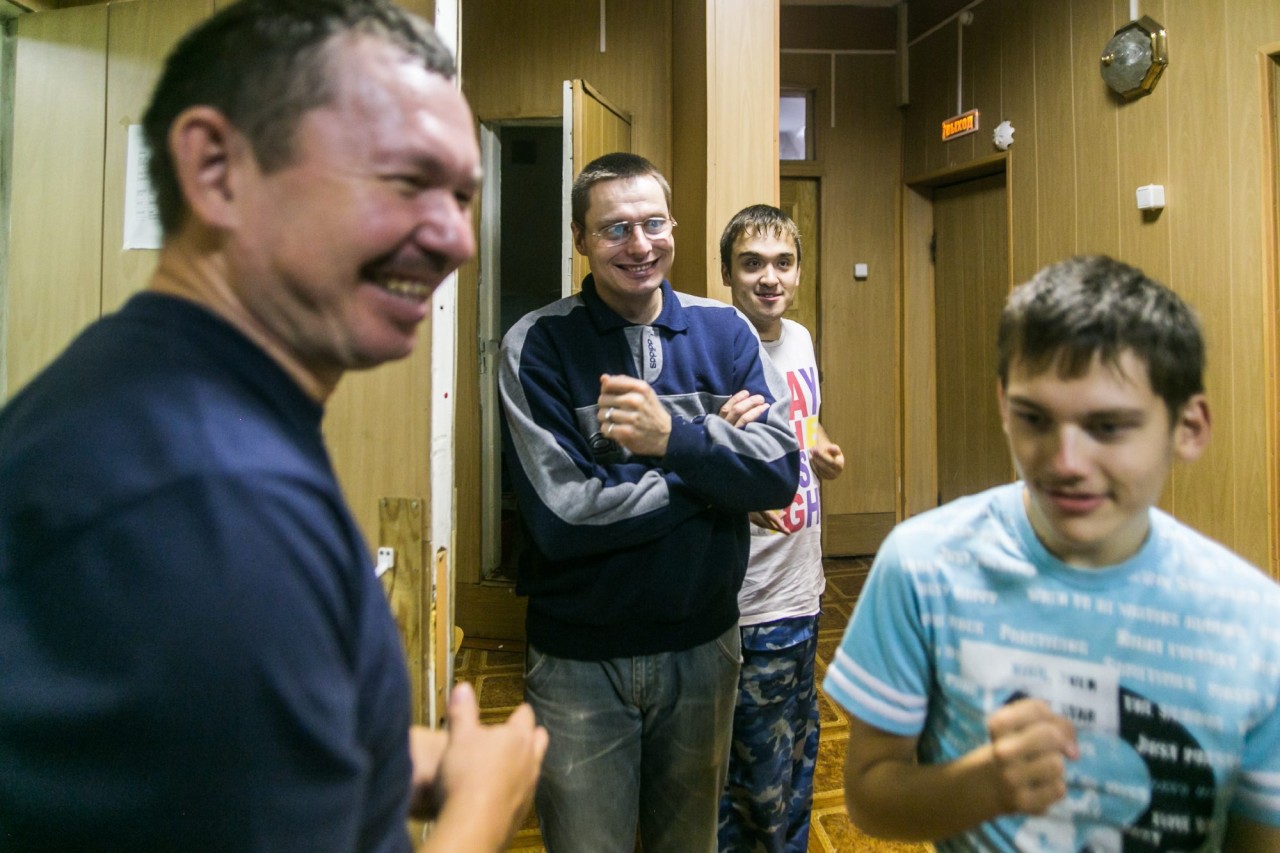 Alyosha, Maxim, Danila and Kolya washed their hands and are ready to drink tea.
The Nadezhda Center is a unique project not only for the Irkutsk region, but for the whole of Russia. Unlike Western countries, where they try to fight the system of boarding schools, reorienting to help families, in Russia there is no state program for helping people with severe forms of mental retardation. If problems are found in development, Russian doctors still advise parents to abandon children, while in many developed countries, on the contrary, parents provide psychological assistance, convincing to preserve the child, promising help from the state. Russian refuseniks are placed in special boarding schools, for example, in Irkutsk there are two of a total number of about 600 people.
Children in families see parents, imitate them, go by public transport, they learn much more than their peers in boarding schools Twisting this quote the main task here is to feed, no one is engaged in the development of children, there are neither funds nor specialists for this. “This is a social deprivation,” says Raisa Afanasyev, head of the department of theories and practices of special training and education of the pedagogical institute of Irkutsk State University, whose students are practiced in “hope”. - The refuseniks from birth are deprived of an incentive to activity. Children in families see parents, imitate them, go by public transport, communicate with peers and adults, they learn much more than their peers in boarding schools with one teacher for a group. Such children do not have a role model. Who will smile them, who will touch them, teach? Even children without delay develop in orphanages worse, what can we say about our guys. ” However, training is not the biggest problem for Russian boarding schools, where many do not even live to school. “They told me about my Danil that with his diagnosis he will live to six years,” says Tatyana Fedorova from Hope. “Now he is 24, and he is quite happy.”
Adults are transferred from boarding schools to ordinary psychiatric medical workers, which are often kept in disgusting conditions, together with mentally ill, although in the same West they have long recognized that people with developmental delay are not sick, not dangerous for society and require a completely different approach, they need family and teachers, and not psychiatrists. In such medical workers, no one is engaged in patients either, the functions of staff are limited to the care of food and hygiene, patients are vegetable between the chamber and the dining room, although they could live in the will and delight loved ones, as the guys do in “hope”.
The new building will receive 25 people. This means that another 14 single people will be able to go out into the world and breathe freely, in 14 families their parents will get the opportunity to work and cut time for themselves and for each other, and those who have no place for them will always be able to come here for advice, advice, help, so that a much larger number of families will have the hope that you can live worthy of any child, and someone will decide not to refuse a newborn with a newborn and some The father will remain in the family, and ultimately these kind, trusting, responsive, incomprehensible, cute children will be able to achieve what we are all striving for - simple human happiness.
After lunch, I say goodbye to the inhabitants of Hope. Sasha presses my hand for a long time, looks into my eyes and smiles at the whole mouth. He is satisfied, glad that I praised his car, Sasha’s day was a success. I remember Natasha: with a plush cow in her hands, she then lonely watched me to the threshold, Natasha does not like when people leave. “So far,” she answered my farewell. So far, Natasha, for now. See you on a housewarming!
In order for the new “Nadezhda” to be able to open, parents collect money on the floor, windows and roof, which so far covered.