
Translated material
The relics discovered several years ago in India belong to the Georgian Queen Ketevan
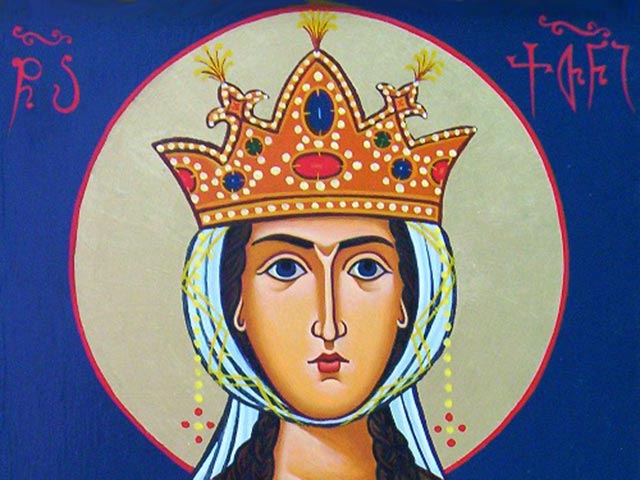
Particles of relics, discovered several years ago by archaeologists in India, in the ruins of a Christian church located in Goa, belongs to the Georgian Queen Ketevan. This was reported by the portal "News-Georgia" with reference to the Ministry of Culture and Protection of Monuments of the country.
"As a result of the analysis of the DNA of the hand found by archaeologists several years ago in a stone sarcophagus located in the ruins of a Christian temple in the Indian city of Goa, it is a high probability that this bone of the hand belongs to the martyr killed in the 17th century - the Georgian Queen of Ketevan, " the Blagovers -Info agency the information of the ministry’s information.
Ketevan was the queen of the East Georgian Kingdom of Kakheti. It came from the royal family of Bagrationi. The wife of Tsarevich David, the heir to the Kakhetian king Alexander II, after the death of her husband devoted herself to the construction of churches, monasteries and hospitals.
Refusing to accept Islam, she spent ten painful years in prison. Shah Abbas promised to make her the queen of Persia, if only she accepts Islam. However, neither torture nor bribery could shake her firmness in faith. And on September 13, 1624, after torture, it was burned with hot forceps.
The remains of the martyr were stolen by the Portuguese missionaries Augustine, who hid them for three years and in 1627, finally taken to India, to Goa, where they buried in the Catholic Church of St. Augustine. Fragments of the relics were also handed over to the son of Ketevan, Tsar Teimuraz I, who laid them under the altar in the Alaverdi Cathedral, and were taken to Rome, to the Cathedral of St. Peter. Then the Georgian Orthodox Church canonized Queen Ketevan, considering her to the face of great martyrs.
In 2004, the Russian Orthodox Church handed over to Georgia a unique icon of the holy martyr Queen Ketevan, which contains parts of the relics of the Holy Georgian Queen.
Indian archaeologists discovered the remains of Queen Ketevan in the old part of the temple in Goa in 2006. According to the testimony of representatives of the Georgian Orthodox Church and Indian archaeologists located in the GOA, the remains were under the wreckage of a stone sarcophagus. It was noted that the sarcophagus lay in the niche of the temple, but after the earthquake and collapse of the part of the building fell and crashed. Under these debris, the remains of the queen were found, in particular the hands.