
Translated material
Bear Merit
For 30 years, the dynasty of Russian biologists has been rehabilitating the bear-thin according to the unique program. With their help, almost three hundred brown bears returned to the wild
Tver region, April last year. A little bear is sitting in a dark forest and quietly whines with pain and fear. He stuck with his paw in the crevice of a tree and cannot get out. People found him and immediately called Pazhnov.
In honor of spring
Bubonitsa is a tiny village in the Tver region. The deaf place where the road ends is a real bear corner. The dynasty of bear rescuers still lives in a house that Sergei Pazhnov built with his father Valentin Sergeevich. He lived a long and beautiful life - 84 years old. And he left behind a unique technique for growing brown bear-trinkets.
The love of the Pazhynovs for the bears is one -sided and absolutely disinterested. Today, three people work in the center: Sergey Pazhnov, his wife Catherine, son Vasily. Even in the center there is an assistant in bear farming Vyacheslav Naumov, a resident of the neighboring village of Nekrashovo.
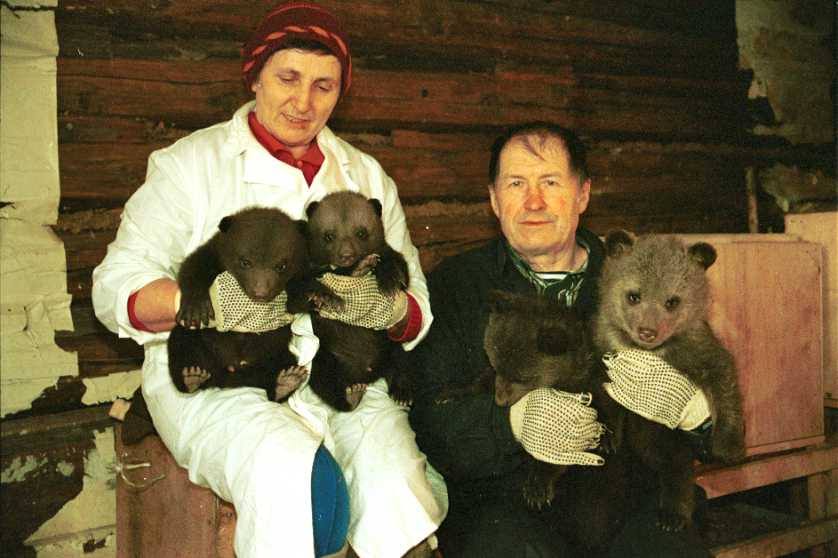 Archive picture of the Pazhnov family. Valentin Sergeevich Pazhnov (Doctor of Sciences, Honored Ecologist of the Russian Federation, author of the methodology for nursing a bear-trinket for their return to the wild) with his wife Svetlana Ivanovna Pazhnova, who took part in all studies on the ecology of brown bear and nursing a bear-sirciritoto: from the personal archive of heroes
A hot time for the PAGENTS usually occurs in February. It all starts with the call. They call either the Ministry of Natural Resources of a particular region, or involuntary witnesses of the tragedy. Catherine with pressure says this word. Orphans are a tragedy.
Behind the new pet, two of the Pazhanyovs leave, on the road by telephone by giving valuable instructions. For example, if the bear is found in the winter at the den, it must be placed in heat. There are always boxes, diapers, heated rugs in the car of rescuers in the car.
According to the usual scheme, I got into the center and Vesnushkin. It was at the end of April, the forest already came to life, woke up. “We named the teddy bear in honor of spring, when everything grows, develops. We hoped, the name will somehow help him, ”Catherine smiles.
The fate of the April found seriously bothered the Pazhynovs, despite the tremendous experience. More precisely, thanks to him. All other cubs of that season have already settled down in forest enclosures, a strong group connection arose between them. And biologists knew: they are unlikely to accept a beginner. Moreover, the wounded. It was dangerous for Vesnushkin.
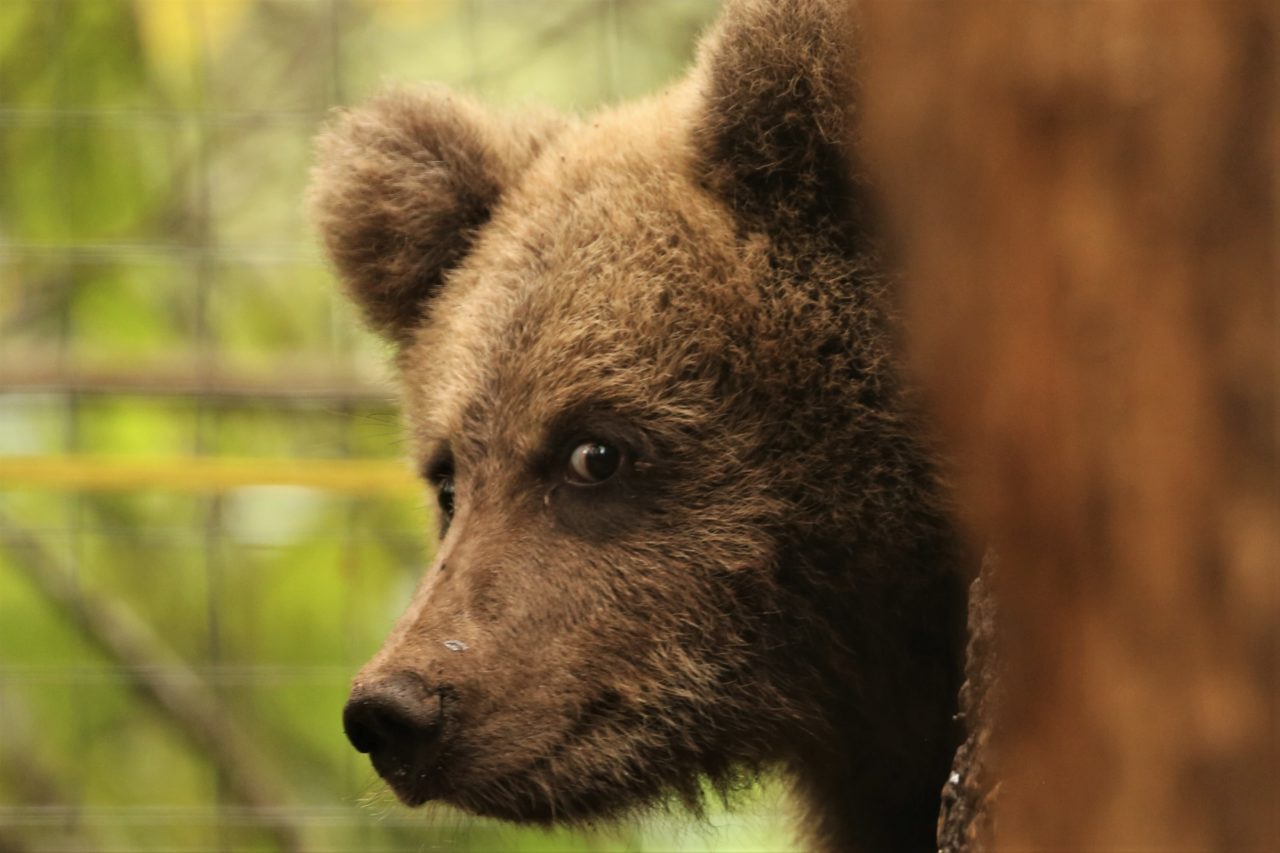 One of the wards of the center of salvation of the cubs is a hedgehog's bear cub: from the personal archive of the heroes
Catherine was very worried about his future fate. Often massaged his sore paw, suffering bites. But the paw remained motionless. Vesnushkina is highly likely to have complete social isolation and disability. If not for the hedgehog.
This teddy bear from the Kirov region ended up in the center already in May. He was funny to be bitten by the wool, recalling the hedgehog thorns, he was distinguished by the wild, and therefore he was nicknamed the hedgehog. For the first time, the Pazhynovs were so delighted with an orphan: Vesnushkin will be a company. And paired with the same age, he has more chances for rehabilitation.
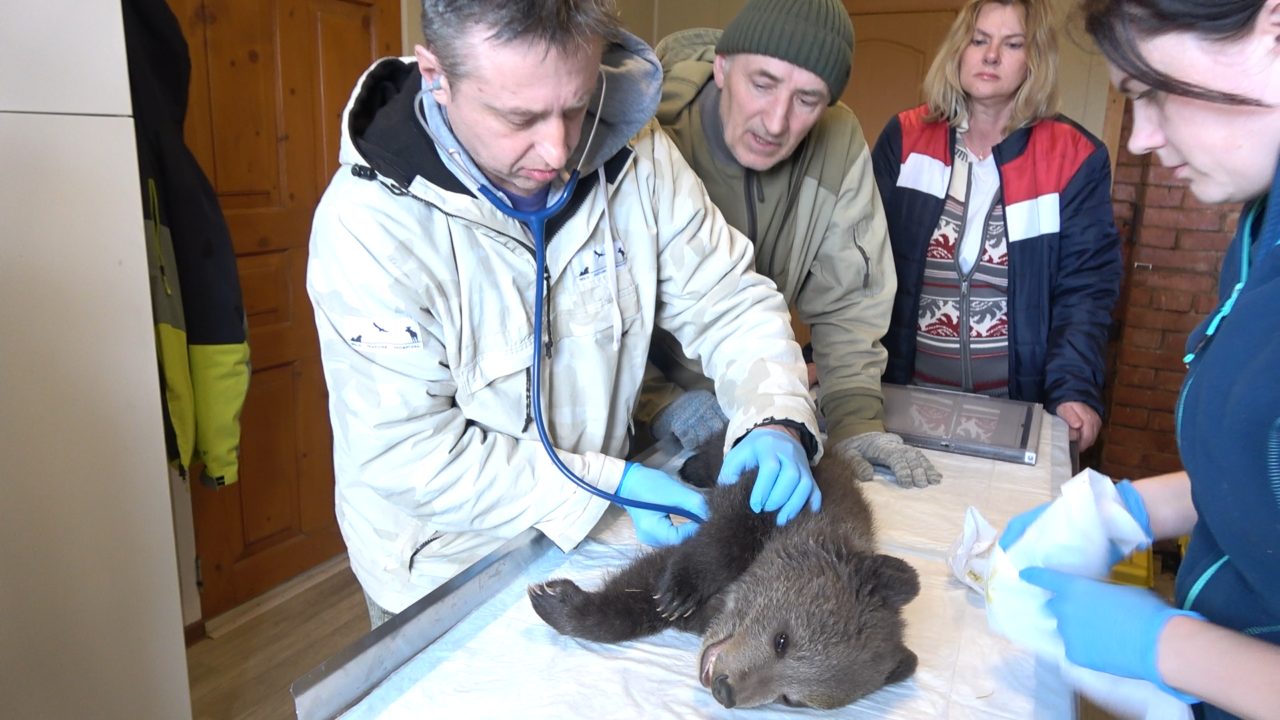 Experts examine Medvetzhonkafototo: from the personal archive of heroes
Provocation as a method
The Pazhannovs took turns on duty near the found. Vesnushkina with a hedgehog in the rapid mode was fed porridge or special milk mixture. Thoroughly checked their condition.
The time from February to May in the center is the most intense. There is almost no division for day and night, there is no rest. Sergey, Catherine, Vasily replace each other according to the schedule. But gradually cubs become more independent. They are transferred to wooden houses, they see and hear a person only during feeding. In March-April, the cubs are waiting for another move-to forest aviarys. It was at this time in the wild that the bear leads the cubs from the den.
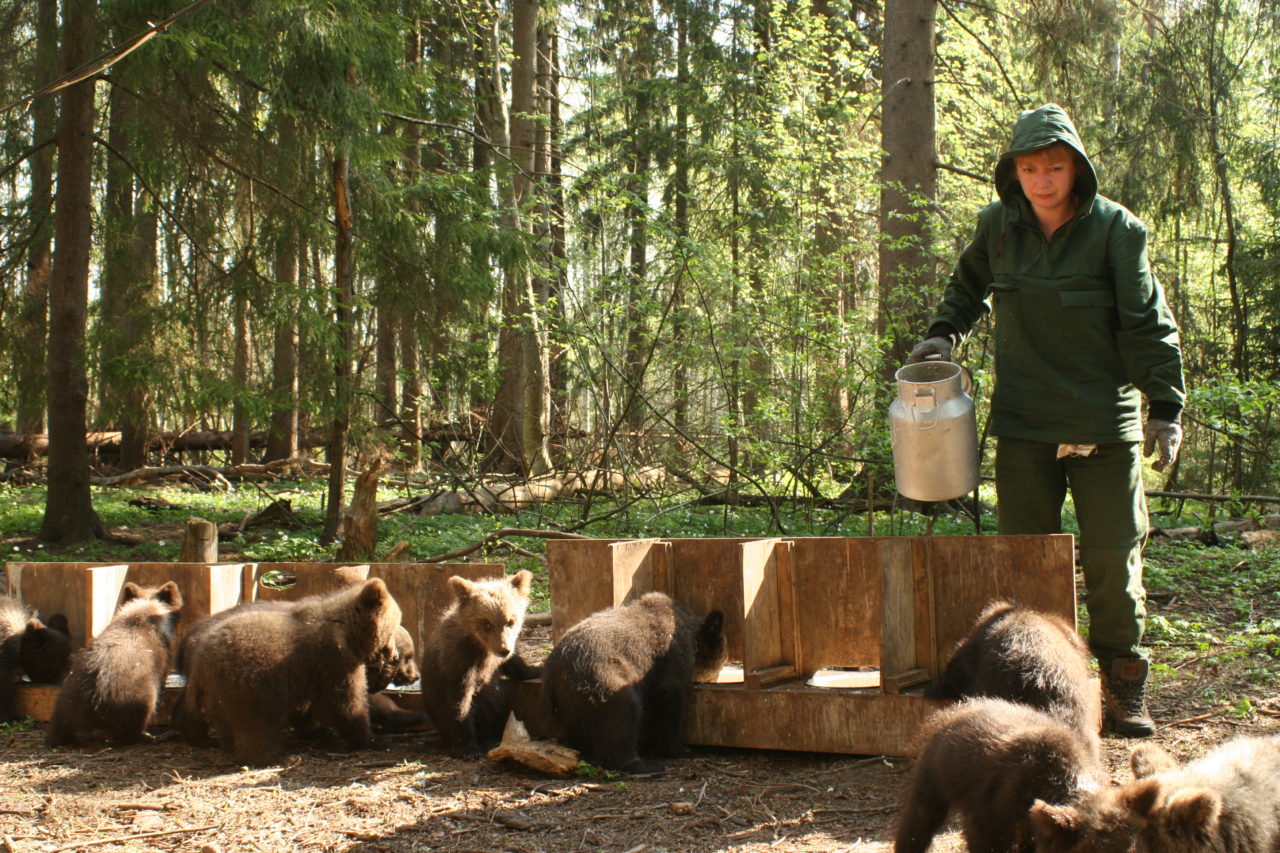 Bear feeding: from the personal archive of heroes
In mid -July, the cubs, one might say, become independent - they themselves can feed themselves, evaluate the situation and the degree of danger. They can already hide in a shelter or climb a tree. And the Pazhynovs open the aviary them. The cubs roam in the district in search of berry places, anthills, and they go to the forest lake. In the language of scientists, this is called "consolidation of indicative and defensive behavior." Overnight usually return to forest enclosures.
Vesnushkin with a hedgehog, like the youngest, went this path a little later than the rest. They were busy with their serious business - the rehabilitation of Vesnushkin. The hedgehog constantly provoked one to games or brawls.
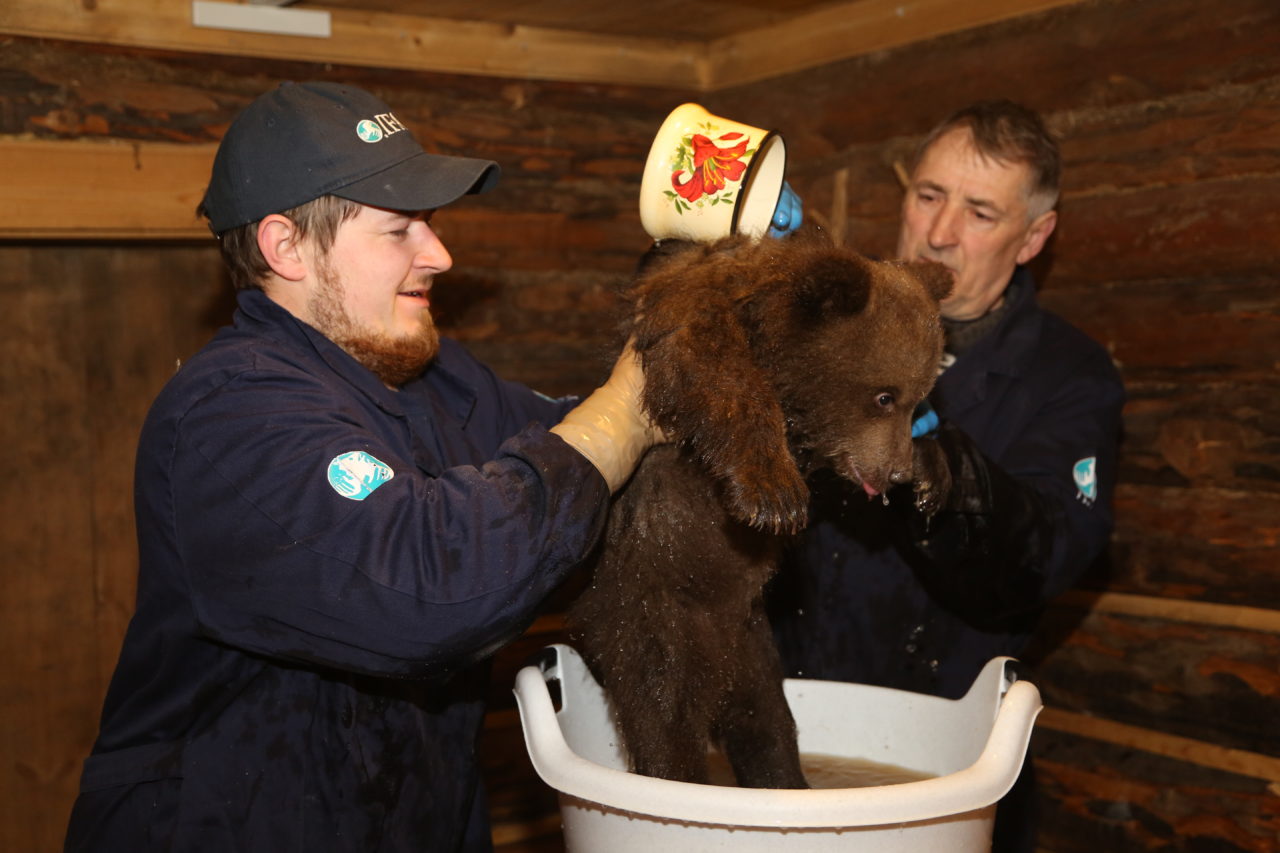 Bathing Medvetzhonkafoto: from the personal archive of heroes
All cubs are different in nature. There are phlegmas, grumbler, bully, haste. The character of the hedgehog was light, amazing and very playful. And a month later, a wounded paw earned a joint life with a hedgehog at Vesnushkin. He used it at first carefully, infrequently, but quickly came to taste. Four paws are not three for you, you know! After one and a half to two months of life in one aviary with a friend, Vesnushkin became an ordinary mischievous teddy bear. He quickly gained weight, learned to climb the trees.
Despite some privileged position, both Vesnushkin and Hedgehog grew up in fear of man. This is one of the main principles of the methodology. If this fear is not there, in the wild environment, the bear will not survive. The Pajetnovs do not educate and, of course, do not train the bears. They create conditions for them as close as possible to natural. Therefore, they easily, of course, are laid by food, defensive, nesting planning behavior.
Ton of apples per week
Before releasing Vesnushkin was carefully examined. There is no injury left. He turned out to be absolutely healthy and gained even more weight than a hedgehog. The grown -up cubs, contrary to the rules, were released together in early November: in a couple it is easier to adapt to an independent life than separately. When the boxes were opened, the cubs literally flew into the forest, publishing a uterine growl. There was much more chances to survive together with Hedgehog and Vesnushkin than one by one.
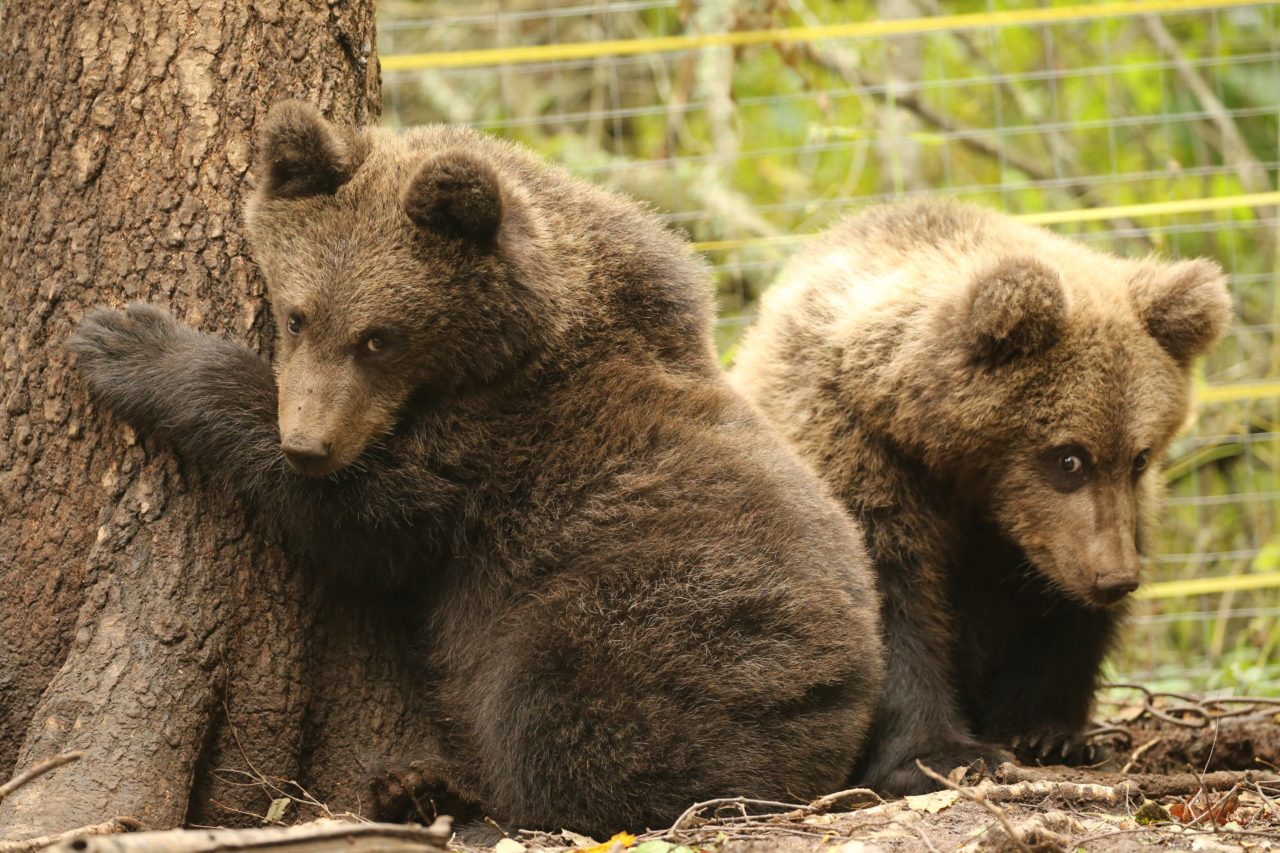 Vesnushkin and Hedgehog - cubs saved by the penitentiary photograph: from the personal archive of the heroes
Autumn is the time for the PAGENSOVs is always emotionally painted. The release of cubs to some extent is a dramatic moment. Men hold on steadfastly, and Catherine can let a tear. But everyone understands: this is a chance for animals. With a bad scenario, the bear can become a person’s slave. Medvetes love photographers, private zoos and catering with an entertaining bias. According to the law of animals, you can remove from such conditions. But there are practically no shelters for their further maintenance in Russia. After a captivity, the bear will not survive in the taiga, he will forever be broken by the psyche, and he does not adapt to a wild life.
Each bear cub entering guests in a restaurant is almost a suicide bomber. Each bear cub that has entered the center of the Pazhtnovs is almost the owner of the forest.
All bears from the center of the help of the Pazhnyovs wear bright yellow marks on their ears. It is impossible to track all the released cubs. But thanks to the marks of more than 50, the bears were registered in different years from the age of one and a half years and at least to eleven, including offspring. This confirms that the graduates of the PAGENSKI can not only survive, but also find a territory suitable for living, integrated into a local population, form a couple with a wild bear and reproduce offspring.
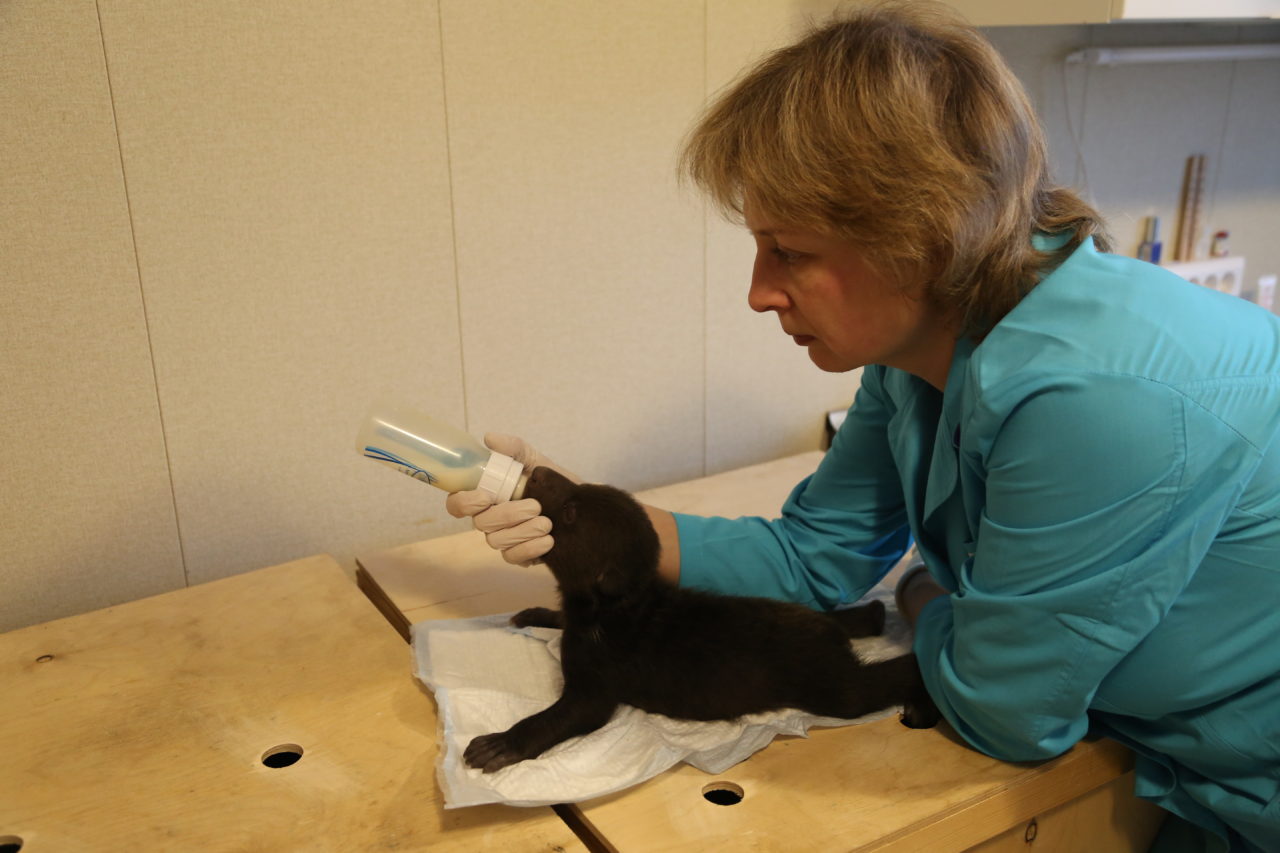 Pazhnova Ekaterina Sergeevna feeds a tiny bear orecaphoto: from the personal archive of heroes
The Pazhannovs steadily observe the most important rule - to release each teddy bear to the forest where it was found. Or to the region, similar in climate and food conditions. What will happen to the bear from the Tver region if you release it in Kamchatka? The diet of bears from the middle lane is 80 percent plant. In Kamchatka, bears eat mainly fish. Tver bear will not survive in Kamchatka, because it does not have the necessary skills for survival in an atypical environment.
“Fortunately, we don’t know anything about them,” Catherine says, finally, about her beloved Vesnushkina and hedgehog. This is conflicting happiness: on the one hand, it has a lot of sadness from separation and anxiety for the future of the wards, on the other hand, Vesnushkin and Hedgehog do not go to people. So, everything is fine with them, they were accepted by the forest, and they accepted their new life full of freedom.
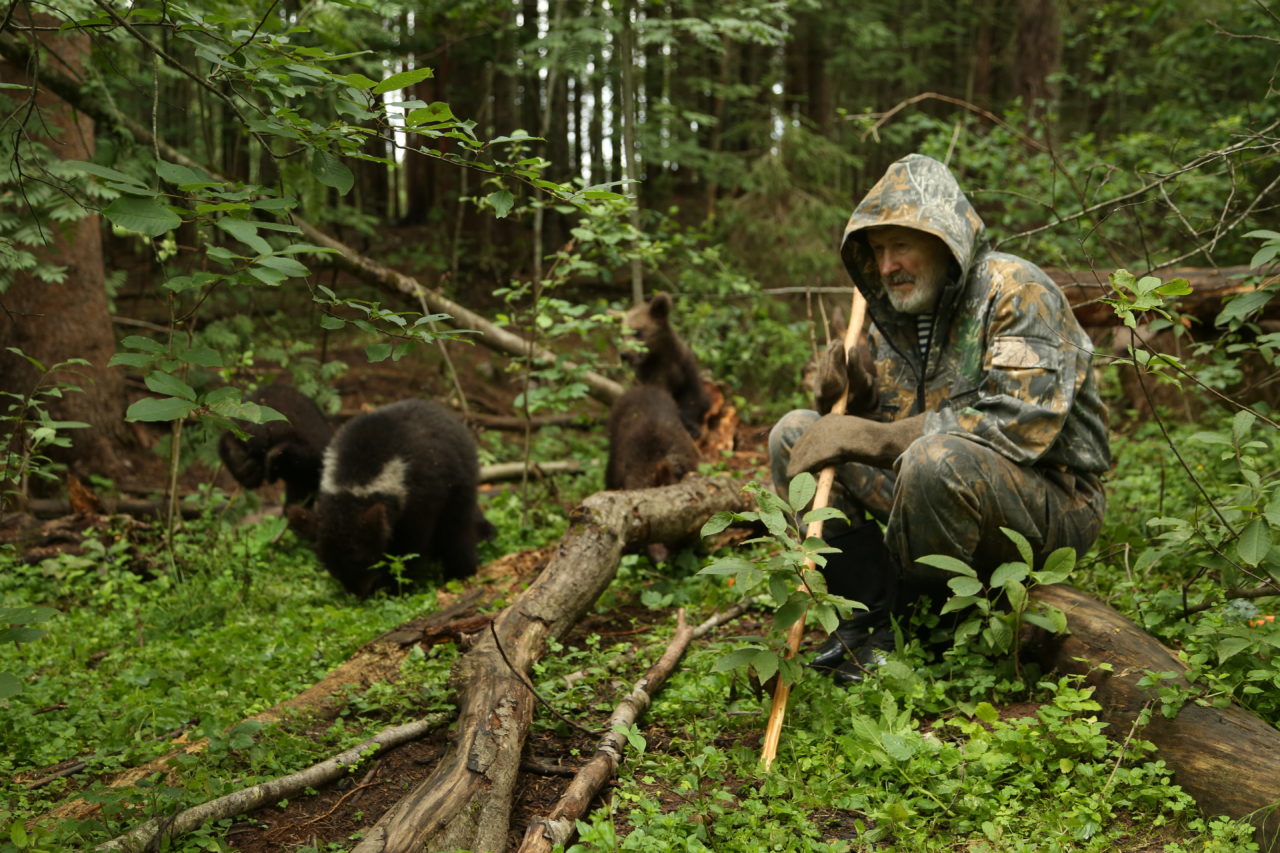 The main goal of the PAGETS is to prepare a cubs for an independent life in a forest room: from the personal archive of heroes
To the question "Why do you need this?" Ekaterina Pazhnova replies: “The state of the population of the brown bear in Russia is beautiful. In some regions, the bear generally feels imposingly. Animals are not on the verge of extinction. So this is a story about the value of every life. ”
90 percent cubs that fell into the center suffered from a person. Since 2012, the country has prohibited a birch hunt for bears, after which the babies are often orphans. Today, cubs are left without mothers for another reason-due to logging work. The screeching, the noise of falling trees, loud voices scare the bear so that they run away, leave the shelter, sacrificing children. From the point of view of reproduction and populations, there is logic in this: a bear can give birth again.
But if there are no people who will come to the rescue to the aid, they will not transfer them to the center, they will die. For the Pajutnovs, this is a matter of balance: the family compensates the animals for the damage caused by other people.
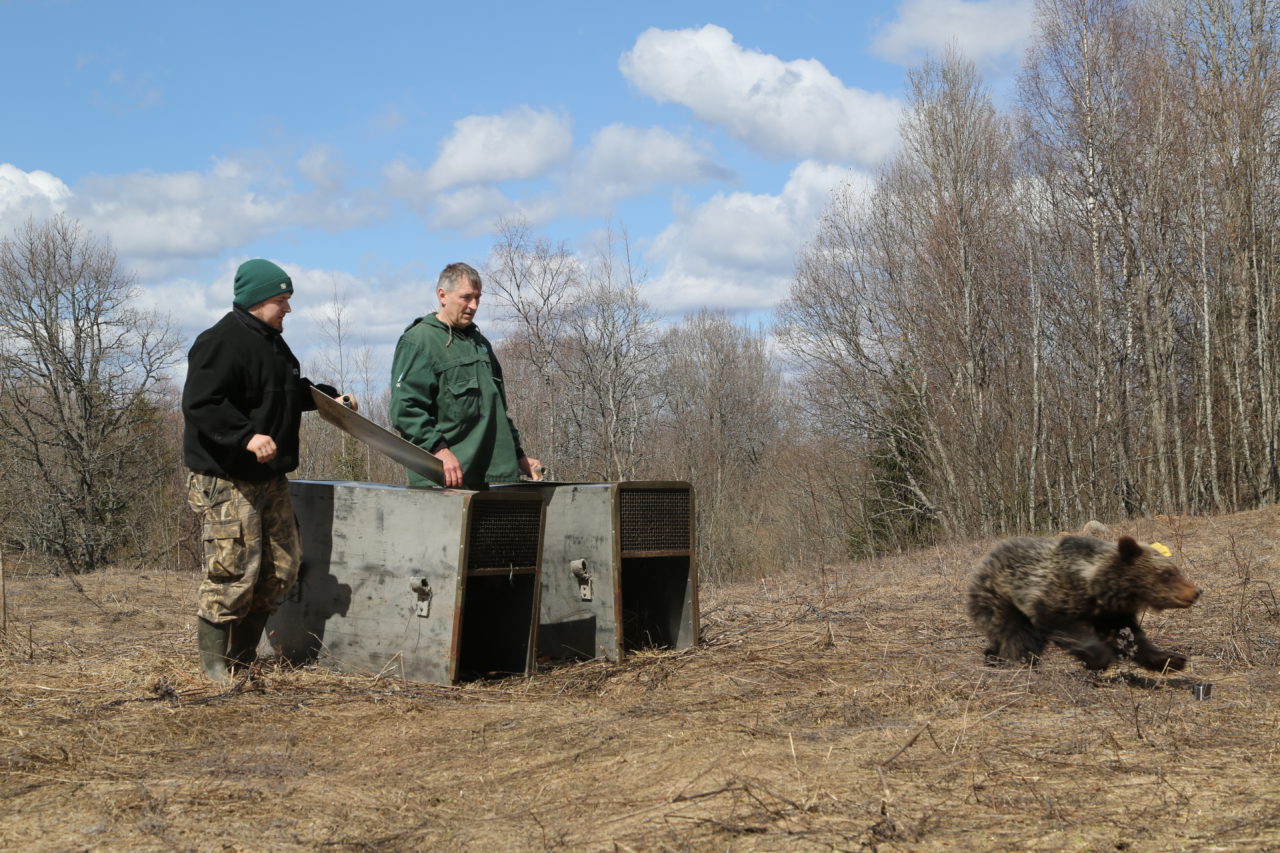 Volunteers let go of the bear cub to the forest photo: from the personal archive of the heroes
So that the center of salvation of a bear-thin can work further, you need money. To gasoline to travel for orphans on the first call. For feed, care products, medicines, veterinary services, rental of forest plots, gas, electricity, firewood, cubs tracking, monitoring measures, etc. For legal and accounting services, salaries, car repair. On apples, after all! Since July, cubs are transferred to special feeds. 10-12 cubs per week eat about a ton of apples. 10-15 tons are spent a year. If the acorns and mountain ash are collected themselves, then you have to buy apples. Like buckwheat, Hercules, oil, eggs, semolina, cream.
Without our help with you, Pazhnov will be much more difficult to take care of orphans. Please, help the kids-medweights become adult bears!