
Translated material
Dirty Baikal?
On January 13, 2010, the Government of the Russian Federation adopted Decree No. 1, which allows to reserve the waste of the Baikalsky cellulose -paper plant (BCBK) to the lake and the pollution of the coasts. This resolution canceled the ban on this activity, also adopted by the Government of the Russian Federation, introduced in 2001. 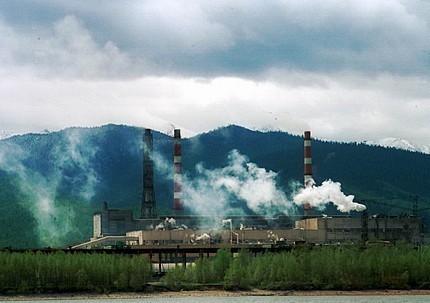
The resolution consists of three points:
- allowed the production of cellulose, paper, cardboard and products from them without the use of vast water use systems for production needs;
- it is allowed to equip special places of storage, burial, and neutralizing the newly formed waste of hazard classes (it implies permission to burial waste on the banks of the Baikal, including highly toxic and radioactive) ;
-It is allowed to burn waste with cleaning of emissions to normative quality (firstly, it will be extremely difficult to ensure the quality control of emissions, and secondly, ash obtained during combustion is often more toxic than the waste itself).
Previously, these three activities were prohibited in the Baikal natural area. Honestly, it was very strange to read this resolution, especially after Putin’s words: “If there is even the slightest share of the probability of Baikal’s contamination, we must do everything so that this danger is not minimized, but exclude”, as well as: “The nature of Russia is a gift that we received from God. This, without any exaggeration, is a miracle that we observe every day, and it requires our protection. ” BCBK is the main reason for the pollution of Lake Baikal.
The consequences of the government’s decree will be such that a year will be thrown into the lake ( Esquire No. 56, June 2010 ):
- 2.14 tons of chloroform;
- 2.8 tons of methanol;
- 0.125 tons of formalin;
- 0.23 tons of phenol;
- 2 tons of turpentine;
- 12.08 tons of nitrates.
I think you should not talk about the beauty and uniqueness of nature about the thousandth time. Baikal (of more than 2630 species and subspecies of animals and plants found to date in the lake, more than 80% are no longer found in the world), as well as that it is included in the UNESCO World Heritage List. And, in the end, this is another treasure that we can lose. 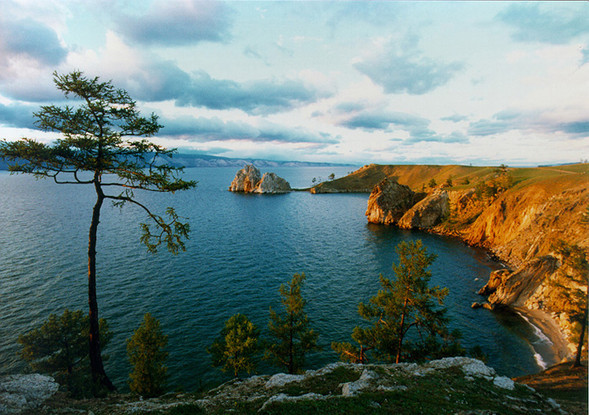
But it seems wild that after words about the protection of the environment, the protection of nature, such decisions are adopted. So what are the reasons for such a decision?
I think it is worth considering, at least briefly, the history of BCBK:
-The 1960s-BCBK is created right on the shore of the lake for the release of cellulose, necessary for the military-industrial complex. Moreover, by the time the construction was completed, the need for its products has already disappeared - new synthetic materials appeared;
- 1965- the Council of Ministers of the USSR adopted a resolution “On measures to protect Lake Baikal from pollution by the wastewater of the Baikal Pulp Plant of the East Siberian Council of Councils”;
-1970s-2001. - Credas of laws, decrees prescribing to reprofile the enterprise and prohibit the discharge of waste into the lake;
- 2001- the production of cellulose and paper without a water-closed cycle is prohibited by decree No. 643 “List of activities prohibited in the central ecological zone of the Baikal natural territory”;
- 2008 - it is planned to introduce a closed water circulation system, which is introduced in September. Then, the owner of the Continental Management BCC declares the unprofitability of the enterprise in the new conditions and the possibility of closing the plant, requiring the issuance of permission to further unhindered waste reset to the lake;
- 2010 - Resolution No. 1.
It would seem a hopeless situation. Either the city -forming enterprise is destroyed, thousands of people are unemployed, or the pollution of the lake continues. However, there was a plan to compensate for losses related to the transition to more environmentally friendly production. The plan included the development of tourism, the creation of additional BCC industries, and waste disposal. But this required additional investments, time and created the risks for which the leadership, hoping that the discharge of waste to Baikal would be allowed, did not want to go. Obviously, the calculations of the leadership were justified.
Now Greenpeace is concerned about this problem. Not so long ago, signatures were collected under the appeal to the general director of UNESCO. The Supreme Court of the Russian Federation examines the claims of ecologists about the illegality of the launch of the BCBK, but this is not enough. These are all attempts to treat symptoms. And it is required to eliminate the causes. It is necessary not to stay away from such problems, so that they do not arise again. It will be ideal if the managers of such enterprises cannot count on the fact that they can simply wait and threaten the dismissal of workers without trying to reform and look for ways to reduce harm.
We are talking about reducing the emissions of CO2, about planting trees and switching to biofuel, but little is done. You can open your eyes now and understand that it is much easier to save what we have, than then restore the lost or create a new one. Antoine de Saint-Exupery said: “We do not inherit the land of parents, we borrow it from our children,” it can be worth protecting it by doing things at least in the field of our influence, whether it is the spread of information or the organization of environmental enterprises? We can save water or proudly turn off the light once a year for an hour, but why, in addition, from time to time, not ask ourselves one question: “What else could I do?” And, I am sure, the answer will not be long in coming.
The article uses materials from the Greenpeace website.