
Translated material
A broken hobsbaum
Not a very good book of a very good historian
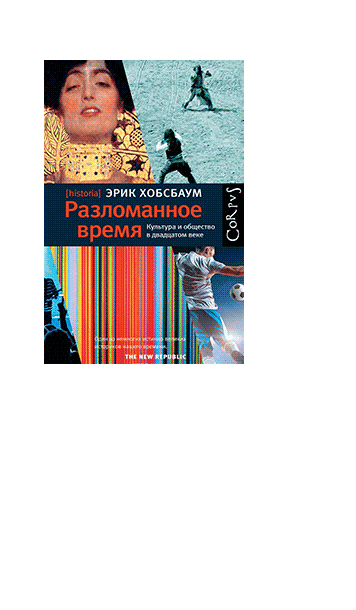
Eric Hobsbaum is one of the most important historians of the last century, the author of the concepts of the “long 19th century” (from the French revolution to the First World War) and “Short XX” (from the First World War to the collapse of the Soviet Union). He translated his last book “The broken Time” about modern culture and art - together with the translator Nikolai Okhotin “Gorky” figured out what it was interesting and what was wrong with it.Eric Hobsbaum. Broken time. Culture and society in the twentieth century. M.: Corpus Publishing House, 2017. Translation by N. Okhotin
Culture in the era of technical reproduction
“This book about what happened to the art and culture of the bourgeois society after with the departure of the 1914 generation, this society itself ceased to exist forever. One aspect of the global tectonic shift that has befell humanity since the 1950s, when the Middle Ages suddenly ended for the 80% of the world's population, about the 1960s, when the rules and conventions of human relations are obviously outdated at once and everywhere. ”
You can’t come up with more suitable words (they are opened with a book) to characterize the desire of the Hobsbaum to bring the final line under the many -sided culture of the last century and outline the first sprouts of the XXI culture (I wonder how long the historian would have been measured about the “long nine -ninete” and “short twentieth” centuries?). From whom, if not from Hobsbaum, you can expect at the same time a deep and intelligible sentence to the contradictory cultural processes, whose witnessed he was? His encyclopedic history of Europe from the French Revolution to the fall of the Soviet Union is “the age of revolution. 1789–1848 ”,“ The age of capital. 1848–1874 "," The Age of Empires. 1875–1914 ”and“ Age of extremes. 1914–1991 ” - united an attentive analysis and artistic skill, which are harmoniously combined in the works of professional historians far from as often as we would like. And in view of the unsurpassed Magnum Opus about the two-century fate of European society, the Hobsbaum automatically receives a carte blanche in the areas of a little more modest-for example, in the art and culture of this society, which is dedicated to the “broken time”.
Hobsbaum, which grew up in the interwar Vienna, grew up in the interwar Vienna, one of the cultural capitals of Europe (albeit at the end of its glory), the Hobsbaum equally digested the culture of both high and low. Or, as they would say now, both Highbrow and Lowbrow, thereby becoming one of the first nobrow historians long before the journalist John Siberia spent this term that destroyed the hierarchy and mixed elitist and mass values. A connoisseur of classical music, opera, jazz (about which in the 1950s he wrote under the pseudonym for The New Statesman and other magazines), classical and avant-garde art, synematographer, even forgive the Lord, Football, Hobsbaum possessed tastes so broad that he could write from the book about each of his interests. Partly, he did so - for example, in the works of the Jazz Scene and "Over time: the decline and destruction of the avant -garde of the 20th century."
The “broken time” included thoughts about everything else: festivals of academic music, Ar-nuvo, Russian avant-garde, Parisian “Humania”, totalitarian art, bourgeois German “Bildung”, sunset of the cultural diversity of the Habsbourg era, revolutionary coups of Dyushan and Warhol and much more. Such a thematic scatter is explained by the fact that the art of the new millennium cannot be understood without the historical context of Europe of the 19th century, "where not only the classic canons of music, opera, ballet and dramaturgy were laid, but also in a number of countries - the foundations of the language of modern literature." Therefore, general reflections on the computerization and digitalization of the cultural sphere (with a mandatory reference to the “work of art in the era of its technical reproduction” Benyamin) are adjacent to capacious, but detailed stories about Belle époque: for example, an analysis of the emancipation of women and Jews in the XIX century and their attitude to the culture of that time or a brilliant essay on the main The outsider of the Viennese avant-garde Carle Krausse ("Only National Socialism was able to make him silent. He ceased to understand his time after the Nazis came to power and died alone").
Untimely thoughts
This is a variegated inflorescence of plots - alas, at the same time the main flaw of “broken time”. Unlike the main works of Hobsbaum, this is a collection of extremely heterogeneous (both in shape and quality) of texts of different years from the various sources that is far from encyclopedicity: whether it is a performance at the music festival or simply fragment from its other book. Unfortunately, such a team of a hodgepodge, with all the desire, does not pull in at least a whole picture of what “what happened to the art and culture of bourgeois society” in the 20th century. Some articles look completely inappropriate: so, the book ends with a lecture on how the myth of American cowboy was born - you are not expected to part with the last creation of a great historian on such a note.
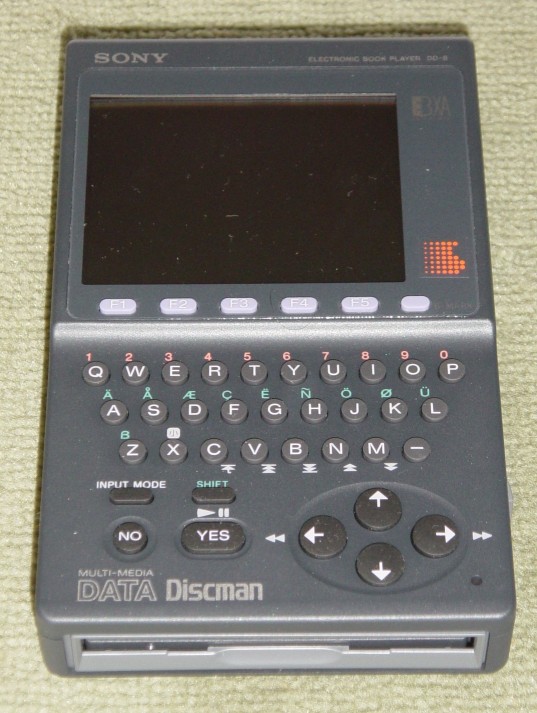
The texts about the mutations of culture at the turn of the XX and XXI centuries, which should give the book the uniqueness, unfortunately, are significantly inferior to where the author works with his usual subject. In the declining of years, the historian stepped on the very unreliable soil of forecasts. Many of them beat the goal not because the hobsbaum suddenly refused insight and the ability to subtle analysis-with this he was just in order-but because the forecasts themselves were made in a impetuous, variable and extremely inappropriate time. The creators of the Rider, writes Hobsbaum, protecting the paper book from electronic, "they do not even claim to improve readability, but only increase memory volumes and are proud that it is not necessary to turn over the pages." The problem is that this was said in 1996. Of course, looking at the Data Discman , it was difficult to imagine Kindle Paperwhite ... or: “The music is already fundamentally reinvented thanks to electronics, it almost does not depend on the ingenuity and technique of the Creator. The 21st century music will become mainly a production product. ” Even if we admit that we are talking about the most frenzied commercial pope, it is difficult to agree with such a strong generalization: throughout the 20th century, the figure of the producer also played an important role (Hobsbaum could recall the great jazz producer Theo Masuro), and in the 21st century the ingenuity and individuality of the Creator, perhaps, is even more important - precisely against the background that the new technologies and media are media. They allowed at least a little to become a creator to much greater the number of people than twenty and even more so fifty years ago.
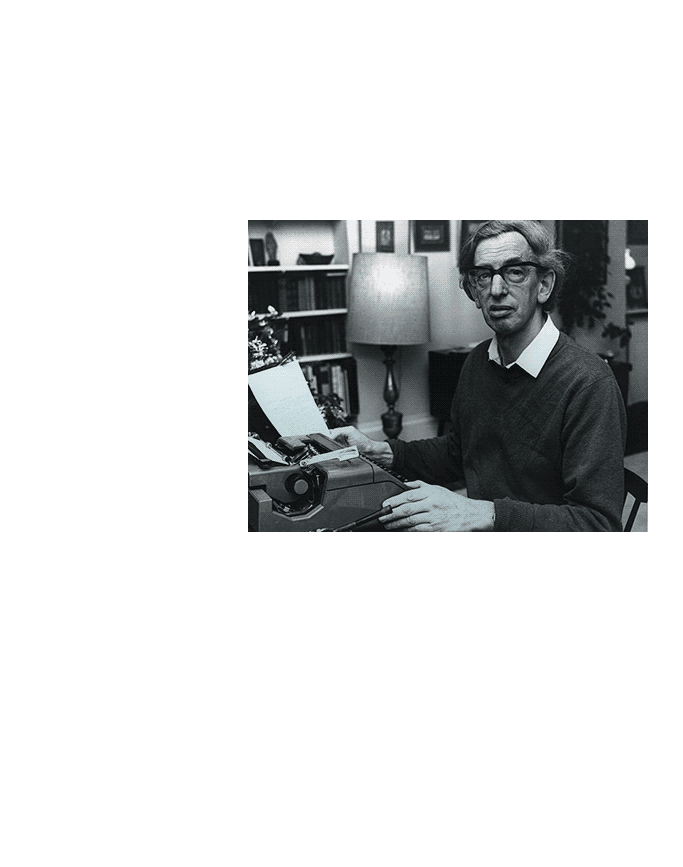
Perhaps the most important and alarming prophecy of Hobsbaum concerns the role of an intellectual in politics and society of the 21st century. The “short twentieth” was able to complain in 2010 by a 93-year-old historian, when the intellectual personified the political protest, fighting against the last colonial wars of Europe and the first imperial wars of America, against the nuclear weapons, state arbitrariness and cruelty of the penitentiary system: “Where are the great activists and signatures of manifestos? With rare exceptions, of which the most famous - Nooam Khomsky, all remain silent or dead. Where are the famous French Maître à Penser , followers of Sartre, Merlo-Ponty, Camus and Raymon Aron, Foucault, Altusser, Derrida and Bourdieu? <...> In a society of endless mass entertainment, intellectuals do not inspire good deeds as famous rock musicians or movie stars. The philosopher cannot compete with Bono or Ino, unless he transforms into a new figure on this universal show - into Selebriti. We live in a new era - at least until the universal noise of the Face -Bucket self -expression and the equalizing ideas of the Internet rule the ball. ”
On the one hand, the Hobsbaum, an intellectual with half a century of experience, quite accurately caught a nuding rejection of his own new era. On Facebook, each Sartre and Foucault for himself in one bottle, and political mobilization today is much more dependent on social media participants than on their intellectual landmarks. To cyberpessimism, the one who carefully studied revolutions and protest movements should listen. On the other hand, in his skepticism a response is already partly laid. Once the same Foucault reproached Sartre in shlaring, master's manners and a tendency to teach mass on behalf of abstract truths. The intellectual of a new sense, said Foucault, can come from an environment of non -intellectuals - doctors, lawyers and other professionals - and must criticize the existing order where he intersects with his personal experience. The same is now: if the intellectual of the Sartre or Foucault format has outlined his own, why would he really not transform into celebrity according to the new rules of the game? No wonder the label "Rock star from philosophy" stuck to Zizhek. Finally, even partly these anxieties of Hobsbaum can be enclosed in brackets, because the tradition of intellectual criticism may have grown, but did not go away: the public performance of the French anthropologist Bruno Latur in the New York against the backdrop of the Climate Summite of the UN and his support for the then many thousands of a multi-thousandth march in the city is a private, but still a sign example of synthesis of philosophy, but still a sign. Politics and activism in the 21st century.
 If you close your eyes to the inappropriate analysis of Western mythology, the “broken time” ends in a sense even more inappropriate material-an article by Hobsbaum about mass culture “From art to pop art: explosion in culture” written in 1964. It would seem what weight today have thoughts of half a century ago about TV shows, comics, rock groups and other pop culture sprouts, which has just begun to gain momentum against the post-war economic growth of the Western world? However, in fact, this is the most innovative text in the entire collection, because in it the Hobsbaum takes an amazing position for that time. He distances from those who contrast “good” and “bad” mass films, pop music, television shows or comics-and simply states that all this has already irrevocably became part of the cultural landscape. It is impossible to apply to mass art the criteria of “good” and “bad”, belonging to a completely different tradition: “It is ridiculous to judge the Gunsmoke series by the criteria that we apply to Hemingaei, the comic about Andy Krippa - as the painting of William Hogart, and Rolling Stones - according to the measurement of Hugo Wolf or even Cole Porter.” These lines are shocking: everything that has become a canonized and integral part of our cultural codes today was once a marginal curiosity that can be easily raised. And a considerable observation was required to recognize the right to exist for young and unfamiliar pop culture.
Nevertheless, even these outstanding articles, written with high journalistic and analytical skill, do not justify the apologies for Hobsbaum in front of his wife at the very beginning: "I apologize to Marlene for what I paid more attention to this book than it should." Even if the time was broken, this is not a reason to make a book of debris about him.
"When the era waved his hand, he was this hand."
At the request of Gorky, the ambiguous content of the “broken time” was commented by her translator Nikolai Okhotin :
“The collection of Essa Eric Hobsbaum, at first glance, seemed extremely interesting to me, but in the process of translation my interest decreased. The guilt of this is probably the genre itself: public lectures, performances, texts to order or on occasion. Sometimes banal things are found, quite a lot of water. However, re -reading the book, you feel its important feature, which manifests itself gradually. This feature, no matter how trivial, turns out to be the author himself. Born in 1917, he lived in Vienna until the beginning of the 1930s, then for several years in Berlin and only then emigrated to the UK. Therefore, chapters 6, 7 and 8 about the emancipation of Jews in Germany, their outcome from Central Europe and the Central Europe itself are read almost as excursions to family history. Chapter 11 about the “last days of humanity” by Karl Kraus is a hymn that sings of the brilliant marginal of Krouse against the background of the crumbling and settling of the Habsburg Empire.
The essays dedicated to the individuals are the second strong part of the book. Kraus, Bernal, Nidem, Overno a kind of display of features: their time has passed, there is no demand for such people, and the author himself is looking for a closing place among these bright portraits. This is a kind of escorting the era, those lost times that the Hobsbaum-story thoroughly restored all his life, and now it goes after them. Popying the statement of Brecht (it is in the book), when the era waved to us with a hand, he was this hand. "
___________________________