
Translated material
Self -collection experience
Fragment of the early diaries of Rainer Maria Rilke
Gorky publishes a fragment of the diaries of Rainer Maria Rilke, who are published by Libra. In 1900, the poet visited the colony of artists of Vorps Vede in northern Germany and described in detail his impressions in the diaries. The artists of Vorps Vede (Heinrich Fogelier, Fritz Mackensen, Hans Am Ende, Fritz Overbeck) broke with the academies and went out into nature: so German visual and applied art turned to the Modern and Art Nouveau. Immersion in the life of artists and the otherworldly atmosphere of the village gave Rilke an impulse to create many poetic works and determined its poetics for many years to come.Rainer Maria Rilke. Vorps Vede. In 2 tt. T. 1. Diary. M.: Libra, 2018. Translation from it. V. Kotelevskaya, E. Zaitseva
The day before yesterday, until noon, he returned from Adik Fogel. After lunch (while the fogelter packed the etchings), I went to the modernzone for two hours. We talked well with him about teaching, about the ability to teach others and the degree of maturity that everyone should achieve before teaching. If you want me to give you something, be, please, first of all with a vessel, and beautiful, be ready to accept and calmly store. Do not come, filled to the top of a stranger, to the teacher. Live first. And if life instills in you longing for knowledge, then come. We do not fill the vessel, we teach, but we can be silent dedicated to each of its filling. Then one lady came to the modernzone, who is looking for expressions in all arts at once, expressions of what she can not clarify for herself in life for herself. But since in all arts her techniques are helpless, they express, creating completely randomly, distorted images from which the girl completely falls in spirit. Oh, just do not be saved by uncertainty in art. Then, when some event will collect your whole being for the first time, in this first acquisition of integrity, whether it grows out of grief and loss or excess, you will rush into art, blindly, obediently and with immense trust. Then you will comprehend in it an image, an image that will become your basis. You will see a figure looming in heaven, whose darkening, in a wave of waves is you, you will find out that you live somewhere, forever and joyful, and that only your reflection will disappear when one day you will remove your genuine creature from the deep waters of life.
People who, before the first experience of self -gathering, want to express and gain themselves in art, exaggerate, creating, individual fragments of their essence to disproportionate, and are more and more removed from all harmony, which is the root cause of all arts. They suffer from the very hypertrophy that is most easily indulged in artistic abilities, build themselves out of drives and accidents, develop a single -sided soul, become specialists in feeling, while following the first gaining integrity, everyone receives confirmation from their creation, which is very important for its development and independence; He feels that he has unity contrary to all obstacles, and his task is to simplify these obstacles even more strongly, that is, to accept them. His growth gained the soil. His soul settles in all directions. His eyes are gullibly open. His lips are patient and stingy in speeches. His hands are at work. He is an artist.
Undoubtedly, for everyone there is a teacher somewhere. And for everyone who feels like a teacher, there is certainly somewhere a student. Therefore, you, teachers, say then only when you enter into a voice. Listen out, you, listening, at night. The time will come, and each voice will reach the hearing, flying through people and the sea. For we are still on the verge of that time and in anticipation.
Who is silent, wise. But who says, says not for his time.
Work on a note on the art of m [Oderezon]. He loves to study colors by plants and animals. The pressed sheets that fade in the darkness, under the back, let him feel that he will survive the color, and he learns from their gamma, which is more durable than the brighter sizes of the summer. Summer color is better preserved on the plumage of dead birds. In the workshop there is a glazed closet with stuffed animals of different birds - and all the species that are only in the nature of a varpswede are collected in the collection. A rare yellow oruster, a beautiful rabbit, on the wings of which blue and silver tones are flowing into thin transitions next to other reddish ones. Beautifully operated ducks, the subspecies of a woodcock, swallows, falcons, hawks, then singing birds, starting with a small urticarist, and, finally, waterfowl, birds of the evening and large, serious birds of the night, with their scaly motifs in the soft plumage of a wide breast.
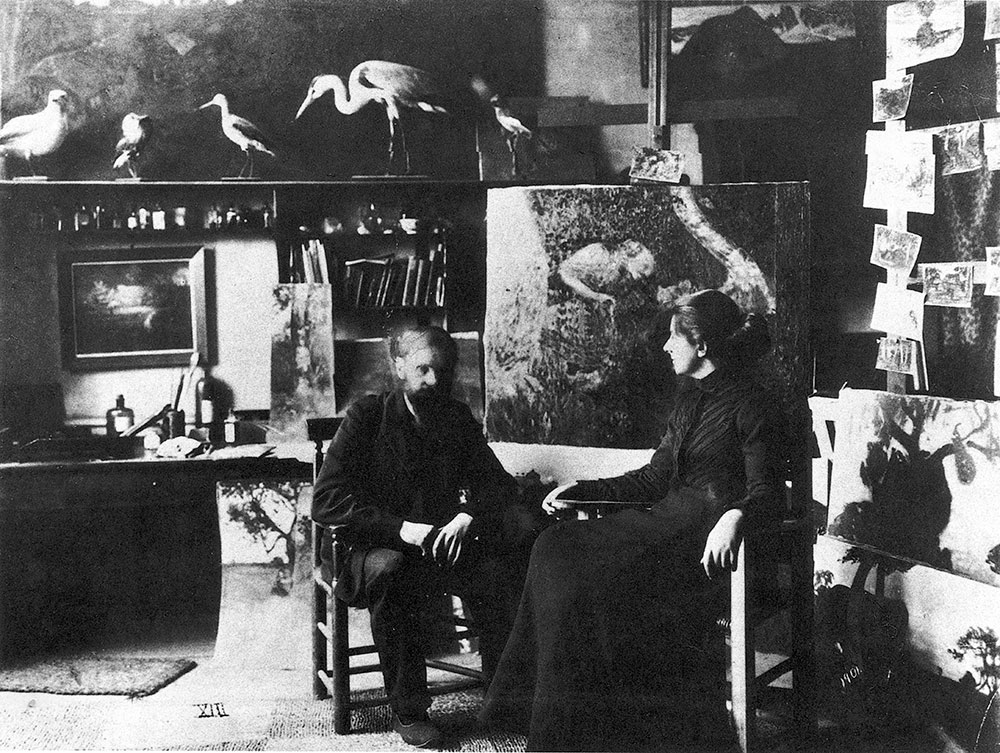
Otto modernzone and Paula Becker in the workshop
Photo: provided by the publishing house
All these beauties surround him in the clocks when the clouds and heaven are not visible to him, and prepare him for wide roads to the swamps, where he makes very conscientious sketches of huts, plain wastelands, cloudy sky, long canals with shaky bridges and especially trees. Often this is only a fragment of the birch trunk, a sketch of birch against the background of meadows or the sky. Greatly worked out plastic, without details, in a wide simple manner. I remembered the red house in the swamp, around which thin birches flow from all sides, like white rain, trembling, like reflection of leaves in water. But in the paintings that are born from such sketches, something inexpressible should be added to such achievements and undoubted acquisitions. It is saved on small sheets, over which M. will turn M. in the evening under the lamp with the help of Sangin and small. These leaflets, each half less than this page, give the viewer infinitely a lot. For they are generated by the abundance of this restrained nature and in contrast with very reliable studies are dark and mysterious. Senya at dusk, spring morning in the field, a clear evening above the swamp, an old woman in a fabulous forest (and a large, important bird on a branch is already sitting) ... All this is already excess on small leaves; Fulfilled by these simple impressions, they seem infinitely large and unforgettable. And where it is once accidentally coming true (I mean the case in the broad sense of the word)-that the authenticity and reliability of the studies coincides in the picture with the moods that were saved on small sheets-there is certainly some very significant work.
From M. I went, full of gratitude and enthusiasm, to a blond artist. I sat with her (she put aside Advent [collection of poems by Rilke, 1898 - inst.]) And looked into the depths of the angle darkened by the fabric, in which Dante's mask hung; A guitar leaned against the sketch, a slightly gleaming strings sounded slightly, and in front of it, beautiful and slender (even more slender against the background of dark soil), lily bloomed. We never began the book of Ber-Khofmann [We are talking about the novel “Death of Georg”, 1900-approx. Ed.]. Talking, then silent, we got closer. It was some very quiet event, as if the whole world was quieter, enveloping many shades. It was a joint hour or a joint moment on the edge of this hour when I said: “And I know only one thing that can confirm if you distract from everything that you wish the faithful and live your genuine life. If suddenly, when meeting with beauty, contrary and through any intervals of time and discord, you feel like a meek follower of your own childhood and notice that your today's life could coincide with the border, where your childhood is closed with confusion and case, with the invasion of the great ... otherwise there is nowhere to expect praise and recognition ... I feel it since, having rejected all the alien, having rejected all someone else's, He returned to where he was already before losing himself in everything too alien to me. ” And in this revelation we were one. Understanding each other in the past and the future ... suddenly heard each other - and after many words that were only a sound, there was a shallow silence: they spoke stones ...
And yet we are going to such a clock
We have been moving to such hours for years,
When a listener was suddenly found between us
And the meaning gives other people's words.
Silence is coming, what we are waiting from the century,
Like evening, that the stars are lit:
Two people grow in one garden,
And this garden is spread out outside of time.
And if immediately after part -
They are not together from the first phrases,
Smiling at each other, they will break through
But everyone will become more than now ...
Maybe this is all similarities: grow in meetings. On a wide road, the end of which we can’t see, we went to this moment of eternity. With surprise and trembling, we looked at each other, like two people who suddenly appeared in front of the door, which is already God ...
I hastily ran away to the wasteland. And if then I was left alone, maybe I would come in ...
But I needed to go home. I read the "Annunciation" and "The Last Judgment" [Poems from the "Book of images" Rilke, 1899 - approx. Ed.] With brilliance in the voice. But then I participated in long everyday conversations, and when, after dinner at the hotel (we talked about Johanna Herdeus! [The owner of the hotel in Vorps Vede. - Ed.]) I finally returned to my red room, I was tired and kept only quiet memories of wandered and distant feelings that could no longer extract any blissful. So our friends fall on us like shadows. Sometimes they do good for us with their darkness, but often we feel only the cold and severity of these shadows that are not the shadows of resting things, but mobile, whimsical, wandering twilight.
Friends do not interfere with our loneliness, they only shy us in solitude.
Friends should be like a dance or music. You should never come to them intentionally, but always with some involuntary need. So, friends should appear in life. On the way they interfere.
On the way to Bremen (yesterday), Fogel told me a lot about March S. [Marta Schroeder is the bride of Fogeler, his muse and model - approx. Ed.]. Back in the first year of life in Vorps Vedas, when they somehow lay with Mackeng on the mountain and looked from there to the village, Mackeng called a fourteen-year-old girl. She was a fair -haired and quiet and already quite pleasant. Makenzen lived with her parents ... "I then became surprisingly quickly friends with Mackeng ...". They went together for long walks around the swamps, went into the huts, and as soon as it happened, they remained beside each other and spoke, Martha Sh., Employed, was always somehow inscribed in the interior, and her quiet blokuria already actively participated in the image. Soon she entered the paintings of Fogler.
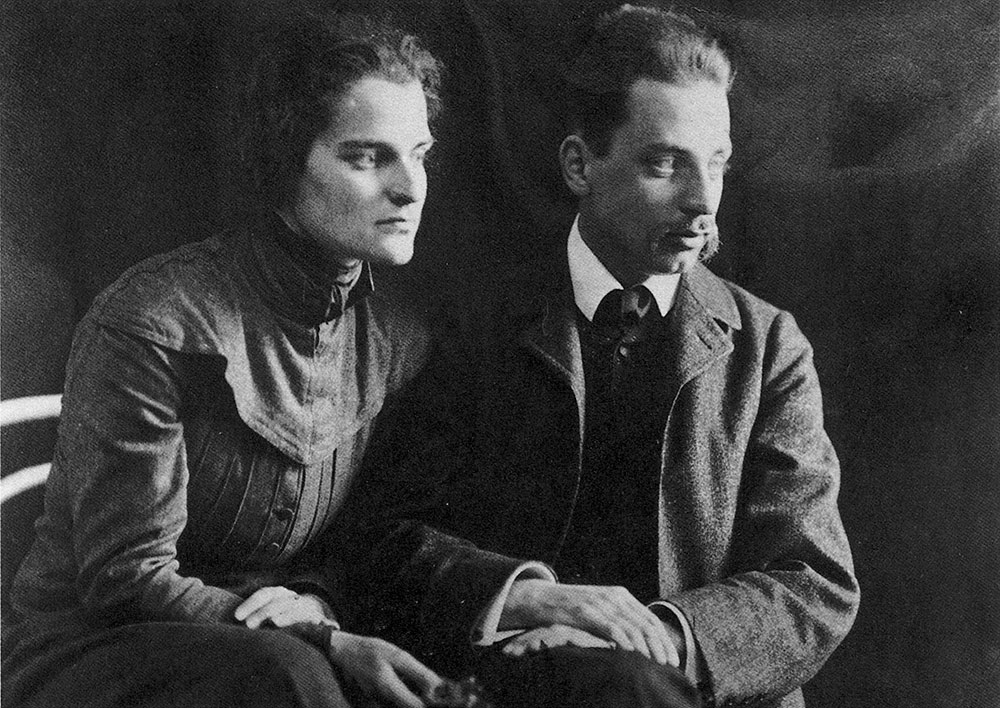
Rainer Maria Rilke and Clara Westkhoff, sculptor and his future wife
Photo: provided by the publishing house
Before that, he painted all the violent, outlandish things. Feasts, jackets before dawn and centaurs jumping out of the emerging day to kidnap the virgin sleeping with a strong hop. She made him simple at once. She showed him the earth on which he began to dream of glorifying it. Thus, their affinity grew out of its formation. Marta was in front of him. A village child, a girl from the swamps, because of the experiences complete tenderness, very lonely and suffering from alienation. It so happened that he, in order to free from painful circumstances, took her with him to Dresden, where she began to study languages (French and Italian) and weaving craft, listening to music. He encouraged her to develop, as encouraged to develop when she expected him at home. He does not contact anywhere with her girlish being, she has his own dreams and embellished memories, in which there is a place for him, even more than in her very life. In the fall, they want to get closer to each other a little more and slowly start reading French books together, later - to watch together paintings, first in Holland ... “And this will be the most difficult ...” Will they get used to this union? Or will something that bring them together? Before the picture, behind the book? And should this trials from the picture or by the book come to, and come to see with all caution?
You write to me: "Tolstoy is very hard in a clear meadow." Maybe we still said goodbye to him. How clearly I see in front of me every moment of that day! [Rilke recalls a trip to Russia and about visiting Leo Tolstoy in Yasnaya Polyana in the summer of 1900 - approx. Ed.] What joy swept over when we rode under the trembling bells through the wavy meadows, for the first time traveling along the Russian soil, just as Gogol and Pushkin traveled, with loudly ringing dishes, on galloping horses. And so they drove into a frightened village, which looked into all eyes because of every wretched door. And again, from the village to the road to the two white stone arches, through which the rise to the park opens. We are quietly entering his shadow; Robe, suppressed by the upcoming one, and we want to enjoy this park and this day without an old man to whom all this leads. And then we stand in front of the White House, in which everything is quiet, we pass by a round green bench and, finally, find in the yard, at the well, someone who takes away business tickets from us. And we are waiting again. And the dog gullibly and affably approaches us close while we stand in front of a small glazed door. I lean toward a white dog, and when I rise again, I see behind the glass, fuzzy and distorted because of refracted light, looking for my eyes on a small senile face. The door opens, passes you forward and shuts sharply in front of me, so that only when the count was already greeted you, I follow, and now I also stand in front of him, somewhat large, according to my sensations, next to his dry light figure.
Having completed the reception of guests, he leaves us with Lev Lvovich and returns to the office. Then I climb after you a wooden staircase and enter an extremely bright dining room in which only old oil paintings darken. The table is long, narrow, covered in white, and a large silver-white samovar rises at the head of it. We sit down. Quite a few things in the large hall, which through three windows is dotted with reflections of the thick greenery of powerful trees. We ask about portraits of the ancestors. Especially interesting is the oldest. Portrait of the nun of the reign of Alexei Mikhailovich. Clearly created by the icon painter, the image completely conveys the character of St. Sophia, in posture, dress and in strictly canonical expression on the face. Only when depicting hands in the artisan, an artist, sighted, awakened, and he wrote them out for sure, with realistic attention to the model; Thus, he lost sight of the general proportions and depicted them, respectively, larger, and now this saint can hardly withstand his earthly hands, which must be the great prayer. Oh, and there was also one sophisticated “portrait”, I remember. The bold nobleman of the end of the eighteenth century, completely dark and dress, and the background around the face with dark eyebrows and the spiritual folding of the lips in the spirit of that faithful time. A frame of an old, faded, echoed tree, oval and almost tasteless. In its own way, this picture was beautiful against the backdrop of the bright and clean wall of the long hall. There were also modern works: the sculptures of Ginzburg and a bust of the thick work of Prince Trubetskoy. We spoke little, drank coffee and often glanced out the window, on a radiant day, where some bird was unusually close to rolled and shouted Carr-Carr with a sharp “p”. We chatted about this bird and, in the end, went to the park after her. Everything bloomed there. The old birch alley was beautiful and shady, at the end of it, Altan stood, which staggered greatly under our steps. We lovingly looked around the Earth, swaying, calmly and matured, forget -me -not, like waves. In the distance there was a tract too remote for the ear, and for the eyes a completely toy. Then we slowly walked back with flowers, asking about different trees, ancient and venerable. Returning, we entered the house from the other. In the hallway, the countess was engaged in the arrangement of books in the cabinet by the window, and we had to listen to the cold greeting she had abandoned and experience all the annoyance, which she expressed to someone invisible. These were alarming half an hour in a small room with walnut furniture. We examined the books in the cabinets behind the glass, tried to look at different portraits, but we only did that we listened to the steps of the count that appeared in the hallway. Something happened: the voices were excited, the girl cried, the count comforted her, the countess’s completely indifferent voice between this ... The steps on the stairs, all the doors set in motion, and then the count enters. He asks you coldly and politely about something, his eyes are not with us, only his gaze addresses me, and the question is heard: "What are you doing?" I don’t remember exactly what I answered, it seems: "I wrote something ..."
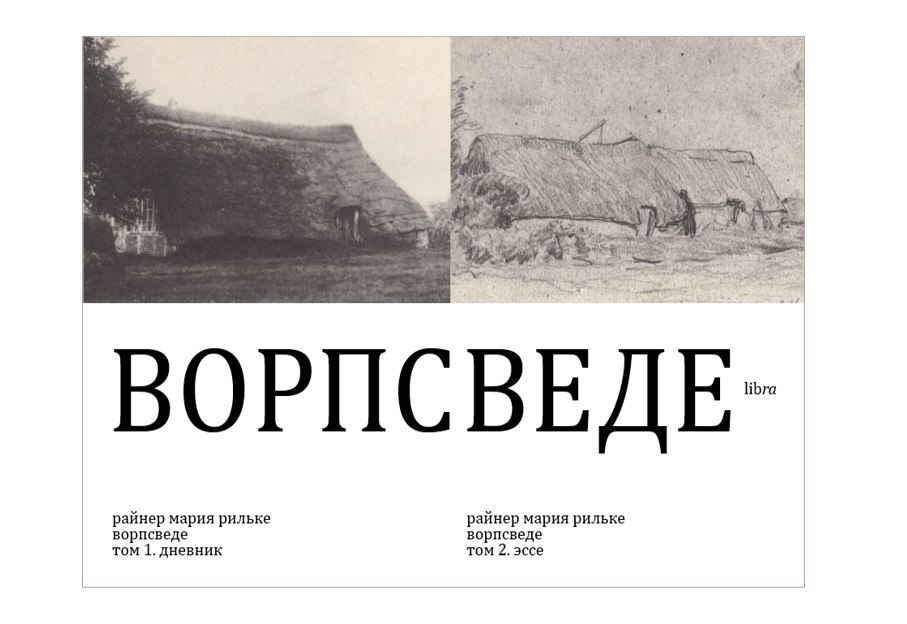
Photo: provided by the publishing house