
Translated material
Salinger mirrors
The centenary of the author "over the abyss in rye"
One of the most famous writers of the twentieth century and at the same time one of the most mysterious: exactly 100 years ago, January 1, 1919, was born Jerome David Salinger. “Gorky” asked the literary critic and prose writer Andrei Astitzaturov to write a text about the secret of today's anniversary.Jerome David Salinger is one of the most mysterious writers of the twentieth century. It became mysterious back in the 1950s, having secluded somewhere in the root, far from people, from large cities, from noisy highways. Then his behavior was explained by the usual eccentricity of the genius, which is about to come to his senses and will appear to the public. Time passed, and Salinger was not all the public or reporters. They spoke that his talent, apparently, was exhausted. But then the book “Franny and Zui” was just published, which broke all the conceivable records of sales.
Following her, three more stories appeared - these, however, caused a much less stir. And then again for many years the silence is incomprehensible, incompetent. Humanitarians, journalists and uppersical gossipers were lost in conjecture and put forward versions. It was reported that Salinger shut up for religious reasons and lives a hermit. It was claimed that he overcame literature and closed in silence, much more wise than weaving a word, even graceful. There were those who saw in his behavior a cunning commercial move - a new way to attract attention, and with this discovery they were noisily admired. In a similar way, by the way, Thomas Pincon behaved: he also never appeared in public. Someone even expressed the opinion that Salinger and Pinchon are the same person that Salinger is now in a new mask and writes under the pseudonym Pincon.
This was far from the only provocation that could make Salinger finally speak. There were others - much more rude. Salinger was laid behind his house, they were hunting for him, armed with cameras and tape recorders; His acquaintances, his agents, his publishers were thrown with letters. Salinger, admittedly, sometimes reacted. But extremely sluggish, indecisive, somehow ascetic. Once he even appeared in court when they invaded his private life too much. They say that when he signed legal documents, his hands were trembling from excitement.
However, it must be noted that Salinger did not specifically hide from anyone. He led all this time, from the 1950s until the end of his days, the life of an ordinary American citizen. He simply did not give an interview, did not suit meetings with readers, did not perform on the radio and on television. Salinger's face was not replicated, and when he came to public places, he was simply not recognized.
Already in the 1960s, he had a huge army of the hottest and loyal fans. This army did not stop at all over the years, but, on the contrary, was actively replenished and became more organized. Countless societies of Salinger's friends, circles on the study of his work, uniting young and not very young enthusiasts arose. It is curious that Salinger's cultness did not contribute to his popularity in academic circles too much. For a long time, very little has been written about the Salinger, much less than about his contemporaries, Updike or Styron. This is not surprising. To build literary locks over the abyss is a risky and ungrateful occupation. There should be soil underfoot, the foundation of archival materials, drafts, personal letters, interviews, conversations, etc. And the researchers of Salinger, if any, were deprived of all this. They remained alone with strange texts and were forced to build hypotheses, relying on indirect evidence or their own guesses. In part, therefore, a solid academic consensus, adopted by the professorship by the professor of his work, has not been developed against Salinger. On the contrary, a third-party, non-academic person may be pretty surprised by the presence of a large number of mutually exclusive versions of any one Salinger plot. However, everyone converges in one thing: Jerome David Salinger is an irreversible, important figure of American literary history. He is the successor of the traditions of S. Anderson and E. Hemingway and at the same time the author, who discovered some prospects for writers such as J. Appadayk, F. Roth and J. Four.
At the beginning of the century, the literary world was stirred up by the sensation: the memoirs of Margaret Salinger, the daughter of the writer, was briskly written, who seemed to open the veil of secrets and answer all questions. And what? In this book there is everything that all curiosity will wish. Injuries of the campus inhabitant, complexes, complaints and, most importantly, the figure of a father, who touched wives, mistresses, their young admirers, their own children - in a word, all who fell into his orbit. Having told a lot of intimate details, energetically shaking the dirty linen, his native daughter painted the surprisingly unsympathetic portrait of a petty, suspicious person - however, very similar to any of us. What are the secrets of the work of the great recluse! We are not up to them. It is necessary to recall all the insults, all sorrows, all of my dad’s injustice. All this is good for reading sensations and exciting. But the Salinger-Referee, if he was such, the reader-reader and the writer-writer remained with brackets-they were not interesting.
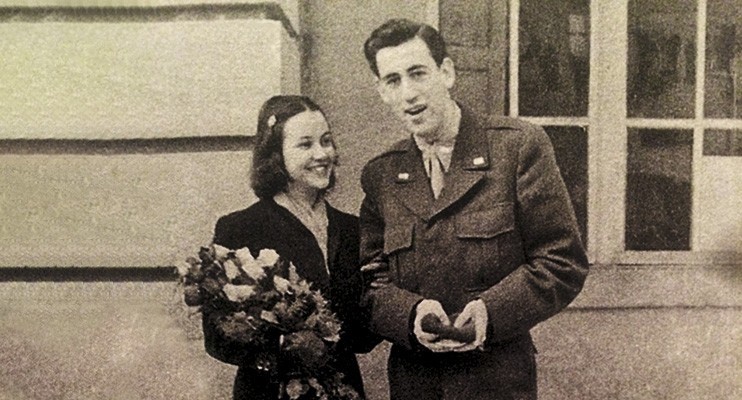 Jerome David Salinger
Then, shortly before the death of Salinger and soon after his death, biographies appeared, written much more restrained, sometimes with love and attention to a complex personality. They flashed facts, historical circumstances, letters to literary agents, legal agreements, copies of tickets for aircraft, trains, steamboats. Biographers, having discarded apocryphal jokes, reliably talked about where Salinger fought, with whom he lived, how he married, how he got bred. And everything remained the same, without the slightest intellectual aftertaste. Salinger with his thoughts and texts remained out of reach. By reading the biographies, a stable feeling arises that the denser you are approaching the Salinger, the more distant, more irrational his figure becomes for you. In the end, you catch yourself thinking that everything told has much more attitude towards you than to him. And the Salinger is still impenetrable and hard, like an insoluble tablet.
Whit Barnett, watching Salinger in his classes in 1939, apparently felt something like that. He conducted a course of literary skill at the Columbia University and almost did not pay attention to the 18-year-old unwell young man who was sitting on the back rows and looking out the window, showing a absent-mindedness typical of people. And suddenly, at the very beginning of the second semester, this young man brought him the story “Teenagers”. The story was written strongly, energetically even by the highest standards of professional literature. Barnett was delighted, immediately published a story in his journal Story and paid the young author his first fee - $ 25.
Perhaps even then, composing his first text, Salinger understood that a person who defends irrefutable human truths is not so significant in itself. That she must be hidden in every way. That it is interesting only to that part, which sets in motion the material of art: images, lines, words. That she is just a great-an intermediary between things and the reader, a transshipment point on which you should not get stuck. What if you want to succeed in art, then it should be made by a transparent lens that refracts the rays of light. But this task is not simple. A person who requires constant care and attention seduces us with feelings, desires, ideas, shocks and injuries.
And Salinger's real injuries were still ahead. Romanes with capricious, arrogant girls, family quarrels, the torment of creativity and the first failures - the story “Teenagers” made a strong impression on the literary teacher, while others brought by Salinger were rejected by him.
And finally, war. Perhaps the worst and most stunning that could happen to him. Being a pacifist, Salinger asks for the front, probably realizing the soreness of this choice, the inability to correspond to the moral absolute in the created conditions. In any case, he was not one of those who cut his heads into the thick of the battle, feeling the delightful music in it and drawing inspiration, dissolving into the soldier's mass. Kipling ideals were far away to him.
The fact that Salinger experienced at the front is difficult to judge, but biographers give impressive numbers: from the regiment in which Salinger served, there were hardly several dozen people who were miraculously survived. Then there was work in counterintelligence, participation in the denazification of Germany, interrogations of punishers, executioners, Nazi scammers. All these physical and moral overloads had to be healed. The methods were at hand - religious existentialism, Zen, without nonsense psychoanalysis and, finally, creativity. Judging by the ironic attitude of Salinger to all of the above, he could not finally recover. And a living evidence of this is his texts. It was as if there wasn’t even no war there, or almost not, but it is invariably present in the periphery of the gaze, in a trophy pistol, in gestures issuing in the characters of the front -line soldiers, in the exhausted nervous faces and in the possible future, about which Franklin speaks - one of the most characteristic characters of Salinger, predicting the war with the Eskimos. The war in the texts of Salinger is always behind, always on the horizon and, which is fundamentally, always in the present, no matter how peaceful it may seem. Judging by the stories “Bananka Fish” and “Lap-Rastyapa,” are not healed. And at the same time, they are cured, if you do not pay attention to your own personality, if you do not make it with the beginning and the completion of everything, if you detect the area lying on the other side of human words and understanding.
Apparently, in literary work, Salinger saw the path of religious salvation, a way of overcoming military trauma that captured his entire personality. And apparently, he did not consider himself the right to present this personality to outsiders.
Most likely, the answer to the questions and bewilderment should be sought in the texts of Salinger. However, there are more questions than answers. How to explain, for example, the incredible attractiveness of Holden Collfield, the central character “Above rye”? The opinion of historians and sociologists of literature was unanimous. Holden is simply consonant with his time, accumulating the youth riot, which gained his strength in the 60s and somewhat weakened in the 70s, when “children of flowers”, hippies entered the stage. Holden is a teenager who challenges decisively to everything: educational institutions, commercial art, astabishman - in a word, “adult world”. In his baseball cap, worn backwards, in his attempt to defend spontaneity (“how to know in advance what he will do”) he seems to be almost a Beitnik, or the prototype of the future hippie.
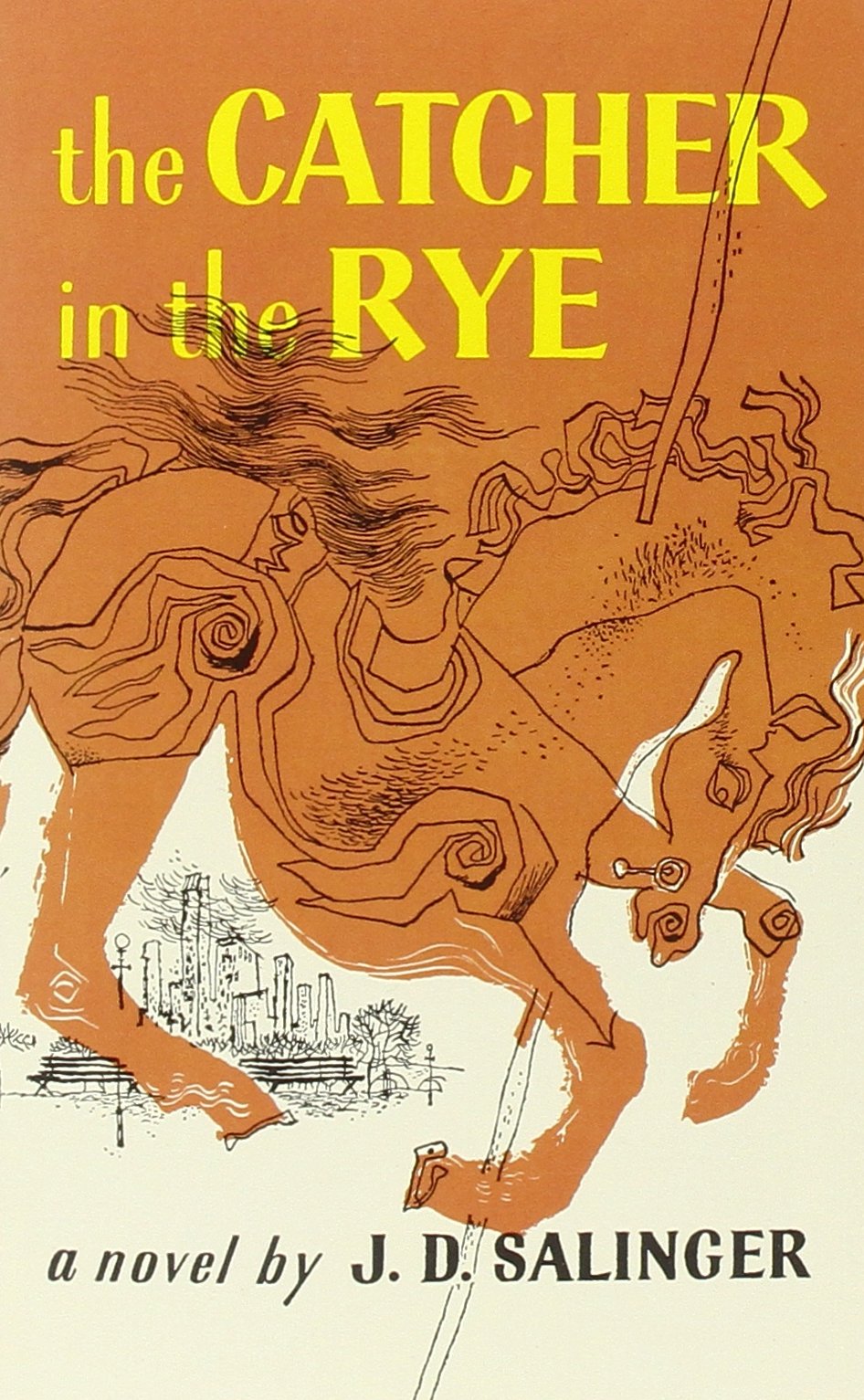 However, times have changed, youth revolutions have come to naught, America and Europe were mired in a swamp of complacency - and these circumstances did not affect the popularity of Holden. Anyway: is Holden a rebel so much? After all, this was the favorite character of Salinger, and Salinger himself was skeptical of political radicalism, to new modern ideas, and the revolution. Apparently, it was different. Most likely, fans of Salinger of the era of the 60s too much wanted to see in his hero themselves, rebels. It seems to me that the image is built precisely for this purpose - as a mirror, so that everyone can see his own reflection in it. Holden throughout the story maintains a state of uncertainty. He really protests, but only against the fact that he imagines himself final, definite, against the schemes imposed on the world. Holden on the side of the virgin, neutral reality, which he is called to protect. In the story, almost every episode remains unresolved and leaves the meticulous reader in bewilderment. In the finale, Holden pronounces a key to understanding (more precisely - misunderstanding) of a story: “ <...> D. B. I asked me what I think about what happened, about what I told you about. In truth, I myself do not know what to think . ”
Think is given to us. To think, determine, draw conclusions, like likes. And we will think about the book exactly as we can, putting forward our personality, our invaluable ideas, our feelings. Of course, we read the book, but the book paradoxically reads us, revealing us our current state, mental and emotional.
Stories and novels are the texts are much more mature and much more appreciated by the fans of Salinger. In them, Salinger leaves the teenage tale with his “and all that”, “well, like you understand” to a more sophisticated, but still ascetic art manner. Nevertheless, he retains the previous task - to turn his texts into mirrors exhibited before readers. This is the whole arsenal of techniques. For example, the Salinger connects almost absurd accuracy and amazing approximation. Against the background of accuracy, he eliminates the general panorama of action - more precisely, organizes in it voids, white spots, and passes. The beginning of each of the stories is extremely specifically, and the reader’s imagination as if there is nothing to do:
“The hotel lived ninety-seven Newyorcians, advertising agents, and they loaded the intercity phone so much that the young woman from the 507th room had to wait half a day, almost half of the third, while she was connected.” (“Bananka fish is well caught”, per. R. Wright Kovaleva)
“Until almost three o’clock, Mary Jane was looking for Eloise's house. And when she went to meet her to the entrance, Mary Jane explained that everything went fine, that she remembered the road absolutely exactly until she turned off the Merrick Parkay ”(“ Lapa-Rastyapa, ”r. Ra-Kovaleva)
“Five times in a row on Saturday in the mornings, Ginny Mannox played tennis on the East-Sayd court with Celina Graff, her fellow practitioner at the Miss Beishor school” (“Before the War with the Eskimos”, lane S. Mitina)
The narrator, as a rule, clearly sets the time, clearly draws the details of the space, but then the panorama completely disappears, remaining unclear. Salinger's stories are often unclear plot motivation. Sometimes the action itself is hidden from our eyes. We, as a rule, do not really know what the Salinger characters look like. We see some kind of dumps, fragments of reality, and not the whole reality. We see an uncomfortable corner of the bed, but not the bed itself. We see a chair in the middle of the room, but not the room itself. The hole of the nail, but not the nail itself. We see three hairs sticking out of the wart on the cheek, but we do not see the cheek. We see a gray -haired head, but we do not see the face. We have to focus on the proposed details, holding within the limits of poorly defined border lines, independently establish connections, think out its world, finish, paint it. And here we are again doomed to transfer ourselves to the space of the text, which becomes a mirror reflection of our efforts, our thoughts and desires.
What else is striking in these stories? Things that are in Sartrovsky appear indifferent to a person existing without any connection with him. Things do not lie in speculative schemes, rebel, injure their owners. Glasses, trays, cigarettes fall from hands; A razor, hidden in a underwear basket, hurts painfully; The gas stove suddenly explodes in the hands of a soldier; The leg of the bed is set so that it will surely trip on it. Salinger has many such examples. Yes, and people themselves seem to be separate from each other, and when they try to build a dialogue, help, achieve justice, this isolation only intensifies. However, the exit is every time. This is a Christian gesture of renunciation of its own truth, from conviction of its finality. Human meanings are imperfect, short -lived, but there is a plan. To feel not the center of the world, not the source of truth, to accept the world in its separation, to become part of the plan - apparently, this is the lesson of Salinger.