
Translated material
Galichi
October 19 - the birthday of the poet, Bard, screenwriter Alexander Galich, on the verses and songs of which generations of Soviet dissenters grew up. Alexander Kolchinsky*, biologist, molecular geneticist, in recent years-historian-research in his autobiographical book “Moscow, g. 1952 ” One of the chapters ** dedicated to the poet. A. Kolchinsky *** did not become August 3, 2024. This publication is the memory of Alexander and Alexander, who was just Sasha for many authors and friends of NT ...
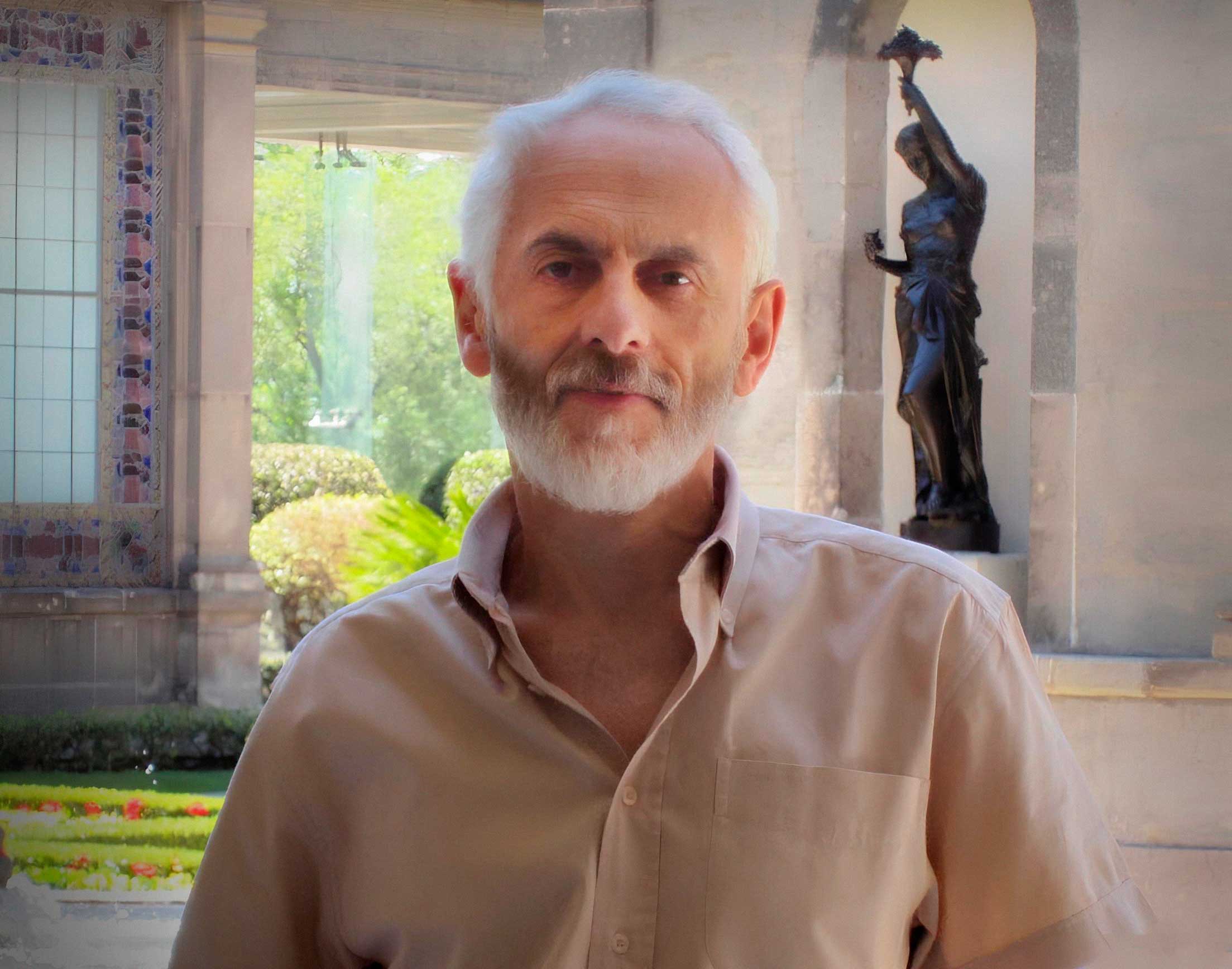
Alexander Kolchinsky
I knew most of my parents' friends from birth. Among them were famous and unknown people who made a successful career and close to dissident circles. It was common that with almost all of them parents were associated with early youth, sometimes even from youth.
Alexander Arkadievich Galich and his wife Angelina Nikolaevna (who everyone called Nyusha) were close friends of her parents as much as I remember myself. Close-this means that they were called back at least once a week and saw each other, probably once a month or two. Angelina Nikolaevna terribly loved her mother’s cooking, as soon as her mother was calling the Galichs and say: “I made stuffed fish,” as Nyusha said “we were leaving” , and they really came that evening. Galichs certainly visited our family celebrations.
Mom has been friends with the Galich since the post -war times. She kept letters of the late 1940s, which Nyusha wrote to her, leaving the city. These letters were signed by David Copperfield, such, obviously, they had a game and his mother.
Nyusha treated me in a kind, she even wanted to unobtrusively participate in my fate. When I was thirteen years old, she decided to introduce me to the daughter of her loved ones, my same age and a very pretty young lady. To do this, she led us to the satire theater for the play "Carlson, who lives on the roof." Nyushin did not materialize the calculation - the young lady and I did not make any impression on each other, and the performance did not particularly like the performance. But I was pleased: I was pleased to go to the theater with Nyusha, once again to feel her attention to myself.
Among the adults, it was considered a beautiful Nyusha. It never seemed to me that the children had their own ideas about beauty, and Nyusha had a characteristic face-an unusually high forehead, an upturned nose, huge gray-blue eyes, short hair, which she had already painted with silver paint to look like a gray one. Only much later, looking at the photos of young Nyusha preserved by my mother, I was able to appreciate her beauty, but her charm and amazingly acute sense of humor always appreciated.
I considered Alexander Arkadyevich beautiful. In addition, he seemed unusually elegant to me in his always suitable suit: a dark turtleneck and a jacket made of expensive thin fabric.
When Galich began to write songs, he constantly sang them with us. Alexander Arkadievich sang always after a long feast, slightly tipsy ( “I sing under the snack / and two thousand grams” ). When Galich took up the guitar, it was, as a rule, quite late, but my mother did not drive me to sleep, and I sat very quietly, afraid to recall myself once again.
At first I did not understand much in Galich's songs. When I first heard the “business trips”, I was terribly surprised why Alexander Arkadievich so strangely addresses Nyusha: “Either you are a whore, or a wanderer ...” And why can a corridor drive her out of the hotel room. The fact that in this first-person’s written song it was about some other, an outsider woman did not occur to me.
About twelve years, the song “Clouds” did not reach me at all. I could not understand why it is important that some clouds are sailing somewhere: “Clouds are floating, clouds / floating into the cute edge, in Kolyma ...” I did not understand the first lines of another well-known song: “But the boss, it’s here, about Stalin / everything is enough for the lamb with his hand ...” Yes, and the allusions to the present, which made up the essence of the conflict, say, were not available in “tone” for a long time. My understanding. But I preferred not to ask adults who, as I saw, had no problems with understanding. I was afraid that they would tell me: “You still won’t understand,” and next time they will not be allowed to sit and listen.
However, gradually the meaning of Galich’s songs began to clear up to me, and I began to persistently convince my parents that “we must finally record Sasha at our place” , that is, buy a tape recorder. I called Alexander Arkadyevich for his eyes - simply because his parents called him that.
Just by this time, the father defended his dissertation, and with money the house became much easier. The tape recorder was bought. I first wrote down Galich on our comet in March 1968, at the birthday of my father.
I must say that it was very difficult to record Galich: he ranged the volume of his voice and guitar in such a wide range, moving from open sound almost to the whisper that it was almost impossible to compensate for these differences. My notes, of course, are imperfect, but I keep them. These films are important to me by comments, each time a little different, with which Galich accompanied his songs. They are dear to me and what I can distinguish in the sound “background” familiar voices: Nyusha, parents, their friends. Nyusha, however, sometimes served remarks right during the song, as if stylistically reducing it; This is heard on many surviving films, and not only mine.
These records were important for the admirers of Galich, and for himself. He eagerly allowed himself to write down wherever he sang, and there were not so few such houses. But over time, it became clear how important it is to make a recording on good equipment, and it was difficult to find such equipment. My mother knew that the luxurious studio tape recorder had her boss, who was a synchronous translator, worked for all kinds of international conferences, and often went abroad. Like most synchronous translators, he was most likely associated with organs, but probably with a completely different department than the one that was engaged in dissidents.
Naturally, before inviting this person with a tape recorder, my mother discussed her idea with Galich, and he liked her. In March 1969, we made a very high -quality record at our house, which, of course, I rewrote myself.
Then I already well understood the degree of risk that Galich exposed himself, and carefully watched how he reacts to the owner of the tape recorder. Alexander Arkadievich was, as always, elegantly amiable, friendly, and cheerfully shouted: “Motor!”, Growing out to sing another song.
It seems that at this time Galich was primarily worried about the quality of his records. He knew that his films had long been “where should”, and apparently decided for himself that if he every time he would try to calculate whether there is a snack among the audience, then he would just have to shut up. If Galich has ever had fears on this score, then he already discarded them: “But I choose freedom / and-whistle in all whistles!”
However, Alexander Arkadievich never showed particular caution. The first time I was surprised to understand this in the fall of 1966.
This happened at a banquet about his father’s protection, arranged in a separate hall of the restaurant of the central house of writers. It is clear that such a banquet was attended not only by close friends of the parents. There were people, in general, unfamiliar: daddy colleagues, opponents, members of the academic council-about forty people.
And after all the settled toasts in my father’s address, the “artistic part” began - Galich came out and sang among other things “Pasternak’s memory”.
I was fourteen years old, and of course I did not know all the details of Pasternak’s persecution and did not immediately realize that the main events took place in the very building where we were at that moment. Nevertheless, I easily recognized the rhythmic scheme of the “winter night” and immediately remembered almost the whole song: “... we will not forget this laughter / and this boredom! / We will recall all / who raised his hand by name! " I saw that Galich was recorded that evening-a microphone hung, and someone around this microphone was fussing, but Alexander Arkadyevich seemed to be absolutely not concerned.
At the same banquet, Galich gave my parents a typewritten book of his poems with a delicate gift inscription. It was the second or third typewritten copy, containing almost all the songs written by that time. The book was intertwined into brown dermatin with gold letters “A. Galich "on the cover. When the first publication of Galich’s songs, which was preparing my wife, who worked in the magazine “October”, was to be released in the Soviet Union, she checked the texts on this book as the most reliable source. There was no such author’s copy, as it turned out, neither the brother nor the daughter of Alexander Arkadyevich.
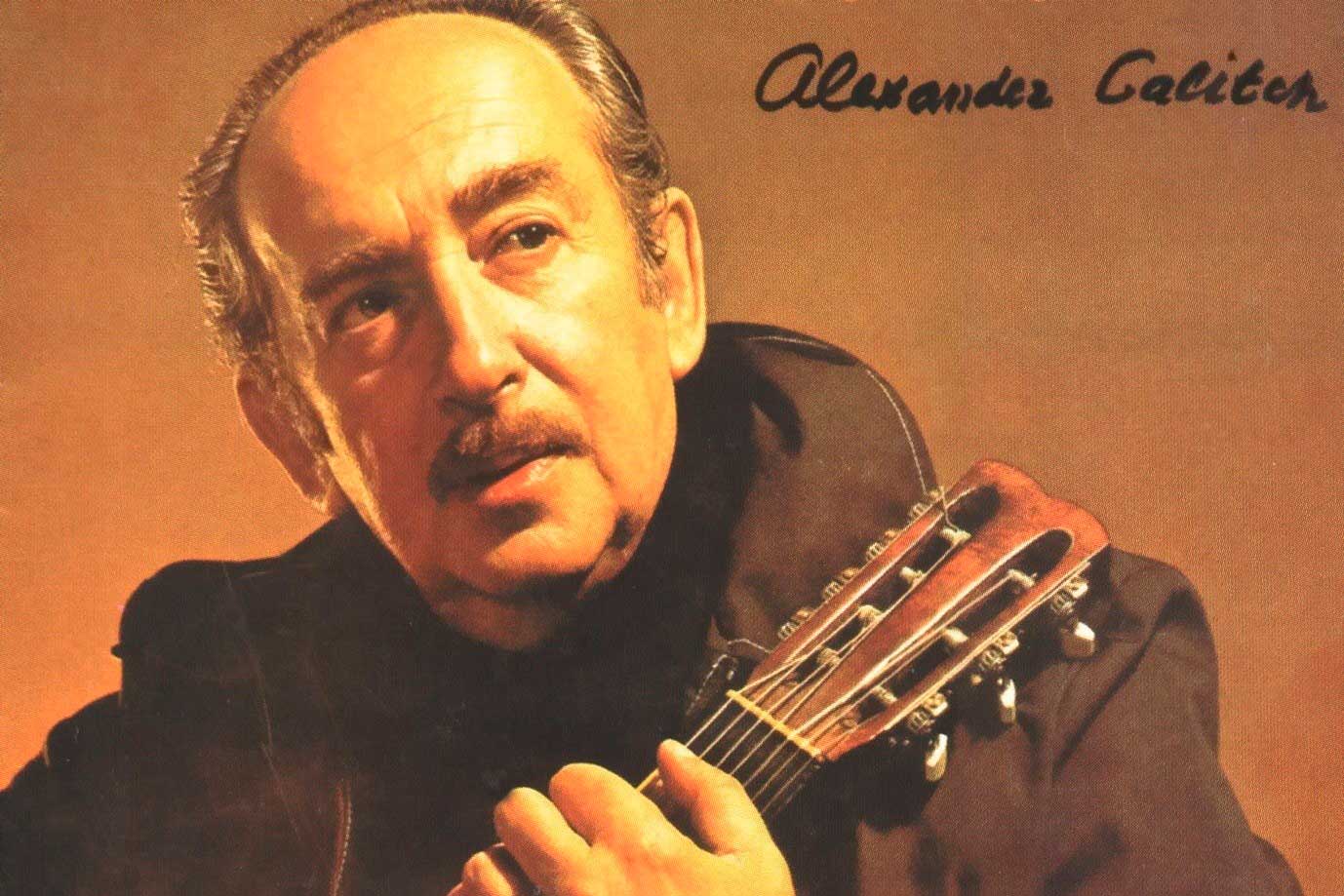
Alexander Galich
The parents went to visit the Galichs, as a rule, without me, and sometimes I myself ran to them in some business.
When I was fifteen years old, I was very fond of Georges Brassens, whose records were quite difficult to find. Once I asked Alexander Arkadyevich if he accidentally had Brassens records, to which he replied: "Of course there is, come in." I arrived, Galich took me the early album of Brassens La Porte des Lilas , and I saw that on the envelope of the records he was coarsely written in a black felt -tip pen: “And sashha ... George Brassins” . Stunned by such close contacts with an unattainable idol, I asked Galich: "Alexander Arkadyevich, so he inscribed it for you?" -And he without any vanity, with some even shy smile, confirmed: "Yes, yes ..."
I remember I noticed the Bitles record on the shelf Revolver , asked, but this can be rewritten? I was pleased to see the Beatles in an adult, an educated, refined person. Parents were condescending to my hobby “Beatles” when I spoke passionately that they would also be listened to thirty years later, they only looked at each other ironically and grinned. Galich, obviously, “Beatles” appreciated, otherwise why would he keep this plate, and, as it turned out immediately, not one of it. Holding me Revolver , Alexander Arkadievich said: “But there is Hard Days' Nights, do you want? Although, probably, Revolver is their main record for today, completely innovative. ” I allowed myself to disagree with this: “Well, what are you, Alexander Arkadievich, Sergeant Pepper - this is a thing!” At that moment, I preferred the recently released psychedelic “sergeant”, although today I understand that it was Revolver for the Beatles turning point.
Galich’s apartment seemed to me the most beautiful of all where I was then. Alexander Arkadievich and Nyusha lived in two adjacent rooms, and in the third, isolated, Nyushin’s daughter Galya lived. Even according to the then concepts, it is not particularly spacious. But everything was arranged with an extraordinary taste, for a European manner, as it seemed to me. Disassemble modern furniture, a checkered blanket on a tacht, on the table- the International Herald Tribune numbers, smells pleasantly to some unfamiliar tobacco. The shelves in both rooms and the hallway were filled with books in several European languages, rare albums.
Galich was surprisingly fluent in French and English. Once I had a chance to verify his knowledge of English. My friends invited me to spend part of the winter holidays in the house of the Bolshevo filmmakers. They showed a movie every evening, often old tapes from the State Film Fund. Somehow they brought the Hollywood film "Stanley and Livingston" of 1939, and they forgot to send the translator. The audience gathered in the cinema sat in indecision-the majority did not know English in English. Someone suggested that Galich transfer. He sat down on the microphone and translated the film as if he was a professional synchronist. It struck me.
Galich’s songs, which I knew by heart, played a very large role in my, so to speak, political education, but this was not limited. In these songs, the authors that I have not read were sometimes mentioned, facts that I have not heard about - and this gave an impetus to self -education. For example, I first learned from Galich about Harms, although Alexander Arkadievich inaccurately remembered his real name - on many records he calls him “Urvachev” instead of “Yuvachev”. Mandelstam's poems turned to me a new side when I heard about “Fedra in the old multi -tiered theater”, mentioned in one of his songs.
I remember what impression the Kadish cycle made on me. They practically did not write about the Holocaust in the Soviet Union, but Galich knew about this almost first -hand. His memoirs describe a visit to Mikhoels, who showed Galich documents about the uprising in the Warsaw ghetto received from Poland.
Not only me, but many adults did not know what was going on, in fact, in the song about “Macs in Monte Cassino” and what it was related to Poland. And it was about one of the episodes of the Second World War-a bloody battle for the Monte-Cassino monastery in Italy, in which the Poles, who obeyed the Polish government in exile, fought mainly on the side of the allies. How accurate this line is, I understood relatively recently, having traveled on the rural roads of Italy in the spring: poppies really bloom everywhere!
Galich saw these poppies with his own eyes, because at the beginning of his literary career he was an unusually successful writer in Soviet criteria. His plays went in many theaters of the country, performed songs on the radio. Alexander Arkadievich early became “visiting”, wrote a script for a joint Soviet-French film about Marius Petip (“Third Youth”), lived at that time in Paris without any “translators” and “accompanying persons” from the Writers' Union or filmmakers. I remember how he talked about his meeting in Paris with Kerensky: for me it sounded like if he met Alexander Macedon.
Galich had something to lose when his songs began to walk in Samizdat and spread on films, and yet he went to it. This path was atypical for the dissident, which Alexander Arkadievich eventually became. Galich’s beliefs that he formulated in the song “Do not, people, are afraid to be atypical for the dissident, are afraid!”: “Do not be afraid of Sumy, do not be afraid of the prison / do not be afraid of Mora and the smooth / and be afraid only the one / who will say:“ I know how it should! ” A similar rejection of ideology was unpopular among most dissidents. But he was especially unacceptable for supporters of “socialism with a human face”, as well as for adherents of the “special path of Russia”.
It is no coincidence that Solzhenitsyn did not want to meet Galich in Russia. I remember that my mother was aware of efforts to organize this failed meeting and very sympathized with the confusion of Galich, who could not help but feel humiliated. In this “non -insurer” there were, I think, there are a lot of subtexts: the pride of Solzhenitsyn; the belonging of Galich's work in urban culture; its popularity among the unloved Alexander Isaevich "Education"; its insufficient "Russianness" in every sense; Its pro -Western, prodemocratic orientation. True, Galich, it seems, did not sign letters in defense of Solzhenitsyn, but after all, Alexander Isaevich himself did not support all protests for tactical reasons, which he wrote in detail.
In the 1970th late winter evening, we had a doorbell. As a rule, none of the friends came to us without a phone call. Father went to open. A completely drunk Galich burst into the apartment, to my horror. He poorly understood where he was. Why did it occur to him to come to our house and get on foot to the fourth floor, it remained a mystery to all of us. His parents were calm down and called Nyusha to pick him up.
In the last year or two Galichi lives in Moscow, parents talked little with them. My mother said irritably that they were “completely in the hands of Ivinskaya” , that they became completely inaccessible and that it is impossible to even call them - Ivinskaya approaches the phone. From this period of Galich’s life, a curious relic remained in our house - a photograph of a middle -aged Pasternak in pajamas with an inscription on the back - “Galich from Ivinskaya”.
The last time I saw Galichs under extremely unpleasant circumstances. In the spring of 1974, he and Nyusha went to my mother for dinner during the day, and I and I and my wife. Everyone sat in a spacious kitchen, on the table stood elegant spring food. I suspected that this is a farewell before leaving, although I did not know for sure. Mom, of course, knew about Galich's plans, but did not discuss them with me.
On that day, Alexander Arkadyevich was an elegant, low -unbuttoned summer shirt, from under which a thick chain of yellow metal peeked out. Mother was sitting next to Galich, slightly moving away from the table, and looked at this chain so that from this gaze she seemed to begin to melt.
I did not immediately understand what was the matter. Alexander Arkadievich tried to be friendly, told me and Ira several affectionate words. Mother was silent hard, sitting in the previous position, her expression was aggressive, her eyebrows were menacingly shifted. Suddenly she asked with an ominous half -whisper: "What is it on your neck?" Galich answered in a ragged voice in which some challenge sounded: "I was baptized." “What does it mean - was baptized?” Then Alexander Arkadievich climbed under his shirt and pulled out a large pectoral cross. At the same time, he said something like: “I came to our only Lord Jesus, and this is a symbol of my new faith,” and kissed the cross.
При этих словах мать закричала: «И ты смеешь у меня в доме...» , и начался громкий скандал. Хотя мать была бесконечно далека от любой религии, в том числе иудейской, она очень не любила, когда евреи крестились, полагая это предательством. Именно это мать и стала выкрикивать Галичу в самых грубых выражениях.
Мы с Ирой стали хором верещать: «Мама, прекрати!» , «Наталья Аркадьевна, как вам не стыдно!» , а Галич в полной растерянности бессвязно повторял: « Я никогда... Я не мог себе представить... Какое право...» Он поднялся, за ним Нюша, и они быстро ушли.
Больше никто из нас Галичей не видел. Однако Нюша, видимо, на мать долго зла не держала. К тому же Нюша знала, что мама, как и несколько других их общих подруг, постоянно навещала ее собственную мать, когда они с Галичем уехали. Пару лет спустя Нюша прислала моей матери с оказией свое кольцо, которое часто носила и которое мне ужасно нравилось в детстве: светлый аметист в форме миндаля был закреплен в простой серебряной оправе так, что он покачивался, как лодочка, при каждом движении руки.
* Текст и фотографии Александра Колчинского любезно предоставлены NT вдовой Александра Колчинского — литературоведом Ириной Винокуровой (Колчинской), автором нашумевшего бестселлера «Нина Берберова: известная и неизвестная» , Academic Studies Press , 2023.
** Впервые опубликовано в «Независимой газете» 04.09.2008.
*** Александр Колчинский (10 мая 1952 — 3 августа 2024) родился в Москве в семье научных работников. Окончил биологический факультет Московского университета. В 1978 г. защитил кандидатскую диссертацию. Работал в Институте молекулярной биологии им. В. А. Энгельгардта и в Институте общей генетики им. N.I. Vavilova. В 1991 году эмигрировал в США. Работал в Университете Теннесси в Ноксвилле и в Иллинойском университете в Чикаго.