
Translated material
BRICS-a-marriage
There wasn’t a rupee, and suddenly it was altyn: the Kazan forum inflated the bubble of an alternative world order
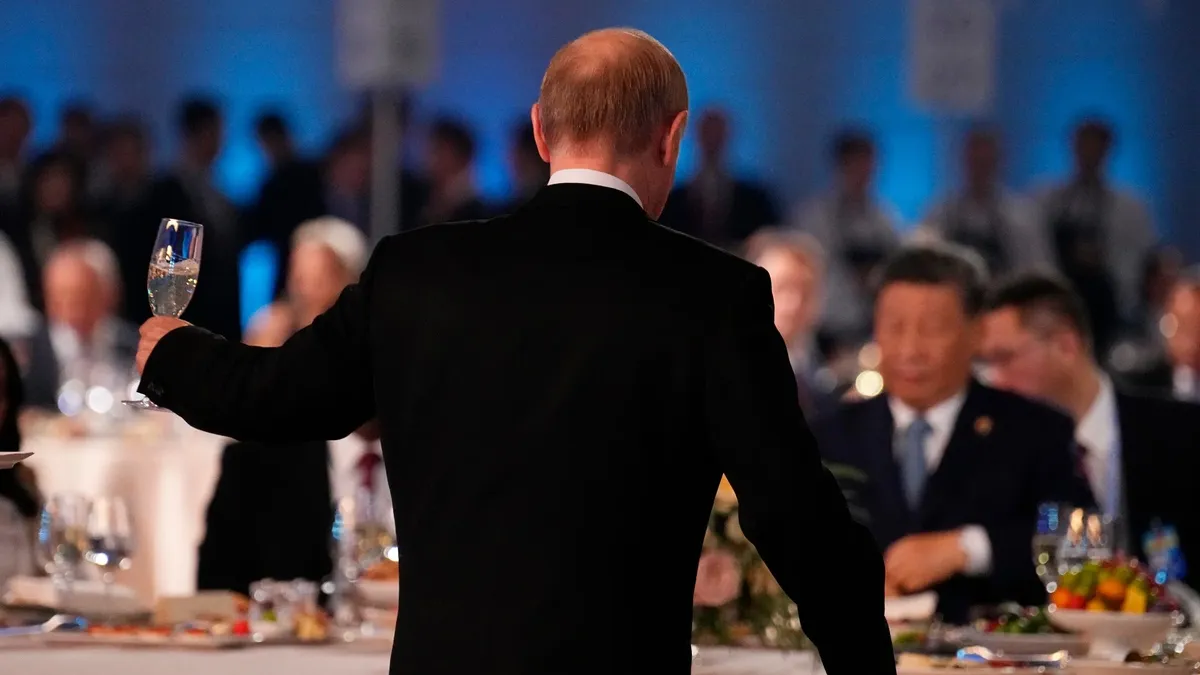
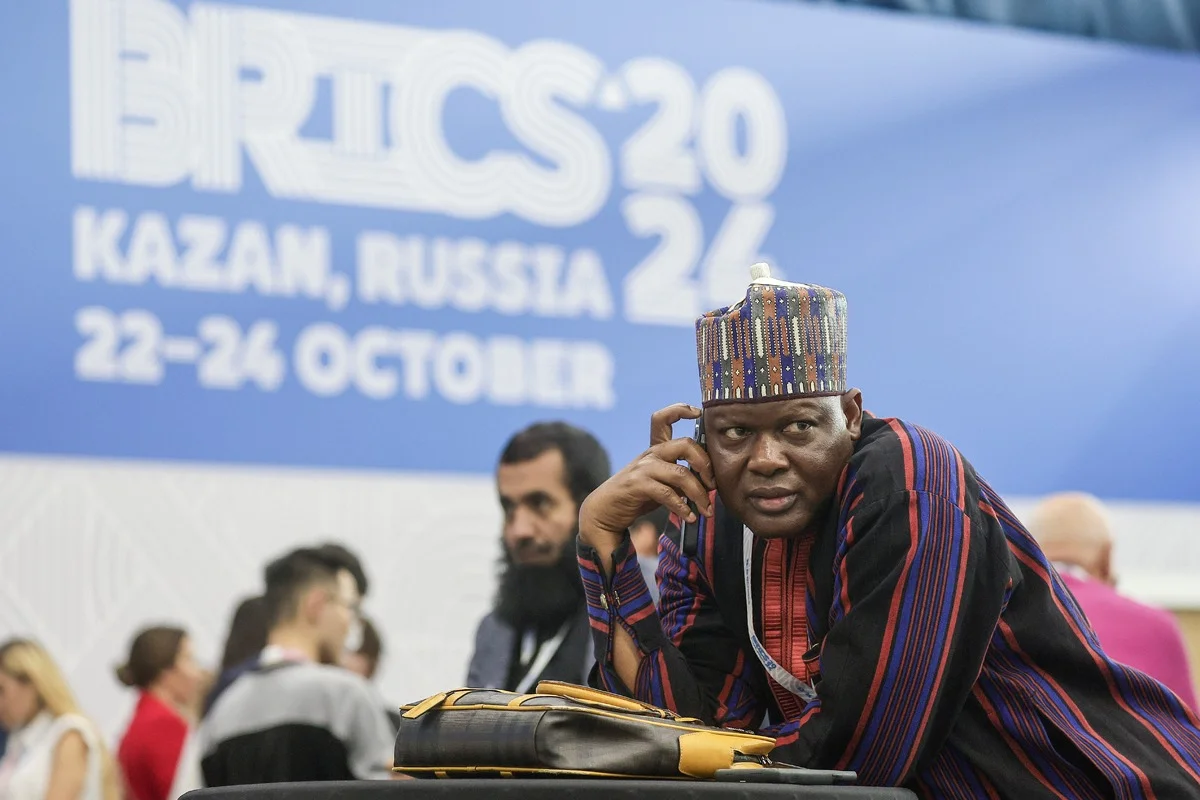
Photo: AP / TASS
(18+) THIS MATERIAL (INFORMATION) IS PRODUCED, DISTRIBUTED AND (OR) SENT BY FOREIGN AGENT ANDREY VLADIMIROVICH KOLESNIKOV OR CONCERNES THE ACTIVITIES OF FOREIGN AGENT ANDREY VLADIMIROVICH KOLESNIKOV.
Narendra Modi, the Indian leader, having eaten bread and salt and chak-chak, hugged Putin, and with a sense of accomplishment, rushed home from the BRICS summit in Kazan to meet and probably hug with Olaf Scholz, the German Chancellor. What Putin is right about is that the world is becoming multipolar. Only it became one a long time ago, many poles appeared in it, and the policies of different countries turned out to be pragmatically multi-vector. The same Modi, just as passionately as he did with Putin, hugged Vladimir Zelensky, and will undoubtedly do the same procedure with his friend Olaf.
Nobody puts more eggs in one basket. But the world, which is undoubtedly experiencing serious turbulence, prefers to nominate these eggs in dollars. And store them in them. In any case, the rupees received for Russian energy resources have nowhere to go and there is nothing to buy with them from India. A geopolitical turn to the east and south is sometimes free and even costly. “Kuzka’s Mother” is always economically unpromising, but its inventor Nikita Khrushchev still knew how to stop himself in time so as not to lose contact with the same “Anglo-Saxons”.
The BRICS summit greatly pleases the Kremlin's expanding ego. In the imagination of the Putin elite, on command, heading south-east, a blissful picture is painted: the Red Banner Choir of decolonized nations sings an aria addressed to Russia, to the tune of the opera by A.G. Rubinstein’s “Demon”: “And you will be the queen of the world...” But to be the host of the summit - solely due to the fact that the chairmanship is a rolling red banner - does not yet mean to be the leader of a world alternative to the Western one, and even less so to truly build this alternative world . Moreover, he cannot completely close himself off from the West:
The Western world has been rotting for centuries, but it still smells good - for some reason people are running away from hunger and pestilence there, to Europe and America, and not in the opposite direction.
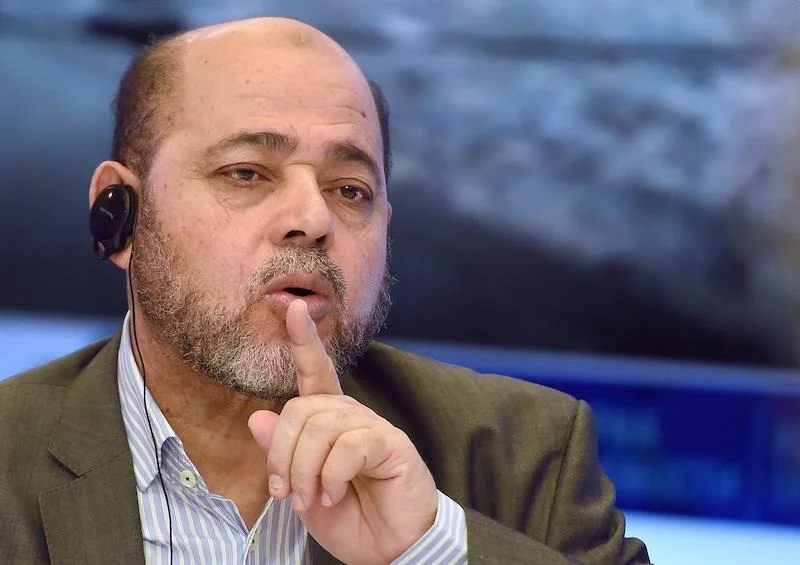
The summit, like BRICS itself, is about quantity, not quality: those who come to the event and/or apply for membership, including as partner countries, do not always understand why they need it. Another side of the same question is why the organizers needed among the participants, for example, the deputy head of the Politburo of the Hamas movement, Musa Abu Marza . It’s as if Father Makhno’s deputy arrived at the Comintern Congress from Gulyai-Polye in a hussar uniform and a sailor’s cap (there was such a Feodosius Shchus, the dream of young Makhnovkas). And then, perhaps, such a comparison is still not strong enough.
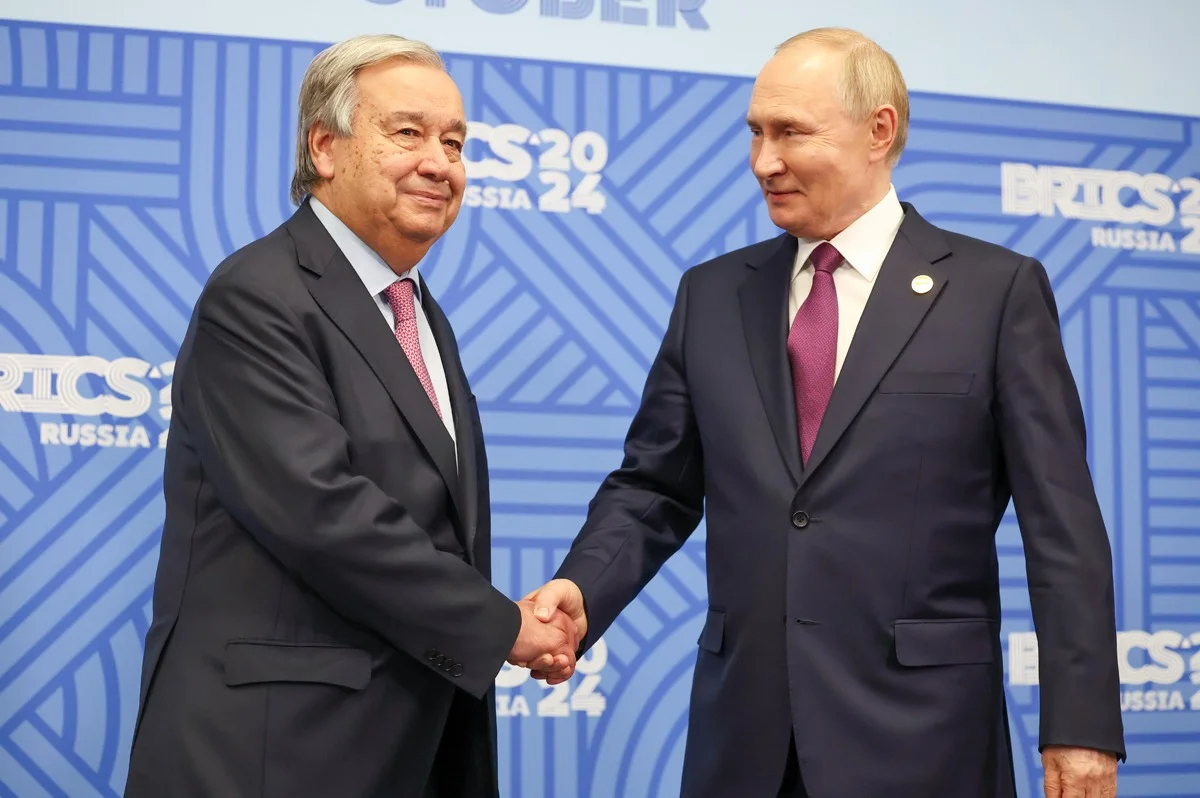
If it weren’t for the bans on everything “destructive” in our God-saved country, UN Secretary-General Antonio Guterres would be greeted not only with interethnic bread and salt and chak-chak, but also with a glass of vodka and a gypsy choir singing “Drink to the bottom!” - to such an extent this is an important guest. Considering the crisis of the United Nations, which everyone assesses from their own bell tower differently, the head of a structure adapted, rather, for the more or less understandable world that emerged after 1945, can be understood. BRICS is a large organization, not very clear; it consists of countries that, such as China and India, have difficult relations. The UN Secretary General needs to somehow indicate his presence. Former Portuguese Prime Minister Guterres is one of the few European representatives who are able to talk to Putin. Another question is that this is another pointless conversation, because again everything, of course, will come down to the fact that Russia, from the point of view of Putin and Lavrov, acts in accordance with the norms of international law, and no one has a realistic peace plan. After all, the UN chief said the world should live “like one family.” And the Russian President agreed with him, joking that there are fights in the family.
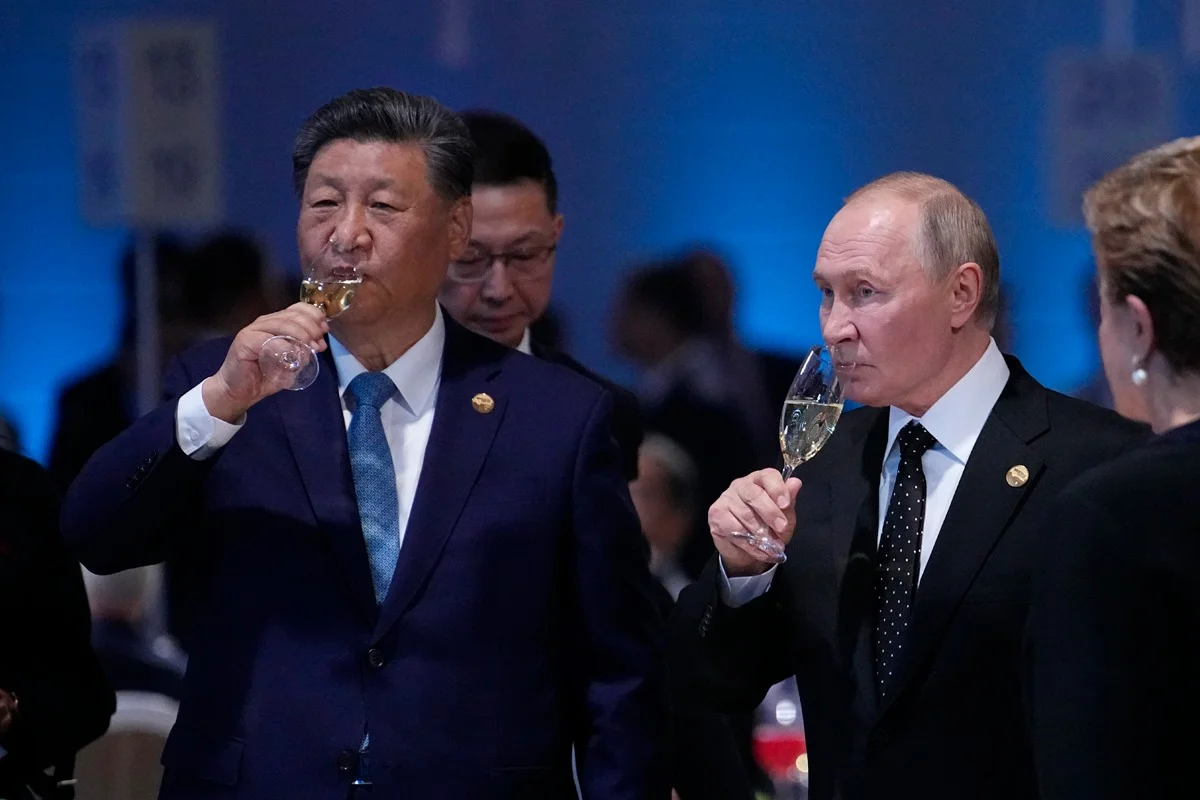
Perhaps some meaningful conversations could have taken place between members of the Russian and Chinese delegations, among whom were figures responsible for the economy. But again - what to talk about? About the problem of payments, circumvention of sanctions, the export of Russian energy resources, which are increasingly needed by China, which is switching to electric cars, about spare parts for Chinese cars, which in Russia there is no one and nothing to service? About “equal” relations in which Russia acts as a convenient younger brother? About the thesis that distorts history about the eternal and invariably blissful friendship of two countries and peoples?
The economic subjects, at least outwardly, were reduced to filling out a book of complaints about the United States. You can probably convince yourself that the West is using the dollar as a weapon, something that not only Putin spoke about at the summit. These words can be repeated with a sense of satisfaction by the Russians themselves, besotted with propaganda, while lovingly converting rubles into dollar mass, using dollars as a means of accumulation and savings, and sometimes even getting themselves cards from CIS countries in order to use them and their children for the benefit of the payment system. the SWIFT system, whose headquarters are located in “unfriendly” Belgium. It is probably possible to create an alternative payment system and even something like a single currency in the manner of the countries of the Council for Mutual Economic Assistance (CMEA). And even call it Altyn, as someone suggested.
But this will not make Moscow the center of an alternative world order; rather, it will remain Beijing. And the current world disorder will not turn into a new world order, where Putin and Xi reign exclusively.
To do this, you still need to have significant soft power, supported by good will, and not deliberately pretentious idle talk, of which there was so much at the BRICS summit that the forum could with full responsibility be called BRICS-a-marriage.
As a result, a bubble of inflated expectations is inflated, accompanied by a preventive funeral for the far from dead West. BRICS, also known as BRIC (Brazil, Russia, India, China), was born as an economic term, even an economic fiction, coined in 2001 by Goldman Sachs economist Jim O'Neill, who described countries that would naturally grow faster than the West because they start from a lower base.
The then head of economic research at one of the largest investment banks in the world can be understood: at that time China was showing incredible growth rates, and the future Chinese economic elite diligently studied economics in the best American and European universities, but the country’s political system was not so personalistically authoritarian and numb , as it is now (which, in fact, largely leads to a slowdown in China). Russia was completely different: it experienced so-called “restorative economic growth” after the completion of the transition to a market economy, and Putin, although arousing some suspicions, strongly welcomed foreign investment and enjoyed the enchanting oil and gas situation in the manner of Leonid Ilyich, who also once temporarily got lucky with this matter. Brazil and India showed significant growth potential.
It's not like that now. And first of all, for political reasons: it is politics that prevents economies from developing, and BRICS is turning into a large but unconvincing fig, aka “Kuzka’s mother” to the United States. The same inventor of the term, Jim O'Neill, published a devastating article about BRICS in Project Syndicate before the Kazan summit. Just read the headline: “BRICS Still Doesn’t Matter”: “The annual BRICS summit is an ideal opportunity for political leaders like Vladimir Putin to promote a vision of a world without the United States. But each year also brings new evidence that this group serves no real purpose other than symbolic gestures and lofty rhetoric... BRICS has done nothing to bring about meaningful organizational or structural changes in international institutions. Moreover, he did just the opposite. Due to the development of geopolitical processes around Ukraine and the rise to power of more nationalist leaders in the West and the BRICS countries, international institutions have become even less effective.”
Ukraine was mentioned in the final BRICS declaration only once. To be honest, it is completely impossible to understand what was meant by the phrase “national positions regarding the situation in Ukraine.” Just as there is nothing more abstract than “appropriate proposals for mediation and good offices designed to ensure a peaceful resolution of the conflict through dialogue and diplomacy.”
The Russian President also touched upon the topic of Ukraine. Here we can confine ourselves to a characteristic quote from a TASS report: “Russia regrets all ( as in the agency’s report - A.K. ) armed conflicts in the world, including the Ukrainian one. This was stated by Russian leader Vladimir Putin at a meeting in the “outreach”/”BRICS plus” format. According to him, there are many armed conflicts on the planet. “Yes, and here at our borders the same thing is happening. “To our great regret,” Putin emphasized after the speech of Palestinian President Mahmoud Abbas.”
Apparently, the summit participants “delicately” avoided the key conflict, and Putin himself spoke more about the Israeli-Palestinian settlement.
Basically, bric-a-brac, random trinkets masquerading as a “more just world order.” Jim O'Neill is right after all: even if BRICS is replenished with many new members, “the result will be nothing more than holding larger summits. The G20 remains the more appropriate and effective instrument for multilateralism.”
Putin’s final press conference, which turned into a personal benefit for the host of the summit, made it possible to clarify some of his positions, however, solely thanks to the question of BBC correspondent Steve Rosenberg about where in Russia’s actions “justice, stability and security” mentioned in the final BRICS declaration. Including where is the security of Russia, because before (...) nothing threatened the country, but now, to put it delicately, there are such threats. The President was quite frank, the meaning of his answer was that if not for (...), then Russia would have found itself in a much worse situation, that is, “it would have slipped into the category of secondary states”, “raw materials appendages”, having lost its sovereignty, and There is nothing more important than sovereignty. How this relates to the safety of Russians and threats to their lives and health, and why this required abandoning normal peaceful life and friendly contacts with the West and its investments, was not explained.