
Translated material
Games have no limits
PlayStation is 30 years old. Why Sony consoles were loved and how the company changed the entertainment industry forever
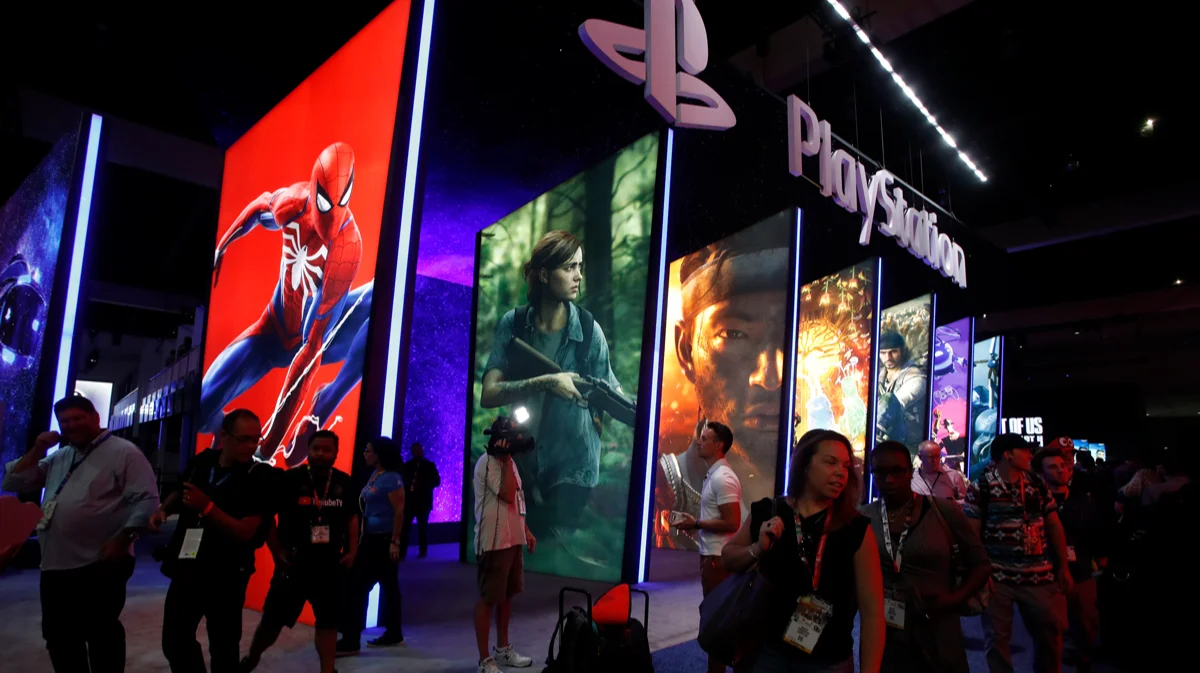
Visitors to the Electronic Entertainment Expo in Los Angeles, California, USA, June 12, 2018. Photo: Mike Nelson/EPA-EFE
On December 2, 2024, Sony celebrated the 30th anniversary of PlayStation. PS5 owners now have access to festive menu themes in the style of previous consoles. The company also released a touching video about the history of the brand and thanked the fans.
PlayStation consoles have become the most popular on the market for three decades. Sales of the PS5 alone are approaching 70 million units, and the PS4 is approaching 117 million. Sony sets trends, launches new popular series and maintains a leadership position in the market. “New Europe” talks about the importance of PlayStation for the gaming industry: how Sony came to success, why its consoles were loved, and why users have remained loyal to the brand for 30 years.
Sony has increased competition in the gaming industry
In the early 1990s, the video game market was almost entirely owned by just two companies: Nintendo and Sega. The first focused on family audiences and developed its successful series like Super Mario Bros. and Donkey Kong. The second relied on rebellious teenagers and youth. The Sega Mega Drive console released daring, daring games: for example, platformers about Sonic the Hedgehog, a trilogy of bloody uncensored Mortal Kombat fighting games and street fighting action games Streets of Rage. Nintendo and Sega tried in different ways to increase their audience and get as many exclusive games as possible.
Sony never even dreamed of entering the gaming market. She only acted as a contractor for Nintendo and supplied it with sound chips. But in 1991, Sony offered to create a CD device for the Super Nintendo Entertainment System (SNES) console. The Japanese company's engineer Ken Kutaragi happily agreed to the deal and formed a team to develop the device. But after a while, Nintendo unexpectedly abandoned cooperation with Sony and turned to Phillips. Kutaragi approached Sega, but was rejected there too. And a lot of money has already been spent on creating a CD device called Play Station.
Kutaragi convinced Sony management that the developments should not be shelved. He decided to release his own console, which could compete on equal terms with Nintendo and Sega devices.
To do this, Sony needed to stand out in some way. And Kutaragi found a solution: according to his idea, the console was to become the most technologically advanced and advanced on the market.
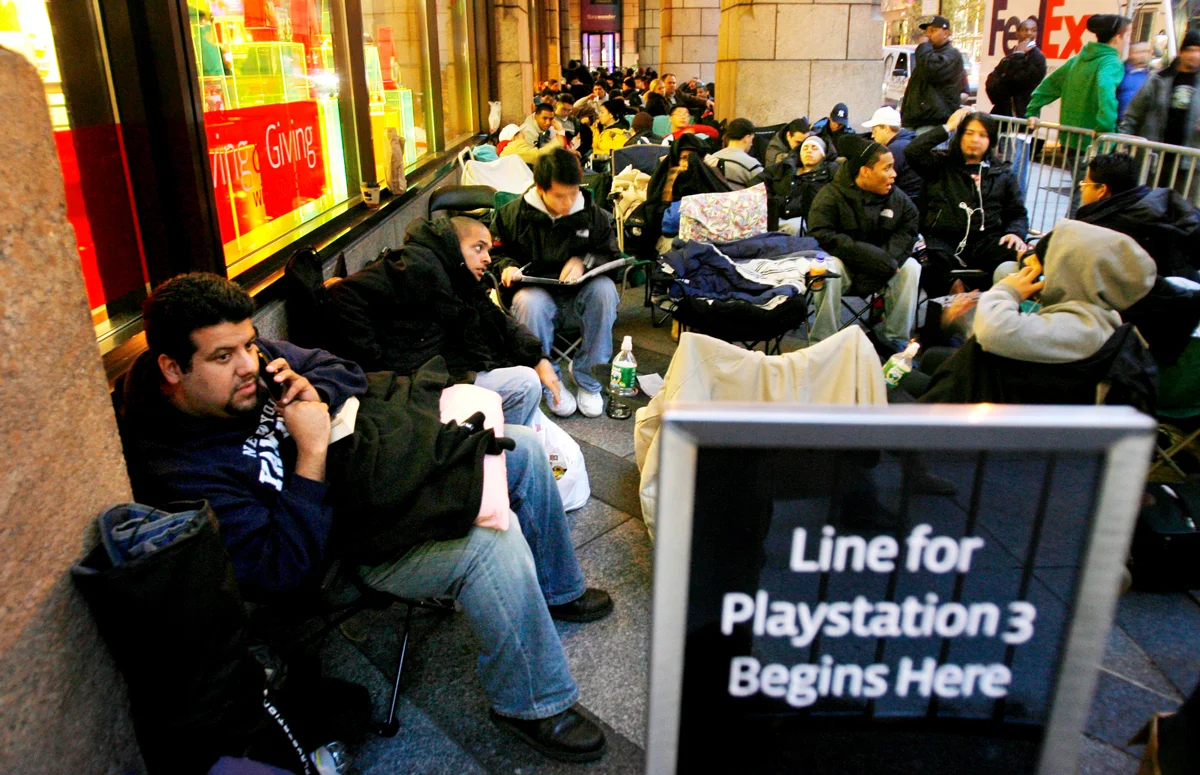
The first PlayStation appeared on Japanese shelves in December 1994. Huge queues formed behind the console; every single device was swept off the shelves. The reason for its success was one thing: PlayStation became the first console with full 3D graphics. An advanced 32-bit processor was responsible for this, which produced excellent visuals for its time. The launch line-up was also good: Sony reached agreements with a variety of Japanese publishers to release 3D games like the Ridge Racer and the Tekken fighting game.

However, success at home did not mean that Sony would necessarily be able to gain a foothold in the American and European markets. In May 1995, the company organized a grand presentation in Los Angeles at the E3 exhibition. Visitors were shown what the PlayStation was capable of and announced a price of $299. Sony's console cost $100 less than Sega's Saturn and was more advanced. Sony finally beat the competition when Michael Jackson attended its E3 party. The singer played Ridge Racer and was pleased. Sony was then talked about as a possible market leader.
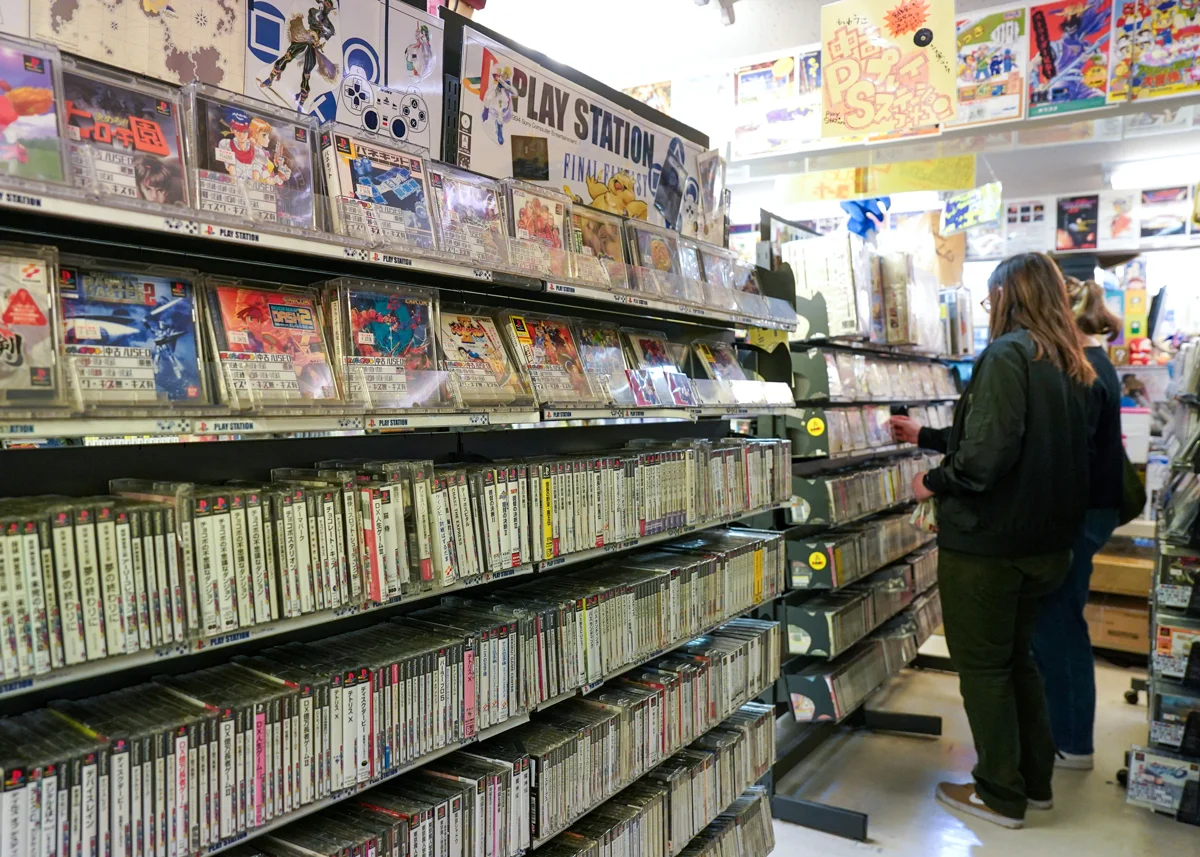
In September 1995, PlayStation was released in the US and Europe. The same thing awaited her as in Japan - tremendous success. Over the next five years, many legendary games were released for the console: the horror games Resident Evil and Silent Hill, the stealth action game Metal Gear Solid, the adventure game Tomb Raider, the role-playing game Final Fantasy 7, the skateboarding simulator Tony Hawk Pro Skater, the racing game Gran Turismo and the platformer Crash Bandicoot .
The PlayStation was loved by both Japanese and Western developers alike. And the console itself became an outlet for those players who were tired of Nintendo and wanted to try something new. In the early 2000s, Sony completely defeated Sega and pushed it out of the console race.
In 2001, Sony itself had a new competitor - Xbox from Microsoft. It surpassed the rest with more advanced graphics, the ability to play online via Xbox Live, and excellent games that had no analogues:
for example, the shooter Halo.
This didn't stop Sony from maintaining its lead. Sales of the PlayStation 2 were so strong that it is still the most popular console in history. The PlayStation 3 at the start was seriously inferior in sales to the Xbox 360, which was released a year earlier, but in the end it overtook its competitor. And the PlayStation 4 was so dominant that it sold twice as much as the Xbox One.
Now Sony cannot be called a monopolist in the industry. At least because the first place in sales is now occupied by the hybrid Nintendo Switch, which can be used in portable and stationary mode. But it seems Sony was able to defeat Xbox: Microsoft games are now coming to PlayStation 5.
Without Sony, the gaming industry would be completely different. If previously only two companies competed for the attention of players, now there are three. High competition encourages companies to monitor the quality of games, reduce prices on consoles and offer the best deals, such as cheap monthly game subscriptions. And this only benefits the players.
PlayStation is loved for its experiments with genres
The brand's history began with traditional genres: fighting games, platformers and racing. But over time, Sony began to invest more money in creating cutting-edge games without analogues. Moreover, they were released not only by the PlayStation studio itself, but also by third-party companies that collaborated with it.
The first PlayStation was remembered by users for several unusual games. Among them is the musical rhythm game about rap battles PaRappa the Rapper. In it, players must press buttons to get on the beat and perform songs correctly. PaRappa the Rapper was so ahead of its time that it was misunderstood at the time, but is now gaining fame and has a spiritual successor in the form of the indie game Friday Night Funkin'. Another unusual game is the Twisted Metal action game about a deadly car tournament. The fight involves, among others, the killer clown Sweet Tooth and the biker Mr. Grimm, and the soundtrack includes upbeat rock music. It was impossible to imagine something like this on Nintendo consoles.
The PlayStation 2 was even more open to experimentation. Just look at the surreal Katamari Damacy , in which one of the bosses spews a rainbow from his mouth. Or Okami - an action game based on Japanese mythology, in which the player controls the goddess Amaterasu in the form of a she-wolf and paints locations in watercolors. It was on the PlayStation 2 that prominent original games like Shadow of the Colossus appeared, in which the main character travels through huge empty locations and kills huge bosses. And also the most famous psychological horror films came out: for example, Silent Hill 2 and Forbidden Siren.
The PlayStation 3 allowed Sony to focus on other genres. For example, players remember the interactive thriller Heavy Rain , the authors of which were inspired by the films of David Fincher. The platformer LittleBigPlanet , which allowed players to create their own levels, also became a hit. The dark shooter series Resistance and Killzone also sold well. In the first, players fought against the invasion of an alien race of chimeras, and in the second, they waged a war with the Helghasts, people who had broken away from the main part of humanity. Sony also published Demon's Souls , the first action game in the soulslick subgenre. Later, the creators of this game will release the popular Dark Souls, Bloodborne and Elden Ring.
With the release of the PlayStation 4, Sony almost stopped experimenting with genres and focused on proven series and gameplay formulas.
The PS4 and PS5 exclusives are very similar to each other: they are mostly cinematic third-person action games with large locations and the ability to hide in the bushes. And in some cases, Sony unsuccessfully copies its competitors: in 2024, the online shooter Concord, the creators of which were inspired by Overwatch, failed . Its budget was about $250 million.
But there are exceptions: for example, the breakthrough platformer Astro Bot. It contains all the iconic PlayStation characters, and some levels are made in the spirit of the brand's games: for example, Horizon and Uncharted. It is now the highest rated game of 2024.
PlayStation is remembered for its innovative technologies
So, it was thanks to Sony that two sticks appeared on gamepads. PlayStation 2 was the first console to support DVDs and allowed you to watch movies in this format on it. They also released the PlayStation EyeToy webcam for it, which recorded the players’ movements—later this technology would be used by Microsoft for the Kinect device. In 2004, Sony released the PlayStation Portable (PSP), a cutting-edge handheld console that produced slightly worse graphics than the PS2. The PSP was technically superior to the Nintendo DS and boasted an impressive collection of exclusives like the action game God of War: Ghost of Sparta and the platformer Patapon.
But Sony really began to surprise with technology only with the release of the PS3. The console's cutting-edge Cell processor was so complex that in the early years, developers didn't know how to make games for it. But after a few years, the processor made it possible to produce graphics that were almost photorealistic by time standards. Moreover, it was the PS3 that made the Blu-Ray format standard, which could hold up to 50 GB on disk. The PlayStation 3 was also the first (and last) home console to support 3D output for games on dedicated monitors and TVs. Only Nintendo's portable 3DS could do this. In 2011, Sony released the PS Vita, the successor to the PSP. True, it was no longer so successful, so Sony stopped supporting it by 2014.
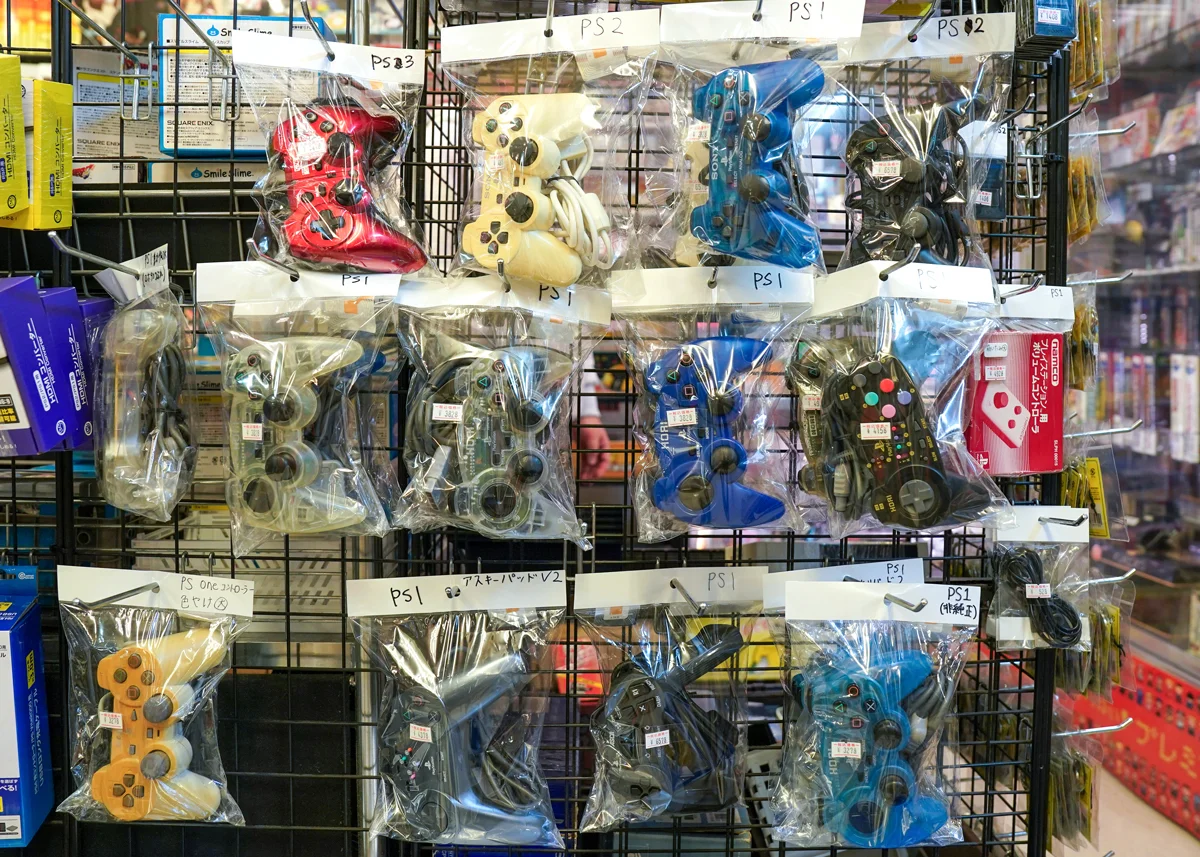
Sony has prepared the most impressive technologies for the PlayStation 4. The DualShock 4 now has a full-fledged touchpad and backlight, a built-in microphone and a Share button - with its help you can take a screenshot or video clip with just one click. Neither Xbox nor Nintendo had anything like this. And in 2016, Sony released PlayStation VR, the first full-fledged VR headset for modern consoles at an affordable price of $399. A year later, the PS4 will have a Pro version - with improved specifications for increased performance and 4K resolution.
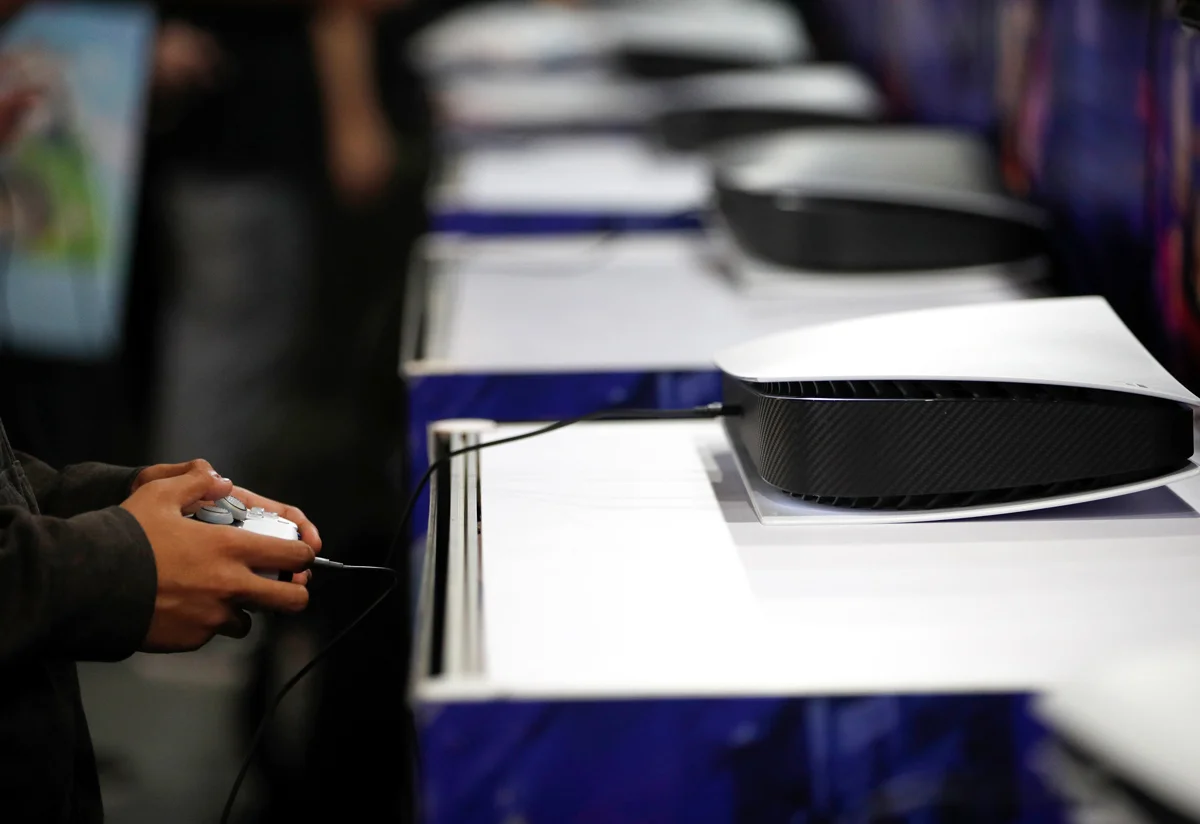
Now the PlayStation 5 continues the line set in 2013. Thus, the DualSense gamepad has excellent vibration and feedback in triggers that simulate the sensations of walking, pulling a bowstring and hitting. PSVR2 is one of the best VR headsets on the market. The PS5 also has an ultra-fast SSD that loads the most demanding games in seconds.
Ordinary users have to pay for innovation. Thus, the PlayStation 5 Pro is sold without a disc drive and a stand for a vertical position for an impressive 700 dollars or 800 euros. And for online games you need to pay for a PlayStation Plus subscription, which starts at $10 per month. But fans have not yet criticized Sony much for this pricing policy. At least, the same Xbox can’t offer anything like that yet.
Sony has raised the bar for blockbuster games
PlayStation wouldn't be such a powerful brand without great games. Experimental titles increased the company's reputation, and blockbusters increased the audience. It all started with the PS2, which released the spy stealth action game Metal Gear Solid 2, the grandiose God of War about ancient Greek mythology, the monumental Grand Theft Auto 3 and its sequels Vice City and San Andreas, as well as the daring and cheerful Devil May Cry.
Since the PlayStation 3 era, Sony has been able to find a formula for guaranteed hits. In 2007, Naughty Dog studio released the cinematic adventure action game Uncharted: Drake's Fortune, and in 2009, a sequel with the subtitle Among Thieves. They showed that games can be as entertaining as the best Hollywood action films. A
Sony finally consolidated its success with The Last of Us, a post-apocalyptic story about the journey of smuggler Joel and 14-year-old girl Ellie across the United States.
Since 2013, Sony has released a number of games that emulate The Last of Us' formula, with its emphasis on spectacular cutscenes, stunning graphics and simple gameplay. For example, among them are Horizon: Zero Dawn about a world inhabited by robotic dinosaurs, the zombie action game Days Gone about the biker Deacon, and the samurai game Ghost of Tsushima. The God of War series also became more down-to-earth, the action of which was transferred from Ancient Greece to Scandinavia. All of these games have extremely high ratings from the press and players.
Of course, Sony is not the only company that produces such games. But it is she who creates the most popular and talked about blockbusters in the industry. Let's say the Spider-Man games sold an impressive 50 million copies. Players see the PlayStation brand as a sign of quality. And now every new Sony game is even preceded by an intro in the style of the Marvel Cinematic Universe - to remind you that this is a PlayStation game.
Sony popularized gaming in many ways and was able to make it part of mainstream pop culture. HBO, known for Game of Thrones, has released a series based on The Last of Us with Pedro Pascal. Films based on Gran Turismo and Uncharted have been released, and film adaptations of Until Dawn, Ghost of Tsushima and God of War are being prepared .
Perhaps no console brand has done as much to popularize games as PlayStation. Competitors like Sega and Microsoft come and go, executives change, but Sony remains at the top of the industry. Perhaps in 30 years it will retain its leading position and the love of millions of fans around the world.