
Translated material
The attempt failed
The President of South Korea could not be arrested for introducing martial law - supporters of Yun Seok Yeol and his guards prevented him. What's next?
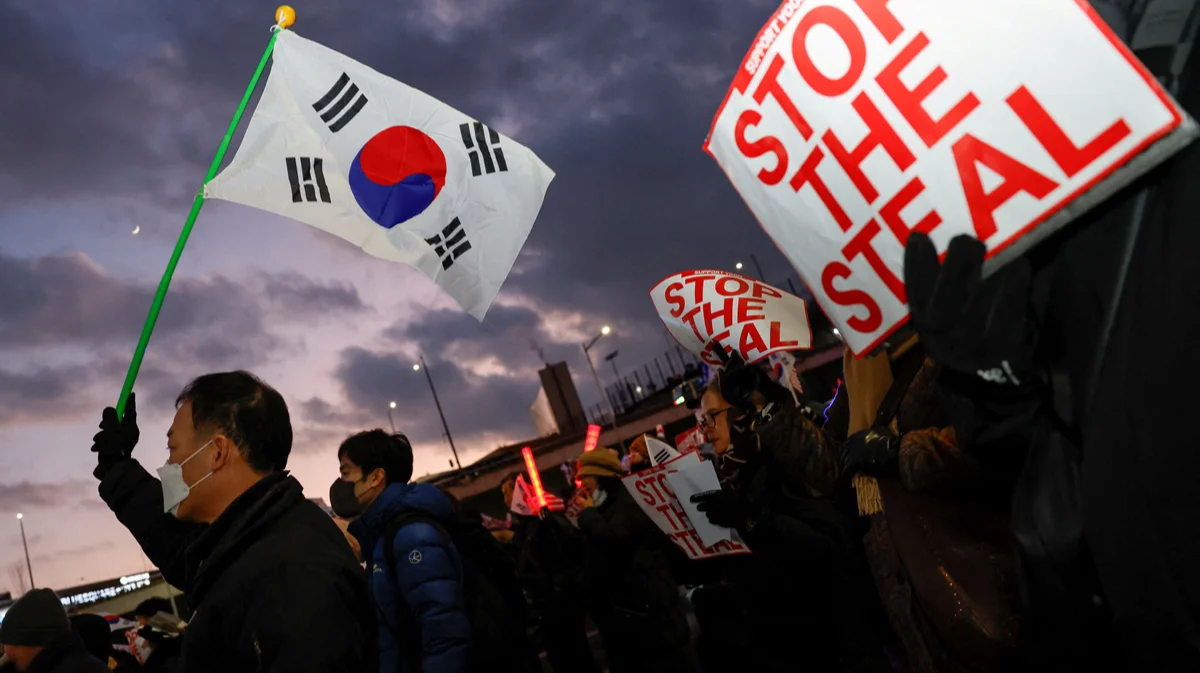
Supporters of the South Korean president during a rally near his residence in Seoul, January 3, 2025. Photo: Kim Soo-hyeon / Reuters / Scanpix / LETA
South Korean investigators tried to arrest ousted President Yoon Seok-yeol, but were unable to do so. A multi-hour confrontation with the security of the head of state ended in their failure. Thousands of supporters of the former head of state have been camping outside his residence in central Seoul for several days, vowing to prevent any attempts to detain him.
“New Europe” talks about a new round of the political crisis in South Korea.
A tense five-hour standoff outside the residence.
The republic's president, Yoon Seok-yeol, has been removed from office and is under criminal investigation for sedition and abuse of power. It was initiated after the head of state accused the opposition of working for North Korea on December 3, 2024 and imposed martial law for several hours. He explained this by saying that parliament does not want to approve the draft budget and is preparing impeachment.
Then military equipment was brought into Seoul, and the parliament was blocked by soldiers. However, 190 deputies from the opposition Democratic Party and the ruling Civil Force managed to get into the legislature and vote against martial law. After this, the military left the building, and the president was forced to apologize and reverse the decision.
Since then, Yoon has failed to show up for questioning three times regarding his case. As a result, on December 14 he was impeached and removed from power.
On January 3, the path to Yoon Seok Yeol's residence in the very center of Seoul was blocked by more than 10 buses and cars, as well as about 200 members of the Presidential Security Service. In this way, Yun’s security prepared for the visit of investigators, who on December 31 received a warrant for his arrest and search.
30 officers from the Corrupt Practices Investigation Office (CIO) and 120 police officers went to the residence of the former South Korean president. However, they were unable to get into the residence: after five hours the operation ended without results, and the warrant, which was already expiring on January 6, was suspended “for security reasons.”
The residence was defended by more than a thousand supporters of the president
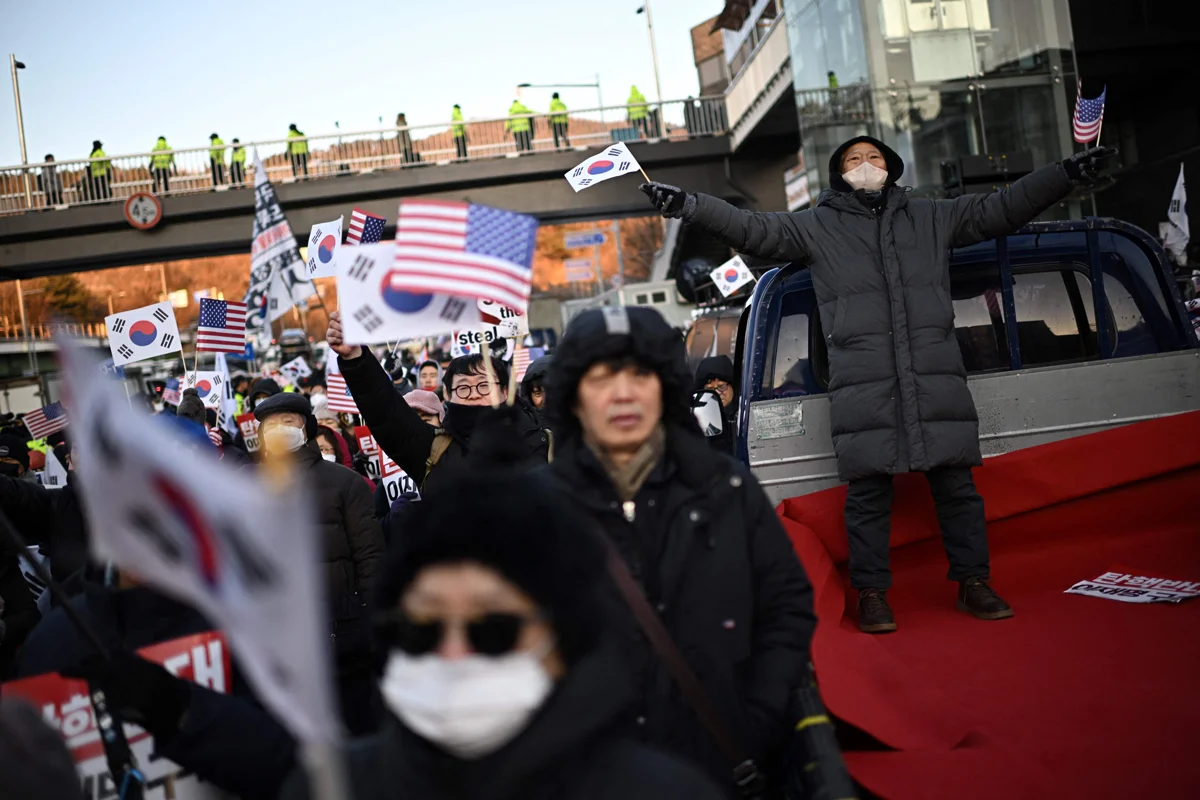
Long before investigators attempted to execute the arrest warrant, more than a thousand supporters of Yun Seok Yeol gathered outside the building. Back on January 2, they set up camp on the sidewalk near the presidential residence, vowing to prevent arrest “at the cost of their lives.”
As Reuters notes , the protesters chanted the slogan “Stop the Steal” by supporters of Donald Trump, who questioned the results of the lost 2020 elections. Many waved the US flag. Trump himself, whose inauguration for a second term is scheduled for January 20, did not comment on the situation.
“I hope that once Trump is inaugurated, he can use his influence to help get our country back on track,” one protester said .
Yoon's supporters also chanted slogans like "Non-valid impeachment" and "President Yoon Seok-yeol will be protected by the people" and called for the arrest of the CIO chief. Some said they would stay at the residence overnight, even despite the sub-zero temperatures.
Yun hardly appears in public
The presidential administration, according to Reuters, filed a lawsuit against three broadcasters and owners of YouTube channels for unauthorized filming of the presidential residence, “a protected facility directly related to national security.”
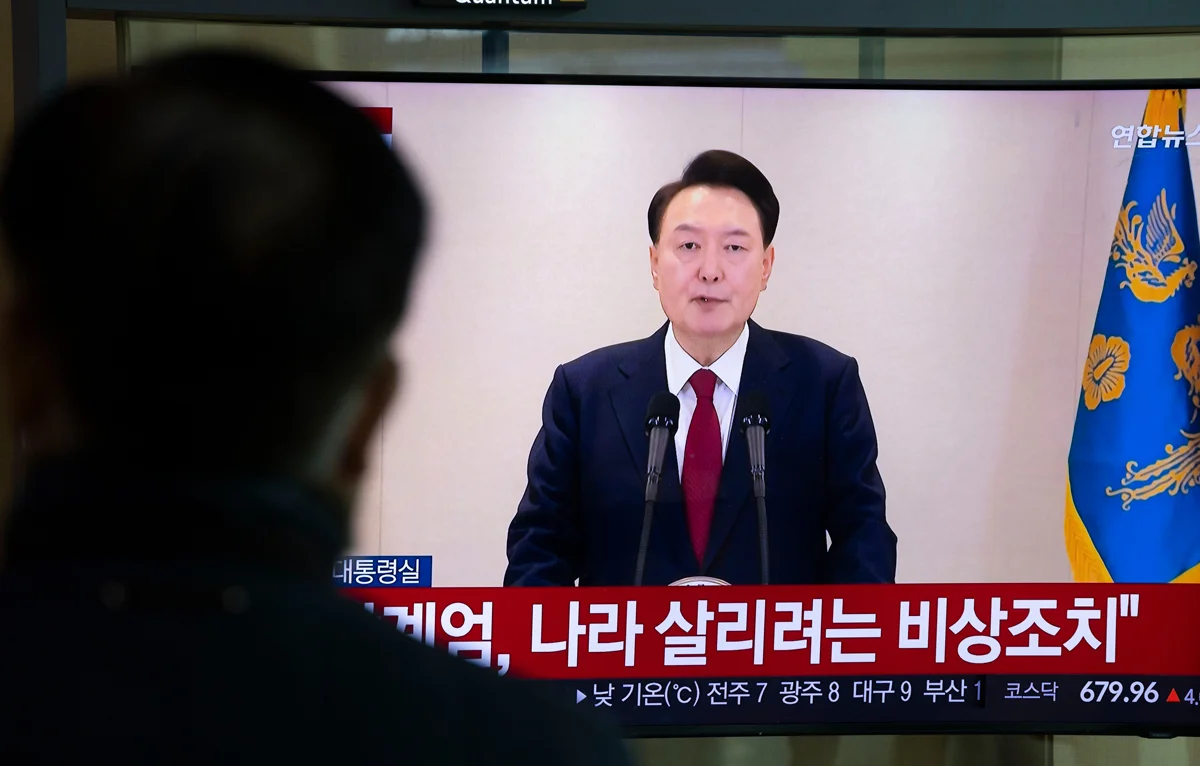
Yun himself did not appear in public during the confrontation. As The Guardian notes , he resisted investigators' attempts to question him for weeks. He last left the residence on December 12 to go to the nearby presidential office and make a televised statement to the nation.
Lawyers for the ousted president filed an appeal against the order on January 2. Yoon's defense argues that the arrest order cannot be executed on the premises of the residence due to a law that prohibits searching areas potentially related to military secrets without the consent of the person in charge.
“The immediate arrest of the leader of the rebellion is the most urgent task to overcome the crisis” in South Korea, said Park Chang-dae, leader of one of the French opposition Democratic Party.
Park Chang-dae called for the immediate arrest of anyone obstructing the execution of the arrest warrant, including the head of the Presidential Security Service, his deputy and the head of the security bureau. According to him, such actions should be regarded as complicity in rebellion, harboring criminals and abuse of power.
“I am filled with great sadness when I see how the one who plotted to start a war and gave the orders to open fire is now hiding in the presidential residence,” he said.
US Secretary of State Antony Blinken will visit South Korea for talks next week, Seoul's Foreign Ministry said.
North Korean state media quickly reacted to what was happening and said that “political chaos” reigns in South Korea due to the attempt to arrest Yun.
What could happen next: a new arrest warrant and resignations
Investigators have at least two options available to them. They are listed by South Korean correspondent for The Guardian Rafael Rashid:
They can submit a new request for arrest and try to execute it again;
Acting President Choi Sang-mok may fire the head of the Presidential Security Service (PSS) to ensure procedures are followed in further arrest attempts.
Police have already charged the head of PSS and his deputy with obstruction of justice. Both were summoned for questioning on January 4. The Office for the Investigation of Corruption Among High-Ranking Officials has not yet announced its subsequent actions. Yun's whereabouts are currently unknown.