
Translated material
Protest lines
Farewell to Navalny, collecting signatures for Nadezhdin, “Noon against Putin.” When every word leads to a criminal case, Russians are protesting in a new way
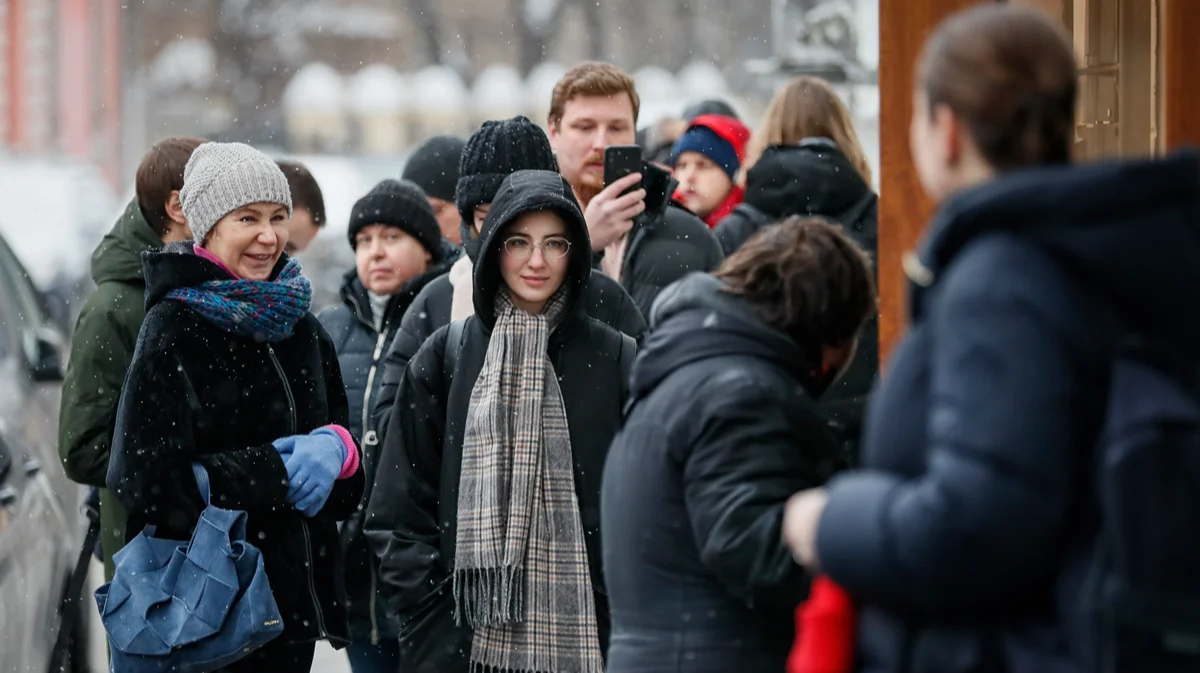
A line of people willing to sign for the nomination of Boris Nadezhdin as a presidential candidate in Russia in Moscow, January 25, 2024. Photo: Yuri Kochetkov / EPA
Queues in 2024 became a symbol of protest in Russia. Despite the fact that Russians could not go to mass rallies, they still expressed civic solidarity. At the beginning of the year, residents of various Russian cities lined up to sign for the nomination of anti-war Boris Nadezhdin for president, to say goodbye to Alexei Navalny in a church and in a cemetery, to vote against Putin in the presidential election. “New Europe”, together with the participants in the events, recalls how people in 2024 proved that there are more opponents of the current government than pro-Kremlin statistics show.
Queues of hope
At the end of last year, politician Boris Nadezhdin announced that he would be nominated as a candidate for the presidency of Russia from the Civil Initiative party. In January 2024, he was supported by Maxim Katz, FBK, and other political forces. The only anti-war candidate had to collect 100 thousand signatures, but no more than 2.5 thousand from each individual region. At the end of January, thousands of people across Russia and abroad lined up in a “line of hope” to support the politician.
Ivan ( the hero’s name has been changed - Ed. ) came to sign in one of the regional Russian centers. He told Novaya-Europa that he had only positive impressions of that day.
“It’s nice to know that the country has a chance. I met a lot of good people in line, and the organizers themselves at the headquarters were very kind to us. Any way to show up and express your opinion is important, the future of the country is dark, so we need to go out with flashlights and light the way, especially for those who feel lost and alone,” he said.
Sergey ( the hero’s name has been changed - Ed. ) also shared that he only had positive memories from the “queues”. According to him, he stood “not for Nadezhdin, but to express his position without consequences.” In general, Sergei believes that the “queues of Nadezhda” were a legitimate way for everyone to show their civic position and not be afraid of punishment. He recalls that he has never met anyone who would have been punished for standing in this line.
- It's cool to realize that you are not alone.
To be honest, I didn’t expect that there would be a lot of people, I went to sign just because I could. But on the way to the headquarters for collecting signatures, I saw people leaving the headquarters and how they entered it. I was very inspired that I was not alone, and there were not 5–10 of us, or even several hundred people, but thousands. Of course, the inspiration that was in those days is no longer there, but when I write about this moment now, I write with a warm smile, the memories warm me.
Sergei believes that the queues were needed for the people themselves, “who cannot and are afraid to express their position openly, who do not agree with the decisions of the Russian leadership.” In his opinion, the authorities saw this. That is why, as he says, among other things, Nadezhdin was not allowed to participate in the elections, because “he could have shown a quite decent result (of course, he would not have won), and not as planned in the Administration of Ukraine or wherever.”
On February 8, 2024, the CEC refused to register Boris Nadezhdin, stating that more than 5% of the collected signatures were considered invalid: 9,417 out of 105,000. The politician appealed this decision to the Supreme Court, but on March 4, 2024, the court declared the CEC’s refusal legal.
Funeral of Alexei Navalny
Alexey Navalny died on February 16, 2024 in the special regime colony “Polar Wolf” in the village of Kharp, Yamalo-Nenets Autonomous Okrug. Russians reacted to his death with an unprecedented wave of mourning. The funeral took place on March 1, 2024 in Moscow. The lines at the farewell ceremony stretched for kilometers. People came to show respect and demonstrate that his memory lives on.
According to the White Counter project, at least 16.5 thousand people came to the funeral service and funeral. The queue to the church in Maryino reached a length of more than 1.5 kilometers. People stood there for several hours to say goodbye to the politician. The crowd chanted: “Navalny!” "No to war!" “Down with the power of murderers!” “We will not forgive!”
“A friend of mine came to Moscow from another city and stood in line for about 9 hours to say goodbye to Alexei Navalny. Already in the dark she was able to get to the cemetery and lay flowers. There were thousands like her. Thanks to her and everyone who was not afraid to come out,” wrote user X.
She remembered that two of her friends flew to Moscow from Kemerovo specifically for one day. Then they spent eight hours in line, but were unable to say goodbye because they weren’t allowed into the church and didn’t get to the grave (they had to go to the airport to fly back). At the same time, in the queue, those who showed train or plane tickets or were simply in a hurry were allowed to go ahead.
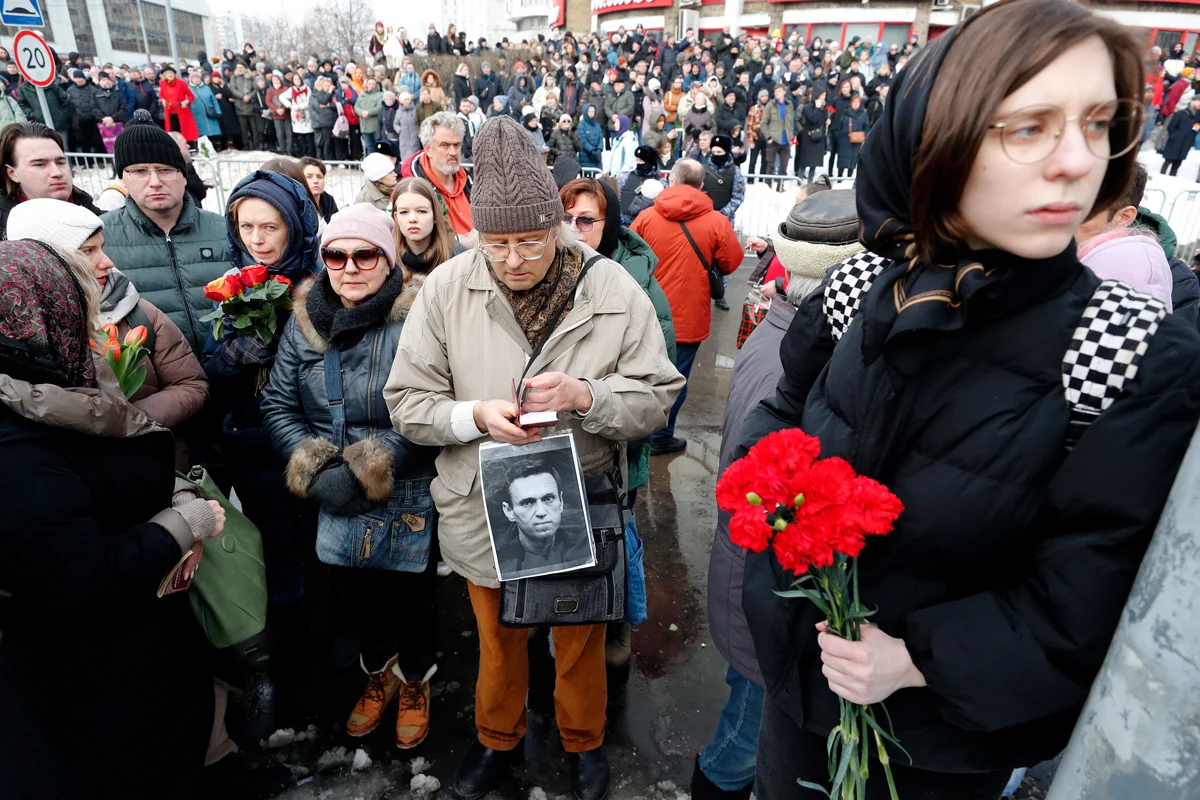
“You move automatically and do what you have to do without thinking about the risks. It was scary, but this fear did not interfere with actions. I went to the funeral in the cold with the feeling that come what may, I couldn’t not go. Navalny’s slogan about courage kindled courage in me and in my loved ones,” another interlocutor of “New-Europe” shared.
She was very pleased and happy, albeit through tears, to see a huge number of like-minded people. According to her, “everyone really wasn’t scared, and the slogans “Love is stronger than fear” became something like air and motivation from within”:
“And gratitude—this was probably one of the main feelings then.”
Peter ( the hero’s name has been changed - Ed. ) was also “pleased to see thousands of people who shared a common grief.” It was especially important for him to feel support “in such a tragic era, when it seems that there are no people left in the country who believe in a future, free Russia, the one that Navalny dreamed of and aspired to.” At the same time, he was left with “terrible” impressions from the funeral itself:
— I looked at him for about an hour (during the funeral service), the sight was depressing, it was difficult to believe that it was Navalny, instead of a cheerful person there was a motionless body. I managed to say goodbye to Navalny and even throw some earth on his grave before he was buried.
On the day of the funeral, more than 100 people were detained in Moscow and other Russian cities. Despite this, for several days after the funeral, thousands of people continued to come to the Borisov cemetery.
“We arrived in Moscow on March 3 and went to the Borisovskoye cemetery, stood in line to lay flowers. And people still continue to walk,” said users X.
"Noon against Putin"
The “Noon Against Putin” rally took place on March 17, 2024, the last day of the presidential elections in Russia. The protest attracted hundreds of people inside and outside the country. The initiator of the action was former deputy of the Legislative Assembly of St. Petersburg Maxim Reznik.
“The explanation was initially on the surface, and every thread talks about it: just as the queues for Nadezhdin (and for Navalny’s funeral) showed that “you are not alone,” so these queues at the polling stations will give hope,” said activists who supported the action .
The idea was for citizens who do not support Vladimir Putin’s policies to come to the polling stations at exactly noon local time, demonstrating massive disagreement with the current government.
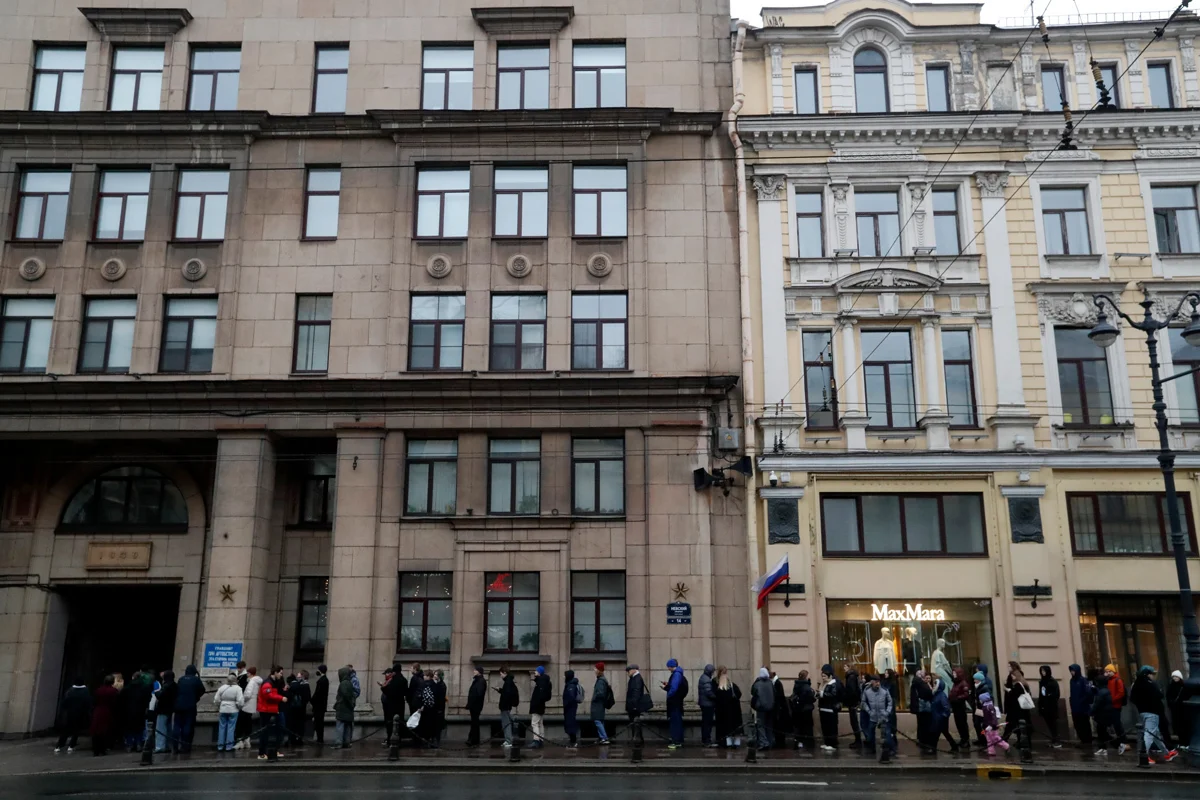
“Moscow region. In previous years of my voting, there were about 5 people at the polling station besides me. But this afternoon pleasantly surprised me! People walked and walked, many elderly (!) who came exactly at 12:00, as well as young people,” an eyewitness shared .
Sergei, who had previously given his signature for Nadezhdin, came to the presidential elections, “as is tradition, on Sunday at noon.”
“True, it turned out that no one had such a tradition at the polling station: there was only one other person (I live in a city of about 70 thousand people),” he said.
Amina ( the heroine’s name has been changed - Ed. ) told Novaya-Europa that she decided to participate in the action because for her it was the only relatively safe opportunity to express her disagreement. According to her recollections, at that moment she “was very embittered and depressed after the death of Alexei Navalny,” she wanted to do at least something.
“Even though I thought that the action was unlikely to lead to anything, it was my duty to go there. There was absolutely no doubt. Even though I live in a small town in the North Caucasus and there were rumors that everyone almost from the police station would be taken to the department, I was ready for this, it didn’t stop me,” she admitted.
The girl recalls that when she arrived at the station, there were a lot of police around, they were filming everything that was happening on their phone cameras and whispering among themselves. Already inside there were women who were distributing ballots, and a security officer in civilian clothes:
“When I voted and left this booth, he almost stood point-blank next to me to see who I voted for and whether I had spoiled the ballot. In general, there were very few people, a few people, but I’m not sure that they knew about the action, although I would like to hope so. I was surprised by my neighbor, who came at the same time as me. We looked at each other so knowingly and smiled, I’m sure she came there for the same thing I did.
The Moscow prosecutor's office warned that organizing and participating in the action could be classified as illegal mass events. The department’s official statement spoke of “signs of extremist activity” in such actions. But that didn't stop people. The exact number of participants is unknown, it is only clear that these are tens of thousands of people. Queues to polling stations were observed in Moscow, St. Petersburg, Yekaterinburg, Novosibirsk and other cities. According to OVD-Info, at least 80 people were detained in 20 cities.
Abroad, one of the most massive protests took place in the capital of Germany. The queue at the Russian Embassy stretched for several blocks; they promised to extend the opening hours of the station by an hour, but closed the embassy earlier. As a result, more than 500 people remained in line. In Riga, many Russian citizens also did not have time to vote, but in Yerevan the polling station was open until 23:00 local time. Many stood in line for 9 hours, but did not leave.
According to the Vote Abroad project, which collected exit poll results at polling stations in other countries, Vladimir Putin was supported by only 15% of voters.