
Translated material
"Glavpahan"
Trump was convicted, but not sentenced to anything other than a gun ban and "felon" status.
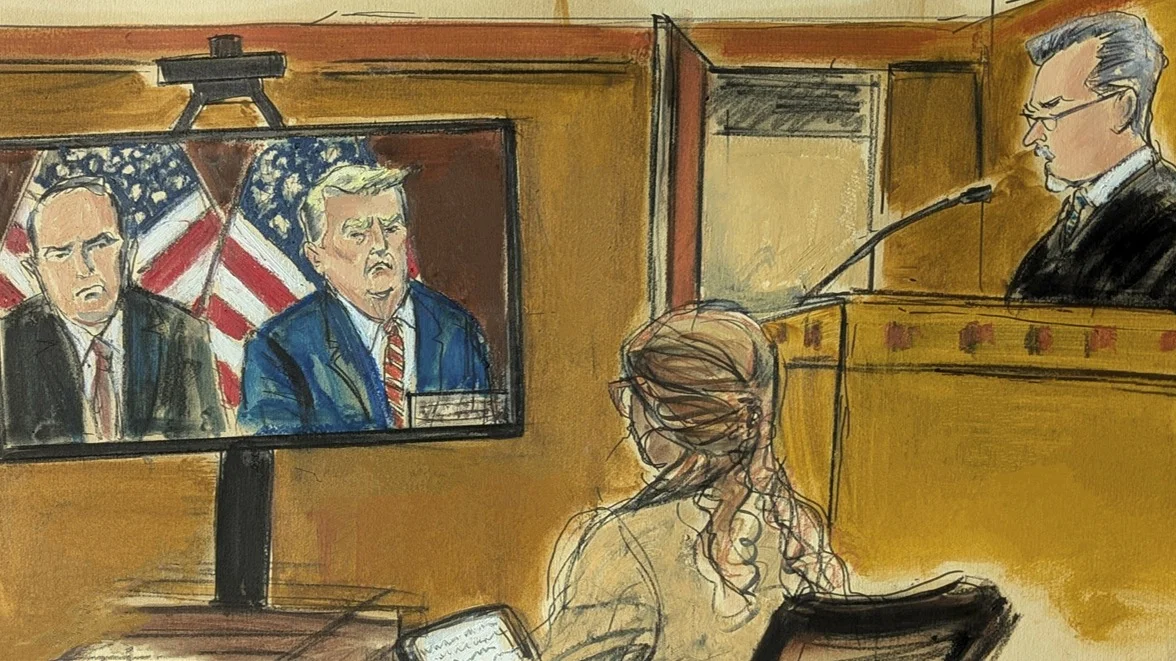
Judge Juan Merchan sentences Donald Trump. Photo: Elizabeth Williams / Associated Press / East News
In a few days, Donald Trump will once again begin commanding the superpower's armed forces. At the same time, he will be permanently barred from owning a personal weapon because he has a criminal record.
On Friday morning, a half-hour ceremony took place in Manhattan Criminal Court, at the end of which the next American president listened to the sentence handed down to him by Judge Juan Merchan.
Merchan, whose last name the Manhattan public prefers to pronounce in French as Marchand, pronounced a sentence of a rare type on the convict, the existence of which I had not previously suspected:
The judge sentenced Trump to nothing, without giving him any prison time, probation, or even a fine.
It would be tempting to conclude that the mountain gave birth to a mouse and that the costly trial, which lasted seven weeks and ended with a guilty verdict by the jury, yielded zero results. Millions of Trump supporters are convinced that a series of criminal cases brought against their candidate over the past two years were launched in order to keep him out of the White House. This tactic by his opponents, popularly nicknamed lawfare, not only did not work, but most likely even improved Trump's chances of success.
Trump haters at least got the opportunity to call him a felon, or better yet, a sad felon, a convicted felon, which many have already done. They are also consoled by the thought that Trump will now be forced to submit a DNA test, as they do in New York with all convicted prisoners.
Before the verdict was handed down, the prosecution and defense exchanged pleasantries. Prosecutor Joshua Steinglass and Trump's defender Todd Blanche, whom the new president will soon appoint as one of the top officials in the Justice Department, made short but impartial speeches, and then they were replaced by the hero of the occasion, who this time was allowed not to trudge far and wide to court, and attend the ceremony virtually from his Florida estate, Mar-a-Lago, where he sat against a backdrop of American flags.
I have seen hundreds of last words, the usual purpose of which is to talk the judge into easing the punishment, and therefore these words are at least not hostile. Trump's speech was different.
The convict habitually characterized his trial as a “political witch hunt” and claimed that he did not know a single prominent lawyer who did not believe that this trial was not worth undertaking.
In support, Trump mentioned a number of famous names, including legal authority David Rivkin, “a wonderful man who just passed away.” Rivkin, who died in late December, was indeed a legal luminary, serving in the Reagan and Bush administrations and as legal counsel to Vice President Dan Quayle. I often came across his name, but I learned that Rivkin was from Pskov only from his obituary in the Wall Street Journal, which published a total of 243 articles with his signature.
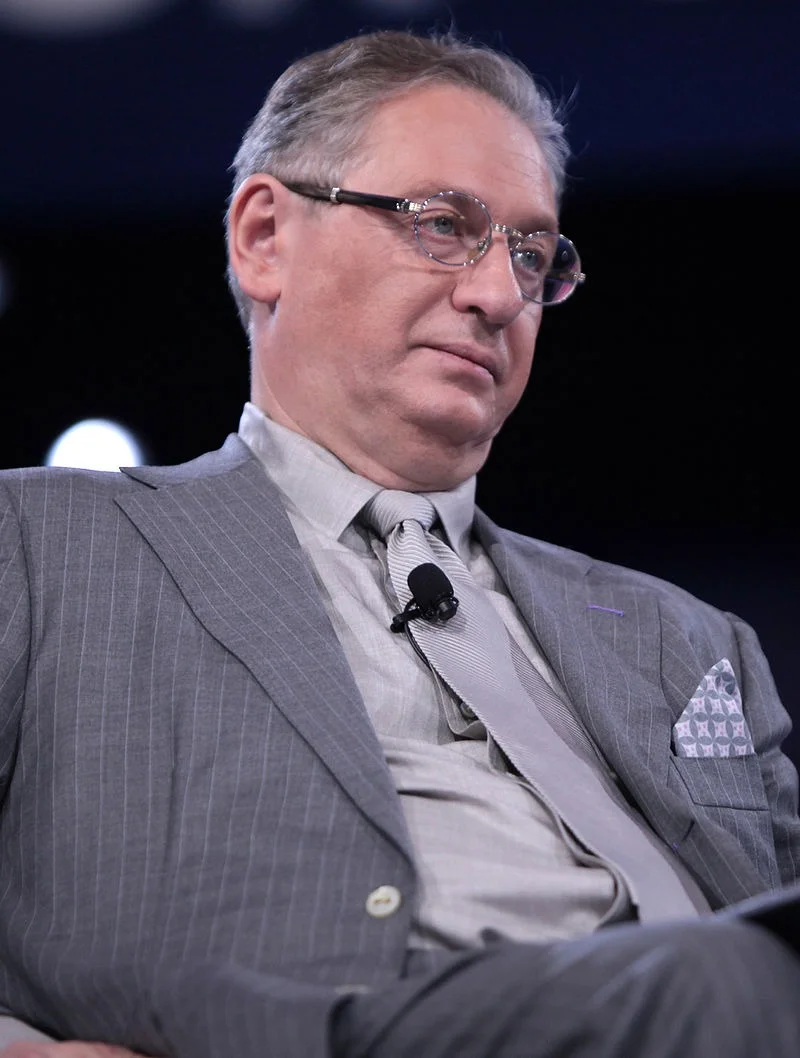
One of them, written with constitutional law professor Elizabeth Price Foley and published on September 8 last year, when Rivkin was already suffering from cancer, was devoted to the Manhattan Trump case, which the authors trashed to smithereens.
In a nutshell, on the eve of the 2016 election, then-Trump lawyer Michael Cohen paid porn actress Stormy Daniels $130,000 in exchange for her written commitment to keep secret her long-standing adultery with Trump, which the latter has consistently denied. Non-disclosure payments are common and legal in the United States.
Trump subsequently reimbursed Cohen for this amount in 34 separate checks, which gave rise to the 34 counts that make up the Manhattan criminal case.
It's an old trick US prosecutors use to inflate indictments. 34 points in the case sound more serious than one, although we are talking about a single crime.
The checks were cleared through Trump's accounting department as legal fees. Why didn't Trump just give the money in cash? Maybe it would be more natural for people in his circle to pay with checks? Or are checks easier to write off on taxes? Who knows. One way or another, Trump is accused of falsifying reports.
In his final statement, he said his accountants wrote the checks, “not me.” “I didn’t say they were for construction or concrete work,” Trump continued. — I didn’t say what kind of electrics they were. I didn't name them at all. They called them legal fees, and that’s what they got me for!”
Since such payments cannot be hidden, prosecutors have been eyeing them for a long time. But neither local nor federal prosecutors, nor the new Manhattan Attorney General Alvin Bragg, who was elected with the money of progressive billionaire George Soros and ran with a promise to deal with Trump, saw no judicial prospects in such a case, especially since the statute of limitations for falsifying financial statements had already expired. In New York, such cases are classified as a misdemeanor rather than a felony, which has both a longer statute of limitations and longer prison sentences.
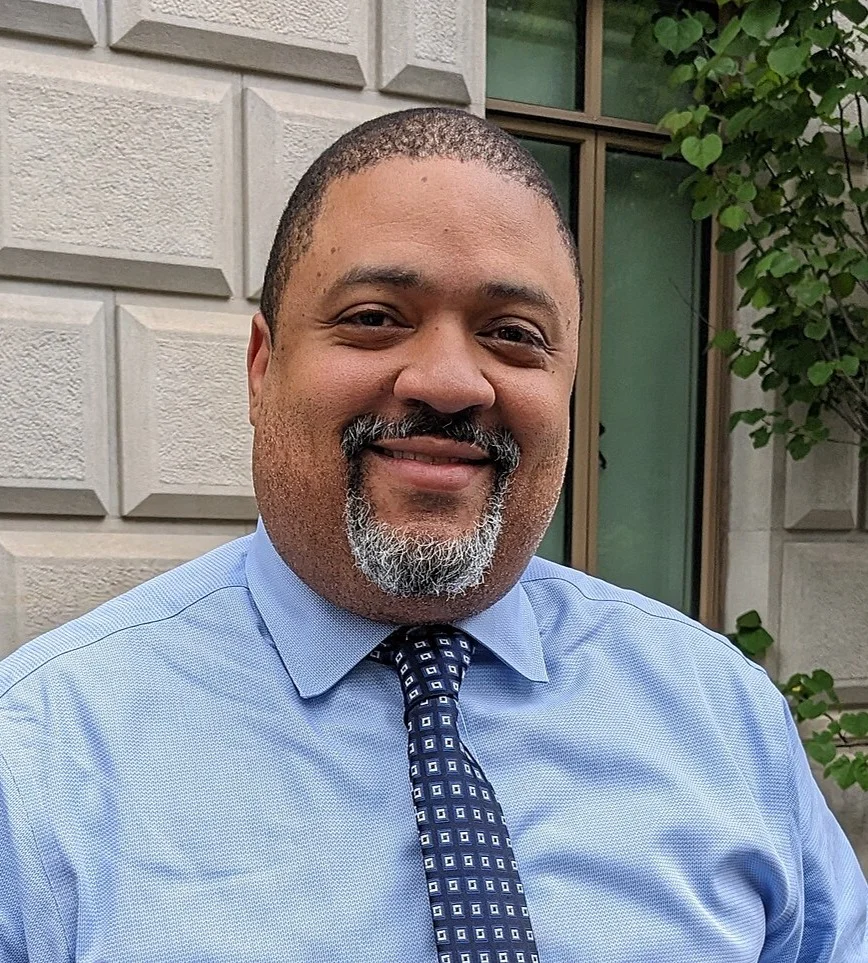
Bragg could not resist the pressure of the liberal public and his zealous subordinates and found a way to reclassify crimes of the first category into crimes of the second, the statute of limitations for which had not yet expired. New York law allows this as long as the misdemeanor is committed in furtherance of some other crime. And Trump was charged with falsifying accounting records in order to conceal circumstances, the publication of which would interfere with his attempt to be elected to the American presidency.
That is, Trump allegedly paid the porn star for silence, trying to illegally influence the outcome of the US presidential election.
As Rivkin writes in the above article, the problem is that the Manhattan prosecutor's office arbitrarily began to prosecute Trump for a federal crime, while it has the right to deal only with local ones. The feds are very jealous of their prerogatives, and the Justice Department, in theory, should have been indignant and slapped Bragg on the wrist. But since, to use Solzhenitsyn's terminology, Bragg was socially close to the Biden administration, it turned a blind eye to his usurpation of federal prerogatives.
Judge Merchan, who is known for his political donations (albeit quite pitiful) to the US Democratic Party, and also previously presided over the trials of the Trump Organization, its chief accountant Allen Weisselberg and former Trump strategist Steve Banon, did not give Bragg a slap, that is, he specializes at the Trumpists' landing.
He may, of course, secretly love them, but this hypothesis is less convincing, since in this case Merchan would not have donated money to the Biden campaign and the organization Stop the Republicans in 2020. and would not have written in the accompanying message that his donation was intended to “confront the Republican Party and the radical right-wing legacy of Donald Trump.”
Returning to Rivkin, who came to the US in 1976 at age 19 with the then wave of Soviet Jews (but later converted to Catholicism): he was a conservative and a big fan of America, but I mostly heard about him in connection with Russia's First Channel . He represented his Big Game co-host Dimitri Simes (Simis) and his Washington-based Center for the National Interest.
Rivkin also defended Channel One’s position for more than five years in its litigation with microbiologist and human rights activist Alexander Goldfarb, who sued the channel in New York for libel. It was Rivkin who notified Goldfarb's lawyer last year that the defendant was giving up the fight. The judge awarded the plaintiff $25 million, which he has not yet received.
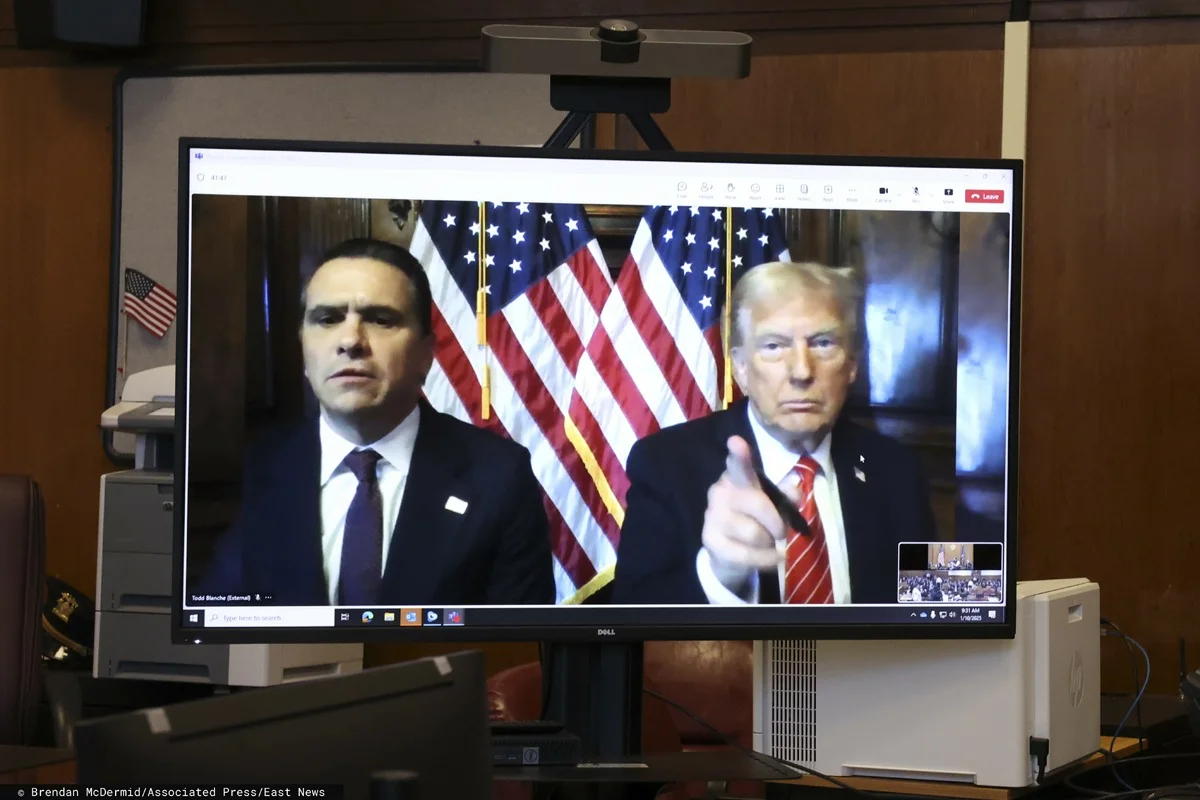
As Trump finished his angry speech, the judge had the last word, explaining why he had limited himself to a sentence of such a rare variety.
Merchan said he did this not for the sake of Trump, who was found guilty by “ordinary citizens,” but out of respect for the office he would soon hold.
According to the judge, the post provides its holder with extraordinary legal protection, which Merchan intends to respect.
The judge concluded his brief remarks by wishing Trump success in his second term in office.
Trump's defense now has 30 days to express its intention to appeal. The title of “convicted criminal,” of course, will do little to prevent him from ruling the country, but it will still be a burden. Trump's defense has high hopes for the appeals court, shared by many lawyers who from the outset called Trump's Manhattan case the weakest of the four brought against the former/future president.
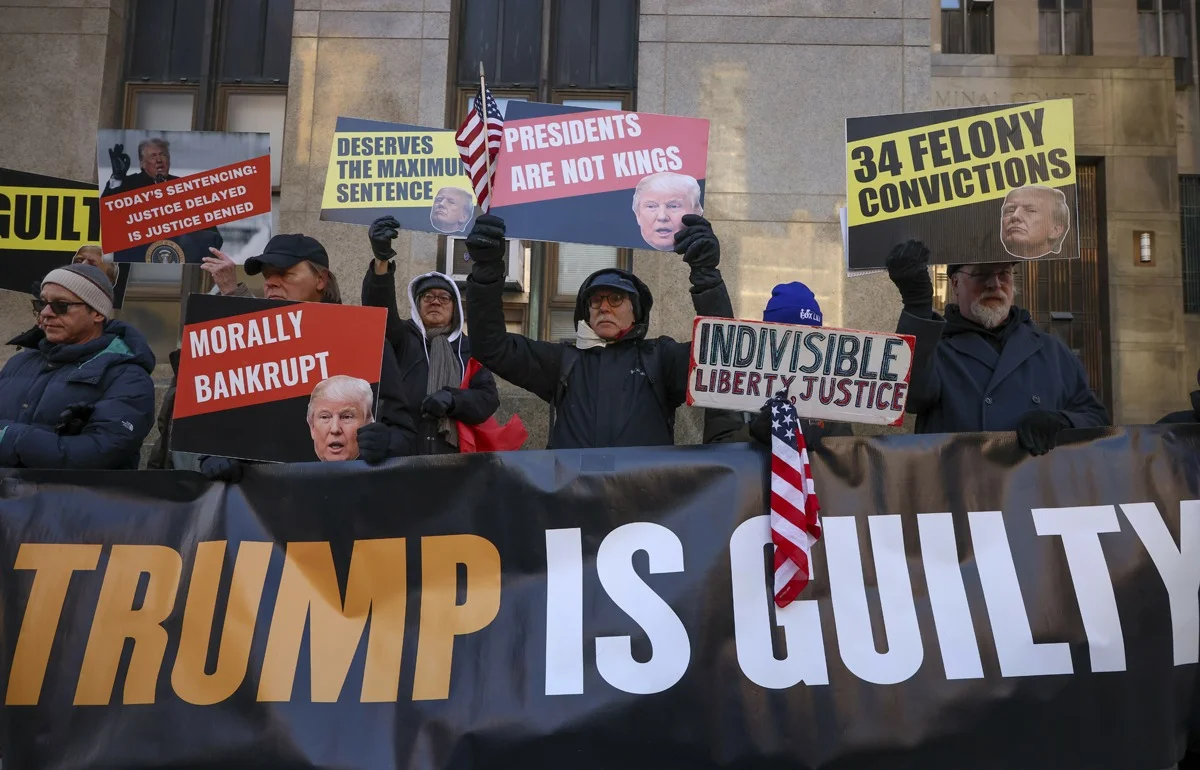
During the hearing, a crowd of several dozen Trumpists wearing red caps with the slogan “Make America Great Again!” gathered outside the court. and in other branded equipment of his party. They held signs and a huge banner that read “Trump Won Trifecta.” This meant that he won both the White House and both houses of Congress. Demonstrators chanted “We love Trump!” and shouted “Shame!” to a judge who was not seen.
A group of Trump's opponents reveled in his new title and waved signs reading "Felon in chief," which roughly translates to "Glavpakhan." However, this nickname is a play on words (from “commander-in-chief”, commander-in-chief).
New York