Translated material
Drama with Komil
Why an assassination attempt on a political figure in Uzbekistan became a political scandal in Russia involving security forces
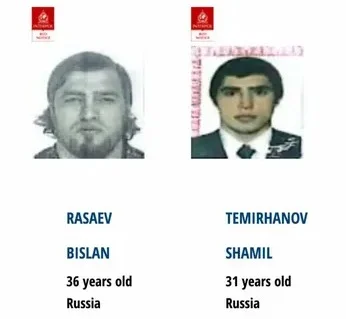
The General Prosecutor's Office of Uzbekistan has put two Russians on the international wanted list in connection with the assassination attempt on Komil Allamjonov, the former press secretary of the country's president. The wanted persons are natives of Chechnya, Bislan Rasaev and Shamil Temirkhanov. Within two months from the moment of the assassination, versions of their involvement were repeatedly published in the Uzbek media.
Flowers of life
The republican prosecutor general's office was the first to disseminate information about the high-profile assassination attempt on Komil Allamjonov on the morning of October 26. True, in the departmental report they chose to exclude mention of the name and status of the former official, limiting themselves to a dry report: at night in the Kibray district of the Tashkent region, unknown persons opened fire on a Range Rover car, the driver and passenger were not injured, the attackers fled, all services were raised to search for them.
But soon journalists corrected the omission in the investigation - radio Ozodlik ( recognized as an undesirable organization in Russia - Ed. ) announced the name of the injured passenger. The incident received a wide public response, gradually becoming a central domestic political topic.
It couldn’t have been otherwise - having left the post of head of the Department of Information Policy of the Presidential Administration this summer,
Allamjonov remained one of the closest associates of Saida Mirziyoyeva, the eldest daughter and assistant to the President of Uzbekistan. Mirziyoyeva not only influenced her father’s policies, she turned into a symbol of the restructuring of an entire nation.
All key reforms - from the liberalization of the economy and public administration to the promotion of environmental and gender agendas - were in one way or another associated with her figure. And, as a result, with the figures from her environment. Last but not least, with Allamjonov, a bright progressive reformer, an apologist for freedom of speech, the market and competition. In this sense, the attempt on Allamjonov, of course, could be interpreted as an attack on the entire reformist course that the president’s eldest daughter proclaimed and symbolized.
In particular, after Allamjonov’s report to the president, Otabek Umarov, the former deputy head of the Security Service of the President of Uzbekistan, who led the so-called “Office,” a structure that widely used force against business, fell into disgrace.
However, in reality, of course, symbolism was not of decisive importance either for the organizers or for society.
In the end, public opinion sought a specific answer to the question cui prodest and found it in a typical intraspecific struggle, and, taking into account the Uzbek context, in an intrafamily struggle.

As in the story with the country’s former leader Islam Karimov, members of the family of the current leader Shavkat Mirziyoyev also fought for spheres and volumes of influence. However, in contrast to Karimov’s plot, where two daughters openly shared economic benefits and social preferences, Mirziyoyev’s youngest daughter Shakhnoza did not cross the elder’s path. Instead, her husband, the president’s son-in-law, the same Otabek Umarov, had political ambitions.
His career, like Saida’s, was just as rapid and was built strictly in the force field - having entered the inner circle of the first person as one of his bodyguards, he quickly became the deputy head of his security service and one of the supervisors of the security forces. With the blessing of his father-in-law, he entered the international arena as a sports functionary and vice-president of the Olympic Council of Asia (OCA). In this status, he, in particular, visited the monarchies of the Persian Gulf, neighbors in Central Asia and Russia, where he developed particularly warm relations with the head of Chechnya, Ramzan Kadyrov.
The routes of Otabek Umarov and Saida Mirziyoyeva, by the way, often coincided - but the president’s daughter still had more frequent and effective contacts with representatives of the West.
In a word, both of them, until the last moment, not only represented the new Uzbek elite, but also aspired to lead it sooner or later.
Crime Event
The investigation into the criminal case of the assassination attempt on Komil Allamjonov, which occurred on the day of the parliamentary elections, was entrusted to an interdepartmental operational investigative group, which included employees of the Ministry of Internal Affairs, the military and transport prosecutor's office and even the Customs Committee of the Republic of Uzbekistan - but not a word was said about the role of the State Service security (SGB).
The investigation into the crime proceeded intensively, but information about operational successes was disclosed selectively, which certainly did not shed light on all the circumstances of the incident.
For example,
During the first two days, four suspects were detained, but only one of them, Shokhrukh Akhmedov, was presented to the public.
The 28-year-old first appeared in crime news in 2021, when he was arrested as part of a group in Turkey and spent several months in prison on suspicion of extorting money from those seeking refuge from Russian creditors. There, he publicly confronted critics of Ramzan Kadyrov several times, strengthening his ties with influential people from the Caucasian republic.

During interrogation in the case of the assassination attempt on Allamjonov, Akhmedov testified against his boss, Uzbek businessman Zhavlon Yunusov. Akhmedov testified that he worked as a security guard for Yunusov and sometimes carried out delicate assignments for him.
By the age of 36, Yunusov had managed to make money in commercial and residential development and lose money in woodworking and pharmaceuticals. However, the most controversial fact from his biography is criminal cases of fraud and causing moderate bodily harm. While under investigation on charges of committing serious crimes, Yunusov managed to remain free and, like his subordinate Akhmedov, was actively in contact with his acquaintances from Chechnya - a bright moment that united this couple.
From a few leaks in the Uzbek media, it turns out that it was Yunusov who provided his guard with vehicles and indicated the escape route. It was assumed that after a successful assassination attempt, Akhmedov and his comrades would burn the car and, at a minimum, lie low in the Fergana Valley, and at best, sit out the storm abroad. But, obviously, everything did not go according to plan: the machine gun did not work properly, and Molotov cocktails were not useful for destroying evidence.
As a result, Akhmedov was detained in Fergana near the Seoul cafe, which belongs to Natalya Fen, Yunusov’s common-law wife and also the daughter of Vitaly Fen, the former ambassador of Uzbekistan to South Korea.
Yunusov himself turned out to be inaccessible to the investigation, since he hid in that same South Korea. It took a little less than a month to search for him, detain him and extradite him.
And during this time, while versions about the motives of those who organized the assassination were multiplying on the Internet, there was a hardware struggle in the political and security blocs of the country for control over the investigation. The result of this struggle became known precisely in those days when Yunusov was being prepared for extradition to his homeland.
Almost instantly they lost their posts
Head of the State Security Service Abdusalom Azizov , Assistant to the Prime Minister Sarvar Ashurov
and his brother, head of the State Security Service's own security department Alizhan Ashurov .
Then they were dismissed from service
Head of the Criminal Investigation Department of the Ministry of Internal Affairs Akhrrzhon Adkhamov ,
First Deputy Chief of the Tashkent City Internal Affairs Directorate Daniyar Tashkhodzhaev ,
Head of the Department for Combating Organized Crime of the Tashkent City Internal Affairs Directorate Timur Sobirov .
Resignation capped a series of layoffs
- Deputy Head of the Presidential Security Service Otabek Umarov .

As reported by The Tashkent Times, Daniyar Tashkhodzhaev is allegedly accused of concealing the crimes of businessman Javlon Yunusov, who, according to law enforcement, is connected with the attempt on Allamjonov.
As part of the investigation, Shukhrat Rasulov, the former head of the Internal Security Directorate of the State Presidential Security Service, was also detained. Uzbek journalists call him the “right hand” of Otabek Umarov.
The National News Agency of Uzbekistan later confirmed that all personnel decisions were related to the case of the assassination attempt on Allamjonov, and individual sources clarified that some of the suspended security officials directly tried to influence the vector and tactics of the investigation.
Thus, the criminal case highlighted the line of contact between the forces and interests of two competing groups in the government of Uzbekistan.
After all the resignations, the investigation for the first time named Allamjonov as the target of an assassination attempt. And it didn’t stop there: in mid-December, two natives of Chechnya were put on the wanted list - 36-year-old Bislan Rasayev and 31-year-old Shamil Temirkhanov.
It is curious that both had nothing to do with the October shooting of Allamjonov’s car, but, according to the investigation, they were preparing an assassination attempt on him even earlier, in August, for which they allegedly acquired fake documents, with which they entered Uzbekistan from the territory of Kyrgyzstan. Formally, they were charged with “illegal entry into the Republic of Uzbekistan and travel abroad, failure to report a crime, as well as illegal trafficking in firearms.”
Chechen trace
Journalists associate the names of Rasayev and Temirkhanov, as well as Akhmedov and Yunusov, with attacks on individual critics of the Chechen government living in Turkey. Their accusation by the Uzbek investigation caused an angry reaction from Ramzan Kadyrov. The response from representatives of Uzbekistan and deputy Odiljon Tozhiev was not long in coming, and ex-deputy Rasul Kusherayev even called for stopping air traffic with Grozny.
The Prosecutor General's Office of Uzbekistan confirmed the indictment in absentia and the international search for Bislan Rasayev and Shamil Temirkhanov. This happened literally immediately after Shavkat Mirziyoyev returned to Tashkent from St. Petersburg, where he took part in an informal meeting of the heads of state of the CIS and a meeting of the Supreme Eurasian Economic Council.
It is hard to believe that these events came as a surprise to the Russian leadership. In any case, since December 19, when information about Rasayev and Temirkhanov appeared in the Interpol database, the FSB and the State Security Service have been in close coordination, which Shavkat Mirziyoyev himself insisted on in connection with the murder of Lieutenant General of the RF Armed Forces Igor Kirillov (the accused, we recall, is a citizen of Uzbekistan) .
Despite the fact that the very alleged participation of Russians in the assassination attempt on an official from Uzbekistan can be considered a negative factor in relations between the two countries, it is difficult to believe that it can reverse the current trend and affect mutual interests. And the point is not that there are more than three thousand enterprises with Russian participation in the Uzbek market, and the amount of Russian investment in the economy of Uzbekistan has exceeded $9 billion.
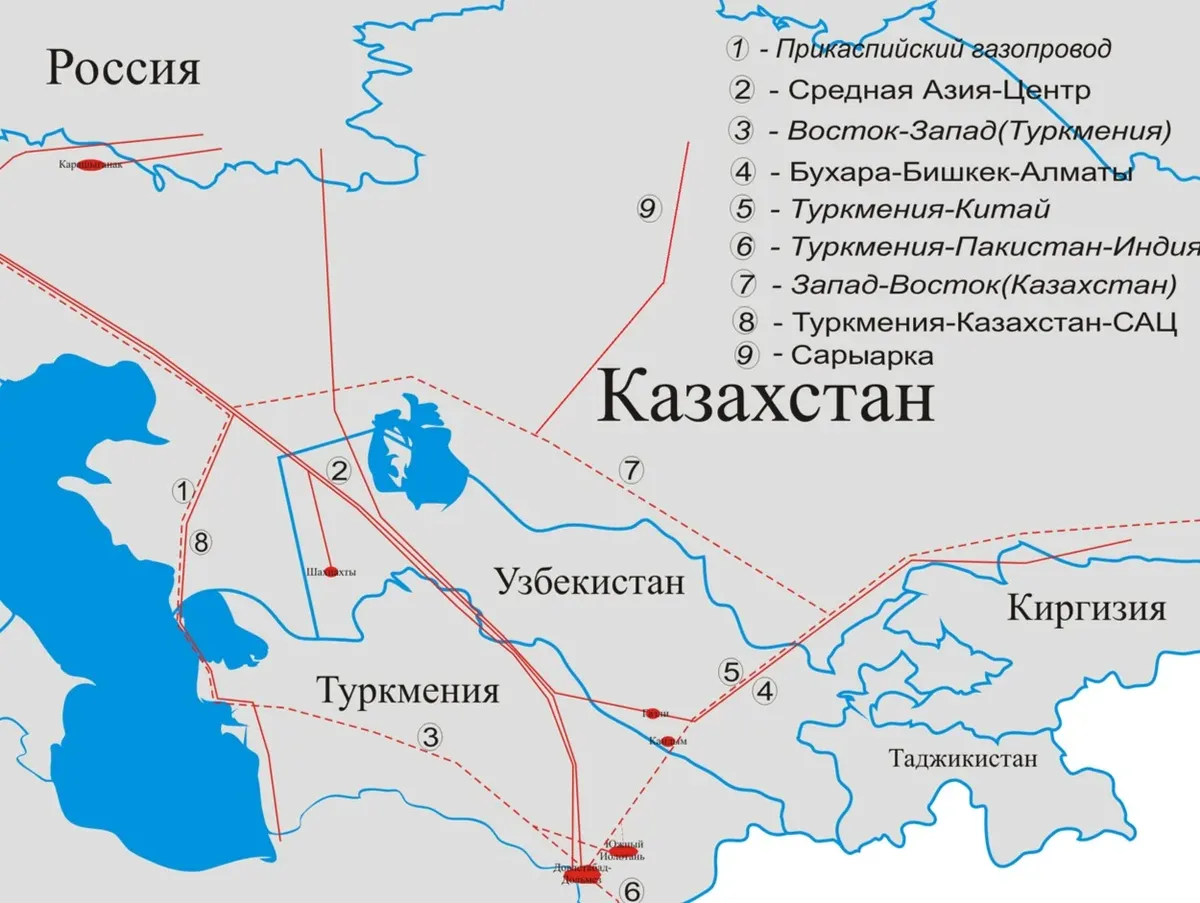
On the agenda are issues of fundamental importance for Uzbekistan: the construction of low-power nuclear power plants and pumped storage power plants on lakes Aydarkul and Karateren with a total production capacity of one gigawatt, joint projects for the construction of a copper processing plant and the launch of a metallurgical cluster based on an iron ore deposit, and finally, an increase in throughput capabilities of the Central Asia - Center pipeline system, which will allow next year to increase gas pumping volumes to Uzbekistan to 11 billion cubic meters.
This, however, not only creates room for maneuver, but also imposes strict obligations on the issue of extradition of persons involved in committing a serious crime. Despite the aggravated international situation, Russia remains committed to fulfilling its obligations under Interpol, especially with regard to requests from friendly countries.