
Translated material
Young President
Jude Law will play Putin in the film “The Kremlin Wizard” based on the book by Giuliano da Empoli about Vladislav Surkov. We tell you what kind of book this is
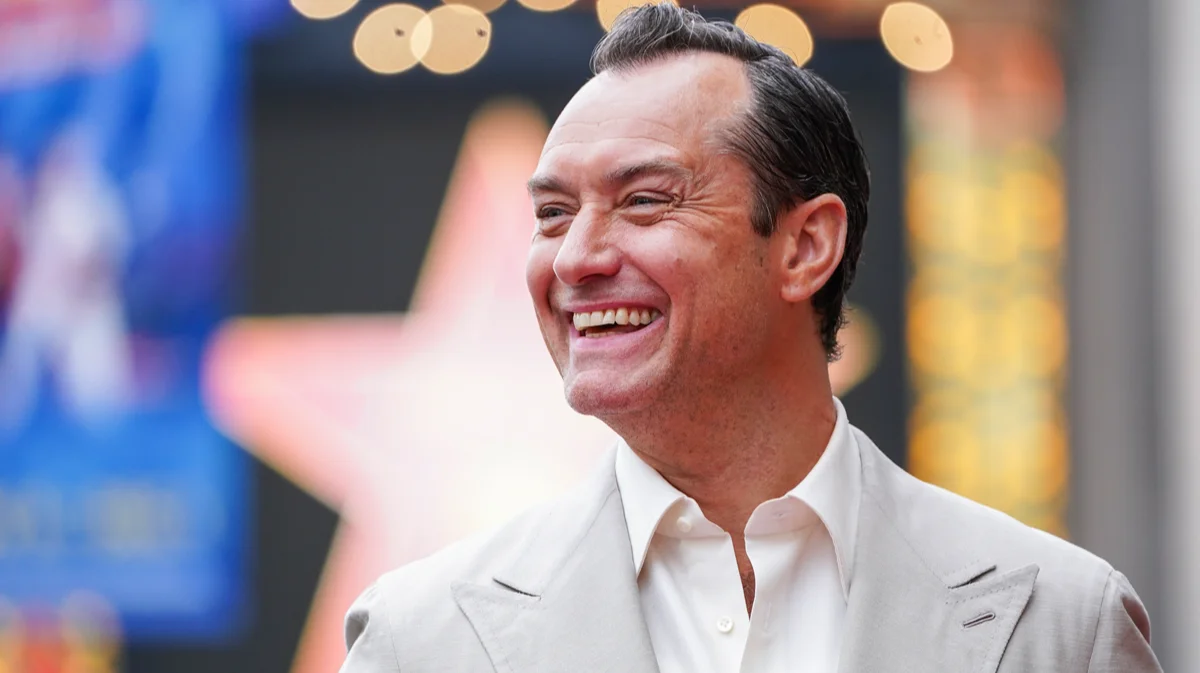
Jude Law attends the unveiling of a star on the Hollywood Walk of Fame in Los Angeles on December 12, 2024. Photo: Jordan Strauss / Invision / AP / Scanpix / LETA
In an interview with Deadline, Oscar nominee Jude Law said he soon plans to play Vladimir Putin at the beginning of his political career. The Russian-language media field reacted accordingly: journalist Farida Rustamova, for example, suggested appointing George Clooney to the role of Patrushev, and Pedro Pascal to Shoigu.
Meanwhile, there is actually no news in the announcement - the fact that in Olivier Assayas’s film “The Kremlin Wizard” Jude Law will play Putin, and Paul Dano will play Surkov (well, his novel prototype), has been known since May last year. As well as the fact that the film is based on the novel of the same name “The Kremlin Wizard”, written by the Italian-Swiss political scientist Giuliano da Empoli in French and published in 2022. While the Assayas team is preparing to shoot the film, we asked our regular author, cultural observer Anastasia Snegova, to talk about the plot of the book and share her opinion on what to expect from a film with such outstanding casting.
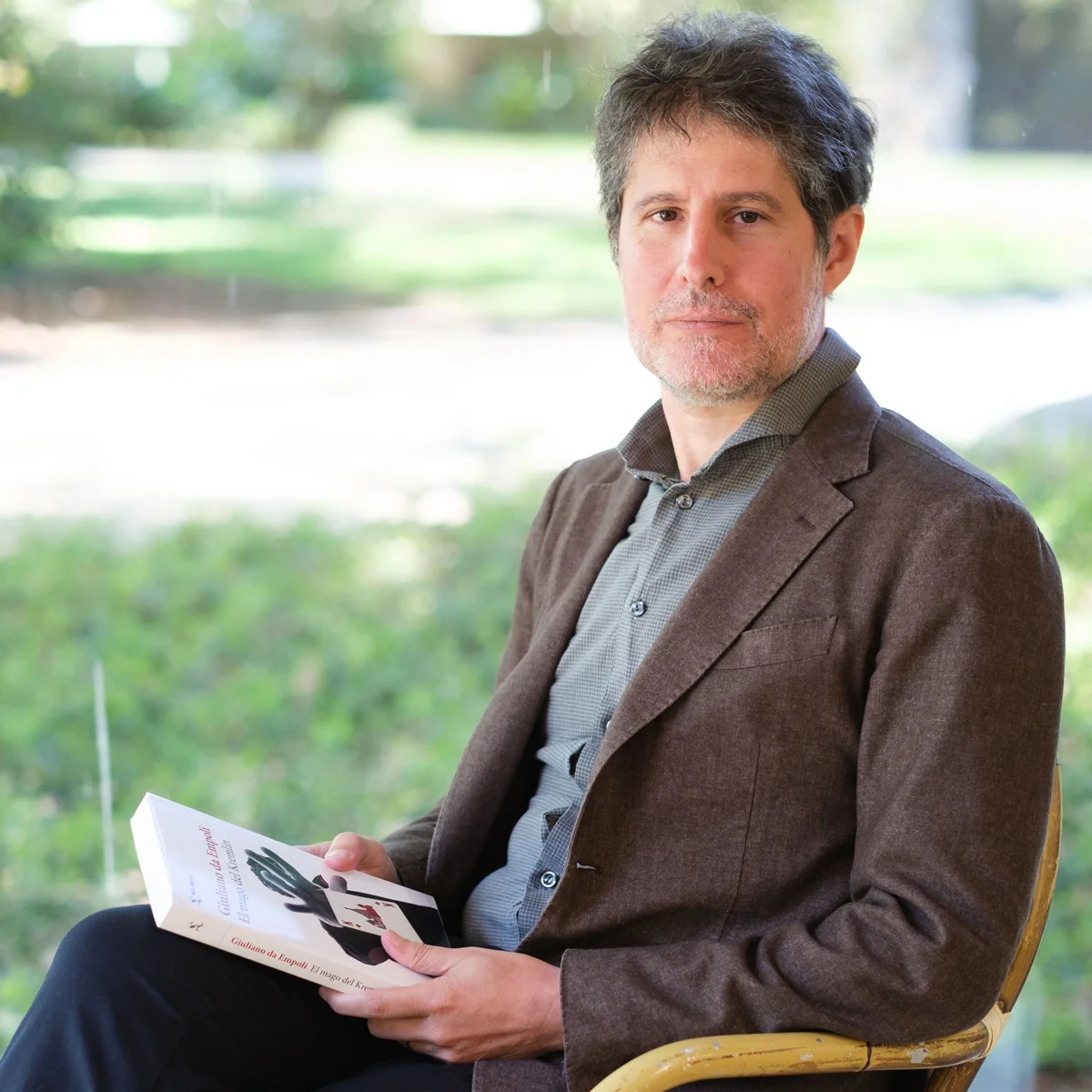
The first thing you need to know about the novel “The Kremlin Wizard” is the fact that it was not written by a professional writer. Giuliano da Empoli is a man of many occupations, who worked (according to his official biography) as deputy. mayor for culture of Florence, advisor to the Prime Minister of Italy (2014–2016) Matteo Renzi, professor of political science at Science Po, and also a regular guest on all kinds of political talk shows and the author of many political essays and columns. “The Kremlin Wizard” is his first fiction book, published exactly after the start of the war in 2022 and immediately making Empoli a “specialist on Russia.”
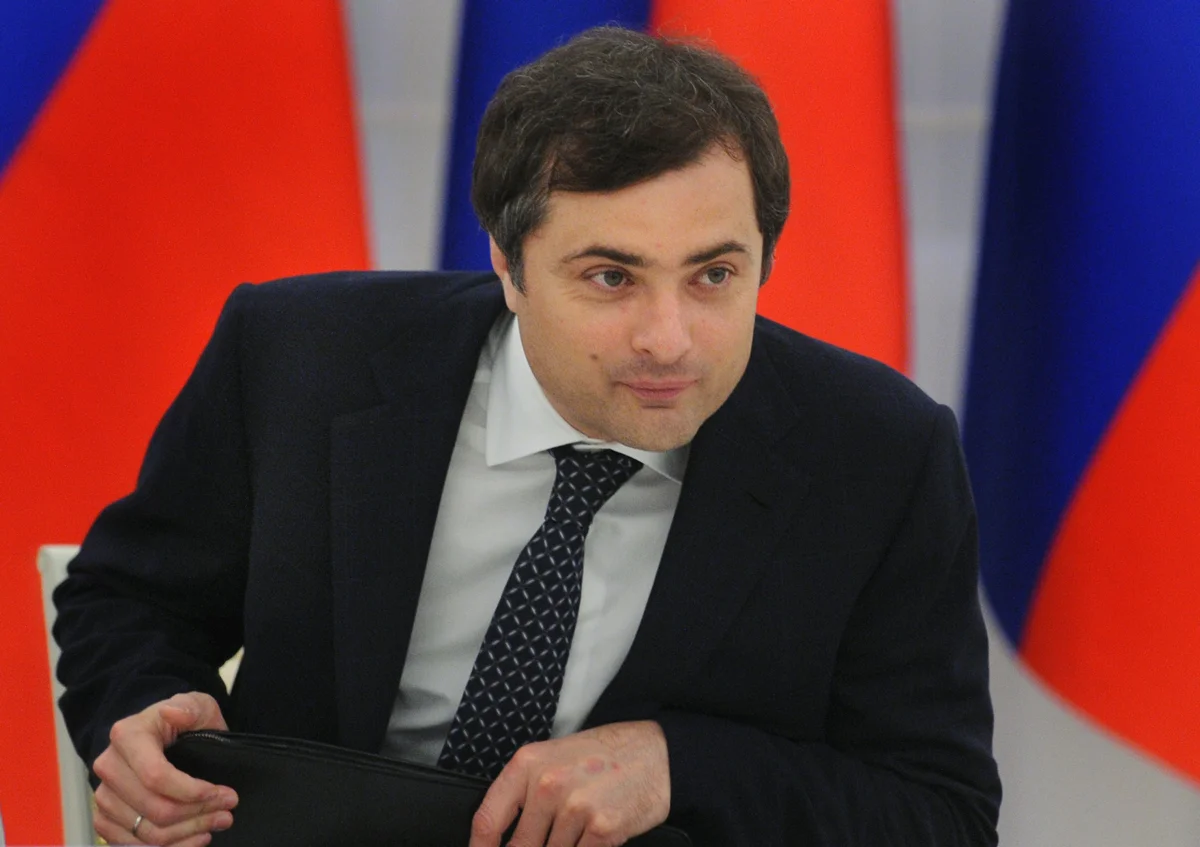
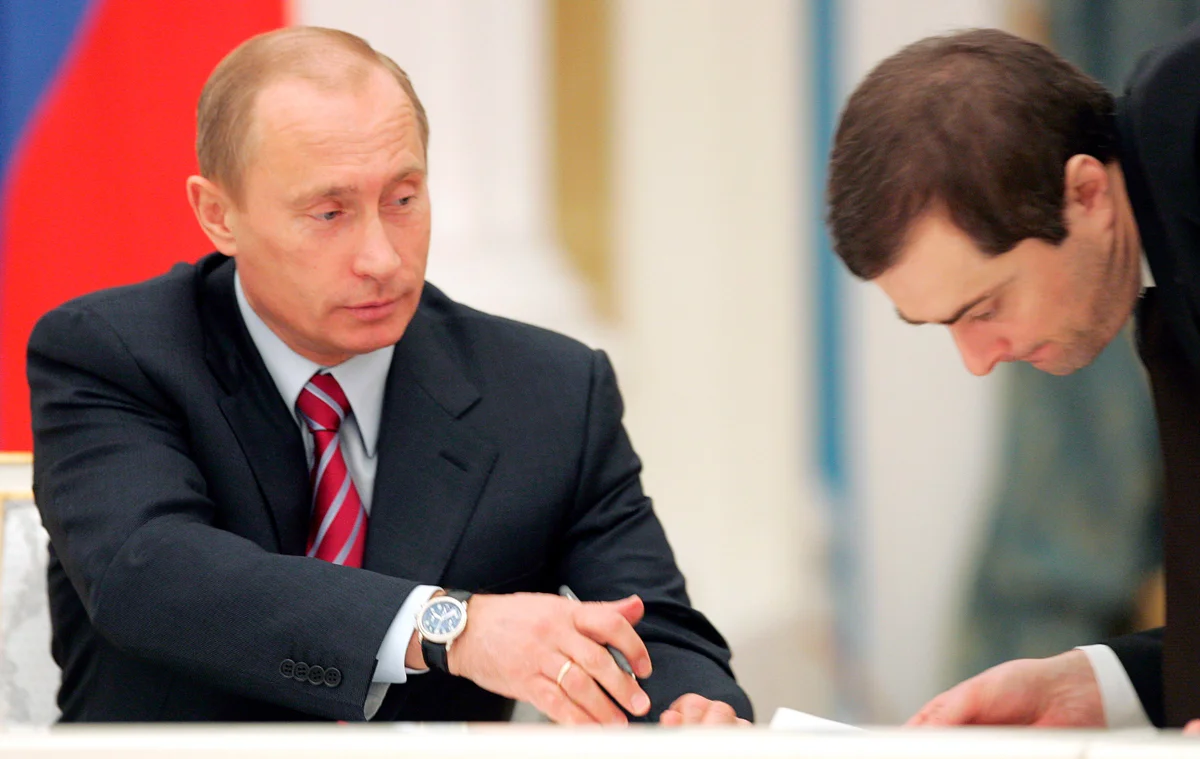
It is not surprising that Empoli, who himself is no stranger to adventurism (judging by his biography), was attracted by the image of Vladislav Surkov. A shadow schemer, theatergoer and television producer, who put his genius at the service of the terrible regime and himself became its hostage, and then barely escaped - like a true trickster, taking secret knowledge and hope for inevitable triumph and a return to power from the dangerous Kremlin palaces. At least, this is how Surkov looks in the eyes of his European fans.
The plot of the book is something like this: a certain foreigner comes to winter, snowy Moscow in order to study Yevgeny Zamyatin. In winter, snowy Moscow, a foreigner suffers and goes to bars and, having nothing to do, writes on Facebook his important thoughts about Zamyatin. One day, his thoughts are noticed by a certain Vadim Baranov - in fact, Surkov’s alter ego - who is so imbued with the foreigner’s Facebook posts that he sends a limousine for him and calls him to his residence. This residence, naturally, is in a dense forest near Moscow: there are long gloomy corridors and huge halls; in the depths of one of these halls, Baranov, the once all-powerful and now disgraced eminence grise of the Kremlin, meets a foreigner, pours him whiskey and decides to confess - to tell the story of his life.
As befits a mysterious Russian, Mr. Baranov begins his life story from afar: with his noble ancestors, with the revolution of 1917, with Stalin’s repressions, and so on. After all sorts of historical excursions and, again, very deep thoughts about the historical paths of Russia, Baranov tells how in the late 80s - early 90s he took up experimental theater and then television, how he was friends with a certain oligarch (Khodorkovsky), how they both fell in love into the same beautiful Ksenia (Alicia Vikander will probably play her in Assayas’ film), as Ksenia chose Khodorkovsky, and Baranov, therefore, chose service in the Kremlin.
Then there are stories about the manipulation of public opinion, about the Chechen wars, discussions about the need for a Tsar for the Russian people, insights like “when a new president appears, everyone in the international arena looks at him as a naive fool,”
quotes (fictitious, of course) from Putin about Stalin, retellings of the history of the confrontation between Berezovsky and Putin (the former thought how the latter would rule, but it turned out to be the other way around, as it happens), Khodorkovsky’s imprisonment (no other than because of Ksenia’s fatal choice , who bet on the wrong guy). In the image of Baranov, Surkov is mixed with Konstantin Ernst: and therefore the same hero turns out to be both the organizer of the enchanting opening of the 2014 Olympics and the author of the provocation in Donbass - in the role of Strelkov-Girkin, however, it turns out to be the biker Surgeon.
Further events obey the laws of melodrama. Only the return of his former love - that same Ksenia - helps Baranov make a breakthrough and finally break out of the vicious Kremlin bonds and leave an abusive relationship with the tsar.
The author’s level of knowledge in Kremlin intrigue corresponds to the level of a person who has watched about two videos of Russian political YouTube. He already realizes that Russia is an authoritarian country, and Putin is perceived as a tsar, and all sorts of unpleasant events like the bombings of houses in Moscow at the beginning of the Second Chechen War were not without the participation of security forces. But, alas, nothing more awaits the prepared reader here.
The most disappointing thing about Empoli's novel is precisely how it fails to cope with the task of being realistic (that is, to provide a more or less reliable picture of the relations within the Russian elite) and at the same time does not become an exciting genre trash thriller. Even the telegram channel “General SVR” and the prophecies of Valery Solovy will say more about Russia, its past and future (not to mention, say, a five-hour interview of Sergei Pugachev with Dmitry Gordon, from where one could get ideas and textures for the series no worse than “The Whole Kremlin army" by Mikhail Zygar).
The text (I read it in English) is written awkwardly in a debutante way. The chapters begin with, naturally, meaningful little parable-stories; a banal adjective will necessarily be selected for each noun, and a verbose metaphorical description for each spiritual change.
For example, the episode of the hero’s spiritual rebirth is described as follows:
…She had no intention of listening to me. My only option was to follow. I dove in noisily. It was the opposite of Ksenia's imperceptible splash. I may have screamed—bathing in icy water has never been my forte. I instinctively started swimming, as much to keep from freezing in place as to catch up with Ksenia. She had stopped about fifty yards from shore and was waiting for me. On the point of reaching her, I thought she was going to take off again. But no, she waited for me to come up. And there, while I pressed her luminous body against mine in the dark water, I read for the first time in her eyes the full majesty of the mystery growing inside her. A fierce and unlimited freedom had been her one goal, for which she had formerly been willing to submit to the most abject slavery. But at present nothing could deviate her from the course the stars had traced for her, and though she was crueler even than before, a new tenderness had ripened in her breast, which I felt was destined for no one but me. All other sensations fell away from me at this point, like ripe fruit dropping from a tree, and alone at the deepest core of my being there remained a reverence for the splendor of the unknown life that vibrated in front of me. And for the first time in years, while the ice pushed against us from every side and the current threatened to carry us away, I had the feeling of being able to breathe again.
It’s amazing how the fortunate timing of the release (2022) and the sudden interest in the mysterious evil from the East turned, frankly, an ordinary piece of literature into a literary sensation - and an apocrypha for the study of Russia, about which the writer Frederic Beigbeder can say that it is “the best the novel that I read over time was Jonathan Littell’s “Benefactors” (apparently, the only one).
My colleague Andrey Sapozhnikov has already devoted part of his article “Mordorland” to the phenomenon and success of “The Wizard”. I will quote an excerpt that includes a commentary by critic Zinaida Pronchenko (who, unlike me, read the novel in French):
Actually, the author himself never declared The Wizard to be anything more serious than just a compilation of political facts and fictional dialogues. However, as The New York Times wrote , the novel turned Giuliano into a “coveted Kremlinologist,” who was even awarded an invitation to dinner with the French Prime Minister to discuss the work.
- The success of the book... it seems to me, is due to the fact that everyone read it in the first year of the war and it explained in a popular speculative manner what Russia is in principle and what its policy supposedly looks like. Complete intrigue and complete corruption,” film critic Zinaida Pronchenko suggests in a conversation with us.
In her opinion, the upcoming film adaptation of “The Wizard,” directed by Olivier Assayas, would be mistakenly perceived as a symptom of the European public’s increased interest in Russian politics:
— Olivier Assayas is an absolutely original director, whose films are not watched by the general public of France... I’m not sure that even an international cast with the participation of Paul Dano (he is supposed to play in the upcoming film by Vladislav Surkov. — Author’s note) can somehow then change. Not to mention that it will most likely, unfortunately, be cranberries. Olivier Assayas is a good director, but I don’t believe in his ability to more or less verifiably convey the Russian context, especially based on such a stupid book.
Although the success of Empoli's novel is indeed understandable and understandable, the cast of Assayas's upcoming film cannot be solely a source of appropriate (or not so appropriate) jokes. The logic of the international film business is that a current plot needs an action-packed embodiment - and this embodiment cannot be done without the romanticization of evil.
How ethical such romanticization is, while the villain from the film continues his atrocities in real life, is, ahem, not exactly an open question. Paradoxically, such an approach to the artistic “understanding” of Russia will not only not bring us closer, but will only further distance the Western viewer from our problems and our latitudes. How can we even talk about Putin if he is played by Jude Law?