
Translated material
Instead of an amnesty
The parliament approved the "humanization of the preventive measures", but part of the pre -trial detention center is now offered to be transferred to the FSB
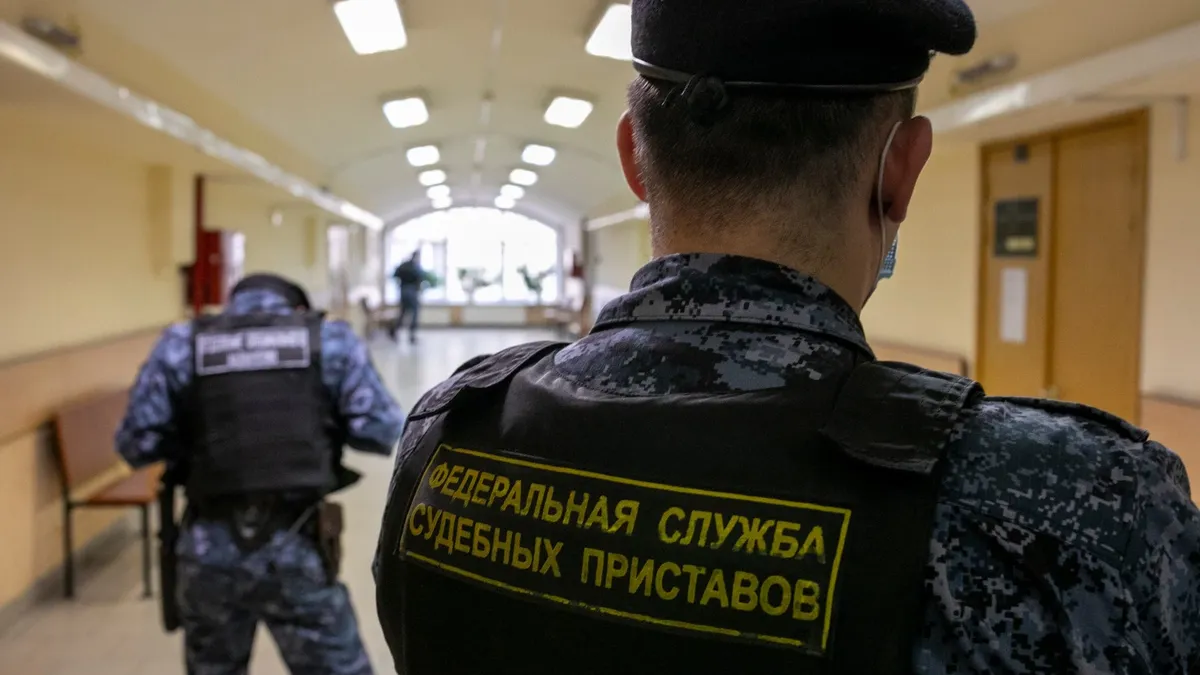
Photo: Alexey Dushutin / "New Gazeta"
The State Duma adopted, and the Federation Council approved the law “On the Humanization of Agricultural measures” -this is how it is characterized in the telegram channel of the upper house, although the “humanization” will turn out not so hot.
The essence of the changes is that to the suspects and accused of non -violent crimes up to moderate gravity, for which the Criminal Code provides for up to 5 years in prison, detention should be applied only in cases where they tried to hide or they were violated by a preventive measure not related to imprisonment. The detention, in addition to exceptional cases, should not be applied to minors, pregnant women, women with a young child, the only parent, as well as to people suffering from severe (not deciphered) diseases.
In the practice of the defendants, for whom the preventive measure is chosen, not related to imprisonment, the courts are usually sentenced to punishments, also with imprisonment not related. The new law, after the president sign it, will not have retroactive force, but can give a chance to those accused who will come to renew the term of detention.
Of the "popular" compositions of the Criminal Code for "humanization" will be falling out Art. 228 (acquisition, storage, transportation of drugs), but only in Part 1, which provides for a punishment of up to 3 years in prison with small party sizes. The new law will also affect non -violent property crimes, but for articles 280.3 (public discrediting the armed forces) and part 1 of Art. 207.3 ("fakes" about the army) provides for an exception. However, this is rather unnecessary, since in practice, usually part 2 tbsp is usually applied at once. 207.3, which provides for the maximum term of punishment above 5 years and is considered “heavy”.
Interestingly, this project was made by the Supreme Court of the Russian Federation back in June 2023, signed by its late chairman Vyacheslav Lebedev.
What did they suddenly remember in the Duma? Perhaps this is due to the amnesty project, which was recently submitted by the Communist Party faction, but through the head of United Russia. Now the Communists can say: we have already “humanized”, what else do you need?
The future law will cut off from sending some of the “volunteers” to the zone, who still offered it at the investigation and court stage as an alternative to detention. Maybe the bodies of the so -called legislative power have information about the imminent end of the special operation?
The Supreme Court of the Russian Federation and previously showed the initiative in issues of restricting the preliminary conclusion, primarily on economic cases - both in the form of legislative proposals and in the form of clarification of the Plenum of the Supreme Court. But in the practice of applying an “exceptional” (so in the Code of Criminal Procedure), this preventive measure did not particularly influence. It is clear why: the investigation has forgotten how to form a evidence base without guilty guilty, and the shortest way to get such a confession is to send it to the bunks.
Without taking into account the real situation in investigative insulators and colonies, it is generally impossible to evaluate what the Russian judicial system is in the broad sense of the word (including a preliminary investigation). With the same period of imprisonment in the pre -trial detention center (and the investigation is usually in no hurry), conditions may vary from bad to unbearable.
Meanwhile, the restless deputy Vasily Piskarev said in his telegram channel that a project was introduced to the Duma to “return” the FSB of a number of pre-trial detention centers and the creation of such specialized insulators in cities where they are not yet.
The numbers of Piskarev, motivating his proposal, gives interesting ones: from 2015 to 2024, the number of cases of state reception, espionage, terrorism and extremism has grown three times, and the number of arrested suspects and accused in such cases was four times.
The procedure for considering these cases in closed court sessions deprives us of the opportunity to at least assume that it has increased: the number of real spies or only cases of espionage, real extremists or only cases of “extremist” articles?
The new Russia inherited the Guin from the USSR - the Main Directorate of the Ministry of Internal Affairs for the execution of punishments. In the wake of perestroika, the Guin system began to relate to prisoners more humane, however, in the late USSR, it was impossible to imagine torture in the ownership of the overseers. In 1996, Guin passed under the wing of the civil and at that time the “herbivore” of the Ministry of Justice - this was the requirement of the Council of Europe, where the Russian Federation entered.
In 2004, by decree of the President, the status of the Guin was increased to the Federal Service for the Penitentiary (FSIN), which remains as part of the Ministry of Justice, but rather formally - in practice it is an independent monster. And the Ministry of Justice as part of the general trend has become more likely "power." The control of civil society for what is happening in the FSIN system is practically lost.

The first reaction to Piskarev’s proposal to transfer part of the pre -trial detention center to the FSB maintenance: well, it made friends! Indeed, in all large cities, individual insulators or corps in the insulators are already under the control of the FSB - in Moscow it is Lefortovo and the so -called Kremlin central as part of "sailor silence". Operational employees of the FSB, not a couple of lawyers, already have access to any insulator at their first request, and also control the leadership of all FSIN institutions (as well as judges who give sanctions for detention) through the appointment system.
At the same time, for what is happening in insulators where suicides and murders periodically occur, not to mention the injuries, the FSB is not responsible. Why should the Chekists take her on themselves?
Vasily Piskarev is not just a deputy, but the chairman of the Duma Committee on Security and Countering Corruption, before settling here, he served the first deputy chairman of the Investigative Committee of the Russian Federation. It is unlikely that with such an experience he would have come out with his initiative, without agreeing it with the leadership of the FSB. What then is the purpose of this lobbying course? Presumably, it can be controlled by part of the financial flows that go through the FSIN today. Also, it’s not so hot that volumes, but the chicken pecks on the grain.