
Translated material
A quarter of a century on a minefield
On May 7, the Krasnoyarsk television company TVC celebrates its 25th anniversary-few of the non-state media in Russia was able to survive to this age. Even fewer who managed to defend their right to freedom of statement. The General Director of TBK - 6 Channel OJSC Vadim Vostrov talks about how to maneuver the television company today in order to stay afloat.
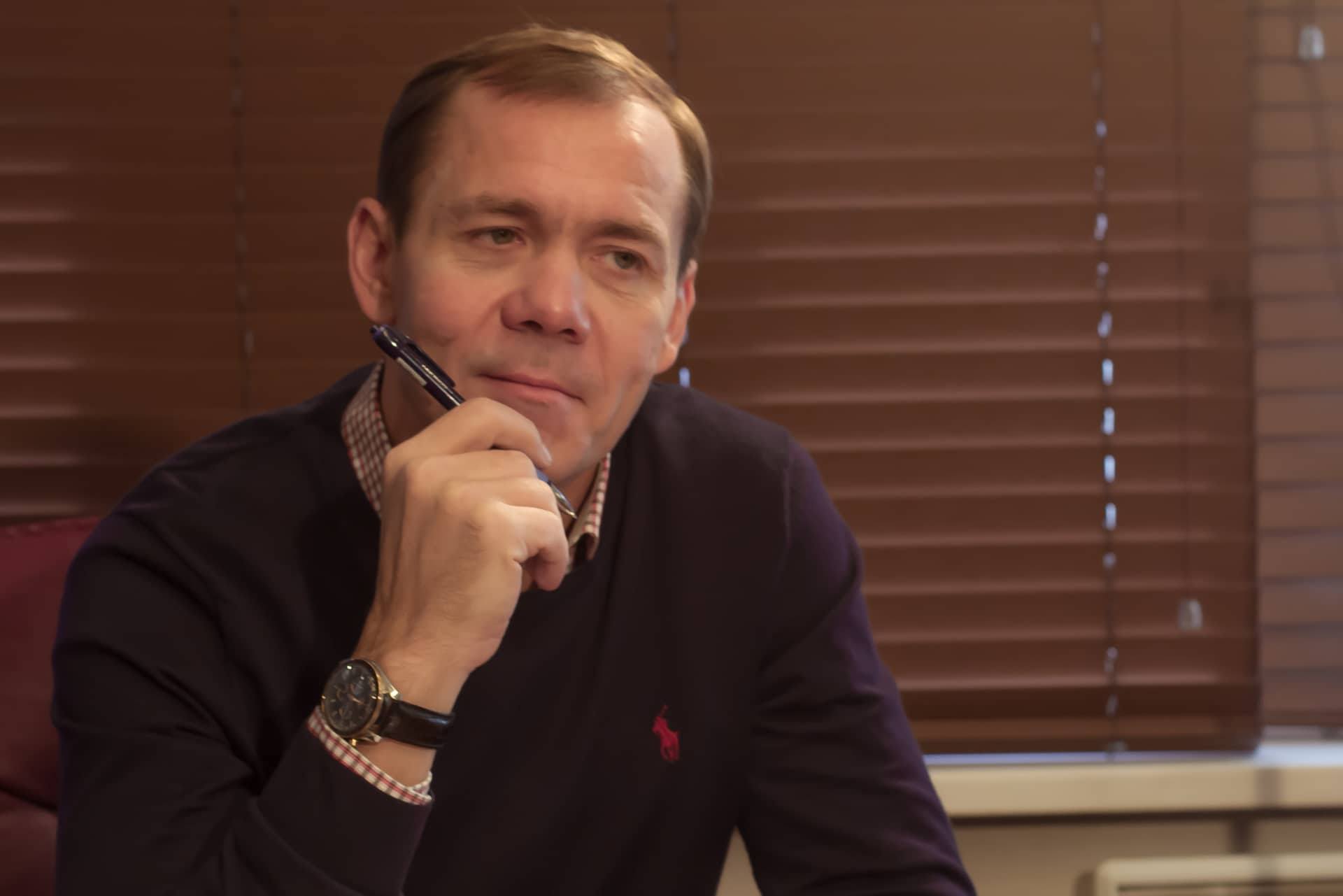
- Vadim, is it not surprising you myself that the TVC television company survived before this anniversary?
- To be honest, it is surprising. There is a feeling that we are one of the last media, which can express independent judgments on the federal subject. At least from well -known regional companies, after closing Tomsk TV-2, I honestly don’t remember such people, I don’t have such people in my memory. Therefore, it is surprising. But I find it difficult to say why this happened.
-That is, you do not know why in Tomsk TV-2 closed, and the TVK in Krasnoyarsk-no?
- I can only make assumptions. I think that TV-2 had aggravating, from the point of view of the authorities, circumstances-communications with Khodorkovsky ( from 2001 to 2003 he was the owner of the control package of shares TV-2. - SR ), the second citizenship [creator of TV-2 Arkady] Mayofis ( at the time of the closing of the TV-2 of the second citizenship, Arkady Mayofis did not have. - SR ), for example. The TVC did not have such aggravating circumstances. This is one thing. And the second thing is that TV-2 really worked all the time in their usual agenda. That is, they worked as if nothing had happened in the country in recent years, as if nothing had happened in the 14th year. I am not saying now that it is bad or wrong. From the point of view of the profession, this is, in its own way, a heroic position. And in this sense, the TVK may have always had more than the TV-2, we still compromised, and we continue to do it now.
- What kind of compromises? And how then do you find a balance between freedom of statement and the survival of your media in the current Russian conditions?
- In fact, even considering compromises, we are not completely safe from anything. This may be just a combination of circumstances. Recently there was an interview with Vladimir Zlokazov, General Director of Studio 41 from Yekaterinburg [about why the TV channel had to be sold to the regional authorities]. It would seem, Yekaterinburg - at one time it was one of the cities - the locomotives of regional television. There was the Fourth Channel and many other brands. And how did it all end? To date, in Yekaterinburg, in fact, there is no independent television at all. In Krasnoyarsk, also there was always a strong competition between television companies, network and non -net: the TVK and Afontovo, Prima and Seven. The political story in our region contributed to this: we had a swan, there were different financial and industrial groups, and between them everyone tried to somehow maneuver. It was a well -known, as they say, "authoritative" entrepreneur Anatoly Bykov and so on. And in the end, in Krasnoyarsk and today there is a living atmosphere of local television. There is competition, there are different views, different players. And, for example, this is not left in Yekaterinburg. Why did it happen? I don't know.
- Has it helped that you were not the only ones?
“I think yes, this is one of the reasons.” Today in Krasnoyarsk you can really say something else on television-this is not in most regions of the Russian Federation. Not even in Moscow and St. Petersburg. And it is easy for us to imagine critical material about pension reform on the TVK. Either we talk about the second citizenship of Brilev, or Solovyov’s property. Local channels can make some critical materials about, including local authorities. In Krasnoyarsk, it was possible to preserve the semblance of living media.
“But you said that you still know the boundaries and compromise.” What is it impossible to talk about on the TVK? Is there a stop list or forbidden topics?
- This is an interesting question - censorship and self -censorship. Today, journalism in Russia is like a minefield. We can only guess what you can or cannot be discussed. The story with the closure of TV-2, it also gave rise to an additional fear of and so intimidated regional broadcasters. For everyone, this was an example: if you do not engage in self -censorship, then you will be the following.
- And how did you determine the boundaries for yourself?
- Here the situation is more complicated than even just self -censorship. I'll try to explain. Firstly, for the regional media, the federal agenda is still not the main one. Of course, our information concept is to talk about what people are interested in and about what people are discussing. If people talk about pension reform either about Brilev’s citizenship, about Solovyov’s villas - we will also say about it. But this is still not the main agenda.
Second. We have a great difference from the federal media. And the difference is for regional journalism, aggravating. The rain channel or the Vedomosti newspaper, for example, has no problem and conflict with its audience. She is normal, progressively thinking, liberal. What is the TVC? The viewer of the TVC can easily see the first or second channel, and then switch to us. This is an ordinary viewer who was formed in traditional television. And in this sense, we roughly imagine what topics can cause rejection of our viewer. Therefore, here, in addition to self -censorship, it also turns on that we cannot go completely contrary to our viewers. And many of them, unfortunately, are in an altered state due to propaganda.
Exaggeration to think that propaganda on smart people does not work
And it turns out such a picture: if we want to work as uncompromisingly, relatively speaking, like “rain”, then we must engage in antipaganda, in fact, by debunking of federal politics. But we have no time or resources for this. And the regional media is not about this, since we must first talk about life in our region. Therefore, some kind of maneuvering is obtained. For example, we have such a heading: spectators can call live broadcast. And it often happens that you declare some topic-and people fall out of everything that they heard on the first and second channels.
- That is, the channel tries to take into account the features of thinking of the audience processed by propaganda, but at the same time, people who work on the TV channel, in their worldview, move away from the audience in this sense further and further? The federal propaganda does not act on you personally?
- On me personally - yes.
- And on your employees?
-The sad situation is that propaganda acts on some part of the employees. And this is also an exaggeration - to think that propaganda on smart people does not act. I have a huge number of acquaintances and friends with a university education, who believe that the Boeing was shot down by Ukraine. This is a fact. In order to understand the information agenda, you need to professionally follow and understand why this or that media says that way. People do not have enough time for this, and propaganda is so total and all -permanent that even the people whom I considered educated and normal are in a slightly altered state.
This is now the complexity of the existence of the media in Russia. You not only evaluate the political risks of the regional media, but you should still think about whether you will understand your viewers in principle, whether they will understand what you want to say about.
- Let's specifically on topics. For example, you can talk about Navalny?
- If there is an opportunity not to mention his last name, then it is better not to mention it, because it is an irritant for people, for a traditional audience. Moreover, there are spectators who, when they hear the surname Navalny, then they do not perceive the information further, they understand everything, the State Department and so on. Therefore, if we have the opportunity to say "the Fund for the fight against corruption conducted an investigation", we will say: "The Fund for the fight against corruption conducted an investigation."
- And if Navalny arrived in Krasnoyarsk and holds a rally?
- Well, there was no such thing yet, I have not arrived. But we covered rallies that organized Navalny's supporters when for the first time in the history of the city there were hard detention. That is, there is no taboo on the name of Navalny.
- And on whose names are there a taboo?
- I think that from the environment of Putin and especially as for the family, - probably these topics. But again, about the apartment of Chemezov or Real Estate Sechin, for example, we reported.
Leave from Ukraine
-You said that after the 14th year it was no longer possible to work on television "as if nothing had happened." Have you somehow covered those events on TSK?
-The 14th year is a difficult story, as in a fog. I personally experienced her heavily, because I saw the splitting of society, my friends and everyone else. And it was such a situation with which nothing could be done. Therefore, I have been three years old, the 14th, 15th, 16th-when the acute phase was in Ukraine, I lived in certain care. I tried to leave the country if possible. In a more normal and non -aggressive atmosphere.
They say: "There is a free market. Work." And the market is not free for a long time
Honestly, we even had a taboo for some time on the TVK. We, realizing that people are in a pumped state, did not go on the topic of Ukraine without unnecessary need at all. There is such a plus with us, unlike the "federals", we can still decide what federal theme we will speak on, but which is not for. This is one of the few advantages of the regional media. And where we see that there is no response from the audience at all, we will better keep silent. We had such moments when our own audience did not understand us and did not perceive us. And for journalism, by and large, this is a very bad situation, tragedy, when his own viewer calls on the air and swear. Many spectators were zombified by propaganda.
- That is, in order not to lose the audience, do you prefer to shut up in such situations?
-In some points-yes. But you only ask about the political component, but there are still economic moments. Starting from the 14th year, advertising markets fell sharply. And most regional media barely survive, because there is simply not enough money in the advertising market, the state also ruined the state. The difficulties of the existence of the media are now not only in politics. The state, on the other hand, intervened where it could, including the economy. People who are far from media do not understand this. They say: "There is a free market. Work." And the market is not free for a long time.
- You say that the regional television company is not designed for the federal agenda. And they themselves shot the film "Zero" - completely federal in content. Why did you do this?
- Because in 2011, when Putin and Medvedev changed places, for me it was a point of no return. Not Crimea and not the Olympiad. And in this case, this is not a question of the TVK, this is my personal question. By and large, it was an author’s statement, it was caused by a personal motive.
Of course, I did not know how events would develop, but there were no doubts about the vector. We passed the point of no return, and then could only be worse. Still, until 2011 there were illusions related to Medvedev’s presidency that transit will be able to, that we will somehow pass this period and be able to change the power in a more or less democratic way. But at the time of the castling, it became completely clear that we are going the other way, and this would not end in anything good.
I have never experienced such pressure and for any reason. Through all the channels that can be pressed, it was done
There was still a whole story with the release of this film. This is about whether there is censorship in Russia. Two weeks before the air, several events occurred at once. Firstly, there was a call from the governor, the governor of the Krasnoyarsk Territory was then Lev Kuznetsov. He invited him to him and said: "They called me from Moscow and said that the film should not be released. And if it comes out, you will have serious problems." Then they called the owner of the room where we were, and said about the same thing. Then greetings came from Roskomnadzor, they told us: "We will take you a warning." I have never experienced such pressure and for any reason. On all the channels that can be pressed on, they did it. And at that moment I thought: well, what would happen ... and decided to show.
We really Roskomnadzor issued a warning-formally for something else, as is usually the case. And I really had serious problems after the release of this film. But I never felt sorry for making such a decision. It is clear that all these things remain behind the scenes, and most viewers sincerely believe that there are no problems with the freedom of the media.
- "hybrid" censorship.
A huge number of norms and a huge number of people who check absolutely meaningless things
- You can say so. If you return to the question of how the media survive. In recent years, a huge number of different laws and by -laws have been adopted, which make the media work extremely problematic. For example, we cannot show a child without the consent of our parents. Relatively speaking, if we have shot bathing children in the pool, it is clear that this is positive, but theoretically, if a person writes a statement, they can attract us. And there are many such laws! .. About suicides, about personal data. Roskomnadzor, for example, believes how many media outlets have 1% of sports per week or 1.5%, and can completely seriously make a warning for the inconsistency of these interest. It would seem to whom whatever cares that in some conditional city 5 thousand kilometers from Moscow will be on air for a week 2% of the culture or 3.5%. But in all seriousness checks are held. Not for political reasons. In this sense, we have a country of the victorious bureaucracy. A huge number of norms and a huge number of people who test absolutely meaningless things. And this also creates pressure. You are constantly under the yoke of some unusual number of some instructions, laws, and by-laws.
- Returning to the film "Zero". His tone was still determined by the December protests of the 11th year. That is, formally, it was already outside the zero. If you shot the film earlier, until December or even until September 11, what would it be about?
- This is a film, in my opinion, about how zero ended. The zero ended with the screaming and the fact that we went nowhere. For me personally, as a citizen and journalist, this ended zero. Dates of eras usually do not coincide with the calendar.
Logic suggested that this could not be. And then we literally reproduced all authoritarian things
Zero is lost time. I will not say anything except banality. This is largely lost decade. The country with the resources that were zero could and should have developed much better than it developed. It would be possible to spend time on the creation of institutions of a normal society, on the creation of infrastructure, but it was spent on strengthening the authoritarian regime. And a huge amount of money was just stupidly stolen.
- If you make a film about the tenths, what will it be about?
“I thought about it, and every time I was stopped by something.” Everything is so turbulent and incomprehensible where it will help out ... In recent years, a lot of phantasmagoric has occurred. I cannot arrange these thoughts, therefore, probably, I don’t take off. Maybe it's too early. Most likely, this would be a film about why this all this happened to us again. There was a time of perestroika, the time of thick magazines, when it became clear that we did not perceive the Russian and world history at all, we did not know much. And when we all recognized this, in the late 80s-early 90s, it seemed impossible that we would return to authoritarianism again. Logic suggested that this could not be. It seems that people read ... And then we literally reproduced all the authoritarian things: violence, propaganda, lies, landing, repressive model, intimidation. And this, of course, is amazing. I would have done about this: how it so happened that we again reproduced that model again, which, it would seem, collapsed and which, it would seem, had to teach us something. And it turned out that nothing like that.
Free people in a non -free country
- When I was preparing for the interview, I came up with the question: why did television, all these expensive studios, cameras, and so on, when there is the Internet, fast, light and affordable. And then Notre Dame happened, and the question disappeared, because for several hours she looked at a straight television air from Paris, not to tear herself away.
- I think television in this sense, of course, is too early to bury. This is the same way the newspapers were buried, then the magazines were buried. Television is involvement. It has more effects on a person than even the Internet. Although it is clear that there is also a video on the Internet.
No need to cover your own cowardice with the absence of a request from the audience
And then, how to be a traditional audience? I think what we do is important. We bring some things to people who are not on the Internet. For people in Russia there is a difference between what they read on the Internet, and what they saw on TV. If we are talking about 5 or 10% of the audience, which already understand everyone, well, they probably do not need television, but what about the audience that is older? Всегда в социуме есть какой-то процент людей, которые привыкли смотреть телевизор и ему доверяют, у них нет времени или желания искать что-то в интернете, и они не являются профессионалами в поиске информации.
Наша миссия – пытаться людям донести правду в той степени, в которой мы это можем делать, и с теми ограничениями, которые мы имеем. Тем более мы видим, что отклик есть. Аудитория новостей ТВК сопоставима, а часто и превышает в Красноярске аудиторию программы "Время", несмотря на все их многомиллиардные субсидии и первую кнопку. В фильме Мелани Бачиной про уничтожение ТВ-2 Игорь Мишин (бывший владелец "Четвертого канала" из Екатеринбурга) говорит: "Это смешно. Аудитории ничего из того, за что их закрыли, было не надо. Сами виноваты. ТВ-2 само виновато в том, что с ним случилось". Хочется Игорю Мишину и многим другим руководителям региональных СМИ, разделяющим такую позицию, сказать следующее: не нужно собственную трусость прикрывать отсутствием запроса у аудитории. История ТВ-2 показывает, что это не так, и история ТВК показывает, что это не так. Потому что аудитория, которая хочет знать больше, чем ей рассказывают на федеральных каналах, она есть. И аудитория нуждается в правде. Иногда бывают периоды помутнения, как в 14-м году. Тем не менее с людьми нужно разговаривать. Стилистика "Дождя" для многих – она реально какая-то инопланетная. Но должны быть в регионах медиа, которые с людьми говорят на понятном им языке и доносят ту правду, которую они могут доносить. По крайней мере, это хоть какой-то здравый смысл возвращает в реальность.
– Мне кажется, я во всяком случае надеюсь на то, что просто за счет смены поколений в какой-то момент гораздо больше будет тех людей, для кого инопланетным покажется вещание Первого канала. Если нет привычки, то, включая федеральные каналы, ты же видишь не новости, а какое-то непонятное беснование.
– Я не разделяю ваше суждение, что со сменой поколений все радикально поменяется. Понятно, что молодое поколение не смотрит телевизор. Но есть еще такой тип людей – консерваторы-традиционалисты. Такие люди будут всегда. Кроме того, я видел результаты социологических исследований, где сторонников Путина не меньше, чем в группе пенсионной. No less! И мне кажется, это иллюзия – полагать, что молодые люди, которые не находятся "в телеке", разделяют те ценности, которые, скажем, мы с вами разделяем.
Я считал, что для людей важна свобода, важна справедливость. Но для большого количества людей это просто пустые слова
У меня были похожие мысли про предпринимателей. Я думал, что предприниматели – это люди свободные, которые делают наперекор, они априори не могут быть идиотами или зашоренными. А в 14–15-х годах, когда был Крым (а для меня с Сочи это началось), выяснилось, что предприниматели, которые торгуют люксовыми западными брендами, которые на этом сделали состояние, теперь говорят: "Да эти пиндосы, да пошли они..." – и так далее. Это происходило на моих глазах. Если ты предприниматель и казался прогрессивным – это не значит, что у тебя внутри были ценности. Это по поводу молодежи, что она не такая. Я уже не знаю какая, уже боюсь рассчитывать на что-то хорошее. Итогом событий в 14-м году и последних лет у меня лично стало, к сожалению, разочарование в народе. Я считал, что для людей важна свобода, важна справедливость или еще что-то. Но я увидел, что для большого количества людей это просто пустые слова.
– Вадим, если бы вы начинали делать телевидение не 25 лет назад, а сегодня, вы бы стали вообще этим заниматься?
– Мне кажется, что да. Ну, может быть, не телевидение, а что-то другое, связанное со смыслами. Если ты хочешь работать с каким-то содержанием, с ценностями, со смыслами, если ты к этому склонен – ну а почему нет? А телевидение ли это было бы или интернет – это уже неважно. Хотя решение прийти в журналистику – это, конечно, была перестроечная волна.
– Если вспомнить то, о чем вы мечтали и думали 25 лет назад? Что из того все-таки сбылось, несмотря на все понятные разочарования?
– Я хотел жить в свободной стране. But this did not work. Я хотел быть свободным человеком. И я думаю, что в значительной степени это получилось. По крайней мере, я более свободен, чем подавляющее большинство моих коллег. Я говорю то, что думаю. И даже с теми ограничениями, которые есть, я чувствую себя более-менее свободным человеком, внутренне свободным.
– Как вы видите себя и свою телекомпанию еще через 25 лет?
Последние три-четыре года, наверное, самые тяжелые за всю историю существования региональных СМИ
– Я все равно надеюсь, что наша страна сможет как-то это переработать, и мы через какое-то время вырулим на более-менее нормальную дорогу. Другой вопрос – доживем ли мы с вами, через какую турбулентность придется пройти и доживут ли СМИ до этого светлого момента. Это, конечно, вопрос. Я тут не отношусь к оптимистам. История показывает, что это все может затянуться. В краткосрочной перспективе я, наверное, не оптимист, а в долгосрочной все-таки верю в то, что мы сможем вырулить. Иначе бы, наверное, не было смысла жить в стране. Кстати говоря, многие спрашивали у меня, нет ли мысли уехать? У меня никогда не было такой мысли, потому что вне российского социума я себя плохо представляю. Я вижу уехавших людей, которые живут теми же смыслами, что и мы с вами, – все они в российском Facebook.
– То есть мы сейчас можем констатировать, что на 25-м году жизни телекомпании ее директор не уверен ни в отдаленном, ни в ближайшем будущем?
– Конечно, не уверен, никаких гарантий нет. Вообще, последние три-четыре года, наверное, самые тяжелые за всю историю существования региональных СМИ.
– Это связано еще и с переходом на цифру?
– И с переходом на цифру, в том числе. Потому что государство разрушило ту модель, которая была, – модель сетевого партнерства, модель аналогового вещания, – а взамен оно ничего не предложило. Просто создало неравные условия и сделало все для того, чтобы региональное телевидение умерло.
Ведь, по большому счету, что они сделали? Есть пул федеральных каналов, для которых создаются специальные условия, я имею в виду Первый канал, Второй канал, квазигосударственные каналы – НТВ, "Звезда" и так далее. По сути, 20 каналов первого и второго мультиплекса полностью контролируются государством либо напрямую, либо через владельцев. И понятно, что эта двадцатка имеет преференции, в ее интересах принимаются законы. Например, закон о вхождении в кабельные сети, что 20 каналов должны показывать бесплатно. Соответственно, всех остальных не обязаны показывать бесплатно, и "кабельщики" начинают брать или пытаться брать деньги с оставшихся каналов. То же самое касается производства контента. Если государство вкладывает миллиарды рублей в субсидии федеральным СМИ, которые создают высококачественный контент – фильмы, сериалы и так далее, – то понятно, что на этом рынке никто самостоятельно уже не сможет играть.
Никаких гарантий никто не дает. Но мы будем пытаться. Нельзя же умирать, не попробовав
В итоге как прошла цифровизация? Они монополизировали рекламный рынок, создали единое рекламное агентство, которое во всех городах продает рекламу этих двух мультиплексов. Они приняли закон про обязательное их вхождение в кабельные сети. Нет качественного контента на рынке, который можно купить, его просто не существует. То есть они делают существование СМИ практически невыносимым. Единицы могут выжить. По сути, они воссоздали советскую модель – модель полностью контролируемого телевидения. Ведь первый и второй мультиплекс – это как Первый и Второй каналы в советское время. А 21-я и 22-я кнопки – это губернаторский и муниципальный каналы, подконтрольные местной власти. Поскольку жизнь идет вперед, есть еще сто каналов, но ты попробуй выжить в этой кислотной среде, которую тебе создали.
Конечно, никаких гарантий никто не дает. Но мы будем пытаться. Нельзя же умирать, не попробовав.