
Translated material
Forbidden songs
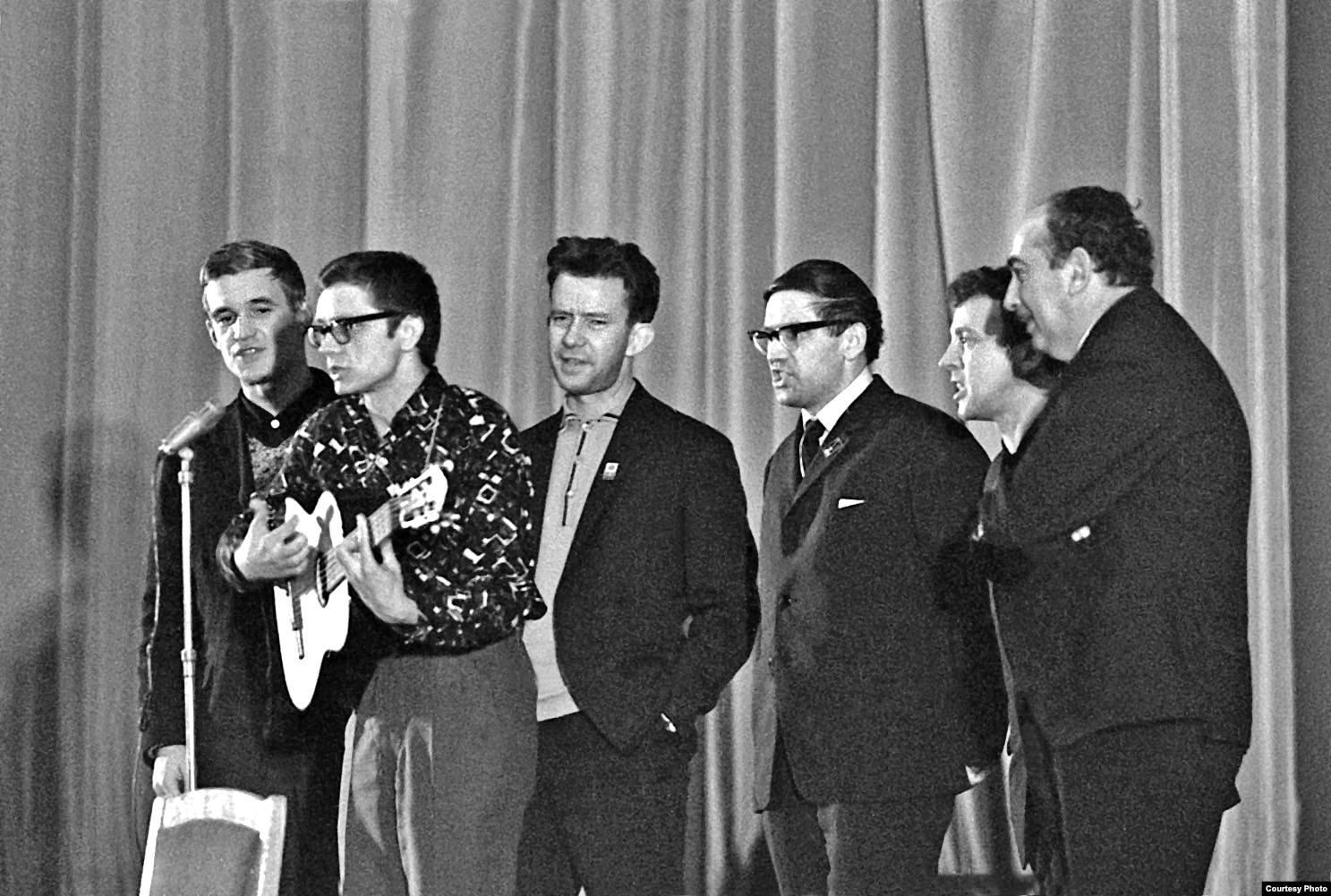
50 years ago, in March 1968, in the Novosibirsk Akademgorodok, a grandiose festival of bard songs took place at that time. He organized and held his local youth club “Under the Integral” . Bardes from all over the country gathered in Akademgorodok, already former in disgrace, Alexander Galich sang "Slimi" and "Memory of Pasternak" . It all ended with an ideological scandal. The festival was condemned in the Soviet press, dismantled at party meetings, and the club "under the integral" was forced to self -dissolve. This was the end of the “thaw” in Siberia.
(Sounds the song of Yuri Kukin "Behind the fog")
The other day in the Novosibirsk Akademgorodok, the forum “Place of Power and Freedom” was held. Eyewitnesses of those events of 1968 recalled how the Novosibirsk Akademgorodok, contrary to all for a long time, remained a “territory of opportunities”, where young talented scientists from all over the country came for self -realization and freedom. One of the participants in the forum was Valery Menshchikov, who was jokingly called the Minister of the Song Club in Akademgorodka in those years.
In 1968, our, perhaps, was not a hymn, but a song that reflected a look from the outside. This is the song of Yuri Kukin "Strange people filled this whole city"
Valery Menshchikov: Akademgorodok in those years - it was a district town that belonged to Novosibirsk generally, although it was already a sustainable concept that it was a separate education. I myself appeared there in 1962, almost four years later, as only Akademgorodok began to be built. I was then a student of Tomsk University, came there somewhat unexpectedly, worked there in the youngest position at the Institute of Geology and Geophysics, in the geophysics unit, wrote a diploma, which later defended very well in 1963. So, in 1968, ours appeared, perhaps not a hymn, but a song that reflected a look from the outside. This is the song of Yuri Kukin "Strange people filled this whole city." And I want to say that strange people came up with and created it. These were our outstanding mathematician scientists Mikhail Alekseevich Lavrentiev, Sergey Alekseevich Khristianovich and Sergey Lvovich Sobolev. All three mathematicians, participants in this grandiose project of the atomic bomb. And in this project, by the way, only the best scientists were taken. These people were generally brought up by that environment-the great scientific university-which developed before the war, and therefore they perfectly understood that in the post-war period, when it was necessary to create something new after the destroyed, according to their ideas, to create only far from very conservative Moscow and Leningrad. And there was a proposal to create this Akademgorodok with certain breakthrough scientific areas, near Novosibirsk. In principle, this taiga place was still. And Academician Lavrentiev, one of the founders of the Akademgorodok chose him. And the spirit of unprecedented in the USSR then freedom arose in this taiga nature. In general, everything was saturated with freedom there, not only in the social sense, which we will talk more about, but also in the scientific one. It was genetics, cybernetics, and mateconomics, and sociology, and structural linguistics, that is, those new areas that were impossible for Moscow or Leningrad.
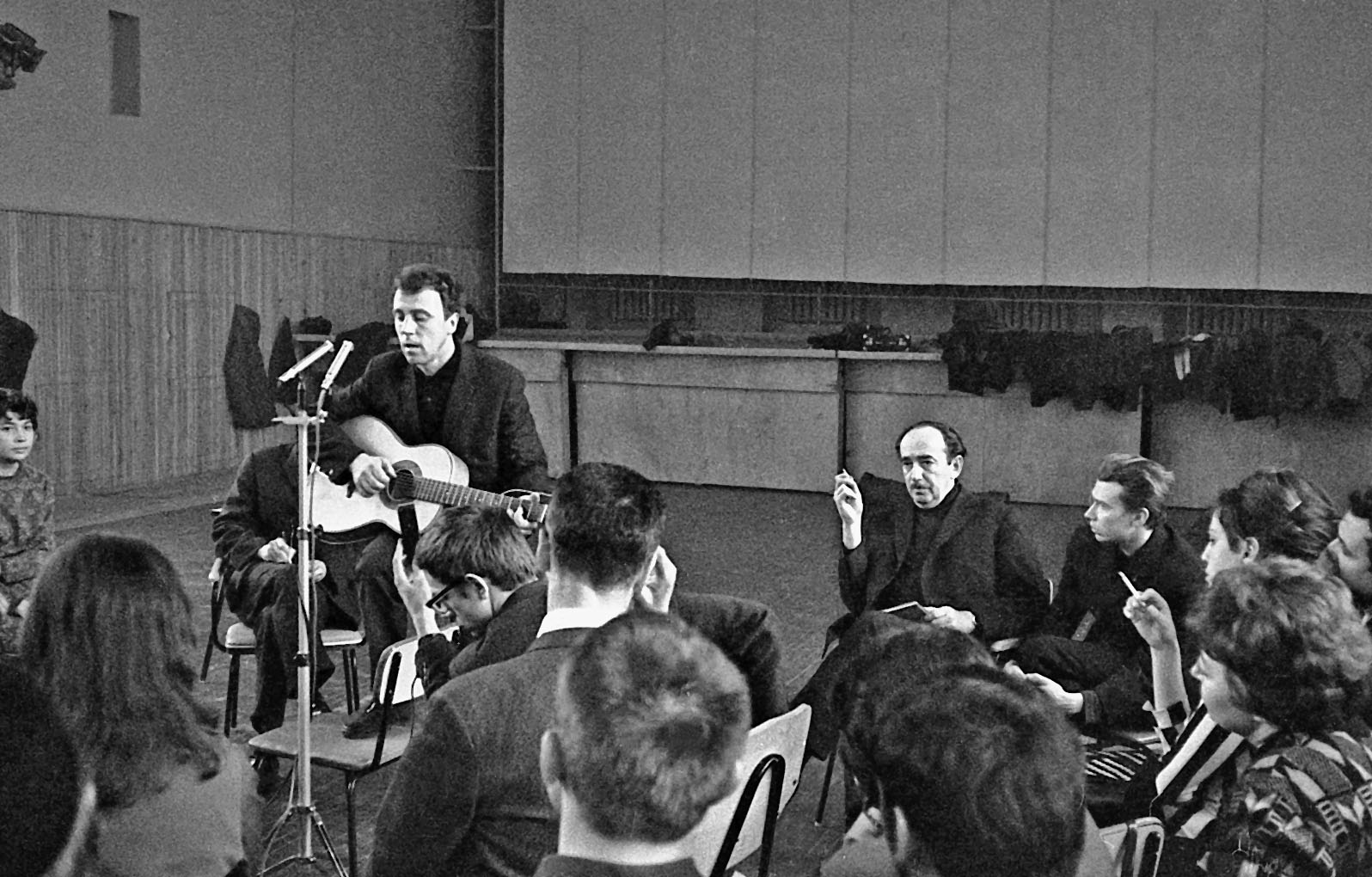
But at the same time, young students, graduate students, young scientists had to be involved in such a virgin soil place. That is, it was a stream, as they would say now, creative, initiative people who were not afraid, that here, in Siberia, there will be completely different conditions of life and climate. So during this period, two points were in Akademgorodka. This is a high level of culture by academicians, the activity of the older generation, plus a certain young growth of people who crave promotion in science, discoveries. And therefore, people gathered here who wanted not only to discover new knowledge, but also to develop in general in the public sense differently. And from here this is free thought.
One of the organizers of the festival, President of the Federation Clubs of the Copyright Clubs Sergey Chesnokov recalls that he then prompted a variety of performers to crucify in Akademgorodok.
We organized a conference in cockerels
Sergey Chesnokov: We organized a conference in the famous cockerels. There was Galich, there was Julius Kim, they sang at this conference, exchanged guitars, using a very correct remarkable beer and interspersing them their songs. And it was a delightful activity - to listen to what they did. And at this conference, it was decided to organize the Federation of Clubs of Songs of Moscow, Leningrad and Novosibirsk. And the president of this federation elected me. It was a strange sensation, because there was simply a very transparent, clean air, some mosquitoes flew there, which Galich compared with fat ducks, it was sunny, the grass was there, all this was wonderful ... And then there is some federation, president and so on. And we decided that the first thing could be made of the festival. This idea was immediately supported by Valery Menshchikov, who represented Akademgorodok there, and then the preparation of the festival began.
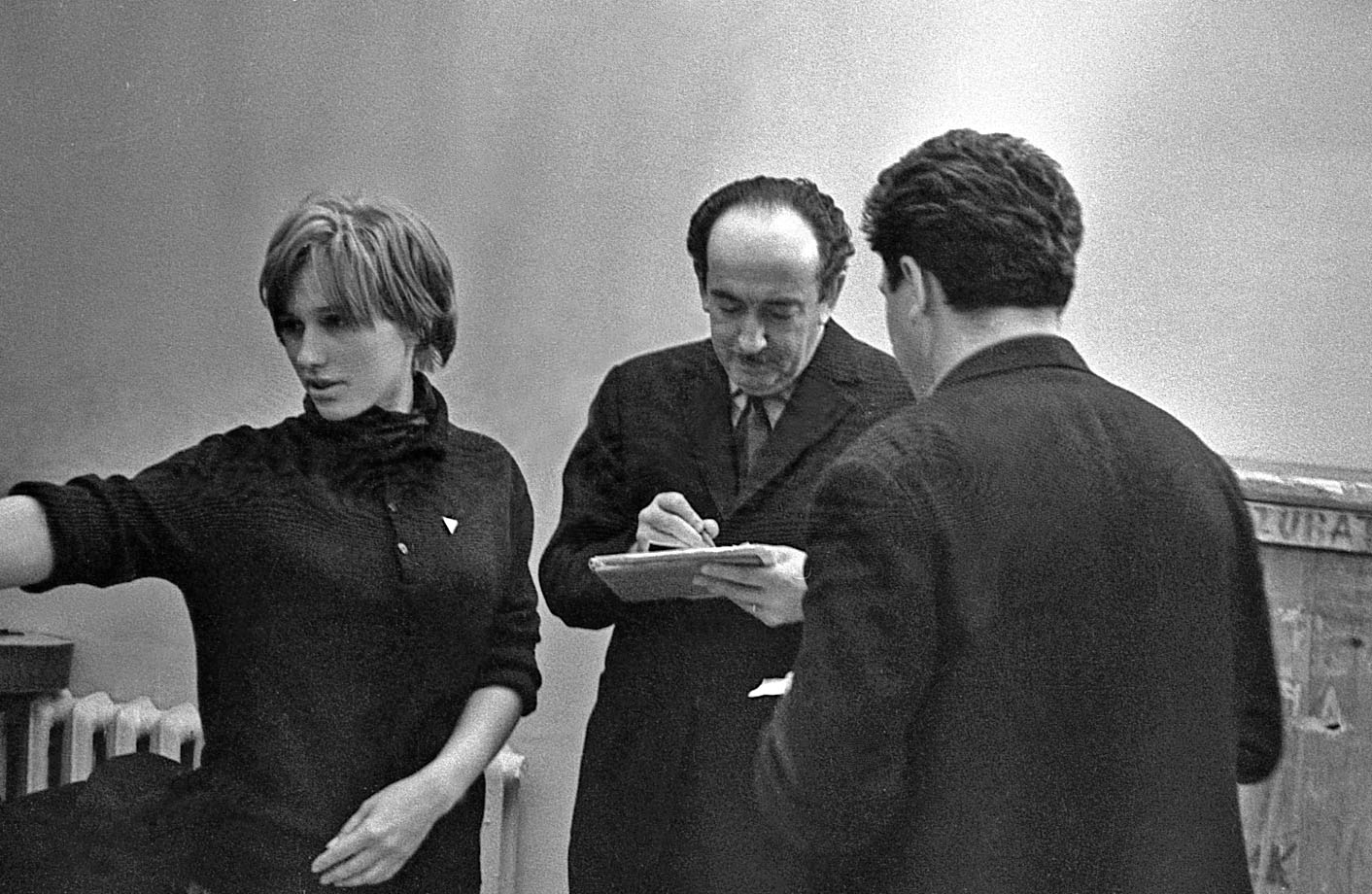
And when people were sitting in the hall, and suddenly they heard the words that, with all the fullness of life directness, spoke clearly and definitely about what happened in the country .... Galich said “not involved in art,/not allowed to the temple”, he did not turn to the gates, with whom everything was clear, he turned to his brothers in the workshop. And it is not for nothing that on the grave of Galich it says: "Blessed are the expulsions of the truth for the sake." In general, many people told the truth then, but Galich was a rare person who knew how to tell the truth so that those who listened to him laughed or cried, and worried, and absorbed this truth as air, as necessary, as it is impossible to live without.
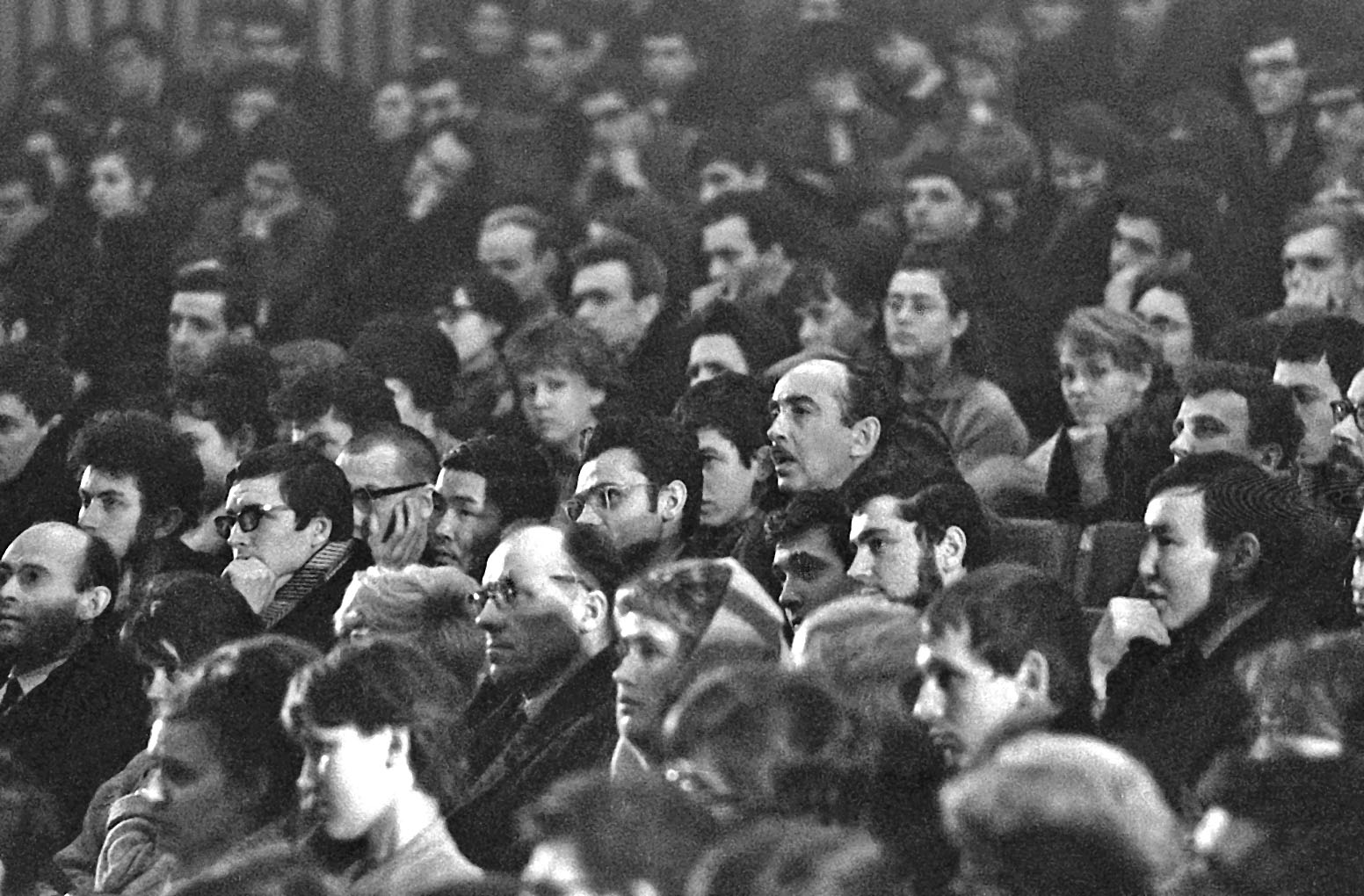
Doctor of Chemical Sciences and participant of that festival Grigory Yablonsky recalls the legendary events of that festival:
Grigory Yablonsky: The situation of such insolence, such a daring act, we felt it all. Of course, we understood that this was somehow not supported by the authorities, but we did not expect such a level of rejection, because the level of indignation and hatred went off scale. And I think that no one suggested a scale of rejection and hatred that followed the festival.
The situation of such insolence, such a daring act, it was felt by us with all
It is no coincidence that the Moscow City Club of Song abandoned this festival. They felt something. Then the Leningrad club also refused to go to the festival. In general, something was cooked there.
The most important event at the festival is, of course, Galich. Otherwise, it would be just a provincial, regional action, and that’s all. And Galich created a completely different situation and set the other bar and gave everything a political sound. The Novosibirsk Regional Department of Culture before the festival forbade selling tickets. And we had to go to the head of the Novosibirsk Department of Culture Ivanchenko. I have this scene before my eyes. We went together with a man named Glory Goryachev. There was such a rather nice figure from the Institute of Nuclear Physics, he was then the engineer of the main theater on Taganka, and then moved back to Novosibirsk and became an active “memory” figure in the 80s. Here is such a loop. But we went with him then, Ivanchenko looked at his broad face with pleasure and with an hostile feeling - at mine. And then at the end of our meeting, when Ivanchenko agreed to sell three thousand tickets, he said such a historical phrase: "Well, do you guys think that I am a conservative? If I were a conservative, would I have been up to twenty years in one place?" And then we happy went to Akademgorodok and began to sell tickets.
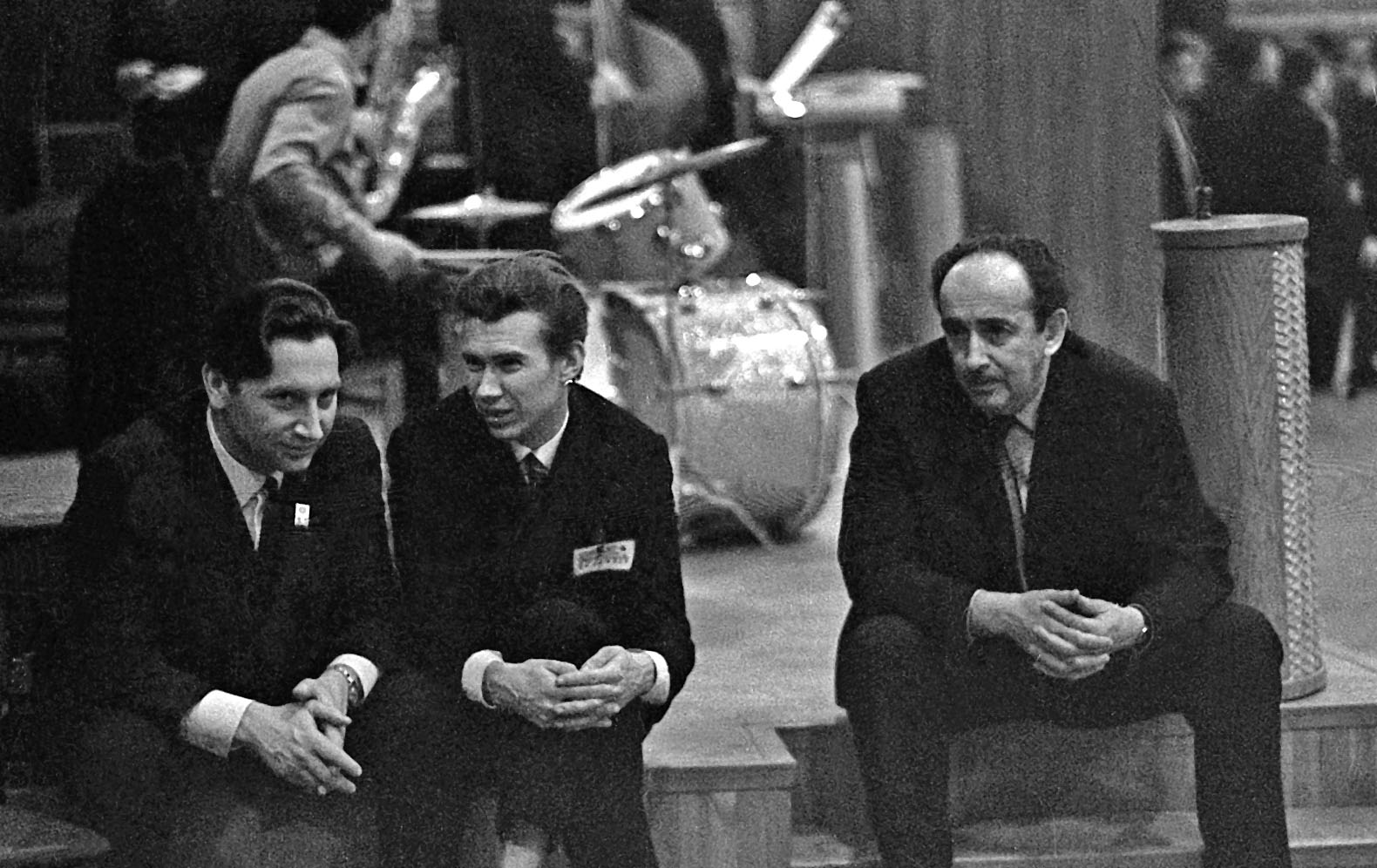
Journalist Yuri Wexler recalls:
Yuri Veksler: I was a spectator. It was 1968, and I have been in Akademgorodok since 1965. In general, this is a feeling of miracles at every step. I would even start with this. You are walking around a small town, such an academic village, around a pine tree, it is all built in the forest, you go along a small street, Academician Sobolev, a great mathematician, is coming towards you. Or suddenly you see in the store of the great academician Alexandrov. But when the festival arose and when it became clear that it would be, then, of course, it was such a little crazy holiday. And, of course, all this was in a cloud of freedom and rumors about what was happening during this period of Czechoslovakia. For example, I will never forget the amazing, from my point of view, a meeting with the editors of the "New World", which took place in Akademgorodok. But all this was rhyme, all this seemed to be in one image, that for some reason everything is possible here, as if neither the KGB nor the CPSU Central Committee is visible, as it were, as it were. Although, of course, it was all. But this feeling of freedom, relaxedness, it fed the whole idea of the congress of bards, a song festival or a festival of songs.
All this was rhyme, all this seemed to be in one image, that for some reason everything is possible here, as if neither the KGB nor the CPSU Central Committee is visible, as it were, as it were. Although, of course, it was all
But, of course, no one expected anything concrete. No one expected the effect of Galich. Some films were known to him, yes, but no one could imagine a living effect. Therefore, the further development of events, which led to the collapse of the cafe club "under the integral", which was the center of free thought, the center of liberty, of course, could not be predicted. People who started this business had no horror scenari in their heads. They fought, they understood that there were authorities, but to imagine that they would then hit the head quite tightly, none of them could, they simply rejoiced and celebrated. And this is the feeling of the holiday it, you can even say on Hemingai - always with me now. And I think that with everyone who lived there then.
For example, such a person as Hera of Beznosov ( one of the organizers of the festival. - C R). Now his daughter is the organizer of today's celebration of the 50th anniversary of the festival in Akademgorodok ( and the creator of the "Integral Museum-Quarter of everyday life of the Akademgorodok".-SR ). This family retained the entire archive of the festival, because they understood what a unique event it was. Sometimes they say that it all ended, hit the head and they all hid in the holes ... No, this is not so! Some may have hidden in holes, but this spirit lived on.
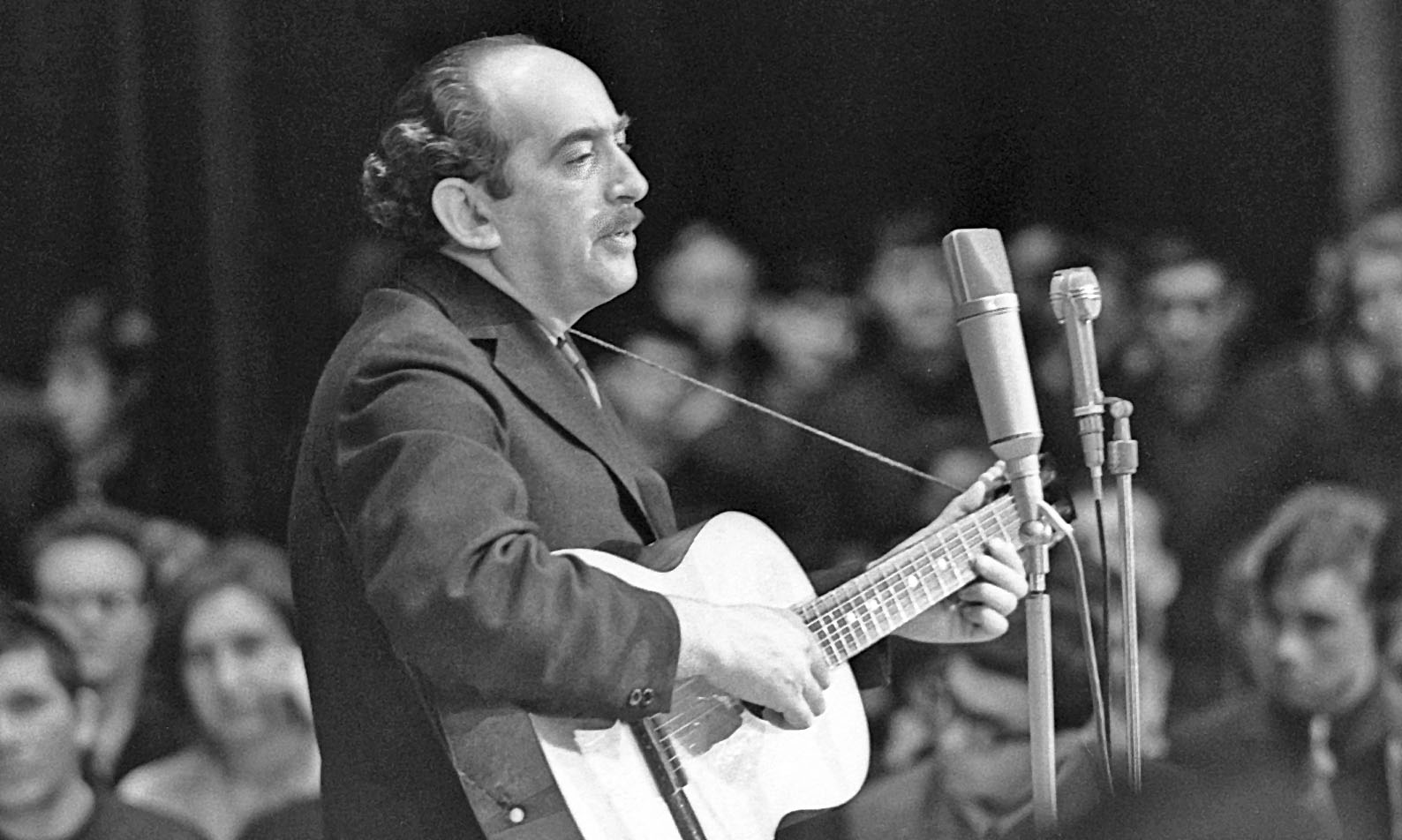
The people who were at the Galich concert say: we were afraid that they would now enter the hall and they would arrest us all. Yes, this is true, but Galich was afraid, and this is visible on the film. But just this joint act of liberation, I think, left something in the heads, in the minds and in the souls.
Julius Kim recalls:
Julius Kim: At the same conference in cockerels, sung a little later Erofeev, Galich had such a conversation. The young man Yura Andreev, such a person, attacked him, with questions that come down to one thing: how are you, such a prosperous Soviet writer, and suddenly sing about prisoners, sing about little people, about these tragedies? How is it to be Soviet combined with anti -Soviet? Galich answered with dignity, he said: "Well, firstly, there are many works in my table, which are written for cinema and the theater, but probably they will not see the light soon." First of all, his play "Sailor Silence", later, was put in the theater in the theater, in mind. This is a wonderful play, Vladimir Mashkov plays remarkably there. “And, secondly,” he said, “I don’t know how to earn anything in addition to literary work. And, thirdly, what I wrote for cinema, television and theater, I did not particularly error against God.” In 1968, the sap was just beginning, and then everything became real. In 1971, Galich was exhausted from the Union of Writers, in 1973 from the Union of Cinematographers, and in 1973 or early 1974 he joined the Sakharov Committee of Human Rights. They then and Andrei Dmitrievich became very friends and switched to you. In 1974, he emigrated. Although there were any ways to retreat as much, at any moment Alexander Galich could return to his former status to the prosperous Soviet. He did not take a single step in this direction, he remained faithful to his new muse, remained faithful to this amazing topic, although this is not a topic, but a whole artistic discovery. And Verny remained to her to the end.
Valery Menshchikov: When we conceived and organized such an all -Union festival of bards, there were no plans that it would be a protest festival. Very few people at that moment knew the songs of Galich. At the end of May 1967, I heard his songs for the first time in cockerels and this was actually speaking for that time, for our attitude to a certain shock. And imagine what a shock, I even think, not only an ideological, but a cultural shock had this power of the whole structure. And you imagine, in the House of Scientists, prayed, the Holy Place of Akademgorodok, a performance at the whole concert of Alexander Arkadyevich Galich in the hall for a thousand seats ... This, of course, was the main event of this festival. And this was inevitably followed by the offensive, those powerful “showdowns”, as in such a word, can be said almost criminal about this, which had been launched before that the restrained power and power structures. The club "under the integral" was closed.
The president of the club "Under the integral" Anatoly Burstein recalls:
Anatoly Burshtein: Galich suffered due to non-commandance, everything that he sang, he sang in small audiences, in the kitchens. And when he came to us and came to Herman Beznosov, then someone said there: why didn’t Vizbor come? Because he does not want to sing for the dessert of academicians (for a dozen academicians). And then Galich laid the guitar, he held it in his hands and sang, and said in silence: "This is a diet. They would have given me singing anywhere, even under the fence, if only they would give it." It was suffered by his heart, because he wanted to convey it to people, and his mouth shut up. And thank God that then in the studio hall, all these songs were recorded on the studio equipment, they simply dispersed throughout the country in million circulations and gave us the opportunity to recognize it for real. In general, I want to say that sometimes the analogy of Galich and Orwell occurs to me. Orwell gave such a phantasmagoric picture of a communist society, and a real picture consists of Galich's songs. What did the people who lived at that time feel? How did they perceive it all? He unobtrusively gave just a true picture, and she was terrible. Galich did not inform us, we were quite enlightened, Solzhenitsyn was already and so on, and he turned to his heart, even more correctly to say, to his soul. “Karaganda” is about the fate of a woman who causes the deepest compassion, the rejection of the reality that surrounded us in the newspapers, in myths, but in the first place - compassion. And I remember how I saw tears in the eyes of a very young girl who knew nothing, was not aware, but her heart prompted her correctly, and the empathy was complete. And it prompted me what this girl was standing. She lived with me for forty years ...
Alexander Galich himself also considered his performance at the festival the most important event for himself. Here is his voice:
Alexander Galich: Hall of the House of Scientists in the Novosibirsk Akademgorodok. It was, as I now understand, my first and last open concert, at which tickets were even sold. I just fulfilled the very song of Pasternak’s memory, and then after the final words the incredible happened. The hall, in which this evening there were more than two thousand people, stood up and stood in silence for a moment before the first applause came. Be blessed this moment!
-

Ivan Tolstoy
Observer of the RS. Cooperates with the RS since 1988. Since 1995 - in Prague.
Editor and host of the programs "On top of the barriers. Myths and reputation." Historian RS. The author of the cycle of 50 radio programs dedicated to the history of RS ("CD-ROM" half a century on the air).
Born in 1958 in Leningrad, graduated from the Russian branch of the Filfak LSU, was an editor in the magazine "Zvezda", taught at St. Petersburg State University, a printing institute and other universities. The author of the books "Cauces of the era" about Russian emigration and Pasternak's Roman: "Doctor Zhivago" between the CIA and the KGB. "
Subscribe