
Translated material
"How much does a person cost"
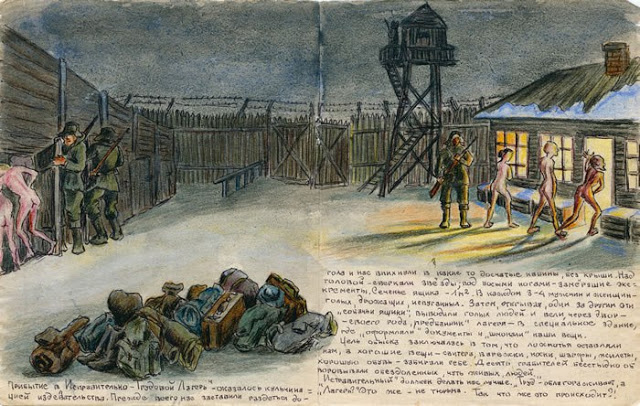
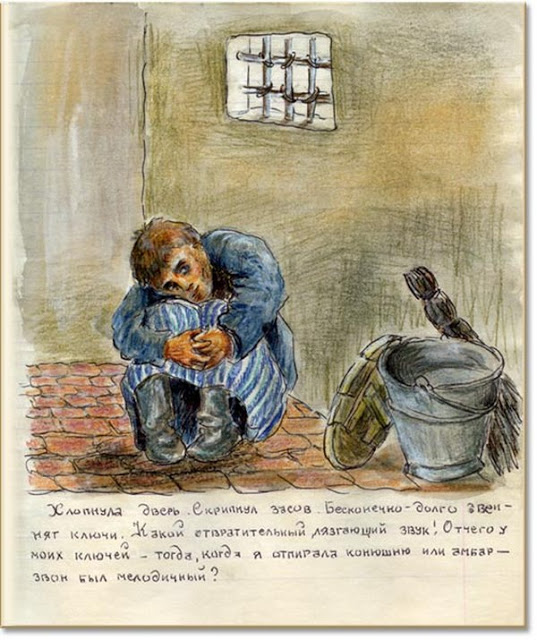
Link in Narym. Escape. Many day wandering in the taiga. New arrest. The death sentence, replaced by a ten -year term in Norillag, behind the polar circle. This is just one episode from the life of Euphrosinya Kersnovskaya, who has passed through all the horrors of the twentieth century and left the memories of the experienced - 2000 pages of the text and 700 drawings.
“If you collect all the tears spilled in Siberia, it will probably be clear why there are so many swamps and quagmers - bottomless, like the suffering of innocent people,” wrote Euphrosyne Kersnovskaya in her memoirs, “How much does a person cost”.
“In 1989, I first read this book - about the Siberian exile, foresters and the fantastic escape of Kersnovskaya,” says journalist Daria Chapkovskaya . -And she was so amazed to read that she decided to ever visit those places and go through the same way.
Soon after, Daria met Euphrosinya Kersnovskaya herself, who then lived in Essentuki and was considered among local residents of the city crazy. They made friends, and Euphrosyne Antonovna spent the last seven years of her life in the Chapkovsky family. Now Daria is the official keeper of the Kersnovskaya heritage. In early September, she arrived in the Tomsk region with the film crew "Escape" to go through the steep route of the heroine of the film. The dream came true thirty years later.
"Who is to blame, and panties are hiding"
The events in the biography of Euphrosini Kersnovskaya would be enough for several volumes of a fascinating novel, and it reached several volumes of a criminal case ... It became known during her lifetime, and the famous - after death.
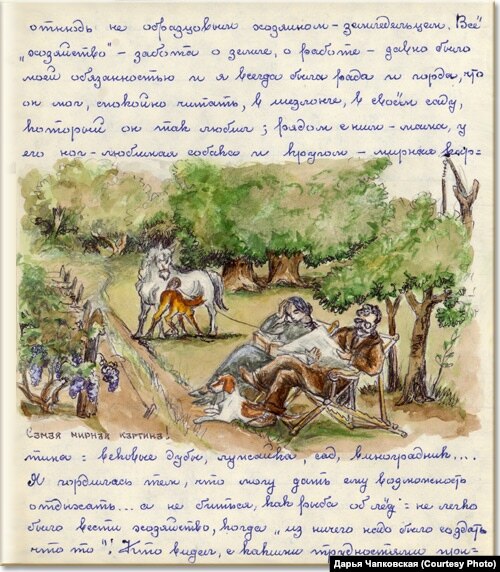
She was born in 1907 in Odessa. Euphrosini’s father, a nobleman and a judicial investigator, was a man of strict principles and once refused to fulfill the order of the authorities, demanding to “disheve” the Jewish doctor. The principalism of the father was transmitted to the daughter. In 1919, the family miraculously managed to avoid the execution, which threatened the "royal official" of the Odessa Cheka. The Kersnovsky left for Bessarabia, in fact, emigrated - soon this part of the Russian Empire went to Romania. They settled in the family estate in the village of Tsepilovo, closer to the rest of the relatives. In 1936, his father was gone, and in the summer of 1940 Bessarabia became part of the USSR and was transformed into the Moldavian SSR.
I had all the possibilities in the first months of the occupation to leave. But I'm Russian. And I had to share his fate with my people
In her memoirs, the Euphrosyne described how the flowering land with the advent of collectivization and the collective farm system changed:
“It seemed that there could be many changes in less than half a year? However, it was so. At every step I stopped and looked around with surprise. The apple trees were always so well -groomed, neatly whitewashed, rinseed - stood with broken, gnawed branches or just stuck hemps (they tied horseback artillery horses). Where usually on soft, well -treated, well -treated. The beds of cabbage were whitened, the swan shifted with dry bodylays and the legs were confused in the thickets of nettles, a woman’s tooth, a dope ... "
Soon the Kersnovsky family was dispossessed - simply put, drove them out of their own home and selected property. Stronging for her mother, the girl insisted that she and her uncle left for Bucharest, she herself remained to look for a job.
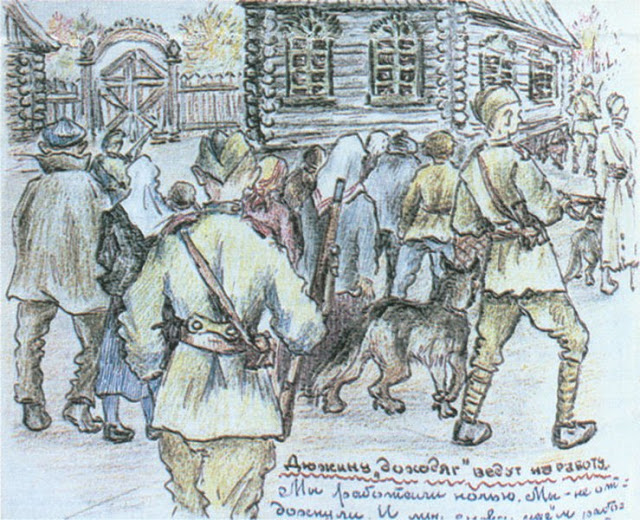
Later, she will explain her decision as follows: "I had all the possibilities in the first months of the occupation. But I am Russian, although the Polish from my father and Greek from my mother flowed in me. And I had to share his fate with my people ..."
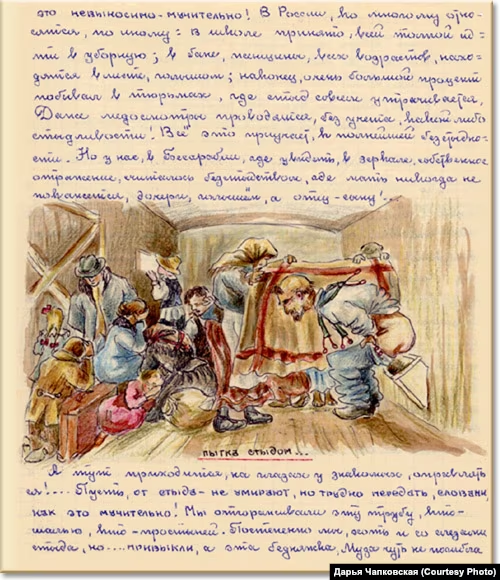
I did not have to wait long. In the summer of the forty -first year they came after her. Euphrosini was not at home, but when I learned about the visit of the NKVD, she said: "Those who are to blame and cowards are hidden!" - And she went for an interrogation. She was arrested and sent to Siberia together with other Bessarabians. The page of the memoirs dedicated to this journey, she entitled "torture shame."
Several months, in calf cars and river barges, the exiles reached the taiga village of Suig in the Tomsk District of the Novosibirsk Region. Here they had to engage in the usual business for all "specialists" - to bring down the forest. Soon, Kersnovskaya had a conflict with the head of the local timber industry industry farm Khokhrin, who was dissatisfied with the free -loving character of the exile, wrote denunciations to it and directed it to the most difficult part of the work - a forest retardation, while removing from allowance.
"In the evening, when the store opened, I went in line with everyone, when my turn came, the seller Schukin told me:
- There is no soldering for you! Khokhrin deleted you from the list to receive bread.
I went to the dining room, stuck a liquid balance of rye ducks - bran.
Sleep, relax ... Forget hunger, forget Khokhrin ...
And yet the next day, hungry and finally exhausted, stuck a portion of empty balland, I went to work and, gritting my teeth, chopped down and rolled logs in cold sweat until I woke up, lying in the snow. ”
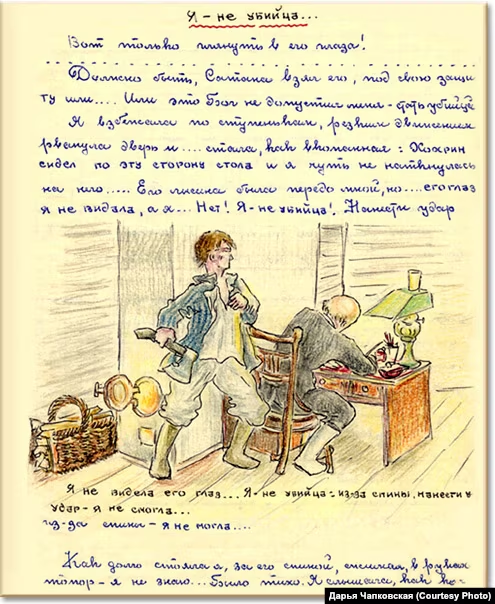
For some time, Euphrosyne hatched the plans of the murder of Khokhrin and even prepared an ax for this, but then said to herself: "No! I am not a killer! I could not strike from behind!" On February 26, 1942, unable to withstand the most severe conditions of existence, the Euphrosyne decided to flee. From March to August 1942, she wandered around Siberia, having passed a total of 1,500 kilometers and interrupted by one -time work and the help of poor people. In the fall, Kersnovskaya was detained:
“In some provincial village, whose name I didn’t even remember, my campaign ended. And it ended in the most deplorable way: I was detained by some plus a girl. Red. The weakness. Of those who are among the people, they say: just a snot. Somersight of those Komsomol members who will never work, but prefer to make their bosses.”
After a short investigation, she was accused of espionage and sentenced to execute, suggesting, however, to write a petition for pardon. In response, Euphrosyne wrote on a piece of paper: "I can’t demand justice, I don’t want to ask for mercy. Don Quixote." It is not known whether the quote from Cervantes did not work on the judges of the Narymsky District Court or they had other considerations, but Kersnovskaya’s execution was replaced by ten years of the camp.
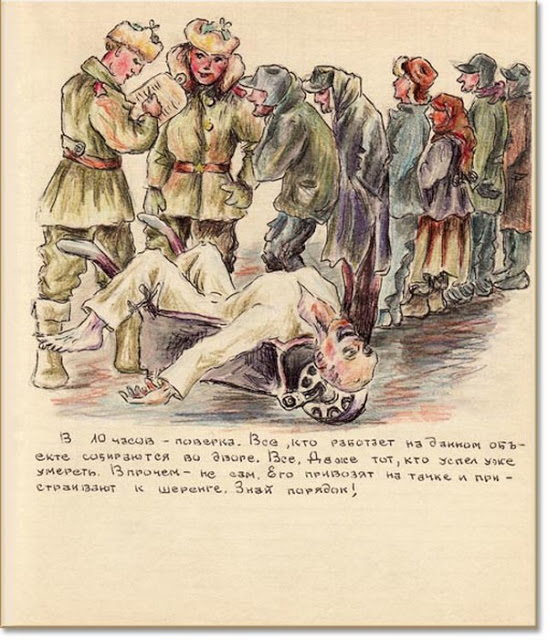
In total, Euphrosyne left 11 years of exile and camps. She was not broken by a stay in a storm (a barrack of a reinforced regime for incorrigible criminals), nor underground prisons, nor multiple rooms in a schizo, nor night interrogations, nor shipping, nor terrible working conditions, including in the laundry, when "... to get 400 grams of bread, it was necessary to wash 300 bloody pairs of blood, or two on a day of the hardness of iron, or two Thousands - yes, two thousand!
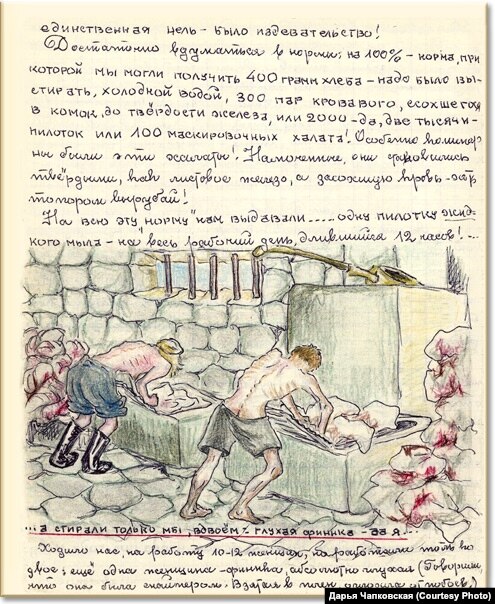
"I had to stand in the water on a stone floor barefoot, almost naked, in my underpants, because there is nowhere to dry clothes, and it is impossible to throw it away to dry it: in the hut is such a shalman that the last footcloth can steal."
Having the education of a veterinary paramedic, she worked as a nurse in a camp hospital and a native in the camp morgue. And in 1947 she became a miner - she mined coal from the bottom. In August 1952, her camp period ended. After the release, the prisoners paid the money they earned during the imprisonment. Euphrosinya Kersnovskaya gave her entire camp salary to the Barack's neighbors with the words "I will make money." She wanted to immediately leave Norilsk, but she refused to give a non-disclosure of what she had seen in Norillag during these nine years, and therefore until 1957 she remained "not the road" due to the polar circle.
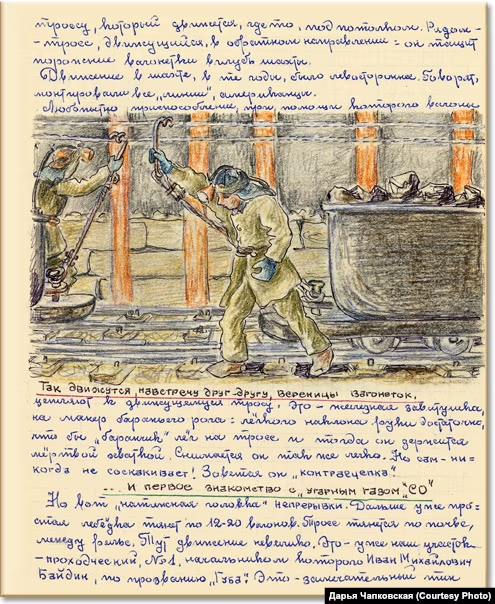
Only in 1957 she managed to go to her native Moldova and visit her father’s grave. And soon she again had a conflict with the authorities - working at the mine an explosive, she constantly criticized the management of the mine for safety violations and once carried out the CROs from the hut - wrote a letter to the city newspaper Zapolar Pravda.
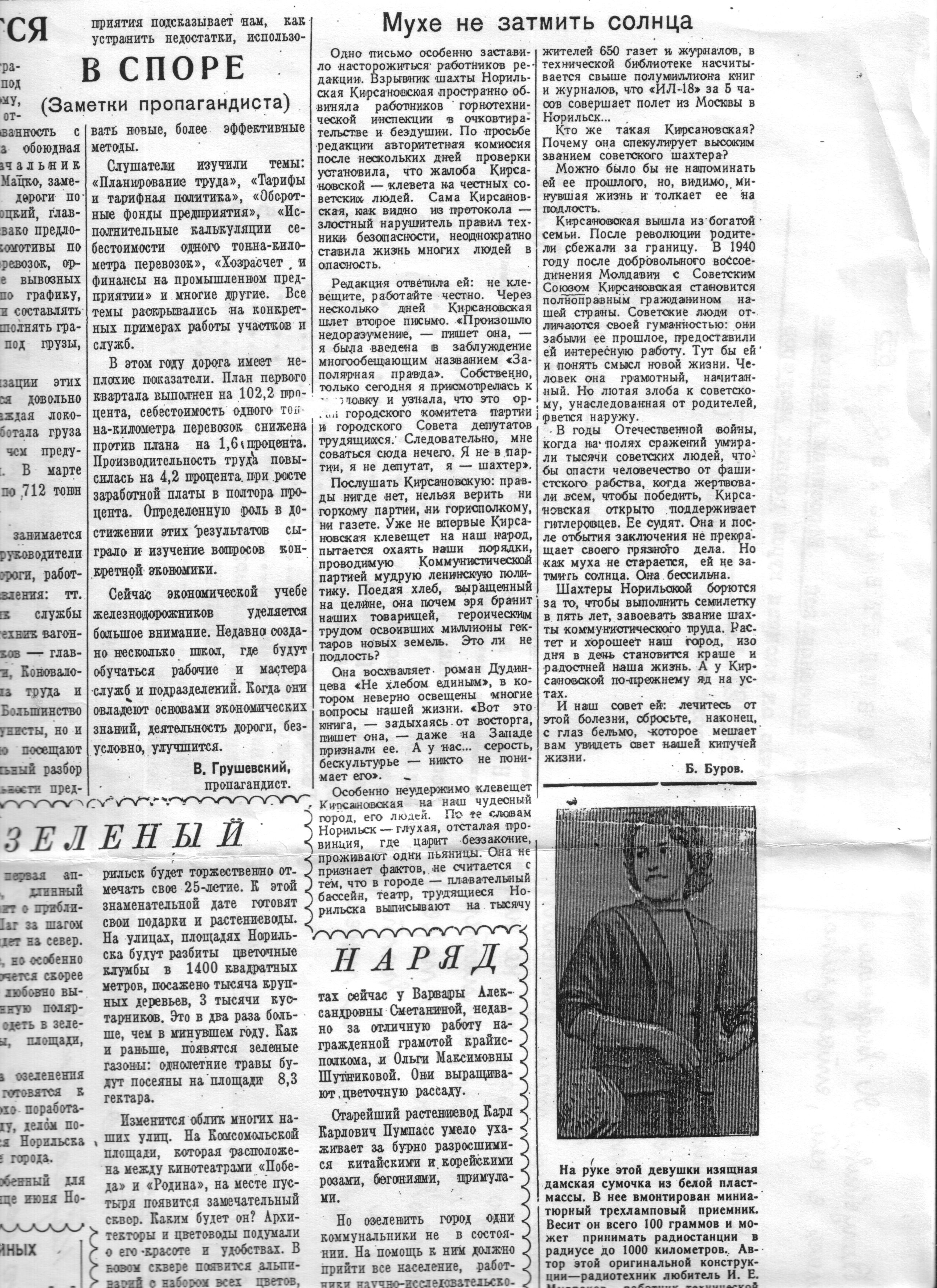
Kersnovskaya’s response was a newspaper article entitled “The Fly did not overshadow the Sun”, in which Euphrosyne recalled its non -imperial origin: “In 1940, after a voluntary reunification of Moldova with the Soviet Union, Kirsanovskaya ( so in the text. - S.R. ) became a full -fledged citizen of our country. Soviet people are distinguished by their humanity: they forgot her past, granted her to the past, granted her a past. An interesting work ... "Apparently, the author of the article had in mind the Narymsky forestry. The letter of Kersnovskaya was called "slander on honest Soviet people," and this publication with a council ended - to be treated for blindness, which prevents the "light of our boiling life." Written by the local KGB, the article served as a signal to the beginning of the Kersnovskaya persecution campaign. The management of the mine was organized by a “comradely court” in the case of the slander, to which local television came. But the indicative process over the “anti -Soviet” did not work, Kersnovskaya, as always, behaved with dignity, and it was not possible to achieve any repentance from her. Many years later, during perestroika, the newspaper "Zapolyarny Pravda" apologized to Euphrosinier Antonovna.

In 1960, having received a mining pension, she was able to leave the Steamver forever, moved to Essentuki, bought half the house and transported from Romania a mother, which she found thanks to the Romanian radio transmission "International wanted list". In Essentuki, Efrosinya Antonovna wrote the memories of "how much a person costs" - about her stay in exile and the Gulag. Since 1980, these memories began to walk in Samizdat, and in 1990 several fragments were published in the journal "Spark", after which the readers filled the editorial office. Publications of drawings and an essay on Kersnovskaya appeared in the English journal Observer and German magazines ART and SERN. In 1991, the album of her drawings was published in Russia under the title "Nazalny Painting". In the German edition, Kersnovskaya’s book was called Ach Herr, Wenn Unsre Sünden Uns Verklagen ... ("Lord, our iniquities testify against us"). In France, the book was published under the name Culpable de Rien ("not guilty of anything"). This publication saw the light in April 1994, a month after the death of Euphrosinya Antonovna.
2500 names from the past
The artist and journalist Daria Chapkovskaya considered a route to Euphrosini Kersnovskaya for 30 years. Since the first time I got acquainted with the book "How much a person costs."
-I read something myself, something Euphrosyne Antonovna told me personally. At that time, she had poor vision, but she continued to lead a rich life: to listen to the radio, to be interested in the news ... - Chapkovskaya recalls. - Everything was interesting, but it was the moment of escape that captured the most. These scenes immediately developed in the head as a modern trailer for the film. So a dream appeared. No, do not make a film, but go through the same route. And even if I realized that I would do it partially by car, partially in good equipment, and not half -starved, but I still wanted to know what Euphrosyne experienced then.
The film "Escape" about the first years of Kersnovskaya’s link will be shot for the central television channels of Russian television. The project is implemented by the State Museum of the History of the Gulag and the Foundation for the Preservation of the Heritage E.A. Kersnovskaya.
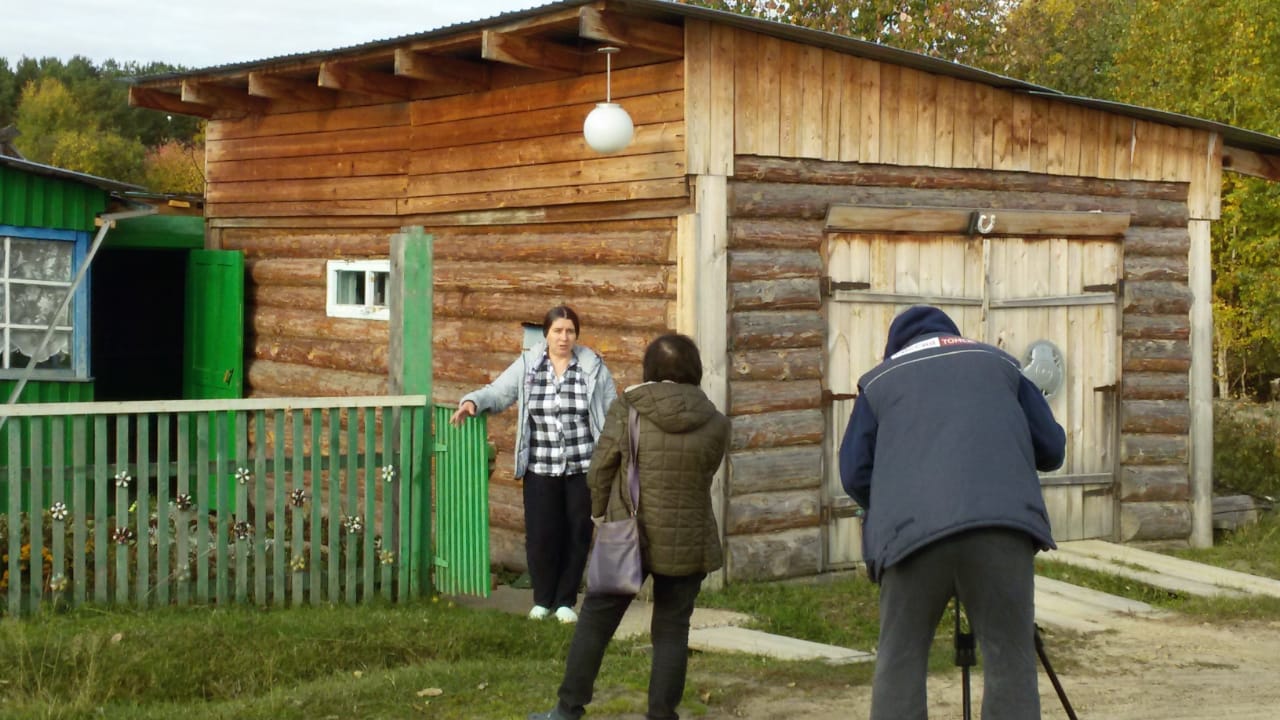
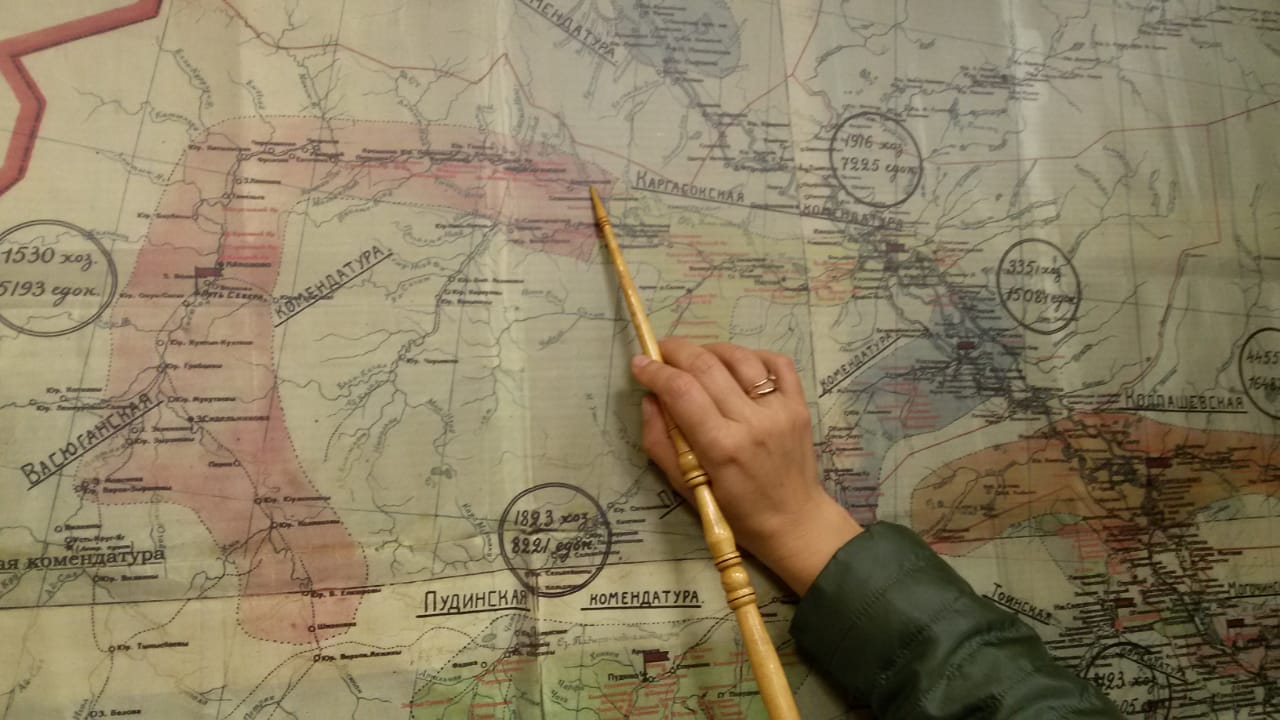
According to director Evgenia Durich, the main task they set for themselves is to try to at least a little to feel and convey to the audience that Euphrosinier Antonovna had to endure in the exile. In two weeks, the film crew passed along the Molchanovo - Parabel - Narym - Suiga route. Hundreds of thousands of exiles were transferred in the same mournum way in the 30-40s.
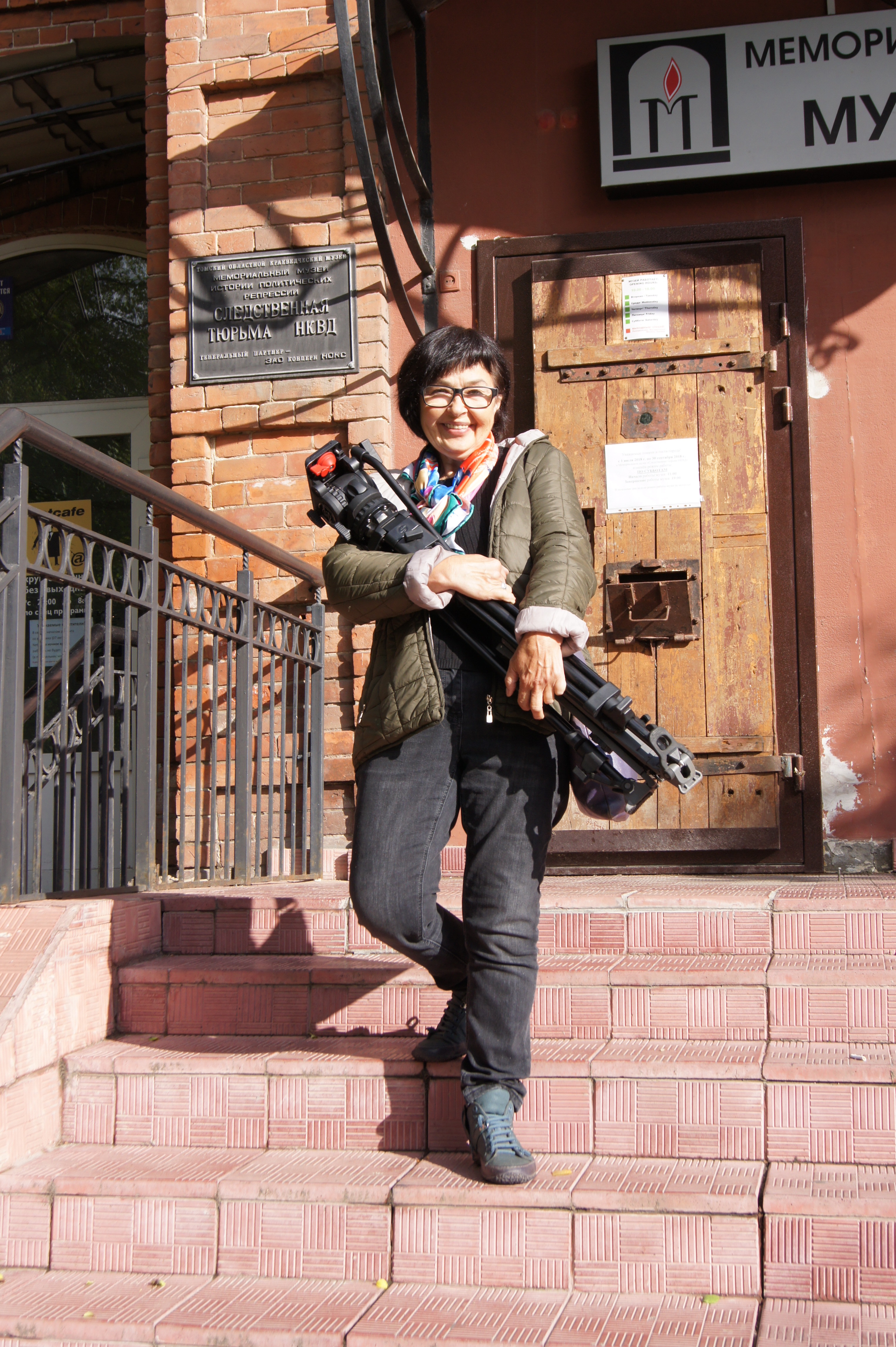
- Of course, Euphrosyne Antonovna entered our literature along with steam great writers as Solzhenitsyn and Shalamov. She left amazing memories in which she was able to tell and draw what other people saw, but what could not or were not able to tell, ”says Evgenia Durich . -It would be naive to expect that during the expedition we will find people who knew Kersnovskaya personally, still more than 70 years have passed, but we knew that people still live in these places who, according to their parents' stories or in young children's memoirs, remember that terrible time, and we want to tell about their destinies. Fate, which were similar to the fate of Kersnovskaya, but which no one could tell in such detail. In the film, we want to reflect that this difficult path was not only through Kersnovskaya, but also a biography of hundreds of thousands of the same as it.
In her books, Euphrosyne Kersnovskaya, with a phenomenal memory, named 2500 names. And some descendants of these people still managed to find.
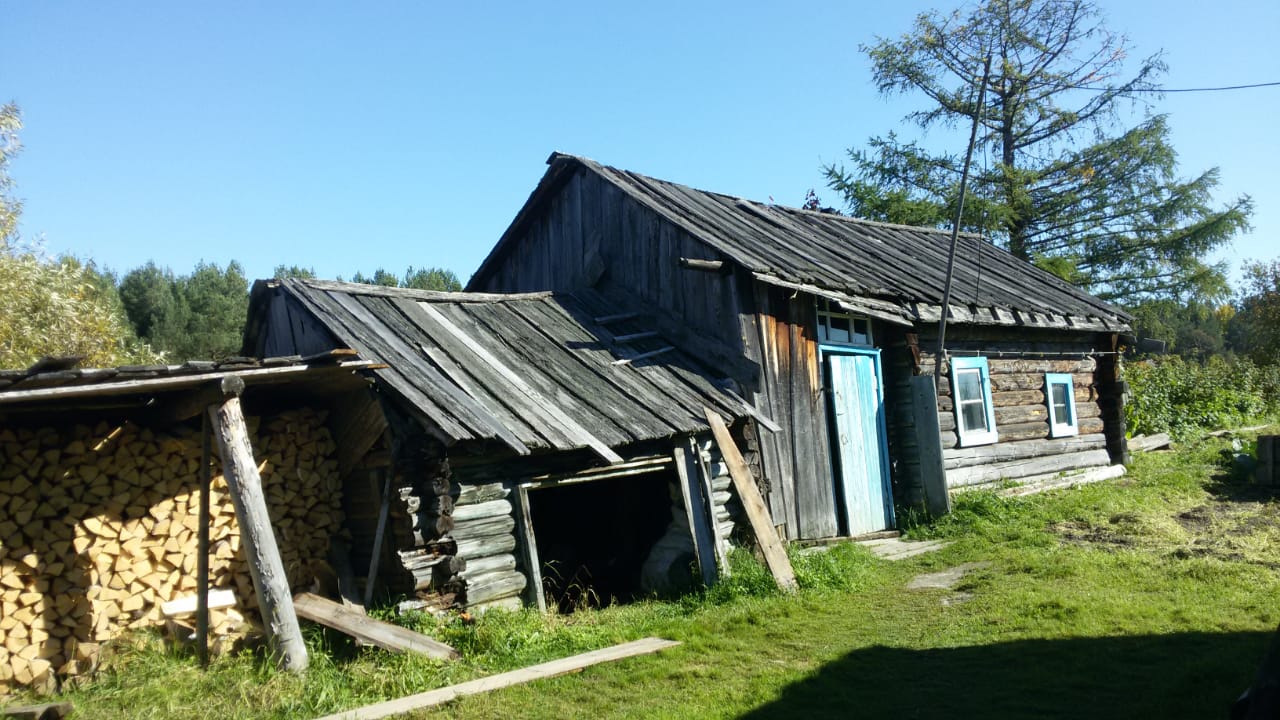
- We found a man whose great -grandfather was exiled to us along with Kersnovskaya, that is, he knew her personally well, and also talked a lot with grandmothers - children exiled in those years. They all over 90 years, and for health reasons, not everyone decided to recall the experienced horror, but what they said did not fit in his head, ”says Irina Zakharenko , head of the culture department of the Molchanovsky district. - An elderly woman recalled how her parents, stolen into exile, were forced to go to work and leave her daughter - almost a newborn - on the river bank, having previously dug a hole there so that the baby did not crawl ... But the water began to remain, and the girl did not drown only a miracle - she was saved by people who passed by. Or another story about how the exiled woman wore in the yards in the arms of her child dying of hunger and begged him to give him at least a spoon of sour cream ... But no one agreed to help. Probably everyone was just afraid ... And in the end, the baby died.
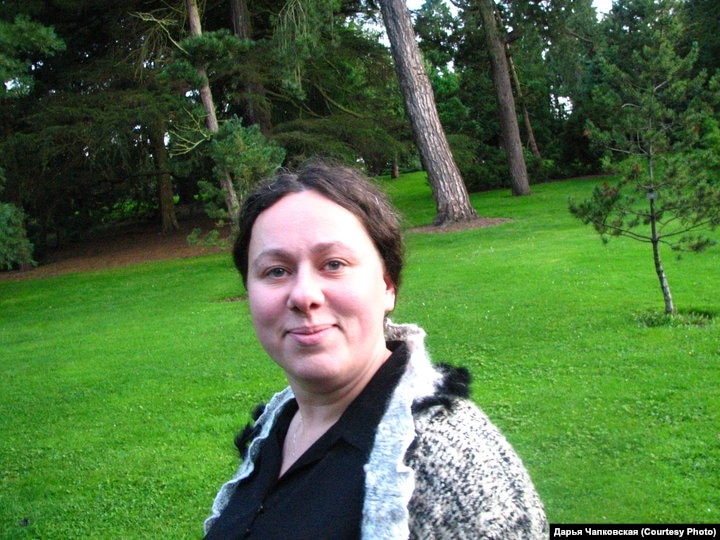
“Of course, we wanted to try to find the maximum number of descendants of those whom Kersnovskaya mentions in our memoirs, but during the filming we often heard with bitterness that we were late for 15–20 years, because“ when such and such was alive, they would definitely tell everything, but now no one ... ”says Daria Chapkovskaya .
Nevertheless, the film crew managed to find the granddaughter of Sergei Kravchenko, who was dedicated to the following episode in Kersnovskaya’s memoirs: a huge forest was rolled through Euphrosin, after she recovered, Kravchenko said: "Someone prays for you, Frosya." And only having met with her mother, Kersnovskaya finds out that she had been asking her guardian to help her daughter survive all these years.
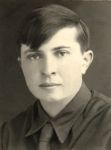
-In fact, old man Kravchenko was called Sergey Mikhailovich, he came to Suiga in the 30s, during the first wave of immigrants, lived there with his wife a long life and died at the age of 87. In the cemetery, his granddaughter Vera showed his grave. She told what grandfather was, including that he really was able to maintain humor and a positive attitude towards life until the last days, ”says Daria Chapkovskaya. - It is amazing to compare the old man made by Euphrosinya Antonovna, and his real photo.
But the data about the head of the timber industry farm Alexei Dmitrievich Khokhrin, who typed and mocked the exiles, disappeared without a trace. Just as the trace of his wife and daughter of Lyuba, who was 9 years old at that time, disappeared and which theoretically could still be alive.
- They say that there is no memory left of executioners. And this is probably true. Maybe that's why we were not able to find any traces of Khokhrin, no references. Not a single one, ”says Chepnovskaya.
"The children of immigrants got the most difficult life"
However, not all the inhabitants of these edges today agreed to communicate with the crew.
I listened to these women and thought: “How did they survive?”, And they told me everything and told me, and then suddenly they started joking or even sing
- There is only one reason: even after many decades, people are often afraid and do not want to remember the experience. At the same time, for myself, I realized that the children of special settlers had a more difficult fate than their parents. Because if the special settlers at least saw the best life, then their children are gone, ”he says Daria Chapkovskaya . - For example, Euphrosyne Antonovna describes that in the Molchanovsky KPZ, a woman sat with her, who had a 5 -year -old daughter and a half -year -old baby. So this girl remained in the house for the elder and not only followed her brother and pulled the farm on herself, but once a week she went 25 kilometers to both ends to bring her mother a program. I also have a child, and it is unthinkable for me to imagine it in this place. I listened to these women and thought: “How did they survive?”, And they told me everything and told me, and then suddenly they began to joke or even sing. And I understood that they survived so, simply preserving this faith in life.
In Suig, there was a street along which Kersnovskaya ran away, and some houses in which the exiles lived. But the common memory still leaves.
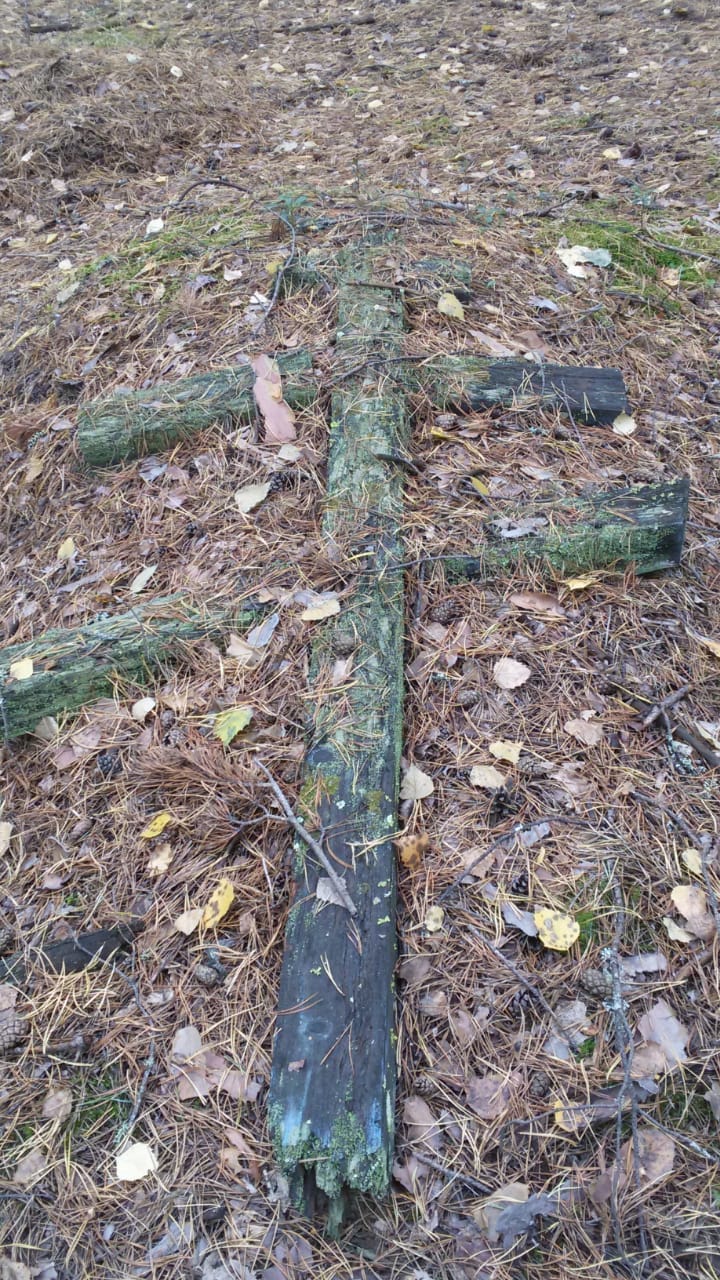
- If in the vicinity of Tomsk and other large cities the memory is preserved mainly due to the fact that the Poles, Lithuanians, Latvians and other nationalities in all cemeteries established memorial stones, then there are no memorials in such places as Suiga. And when the last crosses will rot at the local graveyard, everything will leave. То же самое происходит в Нарыме, на территории которого люди гибли в васюганских болотах, а мертвых детей выбрасывали с баржи… О том, что нет будущего у тех, кто не помнит своего прошлого, писала еще Керсновская, сейчас это четко увидели и мы. В настоящее время история сохраняется исключительно благодаря семейной памяти и таким людям, как герои нашего фильма. А должна храниться на государственном уровне. И никак иначе, – говорит Дарья Чепновская.
Вторую съемочную экспедицию в Сибирь документалисты запланировали на ближайший февраль. Чтобы зрители будущего фильма могли увидеть и понять, что чувствовала Евфросинья Керсновская, уходя в зимний лес 26 февраля 1942 года.