
Translated material
Drumics
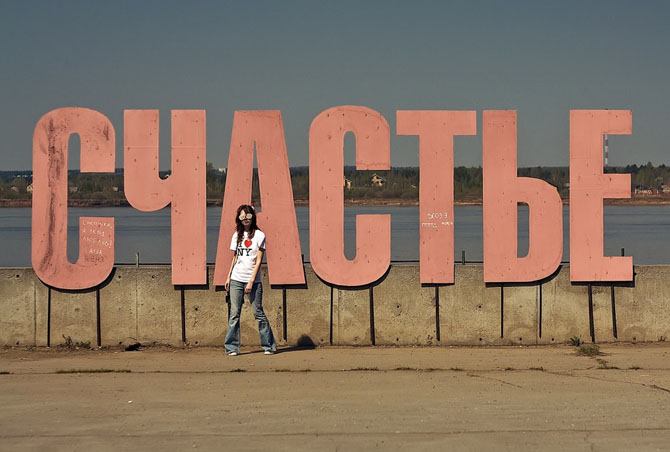
Photo: Alexey cookie / salt
The image of an inquisitive master, merchant or spy with a colonial visit to wild countries has long and firmly strengthened not only in literature, but also in documentary cinema and journalism. Classic travets , like those that left Marco Polo or Ibn Battuta, are full of descriptions of curious cases and strange outloils that were met by travelers along the road. Our country was traditionally considered not only a reliable supplier of furs and hemp ropes, but also messages about the morals of the northern savages. This mechanism also worked in the opposite direction: Russian travelers since Athanasius Nikitin with pleasure treated fellow countrymen with stories about non -Christ with the pesh heads. In each case, the description of walking for three seas is primarily a way to solve your own problems, to deal with yourself, seeing yourself in a stranger.
Nothing has changed in our time: Welbek writes in his book about Russia about cocaine parties with girls (actually the novel “Ideal” about Russia, where girls and cocaine appear, another fandzuz writer Frederick Befeder-“Salt”) , Savitsky is looking for (and finds) in the Mongolian architecture of the Late Steel, a late-Soviet. Aleshkovsky trains the former republics of the USSR to strengthen in the stereotypes imposed by the Armenian radio.
Recently, who have recently been regular inspections of the metropolitan guests in Perm have formed a new genre of travel notes: this is not an alien land, but not quite their own. How to describe it is incomprehensible. Most of the journalists who are in Perm for one or another cultural occasion prefer delight: “Thank God, regions rise. Come here, here is life! " It is clear that the development of the regions, which for some reason suddenly began to take care of the inhabitants of the capitals, feeds on a purely selfish interest-if they are fine, then they will stop going to us. And then, life in the capitals, too, to put it mildly, is not a cake. So, if there are more cultural places where you could run away from the house for a while, everyone will be only happy. Well, in fairness, it must be said that the cultural movement that is happening in Perm is really interesting not only from the point of view of money or social experimentation. The same Flartortian is a vivid example.
Perm is generally an ideal place for a documentary cinema festival, which are traditionally not held in the capitals - neither in Europe, nowhere. They take place with us both in Yekaterinburg (“Russia”) and in Saratov (“Saratov suffering”). But it is in Perm with its status of the city, opening Europe, the places in which Europeans are now carefully peering, trying to recognize themselves - it is logical to arrange films about the life of others. Permians who are always free at the Flartian, look at people on the other side of the screen with the same interest with which foreign directors, Germans and Poles who arrived at the festival, taking all places in pancakes and dumplings, look at the Perm youth. Films about the Japanese sumoists, about Charles Orff Congolese performers, about Thai peasants in the context of constant foreign presence become not a free application to the paid magazine "Around the World", but a kind of conversationalist, a guide to their own city, rapidly changing the face.
By the way, changes that are so to the liking of Muscovites are exhibitions of Ukrainian artists and Valery Koshlyakov, theater and festivals, Permyaks themselves are not unconditionally. It is enough to say aloud a key phrase like a “river station” or “red men” in order to divide any group of citizens in two. Someone believes that the newcomers behave arrogantly and do not give the opportunity to develop local culture. The main part of the city’s guests prefer not to notice these small divets, summarizing them to a more dramatically successful plot “How Marat Alexandrovich [Gelman] and Alexei Viktorovich [Ivanov] quarreled.”
Perm perception by guests from the capitals, encouraging them to write “Life!” Reminds the plot from the Russian history of the post -revolutionary period. In those days, many Western intellectuals sympathized with young advice, often visited the country of the victorious communism, fascinated, disappointed - but most importantly, left a precious currency in the country, and contemporaries - their impressions. Such foreigners, by analogy with the domestic "fellow travelers" were called the word "Fellow-Travelers". The delight of Fellow-Travelers from contemplation of the realized book idea, somewhat dulled the severity and adequacy of the assessment. Just as it is happening with visitors to Perm, who see in local processes only what they are pleased to see.
This is a selfish, absolutely colonial view based on a romantic representation, characteristic of all generations of Flow-Travelers about a noble savage, whose needs differ from the needs of a cultural person. The main justification of the overseas fellow travelers of the USSR was that recognizing the values of communism for the Russians, they did not build plans to repeat this experience at home. “The Soviets are doing their job for Russia,” wrote one German sympathetic to the young state in 1925, “but for Europe they are suitable as an organ for a chamber orchestra.”
An empty place is better suited for cultural construction, ”the builders of all time understood. A lot has already been done, and if the exotic colors of the new culture are destined to live in the Urals without financial injection, it means that they will survive. At least, Muscovites have big plans, the most ambitious of which is to invite their Grois and Paperny levels to Perm universities to the Perm universities of the world science. Someone will probably object to this, although education is still more indisputable than actual art. Then a generation of people may appear in the city for whom “blue noses” and koslyakov are a given, and not the eccentricity of “these visitors”.
In the meantime, with all the interest of Permyakov, to what the metropolitan authorities are doing, their dialogue at times is too reminiscent of the culinary propaganda of the 18th century. The European agronomists moved by the best motives “from the noble” verbally proved the benefits for peasants then not very popular potatoes. They were not embarrassed that bread from potato flour is tasteless and is heavily absorbed. “Inviation does not harm the peasants,” said agricultural leaders. - On the contrary, so they feel satiety in the stomach longer. Founding potatoes, they will look good and will be in good health. ”
The peasants better than others understood that such speeches preceded the early impoverishment of their table, and set fire to the bar's estate at the first opportunity. The noble gentlemen who have used the time in Perm, this is not so obvious, although it is their notes that create the feeling that everything is just wonderful in the region. For universal benefit, we all, perhaps, should now change the tone-from an idiotic-radical one (the first stage of attracting attention is still passed) for more business and restrained. With a cold nose, look at what actually benefited the city, and what is slag. The devil knows that this will change, but, at least, if you get into a column of fellow travelers (or, conversely, before putting the sticks in the wheels), you need to understand where it moves.
The Flyrtiana festival is supported by the Ministry of Culture, Youth Policy and Mass Communications of the Perm Territory.