
Translated material
Perm in 2010
Guide: unique places, old streets, restaurants, clubs, gold institutions.
Take a walk : Siberian street, embankment, Komsomolsky Prospekt
See : Wooden Sculpture, Museum of Contemporary Art, The Theater "Scene-Young", "Museum of Perm Antiquities"
Eat and drink : Zlatibor restaurant, Porta Cafe, Pab of Spinat
Have fun : club "Wind", "Karaoke-Hall", men's club City Cats
Something : Esplanade, the city of Motovilikha, the Museum of the History of the University of Perm, the Piotrovsky bookstore "
Take a walk
1. Siberian street: Siberian outpost, Diaghilev mansion, theater garden
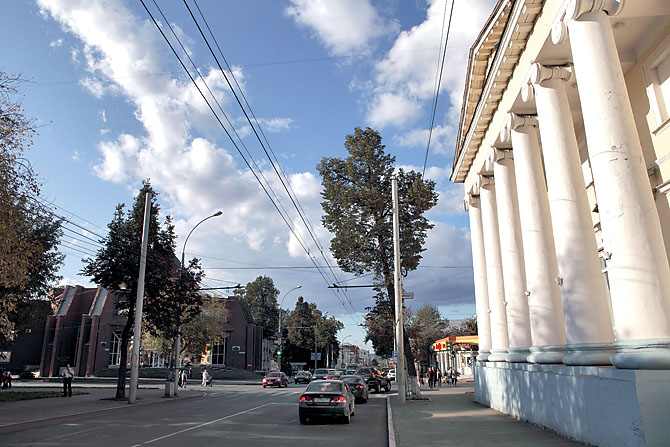
In the building of the former noble assembly (on the right) there is now a club of the Internal Affairs Directorate, and it also takes place in it: True, they are not interested in the privileged classes.
Photo: Alexey Gushchin / Sol
Sibirskaya Street, even in the current very modernized form, is a real architectural reserve, if we mean-let us estimate-its section from the park to them. Gorky to the Kama. This is the merchant Perm, the old Perm - about this was observed by its city inhabitants and rare travelers in the 19th century. Unfortunately, most of the merchant Perm (all the surroundings) was destroyed in the second half of the 20th - and at the beginning of the 21st century. Siberian, however, has been preserved in the best possible way: its central window position creates immunity from excessively initiative and especially gifted developers.
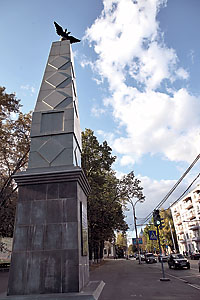
Siberian outpost, outskirts of old Perm.
Photo: Alexey Gushchin / Sol
Siberian outpost. The walk is to start correctly with the Orlenyok Ice Sports Palace, which in the near future they promise to “reconstruct” so that nothing will have left of its glorious Soviet past. Going down to the Kama, you will first stumble upon a faceted obelisk crowned with an eagle; This is a newly-precise clone of the Siberian outpost built in Perm in 1824 by the arrival of Emperor Alexander I. In the 19th century there were two obelisks-they took a copy from one of the twins; You can break your head, thinking with which one and why only from one. Look to the left, through the cast-iron fence-and you will see the prisoner of the city park “Grandmother-Rotonda” (not to be confused with the wooden rotunda of the artist Alexander Brodsky), another symbol of Perm, as replicated as the long-suffering spire of the gallery. “Grandmother” was also elevated by the arrival of Alexander I, but do not think that the whole city was built to the tsar's visit; It just happened. This place is important: the Siberian outpost is the outskirts of old Perm, the Siberian tract began here, according to which the criminals sentenced to the exile and hard labor, including political ones, for example the Decembrists, led to the east.
Diaghilev mansion. In this huge house, Sergey Diaghilev, the future creator of “Russian Seasons” spent his childhood and adolescence. The family mansion of the Diaghilevs, in which, in output times, a weekly, as to work, went all the local light, was called the "Perm Athens." Now it contains the oldest classical gymnasium and Diaghilev Museum. Let the news not scared you off that the monument to the impresario of Ernst Unknown is erected inside the building, as you can expect, ivory and lupis.
Theater garden. I would like to believe that you should enjoy the “modest charm” (especially since the ceremonial Siberian really exudes not a brilliance, but a weak radiance) of merchant Perm, walking from the Diaghilean mansion to the intersection of Siberian and Lenin, the former Pokrovskaya. Turn your head: on the right is the central gastronon, the “CEGE”, the crippled, many times rebuilt the house in which the first local bookstore once functioned, founded by the exiled Pole Jozef Piotrovsky (see “Piotrovsky”). Important from him, on the other side - a bloody, only in the sense of color, the building of the city and Duma administration, the once state -owned chamber. And finally, opposite the city hall, moving away from the city with a low fence, the theater garden is drowning in dusty greenery. In its depths, the famous Perm Opera and Ballet Theater is hidden, a former city theater, built in the 19th century with the money of local residents and excellently rebuilt in Soviet times. The theater garden is nothing: here stands in a shabby coat of a plowan Lenin, a wicked cap; At a distance from him in the thickets, the pasan Pasternak is hidden: Yuryatin from Dr. Zhivago, presumably, was written off with Perm; On the idly staggering townspeople, the revolutionary of Khokhryakov in a dishevefers, in general, looks quite ruthlessly and, in general, quite ruthlessly. “To hang out on the CEG” in the nineties meant drinking beer in the theater garden and playing the Russian Rock guitar.
Memorial Museum S.P. Diaghilev
Siberian, 33
+7 (342) 212-06-10
Perm Opera and Ballet Theater. P.I. Tchaikovsky
Petropavlovskaya, 25a
8-809-300-80-30 (autoinformer), +7 (342) 212-30-87 (cash desk)
Theatre.perm.ru , LJ Perm_opera
2. Embankment
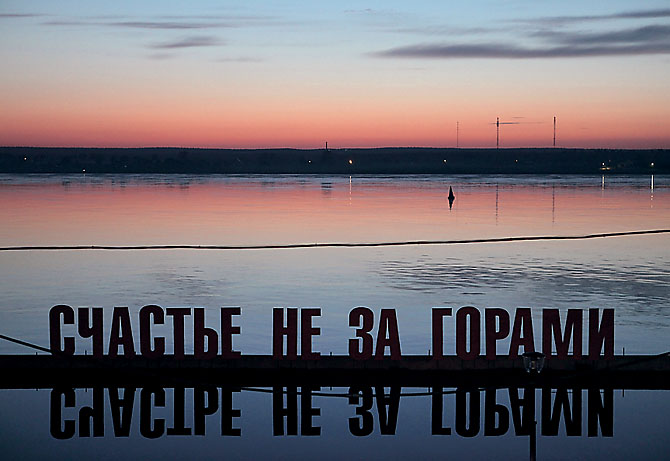
“... and behind the forests” - is implied.
Photo: Alexey Gushchin / Sol
A walk along the Perm Embankment is the best way to carefully examine the Kama, a gigantic cold river, which somewhere in the south, having entered into an alliance with the Volga, flows into the Caspian Sea. Sea! Here you do not believe in its very existence.
The embankment is nondescript, in winter - desert, in the summer - terrible; In spring and autumn - ideal for promenade. Kama, apparently, greatly affects the character of Permians: leisurely people, if not slow, judicious, calm, lazy. What else? Kama is such a special place in which a Russian person, even, say, a liberal, is suddenly imbued with a love of the Fatherland and thinks about the feat. "And our beauty is a kama!" - This person usually says.
3. Komsomolsky Prospekt
He is a compromise, he is “Broadway”, or “Brod”, aka Stalinsky Prospekt (“Quiet compromise”), etc. - the main street of Perm, laid back in the XVIII century (Kungurskaya) and comprehensively rebuilt in the middle of the twentieth century. Comprit is not just a place for walking (Permians usually go up and down on it, and so year after year, regardless of the season), this is the axis of the city, the focus of life; The street, which, as it were, “sews” Perm with her not longly stretching double - mythical Molotov. The compromise of the beginning is the cathedral, the compromise of the end is the Stalin “Death Tower”, the regional Department of Internal Affairs. In an amazing way, Komsomolsky Prospekt explains that Perm can be cozy, meaningful, even beautiful in places. What should be seen during a walk (we go from the gallery to the “Death Tower”): Bishop's House; the chapel and the Slavic school of St. Stefan of the Greatpersky; TSUM and intersection from the street. Lenin - "Perm's navel"; Monument to salty ears. Then - Oktyabrskaya Square; “Anthill” (corner from Pushkin St.); “House of scientists” (residential building, corner from the Revolution St.); Cinema "Crystal". Finally, Komsomolskaya Square and "Death Tower". The last paragraph of the program is “Quiet compromise” and the square in front of the Palace of Culture. Soldatova (end of the 1940s), with fountains, benches, shadows of residents of Molotov.
See
1. Wooden sculpture in the gallery
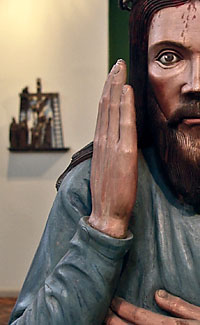
Jesus in the gallery looks quite human.
Photo: Ivan Kozlov / Salt
A collection of wooden sculpture is the main thing of what should be seen in Perm. This meeting would decorate any museum of the world: the art gallery was simply largely lucky, it stores great masterpieces in its storerooms and halls.
Wooden sculpture is sometimes called “Perm gods”: this unsuccessful term in relation to the meeting was first used by Lunacharsky; In 1928, he visited Perm, examined the collection and was so shocked that he wrote an article for “Soviet art”-here is the irony-which was called, “Perm gods”. At the same time, the “Perm gods” are rather archaeological artifacts: small plastic of the Perm animal style, bronze figures of birds, animals, people.
A collection of wooden sculpture (more than 370 carved images of the XVIII-early XX century) was collected in the 1920s by Nikolai Serebrennikov. “It is worth noting,” the guide would say that all these statues are “folk art”. Sculptors are men from a snoch, they saw Christ as a neighbor-a flat Finno-Ugric face, wounds with baked blood, a dreary, forest look. You wander around the hall, and Jesus stare at you, and for a long time you can’t get rid of the feeling that they continue to look - wherever you are. A trip to the gods is not an idle excursion. Be prepared to experience shock - like Lunacharsky eighty years ago; The pun about “shaking the soul” asks - so, in addition to jokes, these are wooden, painted, the peasant’s hand -cut idols with the hand of you will shake it out of you.
Pay attention to the building in which the PGHG is located-the former Transfiguration Cathedral, the main architectural symbol of Perm, a little disfigured in 2010 initiative church officials who generously gilded the spire, previously intelligently galvanized.
Read the photo report from the Gallery reserves in the material " Christ in the Dungeon ."
Perm State Art Gallery
Komsomolsky Prospekt, 4
+7 (342) 212-95-24
Gallery.permonline.ru
2. Museum of Modern Art at the River Station
Generally speaking, Permm is a grand experiment. Firstly, Perm is a city of conservative culture, which for almost a hundred years, as the axis of "University-Theater-Gallery" rotates. The emergence of a museum of contemporary art did not just remove, as they say, accents; It created a geomagnetic anomaly, replaced the local understandable Newtonian physics - relative Einstein. In short, everything became upside down. Secondly, it is logical, the museum that denies a reliable pre-revolutionary mechanism that rotated the Perm culture declared itself a “new motor” (the term Senator Sergey Gordeev, who financed the Russian poor exhibition in 2008, and began with it). River Station - headquarters of the Perm Cultural Revolution.
All this, of course, makes PermM an important attraction. The museum works almost without breaks: large exhibitions, plus special events, festivals, concerts and readings, master classes of the Perm Design Development Center (it is also apartment on the river) and so on. In September-October 2010, Permm will show “inaccessible”-Solnik Valeria Koshlyakov. They promise: the early works of the 1990s, fragments of the installation of Polygimony (Venice Biennale-2003), the installation of the Cloud (2004), the Sarcophagus project (2006), “Inaccessible” (2009).
Go around the Stalin River from all sides, look at the terrible crumbling facade (the building is just starting to seriously reconstruct); the corpse of a huge plush bear, similar to an elephant; wooden machines of nonsense; Graffiti of Ukrainian artists Hamlet and Minin-“A seagull, a seagull, do not miss you!”. And then look at the Kama, which is fuss with the construction of the new Guggenheim - on the drum. As, however, is the rest of Perm, and you personally, the dear guest of the city.
Museum of Modern Art Permm
Ordzhonikidze, 2 (River Station)
+7 (342) 219-91-72
Permm.ru , LJ RECHNOY
3. Theater "Scene-Molot"
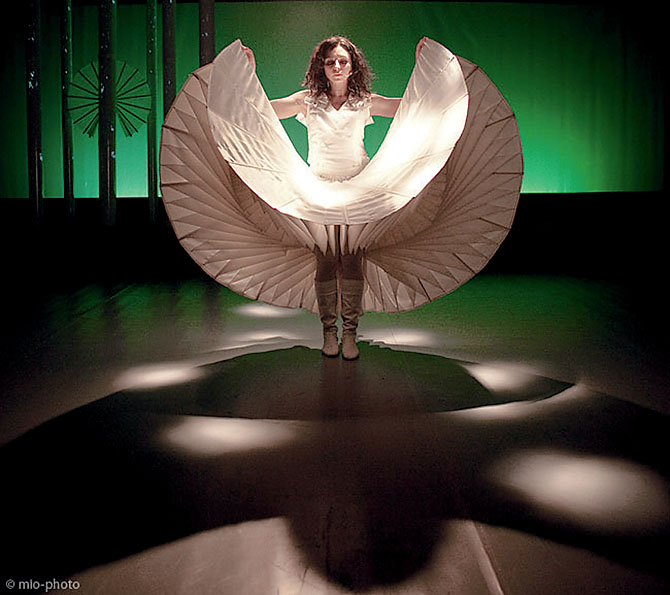
Alisa Khazanova in the role of Agatha is also in a sense a special effect.
Photo: Alexey Gushchin / Sol
One does not like the new dramaturgy, the other is modern directing, the third is the producer Eduard Boyakov personally, but, without a doubt, the “ Young Scene ” today is the strongest Perm Theater and one of the most remarkable provincial theaters in Russia. Moreover, the “Polot scene”, like the Permm Museum, defragment the reality of the Perm culture, licking, generally speaking, to the most sacred-the “axial theater”, which is alone, and his name is ballet. True, the conflict is less obvious: there are a lot of theaters in Perm, the “young scene” is not the headquarters of the cultural revolution, Boyakov is even friendly than Gelman.
The “Young Scene” is spelled out in the theater-theater (whose artistic director, which is characteristic, is the Minister of Culture Boris Milgram ), in his former small hall. The facade of the “Young Scenes” is decorated with flags resembling the scenery for the film by Alan Parsons “Wall”.
In the repertoire of the theater: “Chukchi” by Pavel Pryzhko in the production of Philip Grigoryan; "Ambush" Yuri Klavdieva in the production of Yuri Muravitsky with the "Reper" Syava in the title role; “Agatha is returning home” Linor Goralik in the production of Grigoryan and Boyakov - Alisa Khazanova plays in one version of the performance. The premieres of the fall of 2010: “Nathan Dream” Damir Salimzyanova (based on the play by Yaroslav Pulinovich), “ communicants ” by Vladimir Ageev (based on the play by Denis Retrov).
In the second half of September 2010, the “Scene-Molot” is one of the venues of the festival of modern theater and film “ Texture ”; The key venue, since the festival was initiated by Eduard Boyakov, and the Council of “Textures” was headed by his friend actress Ingeborg Dapkunaite .
Theater "Scene-Molot"
Lenin, 53 (Theater Theater building)
+7 (342) 236-07-67, +7 (342) 236-10-92 (ticket order)
Stage-molot.ru
4. "Museum of Perm Antiquities" at the station Perm I
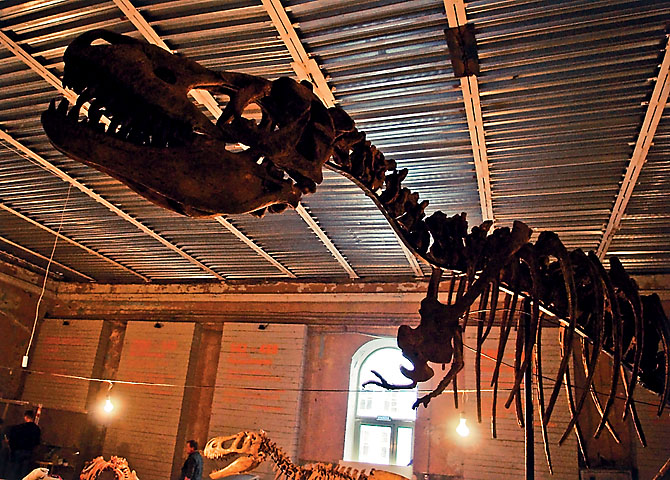
In the "Museum of Antiquities" skeletons are not stored in the closet.
Photo: Ivan Kozlov / Salt
Unfortunately, the “Museum of Perm Antiquities” is an exhibition, not a museum, as one could assume, looking at its name: the local Ministry of Culture allowed himself a little trick. The exhibition, however, is long, and, presumably, it will still prolong it - it is painfully a lot of spectators.
Place of action - the former building of the station Perm I (it should be read: “Perm One”), located across the road from Permm. In particular, such a fact was recorded: nowhere in Russia the River Station is so close to the railway. True, River has already turned into a museum, and Perm I - until in the process (Russian Railways does not give up). Before going to the exhibition, admire the building: this is an elegant provincial station of the late 19th century, with wooden turrets, with very curious bas -reliefs. Something is also preserved inside: for example, thin cast-iron columns.
As for, in fact, the Museum. In two spacious halls, a motley paleontological audience lives. The central part of the exposition, which, by the way, is completely unobvious for the non -specialist, is dedicated to Flora and Fauna of the Perm period (Paleozoic era, 299–251 million years ago). The creators of the exhibition were not limited to only foreign people and estemenosuhs who lived on Earth just at this time; So “Perm antiquities” are also, in principle, cute cunning. “Museum” - an exhibition about evolution, about paleontology in general; This is a prefabricated concert, in which many prehistoric creatures are invited to participate. The beasts have a separate large number, but another living creature is also proposed to play their party; Including the legendary Perm Mammoth, whose skeleton was reconstructed precisely to the opening of the exhibition.
On the site "Salt" you can see a wonderful compact video ecsculture on the "Museum of Perm Antiquities".
"Museum of Perm Antiquities"
Ordzhonikidze, 5 (station Perm I)
+7 (342) 257-18-06, +7 (342) 279-50-84 (Perm Regional Museum)
LiveJournal Mamont-Perm
Eat and drink
1. Restaurant "Zlatibor"
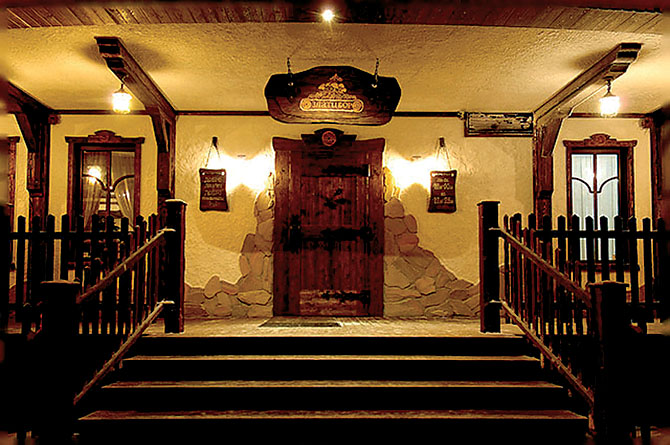
"Zlatibor" of those restaurants in which they remember what it is: there is delicious.
Photo: zb.perm.ru
Zlatibor is a nice Serbian restaurant: with plastered walls, heavy wooden chairs, jugs and jars, national rags on the walls; In short, with all the cute kitsch that is inherent in the Belgrade Kafans. They feed here as generously as in the Balkans: a Serbian chef (his name is Sasha Mladenovich)-clearly not a nominal position in the kitchen of the institution. Therefore, it is national dishes that should be ordered: jelly and kaymak, cheese, dried ham; Naturally - Pleskavitsa, Chevapchichi, Razhnichi, Pier, lamb under Sach; Balkan wine. Take one dish, at least you can deal with it. As in other Serbian restaurants around the world, they are noisily drink in Zlatibor with large companies, but this should not stop you - I don’t know why. Because, probably, that the restaurant is really good, and there are few good restaurants in Perm.
Zlatibor is not very conveniently located: it seems to be in the center, but somewhere in the yards. It is best to go by taxi to the restaurant. After dinner in Zlatibor, you can take a walk to the Theodosiev Church, which is a five -minute walk. This temple in the neo-Russian style was one of the first to restore in the 1990s. On the wall of a universa neighbor, graffiti "gold on your domes-stolen" flaunted for a long time.
Serbian restaurant "Zlatibor"
Kirova, 200
+7 (342) 233-19-33, 238-59-99
zb.perm.ru
Theodosiev Church
Borchaninova, 11
2. Cafe "Port"
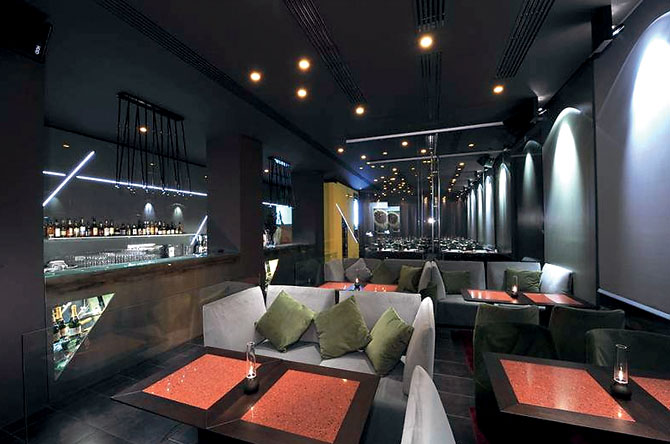
In the "Porto" they go not only to eat, but also to "purely".
Photo: Portacafe.ru
"Shot of Perm catering." It’s not that this is a restaurant that will certainly want to return to, but everything in it has been done reliably, hypoallergenically: a restrained interior; Italian food, similar to Italian food; Ench the waitresses. There is also a Japanese menu, but this is a veil of the Morgan of any Russian-Italian establishment, and it does not matter. Port deputies of the local legislative assembly, “cultural and public figures”, and so on, have dinner. Sometimes there are decent people. In the end, the main thing in Port is a good kitchen, not a collection of social insects.
Cafe "Port"
Komsomolsky Prospekt, 20
+7 (342) 217-11-07
Portacafe.ru
3. PAB "Spinat"
A tiny pub in the very center of Perm is at the intersection of Pushkin and Gorky streets, obliquely from the Catholic Church. English chef; pies, toasts with paste, desserts; You can order a Sunday lunch with a turkey for a large company in advance. In Spinat, it is supposed to drink the Belhaven Scottish beer - the McCallum's Stout is especially sweet, as well as it turns out, weak (4.1 percent). Happy Hour occurs in the Spinach; Sometimes - however, quite rarely - here they play on a saxophone. It is better to book a table in advance - in the evening at the weekend in Spinat, a full house. What else is good? Beautiful and talkative barmen girls. The only minus of the establishment: the local extract does not cope with cigarette smoke.
Spinach (British pub "Spinat")
Pushkin, 9
+7 (342) 212-41-40
Have fun
1. Club "Wind"
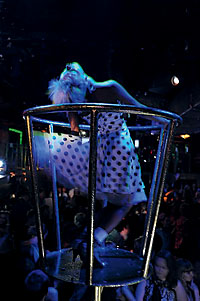
Photo: Veterclub.ru
Вообще-то о «Ветре» среди клубных гурманов принято отзываться пренебрежительно — дескать, провинциальный, тухлый, скучный; что нисколько не вредит его репутации: «Ветер» с самого своего открытия (2008) и по сей день — «главный пермский клуб». Вечеринки, начатые, скажем, в Room Bar (Ленина, 92; обширная карта коктейлей; пляшут на подоконниках), или в ресторане Les Marches (Газеты «Звезда», 27; европейская кухня; фестиваль устриц; белые воротнички и тяжелые золотые цепочки), или в номере отеля «Хилтон Гарден Инн Пермь» (Мира, 45б; четыре звезды; просторный конференц-зал), или в общежитии педуниверситета (Петропавловская, 117; 50 Cent с ноутбука; домашняя пицца) — неминуемо заканчиваются «Ветром», где красивые пермские девушки встречаются с некрасивыми пермскими мужчинами.
Интерьер «Ветра» напоминает о тех славных временах, когда стразы носили даже бычьи шеи. Бархат, диваны, позолота, полутьма, конфетти, мягкие випочки, жесткий фейс-контроль, девушки в вечерних нарядах и на высоких каблуках, мужчины — ну, мужчины в разном. «Мы зарабатываем на выпивке», — любит повторять управляющий «Ветра» Миша Вишневский; выпивка льется рекой. Смущает в «Ветре» только вот что: однажды, заглянув на вечеринку, вы внезапно можете попасть на концерт, предположим, артиста Данко. Короткий, под фанеру, но хоть под землю провались, как потом людям в глаза смотреть.
Клуб «Ветер»
Сибирская, 16
+7 (342) 243-34-83, +7 (342) 276-77-94 (Роман), +7 (342) 276-77-93 (Ирина), +7 (342) 298-20-05 (Михаил)
veterclub.ru
2. «Караоке-холл» на ул. Газеты «Звезда», 5
Двухэтажный «Караоке-холл» с большими экранами, удобными диванами, дешевой выпивкой и чрезвычайно медленным обслуживанием. Славу заведению сделал Марат Гельман: если директор Речного вокзала находится в Перми, вы непременно встретите его именно в этом караоке — в районе, скажем, полуночи, в любой из дней. Гельман обязательно исполнит для вас и других ценителей: «Let my people go» старика Армстронга и «Старика Козлодоева» старика Гребенщикова, — и в подтверждение своего выступления спляшет.
Также доподлинно известно, что в «Караоке-холле» на Газеты «Звезда» писатель Владимир Сорокин пел «Червону руту», продюсер Эдуард Бояков — «Аргентину — Ямайку», модельер Александр Петлюра танцевал стриптиз, режиссер Валерия Гай Германика выгуливала свою флегматичную собачку. Обратите внимание на доспехи рыцаря (нижний зал): считается, что это первый памятник Гельману на территории России.
По вторникам вход в караоке бесплатный, а значит, можно наблюдать пермяка в естественной среде обитания. Пермяк, в отличие от Гельмана, менее требователен к музыкальному репертуару: самец пермяка седлает Лепса и выигрывает, самка — Таню Буланову — и тоже не остается незамеченной.
Karaoke-hall
Газеты «Звезда», 5
+7 (342) 257-05-05
3. City Cats
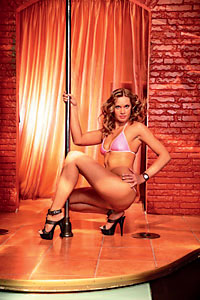
Фото: citycats.ru
Про мужской клуб City Cats есть локальная шутка: именно так — Сити-Кацем — называли за глаза бывшего сити-менеджера Перми Аркадия Каца. Кроме того, согласно легенде, в клубе City Cats был побит разгневанными аборигенами дизайнер Артемий Лебедев. Сообщается: пермяк возмутился тем, что Лебедев (арт-директор Пермского центра развития дизайна) тратит бюджетные деньги на стриптизерш. Новость, впрочем, получила опровержение.
City Cats — крупное предприятие. «Клуб расположен в здании бывшего купеческого особняка... На трех этажах клуба гости, не опускаясь до уровня порно-бордельного времяпрепровождения, получают ассортимент мужских развлечений», — сообщается на сайте City Cats.
Классический стриптиз с шестом, закуточки для приватных танцев, массажный салон, лесбо-шоу «За стеклом», BDSM-room, «дискотека» с полуголыми пермячками. Девушки, говоря откровенно, не очень симпатичные, но очень самоотверженные. Поездка в клуб, как правило, важный пункт программы пребывания вип-гостя в Перми. Есть, конечно, и камерные заведения («Яма», «Рай», «Розовый пеликан»), но City Cats как-то больше способствует разгулу — и потому уже клуб попал в наш путеводитель.
Мужской клуб City Cats
Орджоникидзе, 23
+7 (342) 219-91-34, +7 (342) 219-93-30
citycats.ru
Бонусы: что-нибудь эдакое
1. Эспланада
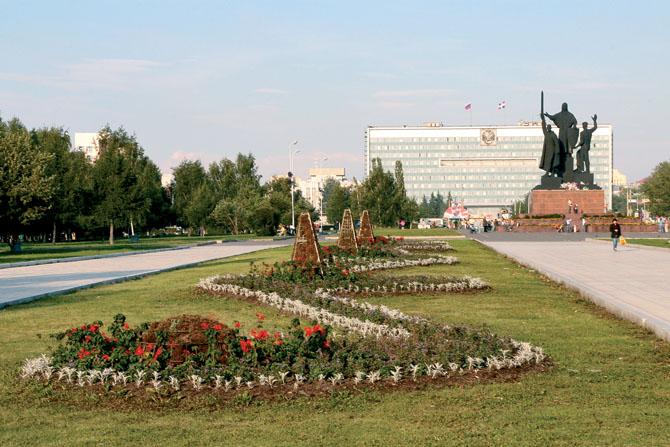
Эспланада — якобы самая большая площадь Европы. У пермяков, впрочем, все — «самое большое».
Photo: Alexey Gushchin / Sol
Эспланада — громадный странный пустырь в самом центре города. На одной его оконечности — белый кубик Театра-Театра. На другой — парадный брежневский «Дом советов», перед которым установлен новейший бетонный монумент за авторством Николая Ридного: слово «Власть», лежащее навзничь на сырой земле. В самом центре эспланады — клочковатая аллея и памятник «Единство фронта и тыла», который местные жители называют «трезубцем»: Родина-мать и солдат почему-то глядят на театр, а рабочий — на «Дом советов».
2. Город Мотовилиха
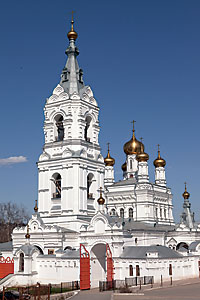
Photo: Alexey Gushchin / Sol
Мотовилиха (вошедшая в состав Перми только в 1917-м) лежит вдали от туристических маршрутов и тем хороша — ее старая часть достаточно руинизирована, чтобы не утратить сходство с настоящей, дореволюционной уездной Россией. Стоит потратить время и добраться сюда на такси (полчаса от центра), чтобы осмотреть комплекс белокаменного Свято-Троицкого Стефанова монастыря, прилегающую к нему (sic) Красную площадь, окруженную старыми домами. Здесь все так же, как сто лет назад: время обошлось с этими местами чрезвычайно деликатно. Рядом, в нескольких минутах ходьбы — реконструированный в 2010-м Райский сад (бывший сад Свердлова), Мотовилихинский пруд, центр Мотовилихи.
Свято-Троицкий Стефанов мужской монастырь
Висимская, 4а
stefan-monastyr.narod.ru
3. Музей истории Пермского университета
На другом конце города находится лучший из малых музеев Перми — Музей истории Пермского университета . Он расположен в самом сердце кампуса, в здании истфака, с которого университет когда-то и начался. Основная экспозиция: хроника становления первого уральского вуза. Но особое внимание нужно обратить на художественный отдел (состоящий из древнеегипетских и античных артефактов) — полноправный наследник Музея древностей и искусств, функционировавшего в университете в первые годы его существования. Экскурсии только по записи.
Музей истории Пермского университета
Букирева, 15
+ 7 (342) 2-396-592
4. Книжный магазин «Пиотровский»
Открывшийся совсем недавно «независимый книжный магазин» « Пиотровский » (названный так в честь основателя первого книжного в Перми — ссыльного поляка Юзефа Пиотровского) прославился уже на всю Россию. Помимо того что магазин предлагает отличную коллекцию литературы (нон-фикшн и малотиражная художка), в «Пиотровском» еженедельно проходят лекции писателей, литературоведов, философов, круглые столы и дискуссии. «Пиотровский», как и следовало ожидать, сравнивают с «Фаланстером» — и не безосновательно: московские книготорговцы консультировали основателей пермского букстора.
НКМ «Пиотровский»
Луначарского, 51а
+7 (342) 243-03-51
ЖЖ piotrovsky_book