
Translated material
How the professor was pressed
In October 2011, the Perm classic university celebrates the 95th anniversary. The “first in the Urals” had a difficult childhood: the crisis of one year coincided with the October Revolution, up to five years in a civil war, and even after 1922, a naughty child reacted affectively and somehow did not strive to be loyal to the Soviet state. Particularly active sabotage people on a general sluggish Perm background looked like professors of higher education. From its founding, the historian, associate professor of the current PRIU, Leonid Obukhov spoke about the relations of the authorities and professors of the university from its founding.
1916 - 1918. "Proletarization" could not be achieved
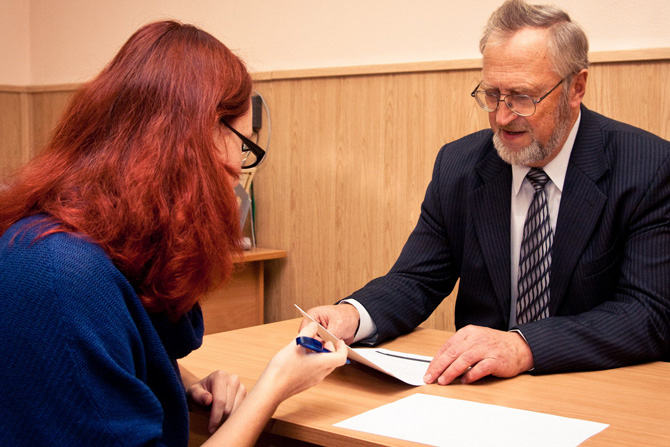
“The main thing for the Bolsheviks was not the level of professional training of graduates of the university, but knowledge of the foundations of Marxism, the willingness to fulfill any instructions of the Communist Party.”
Photo: Ilya Bukirev
- To understand the situation: how did the first professorship appeared at the provincial Perm University?
-The University of Perm was lucky: when creating it for teaching, young promising privat-documents from the University of Petrograd, who soon became professors, large specialists in their fields of science were invited. Almost all of them adhered to liberal-democratic views, many were members of the Cadet party. So, six university professors participated in August 1917 in the elections to the Perm City Duma according to the list of the Cadet party and two of them: K.D. Pokrovsky (rector) and N.V. Kultashev (future rector) became vowels of the Duma.
- As a professor, for the most part liberals, reacted to Bolshevik innovations in the field of higher education?
- Most professors reacted negatively to changes. They especially indignant about the abolition of university autonomy, which the new government interpreted as a bourgeois principle. Teachers also opposed the new rules for admission to universities, which provided for the enrollment of primarily people from the environment of the proletariat and the poorest peasantry. The rejection by professors of the new rules of admission is quite understandable: anyone could enter the university, barely able to read and write (he had to write a statement himself and put a signature). How to teach such students if they do not know elementary things? The main thing for the new government was not the level of professional training of graduates of the university, but knowledge of the foundations of Marxism, the willingness to fulfill any instructions of the Communist Party.
- But for the Bolsheviks, the results were deplorable ...
-Despite all the efforts of the authorities, in 1918 there were no significant results in the “proletarization” of the university. The board and advice of the university in every possible way opposed these measures, which for the Bolsheviks meant "sabotage", which could not remain unpunished: on October 11, the rector of the University N.V. was arrested Kultashev and a number of board officers.
To clarify the situation with the rector, the dean of the historical and philological faculty of prof. N.P. Ottokar and the acting rector (for the period of the absence of the latter) Professor A.A. Zavarzin, however, were arrested without explanation. The situation was resolved only after the intervention of the commander of the 3rd Army of R. Berzin and the appeal of professors to Moscow.
How to explain this attitude of the spawn? Firstly, its chairman P. Malkov graduated from only a two-year parish school. In addition, he remembered the position of university professors in 1917 and not without reason, as the head of the Cheka, treated the professor with distrust of the professor.
- It is obvious that after the arrest of the rector and colleagues, the professors were even more disliked by Soviet power ...
“The attitude of most professors of the University of Perm to the authorities of the Bolsheviks clearly characterizes“ an appeal to foreign universities about the disaster experienced by Russia ”. Professors of the university took on “the obligation to say to the universities of other countries and the entire civilized world that Bolshevism with Russia and why Russian citizens strive for its overthrow” in the “circulation” showed the deplorable state of the country, to which the Bolshevik power led. However, the University Council decided to finalize the “appeal”, since many professors considered that the university should not act on political issues in principle.
1918 - 1922. Tangible scientific losses
“During the years of the Civil War, the university suffered tangible scientific losses: they left or did not return after evacuation to Perm more than one and a half dozen professors.”
Photo: Ilya Bukirev
- Tell us about the university during the civil war. What happened to the highest school when Kolchak came to power in Perm?
- Kolchak showed a completely different attitude to the university. The rector and professors were present at the meeting of the Supreme Ruler and at a common reception arranged in the hall of a noble assembly. In an extremely saturated visit program to Perm at A.V. Kolchak also planned a visit to the university, but he did not have time left.
In March 1919, A.V. Kolchak sent a welcoming telegram to the rector on the occasion of the 100th anniversary of St. Petersburg University, in which he wrote: “... I am especially pleased on this historical day to welcome science figures on the territory of the liberated country ... I firmly believe that during the days of difficult trials of the country and persecutions declared by Bolshevism, scientific thought will not zealo ...”.
-How strong losses did the personnel composition due to the war?
-Almost all of the faculty of the composition was evacuated with the troops of Kolchak in Tomsk and Irkutsk. Most of them later returned to Perm. During the years of the Civil War, the university suffered tangible scientific losses: for various reasons, they left or did not return after the evacuation of more than one and a half dozen professors. Among them were future Academics B.D. Grekov, K.D. Pokrovsky, I.M. Vinogradov, such bright scientists as G.V. Vernadsky, N.V. Ustryalov, L.V. Assumption and others.
1922 - 1930. Consistent pressure
"The head of the Uralobkom brigade considered a surplus a tradition of respectful attitude to professors, argued that" any student of the Rabfakovets is above the arch-bourgeois professor, since he owns the Marxist-Leninist methodology. "
Photo: Ilya Bukirev
- After 1922, the “Bolshevization” of the university proceeded more intensively?
-“Bolshevization” began with the liquidation of the historical, philological and legal faculties in 1919 and the creation of the faculty of social sciences (voncers) on their basis. Teaching at the new faculty was carried out “on the basis of a Marxist methodology”, and party and Soviet workers who often had no higher education were involved as teachers. Among other things, this measure was to create a counterweight to the old professor and split it.
At the same time, the process of "proletarization" of the student is gaining momentum. First of all, the Communists and Komsomol members were accepted on the background. An important step in this direction was the creation of a rabfak in November 1919. Only members of the RCP (b), the Union of Youth and Trade Unions were accepted to the rabfak. Communist cells were also created at the rabfak, background and some other faculties.
But the party layer among the faculty grew extremely slowly. Unlike students, the professor kept their best.
In December 1924, a member of the party S.N. was appointed rector of the university Gray -haired. This was the first appointed, not the selected rector. The Perm Department of the OGPU introduced its informants in the university environment and regularly received information about the moods of the professors. In 1927, a member of the CPSU (b) S.A. was appointed rector of the university Stop. It was with him that the consistent pressure on the “reactionary professor” began, as a result, some were forced to leave the Perm University.
- In connection with the permutations in the highest leadership and the pressure of the professor’s power structures, did the attitude towards the Soviet regime?
- In the information note of the OGPU on the moods of professors (1929), it is written: “Most scientists externally refer to the Soviet regime loyally, but“ internally many of them are considered to be “dictatorship of a boor, uneducated, uncultured.”
At the turn of the 20-30s, the position, in general, has not changed. In the certificate for the Perm district committee, teacher A.S. Sokolov identifies three groups among professors: “sincerely perceived Marxism”, “fake under Marxism” and “direct opponents of Marxism”. At the same time, the first group belonged to units, while the majority were the majority.
The characteristics of the faculty of the pedagogical faculty of PSU, compiled at the end of the 1929/30 school year, give a negative assessment of most professors, but it was the color and glory of the university. So, professor A.P. Dyakonov is characterized as “a typical bourgeois professor, far from the requests and life of the working masses”, and about the historian A.L. Savich says: “There is no historical worldview. Belongs to the old school of historians - warrings. "
The beginning of the 1930s. "Witch Hunting"
"In the fight against the professor, they made a bet on students and young teachers."
Photo: Ilya Bukirev
-Unlike the 1920s , when experiments were allowed in education and other spheres, the 1930s- the period of folding the Soviet totalitarian system. How did the relations of professors and authorities develop during this period?
- In 1930, higher education was reorganized again. The university was actually liquidated, and five industry institutions were created on its base: chemical-technological (Berezniki), Zooveterinar (Troitsk), agricultural, medical and pedagogical (Perm).
In 1931, the liquidation of universities was recognized as erroneous and a decision was made to “deploy a number of a new type of universities” including Perm. Rector of PSU S.A. Strachev (since 1930, instead of the rector, the position of director has been introduced) headed the university reorganization commission and was simultaneously appointed rector (director) of the pedagogical institute. At this difficult time, in November 1931, the Uralobkom brigade arrived in Perm to check the work of the university and the pedagogical institute. The conclusions of the brigade were crushing for universities in the city, the professor was called "counter -revolutionary". In Perm, a kind of “witch hunt” began.
- What methods were the struggle?
- In the case of respected professors (for example, against Syrtsov, Dyakonov, Hippius) used administrative pressure. A list of teachers who was supposed to be dismissed was planned. Among the first was V.V. Hippius. They survived the objectionable not directly, but under various pretexts. So, it was decided to conduct a systematic and regular review of the departments and specific scientists, and the main emphasis was on the ideological component. That is, they created unbearable conditions for some teachers and thereby forced the same V.V. Hippius and P.S. The Theological leave.
Further policy formulated by S.A. Statchev, was quite cynical: “... Now the professors are disoriented, not organizationally formalized, it is necessary to gradually remove them, because their new young forces are growing, and there is the possibility of training their personnel. Our expanded program is to preserve the professor if possible for teaching and for work and withdraw it only when it will not be needed in our conditions. ”
Also, in the fight against the professor, they made a bet on students (primarily party members) and young teachers. The head of the arrived brigade of the Uralobkom N.N. Elvas considered a surplus a tradition of respectful attitude to professors, argued that “any student of the Rabfakovets is above the arch-bourgeois professor, since he owns the Marxist-Leninist methodology” and should fight any manifestations of bourgeois ideology.
Even despite the actively struggle of the rector of Struchev against the “counter -revolutionary” professors, the Bureau of the Perm city committee of the CPSU (b) agreed with the conclusions of the Uralobkom brigade and ruled: “1. For the surrender of class positions on the ideological front, the perversion of the party directives about higher education, the assumption of levak -winging in pedagogy, consider it necessary to remove the leadership of the pedagogical institute and declare Comrade Comrade. Stop and Nayakshin; 2. Bureau of the party team of the institute - dissolve ... "
Follow @SALTT_TWIT