Date
Author
Евгения Назарец; Елена Поляковская
Source

Preserved copy
Translated material
Cross to help
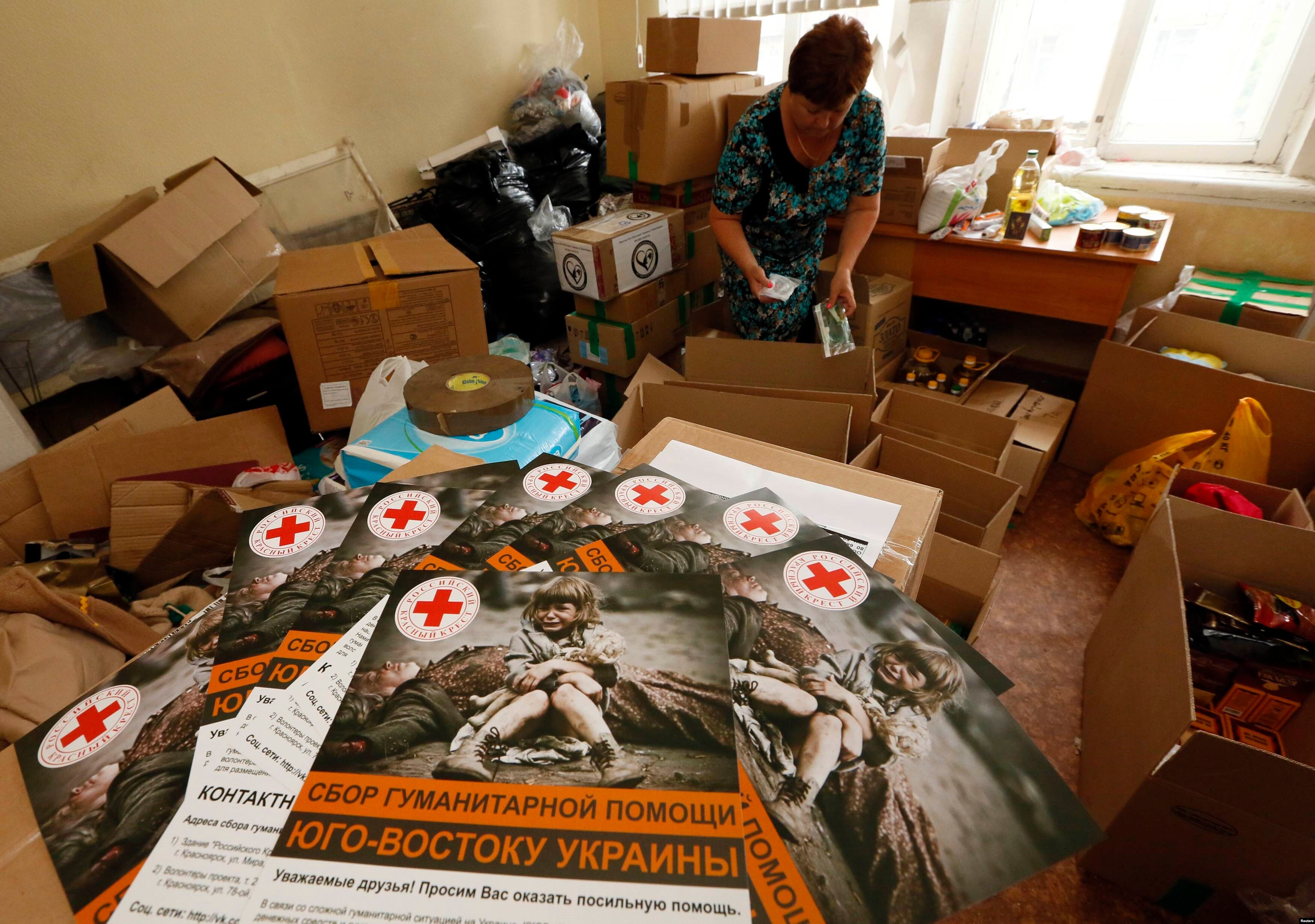
The second "humanitarian convoy" from Russia can go to the east of Ukraine from day to day
The second "humanitarian convoy" to Eastern Ukraine is being prepared in Moscow. But this time, the column is going to accompany not the Ministry of Emergencies, but the Moscow City Society of the Red Cross. This organization is not a structural unit of the International Committee of the Red Cross, although it performs similar functions. The organizers talk about the mistakes in holding the first convoy, which almost deployed back the power of Ukraine, and hopes that the well -known name of the Red Cross will ensure the success of the next Russian humanitarian mission.
The Moscow Red Cross Society is led by the capital's lawyers Igor Trunov and Lyudmila Ayvar, known for participation in cases related to terrorist attacks, disasters, resonant crimes, where the defense of the victims acquires not only criminal, but also humanitarian, human rights meaning. After a meeting with representatives of the Russian Emergencies Ministry, which almost failed the first humanitarian mission to the self -proclaimed Novorossia, the Moscow City Society of the Red Cross reported on the creation of a group of escorting the “humanitarian convoys” and clarifying the needs of the injured population. According to Igor Trunov , the account of the time before sending the second convoy goes to the days and hours, they prefer to deal with the population not with the population, but with organized large suppliers:
This, of course, was a shortage of the first humanitarian column. Do not understand the difference between the Red Cross and the Ministry of Emergencies. On the column of the Ministry of Emergencies in Ukraine, you can shoot everyone, since this is a militarized Russian structure
- This conversation mainly goes with large companies. Our meeting was attended by several medical companies. And during the discussion there was a problem of exit medical points that would provide assistance to the local population in shift mode: either we are deploying a medical hospital right next to the border in Russia and between the settlements a bus with the Red Cross emblem, or it will still be the away function of our doctors. It is clear to bring the medicine, but the doctor should still prescribe these medicines. The Red Cross is a world system regulated by international conventions and protocols. You can’t independently provide international humanitarian assistance, opening it as a charitable organization, having gathered something and delivering through the border in some ways. Because they can kill. It is quite difficult to explain that you are with good intentions, that you do not have cartridges, but flour and sugar. The Red Cross and the Red Cross have immunity: you can’t attack, you can’t shoot, you can’t kill - under the danger of international criminal prosecution, which has no limitation period. If this is a column of the Ministry of Emergencies, if it is a column of some kind of charitable structure, then here everyone’s hands are unleashed. This, of course, was a shortage of the first humanitarian column. It was not clear whether the Red Cross officers were going there or not, but this is probably a classic Russian first pancake, which is always lumpy. Because Russia has not fallen into such situations for a long time. Do not understand the difference between the Red Cross and the Ministry of Emergencies. On the column of the Ministry of Emergencies in Ukraine, you can shoot everyone, since it is a militarized Russian structure and there are no international acts of humanitarian law, some conventions that say that the Ministry of Emergencies have immunity. Now everyone became clear to everyone that the column should move without fail under the auspices of the Red Cross.

As the head of the Moscow Red Cross Society Igor Trunov put it, one or two convoys can not stop the humanitarian catastrophe in the Lugansk and Donetsk regions, you need a system for supplying assistance to Ukraine. At a press conference in the NSN, for confirmation, he turned to the coordinator of the volunteer organization Novorossia-Center Andrei Razumovsky :
- Since August in Lugansk there is no light, water. It was not, there is no connection either in stationary, nor mobile, and, of course, the Internet. Since the end of July, a commandant hour has been introduced and a ban on the movement of almost all types of transport, except for public. But since the beginning of August, there have been very serious interruptions in fuel, already at the end of July it was impossible to refuel the car, and therefore the work of public transport in the city is practically paralyzed. People from the end of July - early August stopped receiving pensions, and very many stopped receiving salaries. Food products end by the end of August. In the heat, in the absence of water supply, large problems with drinking water began. 200 thousand people have been all this time and partly in shelters, these are, as a rule, cellars of residential buildings. Despite the fact that every effort to evacuate children and women from Lugansk was made, there are still children, women and a lot of old people, pensioners. Many people will need serious psychological rehabilitation.
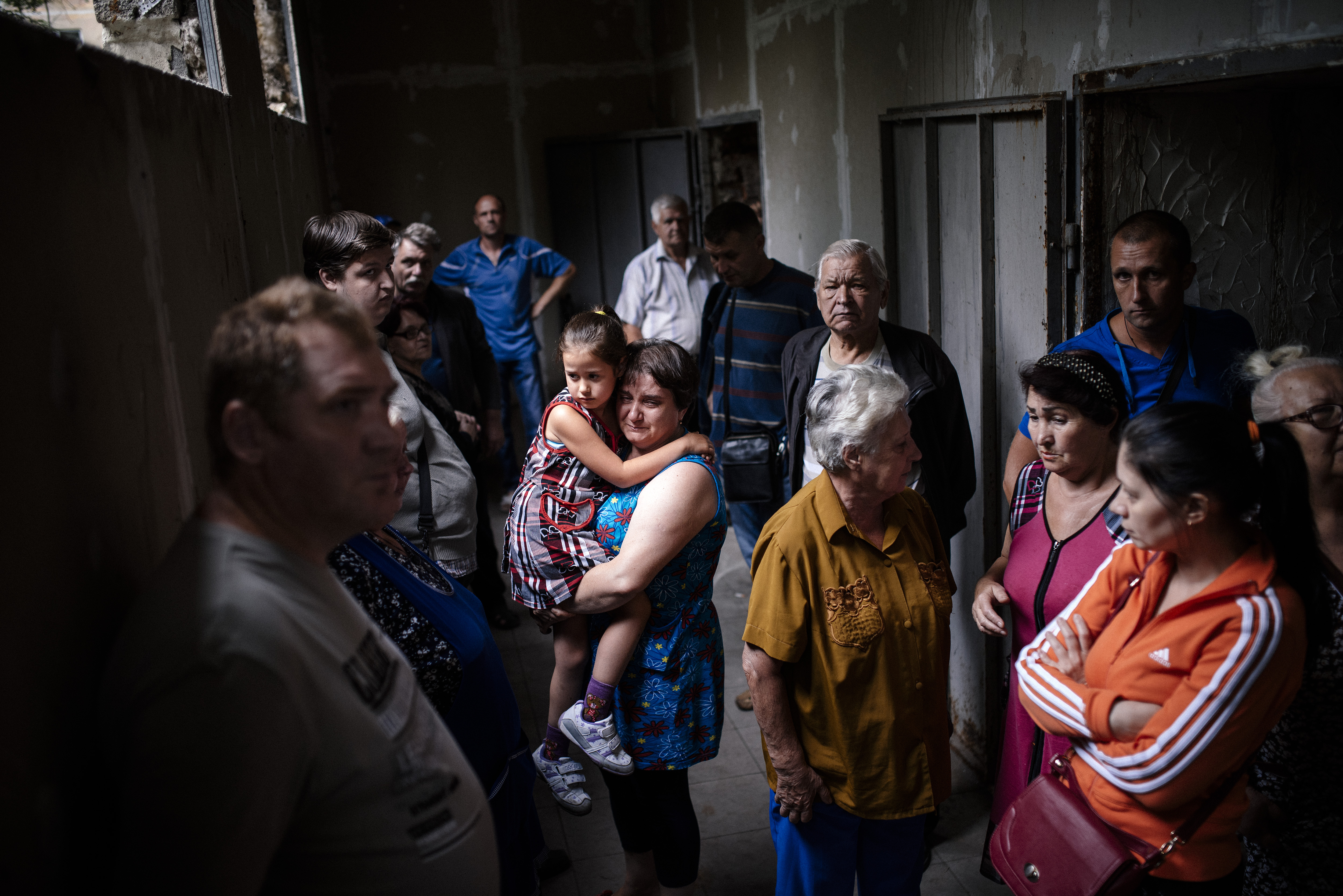
The exhausted residents of Lugansk are no longer in the state to think from whose hands and in whose accompaniment the help they need is the help. But it is obvious that not only Russia is trying to deliver humanitarian goods to Eastern Ukraine. The International Red Cross Committee also provides assistance to the victims and wounded in battles. The leadership of an international charitable organization also knows that their "namesakes" from Moscow collect the second "humanitarian convoy". This was told by the head of the public relations department of the regional representative office of the International Committee of the Red Cross in Russia Victoria Zotikova :
We are waiting for the parties to agree, and only then can we consider all issues that can be related to the participation of the ICC and the further fate of this convoy
- We know, of course, that there are discussions between the Russian Federation and Ukraine about the organization of the second “humanitarian convoy” to the east of Ukraine from Russia. But we still cannot comment on the details, because they are unknown to us. We are waiting for the parties to agree on this, and only then can we consider all the issues that can be related to our participation and the further fate of this convoy. In Ukraine, there is our representative office (as we call a delegation) in Kyiv, and now our colleagues are in contact with the local authorities, work in close cooperation with the Ukrainian Red Cross Society, and provide assistance on the territory of Eastern Ukraine. For example, in Lugansk, the International Red Cross Committee provided dressings on August 28 for the treatment of 600 wounded. So we work there, we try to provide assistance as far as possible.
The International Committee of the Red Cross believes that the choice of the method of delivery of the humanitarian cargo (railway or a motorcade), and the entire regulation of assistance to the Moscow Red Cross should discuss with the Ukrainian side. The question is who is this very "Ukrainian side". Indeed, in Kyiv there is both its own Red Cross Society and the representative office of the International Committee. There are official Kyiv authorities and leaders of the self -proclaimed republics. The head of the Moscow Red Cross Igor Trunov said that in Russia the organizers of the second convoy notified the Ministry of Emergencies and the Foreign Ministry, and he outlined the circle of possible negotiators in Ukraine as follows:
Because the column is coming from Moscow, the Moscow Red Cross will accompany with the participation of the Donetsk Red Cross and the Lugansk Red Cross
- The latest telephone negotiations say that they (employees of the Red Cross Society of Ukraine. - RS ) still do not really understand how to behave in this situation. We are now looking for exits to the Lugansk Red Cross and the Donetsk Red Cross, because there were quite active branches. Why does the Moscow Red Cross carry out this work? Because the column from Moscow is coming, the Moscow Red Cross will accompany with the participation of the Donetsk Red Cross and the Lugansk Red Cross. Moreover, the head of the Ukrainian Red Cross resigned. Given these difficulties, negotiations with the Red Cross of Ukraine are conducting, but so far there are few intelligible answers.
Igor Trunov hopes that not only the emblem of the Red Cross on the sides of trucks or wagons will contribute to the more easily advancement of the second “humanitarian convoy”, but also that representatives of European countries will be accompanied. Delegates from the Confederation of Russian Communities of Europe, namely the communities of France and Ireland, according to Trunov, intend to deliver a party of primary necessity bought at their own expense with the Russian humanitarian mission to Ukraine. But the reason why the emigrant Russians want to personally join escort is too prosaic, explains Igor Trunov :
We will go with this column ourselves, because whatever you go to Russia - it is not clear where it goes, does not reach the goal
- Charitable assistance, which is assembled amateurously, is quite strange in Russia, because much of this help is generally disappeared. Our colleagues from France, from Ireland, from Europe, say: "We will go with this column ourselves, because whatever you go to Russia - it is not clear where it goes, does not reach the goal." On the other hand, this is good for us, because international representatives, foreign citizens are also a certain protection, an additional security guarantee for our employees.
Lawyer Igor Trunov and his colleague in law practice and work in the Moscow Red Cross Lyudmila Ayvar understand the future humanitarian mission to Eastern Ukraine than just the delivery of water, canned food, clothing, medicines and medical care. The International Committee of the Red Cross recognized that events in the east of Ukraine are in the nature of an internal armed conflict, which means that there are international law that related to the rules of warfare. Lawyers Aivar and Trunov intend to use this in the interests of the victims:
It doesn’t matter who bombing the cities, who shoots from guns at settlements. In any case, this is a criminally punishable act and it is a jurisdiction of the International Criminal Court
- We created a commission to establish facts for investigating war crimes, in violation of the 1949 Geneva Conventions and the additional protocols of 1977 - the use of weapons, shells, military operations causing damage, suffering from the civilian population, destruction of civilians, objects necessary for the survival of the civilian population. All these facts take place in Ukraine, and it does not matter who will bomb the cities, who shoots from guns at settlements. In any case, this is a criminally punishable act and it is jurisd with an international criminal court. Ukraine is not a member of the International Criminal Court and did not ratify the Roman statute. The International Criminal Court says that in relation to those countries and criminals of those countries that have not ratified the Roman Statute, two options for initiating criminal cases and investigation are possible - at the request of the prosecutor of the International Criminal Court and on the proposal of the UN Security Council. We have created a commission that is now starting to accumulate and collect evidence of unlawful actions in relation to the civilian population, we form a dossier for sending to these two structures. There is another third option - this is called universal jurisdiction. In Russian legislation, there are articles such as the 257th Genocide, 356th "application of prohibited funds and

Methods of warfare ”, and international humanitarian law allows criminal cases in the absence of a direct connection between crimes and this state. Therefore, the dossier, including, will turn to our Investigative Committee, in order for criminal cases in accordance with the principle of universal jurisdiction.
According to Igor Trunov, his colleague Lyudmila Ayvar will deal with a survey of local residents in Lugansk and Donetsk, collecting certificates of war crimes in eastern Ukraine, which were published in the media and social networks. Russian lawyers intend to issue all this as legal evidence, unite in the dossier and transfer to the Investigative Committee of the Russian Federation and the International Criminal Court.