
Translated material
No questions asked
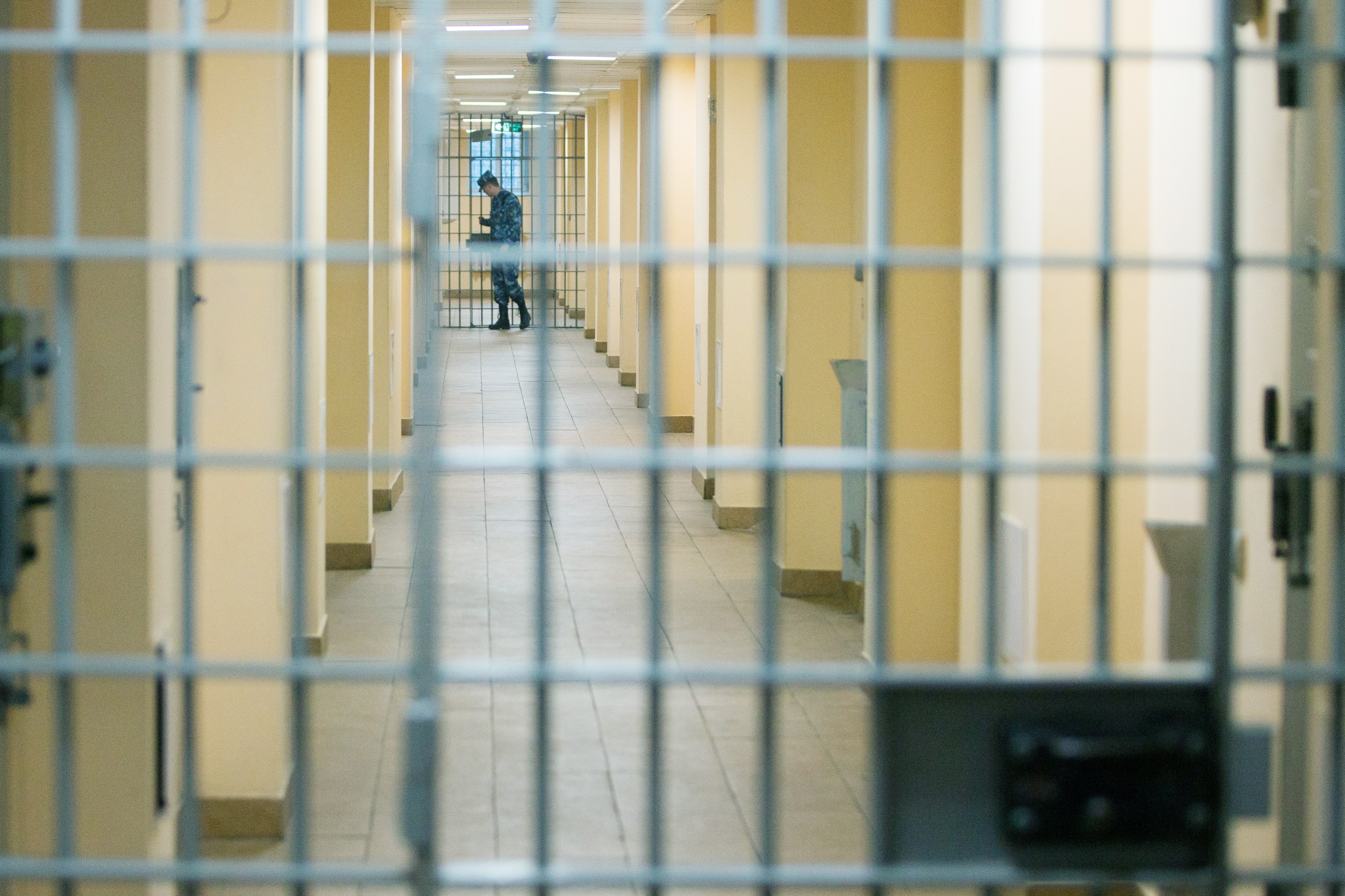
The government wants to ban public observers from asking “unnecessary” questions to prisoners
Maryana Torocheshnikova: In December 2015, the Russian government submitted to the State Duma a bill amending the current law on public monitoring commissions (POC) . The explanatory note to the project notes that it is aimed at improving public control over ensuring human rights in places of forced detention. But human rights activists say that the amendments effectively curtail the activities of public observers, and thus people in custody are deprived of the only effective opportunity to report violations of their rights.
In the Radio Liberty studio - members of the Moscow Public Monitoring Commission, journalists Zoya Svetova and Eva Merkacheva .
The bill does not seem scary and monstrous to me in this part. Firstly, members of the PMC are given the right to make films, photographs and videos in order to record violations of the rights of suspects and accused with their written consent. Human rights activists have been insisting on this possibility for a very long time. Members of the PMC will be allowed into clinics where compulsory psychiatric care is provided. And observers have also been asking for this for a long time. And finally, members of the PMC will be able to use microenvironment control devices - measure temperature, humidity in the cells, determine the presence of fungus and other things. I think everything is great. And there is nothing in this block that could indicate a violation of the rights of observers. On the contrary, rights are expanding. So what are the members of the POC unhappy with? And why, in particular, did the Presidential Council for Human Rights say that if this law is adopted, then any public oversight and control can be put to rest?
This is a very tricky bill
Eva Merkacheva: This is a very tricky bill. What you noticed is true. We will have the right to inspect closed psychiatric clinics, and this is very important, since what happens there was, in principle, not subject to any public control. Even the parents of these unfortunate patients, who are being treated there under duress, could not go there and see what the ward was like, whether they were tied up or beaten. In fact, there was such an exclusion zone there, and it was even worse than in prisons. The only thing we could hope for was that doctors were not jailers, that they were more compassionate, and that the horror that was happening in some prisons was not there. And what we asked about video and photographic recording is also a great achievement. But there are a lot of nuances even in these provisions.
Each item in this bill is fraught with many dangers that, in principle, will negate the idea of public control. We, in fact, are deprived of all our rights and become a nomenklatura. That is, we can just go in and even take a picture of something, but we can’t do the main thing - we can’t communicate with people. And it clearly states that members of the POC, entering such premises, cannot ask any questions that do not relate to violations of the rights of the content, and if we do ask such questions, then the employees must interrupt the conversation. What does it mean? Usually we go into a cell and cannot ask the person from the very beginning: “What are you complaining about?” You must first say hello, ask how he feels, maybe to establish some kind of psychological contact, ask what kind of music he likes, how his cellmates are, how much light gets into the cell, whether he has any anxiety... All these questions are not included in the list of permitted questions under the new bill. You understand, people often simply don’t have time to get their bearings and say something, they sometimes get scared because we come in accompanied by employees, a video recorder, they don’t know who we are.
All these moments that allowed us to somehow establish contact and get the person talking are very important. There were cases when we came, and at first the person said that there were no complaints, and then during the conversation a huge number of things became clear about how he was beaten during the arrest, how he was mocked after, how the investigators extract testimony now.
Maryana Torocheshnikova: As far as I understand, current legislation also provides for restrictions on observers asking questions related to the investigation. And even now they are pulling back.
The law on public control states that public observers can only ask about places of detention
Zoya Svetova: The law on public control states that public observers can only ask about places of forced detention and conditions. It doesn't say that we can't ask questions about how a person was detained. Therefore, very often we have disputes. Most of the disputes are in federal institutions, for example, in the Lefortovo pre-trial detention center. This is the most closed pre-trial detention center, and we have disputes there all the time, because the employees understand this 76th law in their own way, and we understand it in our own way. That is, we, of course, ask people what their names are and so on. Some people don’t even want to give their names, because when employees come in they immediately say: “If you don’t want to, you don’t have to give your name,” and the person immediately becomes tense. This is the first. We once asked how old a person was, and the employees immediately began to say: “You can’t ask that, it doesn’t apply to the conditions of detention.” But this is complete nonsense! We cannot even make contact with a person. Further, when we ask how the detention took place (and people who are kept in the Lefortovo pre-trial detention center are, as a rule, accused of serious state crimes, terrorism, espionage or drug smuggling, and such people are detained very harshly), we are immediately restricted.
There is also a very painful issue - protection
There is also a very painful issue - protection. Whether a lawyer is allowed in, whether he is appointed or not. And we, as a rule, are not allowed to ask this, because they interpret the law incorrectly. The law doesn’t say that you can’t ask about a lawyer. This is the right to defense, and if a person is dissatisfied with his lawyer, then his right to defense is being violated. Prisoners sometimes simply send telegrams. I once received a telegram where a prisoner wrote: “Help me so that my lawyer is allowed to see me.” And prison officials believe that this is not a violation of rights. But with the new law, it turns out that we can only ask whether the prisoner has a good mattress, whether he is fed well, and that’s all! This is some kind of imitation of public control!
Photography will now be allowed. In some regions, photography was already allowed, because, again, it is not prohibited by law. But they will only allow photography with the person’s written permission, and it is clear that the person can always be told: “Why are you agreeing?” For example, a person was beaten, we come and say: “We want to record that you were beaten.” They will take him to some room, talk to him: “Now they will leave, these public observers, and you will stay here, and if you agree to have your beatings photographed, then you will have big problems later.” And the person will refuse.
Eva Merkacheva: There is an even more cunning formulation. It says that a person can first give such consent and then withdraw it. That is, we come, the person says that he was beaten, shows his back with scars, we take photographs, he gives written consent. And a day later he writes a statement that he refuses. And what to do with these pictures?
Maryana Torocheshnikova: What if you have already published them?
Zoya Svetova: He can sue us.

Eva Merkacheva: And another interesting point: we must ask written permission from the administration of the institution to photograph, for example, broken benches, bunks. Will the jailers give us such permission? It’s unlikely, because it’s not in their interests if something goes wrong there. I'm not sure we'll even be allowed to take pictures of bad food. They will simply delay the procedure for obtaining written consent, and we will not be able to sit and wait endlessly until some boss gives us a piece of paper that he allows us to photograph the gruel. In the end, this will all be a profanity, that is, we seem to have the right to take photographs, but in fact we will either be afraid to do it or will not be able to get permission to do so.
The Russian government has submitted to the State Duma a bill amending the current law on POC
Maryana Torocheshnikova: That is, officials will report on how well the rights of people in custody are respected, but you won’t be able to really influence them in any way.
Eva Merkacheva: The prisoner tells us that he was beaten, but the officer will say: “Were you beaten now, in this cell?” He will answer: “No, I was beaten during arrest.” But we cannot ask questions about how he was detained, what they did to him, whether they tortured him. Although this is a very controversial thing, since a person, even when he is put into a police car during arrest, is, in fact, already in a place of forced detention. He is not voluntarily in this car. He is taken, placed in a temporary detention center - this is also a place of forced detention, and everything that happens there, I believe, is the zone of our control and attention. Otherwise, they will beat the person and do whatever they want with him before he is placed in a pre-trial detention center , and there he is under terrible pressure, and there they will create any conditions for him, but he will already be so depressed that he will not be able to give truthful testimony.
Maryana Torocheshnikova: And in any case, he will already be defeated in his rights.
Zoya Svetova: Yes, and he won’t be able to tell us this, that’s the thing.
It happens that a person is in great pain, but there is a catastrophic shortage of psychologists
Eva Merkacheva: Very often the people we come to see in their cells start telling us their everyday stories just to talk it out. It happens that a person is in great pain, but there is a catastrophic shortage of psychologists; on average, there is one psychologist per thousand prisoners. Here is a person sitting in a cell who has never been there before, and we are living people, civilians, not in uniform, we came from the outside, and sometimes they just rush to us to tell us about their pain. Some stories concern some situations in the wild. One person told us that he was unable to warn anyone when he was arrested, but he had a cat left in his apartment, and she had been without food for five days, there were no relatives, no one knew about it. We began to figure out how to save this cat, where to call, who has the keys, who are the neighbors. If the law is passed, we will be prohibited from even discussing it.
Women often say that now their child will be taken away from them, that their husbands deliberately put them in a cell for a short time in order to solve the problem with their children. And they say that you need to contact such and such a lawyer, an authorized representative, or somewhere else. And we, it turns out, should close our ears and not respond in any way to all these screams and moans of pain, saying that none of this concerns us, all that matters to us is what kind of gruel you have and whether the mattress is good.
Maryana Torocheshnikova: And “if members of the POC discuss issues that are not related to ensuring the rights of suspects and accused in places of forced detention or members of the POC violate internal regulations, the conversation is immediately interrupted.” Do I understand correctly that you will not be able to ask about the health of prisoners?
Zoya Svetova: Well, I think we can still ask about health. It is not stated here what exactly it is about. There again, I think, the same discussion will take place. Sometimes we even shout at each other with the staff in the cell. We will say that health relates to the conditions of detention, but they will say that it does not.
Maryana Torocheshnikova: So it turns out that this law will make your work ineffective?
Women say their husbands deliberately put them in a cell for a short time to solve a problem with their children
Eva Merkacheva: There are even funny things there, for example, compliance with internal regulations by members of the PMC. That is, we are equated to prisoners. When a prisoner sees a staff member, he must stand up, introduce himself, with his hands behind his back... Will we need to do this too? There are internal rules that determine the regime: breakfast, lunch, dinner. We won’t be able to come when breakfast is served, when the gruel is served? In this case, we will never know what kind of gruel they eat.
Zoya Svetova: This is a completely incomprehensible point!
Eva Merkacheva: How can internal regulations affect us? We are outsiders and we cannot be subjects.
Maryana Torocheshnikova: This simply looks like an expansion clause so that the supervisor, the FSIN employee, will always have some kind of loophole in order to stop conversations that are unnecessary, from his point of view. He will simply refer to the internal regulations, and that’s all.
Zoya Svetova: If the law is adopted, it means that in each specific case we will draw up an act. Then our only opportunity to challenge it is to go to court and sort it out there. Or sue the Constitutional Court - I don’t know...
Maryana Torocheshnikova: According to the proposed amendments, the PSCs themselves will now be formed somewhat differently. And if we proceed from what is proposed, then there will be no one particularly likely to go to court.
Many of us will have to surrender our mandates as members of the PMC
Eva Merkacheva: Yes, there they automatically exclude a huge number of current members of the POC. Many of us will have to surrender our mandates. It is said that a person who has a relative in prison cannot be a member of the PMC. Until today, if you had a loved one in some kind of pre-trial detention center or colony, then you simply did not go to this place, but had the right to control everyone else. If they don’t let them go anywhere, then half of the POC members will simply evaporate, because usually ordinary people don’t care about what happens behind bars, we always think that it won’t affect us or our family. And if someone’s husband, brother, father was imprisoned, then they begin to write, find out what is happening, try to change something not for him specifically, but in general, for others. And this is the main motive for people to go to the PSC. A lot of mothers and wives are members of the PMC. And if they leave, I don't know who will remain.
There will remain commissions convenient for the FSIN, which will go through the cells, drink tea or something stronger with the management of the detention center and disperse
Maryana Torocheshnikova: There will remain commissions that are convenient for the FSIN, which will come, go through the cells, drink tea, coffee or something stronger with the management of the detention center and leave.
Zoya Svetova: Yes, they are called law enforcement veterans. There is such a commission, for example, in Mordovia. I used to go there often, and prisoners told me that former prosecutors, former prison employees come there, everything is fine with them, and then they go out to drink and don’t help anyone. This is what the commissions will probably be like.
Eva Merkacheva: There is one more important nuance. Now it will be impossible to nominate representatives of organizations recognized as “foreign agents” as members of the POC. In the Moscow PMC, for example, the most effective member of the commission is Anna Karetnikova, who was represented by the Memorial organization, which was recently recognized as a “foreign agent.” And it turns out that Anna will not be able to be a member of the POC. And she spends a huge amount of time in prison, she just lives there, and she sent a record number of requests, concerned about the prisoners.
This is an absolutely discriminatory political norm
Zoya Svetova: This is a completely insane norm. After all, “foreign agents” are the oldest human rights organizations in which real human rights activists work, and they nominate people of the same kind. They won't nominate the former prosecutor. And this doesn’t go anywhere, from a legal point of view, because today you were recognized as a “foreign agent”, and tomorrow you challenged it - and you are no longer a “foreign agent”. Here is the organization “Soldiers' Mothers of St. Petersburg” - they were “foreign agents”, and then something changed, and they were expelled from there.
Maryana Torocheshnikova: A procedure has now been launched to stop calling the movement “For Human Rights” a “foreign agent” .
Zoya Svetova: And what should we do then? Your organization was a “foreign agent”, you were rejected as a candidate for the POC, and then the movement “For Human Rights” ceased to be an agent, and you can no longer enter there.
Eva Merkacheva: In addition, they said that the rights of members of NGOs recognized as “foreign agents” would not be limited, but here is a direct indication of the opposite.
Zoya Svetova: This is an absolutely discriminatory political norm.
Maryana Torocheshnikova: Do people who are in custody know that such amendments are being prepared?
Zoya Svetova: I don’t know. But prison officials know, they are very happy with this and are really looking forward to the law being passed.
Often a person, while behind bars, either dies or is on the verge of
Eva Merkacheva: There is also a very important point about medical questions that we will not be able to ask. Often a person, while behind bars, either dies or is on the verge. And if the PSC does not intervene, the person may die. How many people have we rescued thanks to the fact that we petitioned for a medical commission to be held, the person was examined and it was recognized that he could not be kept in custody due to a serious illness! We at least raise this topic and highlight it. And it says that members of the PMC cannot ask questions related to medicine, demand medical certificates, or in any way interfere with the medical activities of the institution. We have a lot of questions for prison doctors; they make up the lion's share of our complaints. A person goes to jail, an ophthalmologist does not come to see him for six months or a year, and the person loses his sight, literally every day.
Maryana Torocheshnikova: Or he simply cannot get the medications he took in the wild.
Eva Merkacheva: Either his eye or limb is rotting. These are issues that require our immediate intervention! Does this relate to human rights? Certainly! If we are deprived of the opportunity to ask questions to doctors, then we will get a wave of deaths, there will be a huge number of complainants and criminal cases initiated regarding the death of a prisoner and even regarding his bringing to death.
Maryana Torocheshnikova: In 2008, when this law was adopted after long discussions, it was said that POC would help the Federal Penitentiary Service eliminate shortcomings, observers would be friends with them, and everything would be fine. And these current amendments indicate that the lobby, either from the FSIN or other officials, is aimed at forgetting about cooperation, let them just leave it alone...
A person goes to jail, an ophthalmologist does not come to him for six months or a year, and the person loses his sight, literally every day
Eva Merkacheva: The people who developed these amendments are either not very literate (which I doubt), or they are very short-sighted and are doing something to the detriment of the system as a whole. After all, people who initially understand our task believe that we are helpers. But only a few jailers think so; they ask us after the visit: “What did you see? What did they tell you?” There are such rare people in the administration who shake their heads and then try to either remove some bad guard who beats prisoners, or solve the problem of food theft, or something else. They understand that this not only spoils the image of the service, but also angers the prisoners, turning them into people who, when released later, will be potentially dangerous to each of us. But every jailer has children, has some kind of future, and he understands that if he does not contribute to solving the problem, then all this may ultimately affect him. But, unfortunately, there are only a few of them. There are very few smart, intelligent, intelligent people!
Zoya Svetova: This system fights against human rights activists: both the FSIN and, I think, this law are also lobbied by law enforcement agencies, the investigative apparatus, and the prosecutor’s office. In the understanding of our state, a prison is a repressive place where people are suppressed and the necessary testimony is obtained from them. We have a lot of fabricated, falsified cases that are based on slander and self-incrimination. And besides, about 90 or 85% of cases are considered in a special manner, when people simply agree to admit their guilt. Therefore, the prison must be closed so that it is comfortable for investigators and operatives to work there. And suddenly people from outside come there, human rights activists, to whom the person suddenly tells what is happening to him there...
After all, 90% of the complaints we receive are complaints about how the case is being investigated. Of course, if they beat a person there and extort money, maybe they will tell it someday, but as for prison life, they somehow adapt. But among the members of the PMC there are often journalists who write about this, and of course, people from the system are against this.
Maryana Torocheshnikova: They even wanted to ban journalists from joining the PMC, because in this way other journalists who are not members of the PMC are discriminated against and cannot receive any information... In general, it was some kind of nonsense!
Prison, in the understanding of our state, is a repressive place where people are suppressed and the necessary testimony is obtained from them.
Zoya Svetova: This standard was not introduced. Maybe they want to have their own journalists who will write about how good it is to live in prison. In general, it seems to me that the institute of public control has become very famous over these 7 years due to the fact that strong human rights activists have come who write, talk about this, and are quoted a lot, the prison has become open, and society, thanks to the members of the Public Monitoring Committee, has begun to learn a lot about what is happening in prison. And the authorities want to somehow take over this institution and make it their own. Here I also see a great danger: it will become an absolutely pocket organ working for the authorities.
Maryana Torocheshnikova: Is it possible to resist this story? To what extent are State Duma deputies ready to support this bill? Can we expect that there will be some kind of demarche here and they will say “no”?
If we are deprived of the opportunity to ask questions to doctors, then we will get a wave of deaths
Eva Merkacheva: I think it’s possible. We talked with a number of deputies, and they said that they support us and believe that the law cannot be adopted in this form under any circumstances, that the entire institution of public control will collapse, and this will harm everyone. Therefore, we really hope that the same thing will happen that has practically already happened with the “bloody bill”, the one that was called the “law of sadists” - it concerns the expansion of the rights of jailers to beat prisoners and use special means on them. Initially, when it came to the Duma and was adopted in the first reading, it caused a huge amount of criticism, because it was assumed that a prisoner could be beaten just for not saying hello or not making the bed. Our human rights activists spoke out against this a lot and went out with pickets to the State Duma.
Maryana Torocheshnikova: And there was a petition, signatures were collected, many people responded.
Eva Merkacheva: And the deputies heard us. The latest version of the bill, which was amended by Alexander Khinshtein , is now completely satisfactory to us. All the blood and dirt were wiped off him.
Maryana Torocheshnikova: But there, too, everything was very cunning. First, this terrible bill appeared, which was opposed by human rights activists, everyone seemed to agree that it needed to be changed, a commission of the Presidential Council on Human Rights was convened, this bill was finalized, and then the first reading in the State Duma - and there appears the same bill that everyone condemned, and the deputies vote for it. And now Deputy Khinshtein has prepared the bill for the second reading.
Eva Merkacheva: And we were just talking about how to prevent such a substitution from happening a second time. Khinshtein gave us his parliamentary word, we trust him. We, of course, kept this option for ourselves, ideal for us, we will compare it when it comes to the State Duma in the second reading, every letter, to the comma, and, if something is wrong, we will go out and shout again. We will not allow the original sadistic version to return!
The deputies heard us. We are now completely satisfied with the latest version of the bill, which was amended by Alexander Khinshtein.
We really hope that we will be heard this time too, and the law on POC will still be amended, the positive things that were introduced will be left in it, but everything that concerns the restriction of our rights, which negates public control, will be removed from there. After all, if we are deprived of our powers, no one will understand what is happening in places of detention.
Zoya was very precise about the investigation. Now the professionalism of the investigation is greatly declining, and if there is no public control yet, the investigators will understand perfectly well: as soon as you put a person in a pre-trial detention center, you can then do whatever you want with him, get evidence from him in any way, and no one will know about it.
Maryana Torocheshnikova: I have a feeling that they always do this. They seat people for the convenience of work, so that a person is at hand, so that you can always put pressure on him...
We really hope that we will be heard this time too, and the law on POC will still be amended
Eva Merkacheva: Until now, if a person did not agree to testify, they could put him in a cell where, for example, tuberculosis patients or criminal authorities were kept. And a person, for example, is a businessman, and he is afraid of such characters. But you can still work with such a character and force him to talk to this businessman... And after a few days you can get any recognition from him. But we stopped such situations, found this person and placed him in a normal cell, where no one mocked him. That is, we changed the situation, and the investigators were afraid of this.
Maryana Torocheshnikova: In general, you are inconvenient.
Eva Merkacheva: Yes, we are very uncomfortable!
Zoya Svetova: But I think that Eva is too optimistic about the fact that some deputies promised something. These amendments were not introduced in order to change them later, without voting for them. These amendments have been prepared for a long time. They are very well thought out, they hit the most painful things: we don’t need the most professional human rights defenders, we don’t need those who have motivation... These “foreign agents” will not come to political prisoners, they are generally unreliable people. Medicine is a professional data. And in general, this is corruption! They will say that we go around asking people why they are sick, taking money from them, promising them liberation...
Maryana Torocheshnikova: Aren’t the FSIN employees afraid that riots will be provoked in this way? After all, it was the observers who often managed to level out conflict situations and prevent an explosion in the colony. And if there are no observers, then we can expect riots by prisoners who simply will not find other ways to draw attention to the ongoing lawlessness.
The FSIN, of course, doesn’t want there to be riots, but the prosecutor’s office and the Investigative Committee don’t care, they have their own interests
Zoya Svetova: The FSIN, of course, doesn’t want there to be riots, but the prosecutor’s office and the Investigative Committee don’t care, they have their own interests. And this repressive machine does not think about what will happen. She just needs to solve her local problem - so that these observers are not here. Some jailers are simply furious - some people walk around and run the prison... They always ask: “Why did you come here - to protect the prisoners?”
Maryana Torocheshnikova: By the way, why really protect prisoners, especially those who are in special or strict regime colonies? There are just notorious repeat offenders there!
Eva Merkacheva: Firstly, the percentage of judicial and investigative errors in Russia is still very high, it is higher than in other countries. Secondly, a person is sentenced to a term of imprisonment, but not to torture. And we must understand that these people will return to us sooner or later, and how they will return is the worst thing. The person who was tortured will become a beast. I think no one wants to run into such an animal on the street. And our task is to ensure that these people come out without losing their human appearance, so that they are ready to continue a more or less normal social life.
Maryana Torocheshnikova: But this is not the task of human rights activists, but precisely the state - to correct the person and return him to society. We also call institutions correctional.
A person is sentenced to a term, to restriction of freedom, but not to torture
Eva Merkacheva: And we must control this process, which is what we are doing. What are human rights defenders? They are the eyes and ears of society. And society delegated us to these places precisely for this purpose - so that we would know for sure that they do not torture, beat, or kill there.
Maryana Torocheshnikova: Zoya, do you feel feedback - from the administration of colonies or pre-trial detention centers?
Zoya Svetova: Very rarely does one get the feeling that in some specific situations we are perceived as helpers. There were cases when, for example, we helped obtain medical assistance from the Moscow department. But this is very rare, and lately this has not happened at all. They implement our recommendations, but precisely so that we do not criticize them. They are afraid of criticism because no one wants to lose their job. I noticed that they try to cooperate with us when we talk about human rights, so that we do not expose, for example, corruption violations. It is no secret that in all Moscow pre-trial detention centers there is corruption, which prisoners know about, relatives know about, and we know about.
Maryana Torocheshnikova: Yes, corruption associated with some preferences for prisoners in the form of mobile phones, additional transfers, and so on.
Zoya Svetova : The same release due to illness, creation of better living conditions for money... Or, for example, these famous stores in the pre-trial detention center (pre-trial detention center-mag), where food costs much more than in the wild. We have a suspicion that the FSIN employees are somehow affiliated with this store. But we very rarely talk about this. There is, as it were, an unspoken pact between us that together we take care of the conditions of detention, help so that prisoners are not beaten, and the employees meet us halfway and can, for example, transfer a person from the press hut to a normal cell... Or, say, we identify some kind of illness, urgent hospitalization is needed, and the employees meet us halfway. And in this way we seem to cooperate.
It’s no secret that in all Moscow pre-trial detention centers there is corruption, which prisoners know about, relatives know about, we know
But when you see that the head of the pre-trial detention center has a huge, luxurious car... As a journalist, it would be very interesting for me to write an investigation about this, but I won’t talk about it. After all, if I write about this, I will no longer be able to help people. The people who are sitting there are, in a way, hostages of this head of the pre-trial detention center.
Eva Merkacheva: We did raise the topic of the pre-trial detention center magician. And now the FAS is considering applications from those people who used to sell food to prisoners. Prices have increased several times, we wrote and talked about this a lot. The assortment has decreased very sharply and usually arrives with delays. Everything depends, of course, on the pre-trial detention center, on the situation, but we believe that this directly concerns the rights of prisoners. At some stage we despaired, because we talked and talked, but the FSIN did not react to this in any way, only promised to sort everything out. And now another agency has gotten involved: if the FSIN could not figure it out on its own, then the FAS came to its aid, and perhaps it will get to the bottom of the truth.
Maryana Torocheshnikova: Has the situation in Moscow pre-trial detention centers changed in terms of providing prisoners with necessary things, protecting their rights, access to medical care, if compared, for example, with the situation last year or the year before? Do you know the facts of the death of prisoners in Moscow pre-trial detention centers in 2015?
The main problem is overcrowding in Moscow pre-trial detention centers
Zoya Svetova: It seems to me that the main problem is overcrowding in Moscow pre-trial detention centers.
Eva Merkacheva: Yes, in “Matrosskaya Tishina” the excess is 80%, that is, there are 18 prisoners per 10 beds.
Maryana Torocheshnikova: This happened in the early 2000s.
Eva Merkacheva: Then it was even more, then they generally slept in 3-4 lines. But what we see now is terrible: there are cells where more or less everything is in order: for example, there are 12 people for 10 places - well, you can make a bed for two of them on the floor or find some cots. And there are cells where there is no room for anything at all, and there are several times more people packed there. We are told that this is due to an attempt to comply with the law, which prohibits holding together people with different articles. We went into one cell where we didn’t even have a place to sit, and there people were making hammocks out of blankets. You can only make a hammock on the top tier, and from there people fell at night, because the blankets were flimsy, they showed us bruises...
Zoya Svetova: This is due to the fact that they plant a lot.
Maryana Torocheshnikova: But, on the contrary, they should have relieved the pressure on prisons and colonies, because recently there have been several amnesties.
Eva Merkacheva: No, this does not concern Moscow at all.
Zoya Svetova: Maybe this is also due to renovations: renovations are constantly underway in various pre-trial detention centers.
We notice people there with absolutely ridiculous articles: he stole a coil of wire, which costs 5 thousand, and sits in a pre-trial detention center for 8 months, takes up a place, the state pays for it
Eva Merkacheva: And it seems to me that this is also due to the fact that the investigation is now taking people into custody, for example, for stealing mobile phones. We notice people there with absolutely ridiculous articles: he stole a coil of wire that costs 5 thousand, and sits in a pre-trial detention center for 8 months, takes up a place, the state pays for it. Or a woman stole a phone, she left three children in the wild, and the state spends money to support these children, who are scattered in different orphanages, and supports her herself. And a mobile phone costs only 6 thousand. Lots of such things! For the investigator, this is another “stick”, and he can easily bring the case to court. But if he lets her go, then she will most likely go to her Samara region or to her Kemerovo, and then the trial will not take place, and his “stick” will be lost. And they keep them until the last minute, until the verdict is passed.
This year there were periods when we had a big jump in suicides in Moscow, and some cases seem strange to us. One businessman from Kazakhstan was given a very short sentence, and everything was fine with him, he even had a telephone in his cell, he talked with his family, smiled, and for some reason he hanged himself at night. And there were a lot of such strange deaths. Maybe something happened to the psyche, or maybe they somehow contributed to...
When a person went to prison after a psychiatric clinic, and these tendencies were already manifesting themselves, this can still happen. There was a man who killed people here, then went to Ukraine, fought for one side or the other, and in the end he was detained. He really turned out to be crazy. This was not a person, but just a killing machine. He studied martial arts - in general, a rather dangerous guy. And when he committed suicide, it did not surprise us. But there was one prisoner who was accused, however, under a very bad article: “Violent acts of a sexual nature.” During the day, under a blanket, he cut his neck open with a blade, without making a sound. This, it seems to me, is very strange.
Zoya Svetova: He had several suicide attempts, and this does not surprise me.
Maryana Torocheshnikova: And if we talk about the state of health of prisoners... Previously, there were cancer patients who were admitted to a pre-trial detention center with one degree of disease, and were released to literally die.
Even if a person is convicted, but is seriously ill, he should not be detained
Zoya Svetova: Yes, there were several such cases. And we sought to ensure that these people were released on health grounds. Indeed, there were 2-3 such cases when people were released - literally to die.
Maryana Torocheshnikova: That is, the situation has not changed this year.
Zoya Svetova: No, it is changing, because there is a 3rd resolution, when a suspect or accused is released due to health reasons, it still works, and some people are released.
Eva Merkacheva: We don’t know how long people who are released under this decree live in freedom. They might die within a week. And, of course, this is very sad...
Zoya Svetova: This list of diseases is very imperfect. And we talked a lot about this.
Eva Merkacheva: It is strange that the government is not interested in changing this list, does not make it softer, does not include more diseases in it. Instead, they deal with POC.
Maryana Torocheshnikova: Why, if you can simply prohibit observers from talking about diseases?
Zoya Svetova: We believe that even if a person is convicted, but is seriously ill, he should not be kept in custody. But the government doesn't think so. It believes that if a person does not die at all, then let him sit.