
Translated material
Tipped city

On April 22, Kaliningrad (former Königsberg) celebrates the birthday of his most famous citizen - Immanuel Kant. It was in this city in 1724 that the great philosopher was born in the family of the artisan. Today, Kant's name in Kaliningrad is Baltic Federal University. The city is revered in the city of Kant and began to restore the house in which he wrote his first philosophical composition. However, the veneration of the author of the author of the "categorical imperative" sometimes takes in Kaliningrad the most bizarre forms.
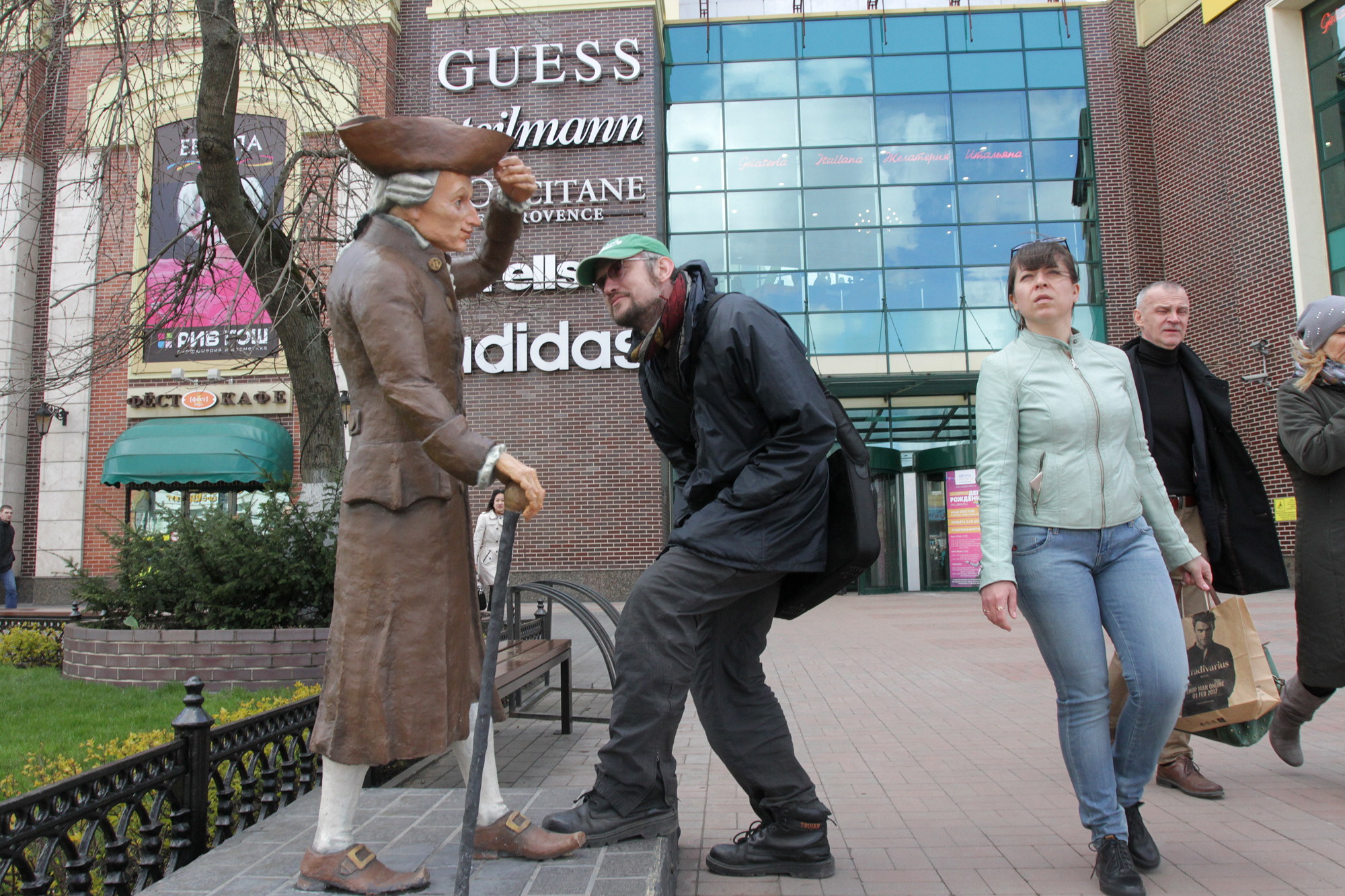
Before the entrance to the European shopping center, in the very center of Kaliningrad, recently appeared a painted sculpture of a stunted, a little embarrassed person in a frock coat and with a cane. He slightly lifts his triangle, as if greeting the passers -by. The sculpture is called "Good Kant". It was made and established at the initiative of the deputy of the regional Duma Alexander Musevich at the end of last year.
I wanted to make Kant closer to all of us, more accessible to people. Historians say that Kant was a kind person, and the sculpture, in my opinion, turned out to be good
- The idea is to show the ingenious thinker an ordinary citizen who can easily be hugged, with whom you can take a picture. I wanted to make Kant closer to all of us, more accessible to people, ”Musevich explains. - Historians say that Kant was a kind person, and the sculpture, in my opinion, turned out to be good. And kindness is what is very missing in our life now.
Most passers -by do not show special interest in the "good Kant". But someone stops, makes a selfie against the background of sculpture.
“This is the one that flew on the core and pulled out his hair,” one young lady confidently declares, quickly “clicks” the sculpture on the smartphone and disappears in the shopping center.
Some, however, understand who this is a low person with sad eyes.
- I am a participant in the All -Russian Olympiad in the German language. Kant, like a German, is close to me - that's why I decided to take a picture next to him, ”says Lyudmila Tarasova from Nizhnevartovsk. - Just yesterday we had an excursion to Kant Island, we were told a lot about this philosopher. The impression of something monumental was created. And here he is just a man.
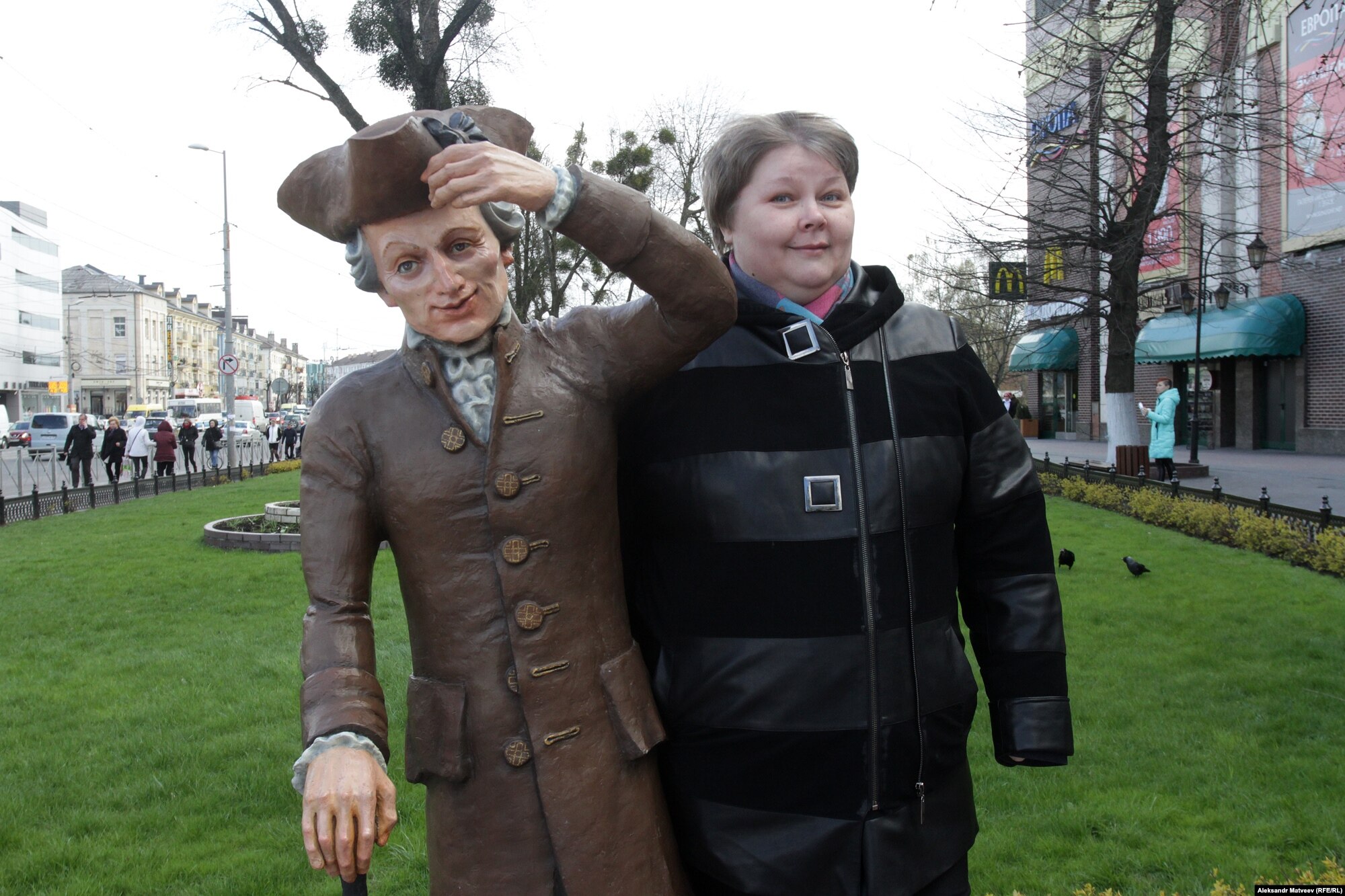
“He is very funny and some kind of home, I like it,” agrees Tatyana Ruban , who also came to the All-Russian Olympiad in the German language from Murmansk. - A photograph with Kant will be a good reminder of a trip to Kaliningrad.
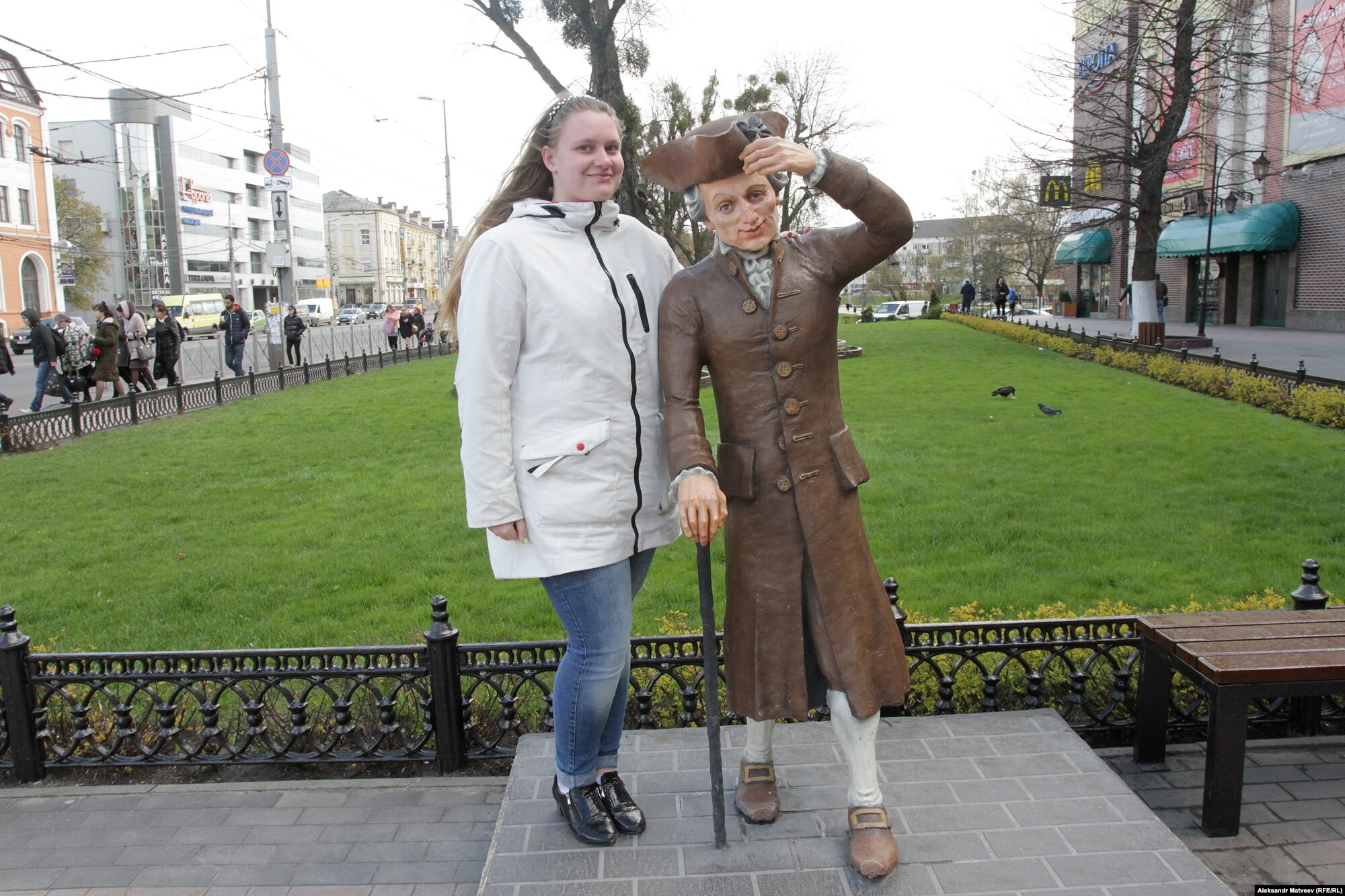
The translator Ilya Svesivtsev also belongs to the "good Kant" very favorably:
“I have only one claim to sculpture,” he says. -Here Kant has brown eyes, but in fact they were heavenly blue. But in general, this, I think, is a good job that responds to good people with a sense of humor and children. I do not think that this object should be taken too seriously. This approach often ruins.
Categorical imperative
But the oldest cantead of the region, doctor of philosophical sciences, professor Leonard Kalinnikov "Good Kant" is categorically disliked.
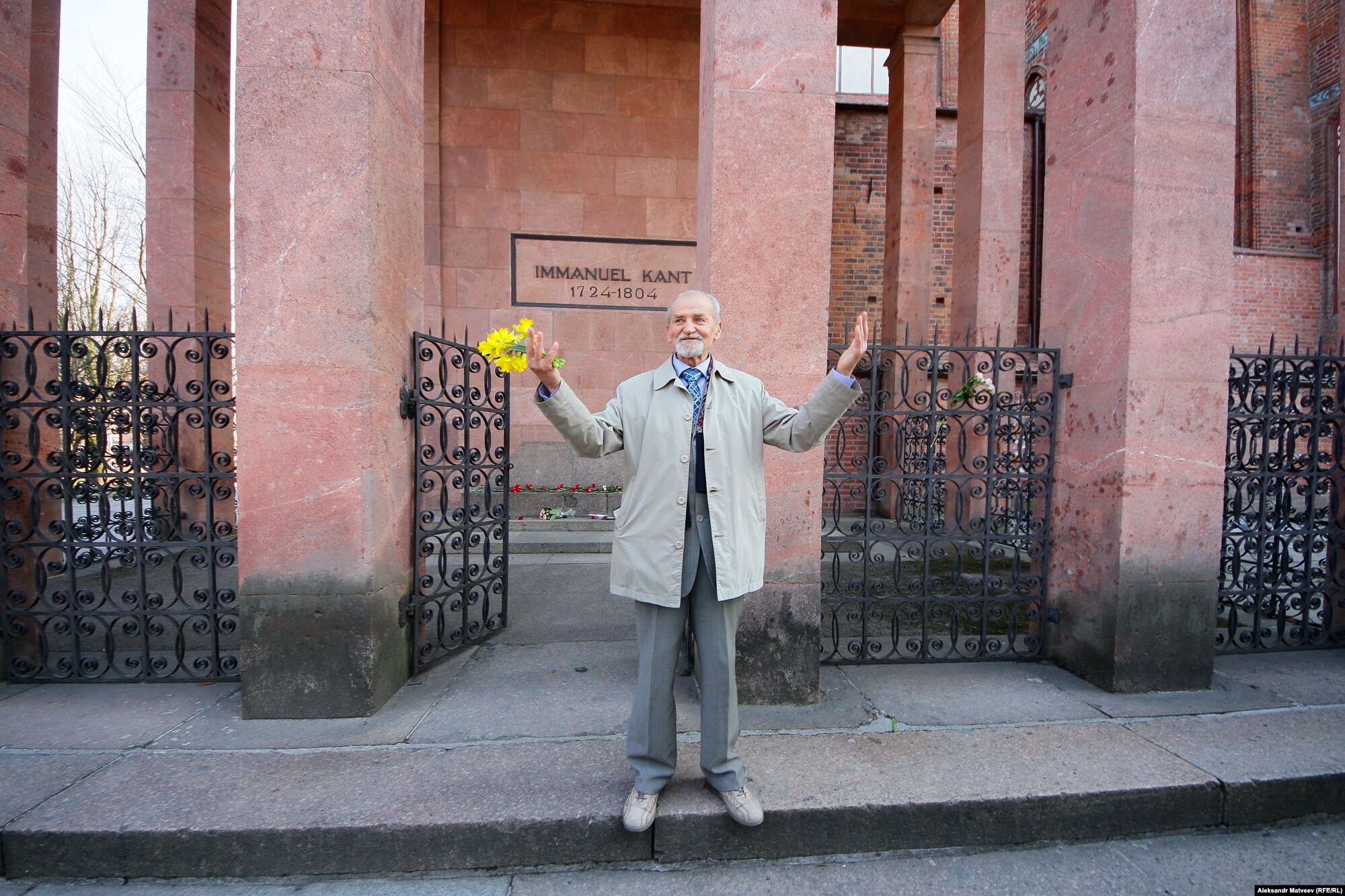
“This is vulgarity,” he believes. - Such a sculpture is not worthy of the great philosopher and the city in which he lived.
Leonard Alexandrovich believes that Kant’s ideas would be more of benefit. In his opinion, the life of people would be easier if they followed the famous categorical imperative of Kant, which says: "Do so that the maxim of your will could be a universal law."
In fact, Kant offers a target program of behavior that will make a person’s life meaningful
“That is, in fact, Kant offers a target program of behavior that will make a person’s life meaningful,” says the professor.
Leonard Kalinnikov came to Kaliningrad from Ivanovo in 1966 by distribution to a local university. Then he was young and highly hopes for a thirty -year -old scientist.
“It was my free, conscious choice,” he says. - There were other options for employment. But I stopped at Kaliningrad - the city where Kant lived and worked.
However, I saw Kalinnikov here not at all what I expected.
- I imagined a classic medieval city with sharp spiers of Kirch, with narrow streets, with many old buildings. However, there was very little left from Königsberg, who was drawn in my imagination - the city lay in ruins. This is not to say that I was disappointed, no. I understood that there was a war and that the wounds that she inflicted were not healed as quickly as she would like, ”he recalls.
At the same time, Leonard Alexandrovich is sure that the city, which has undergone such serious changes, still did not cease to be itself.
“I believe that Kaliningrad and Königsberg in the minds of every educated person are one,” he says. - To separate them would be a big mistake.
According to Kalinnikov, Kaliningrad, as well as Königsberg, still stores the “genius of the place” of Kant.
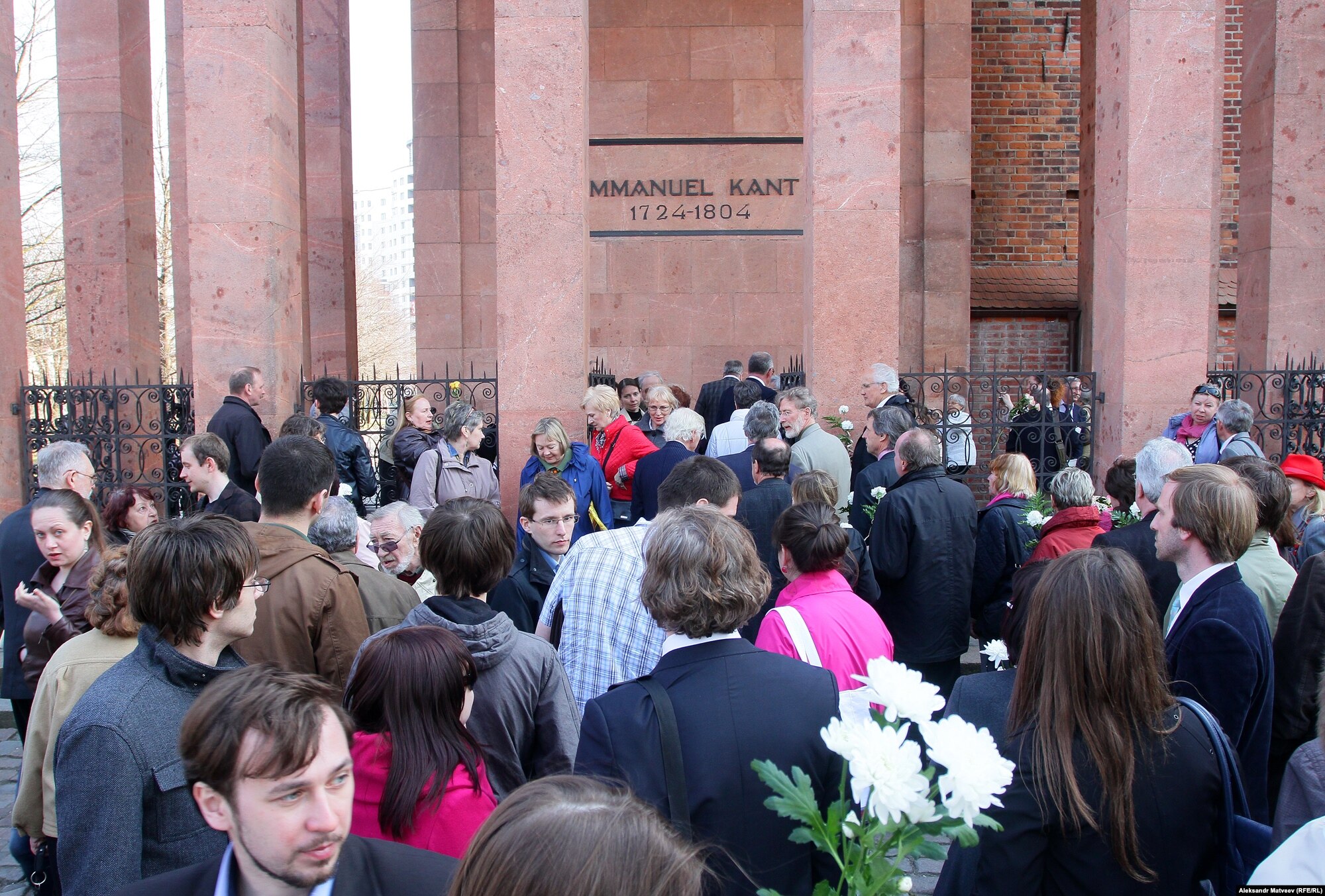
- What does Königsberg look like in the minds of an educated citizen of the world? Ask him this question, and he will outline the royal castle, but he will notice that the castle looks the most magnificent from the windows of Kant's house to Princessinstrasse. He will outline the cathedral on the island of Kant (formerly until 1945 by Knaiphof), but will say that the cathedral formed a single complex with the building of the old Albertina, the University of Kant. In the minds of the world, Königsberg and Kant are inseparable. Ask now what Kaliningrad looks like? And again you will be indicated to the cathedral first of all! But the cathedral miraculously owes its Genius Loci. The portico over the grave of the genius of world philosophy in all the vicissitudes of the Second World War surrounded mystically. Apparently, they shuddered with the pilots of the English bombers in August 1944-and the bombs lay down, not disturbing the great ashes.
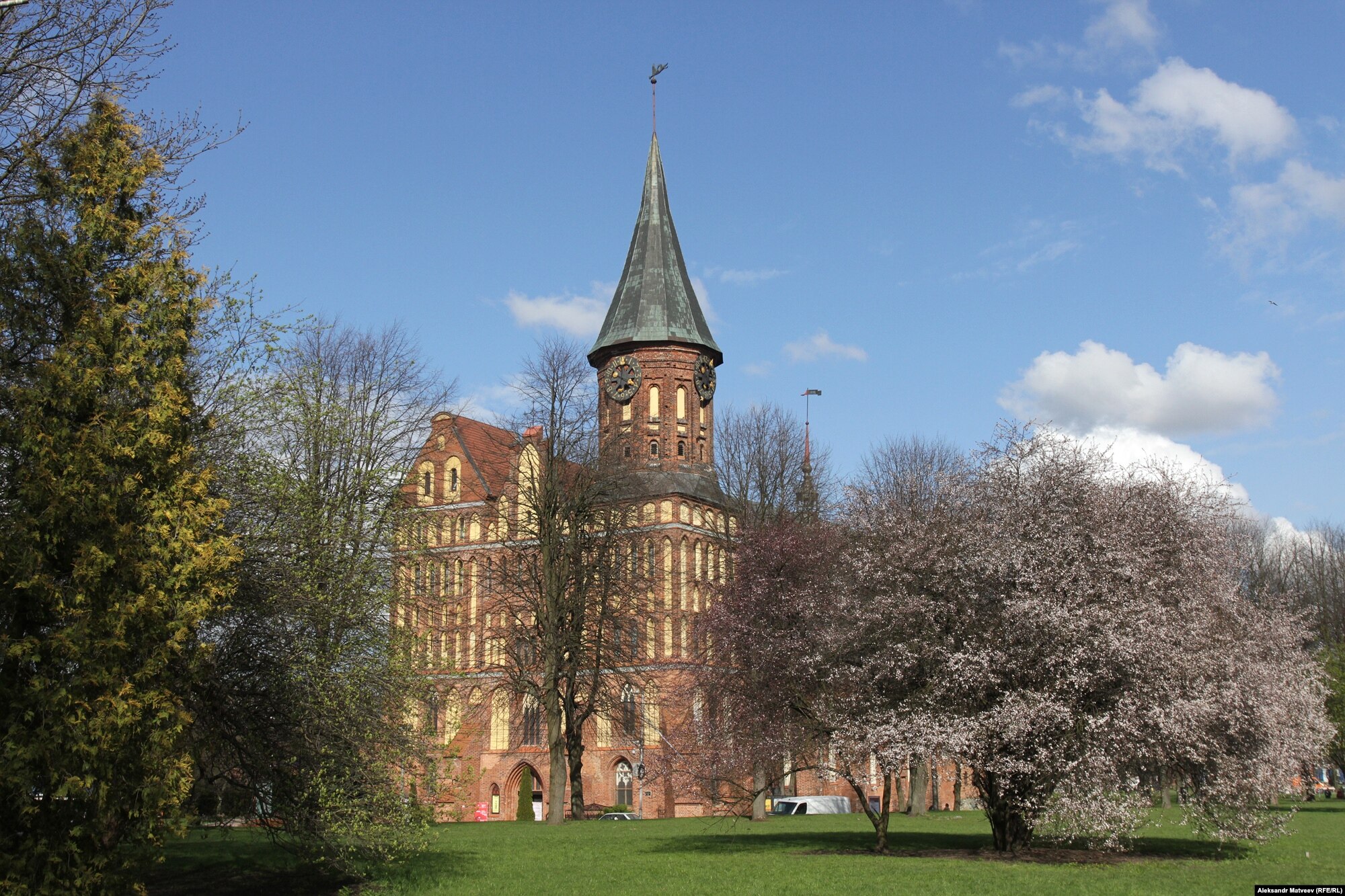
Unfortunately, it was impossible to professionally study Kant's work in Soviet Kaliningrad for a long time.
They shuddered their hands at the pilots of the English bombers in August 1944-and the bombs lay down, not disturbing the great ashes
Nobody openly forbade this, but at the same time “upstairs” was made to understand that this kind of activity was considered as undesirable, ”Kalinnikov recalls. - About the pre -war history of the city in general and about Kant, in particular, they tried not to talk once again.
A fracture, and quite sharp, occurred, only in 1974.
-This year was declared UNESCO by the year of Kant (in honor of the 250th anniversary of the philosopher.-RS) , so it became impossible to ignore the fact that he was born and lived in the former Königsberg-current Kaliningrad. A delegation of the Academy of Sciences, led by the famous Soviet philosopher and historian of philosophy, Theodore Oizuzerman, came here. Scientists got acquainted with the situation and came to the conclusion that our city should become the center of trowel. And this direction began to develop. And here it is important to understand that, "recalling" Kant, it was impossible not to recall other famous residents of Königsberg - for example, astronomer Bessel, writer Hoffmann and so on. So, we can say that Kant discovered Kaliningrad his past, ”says Kalinnikov.
Lost monument
At the same time, the first monument to Kant in Kaliningrad appeared only in 1992 thanks to the native of East Prussia Countess Marion Denhoff (1909-2002). In 1986, the countess, feeling the wind of changes in the relations of the USSR and the West, revealed to reporters a family secret. It consisted in the fact that at the end of 1944, the young Dunhoff persuaded the then members of the magistrate of Königsberg to allow her to take her to her estate Friedrichstein a monument to Kant in 1857 to save him from the bombing, which began to be subjected to the city center. Denhoff clearly described everything - how and where then she hid the work of the sculptor Christian Raukh. However, she did not take into account that in 40 years in the former East Prussia, much has changed. For some reason, her estate was among the people began to be called the "giving of Goering" (although it had nothing to do with the Nazi criminal) and therefore destroyed with special enthusiasm.
It is not surprising that by the mid-80s there was nothing left of the estate, therefore, in the place indicated by the countess, the search engines found nothing. Three years later, Dunhoff herself had already arrived in Kaliningrad with money sufficient to make an exact copy of the Kant monument, which was installed in the old place - opposite one of the former Albertina buildings (now the Baltic State University named after I. Kant).
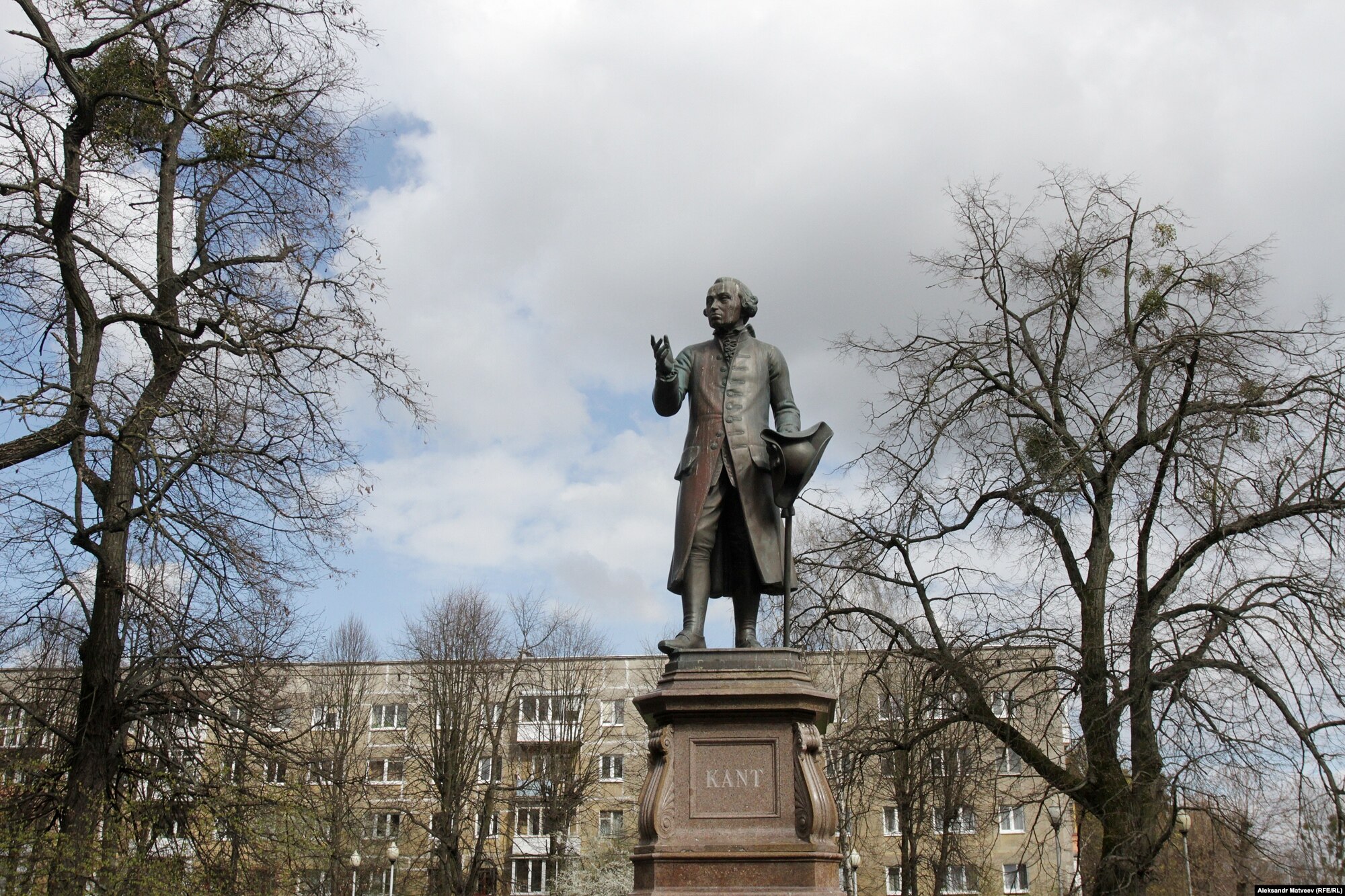
However, in Kaliningrad there are also people who hope to find the very true Raukhov sculpture of Kant. Local historian Sergei Trifonov has been looking for it for ten years. However, he is sure that luck is close.
“I have no doubt that the sculpture is buried at the eastern wall of the Bunker of the last commandant of Königsberg Lyasha (now there is a branch of the regional historical and art museum.-RS) ,” says Trifonov. -My team took measurements at the bunker, and the devices showed that at this depth something large and metal. Now there is a coordination with the competent authorities to get permission to get this "something."
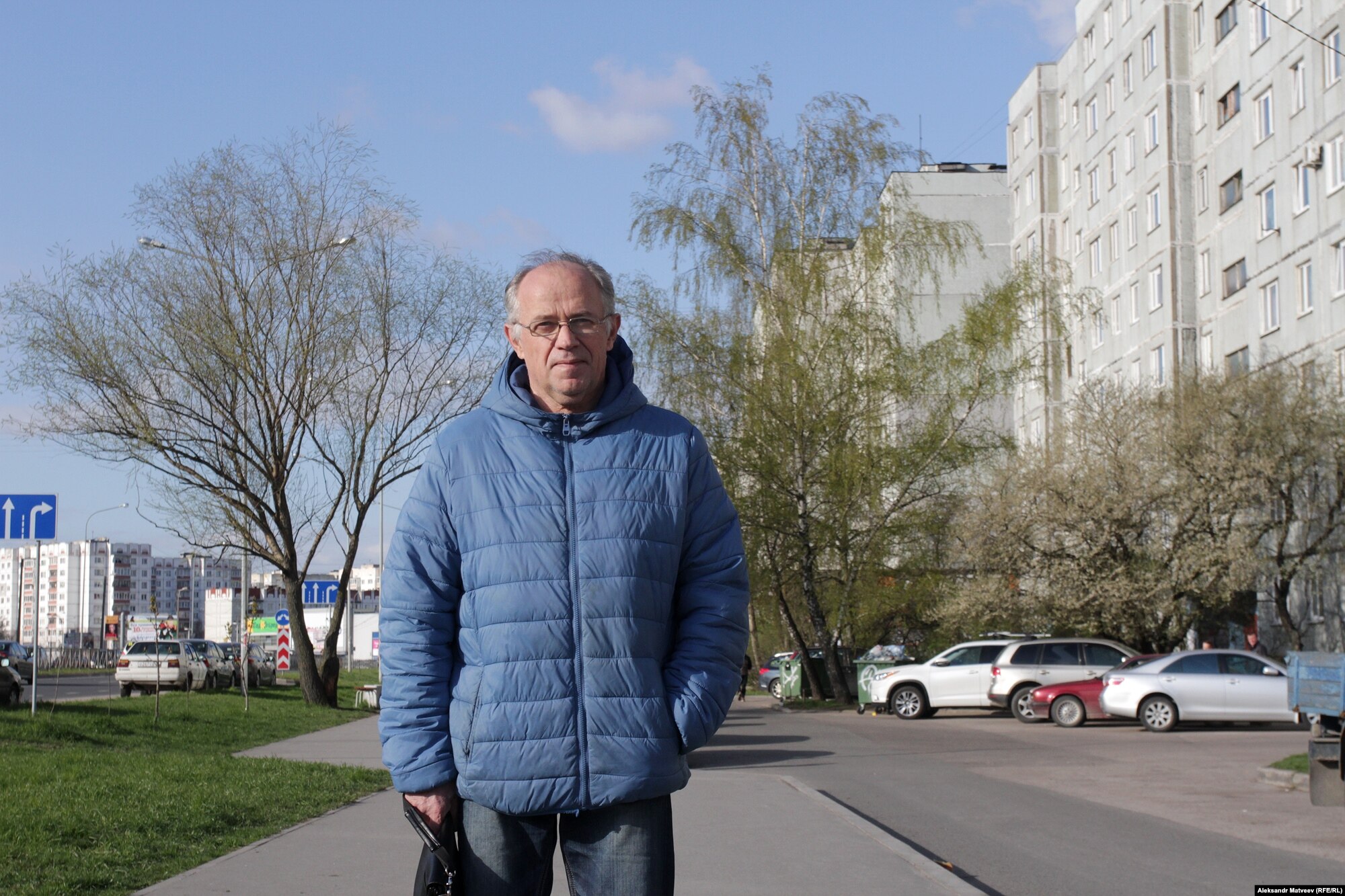
The inconsistency of this version with the testimonies of Dunhoff Trifonov himself does not bother.
- Apparently, the countess did not personally hide the sculpture herself, but instructed to do it to her manager, who misled her: he buried the bronze Kant from the bunker, but said that he had taken him to Friedrichstein.
Leonard Kalinnikov is skeptical to the Trifonov version.
We came to the former Friedrichstein and talked with the locals who said that they had long found a “man in a triangle”, which they sawed and handed over to scrap metal
“All this, of course, fantasies,” he laughs. -At the end of the eighties, we came to the former Friedrichstein (now the village of Kamenka) and talked with local residents who said that they had long found a “man in a triangle”, which they sawed and handed over to scrap metal, and the helped money drank the whole village. This version looks much more truthful.
Kant and Baba Raya
Another monument associated with the great philosopher is located outside Kaliningrad - a house in the village of Veselovka (formerly Eudshen), where Kant from 1748 to 1751 lived in the family of Pastor Daniel Ernst Andersha as a home teacher of his children. There is reason to believe that he wrote his first philosophical work “Thoughts about the true assessment of living forces” precisely in Eudshen.
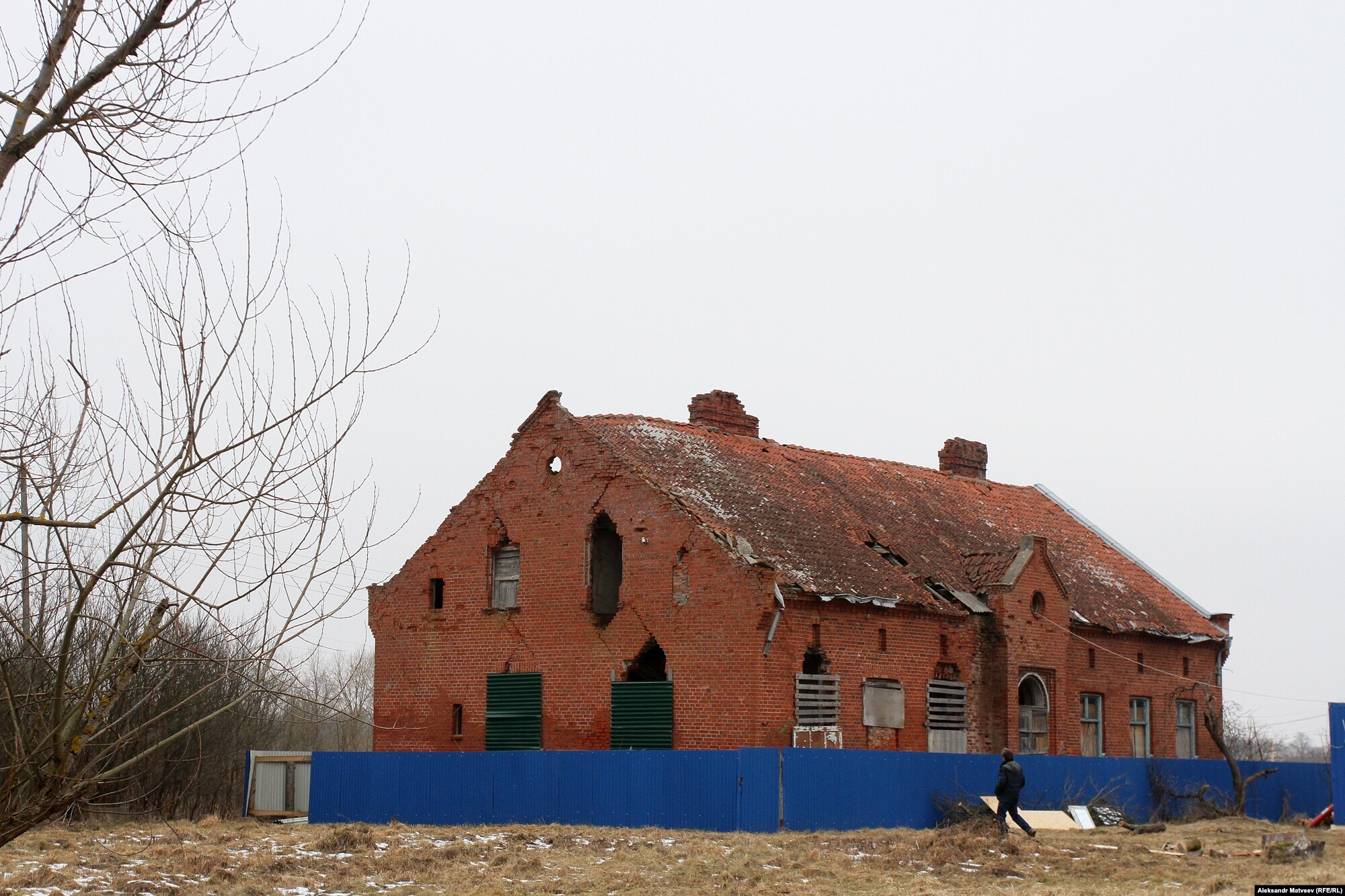
In the post -war years, the pastors of local Kirch lived in the empty house, in which the generation of the local Kirchi lived, a large family of the Harins from the Kaluga region entered. By the beginning of this century, only the elderly Raisovna Rodionovna remained in the house, and the house itself was so dilapidated that at night the famous Kantian starry sky could be observed over the roof.
“I don’t live, but I am tormented,” Baba Paradise complained ten years ago to the author of these lines. - The house is cracking at all seams. When the wind blows, it takes a dumb. That and look, the ceiling will collapse! It’s scary to go out into the courtyard. A tile flies from the roof - it can fall on his head. By God, at least break the tent in the clean field and live!
Of course, in Kaliningrad, many understood that Kant's House should be saved. However, he did not even manage to assign a security status. This house after a fire in the 19th century was completely rebuilt. And if so, then the walls cannot remember Kant, officials responsible for assigning status said.
“Yes, the house was rebuilt,” the associate professor of the Department of Philosophy of the I. Kant Vadim Chaly agrees. - However, the new one was built on the old foundation. And therefore, some stones of this house Kant still remember. He lived at the pastor for three years, probably more than once he went down to the basement-behind cucumbers or for something else ...
A few years ago, RAISOVOVNA was taken to her relatives, and the house was empty. Fortunately, he was not dismantled on bricks. But someone wrote on the building the large green letters "Kant-Lokh". Last spring, a certain tourist photographed this art, posted pictures on the Internet. They were replicated by Russian and foreign news agencies, a scandal erupted.
And perhaps this is exactly what produced both local and federal authorities to take some steps to preserve the object associated with the great philosopher.
Already in the summer of 2015, Kant's House was still included in the list of cultural heritage objects of regional significance.
However, there is a version that the process of assigning a “Kant’s house” of the security status was accelerated not so much by the incident with an offensive inscription as that in April 2013 Vladimir Putin, meeting with students of the Baltic Federal University. I. Kant, said that Immanuel Kant should become a symbol of the Kaliningrad region.
Be that as it may, in 2016, 46.3 million rubles were allocated from the reserve fund of the President of the Russian Federation for the restoration of the monument. And this year, restoration work finally began. Their winning the competition "Special Scientific Restoration Design and Production Workshop" from Moscow is maintained.
According to the presented project, in Kant’s House it is planned to open a small museum with the “Philosophical Garden”, “Philosophical Alley” and elements of the ethnographic exposition in the open air. It is planned to finish the restoration by the end of the year.
On the website of the local historical and art museum, to which Kant’s House is now attributed, there is a link to the webcam, with the help of which you can observe what happens to Kant’s House. Now the reconstruction of brickwork is being actively underway. So there is a hope that by the next birth of a philosopher his house will be put in order.