Translated material
Father and God
The best writer of the Balkans - about parents, Tito, Madonna, homosexuality, about communists and Catholics, about dead pigs and the city of Dreams, Sarajevo
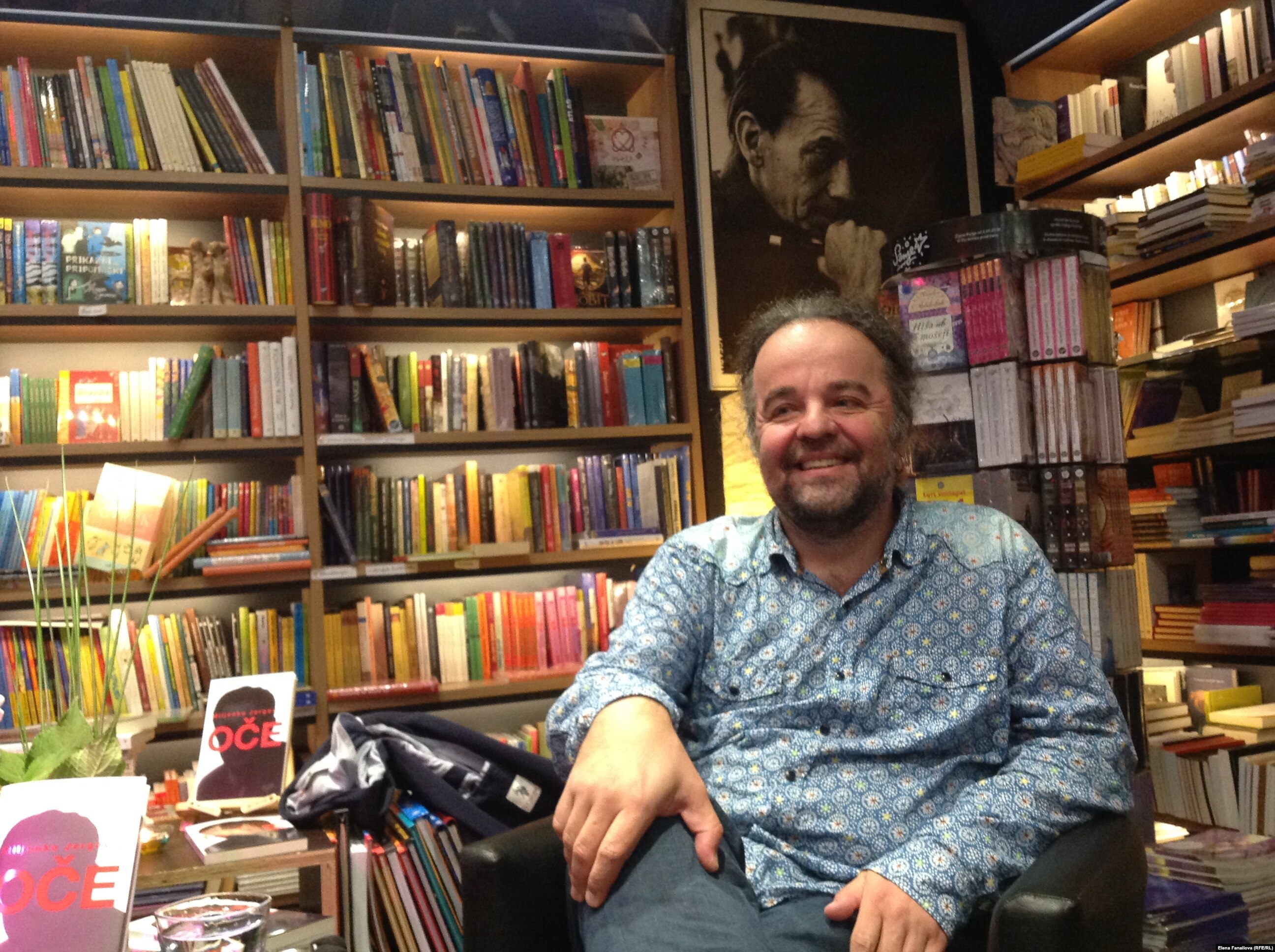
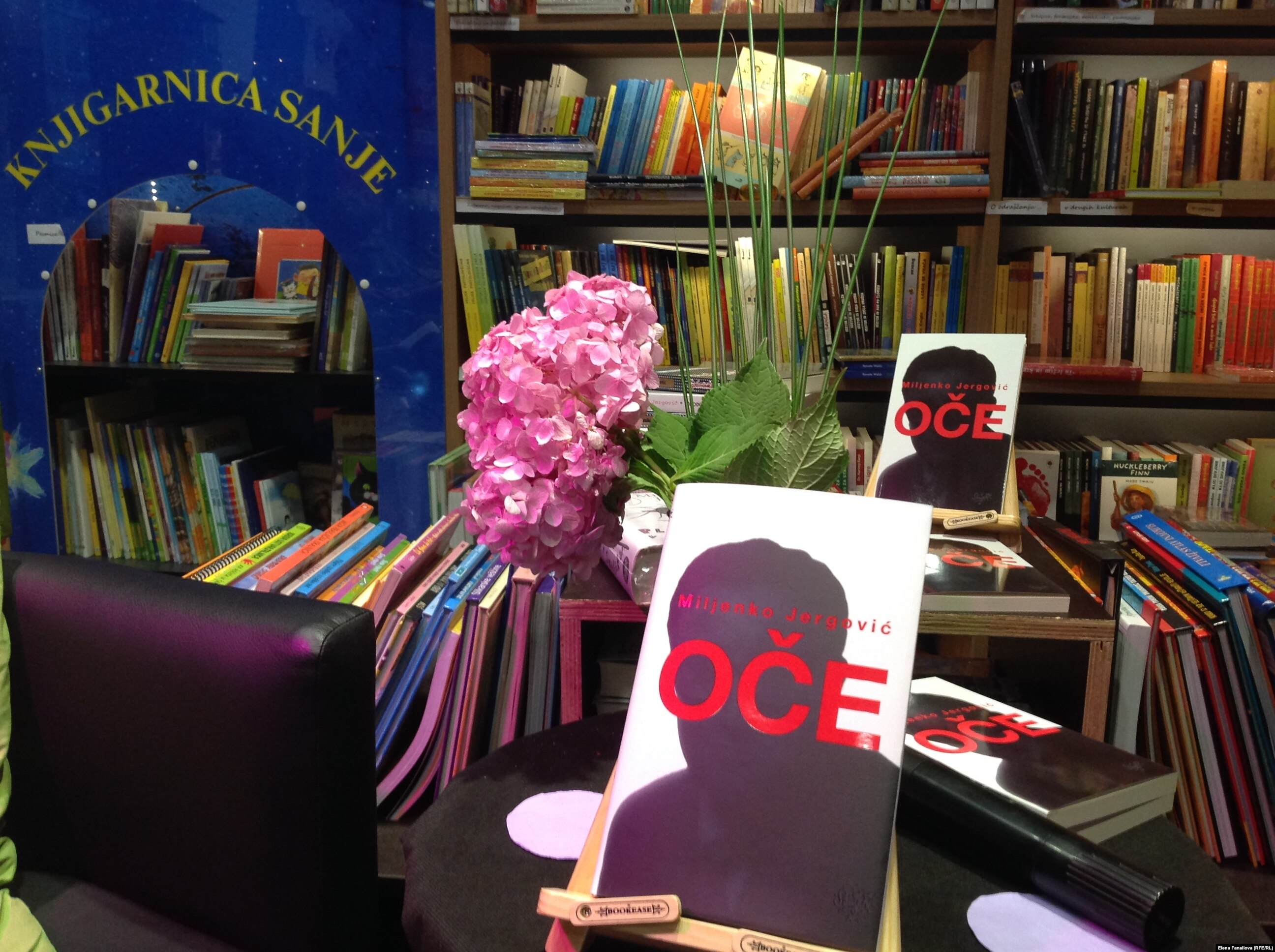
Milenko Ergovich , the best writer of the Balkan, a native of Saraev, a resident of Zagreb, presented his book "Father" in the bookstore of Sanje in Ljubljana. We offer fragments of Ergovich’s speech to the Slovenian public.
The best writer of the Balkans - about parents, Tito, Madonna, homosexuality, about communists and Catholics, about dead pigs and the city of Dreams, Sarajevo
- The novel begins with the fact that the sister of his father’s current wife calls you and reports his death. The book is an attempt to figure out the life of a father who almost did not live with you, but continued to influence your personality. Our fathers, even dead, remain a problem, the main problem in the life of a man?
- Father's problem? This is mainly a male question, well, or a question that is posed by mother -in -law, that is, the husband’s mother, very concerned about the fate of her raised son and with suspicion of those who are the father of this child. In the Balkans, apparently, this question is asked more often than in other parts of the world. Under the Balkans, I understand the space that begins south of Vienna. All Balkan peoples believe that the Balkans are a territory that is located east and south of us, including the Greeks. DNA analysis for that was invented that men from the Balkans could make sure that they are the fathers of which children. However, men from the Balkans do not believe in DNA. Grandma Stefania, my father’s mother, if she lived to the era of DNA, would probably be sure that the DNA is anti -Horvit, anti -icing and godless conspiracy. About this, in particular, my book - only I write on this subject in a rather cynical way.
- Father is the main figure of the novel, the tragic and comic at the same time, you also talk in detail about his parents, your grandfathers. But, it seems, in this book you try to somehow bypass the figure of the mother.
- I wrote about my mother in the book "Rod", which came out, so fat, after the book "Father", and which talks about a kind, about a family tree, which was founded by my great -grandfather Carl Stubler in Bosnia. He was a German from a banat , a railwayman who lived a life in Bosnia, gave birth to children who also gave birth to children, and now a family arose, who eventually left Sarajevo during the Yugoslav wars of the 1990s and which disappeared in Bosnia after the death of my mother. The book is about my mother, about a single mother, about the socialist myth of a single mother. For the first time I devoted to this topic the story “Mom Leone”, and my mother appears only as an invisible figure, such a silent character in the book “Father”. My parents divorced, my mother was left alone, and the title of single mother proudly wore all her life. In general, my grandparents raised me, my father carefully paid child support, and my mother came home to the finished dinner every day, had no problems, but insisted that she was a single mother, but no one knows what it was-to be a single mother. This myth of a single mother was terribly interested in me, it includes a whole world born by socialism, which to a large extent disappeared along with socialism. It is difficult to understand those generations that were born and grew after Yugoslavia what many socialist terms mean, in particular, which means the socialist concept of a single mother. This is a woman who raises a child alone, without a second parent. Well, what's the problem? However, based on the views of that time, this is a problem around which a whole mythology is created, worthy of a literary description. It is curious how words die, how concepts die, how large segments of family experience go out over time. From this point of view, we are now living in some kind of work, in post-yugoslavia, in post-socialism, probably in post-Europe-and we talk about some dubious languages and systems of concepts.
- That is, you criticize the most sacred that a person has, a maternal image?
- Yes ... mother ... to such an extent, the central figure of our mythology is that even the most important curse is devoted to her. It is no coincidence that we are prompting Mother. This is an important element. In our Austro-Hungarian-Balkan world, homosexuality was considered a more or less normal phenomenon, it was that which was not demonstrated. There were enough homosexuals in all centuries of our history, and it was more or less ok. Despite the fact that the Turks came to us, we were only slightly patriarchal and homophobic. Throughout the territory of the former Yugoslavia, there is only one small nation, in the mythology of which pederasty or homosexuality does not exist - the Montenegrins did not have any problems, since among this people there were no such phenomena (the laughter of the hall). When they first learned about the existence of homosexuals, they were very surprised, because they had previously believed that such a phenomenon simply does not happen. Why do I remember this? Because from Slovenia, which has lost its authentic curses and borrowed our Serbian-Khorvat curses, and to Macedonia, the mother is addressed to the mother everywhere. And only in Montenegro the curses are addressed to the father. They say so - "e ... tuza" - they address the curses not to the mother, but to the father. The sexual status of Montenegrins in this regard is very curious and very doubtful. I tried to talk about this with my friends-Morozhnytsy, but I did not meet understanding.
If you discard the jokes, it is clear that the socialist society remains predominantly patriarchal, despite the processes of emancipation, which, of course, we should not forget about. Nevertheless, there was a completely patriarchal cult of maternal holiness. Mother and Comrade Tito never and in any way could be called into question. This legacy has been preserved. You can talk about anything, but if you begin to talk negatively about the mother, people around feel uncomfortable, they feel under threat. When it comes to the processes of emancipation under socialism, I, finding myself in the clerical northwestern country ( mean Croatia ), in the last year I encounter serious retrograde processes, with attempts to deny the worldview and concepts that socialism brought us. I did not observe this before. Let's say that the right to abortion is concerned-at some point the discussion on this topic has become a civilizational trend. If there were no socialism, an abortion would now be punished in Croatia. If it were not for socialism, then I doubt that divorces would now be possible in Croatia. And if there were no socialism, then, probably, Croatia would now be ruled by the Council of religious figures who are subordinate to the parliament, as exists in the Islamic Republic of Iran, with the only difference being that Iranian religious figures are more progressive than Croatian Catholic bishops. This is not funny. Your (Slovenian) Catholic bishops compared to Croatian - with only exceptions - real punks.
- You want to say that communism is better than Catholicism?
- I will not be very original or smart, saying that communism is essentially a secular religion. This was already said by many more smart than me people. However, Yugoslavia was nevertheless a specific case, because, unlike the USSR and other Eastern European countries, the churches here did not turn into libraries, museums of atheism, warehouses. All temples, without exception, remained temples. The socialist authorities of Yugoslavia never usurped sacred premises. Maybe some auxiliary rooms or buildings were selected, but for the Cathedral to turn into something else-this was not the case. That is, external differences from the USSR were, but there was another more important circumstance. After a break with Stalin, and especially in the 1960s after the noticeable liberalization of society, what was called "socialism with a human face." And although very often this socialism had an inhuman face, people had the opportunity to relatively free religious self -determination. They felt more freer than in the East then, and more freer than now, for example, in Croatia, because in Croatia it is even more difficult to determine the issue of faith than being a homosexual, and being a homosexual in Croatia is very difficult. The question of faith has acquired a certain madman, which was not even in the worst years of the socialist system. One of these manifestations was a book from the compulsory school curriculum of the Slovenian socialist writer Franze Bevka. Interestingly, Slovenia did not actually have literal socialism, but many socialist writers were Slovenians. In Slovenia, socialist realism in literature, in painting and culture was generally a noticeable phenomenon, unlike Serbia, for example, free of such a tradition. And this French Bevk had no great talent, but still wrote one successful book. This is the best biography of Tito for children , although in fact it is not a biography, but something like a book about a saint. However, I comprehended the meaning of this holy book only having met real holy books. Franz Bevk borrowed for his book from the Holy Scripture of Christ the details, the atmosphere and the situation and attributed them to Comrade Tito. The question is that now, reading this book, I can’t understand whether Franz Bevk did it consciously, or behind the figure of the famous Slovenian partisan was actually a Catholic from the childhood of this author. Our imagination and our mythology are formed in childhood, by 12-13 years. At the age of 12-13, Franz Bevk-like comrade Tito, like Comrade Cardel, were not the people who they later became. Their dreams were dreams of another time and another mythology. The dream of Franz Bevka was so deeply Catholic that his book turns into incredibly blasphemous and at the same time into incredibly Catholic. I have no intentions to engage in theory or the history of literature, but if I were a professor at the Faculty of Yugoslav -Slavic literature, I would decisively recommend this book to my students. Because this is not an open phenomenon, important for the knowledge of our world, our cultural subconscious. What happened to those generations - and I belong to one of the last such generations - whose representatives studied such books in the compulsory school curriculum? What happened to them in 1990? When, from the Pioneers of Tito, atheists, they suddenly became a sophisticated believers of Catholics? How did they combine what they knew about Tito Mary’s mother with what they later learned about another mother, also Mary? Or they all managed to completely forget, which is also possible? Bevka had its own Jordan river - of course, this is the pimp river ( the border river between Croatia and Slovenia ). On the one hand, the sutla is Croatia, on the other - Slovenia. On the one hand, the father of Tito was Croatla, on the other, his grandfather-word, the family of his mother. It is not known how much this is true, but that is not the point. At that time, the pimal became the metaphor of our brotherhood and unity, in which our only way out was, because otherwise - a fratricidal war and nationalists as the main evil. By the way, I completely agree with this. As for Jesus, he was a pure Jew who spoke Aramaic (as far as you can understand, now it is Arabic). In the book of Franz Bevka Tito is a person of double identity, and this is very important, especially from today's perspective. In modern Europe, children are explained that people of other nationalities do not eat children for breakfast and that people of a different faith are not our deadly enemies. It is important that Franz Bevk reminded us of this in a timely manner, although he was in captivity of geography. However, from the political point of view of this duality of the character, Tito is not enough - for politics, one of its side should be Serbian, and the other, for example, Albanian.
- In this book you mention, including about father and alcohol. Is this a literary technique or life experience?
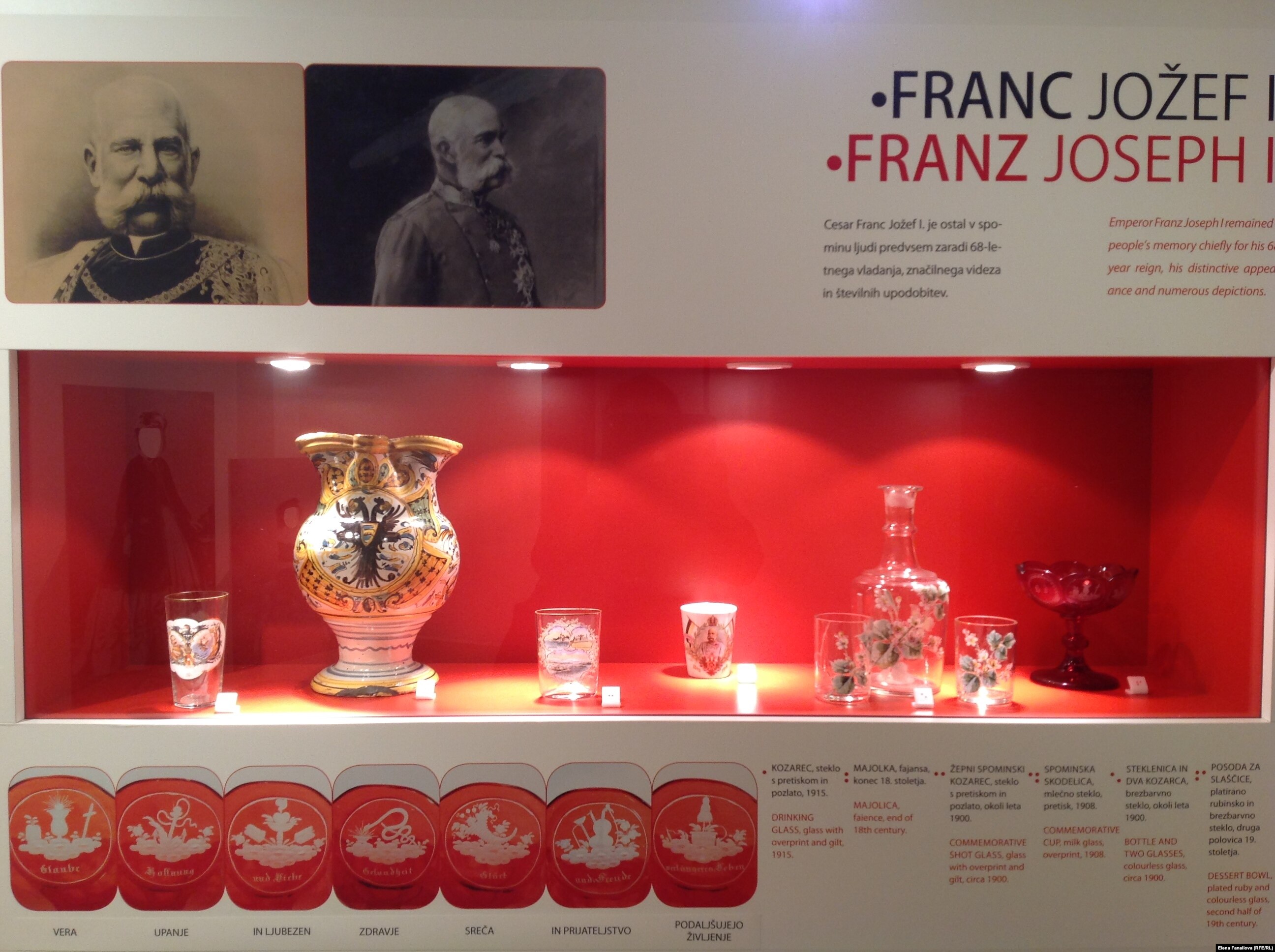
- Unfortunately, it never happened that I would like to happen before I drank this, as I call her, "thunder." Slovenian alcohol manufacturer - Talis. The manufacturer of alcohol and non-alcoholic products Talis went down in the history of culture through one beautiful long-standing poem by Andrei Brvara , where there was a refrain, which recalled the products of the Ora Talis from Maribor, a carbonated orange drink, a successful socialist replica of Western drinks popular in the 1970s. He was drank all over the Dalmatian coast, when Mirinda had not yet appeared on sale. This was the best ambassador of Slovenia in the former Yugoslavia. And Brvar wrote a quasiPatriotic ironic poem. This is another mythical point. I don’t know how it was in Slovenia, but with us, to the south, when we went to the doctor, they always brought him something as a gift. And this was not perceived as a bribe or corruption, as it is now, but simply believed: in order for the treatment to be successful, you need to give something to the doctor. And the doctor had no way to refuse, since it was impossible to imagine a more terrible insult. My father, which I write about in the book “Father”, all my active life on Thursdays, once a week, went to Palais , work as a doctor for a fee, and he would never refuse and would not refuse it - it was a practice, an honorary duty, and appendage to the home budget. Already when he was the chief physician of the Sarayevsky hospital, he still traveled once a week in Palais and did not refuse to do it to the very retirement. It is also interesting that the inhabitants of Pale participated in Saraev’s siege, and it turns out that his more or less patients shot in the city of guns and mortars, and this is one of the terrible life of my father. These people with Palais, who were fragments of the mountain world, where there was a lack of attending doctors, had a whole list of strange and picturesque gifts to doctors. One of the most scandalous was when he was given half of the just stabbed pig or a whole freshly baked pig. Moreover, they specially came to the Sarajevsky hospital - they came to the doctor with a gift. The pig was wrapped in oiled paper, on which a special ink pencil (they are not released now either), like a felt -tip pen, it was written: "Dr. Ergovich" or "for Dr. Ergovich." Dead pig with dedication. Like all other doctors of that time, the father had to put this pig somewhere-cook, divide with colleagues or something else, continuous flour. Therefore, those who gave alcohol were considered the best patients. There was another interesting thing. My father, like all venerable socialist doctors, could not give money - this should not have happened at all, the attempt itself was considered a difficult insult. Gold or money. Apparently, some doctors took money or gold, but not my father. And then such things happened a couple of times. One patient gave my father an excellent wallet, which my father reply for me, and which I used for many years. Of course, the patient was not so vulgar as to put the money in a wallet, this could not happen. However, the patient was cunning: in a small pocket, which was behind the buckle of the wallet, Dutac was stored. Father did not notice this. You probably saw these French-Joseph gold coins with your grandparents with the grandfather with the emperor’s profile on the reverse. You know this tradition - it is both in Slovenia and south: when the baby was born, such a golden tuk was laid under the pillow. I was 14 or 15 years old, and I tried to explain to my father that this was not a bribe with money, but a tribute to tradition, but he was terribly worried. Then once again the same story happened with him, but he independently found his Dukat.
- Sarajevo in the book "Father" is a real city, the city of nostalgia? What remains of it from that Sarayev, where you grew up?
- This is one of the questions that there is no answer. I feel like ... You know, in the 1950s-1970s, Israel was full of people born in Lviv, Kyiv, Lodz, Warsaw, Riga, and it seemed that cosmic distances separated them from those cities. They were separated from their native cities. Life tragedy. My hometown becomes the same. Today's Sarajevo with my birth certificate has nothing to do. But I am writing about another Sarayev, about the city in which I was born and raised. And I am the only owner of this city who has nothing to do with today's city. It seems that the city I write about never existed in history, and I seemed to have invented this life and this city. Previously, children from Lego Cirpiches built toy cities, but I built my city from memories. In my Sarayev, the one who had been to Sarayev will recognize the city, but for other people of my city does not exist in nature. But not only in Sarajevo such a story. Literary Dublin is also a non -existent city. The same story with Zagreb: I perceived it according to the books of Miroslav Krleta and always believed that this city really exists. But the reality was different. It seems that Krley came up with the city, and not only in works of art, but also in essays. Получается, что, пока о городе не напишут, он не существует в литературе. Существуют несуществующие города, а существующие города не существуют. Любляне повезло: об этом городе писали большие и очень разные писатели, отличавшиеся друг друга, например, Витомил Зупан и Эдвард Коцбек . Хотя Коцбек писал партизанские истории с психологической подоплекой. Когда я приезжаю в Любляну, я приезжаю в гости к двум людям – Коцбеку, с которым я никогда не встречался, и к Зупану, которого я однажды встретил на улице, но не решился к нему обратиться. Может, оно и к лучшему.
– Вы пишете о семье, о прошлом, а что вы думаете о будущем?
– Есть две разновидности людей будущего. Одна – опасные авантюристы, второй – классические перевертыши. Только они говорят о будущем. О будущем нельзя ничего говорить, его не существует. Никто никакого будущего не видел. И Жюль Верн не описывал будущее. Он мечтал и обманывал людей, говоря им, что это – будущее. С литературной точки зрения это вполне легитимно, но никаким будущим он не занимался. Точно так же не существует и настоящего, поскольку в тот момент, когда вы думаете о настоящем, оно превращается в прошлое. Все, что мы есть, все, о чем мы можем размышлять, – это прошлое. Наше происхождение состоит из прошлого. В этом состоит наш моральный императив – хорошо относиться к кому-то имеет смысл в силу того, что вы указываете ему на прошлое, в котором он совершал хорошие поступки, на основе которых вы хорошо к нему относитесь. Но в отношении будущего – это всего лишь красивая иллюзия. Меня страшно нервируют мудрецы, которые возражают против возвращения в прошлое и занятий прошлым на том основании, что это уже израсходованные литературные темы. Вот эти разговоры политиков: "Мы должны наконец обратиться к будущему". Я повернут к будущему спиной, меня будущее ничуть не интересует, а политики, которые повернуты к будущему, – безобразные популисты, которые обманывают. Еще какой-то аргумент был у меня против будущего, но сейчас не могу вспомнить.