
Translated material
Absorption of Europe?
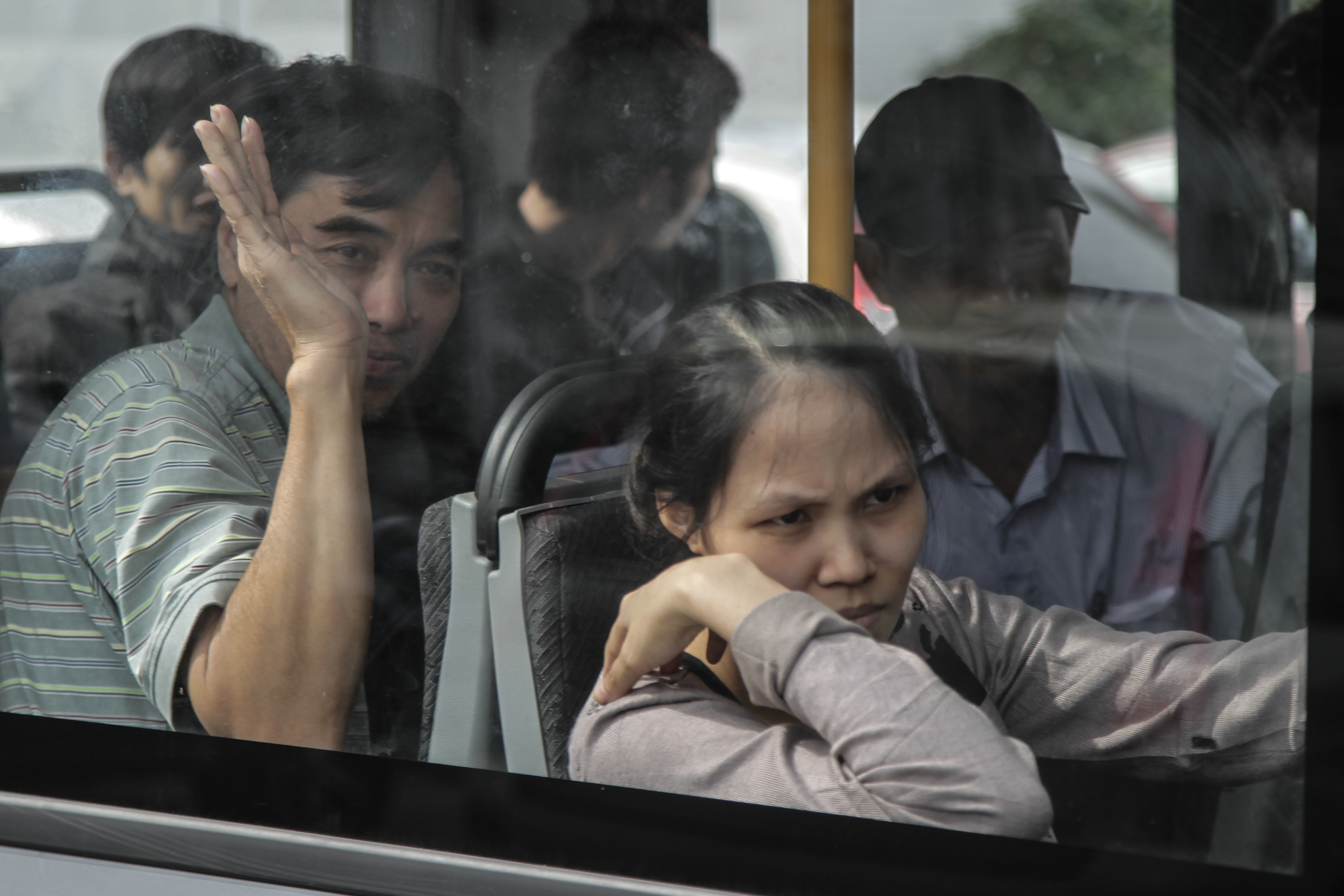
How to help refugees? Discuss Evgenia Lyozova, Olga Potemkin, Julia Petrovskaya, Yuri Veksler
Europe threatens a new great resettlement of peoples?
Every day, thousands of migrants overcome - sometimes at the cost of life - the fragile boundaries of the European Union. Why is this happening and what can be a solution that arranges all parties? This is discussed by human rights activist Yevgeny Lyozova , political scientist Olga Potemkin , journalists Julia Petrovskaya , Yuri Veksler .
Presenter- Vladimir Kara-Murza Sr ..
Vladimir Kara-Murza Sr.: news feeds are full of reports on how tens of thousands of migrants overcome every day-sometimes the cost of their own life-the fragile boundaries of the European Union.
Does Europe threaten a new great relocation of peoples and why is this happening? We will talk about this today with the human rights activist Evgenia Lozova, an employee of the Civil Assistance Committee.
Evgenia Borisovna, what feelings this picture causes you: thousands of migrants who hang on the decks of the steamboats going to Europe?
Evgenia Lyozova: Of course, this is a monstrous picture. The information that we receive about the invasion of migrants from all sides that is now being in Europe, we see in all the media, and, of course, this is horror. If we consider Europe as the unity of countries, as a European union, apparently, he will have to seriously think about how to do so that the whole load does not lie on those several countries that refugees are easiest to achieve. Apparently, there should be some kind of distribution within the European Union.
In addition, apparently, it makes sense to seriously share conventional refugees, that is, really refugees, because they are persecuted, and economic refugees who run from very difficult existence conditions. There is a very big difference here, and an individual approach is required. I understand that it is very easy to say-an individual approach, when there are thousands and thousands of them, but not to drown people, they still need to be saved somehow.
Vladimir Kara-Murza Sr.: Let's give the floor to Yuri Veksler, our own sobsor in Germany.
Yuri, Germany has the greatest quota for reception of refugees. Is she able to keep her promise this year to accept exactly as much as she is allotted?
Yuri Veksler: Quotes continue to be discussed. Of course, Germany will always accept more refugees than other countries of the European Union. I am in Germany in this sense, especially today, after the press conference, Angels Merkel. At this press conference, which lasted a long time, the most attention was paid to the problems of taking a wave of migrants.
The fact is that all this requires so many changes in the European Union, including legislative. Because the quota system, and legal justifications for the reception of refugees in the European Union were arranged so to protect Germany-and to some extent France-from the penetration of an excessive number of refugees. Because it was understood that where these people entered the first time, they must be interviewed, and there should be decided whether they are made as refugees. And if the decision is negative, then they must be sent to their countries. But Italy is not able to accept and process as many people as it reaches the shores of Italy. And today we see things such as, for example, in Hungary. Still, the authorities allowed refugees in a huge amount to sit on trains going in the direction of Munich, Berlin, Vienna. That is, there are still distribution problems, and most importantly - reception.
The fact is that Germany cannot simply put up tents. Well, for a while it is possible, but she must solve all the problems: where people will live, in which schools, kindergartens will go their children, how they will eat. And in general, which of them has a chance to stay for a while. Germany expects that she will have to receive 800 thousand people this year. Of these, about half, roughly speaking, are not Syrian refugees, these are not refugees from the zone of military operations, but these are European refugees from the Balkan countries. I think someone is initiating these things. And we see terrible cases. People are drowning not on ships. For example, a refrigerator was found on the border with Hungary, in which there were more than 70 dead refugees. Today I read the statement of our head of the police that 1800 people who are engaged in the transportation of people have already been arrested. I can’t imagine what kind of figure it is. So, there are people who make business out of this.
Nevertheless, Germany has the experience of taking refugees in a massive order - and the Germans after the war, and the Turks at a certain time, and the Russian Germans 3 million ... The authorities just need to make this decision. And if it is accepted, and funding will be allocated, and this is quite according to Germany, then everything will be done. The only thing that scares, especially in the eastern lands, is and will be resisted by people of ultra -right beliefs.
Vladimir Kara-Murza Sr.: Evgenia Borisovna, and what is the main difference between refugee problems that arrive in Russia, and those who try to get a job, for example, in Germany?
Evgenia Lyozova: The situation with refugees that occurs in Russia, a much lower level. If we talk, for example, about a huge stream of refugees from Ukraine, then these are completely different people. These are people of Russian culture, which would easily integrate on the spot, many have relatives here. And the only thing that they need from Russia is legalization, the opportunity to live and work calmly so that no one is touched. According to various sources, we have from a million to 2 million refugees from Ukraine. At the same time, 250 thousand received temporary asylum. About 250 people received refugee status. Moreover, the vast majority are former employees of the Berkut, people who have proven themselves in a special way. And where the rest went about 1.5 million is generally incomprehensible.
The main problem that our refugees face, whether they are from Ukraine, from Syria, from nowhere, is a monstrous problem of access to the procedure. The migration services since the influx of refugees from Syria ... Apparently, the rare moment had happened when there was some kind of unspoken, apparently, order-nevertheless to give a temporary asylum. Because before that it was not given at all. And this, along with the desire of the Syrians, to speed up the situation and alleviate the path to the shelter, provoked monstrous corruption. At the moment, at best, every second person was faced with the fact that he could not achieve admission to the procedure without money, cannot go in an interview and so on.
Vladimir Kara-Murza Sr.: Let's give a word to Olga Potemkina, political scientist, employee of the Institute of Europe of the Russian Academy of Sciences.
Olga Yuryevna, today the President of Croatia was calling to coordinate all the actions on the problem of refugees in Europe. And why in Croatia the most desperate situation has developed today?
Olga Potemkina: I do not think that in Croatia the situation is the most desperate. The most desperate situation is so far in Hungary, where the main stream of the guide applicants rushed. I would not call everyone refugees. Refugees are those who receive status or can really claim this status. Here the Syrians are definitely refugees.
From the Balkan countries of refugees, it simply cannot be by definition, these are economic migrants. And there was a special summit on the regulation of migration flows from the Balkan countries, at which the heads of state and governments decided to specifically emphasize, specially called the Balkan countries safe - to cut off all the possibilities of providing asylum to citizens of these countries. So Croatia is also excited in this regard.
The difficult situation, of course, is in Germany. Germany first flinked and recognized the need to change the so -called Dublin refuge system, a change in the Dublin regulations, according to which the country, which the guideline contender is responsible for consideration of his petition. Germany initially opposed this. I would not say that only those countries that cover the common border of the European Union suffer from this system. The same Germany and Sweden receive a commensurate number of petitions for asylum from those who arrive there by tourists, and then asks for asylum. They are in the same serious condition as countries on the border. Therefore, Germany opposed all changes, but now Angel Merkel announced that Germany will accept those who are really a refugee, that is, the Syrians who are fleeing the war. But Germany will reject the provision of asylum to the so -called economic migrants.
Therefore, there are no easy answers to complex questions. Of course, the quota system is discussed. But what is a quota system? These are 40 thousand people. Well, they will be distributed to all EU countries if, finally, the consent is reached. But there are a huge number of other applicants. Therefore, in November there will be an important event - a summit with the participation of the leaders of the African states, because now all attention should be focused on the African continent. While the war, the consequences of Chaos in Libya and North Africa will continue, while disgrace in Central Africa will be happening, all the guidance applicants will follow to Europe, and no quota system will help here. In general, this situation is for many years.
Vladimir Kara-Murza Sr.: Evgenia Borisovna, do people run from the Balkans only for economic reasons?
Evgenia Lyozova: In fact, from any country, people can flee for any reason, for example, due to personal persecution. And I would beware of generalizations. It is necessary to deal with each person, because he may have reasons for fleeing from the seemingly favorable, landscaped country, where there is no war.
Vladimir Kara-Murza Sr.: Let's listen to our correspondent in the Balkans Julia Petrovskaya. It gives a general description of the situation in the region.
Julia Petrovskaya: If we talk about a crisis with refugees who arrive in the territory of Western Europe through the Balkan Peninsula, then several aspects need to be allocated for the Balkans.
The first is that the most popular in recent months has become a direction for refugees who come to Western Europe through the territory of Macedonia and Serbia. First of all, they fall into Macedonia from Greece. Thus, they fall into the Balkans from the country - a member of the European Union.
The second aspect is that the Balkans have a large number of displaced persons and refugees who have remained there since the conflict of the 90s.
And the third point - the Balkan countries themselves, that is, the countries of the former Yugoslavia, are the donors of refugees for Western Europe. Moreover, these countries are candidates for joining the EU, but due to poor economic indicators, due to a low standard of living, many of their citizens are trying to move illegally to the territory of Western Europe.
Speaking specifically about the direction that refugees from the zones where the fighting has been preferred recently, that is, about Macedonia and Serbia, are small countries that do not have sufficient means in order to independently withstand the influx of refugees that is observed now. Thus, there is no reason to expect that Macedonia and Serbia will be able to seriously help the European Union - to stop the wave of refugees or at least help in the decision of this crisis. These are small countries that, one might say, themselves are quite poor, they are among the poorest countries in Europe. And they do not have the means in order to place refugees in a large quantity or provide them with additional help, create some conditions for them. Thus, the Macedonia and Serbia themselves will need very serious assistance to the European Union - both financial and any other organizational assistance that will allow them to solve this problem of refugee influx from war zones.
Vladimir Kara-Murza Sr.: Yuri, do the German authorities have any preferences? Maybe they are more hunting for citizens from the Balkans who are more educated, civilized than, for example, refugees from Asian or African conflicts?
Yuri Veksler: German state policy is not inclined to make any choice. But people who will arrive from the Balkan countries will be very carefully interrogated, find out the reasons. It is predicted that almost none of them can be recognized as a refugee, and they will be sent back.
As for refugees from the zones of military operations, primarily Syrian, we already have right populists who say: "After all, there may be Christians there. Let's take Christians, but not take Muslims." I can’t say that these are marginal voices, this is the right populism. By the way, I am afraid that it will be heard in September-November-and the further, the more. Nevertheless, I do not think that the German society will allow itself to be knocked from the perspective, and these people, organizations, PEGIDA party will win support in their rejection of refugees as such. After the war, the Germans have a few words that they are scared in principle. One of these words is "selection", from which everyone shudders. Therefore, in Germany, selection is impossible. But Germany will certainly be dealing with each candidate for the provision of political asylum.
Today I read the performance of the authorized government on the integration of refugees Aidan Ozoguz. She is a Turkish woman. There are many examples of successful integration in Germany 3 million people who once came from Turkey. So, she brought such a figure: in the world at the moment, 50 million people cannot live in their homeland, of which 17 million are already outside their countries and are refugees. Of course, it would be nice to realize these facts. I think that Europe is facing a large test for its own strength, and it needs to be solved by all means to solve this problem. And today we see that Austria, for example, intends to restore borders. Many discuss whether the Schengen treaty is not in question.
And besides, we have another serious problem. Germany is a federal state. The distribution of refugees within Germany is no less problem than their distribution in the European Union. Because the lands are controlled by various political parties, let's say, different coalitions, and the east than it is harder to make refugees from Berlin. But there will be no selection in Germany.
Vladimir Kara-Murza Sr.: Evgenia Borisovna, is there such a tendency in Russia that, for example, Christians are more willing to work than Muslims?
Evgenia Lyozova: To work, maybe there is. But in general, if we are talking about recognition of a refugee, then in Russia they do not like anyone. It is difficult to say that, for example, they love Christians. They also do not like. About the first three months they loved Ukrainians. At first there was enthusiasm, and now they have cooled down to them.
Vladimir Kara-Murza Sr.: Olga Yuryevna, and what problems are the most relevant and require immediate resolution to relieve tension in this situation?
Olga Potemkina: There are several measures of a short -term and long -term nature that the European Union is now trying to decide. After the summer ended, all European institutions were restored, migration issues in the foreground on the agenda in various forums. For example, on September 14, ministers of the internal affairs and justice will gather that will solve these problems. But first of all, these are quotas, how will the applicants for asylum will resettle. The commission is going to make a resettlement not disposable, but permanent, and new legislation will also be adopted on this occasion. Foreign and defense ministers will meet, led by Federica Mogherini, and we will talk about the resumption or termination of the naval operation, which involved the destruction of smugglers. So far, the first stage of exploration has passed. For the second and third stages, the consent of the UN Security Council has not been obtained. And ministers will decide what to do next. But, apparently, the operation will not continue. Next, the issue of amendments to the Dublin system will be discussed.
And since the question of Schengen is raised on the agenda, the boundaries are unlikely to be restored. Not a single country - in accordance with the existing Schengen legislation - cannot unilaterally restore border control. According to the latest edition of the Schengen regulations, countries can restore border control from two months to six months in the event of a threat of national security. But when the Schengen regulations were reformed, one amendment was made: an influx of migrants cannot be considered a threat to national security. It is possible to restore border control if it is recognized that there is a threat of terrorism. And this may well be, because it is known that the smuggling of people from North Africa is controlled by the Islamic State. So everything is very difficult, and this issue will be discussed.
And finally, the European Union does not refuse that it needs new migrants - but only highly professional ones. И в связи с этим будет обсуждаться усовершенствование легальных каналов приема мигрантов. Сейчас совсем не до того, но в следующем году стоит на повестке дня реформа существующего законодательства – так называемой "голубой карты" – для привлечения высококвалифицированных специалистов. Все эти вопросы сейчас интенсивно решаются. Миграционная проблема вышла на первый план, затмив собой все проблемы еврозоны.
Но пока существуют внешние обстоятельства – сирийская война, ситуация в Ливии, в других североафриканских странах, миграционная политика ничего не может сделать. Потому что все, что происходит, – это ликвидация последствий внешнеполитических действий Европейского союза. И сейчас все усилия будут направлены не только на решение миграционных проблем, но и на привлечение инструментов политики развития, внешней политики и сотрудничества с третьими странами.
Владимир Кара-Мурза-старший: Давайте послушаем мнение Юлии Петровской, которая напоминает о специфической ситуации в Сербии.
Юлия Петровская: Для того чтобы было понятно, в каком уязвимом положении оказалась на сегодняшний день Сербия, я приведу такой пример. Македония не располагает возможностями как-то сдержать беженцев, она предоставляет им трехдневные транзитные визы. Многие беженцы за это время успевают прибыть в Сербию. Далее из Сербии они хотели бы перебраться в Венгрию, но в Венгрии установлена многокилометровая заградительная колючая проволока. Плюс строится дополнительное укрепление для того, чтобы люди не могли проникать в страну. И Сербия рискует в ближайшее время оказаться страной, где осядет очень большое количество беженцев из зон боевых действий. При этом Сербия сама сталкивается с проблемой внутренних перемещенных лиц, на ее территории находится около 200 тысяч перемещенных лиц из Косово. И на ее территории находится по-прежнему несколько десятков тысяч беженцев из зон конфликта бывшей Югославии 90-х годов.
Сербский бюджет, который и так является очень дефицитным, страна не в состоянии оказать беженцам какую-то серьезную помощь, поддержку и справляться с этой новой проблемой. Для Сербии здесь дополнительный экономический и политический риск из-за большого присутствия старых и новых беженцев. Для Сербии это новая проблема – прибытие беженцев небалканского происхождения. Сербия не входит в число самых терпимых стран. И появление большого количества людей из других регионов мира для нее несет очень много рисков.
Европейский союз в данной момент предлагает помощь Сербии и Македонии в размере 1 миллиона евро. Конечно, это недостаточные средства. Здесь должен быть общий подход со стороны Европейского союза к решению проблемы беженцев, в том числе и на Балканах.
Владимир Кара-Мурза-старший: Юрий, по телевизору часто показывают, как строят заграждения из спирали Бруно. Насколько это цивилизованная практика? Европа была образцом пространства без границ, а теперь она даже хуже, чем Палестина.
Юрий Векслер: Я не знаю случаев построения каких-то заграждений в Германии, но вполне допускаю, что и это может быть. По крайней мере, у нас будет проблема охраны тех мест, где будут жить беженцы. У нас уже есть случаи нападения на них, чудовищного – слава Богу, без жертв – поджога того здания, которое было выделено для поселения беженцев. Поджигателем оказался пожарный! То есть правый экстремизм, "настроенный" на предполагаемую, планируемую волну приема беженцев, – безусловно, явление немаленькое. И с ним надо будет так или иначе справляться. Это одна из опасностей, в которой, я думаю, в Германии все отдают себе отчет.
Одна серьезнейшая вещь на будущее, – а я представляю, что Германия примет много беженцев, – это все-таки проблема их реальной интеграции. Потому что даже турецкая община, а это более 3 миллионов человек, – это люди, как правило, хорошо владеющие немецким языком, многие из них оканчивают немецкие вузы, учатся и работают в Германии. Очень малый процент безработицы. Это люди, которые сохраняют свою культуру, и это замечательно. Они читают газеты на турецком языке. В общем, какой-то баланс, видимо, в этой общине есть.
Но вот есть и другая община, против которой до сих пор никто не поднимал голоса, кроме одного нашего популиста – Тило Сарацина, – это арабская община, выходцы из арабских стран. Пока их было мало, например, в Берлине их не так много. Но известно, что с ней положение неблагополучно. Эти люди не хотят говорить по-немецки, они в Берлине занимаются наркобизнесом. И даже был у нас случай много лет назад: женщина-судья в Берлине, которая занималась ими непосредственно, написала книгу о мигрантах из арабских стран – и покончила с собой от отчаяния. Поэтому мне кажется, что грядут большущие проблемы, и если не будет выделено достаточно денег на педагогов по языку, на педагогов по интеграции, если не будут организованы курсы, – мы можем получить в Германии серьезный очаг для полиции, следственных органов и так далее. Преступность у выходцев из арабских стран в Германии высока. Пока их количественно было не так много, это не было так важно, видимо, для правительства, можно было проблему игнорировать, что, собственно, и делалось. И это серьезное испытание для Германии. Но я, любя Германию, склонен думать, что она справится с задачами, если они будут зримо поставлены... Раньше даже Меркель немножко закрывала глаза на эти проблемы. Теперь, я думаю, что политическому менеджменту по силам решить эти задачи. Но это потребует времени, усилий, денег, людей, энтузиастов и так далее.
Владимир Кара-Мурза-старший: А как меняется социальный и национальный состав беженцев, какова тут тенденция?
Евгения Лёзова: Достаточно долгое время основной категорией беженцев были выходцы из Афганистана. Причем это были люди, которые в свое время, может быть, обучались в России, при коммунистическом режиме воевали на стороне, близкой к Советскому Союзу. Их много и до сих пор. Ситуация в Афганистане разная, но всегда нехорошая. Поэтому беженцев из Афганистана много.
Естественно, второе место у Сирии. Ну, может быть, первое и второе место делят Сирия и Украина. Афганистан остается на третьем месте. Очень тяжелая ситуация в Судане, оттуда тоже много людей – из-за войны между Северным Суданом и Южным.
Владимир Кара-Мурза-старший: Ольга Юрьевна, насколько они эффективны эти заборы, которые уродуют европейский ландшафт? Это цивилизованная мера? По-моему, европейцы никак не ожидали увидеть на своей облагороженной земле приметы военного времени.
Ольга Потемкина: Мера, конечно, нецивилизованная, но я бы не сказала, что она совсем неэффективна. Ведь первой страной, которая выстроила забор, была Греция – где-то в 2007-2008 годах. Греция была слабым звеном, и на греко-турецкой границе как раз проходил один из главных путей нелегальной миграции. Тогда ее удалось сдержать. Конечно, забор каким-то образом сдерживает потоки. Но если есть налаженный бизнес по контрабанде людей, то никакие стены не остановят. Мы видим, что делается в Кале. Там вроде тоннель, трудно проникнуть в Великобританию, – но все равно умудряются. Так что стены сдерживают, конечно, но нельзя назвать эти меры эффективными. А средств борьбы с криминальными сетями контрабанды людей не так уж и много. И они пока, к сожалению, не работают. Будут, по-видимому, в дальнейшем обсуждаться возможности и средства противодействия всем этим мероприятиям.
Что касается интеграции вновь прибывших беженцев. Очень часто говорят, что правительства европейских стран ничего не делают, что нет никаких программ по интеграции. But this is not at all like that. Все делают: и средства выделяют, и программы, и курсы, и язык учат. Но все дело в численности. Никаких денег не хватит Европе, чтобы принять всех тех, кто туда стремится. Сколько бы средств ни выделяли, какие бы программы ни осуществляли, все равно ничего не получится, если не остановить этот поток. Вот в этом самая главная проблема, на мой взгляд.
Владимир Кара-Мурза-старший: По-моему, начали строить стену между Украиной и Россией с украинской стороны.
Евгения Лёзова: Ну, наверное, их можно понять. Я думаю, они не от беженцев строят стену. Я думаю, у этой стены другие задачи.
Владимир Кара-Мурза-старший: А российско-украинская ситуация усугубила обстановку в Европе с точки зрения бесконтрольного усиления миграционных потоков?
Юрий Векслер: Я думаю, что связь между событиями на Украине и процессами, которые происходят в Европе, в частности в Германии, и процессами, связанными с беженцами, безусловно, существует. Но такой же "гибридный" вариант воздействия некоторые наблюдают в Германии – как и эту "гибридную войну".
В Германии обсуждается антииммиграционное движение PEGIDA, а оно прежде всего антиисламское, – это большие демонстрации, это много людей в Восточной Германии, в Лейпциге. Эти люди выходят с антиисламскими лозунгами, они требуют изменения политики приема беженцев, в частности из исламских стран. И недавно стали проникать в прессу сообщения, что эта организация финансируется из России. Если это правда, то это, конечно, ужасно, потому что тогда это дестабилизация внутри Германии. Эти мирные демонстрации полиция атаковать не решается. Но предполагается, что это движение осенью будет шириться. И если оно финансируется из России, как некоторые утверждают, то мы видим примерно ту же политику дестабилизации, которая проводится Россией в Украине, и она таким образом достигает Германии. Я, далекий от конспирологических теорий человек, в этой связи могу сказать, что когда-то разведка ГДР под руководством Маркуса Вольфа забросила в ФРГ тысячи агентов. К моменту падения Берлинской стены этих агентов было 9 тысяч. За годы объединенной Германии было выявлено 3 тысячи агентов. А 6 тысяч агентов – не выявлены. И я иногда думаю, что кому-то они могут быть подчинены. Но хотелось бы думать, что этого нет.
Меня гораздо больше волнует другое – Германия была и остается местом, где террористы исламских взглядов, исламисты строят свои планы, обучают своих людей. Контролировать это очень трудно. Попытка в Германии ввести законодательное требование, чтобы имамы в мечетях вели проповеди на немецком языке, к сожалению, пока ни к чему не привела. А это было бы не так уж плохо. Наш президент даже сказал, что мусульманство, ислам принадлежат Германии, это тоже часть Германии. Но страхи в Германии есть, и на них играют. С помощью России или нет – не знаю, но эти страхи будут озвучены гораздо громче, как только беженцы начнут в массовом порядке прибывать в Германию.
Владимир Кара-Мурза-старший: Юлия Петровская считает, что Евросоюз и балканские страны должны пойти навстречу друг другу.
Юлия Петровская: Я хочу подчеркнуть, что балканские страны, особенно те, которые не является членами ЕС, никоим образом не могут повлиять на выработку общей стратегии Европейского союза по беженцам. Эти страны никак не могут повлиять на урегулирование конфликтов в Сирии, в Ираке, в Афганистане, откуда беженцы прибывают в Европу. Эти страны находятся в очень сложном положении, и им должна быть оказана адекватная помощь.
Есть еще один аспект, который тревожит Европу, – это беженцы, которые идут непосредственно с территории стран бывшей Югославии. Они, пытаясь улучшить свои жизненные условия, переезжают в Западную Европу, и используют для этого далеко не всегда законные способы. Огромный наплыв беженцев, прежде всего, в Германии наблюдался в последний год с территории Косово. Здесь речь идет, скорее всего, о какой-то активизации криминальных групп, которые более активно перевозили людей в Западную Европу, не только в Германию, но и в другие страны. Естественно, у этих так называемых беженцев речь не идет о каких-то конфликтах или притеснении на религиозной почве, или политическом притеснении. Здесь речь идет о попытках улучшить свое экономическое положение, о неинформированности людей, которые стали жертвой криминальных групп, которые обещали им улучшение условий жизни в Западной Европе. У этих людей нет никаких шансов остаться законным образом жить в Европе, их прошения о предоставлении статуса беженца не будут удовлетворены. Этих людей просят покинуть Западную Европу или их выдворяют.
Конечно, Германия и другие страны очень обеспокоены наплывом граждан балканских стран, и призывают правительства этих стран также активно работать, чтобы предотвратить эти потоки. В последние месяцы наблюдалось снижение количества мигрантов с Балкан. Но в любом случае проблема остается. Ежедневно прибывают десятки автобусов. И власти Германии и других стран, естественно, должны заниматься этим вопросом, чтобы рассматривать их прошения и заниматься их возвращением на родину. Так что проблема очень многогранна, если говорить именно о том, как Балканы на сегодняшний день участвуют в кризисе с беженцами. То есть, прежде всего, это поток беженцев из зон боевых действий, которые предпочитают в последние месяцы двигаться через Балканы, а именно через Грецию, Македонию, Сербию в Венгрию, в Австрию и в Западную Европу. Другая проблема – это то, что сами граждане бывшей Югославии пытаются незаконным путем проникать в Западную Европу, и тут тоже речь идет о десятках тысяч человек. Каким образом эта проблема будет решаться – сказать сложно, потому что это глобальная проблема. И Евросоюз, который в последние месяцы столкнулся с серьезным кризисом, очевидно, в ближайшие месяцы будет посвящать очень много времени выработке каких-то эффективных решений.
Владимир Кара-Мурза-старший: А связан ли напрямую уровень преступности среди приезжих и количеством мигрантов, которые попадают в ту или иную страну?
Евгения Лёзова: Было несколько заявлений высокопоставленных сотрудников полиции России, где говорилось, что прямая связь есть, приводились даже цифры. А потом цифры оказывались не совсем верными.
Владимир Кара-Мурза-старший: Центр "СОВА" их опроверг.
Евгения Лёзова: Ну, чем больше людей, тем больше вероятность того, что среди них больше преступников. Кроме того, если государство не дает возможности мигрантам интегрироваться в общество, оно их толкает к преступному образу жизни или поведения. Буквально недавно мы столкнулись с тем, что одна сирийская семья, доведенная до отчаяния отсутствием возможности добиться убежища в России, начала всерьез рассматривать мысль о попытке нелегального перемещения, например, в Германию. Потому что стало известно, что Германия принимает, а в России они бьются-бьются – и ничего. Они не имеют права работать без легального статуса. What to do? Steal? Ну, наверное, часть из них к этому и приходит.
Владимир Кара-Мурза-старший: Конечно, есть разные примеры. Но, в принципе, прямой связи нет. Если им предоставить хорошие условия, они могут адаптироваться быстрее.
Евгения Лёзова: Разумеется, если к человеку относиться по-человечески.
Владимир Кара-Мурза-старший: Юрий, в Германии эта связь как-то напрямую коррелируется? Или, как в России, это притянуто отчасти правоохранителями?
Юрий Векслер: Я уже упоминал про проблемы с выходцами из арабских стран. Я думаю, что это все равно и всегда проблема недоработки, ведь многие смотрят на эти проблемы сквозь пальцы. Я знаю, что реальная проблема есть, есть реальная преступность среди приехавших из других стран. Но мы видим пример интеграции турецкой общины. В моем подъезде живут три турецкие семьи, их дети оканчивают вузы, работают врачами, фармацевтами. То есть очень многое зависит, конечно же, от общины, и от того, что для нее делают.
В Германии обсуждается вещь, ранее немыслимая. Любой въехавший должен получать для своего жизненного обеспечения столько же, сколько любой другой. Здесь нет никакой селекции. И Германия впервые обсуждает, и уже попробовала объявить, что выходцы из стран Югославии будут получать на продовольственную корзину не 400 евро, грубо говоря, а 200 евро. 400 евро заметно превышает тот жизненный уровень, который есть в этих странах. 200 евро – это сопоставимо. И уже объявление об этом, как мы видим, сразу снизило количество тех, кто сюда приезжает. Говорят так: "Давайте их пугнем". Тем не менее, 15-16 миллионов человек, въехавших в Германию после войны и "переваренных" Германией, – русских немцев, турок и изгнанных немцев, – все-таки вселяет оптимизм. Самая богатая страна Европы свою миссию по приему людей, страдающих от войны, так или иначе выполнит.
Владимир Кара-Мурза-старший: Ну, есть такая нехитрая мораль, что преступники не имеют национальности. Но она, скорее, для утешения. Конечно, есть и национальные, и этнические преступные сообщества. Но главное, что надо решать проблемы обычных людей, часто имеющих детей и пожилых родителей, которые пытаются найти себе место под солнцем.
Евгения Борисовна, мы всегда солидарны с вашим комитетом и не считаем его "иностранным агентом". Мы считаем его самым полезным членом российского гражданского общества.