
Translated material
Fantasies about progress
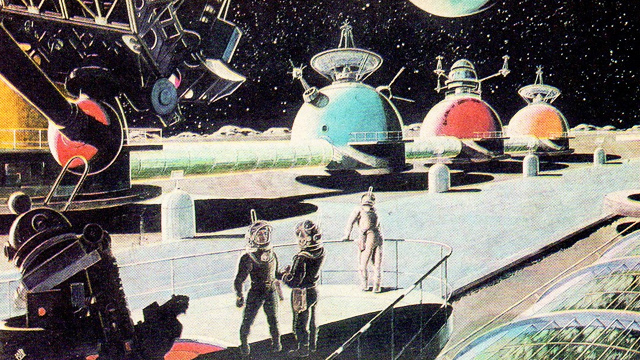
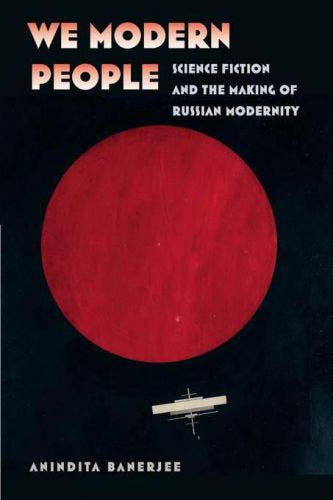
The author of the book by We Modern People ( "We are modern people") Professor of the University of Cornell Anindita Banarenji nominates an unexpected hypothesis: Russia owes its modernization to such a literary genre as science fiction. Russian scientists, carried away by the works written in this genre, began to try to realize what painted the author’s imagination.
- Science fiction, it seems to me, played a much more important role in Russia than in the West. The West in reality experienced a scientific and technical revolution: the theory of relativity was developed, electrification was underway, and aviation was born. Life has changed before our eyes. Russia - lagging behind. The scientific and technical revolution in the West coincided in Russia with revolutionary events in 1905, in February and October 1917. At the same time in the Russian press, in newspapers and magazines, scientific and technical achievements were actively popularized: the development of telephone and telegraphic communication, cinema and radio. Russian science fiction, relying on these innovations, tried to predict how all this could change everyday life. Thanks to periodicals, science fiction works read different segments of the population in different parts of the country. Neither the proletarians nor disdained this genre
- In Soviet times, science fiction played the same role or its role changed with the advent of authors such as Alexander Belyaev, Ivan Efremov and, in later years, Arkady and Boris Strugatsky?
- I am very glad that you mentioned the Strugatsky, because those who are interested in Russian and Soviet science fiction are aware of the incredible popularity of the Strugatsky for several decades, and before them there were Efremov with his "Andromeda nebula." But in my book I analyze the Russian pre-revolutionary science fiction and limited myself to the period from 1880 to 1922, that is, before the NEP. I was wondering how this genre developed before the beginning of the 1920s. Later, under Stalin, science fiction was subjected to severe censorship and even persecution. I study the time preceding the period when science fiction became, so to speak, opposition regarding Bolshevik socialism.
- You argue that science fiction has been formed as a separate literary genre in Russia. Is Jules Verne, Mark Twain, Conan Doyle and many others were only predecessors?
- Yes. My statement is based on the fact that now the first scientific and fantastic work is considered to be the book of Mary Shelley "Frankenstein, or modern Prometheus" published in 1818. But this work was called science fiction much later, like some Jules Verne’s novels. The name of the literary genre "Science Fiction" first appeared in an editorial note, published in 1894 in the Russian journal "Nature and People". In the West, this definition appeared later. The term "science fiction" has become widespread in the United States only in 1926, and in Russia - 30 years earlier.
- The modernization of Russia was the most influence of the books of Russian science fiction writers or translations of Western authors?
- Then they published both translations of German, French and English science fiction, in particular Herbert Wells, and domestic, Russian authors. At the same time, the news of science and technology, articles on this topic in periodicals were widely published. All this together influenced the modernization process. Then there was no difference between scientific and technical journalism and the literary genre of science fiction, between real news and fantasies about the future. In the perception of the Russian reader, science fiction somehow found confirmation in the news. But now in Russia this literary genre is no longer of such influence as at the beginning of the last century. Perhaps this is due to the loss of previous illusions. Nevertheless, science fiction has a rather large audience. People did not stop reading, although today's books written in this genre are different from the previous ones.
- What is the essence of your research?
-The essence of the book, in short, in an attempt to figure out why science fiction has become so spread in a country that lagged behind the West in scientific and technical modernization, but was ahead of the West in thought about it. By the way, the desire for modernization and in today's Russia is great - just like in a number of other countries that once lagged behind the West. I mean China, India, where I come from, Brazil and Turkey ...