
Translated material
Lira and Power
Transfer from the cycle "Writers and Music"
Vladimir Abarinov: Count Aleksey Konstantinovich Tolstoy child sat on Goethe’s lap and was a friend of the childhood of the heir to the throne Alexander Nikolaevich. He could make a brilliant court career, but never strove for this. When the heir became Emperor Alexander II, he granted Tolstoy to the outbuilding wing, then to the raghermeasters, but did not carry any service at the court, lived for the most part abroad or in his family estate and only wanted to write. He was a writer of a wide profile: a thin lyrical poet, novelist, playwright, satirist, parodist. As Turgenev put it about him, he possessed "his own original and at the same time very diverse physiognomy." And Tolstoy himself said about his literary credo that he "holds the banner of art for art."
He had a thin, delicate nature, and it is not surprising that his lyrics are almost all on the music. Romances wrote to his poems by the best Russian composers, from Tchaikovsky to Rachmaninov, and often on the same poems. For example, five romances were written on the poem “The souls of heaven” quietly flew by the males: Tchaikovsky, Mussorgsky, Roman-Korsakov, Caesar Kui and Anton Arena. This is the gold fund of the Russian romance - it is enough to name "Affairs of a noisy ball" or "bless you, forests."
In 1871, Tolstoy translated the Scottish ballad "Edward", about which he writes that he was "shocked from head to toe" and compares it with the stage from Macbet. This is a dialogue between the mother and son, who, as it turns out, pushed him to kill her father. Music for this duet was composed by Anton Arena.
Many romances on Tolstoy’s poems were in the repertoire of Dmitry Hvorostovsky who had left us the untimely. Here is one of them - "cries, and splashes, and the wave splashes ...". Music of Rimsky-Korsakov. Record 2008. Concert from the cycle "Russian romances in the Russian Museum." Mikhail Arkadyev accompanies.
In 1861, Tolstoy wrote the dramatic poem Don Juan. It was printed in the "Russian messenger", but censorship did not allow the production in the theater. Tolstoy never waited for the performance. Don Juan was first set in 1905. The music for this play was written by Eduard the direction - permanent, for 47 years, until his death, the main conductor of the Mariinsky Theater and a rather prolific composer. I did not find the records of this music, but Tchaikovsky wrote to the poems of this drama to the well -known serenade Don Juan, who became an independent work, she is very fond of performing it in concerts.
It seems to me that the dramatic trilogy from Russian history - “The Death of John the Terrible”, “King Fedor Ioannovich” and “Tsar Boris” became the peak of the work of Alexei Konstantinovich Tolstoy. In these works - as they would say today, in this project - Tolstoy retreated from his principle “art for art” and proved himself, I would say as a kind of political thinker. “The death of John the Terrible” was allowed to produce and was a loud success, but “Fedor Ioannovich” did not miss censorship, because the Russian monarch is shown in this drama a weak, limp ruler. King Boris received censorship permission, but Tolstoy died before the play was staged.
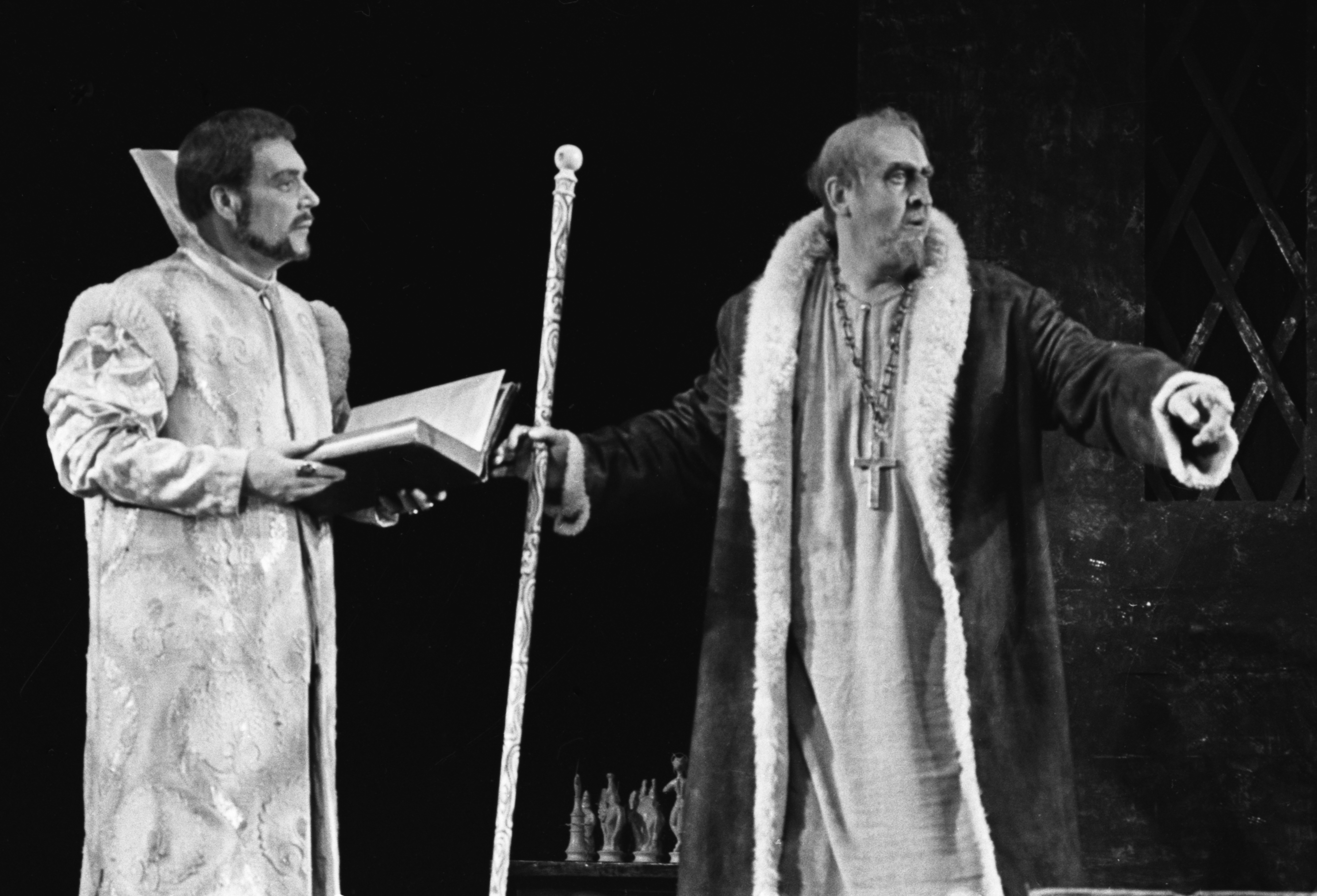
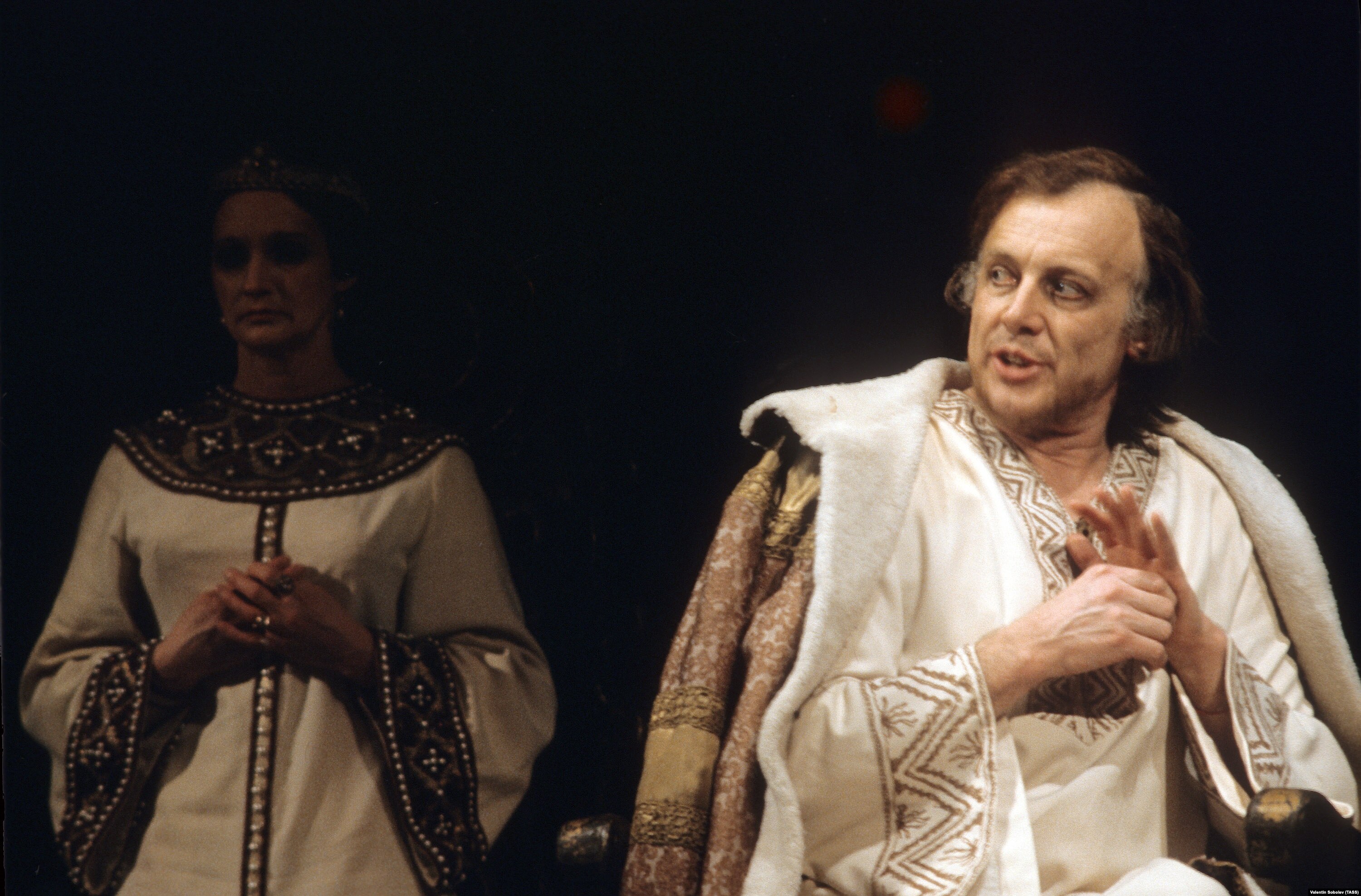
And the play “Tsar Fedor Ioannovich” opened in 1898 the Moscow Art Theater - not “Seagulls”, as many people think, namely, “Fedor Ioannovich”. Moscow theater -trees, of course, remember the sensational performance of 1973 at the Maly Theater. Director Boris Ravensky invited Tsar Fedor Innocent Smoktunovsky to the role of Tsar. The performance was born in agony. There was a moment when the leading role called the director and actors to admit that the performance did not work out and to refuse it. But the performance nevertheless came out, there was a pilgrimage to him. It was a huge event. The sensation was not only the game of Smoktunovsky, which never fit into the Small ensemble, but also the music written by George Sviridov.
We will hear a short passage from the performance, the scene in which Queen Irina asks Boyarin Ivan Petrovich Shuisky to make peace with Boris Godunov. The musical background of this dialogue is Sviridov’s choir “Holy Love”, and we will hear how subtly and naturally the music is woven into the fabric of the play. Irina - Galina Kiryushina, Shuisky - Evgeny Samoilov. State Republican Academic Russian Chopella named after Yurlov, conductor Yuri Ukhov.
The film is a performance of the Maly Theater "Tsar Fedor Ioannovich" (1981). Director Boris Ravensky. Tsarina Irina - Galina Kiryushina, boyar Ivan Petrovich Shuisky - Evgeny Samoilov, King Fedor - Yuri Solomin.
Further in the program:
"Samara courtyards."
Representatives of the three generations of Samaras say.
Radio anthology of modern Russian poetry.
Poems Katya Kapovich (USA).
* * *
Here is someone else's music, it happened
to the navel torn my soul
behind the wall.
Jazz black singer,
dilapidated, like an old wings,
I remembered the year thirty -second.
How are they there with Duke or Ella
before the crowd of black or white
Cut the blues.
Eh, what roses were thrown in them,
Today there are no such. Dust on the piano
In the windows, the rain is spitting a naked bush.
Nothing, dear, we will drink brandy.
Your life will remain in legend
And mine is easy
Squeezes on a three -legged ottoman
And it will go its empty road.
That's all here. Let My People GO.
"Red dry."
Radio Easterces "Hot Wines of the Campaign".
(passage)
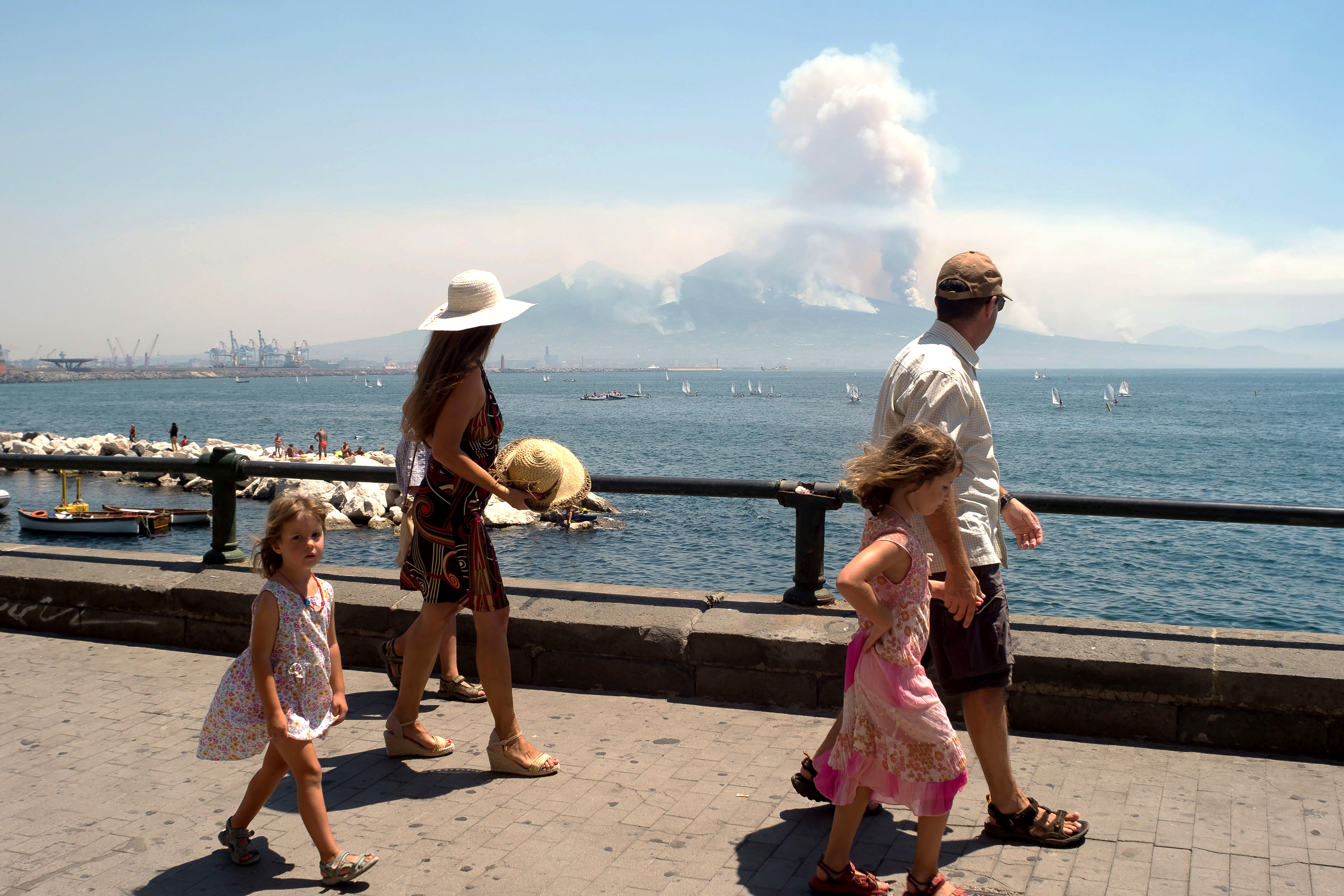
“We asked the waiter to bring a bottle of Greco Di Tufo. It was cold and poured with heat. Enzo spoke incessantly. He talked about the Pompeysk dog, which during the disaster with paws rammed the volcanic ash and would surely be saved if not for the chain on the neck. Her agony was captured in stone and is now stored in the museum. He spoke of an invaluable nonsense found in the pockets of the buried altogether; about voids in the form of a human body in a frozen lava - the bodies decomposed, the skeletons and gutted, but the voids saved human agony; And, of course, about amphoras, cellars, grape crush with forever petrified pressers. ”