
Translated material
"There are no prophets in the fatherland ..."
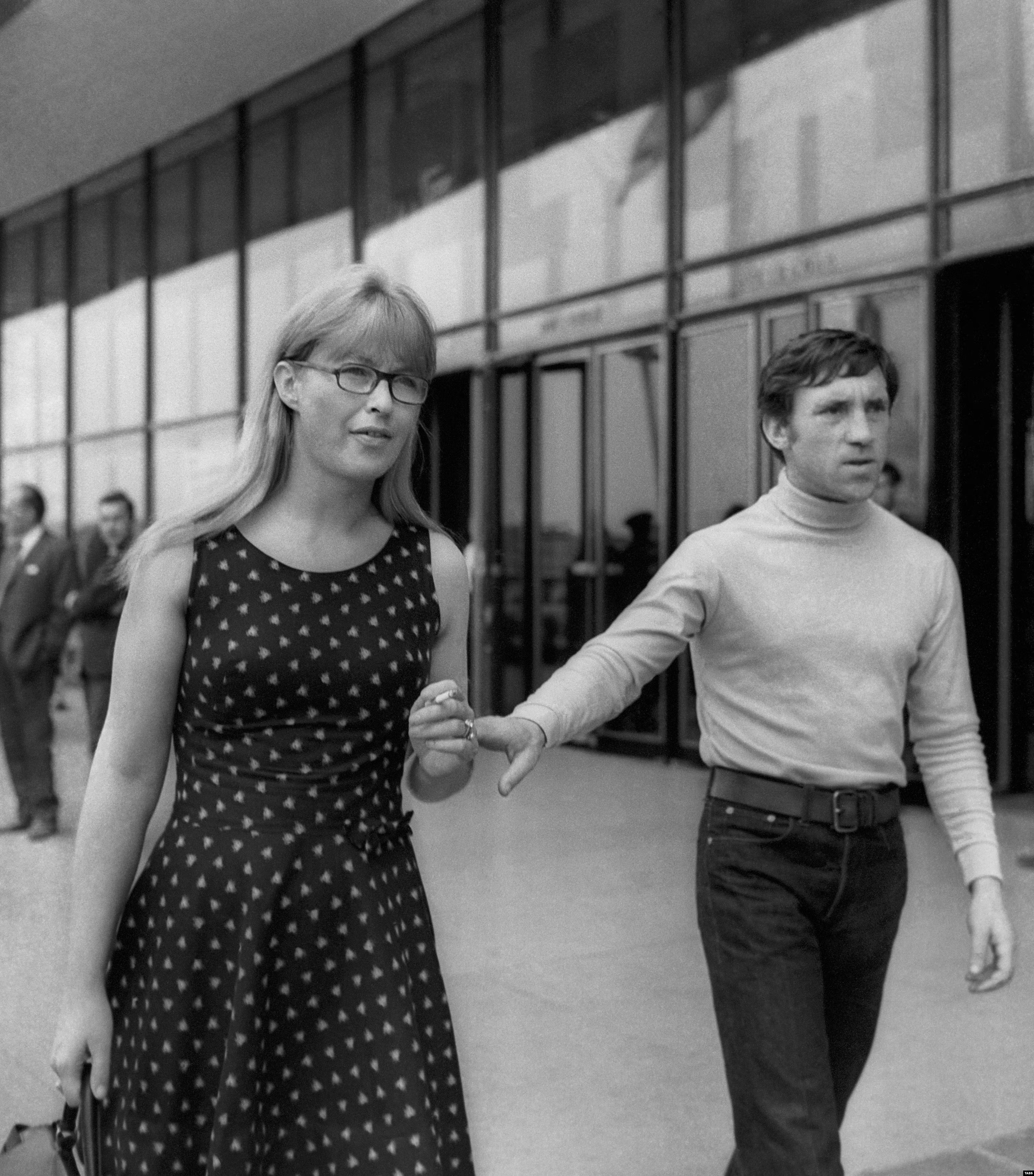
About Vysotsky - Alexander Osovtsov, Yuri Veksler, Felix Antipov
35 years ago, Moscow said goodbye to Vladimir Vysotsky. Contemporaries recall him: politician Alexander Osovtsov , journalist Yuri Veksler , actor Felix Antipov .
Presenter-Vladimir Kara-Murza Sr..
Vladimir Kara-Murza Sr.: Approaches July 25-the traditional day of memory of Vladimir Vysotsky. This year turns 35, as he is not with us-he passed away in the days of the Moscow Olympiad-80. And to each of us in our own way this man is memorable-and to us, his contemporaries, who knew and saw him live, and our children, who know about him already from us. Therefore, every year we always return the memory to this great son of our people.
And today we want to recall Vladimir Vysotsky with our comrades - politician Alexander Osovtsov, an opposition, who is known to you as a guest of our political programs. And today he will act as a person who knew closely and saw Vladimir Semenovich closely. And also a partner of Vladimir Vysotsky on the stage - Felix Antipov, an actor of the Taganka Theater. And in touch, we have a Radio Liberty correspondent in Germany, Yuri Veksler, who is a kind of chronicler of the Taganka Theater.
Alexander, do you recall the summer of the 80th year? Have you already appreciated the scale of the personality of your Moscow acquaintance in St. Petersburg Vladimir Vysotsky?
Alexander Osovtsov: Yes, of course, I recall. There was an Olympics. I was then in Moscow. But I would like to make a reservation: I can’t claim that I knew Vladimir Semenovich closely. I was familiar with him and saw, probably five times.
Vladimir Kara-Murza Sr.: How did you meet?
Alexander Osovtsov: I had a close friend of my youth, as he himself is joking now, "the son of the famous mother and the father of the famous son." But for me this is a very significant person in my youth - his name is Andrei Urgant. In the second half of August of the 75th, I went to the Dunet board for a week near Leningrad. A wonderful place, very pleasant, beautiful, with a unique microclimate - there is rarely rain there, it is on this patch of the coast of the Gulf of Finland. And one morning I go to the beach. Quite early - there were practically no people. And I look - Zurik is running, Andrei's dog. I immediately realized that Andrei was not far somewhere. I saw him. They laughed, talked. And there another person came up, as it turned out, Vysotsky, whom I did not recognize in person then. Because in the 75th year, I was not fond of to put it mildly with a cinema. I saw one film, in my opinion, with his participation. Well, somehow the rally did not identify. If he began to sing instead of saying hello, I would have found out. And he did not find out in the face, on TV he was not shown by the 75th year simply once. I was not a fan of the Moscow Theater on Taganka and then I was not passionate. I was then exactly 18 years old. Not that I went to Moscow to the theater. When I visited Moscow, I sometimes went to the theater, but not to Taganka. In such circumstances, we met.
And once again I will say: we were not close comrades. And the age difference was noticeable, and in lifestyle - significant. Well, maybe on average they met once a year when he came to Leningrad. In my opinion, once in Moscow. The only thing, in my opinion, what he identified me, is that he was a man with a very accurate eye, and said a couple of times: "I love him for not only asking him to sing, but also shows that he doesn’t want to.
Vladimir Kara-Murza Sr.: Felix Nikolaevich, when did you first see Vladimir Semenovich?
Felix Antipov: In 68, probably in March, Yuri Petrovich Lyubimov invited several people to his theater, and me in particular. I sat on the rehearsal of the play "Living". And in the role of Motyakov, Volodya came out. He did not know the text or something like that. In general, something happened there. And he says: "Give Felix the text - let him read." And when the rehearsal ended, Volodya says: "I will show you everything there. You do not be afraid." I don’t know if he wanted to play it or did not want to. But it ended that I played this role.
Somehow little talk about the devotion of Vladimir Theater. After all, it would seem, well, what the theater is there - it will not add special glory, earnings - even more so. He could act, give concerts, just write, but you never know what! .. So not. And what roles he played! .. I witnessed how he and the sick played, overcoming serious physical pain. And this is all 12 years, until his death. And he never hack. I could have played half -heartedly, but it always laid out, and with such energy, with such a cost - just fantasy! This, apparently, demanded so many all sorts of forces and suffering from him! .. I can’t call now in our theater such a person who would play with such a return.
Vladimir Kara-Murza Sr.: We want to devote tonight just mostly theatrical hypostasis Vladimir Semenovich. Therefore, we will give the floor to Yuri Veksler, who is a great fan of the Taganka Theater.
Yuri, when did you see Vladimir on stage?
Yuri Veksler: I saw him early enough, I think it was the 64th or 65th year, in the play "Antimira". It was a small role, but I remembered it forever. He with Smekhov read a couple of Voznesensky’s poem “at Tyzha’s hour, near the teaspoon I was lying sad at night, told my friends about the lake and the greatness of being ...” Vysotsky lay at the feet of Smekhov. And then it was: “But suddenly the black raven mixed up with the conversations, flashing with blue eyes, he said:“ And on ... ”he stumbled, and we understood what rhyme was there. But he said:“ And in a fig?! ”And this“ and a fig ”was repeated, very mixed up and remembered forever.
And I would like to say two words in continuation of what Felix Antipov said. Once I was simply amazed at the devotion of the Vysotsky Theater, seeing how he played in the play "Fasten the belts." He came to this performance for one episode. He made up for him under an dusty soldier of the Great Patriotic War, put on himself, in my opinion, some machine gun with a guitar. He appeared inside the performance on the back of the stage and began to sing his song “From the border, we turned the earth back ...” And singing this song, slowly moving forward, went down to the hall, passed the hall through and through. And with the last sound disappeared at the end of the hall. This was his only way out in this performance - a soldier of war. And for the sake of this performance, for the sake of this exit, the artist of the theater on Taganka Vysotsky came and made this micro -episode in a large performance with complete return. I believe that this is an example of serving your work, in particular the theater.
Vladimir Kara-Murza Sr.: They already talked about physical pain. I know that this pain brought him the role of clap, a classic scene on the platform.
Alexander, I know, you were in the performances where Vladimir Semenovich played.
Alexander Osovtsov: Yes, I was, of course. I loved the drama theater then.
Vladimir Kara-Murza Sr.: What roles did you remember?
Alexander Osovtsov: In this sense, I am extremely banal - I remembered Hamlet, of course, with a non -standard decision. I was accustomed to the traditions of the BDT most of all, the tetra named after the Moscow City Council, where there were no such non -classical things. In fact, this image is a more image of Vysotsky than the image of Hamlet that many have in consciousness. Because, as it becomes clear now, the tall was a surprisingly lonely person. After all, he was by age "sixties", which did not become famous with his peers. Fame came to him much later. Even in the circles of "sixties" later. What is called "popular glory" is generally a year before death. Yes, there was a film "The meeting place cannot be changed." And before that, the general public knew him little, because in some hits of Soviet cinema he did not star, but he was not shown on TV. His songs, of course, were already known then, but comparable in a narrow circle. And the real glory, as an expressor of the ideas of some time, a certain generation, is completely posthumous to him.
Vladimir Kara-Murza Sr.: Of course, even we, who during his life understood his scale, learned a lot only after his departure.
Felix Nikolaevich, we spoke about Gamlet. You played a burial ground. I saw a chronicle where Georgy Aleksandrovich Tovstonogov sits in the hall. That is, he saw this performance. How many years did you go on stage with Vysotsky in this performance?
Felix Antipov: How I came in the 68th-all 12 years, to his death. I remember the last performance "Hamlet". At this performance - and it was summer, the heat - before the bow of Alla Sergeevna Demidova, jokingly says: "What, it is weak to play another performance at once?" But this turned out to be the last performance, we did not play anymore.
I must say that in the poetry of Vysotsky and in theatrical roles he always had his own intonation. And this is amazing! This, probably, is the most important thing for both the poet and the artist is to find his intonation. I still remember, and in my ears there is this phrase from "Crime and Punishment": "Tell me, the master has left for America." It was very cool!
But I disagree a bit about Vysotsky’s wide fame. When we arrived on tour in the Naberezhnye Chelny, we walked from the station to the hotel - all the windows were open, tape recorders stood in all windows, and Vysotsky songs rushed from everywhere. No, he was known very widely, it seems to me.
Alexander Osovtsov: Yes, in all the windows where tape recorders stood, yes. But in all the apartments they were then - this is what I had in mind. TVs were almost everywhere. And before the "meeting place ..." - where tape recorders are another audience. Moreover, Naberezhnye Chelny: a car giant, technical intelligentsia even in working positions. These, of course, knew.
Vladimir Kara-Murza Sr.: Yuri, when did you see Hamlet, what do you remember that performance?
Yuri Veksler: I saw Hamlet twice. Once I remember that I heard a lot about Borovsky’s curtain and somehow waited for him. But the curtain somewhat disappointed me, although it was very cool and strong. And I was July 18, 80 at the last performance, about which Felix Antipov talks about. I had a strange impression. I know from the description of Alla Demidova that Vysotsky felt badly, he needed help in pauses. But there was a feeling (especially since I watched the second time) that all the actors worked professionally - both laughs and Demidov and others, but they were very tired of the heat, and fatigue was a little visible. But for some reason, I did not feel any fatigue on Vladimir Semenovich, his passion was as huge as always.
“Hamlet”, it seems to me, like “Galileo’s life”, and even, perhaps, two roles - Svidrigailov in “Crime and Punishment” and Lopakhin in the “Cherry Garden” of Efros showed the potential of a tragic actor. Of course, he was not in this sense to the end, but these are certainly the roles that were made by Lyubimov and Efros "to outgrowth" when Vysotsky was already mature. In general, he grew as an actor. And to the last roles it was a great master. He is in the late 60s, at the beginning of his activity, and before the end of his life, these are two different actors. It was already a master.
Vladimir Kara-Murza Sr.: Let's see how Vladimir Semenovich remembered the work on Hamlet. This is a unique entry of Montenegrin television, found by our colleagues from the Association "Paradise".
Vladimir Vysotsky: Our theater is led by our wonderful director - Yuri Petrovich Lyubimov. Well, I think that he is one of the best directors in the world, because all his performances are simply unique, and it is very difficult to tell about them. Each performance has its own unusual image. Well, for example, if this is the dramatic poem by Yesenin "Pugachev", then this is a wooden platform that goes down, such a wooden block, two axes. And on the stage on this platform, naked people who read wonderful Yesenin poems.
Well, I want to say a little about the production of Hamlet because I have been playing Hamlet for two years now. And we suffered for a very long time, for example, what a prologue to make in this performance. And finally, they came up with such a prologue: before the start of the performance, when the audience enters the auditorium, a man sits near the wall itself, Hamlet, in a black sweater, with his face - without makeup, sits with the guitar in about this position. And I play something on the guitar-some pieces of songs, some melodies. Then the viewer calms down, sits down in the hall. A scream of a rooster is heard, light is extinguished, I get up and, together with the guitar, I go to the most advanced and sing the audience with the wonderful poems of Pasternak, the music for which I wrote. Poems are called "Hamlet".
"The rumble was silent. I went to the stage.
Leaning against the door jamb,
I catch in a distant echo
What will happen in my century.
The dusk of the night is instructed to me
A thousand binoculars on the axis.
If possible, aVVA.
Pass this bowl past.
But the schedule of action is thought out,
And the inevitable end of the path.
I am alone, everything is drowning in Pharisee.
Life to live is not to cross the field. "
Vladimir Kara-Murza Sr.: Vladimir picked up a guitar. And what impression did he make when he sang? How did people react? What atmosphere hung in the air?
Alexander Osovtsov: I was not at any of his concerts. Only once I saw ... By the way, about Tovstonogov. In April 80, when I last saw him in Leningrad, a short, 30-40-minute film was shot about him, a film in Leningrad in a small BDT Hall-precisely with songs. But just like that, I am absolutely sure, Tovstonovov would not let anyone sing in the BDT hall if, at least, he did not value this person or performer. Therefore, I saw him literally a couple of times and in a chamber setting. And those who were there, of course, were listened with fascinated. Because, I think, his energy could lift or crush a large hall as I wanted, but near it was so colossal that it even acted on me, relatively indifferent to a person’s songs. I had to see something, hear different performers, but it was still something else. Also because ... literally now sounded, he said that he sings not songs, but poems. He sang poems. And poetry is completely different than a song, in my opinion. And she acts on people completely differently. It has always been the influence of great poetry on people who love poetry.
Vladimir Kara-Murza Sr.: Felix Nikolaevich, and when did Yuri Petrovich see this gift in Vladimir? And when did he use it in the interests of the theater?
Felix Antipov: I think he was the first to notice a major poet in him. After all, when Vladimir just came to show, he said: "I will sing you now." Well, he sang some songs. And Lyubimov asked him: "Whose words are these?" He says, "mine." He stopped and said: "Yes?! Well, that's good, it's serious." Apparently, from the very first meeting, it somehow got into it. And in the last words of the play "Vladimir Vysotsky" he very correctly said about Vladimir: "We lost a large, large poet." So, probably, this originated in it from the very beginning and continued all their joint work and creativity.
I must say that he always distinguished him in songs, even rather in verses, as Alexander said correctly. It is not known how the found ... Until now, "literary" people cannot understand how it was done, but, apparently, it was so magical, mystically inspired, that it immediately attracted and fell into a person listening to this. It is even surprising that people like, for example, Brodsky ... "What amazing rhymes he has!" -This is still Brodsky. And as this is done, it is still unknown to anyone, and thank God, which is unknown.
Vladimir Kara-Murza Sr.: Yuri, you are a fan of the Taganka Theater. And what share of the success of the theater can be safely attributed by the talent and work of Vladimir Semenovich?
Yuri Veksler: We all know that it is big. But the most interesting thing is that it grew too. I remember my initial impressions, where the number one figure on the stage, of course, was Nikolai Gubenko, and not Vladimir Vysotsky at all. And Vysotsky grew, and the further, the more. It grew precisely because he had a true poetic gift. Lyubimov was a great master of reading poetry. And the Taganka, in my opinion, gradually began to walk a little on Vysotsky. I don’t know if the actors noticed. This is especially true for poetic performances. It seems to me that it was in these performances that Vysotsky’s influence was great. Because there was a real poet on the stage, and you can’t confuse it with anything. It seems to me that this is influence.
Although I know that many in the theater were different about Vysotsky’s successes, to his popularity. Many (well, it happens with the actors) believed that they were no worse, and Vysotsky’s words are largely total from the fact that he is both a poet and author-performer, and so on. Nevertheless, of course, Vysotsky in his own way in many ways formed the image of the Taganka, of course, not entirely. I think that, of course, Yuri Lyubimov and David Borovsky did more, but Vysotsky was, of course, the figure of the leader.
Vladimir Kara-Murza Sr.: Let's see an excerpt from the "Kaputnik" on the 10th anniversary of the theater, which was found thanks to our comrades from the studio "Paradise". Separately, they found a video, separately-the sound written in the radio room, these pieces glued-and a 30-minute film turned out. Here, Vladimir Semenovich is performed by the song "Alien Rule", in honor of which a prize of his name, which is presented on January 25, is now named, is now named.
Sings Vladimir Vysotsky
"He is to blame - and tears lute,
And groan -
Fell into someone else's track
Deep.
And it would be necessary to exit, push,
But there is no agility.
Perhaps someone will drive up-
And pull out ...
Напрасно жду подмоги я, –
Чужая, стерва, колея.
Расплеваться бы глиной и ржой
С колеей этой самой чужой.
Ну, тем, что я ее сам углубил,
Я у задних надежду убил.
Прошиб меня холодный пот
До косточки,
И я прошелся чуть вперед
По досточке.
Гляжу – размыли край ручьи
Весенние,
Там выезд есть из колеи –
Salvation!
Я грязью из-под шин плюю
В чужую эту колею.
Эй, вы, задние! Делай, как я.
Это значит – не надо за мной.
Колея эта – только моя!
Выбирайтесь своей колеей!
Выбирайтесь своей колеей!
Владимир Кара-Мурза-старший: Феликс Николаевич, а вы когда-нибудь присутствовали при том, как Владимир Семенович что-то записывает или сочиняет, когда он "поймал" какую-то рифму?
Феликс Антипов: На репетициях, а мы же очень много вместе работали, он постоянно присаживался к столу, чего-то записывал мелким почерком. Видимо, этот процесс все время в нем происходил, и то, что ему надо, он тут же фиксировал. У меня такое ощущение, что он был занят этим все время. Даже иногда в каких-то разговорах вдруг он как-то вроде выпадал. И на протяжении всего нашего знакомства такие вещи происходили.
Действительно, он рос от спектакля к спектаклю или от одного периода жизни к другому. Он в конце Гамлета играл очень здорово, гораздо лучше, чем вначале. Я уж не говорю о Свидригайлове.
Конечно, были какие-то вещи в труппе… ну, зависть, может быть. Но когда в спектакле играл Высоцкий, то, конечно, и зрители, и артисты попадали под его обаяние, под его ритмы, под его интонацию. Конечно, он все окрашивал своей очень выразительной индивидуальностью. А уже после него прошло довольно много лет, но поэтическая составляющая была очень серьезной в нашем театре. Юрий Петрович и сам писал, и он очень строго следил за стихом, чтобы он был точный, правильный. Может быть, он этим "заразился" от Высоцкого.
Владимир Кара-Мурза-старший: А почему большинство спектаклей и хронику июля 80-го года, когда Москва прощалась с Владимиром Семеновичем, запечатлели в основном иностранные теле- и кинодокументалисты? Хотя была Олимпиада-80, Москва была наводнена советскими съемочными группами, но никто не удосужился прислать хотя бы одну телевизионную бригаду на Таганскую площадь.
Юрий Векслер: Я думаю, что какие-то бригады из одной организации там, несомненно, были, и съемки эти когда-нибудь всплывут. Но ведь Высокий до дня своей смерти был персоной-табу на телевидении вообще. Съемки, которые были сделаны на телевидении уже по итогам, по-моему, фильма "Место встречи изменить нельзя", были показаны после смерти. Высоцкий был запрещен на телевидении. И конечно, его смерть была поперек горла московскому и советскому начальству – именно потому, что шла Олимпиада, были иностранцы.
Есть рассказ Юрия Петровича Любимова, который я сам записывал, о том, как были скомканы похороны, их обещали провести у Кремлевской стены, там была огромная очередь. А автомобиль с гробом нырнул в тоннель. И люди стали кричать: "Фашисты!" Любимов вообще связывал историю организации похорон со своей дальнейшей судьбой. Хотя я знаю, что во многих отделениях КГБ была масса поклонников Высоцкого. Его песни были всенародно любимы, потому что он давал голос народу, который, в общем-то, был нем. Но, несмотря на это, официальные позиции были, конечно, очень жестки по отношению к нему. Но я уверен, что неофициальная съемка была. Я был в тот момент у "Таганки", потом поехал на Ваганьково. И было видно, насколько власти это все не по вкусу. Известность у него была огромная, но официальной известности не было. Чтобы неофициально популярного человека провожала вот такая публика и такой резонанс вызвала его смерть – это, скорее, раздражало.
Владимир Кара-Мурза-старший: Давайте послушаем рассказ Высоцкого про спектакль "Антимиры" и "Песню акына", которую Владимир Семенович написал на стихи Андрея Вознесенского.
Владимир Высоцкий: Мы в нашем театре, мне так кажется, снова возродили поэтическую, что ли, если так можно сказать, традицию. Она была утеряна после "Кривого зеркала", "Синей блузы", где присутствовала поэзия. И вот впервые у нас в театре это было возрождено. Семь лет тому назад поэт Андрей Вознесенский принес в театр несколько стихотворений, и мы сделали спектакль "Антимиры". Сначала хотели его играть один раз в Фонд мира, так и афиша гласила: "В Фонд мира, один раз!" Но так как этот спектакль имел большой резонанс – люди тянутся к поэзии, у нас очень любят поэзию, – мы получали массу писем о том, чтобы мы продолжали играть этот спектакль. И мы его играем. Теперь уже, конечно, без Вознесенского, потому что Вознесенский очень часто бывает в разъездах, но иногда, особенно на юбилейные спектакли, он приезжает и после нас читает новые свои стихи. Это такая у нас уже традиция.
Ну, а я хочу вам показать то, что я делаю в этом спектакле, потому что все-таки сегодня встреча со мной, хотя я так разговариваю много о театре, вот я хочу вам показать... Это не песня, это стихи Вознесенского, которые просто ритмизованы под гитару. Это называется "Песня акына".
"Не славы и не коровы,
не тяжкой короны земной –
пошли мне, Господь, второго, –
чтоб вытянул петь со мной!
Прошу не любви ворованной,
не милостей на денек –
пошли мне, господь, второго, –
чтоб не был так одинок.
Чтоб было с кем пасоваться,
аукаться через степь,
для сердца, не для оваций,
на два голоса спеть!
Чтоб кто-нибудь меня понял,
не часто, ну, хоть разок.
Из раненых губ моих поднял
A horn scratched with a bullet.
And let my partner singing
Forgetting that we are power together,
меня, побледнев от соперничества,
прирежет за общим столом.
Прости ему. Он до гроба
одиночеством окружен.
Пошли ему, Бог, второго –
такого, как я и он".
Владимир Кара-Мурза-старший: Александр, ведь в конце жизни Владимир Семенович вырос в общественную фигуру, особенно после его участия в альманахе "Метрополь", которое обернулось большими драмами для его участников. Оно же не было случайным?
Александр Осовцов: Нет, конечно. О случайности тут не может быть и речи. Он был человеком, разумеется, из того круга, который его и слушал. А ортодоксальных советских людей в этом круге просто не было. Если говорить по большому счету, то через 10-11 лет после его смерти те люди, которые при жизни слушали Высоцкого и после его ухода продолжали его слушать, – именно они и совершили то, что некоторые называют демократической революцией 91-го года. Я не хочу сказать, что Высоцкий был поэтом этой революции. Разумеется, в 80-м году никто ее в реалиях не предвидел. Но настроения этого круга людей в поэтическом творчестве никто не выразил даже сравнимо с ним – ни раньше, ни позже. Он, конечно же, поэт того поколения, которое не поучаствовало, что ли, в "оттепели" конца 50-х – начала 60-х, потом "мы тоже дети страшных лет России, безвременье вливало водку в нас..." Потом оно достигло пика своей жизненной активности и своих социальных свершений (извините за пышный стиль), в 89-м, 90-м и 91-м.
Владимир Кара-Мурза-старший: Феликс Николаевич, мы знаем что спектакль "Владимир Высоцкий" шел некоторое время в Театре на Таганке у Юрия Петровича и за стенкой у Николая Губенко. Юрий Петрович, к сожалению, в минувшем октябре ушел из жизни. Как он старался сохранить память о Владимире, как он поддерживал преклонение перед ним в своей труппе?
Феликс Антипов: Да особенно и не нужно было поддерживать. К счастью, постепенно все поняли значение этого поэта и актера, его значимость в истории театра и в истории русской культуры. 35 лет со дня смерти прошло, и я думаю, что имя Высоцкого все-таки стоит в ряду великих имен русской поэзии. То, что Юрий Петрович сделал этот спектакль, – это просто замечательно! Он до сих пор идет при аншлагах. Причем публика совершенно разная – и юная, и молодая, и старики, которые произносят про себя, шевеля губами, тексты Высоцкого, которые произносят артисты. И вот что удивительно – интерес только прирастает с каждым поколением. Ведь можно считать, что уже два поколения прошло, но интерес не ослабевает. Это уже явление нашей жизни, в которой мы живем. Причем это становится дорогим лично для каждого.
Мы играли с ним одну и ту же роль в спектакле "Павшие и живые". И у нас был один смокинг на двоих (театр-то бедный). После того как Высоцкий умер, я стал играть один. И вот идет следующий спектакль, я сую руку в карман – и там лежит его зажигалка. И это происходит перед выходом на сцену. Вот я тогда, наверное, понял, какая это утрата лично для меня. Вот эта вещица в руке, и надо выходить... Вот этот момент, видимо, люди испытывают, когда слушают Высоцкого, – что они потеряли или, наоборот, приобрели что-то самое дорогое для себя.
Владимир Кара-Мурза-старший: Юрий Петрович хотел сохранить память о Владимире и поставил спектакль. Его в довольно грубой форме запретили. А потом и самого Юрия Петровича лишили гражданства. Юрий, тем самым чиновничество, власти проявили свое подлинное отношение к Высоцкому, которое они, может быть, лицемерно скрывали?
Юрий Векслер: Я не берусь судить о том, что это было за реальное отношение. Просто это было слишком много для чиновничества – спектакль, посвященный актеру, да еще и пока непризнанному поэту. Думаю, что их больше пугало, что они что-то пропустят, а потом им это отольется. Высоцкого любили во всех слоях общества. И в ЦК КПСС, и в КГБ у него, я думаю, тоже были поклонники. Но официальная позиция Московского горкома партии... Каждый на своем месте боялся. Самое главное, что у них было всегда, – страх разрешить что-нибудь такое, за что потом сверху будет окрик. Мне кажется, проблема в этом. Там не было никакой крамолы, там была человеческая интонация христианской, в конце концов, памяти о человеке. Что тут было запрещать?..
Вот телевидение так и не пустило его никогда. Но была такая история. Было огромное желание Анатолия Эфроса, чтобы Высоцкий играл Печорина в телеспектакле "Страницы журнала Печорина", где в итоге сыграл Даль. Это я знаю от Майи Туровской. И для меня это было ново. Почему он хотел Высоцкого – мне понятно. Он хотел, чтобы Печорин был близок к Лермонтову, был поэтом. И хотел подлинности поэтического нутра человека. Но ему не дали. Конечно, Даль – замечательный. Но такая жалость, что не сыграл Высоцкий – как было бы здорово…
Владимир Кара-Мурза-старший: Александр, заголовок нашей передачи – "Пророков нет в отечестве своем..." Как вы считаете, почему Россия так небережлива к своим гениям? Недавно было 75 лет Иосифу Бродскому, которого тоже изгнали.
Александр Осовцов: Почему и как можно говорить об остальных странах – я не знаю. "Нет пророка в своем отечестве..." – это же не про Россию сказано. А про Россию я могу сказать, что я думаю. Потому что Россия всегда, за исключением кратчайших периодов, обычно исчисляемых месяцами, в своей многовековой истории – это государство тираническое, деспотическое. И один из секретарей ЦК 60-х годов выразил отношение государства к пророкам, в том числе, простейшей фразой: "В конечном итоге, любая мысль носит антигосударственный характер". А пророк всегда свободен по определению. Пророческий дар немыслим без свободы самовыражения. Поэтому пророк – всегда враг тирании. Даже если он прославляет тирана. А Высоцкий тиранов не прославлял.
Владимир Кара-Мурза-старший: Феликс Николаевич, мы очень любим Театр на Таганке. Какие завтра будут мероприятия в память о Владимире Семеновиче?
Феликс Антипов: Вот сейчас, по-моему, в 11 часов в саду "Эрмитаж" начнется чтение стихов и песен Высоцкого. Это какая-то новая форма таких выступлений.
Владимир Кара-Мурза-старший: А завтра в музее будет премьера фильма наших товарищей из студии "Ракурс".