
Translated material
Brand with beer and dismemberment
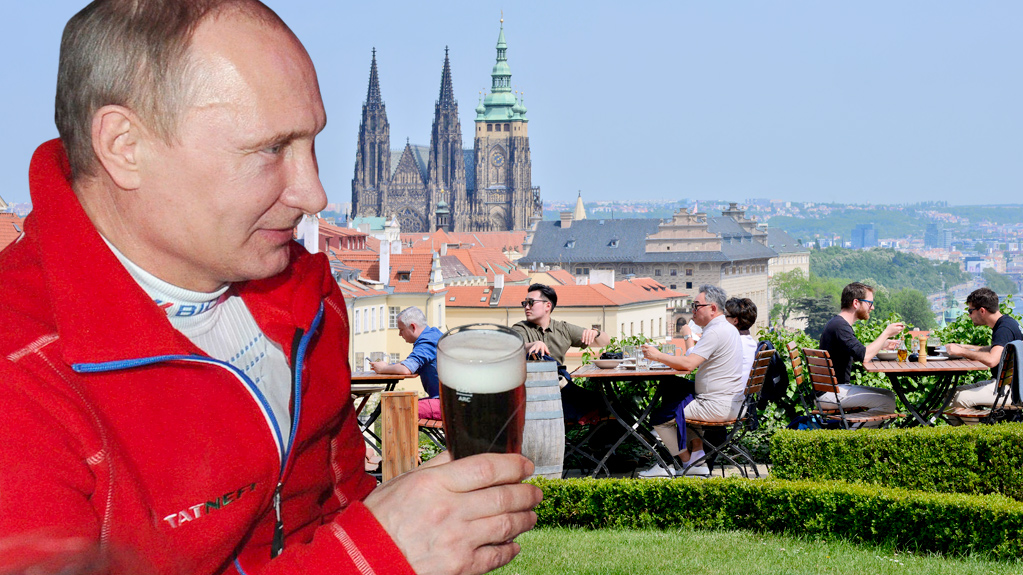
Elena Rykovtseva: Vladimir Putin took care of the state of nationalities in the Russian Federation, but most of all he is concerned with the fact that these nationalities want to suffer among themselves, and to tear Russia into small pieces, to dismember. He spoke about this from the beginning to the end of the council on interethnic relations, without stopping.

Width PX Height PX
The url has been copied to your clipboard
No Media Source Currently Available
0:00 0:00:57Elena Rykovtseva: Reveal and divide, then use. It was the beginning of his speech. And the same ending: "This political struggle will continue. The marginals will swing the country from the inside." Of course with the presentation of their foreign owners. And in the middle, he constantly returned to these enemies, but, of course, from the presentation of the speakers. Listen to the episode of his communication with Konstantin Kosachev, one of these speakers.
Elena Rykovtseva: Actually, this meeting was formally devoted to a completely different-integration of peoples from the seized territories: Ukrainians, Russians and so on, who since 2014 suffered from the fifth nationalists and Bandera, and now they need to be integrated into the friendly family of the peoples of the Russian Federation.
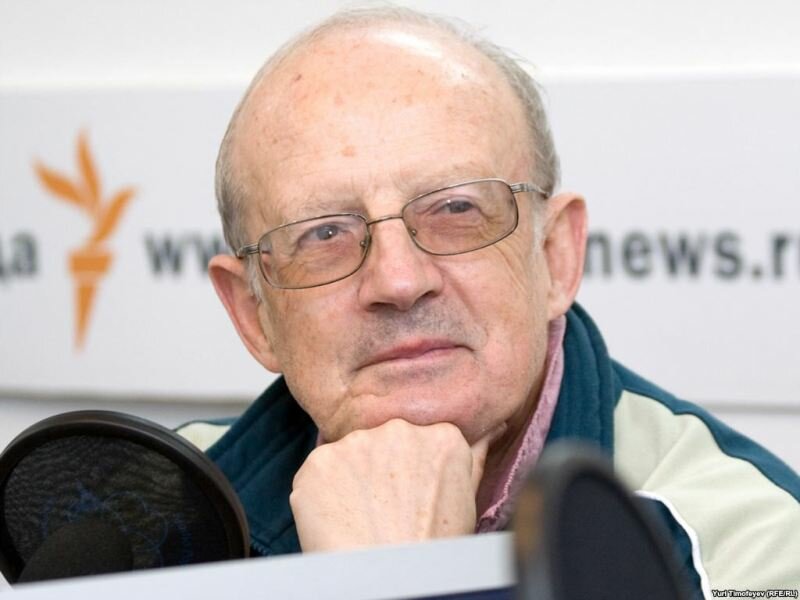
With us Andrei Piontkovsky . I would like to hear your thought about this obsessive idea: maybe they really want, maybe not from scratch he wanders out that they will come and divide?
Andrei Piontkovsky : He sincerely believes in this - in the intrigues and insidious plans of our Western enemies. How did Putin’s transition to such extreme anti -Westernity and anti -Americanism began? This happened during the Beslan tragedy. At that moment, the relations of Washington and Moscow were quite constructive, by the way, more than in the Yeltsin period. Putin was the first to express his condolences after the disaster 9.11. Contrary to the opinion of the majority of the Russian political class, he allowed the Americans to take advantage of the Russian territory and the territory of the Russian allies for the Afghan operation.
Putin sincerely believes in the intrigues and insidious plans of Western enemies
Then, in a similar speech, he made his famous remark that the attack in Beslan, as an attack by Islamists in the Caucasus, is actually a crime of more traditional, more powerful enemies of Russia. Since that time, his ascent to the "Munich speech" began, then - the plans of revenge in the Third World War for the defeat of the Soviet Union. After all, the war in Ukraine began as a kind of prelude to a large war with the West, with an ultimatum. We remember this Tolstomordo deputy minister, he has not gone anywhere with his appeal: collect manat and get out. This anti -Western phobia is characteristic not only for Putin, for his entire environment.
In addition, an endless return to the theme of female sex hormones: on this topic he slips on any reason. He and Chancellor Merkel jokes told about this topic at some meeting dedicated to the International Women's Day, gave a large lecture on the sexual life of some bugs. This is his favorite topic, taken out of the St. Petersburg gateway. Against the background of the crimes committed by Putin in Ukraine, against the background of the moral disaster that all Russian society is experiencing, today's exercises are a trifle.
Elena Rykovtseva : Could you, looking into his eyes as a hypnotist, say: no, the West does not want to dismember the Russian Federation? You can say with confidence: there is no such task of the Western community?
Andrei Piontkovsky : I would recall, for example, the most unsuccessful performance of US President George Bush Sr. in his career in August 1991 before the Supreme Council of the Ukrainian Soviet Socialist Republic, in which the majority were communists. He was boasted then, Ukrainian deputies almost threw eggs with eggs. Bush called in no case to declare independence. You can feel great in the updated Soviet Union, led by such a wonderful person as Gorbachev. I remember how Bush adviser was worn on national security: with whom will I talk about nuclear weapons? The United States was horrified by the prospect of the collapse of the USSR.
Returning to today's days, we see in what intense struggle inside the American administration every new decision was born to assist Ukraine. We remember how part of the administration opposed the transfer of "jeelins": in no case should you transmit "jvelins" - this can provoke Putin. And so until recently. Now the struggle for F-16 fighters is ongoing. In this struggle, opponents of the weapons of Ukraine are two arguments. The first is the threat of Putin's nuclear blackmail. The West somehow gradually coped with this threat. Firstly, they realized that it was an empty bluff and blackmail, Putin is not a martyr, he was not going to meet with virgins in paradise.
The West is afraid of the decay of Russia
Secondly, they have already hardly warned Putin, which would follow if he reached for nuclear weapons. But the second argument remained, he is repeated all the time in Washington: yes, of course, Ukraine is a victim of aggression, they must win, but do not allow humiliating and destructive for the Putin system of victory, because then Putin will leave, the whole top will leave, and the great Russian Troubles, the decay of Russia will begin. For some reason, they especially love to frighten themselves with a phrase: in the territory of 11 hourly zones, stuffed with nuclear weapons, and so on. The West is afraid of the decay of Russia.
Elena Rykovtseva : As then it was not possible to convince the Russian propaganda that the West of the Soviet Union did not want, and now nothing happens. Dosy, Andrei just said that Putin himself believes in it. What is this actually paranoid belief that the West will come and divide us?
Not the West kills Russia - this is Putin himself and his environment puts a cross on Russia with their actions
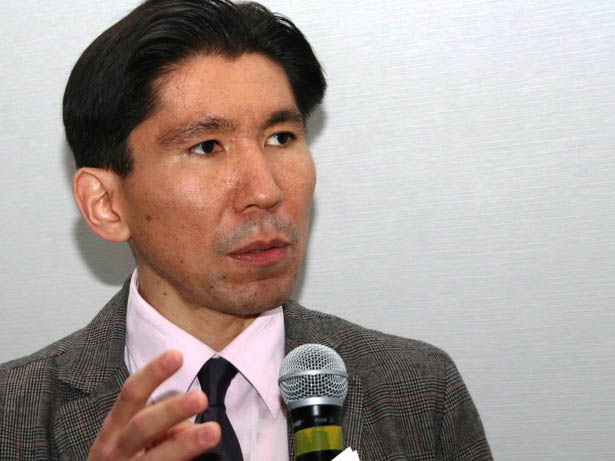
Dosy Satpaev : Based on the one who has done the most harm to Russia, Putin, in my opinion, takes first place here: both his actions and those decisions that put a serious cross in the future of Russia. If we take the medium -term and long -term perspective, then the key question comes down to the following: well, now everything is closed on Putin’s interaction with the West, in the conflict of Ukraine and Russia with the participation of Putin, the initiator of this conflict; What will happen to Russia after his departure, what forces will appear, what will this lead to? If we proceed from the fact that Putin launched this flywheel seriously and for a long time, whoever came after him, the trend of rollering Russia towards economic, political, military, cultural degradation, because the abolition of culture has begun is a serious blow to the intellectual layer of Russia. I think, most likely, not the West kills Russia - this is Putin himself and his environment puts a cross in Russia in all areas and relations with his actions. Putin’s propaganda statements and his entire gang regarding the fact that someone poses a threat to them ... In my opinion, they themselves pose a threat to Russia. The most problematic is that this is a threat to the future of Russia for many, long years, paramed to.
Elena Rykovtseva : There is another topic that he tried to hold in this meeting, it can be called briefly "we are beaten, we are stronger."
Elena Rykovtseva: After that, he brought the numbers in support of his position. He said: “The more sanctions were taken in relation to us, the more slander was, the higher the general consolidation parameter became. Over the past five years, the total consolidation parameter increased by a third and by the beginning of 2023 exceeded 94%. Objective statistics: the level of general-firm identity in Russian society in 2017 amounted to 63%, in 2022-94.2%.” Do you really see this dependence: the more sanctions, the more slander, the more attempts to dismember us, the stronger we are?
Andrei Piontkovsky : We are so strong that I can’t even quote on this air the dialogue of our prominent military figures, the head of our largest unit, who is now conducting a heroic struggle in Bakhmut (this is enthusiastically commenting on television), Mr. Prigozhin, Minister of Defense Mr. Shoigu and chief of General Staff General Staff. The mildest expressions are “traitors”, “thieves” (we know what was called there). Recently, Mr. Prigozhin has been increasing the level of his uncompromising criticism, through a comma is already addressed not only to the Minister of Defense and the head of the General Staff, but also to the Commander -in -Chief of Putin. And in relation to him, he uses terms, which, apparently, are known to our listeners: in a soft form it is a "finished eccentric." This, of course, is a very high level of consolidation!
Prigozhin calls to throw the front and go to Rublevka, where the main traitors who have robbed the country live
This is not an exchange of replicas of individuals. Firstly, these are the most prominent figures in the Russian armed forces, and secondly (you, too, probably look out of the corner of the eye of patriotic Zcaunks), Prigozhin is a hero of turbo patriots. 90% of the society consolidated around Putin according to Prigozhin that the Minister of Defense and the head of the General Staff are traitors, thieves, traitors, they need to disrupt the epaulets from them, direct it barefoot to the front to atone for their guilt. As for the rank -and -file composition of the military, I am sure they regularly watch Prigozhin’s video, who tells them that they are thrown into a “brainless war”, they should be able to transmit, tear back place for those who threw them into this war. In general, these are the calls of the Bolsheviks of 1916-17. The Bolsheviks urged to throw the front and go to divide the land, and Prigozhin calls to throw the front and go to Rublevka, where the main traitors who robbed the country live. An amazing level of consolidation of Russian society!
Elena Rykovtseva : And on the other hand, a shaman will go, which will be released from dungeons, they will consolidate all kinds of Russian society around them.
Andrei Piontkovsky : And on the third side, the Putin Popik, his confessor will go.
Elena Rykovtseva : Tikhon Shevkunov with Ksenia Sobchak under the pen.
Andrey Piontkovsky : If you want, a variant of religious struggle, fundamental Orthodoxy and Buddhism.
Elena Rykovtseva : We move on to a very important topic: in China, the Summit "China - Central Asia" takes place in China without the participation of Russia. Russia replaced China. Whether he will replace it somewhere else, we will understand.
Elena Rykovtseva: Do you agree that Russia has lost its influence in the region and China is ready to take its place?
Dosym Satpaev : before the war in Ukraine in Central Asia between China and Russia there was an unspoken division of influence. China dominated the economic sphere as one of the main investors; In fact, this led to the fact that some countries of Central Asia, such as Tajikistan and Kyrgyzstan, are major debtors of the Chinese export-import bank. Russia occupied the role of a military-political umbrella in the framework of the CSTO. The war in Ukraine dealt a powerful blow to the reputation of Russia as a military partner, on its decrepit and ineffective weapons, on its unemployed military doctrine and tactics. Even the countries of Central Asia began to understand that Russia as a military-political umbrella is if an umbrella, then a holey.
China is very clearly positioning itself as a key player in the region
Economically, Russia has long played a key role in Central Asia as an investor, as a player. Although, on the other hand, economic relations were preserved because labor migrants from Uzbekistan, Kyrgyzstan, Tajikistan are still working in Russia, and there are a lot of them. If we are talking about the military-political presence of Russia, then, of course, it will no longer be considered as an equal partner, at least from China.
Here it is necessary to proceed from the fact that the format that was held is actually not know-how of China, because the format "China Plus Central Asia" is a certain copy or tracing paper of the same formats that existed in Central Asia. For example, in 2004, Japan was the first to propose the format of Japan Plus Central Asia, then South Korea Plus Central Asia, then the United States under Barack Obama proposed its format of the USA plus five countries of Central Asia. Russia only last year proposed its format "Russia Plus Central Asia." And here China connected. At the same time, we see that China is very clearly and specifically positioning itself as the main, key player in the region. If you look at the initiatives based on the results of this summit, then there are 99%-initiatives related to economic interaction, it is transport and logistics interaction, trade, investment, agriculture, "green energy".
There is little about politics as such, little about security, this is said, but in passing, basically it is an economy. That is, China wants to tie the region even more tightly to itself in the economic sphere, and he succeeds. In the future, when the economic presence of China increases, even more investment, of course, will need to be protected. Therefore, the military-political presence of China in the region will also be activated. Russia is already turning, in fact, into a certain satellite of China, a second -plan player for China, a source of raw materials for China through the territory of Central Asia countries. I think that the future of Russia in Central Asia as a key and important player - this story has already ended.
Elena Rykovtseva : In your opinion, does Russia look at such summits with jealousy or favorably: let them build their connections there?
Andrei Piontkovsky : The whole world has read the article of Kissinger the other day, or rather, his large eight -hour anniversary interview with the magazine "Economist" (Kissinger will turn 100 years old after a few days). There is a lot of interesting things, but the most significant for us one phrase of Kissinger seemed to me. He said: "You know, I lived a long political life, talked with the leaders of different countries, and I have never met a Russian who would tell me some good word about China, and never met a Chinese who would have a positive responding to Russian." These are the true relations of China and Russia.
The positions of the Russian authorities throughout the post -Soviet space fell sharply
Elena Rykovtseva : Why are they filming and translating into Chinese "How steel was tempered" and much more?
Andrey Piontkovsky : This is the inertia of communist China. We have excellent Chinese, the publication of "Republic" periodically gives reviews of the Chinese blogosphere, where we can get enough knowledge about the true attitude of the Chinese. Kissinger talks about a certain category of people: he did not meet people from the street. He recalls that Brezhnev twice (once under the presidency of Nixon) tried to make a conversation with him about the joint Soviet-American operation to eliminate China's nuclear potential. Kissinger every time pretended that he did not understand anything.
Of course, with enormous suspicion - answering your question. What were the claims to Ukraine, what began the most acute stage of relations when Yanukovych was going to sign a completely innocent economic association with the European Union? These imperial instincts of Russia are always present, manifest in the most rude form. More recently, in September last year, at the CIS summit in Ferghana, none other than the seemingly faithful vassal Putin Rahmon publicly besieged the eyes of the whole world: Vladimir Vladimirovich, stop behaving with us, as with the Union Republics, we have long been not your union republics! Of course, with what feelings does Moscow watch this summit of Central Asia, but what can it say? She cannot say anything on more serious occasions.
Vladivostok was declared an internal Chinese port: Chinese vessels should not go there customs
I think our listeners, spectators are aware that a few days before the visit of SI to Russia, the Ministry of Natural Resources of China published a new map of China, on which a huge, formally Russian territory from Vladivostok to Baikal was indicated by the original Chinese names, those that they wore in the middle of the 19th century, before the announcement of these regions, the tsarist government. Moscow did not pick up. The last news: Vladivostok was declared an internal Chinese port in the sense that the Chinese vessels that come there should not pass customs. Such a master's development of all these territories is a violent pace. Of course, China at the same time uses the new weakness of Russia that my colleague spoke of. Резко обвалились позиции российской власти по всему постсоветскому пространству, не только в Центральной Азии. Смотрите, как совершенно независимо ведет себя Азербайджан и даже несчастная, почти полностью загнанная в угол Москвой Армения пытается вырваться из этих "теплых братских объятий". Российская империя разваливается на глазах.
Елена Рыковцева : Мы сейчас увидим сюжет, который говорит о том, что в Казахстане тоже не слишком рады такому укреплению отношений между Китаем и Казахстаном. Вы уже слышали, что следующий саммит президент Казахстана приглашает к себе. Но есть одна проблема, которая тревожит часть общества этой страны.
Елена Рыковцева: Вы уже увидели, что не все довольны этим безвизовым режимом. Досым, как вы сами относитесь к укрепляющимся, утесняющимся отношениям между двумя странами?
Досым Сатпаев : В течение долгого времени в Казахстане делают акцент на очень важном моменте: Китай, как и Россия, – это имперское государство, государство с имперским прошлым, а следовательно, с имперским восприятием мира. Они не относятся к странам Центральной Азии, как до сих пор Россия, как к равноправным партнерам, для них мы игроки некоего второго-третьего эшелона, мы соседи, мы им важны с точки зрения сохранения стабильности, потому что мы для них больше как тыловая база на фоне напряженности вокруг Тайваня. Для Китая мы важны как источники сырья, сельхозпродукции, как транспортно-логистический маршрут.
Исторически в Казахстане всегда было настороженное отношение к Китаю
Как относится Китай в целом к постсоветскому пространству, мы хорошо видели в скандальном интервью китайского посла во Франции, когда он, по сути, поставил под сомнение суверенитет практически всех бывших советских республик, заявив, что с точки зрения международного права, их суверенитет – это фикция. Потом, конечно, МИД Китая пытался все это дезавуировать. Все же понимают, что дипломатические представители такого уровня, особенно послы, тем более в таких ключевых странах как Франция, отсебятину не несут, они озвучивают то, что в целом думают в Пекине. Выходит, что для них мы тоже некая часть будущей прочной зоны их стратегического влияния.
Что касается Казахстана, то исторически в Казахстане всегда было настороженное отношение к Китаю. Если брать исторический период, от кого китайцы строили великую китайскую стену? От кочевников, то есть конфликт между Китаем и кочевниками – это глубокий исторический конфликт. До начала проекта "Крым наш" в 2014 году, когда Россия аннексировала часть Украины, Китай занимал первое место с точки зрения угроз для Казахстана в сознании многих его жителей. После 2014 года Россия заняла это место, а после начала войны в прошлом году она его закрепила, но Китай все равно находится на втором месте в плане угроз. Многие видят в Китае государство, которое, в отличие от России, не бряцает оружием, не орет, как Кинг-Конг, и не бьет себя кулаком в грудь. Оно тихо, спокойно, как удав, не спеша, может в течение десятилетий спокойно переваривать экономики и даже политические системы других стран, опять же под красивыми лозунгами.
В Казахстане уже были митинги против нового земельного кодекса, в том числе они имели антикитайский характер
Я хотел бы напомнить знаменитые 36 стратагем Китая, древнейший указатель, как вести боевые действия. Там есть одна стратагема, которая гласит: превратить роль гостя в роль хозяина. То есть Китай сначала должен зайти как гость, но потом, со временем стать хозяином. В принципе, Китай, скорее всего, будет выполнять эту функцию и касательно безвиза, и касательно более тесных взаимодействий: открытие китайских предприятий на территории Казахстана, открытие неких мастерских Лу Баня. Кстати, в Казахстане должны открываться мастерские Лу Баня – это значит, что граждан Казахстана должны готовить для работы на китайских предприятиях по определенным китайским принципам, в том числе обучать их китайскому языку, то есть, по сути, это формат мягкого влияния Китая. Поэтому неудивительно, что многие граждане Казахстана очень настороженно относятся к этим тесным объятиям с Китаем, ведь это объятия между великаном и карликом: понятно, что он может и задушить. Тем более, что правильно отмечалось в сюжете: в 2016 году в Казахстане уже были очень мощные митинги против нового земельного кодекса, в том числе они имели антикитайский характер, так как многие подозревали, что с принятием земельного кодекса эти земли могут быть изъяты под контроль китайских бизнесменов.
Елена Рыковцева : И наоборот, есть политологи, которые опасаются того, что Китай придет, будет требовать, чтобы все производство было китайское, оборудование китайское, материалы китайские, инженерно-технические работники китайские, будет настаивать, чтобы были китайские рабочие. Этот страх есть. Посмотрим, что отвечали московские прохожие на вопрос: а вы хотите безвизовый режим с Китаем?
Елена Рыковцева: Большой паники нет. Андрей, если бы вы были гражданином Казахстана, вы бы кого опасались больше: китайского или российского соседа?
Андрей Пионтковский : Китайского, конечно. Китай тысячелетиями относится к нам всем как к северным варварам. Это истинное отношение лабораторно проявляется в Уйгурском национальном округе. Неслучайны эти реплики казахских экспертов, напоминающих, что творится с уйгурами. У казахов нет иллюзий о пребывании в советской империи, все помнят и ужасы Голодомора, и подавление восстания 1916 года, когда царское правительство начало призывать казахов. К русским, в общем-то, как-то привыкли, знают, как с ними обходиться, нашли какие-то пути взаимоотношений в форме самостоятельного национального Казахстана. Китайцы – с одной стороны, загадка, с другой стороны, это загадка с предсказуемым страшным ответом. В этой атмосфере нужно было добиться того, чтобы Россия воспринималась большей угрозой, чем Китай. А как иначе, если крымская авантюра дала толчок многочисленным публикациям и заявлениям о северных регионах Китая, о русском характере, "зеленые человечки" вот-вот готовы были появиться на севере Казахстана? Это еще один фантастический провал российской внешней политики.
Китайцы – это загадка с предсказуемым страшным ответом
Елена Рыковцева : Досым, согласны ли вы с этим тезисом, что по-хорошему следовало бы больше бояться Китая, но Россия ухитрилась сделать себя первым номером по части страхов?
Досым Сатпаев : Вообще-то, по-хорошему мы не должны никого бояться (элемент такого, что младшие братья должны бояться старших и тому подобное). Но мне кажется, что страны Центральной Азии за эти 30 лет (кстати, время тоже было упущено) могли бы, если бы проводили эффективные политические и экономические реформы, снижали коррупцию, по аналогии хотя бы с Сингапуром. Кстати, пример Сингапура я привел не случайно. Ли Куан Ю был неплохой менеджер, но у него было немало тезисов по поводу международной политики. Кстати, тезис о том, что маленький Сингапур в любом случае стал настолько важен для всех, что никто не хотел бы на него нападать и портить с ним отношения, – хороший показатель. У Чингисхана была хорошая фраза: если крепость крепка изнутри, то ни один враг ее не возьмет. Один предатель внутри крепости, как бы ни были сильны защитники, может открыть дверь врагу, и эта крепость падет.
За 30 лет Казахстан при всем его потенциале так и не стал сильным игроком
Мы должны поменять свое восприятие России и Китая не с точки зрения некоего пугала, что мы должны их бояться, мы должны сделать так, чтобы эти страны нас уважали во всех сферах: и экономической, и политической, и военной. Unfortunately, this does not happen. Это вина именно наших государств, вина казахстанских правящих кругов, которые за 30 лет так и не смогли сделать Казахстан, при всем его экономическом, человеческом, территориальном потенциале, сильным игроком, с которым считались бы, чтобы никто не бегал к Путину, никто не ездил по первому звонку. Назарбаев и Токаев похожи тем, что это люди советской эпохи, делавшие карьеру еще при Союзе, а Токаев даже еще работал в Китае в посольстве, то есть он имеет некий пиетет по отношению к Китаю. Я думаю, мы должны наконец перестать экстраполировать все эти страхи по отношению к кому-то и делать все, чтобы нас если не боялись, то уважали, а это зависит именно от нас. То, что делает Китай, он делает, исходя из собственных национальных интересов, и так поступает практически любое государство.
Елена Рыковцева : Обратите внимание, что он, исходя из своих собственных национальных интересов, страну не разрушает, а Владимир Путин, говоря о национальных интересах, делает ровно то, что он инкриминирует Западу: разваливает Российскую Федерацию.
Мы успеваем переместиться в Японию, в Хиросиму, где еще один саммит , куда ждут, кстати говоря, Владимира Зеленского, который сейчас сделал остановку в Саудовской Аравии, пытается договориться об энергетических поставках: для Украины это очень важно. В Японии сейчас начинается очень серьезный саммит "большой семерки". Давайте посмотрим сюжет о том, что там происходило сегодня.
Елена Рыковцева: Андрей, чего ждать, на что рассчитывать, особенно Украине, и России в каком-то смысле?
Андрей Пионтковский : Самое главное уже произошло, уже процитировано заявление саммита, они подтвердили ту позицию, которая была выражена в двух онлайн-встречах "большой семерки" 17 октября и 17 декабря, о том, что единственный путь к миру – это полный вывод российских войск со всех оккупированных территорий. Это очень важно сейчас повторить. Мы же видим, как нас просто захлестывают публикации в американской леволиберальной прессе ("Вашингтон пост", "Нью-Йорк Таймс"), в западной прессе о том, что Запад устает от Украины, пора бы подумать о некоем мирном плане, о прекращении огня, тогда перестанут гибнуть люди; на этом фоне инициативы Папы римского. Мы видим громадное давление. Все это пустое. Очень хорошо, что главы семи государств поддержали по существу жесткий план мира Зеленского, который сегодня уже является фактически ультиматумом "большой восьмерки". Весь мир ожидает, что завтра или послезавтра там появится Зеленский – это будет очень символическим жестом солидарности "большой семерки", фактически превратившейся в "большую восьмерку".
Появление Зеленского на "большой восьмерке" – ожидаемое событие, а в Саудовской Аравии почти сенсация
Елена Рыковцева : Он сказал серьезные слова о своем визите в Саудовскую Аравию , об этих энергоносителях, о том, что он надеется на поддержку арабского мира. Что вы думаете об этих перспективах?
Андрей Пионтковский : Это еще один очень важный шаг украинской дипломатии. Появление Зеленского на "большой восьмерке" – это ожидаемое событие, а вот это почти сенсация. Это совсем другая аудитория – Лига арабских государств, это аудитория, которую Москва считала если не нейтральной, то в какой-то степени понимающей российскую позицию. Он очень искусно построил свое выступление, в центр внимания поставил проблемы, близкие этой аудитории: положение крымских татар, ограничение прав мусульман в РФ, на оккупированных территориях. Мы почти забыли об этом: очень важный вклад сделала Саудовская Аравия, даже лично наследный принц, в первый взаимный обмен пленными , когда были освобождены бойцы "Азова". Все эти Скабеевы и Соловьевы каждый день показывали нам железные клетки в Мариуполе, в которых будут судить этих людей.
Елена Рыковцева : Он сказал, что нужно обратить внимание на положение мусульман в Крыму. И все это одновременно с еще одним форумом в Казани о том, как хорошо и весело живется мусульманам на Руси.
ПРОДОЛЖЕНИЕ РАЗГОВОРА СМОТРИТЕ НА ВИДЕО