
Translated material
There is no forgiveness to the neighbors
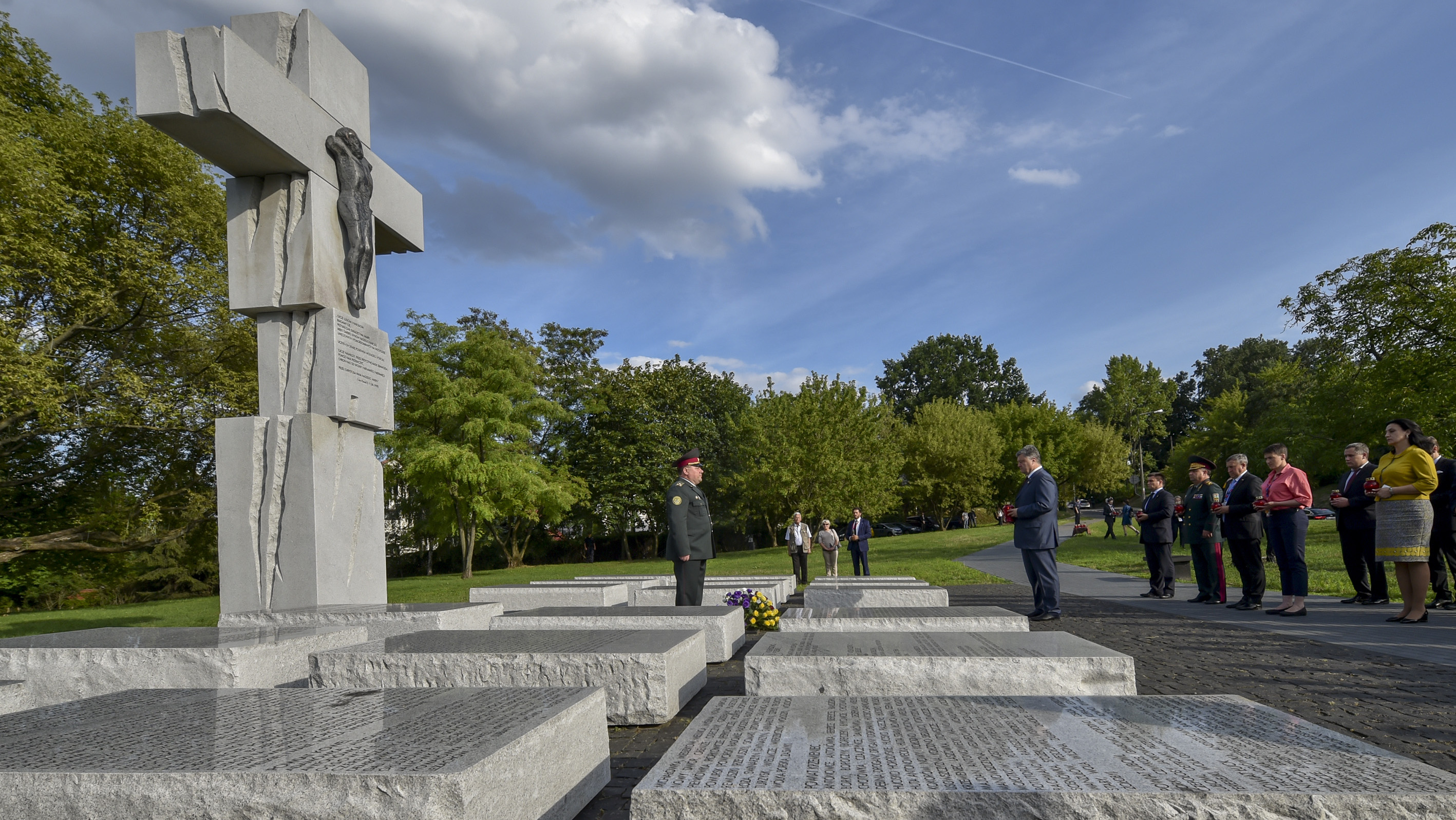
The next stage of the dispute about the Volyn massacre led to the exacerbation of Polish-Ukrainian relations
Ukraine and Poland again "did not share" the general story. The Senate of Poland recently adopted a resolution , announcing on July 11, "the national day of memory of the victims of the genocide, carried out by Ukrainian nationalists against citizens of the Second Republic" (as it is customary to call the Polish state that existed between the two world wars in Poland). Ukrainian society reacted painfully, although the President of Ukraine Petro Poroshenko, whose visit to Poland came to Poland just these days, made a number of conciliatory gestures during his stay in this country.
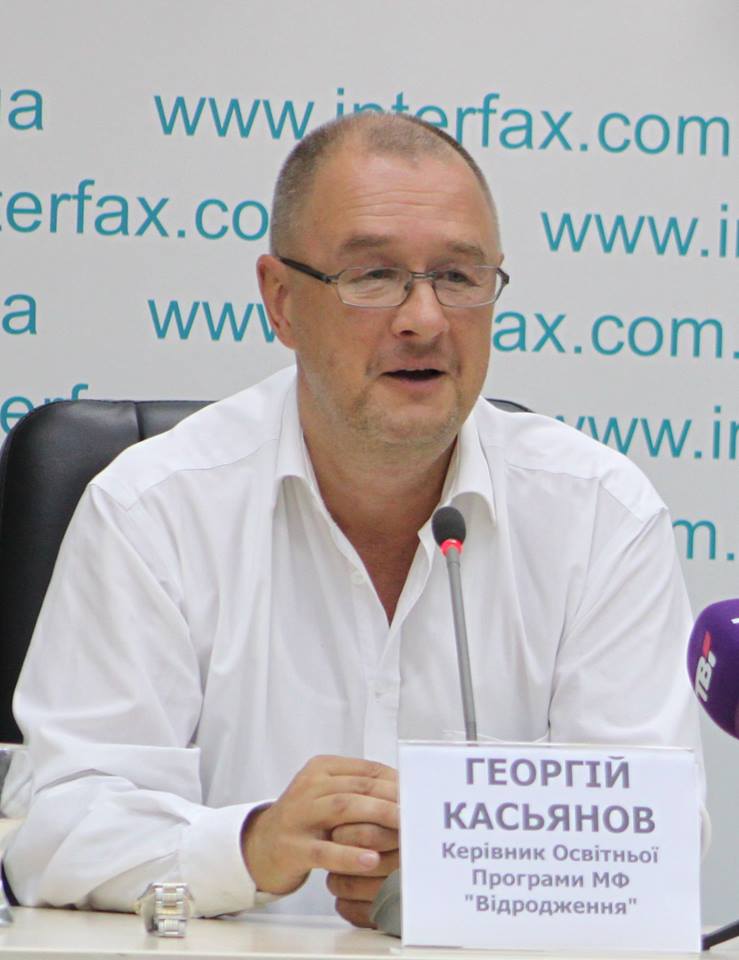
Why again the theme of the Volyn massacre surfaced (as it is called in Poland), or the Volyn tragedy (the name often used in Ukraine) - the mass destruction of the Polish population with the detachments of the Ukrainian rebel army and Ukrainian - as a result of the response of the Polish army of Kraiova ? For Radio Liberty, this painful topic was commented by a Ukrainian historian, professor Georgy Kasyanov .
-The theme of the Volyn tragedy in recent years every now and then with sad frequency pops up in Polish-Ukrainian relations. What is the current conflict connected with, why right now everything has stirred up again? The Polish Senate adopted the corresponding resolution - on the recognition of the Volyn events of 1943 by genocide. In Ukraine, this caused an appropriate negative reaction. Why right now?
-Indeed, at one time, in 2003, in my opinion, Yatsek Kuron said that there is a certain “anniversary” in these matters. And once every five years - 2003, 2008, 2013 - the Volyn theme really appears. Here 2016 has now violated this algorithm. Apparently, this is due to some kind of internal political affairs in Poland. There, all the time, the pressure of the cherry societies and right forces is felt. Apparently, there are some serious problems in Poland, since in the "exorbitant" time they suddenly raised this problem again. Although if you look more carefully at the Polish political life, then the anniversary of that tragedy by the Kryu communities and politicians of the right spectrum is informally celebrated every year. Now there is simply another attempt to formalize all this and again go to the question about the genocide. The exact political situation in Poland and the reasons why Pavel Kukiz and the ruling party "Law and Justice" were excited right now and decided to sell the wording that is not very acceptable for Ukraine, I do not know.
Now there is another attempt to formalize all this and again go to the question about genocide
- And how can you describe the Ukrainian reaction to these events? Did this cause some serious public outrage or, rather, a storm in a glass of water? And how does official Kyiv react?
- Official Kyiv has not yet reacted in any way. There were various kinds of contacts, at the level of ministries of foreign affairs, in that spirit (from the Ukrainian side) that such steps as the decision of the Polish Senate will not be perceived very well in Ukraine. Official gestures - President Poroshenko kneeled in front of the monument to the victims of the Volyn tragedy in Zholibozh , the Warsaw area, during a visit to Poland. But there is a short background. The so-called memorial laws were adopted in Ukraine, and one of them is associated with the honor of participants in the national liberation struggle, and in the list of these participants there are organizations that have a specific reputation in Poland. I am talking about organizing Ukrainian nationalists and Ukrainian rebel army . When these laws were adopted, the then president of Poland Bronislav Komorovsky regretted that these organizations appear on the list of those who need to be honored. But there were no sharp movements from Poland. Then we see the current process of decommunization in Ukraine. It is accompanied by the introduction to the symbolic space of the society of other heroes - nationalists. And this leads to the fact that the neighbors begin to be nervous. I think, to a large extent, the revival of the right in Poland in the Ukrainian direction is provoked by the fact that we have replacement, let's say, a Soviet nostalgic narrative in memory of a nationalist narrative, primarily in the symbolic space.
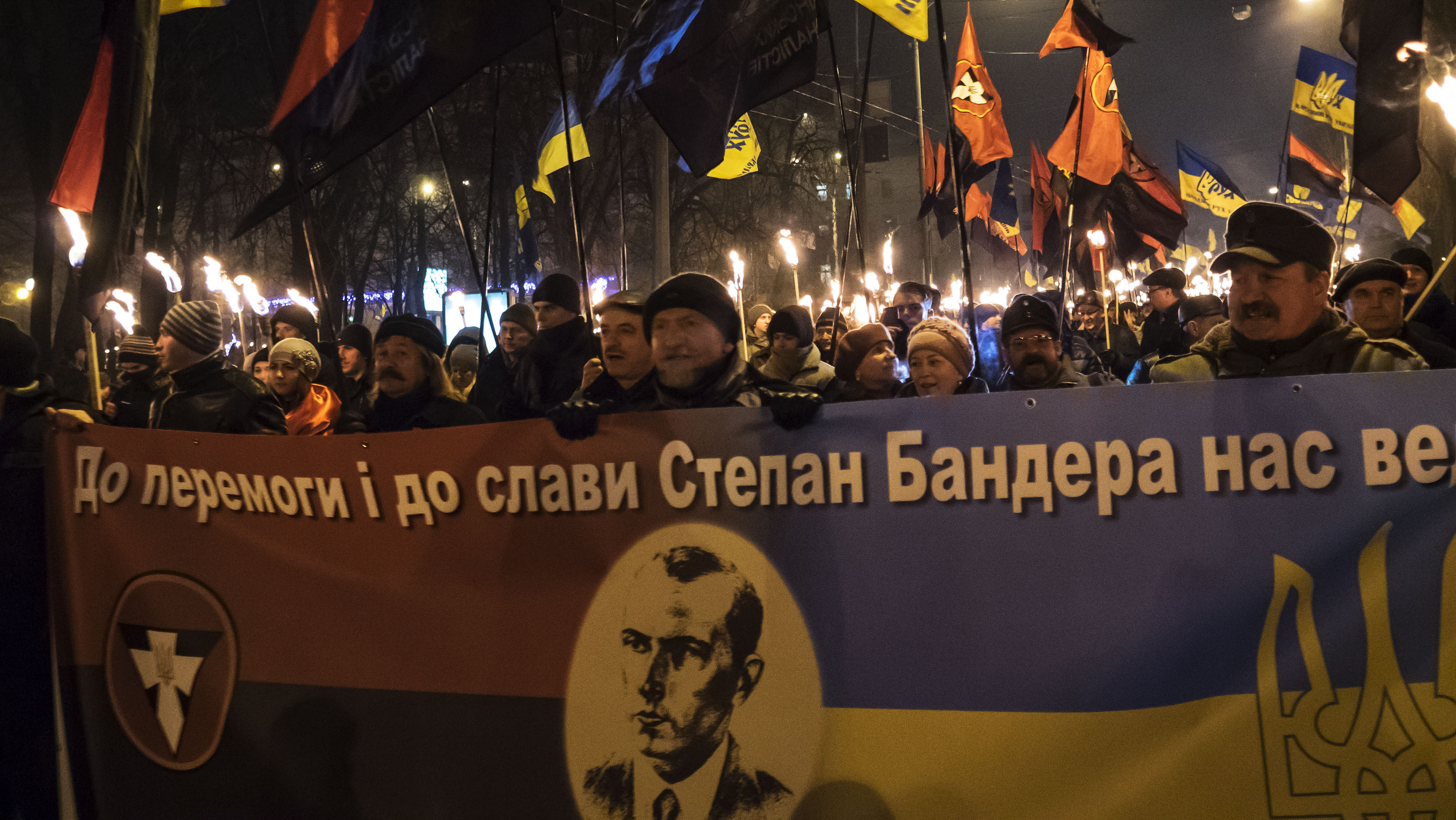
- Do you mean, in particular, the decision of the Kiev Rada to rename Moscow Avenue to Stepan Bandera Avenue?
- In particular, yes. I want to note that this decision took place literally on the eve of Poroshenko’s visit to Poland. I don't think this has added positive.
-But the avenue was renamed Moscow, that is, apparently, if it was aimed somewhere, then in the other direction: not to the western neighbors of Ukraine, but to the eastern ones. And the western ones were offended.
- The eastern ones are also offended. Moscow made statements about this, well, these are standard statements. After all, it is not in Moscow in this case, but in Warsaw. Because Bandera, in general, is a person perceived not only by the right in Poland negatively, but also by people from the liberal camp. In this case, both liberals and nationalists in the rejection of such a person are in paradoxically.
-How would you, in your opinion, look like in this situation a more reasonable approach to these problems? We know that Eastern Europe is a specific place. There, everyone has managed to fight and let the blood to a neighbor, almost everyone to everyone, over the past few centuries. Is there any, in addition to this periodic surgery of the Volyn theme, and the positive experience gained over the years of the existence of independent Ukraine in relations with Poland? What would have to be followed?
Both in Polish society and in Ukrainian there are people who have already pronounced this magical formula many times: we forgive and ask for forgiveness!
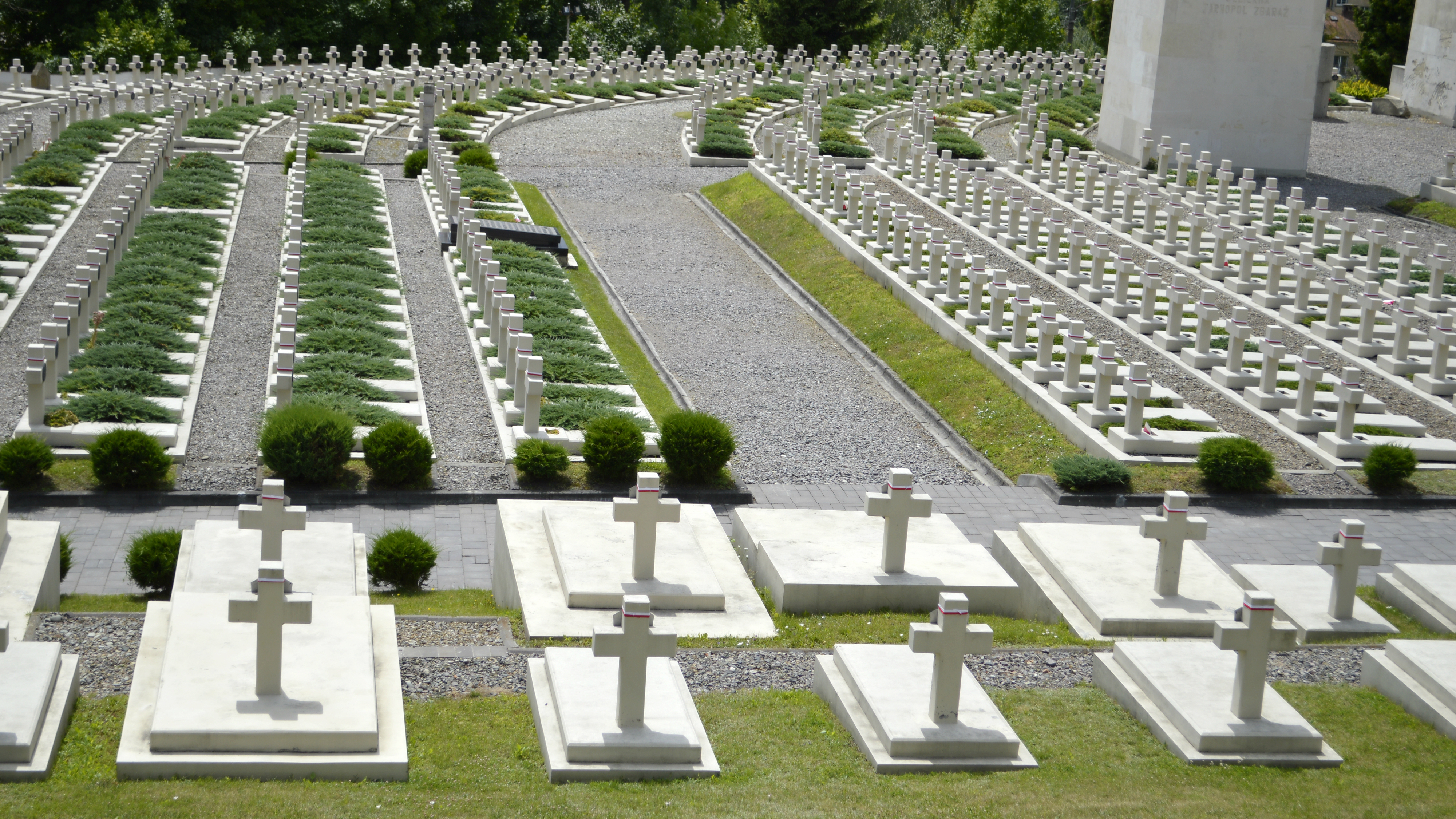
- There is experience. I can give an example - in the Lychakovo cemetery in Lviv there is the so -called "Orlyate cemetery" with which the burial of soldiers of the Ukrainian Galician army is adjacent. (At the end of 1918, in Lviv, there were battles between Polish formations and the city’s Polish population, on the one hand, and the troops of the West-Ukrainian People’s Republic , on the other.-RS) . They are adjacent, and this story, which began back in the mid-90s, thank God, ended with some compromise when the dead found their place, and the living found a place where they can pay their due. And these places are nearby. This can serve as a small, private, but example of how to agree. In addition, when they are now talking about Volyn tragedy, they will focus more attention on conflict moments. But in fact, both in Polish society and in Ukrainian there are people who have already pronounced this magical formula many times: we forgive and ask for forgiveness! This was done in 2003 and in 2013, in this decade the presidents of Poland and Ukraine opened memorial places to the victims of both Polish and Ukrainian actions. And thus, the line on dialogue, cooperation, mutual understanding is, it just does not cause much interest among journalists. As a rule, things related to the conflict are thrown into the media space with the struggle, they attract more attention. Because of this, in fact, a storm in a glass of water turns into a certain universal phenomenon.
- I am not inclined to conspiracy, but I will still ask such a question. The next aggravation in Ukrainian-Polish relations, of course, can only be welcomed by the Russian authorities, given the current state of Russia's relations both with Ukraine and Poland. Is there now any evidence that this exacerbation is somehow inspired from the outside?
- I have no objective data that could confirm or refute this hypothesis. Objectively, yes, Moscow, of course, is interested in the relationship between Ukraine and Poland to be spoiled. This is a very old thesis. So, when they talk about the Volyn tragedy, some people in Ukraine, who take an unconditionally position of the correctness of the Ukrainian side, say that this massacre was provoked by the NKVD, Soviet agents. Another look - that it was provoked by the Germans. That is, this is an ancient thesis that this or that external power necessarily does something in order to quarrel peoples. Russian propaganda is doing the same today, when he says that Ukrainians, in general, are “normal people”, and they were simply ruined by the Americans and NATO, who provoke Ukraine to some actions that are hostile to Russia. So this is a standard rhetorical figure - about the third side, which is interested in being worse. Of course, any conflict situation between Ukraine and Poland into the hands of those who want Ukraine to keep in their influence. But in this case, I can’t say that some FSB agents work somewhere, like mining in the mines, and I can’t, provoking the Ukrainian-Polish quarrel, because I simply have no data.
Objectively Moscow, of course, is interested in the relationship between Ukraine and Poland to deteriorate
-And if you take a purely historical side of the issue: how much Ukrainian and Polish historians have together advanced in the study of the tragic events of the mid-1940s? Because, if you dig, even superficially, it is still clear that there are discrepancies in estimates the number of victims on both sides - how many Ukrainian rebels killed, how many Polish partisans killed. Are there quite serious, deep joint work on the study of this sore topic?
- There are 13 volumes, a collection, it was prepared by Polish and Ukrainian historians, it is called "difficult questions: Ukraine and Poland." It is about the Second World War and about the problems that are now being discussed. In particular, about Volyn. There is a 8-volume of research also Ukrainian and Polish historians, where their points of view are represented. There are personal works of such famous Polish historians, for example, as Grzegozh Motyk , or from the Ukrainian side Igor Ilyushin , where versions of these events are quite balanced. Naturally, there are discrepancies, because if we talk about the Volyn tragedy itself, it is clear that the Poles for a long time for all ideas about this event were built on the book of Eve and Vladislav Semashko , published in 2000. The book is not in the strict sense of the word scientific research. It is called "Genocide committed by the Ukrainian nationalists over the Polish population of Volyn" (in the original: Ludobójstwo Dokonane Przez Nacjonalistów ukraińskich na ludnoši polskiej wołynia 1939-1945. -RS) . These are two volumes. And it is clear by the name that the book is written in the key ideological, political. Here she, unfortunately, was one of the few main sources for the Polish side for the events in Volyn for a long time. And then studies of the same hoe appeared, much more reasoned, suspended. Like any study, there are also disadvantages. This topic requires a long -term joint study aimed at collecting the maximum number of facts and verify them very carefully.
So far, the same side rely on what they found. In Ukraine, in recent years, local historians in the regions, Volyn, and in the Rivne region conducted such local, point studies that simply clarified the number of victims. They took the book Semashko and, using different methods, found out how much it was really killed. And very often they found discrepancies, let’s say - an exaggeration of the number of victims from the Polish side and a proximity - from the Ukrainian side. In principle, the question of the number of victims has an unpleasant moral color, because they begin to count who killed whom more. In this case, the ratio of quantity does not matter. They killed both others, and killed civilians. Therefore, you need to translate all scientific discussions to another plane: a thorough collection of facts, thorough verification, clarification of reasons. In my opinion, there is a very dangerous tendency from the Ukrainian side when these events begin to be called the "Second Ukrainian-Polish War." Well, then, you yourself understand, in the war as in war, well, what, this is normal, and thus there is a relativization of what, in general, is called crimes against humanity. And both sides made them.
-If there is still a large enough array, as you said, scientific research on this problem, then why are these conclusions so slowly and badly, apparently, reach the mass consciousness, apparently, both Polish and Ukrainian? In this mind, the barricades are still: they are to blame, we are not guilty ...
- Well, there is a standard contradiction between what scientists do and say and what society wants. Ukraine is now in a state of war, in society the corresponding moods. When there is a war, from historians, they are more expected not to reason on academic topics and balanced, cold-rational analyzes, but are waiting for a certain fostering of ideological, so that they confirm the correctness of a certain party. In this case, some part of society painfully perceives the Poles's claims about what Ukrainians made in the 1940s, and says: we were also attacked, we are now victims, and the Poles attacked us, and we were victims, not executioners, therefore, be kind, historians, justify this point of view. This is the first. Second: academic research, of course, is understandable primarily to scientists, this is a small number of people who, in principle, are able to calmly talk to each other. There was a case when there was a discussion between Polish and Ukrainian historians on some difficult topic, then its participants were stuck green labels, and only those who had these marks could speak. People from the public could not speak, they had red labels. Thus, they provided a normal, calm dialogue in the presence of the public.
When there is a war, from historians they expect more to confirm the correctness of a certain party
Unfortunately, in Ukraine and Poland there are policies and certain segments of society that are interested in conflict. They pursue their specific political interests, but for the sake of these interests they are ready to complicate relations with neighbors. While there is such political interest, both societies are doomed to talk in such a vein with the language of mutual accusations. Both the Ukrainian and the Polish side, those who wanted to close this topic, have already said: we forgive and forgive. There is nothing more to say. Then you can only go in a circle, which, in fact, is happening. The discussion goes in a circle. Only it rises now to the next qualitative level, when the word "genocide", the term absolutely politicized and not bringing consensus, appears in the vocabulary and further exacerbates the situation. I want to remind you that the Ukrainians themselves were exactly the same position when they sought at the level of international organizations so that the Holodomor of the 1930s recognized as genocide, and these efforts of Ukraine at the level of international organizations are quite successfully blocked by Russia. Then the Ukrainians sought official use of the concept of "genocide". Now the Poles achieve the same, and the Ukrainians are told that this is not necessary to do this.