
Translated material
Against garbage

In Bergen there is a small public group consisting of representatives of left -wing parties and independent ecologists "Clean Air DunmarkPlass." For seven years, these activists have been organizing public discussions and protests, demanding from the city authorities to revise the transport policy . On the leaflets stylized as a message from the city administration, environmentalists write: "Demand the gas masks for yourself and your children from the Bergen Commune." One of the shares of "clean air" was called "we are my own streets" - the deputies came to place the track by the City Council and demand to reduce traffic to Dunmarkplass.
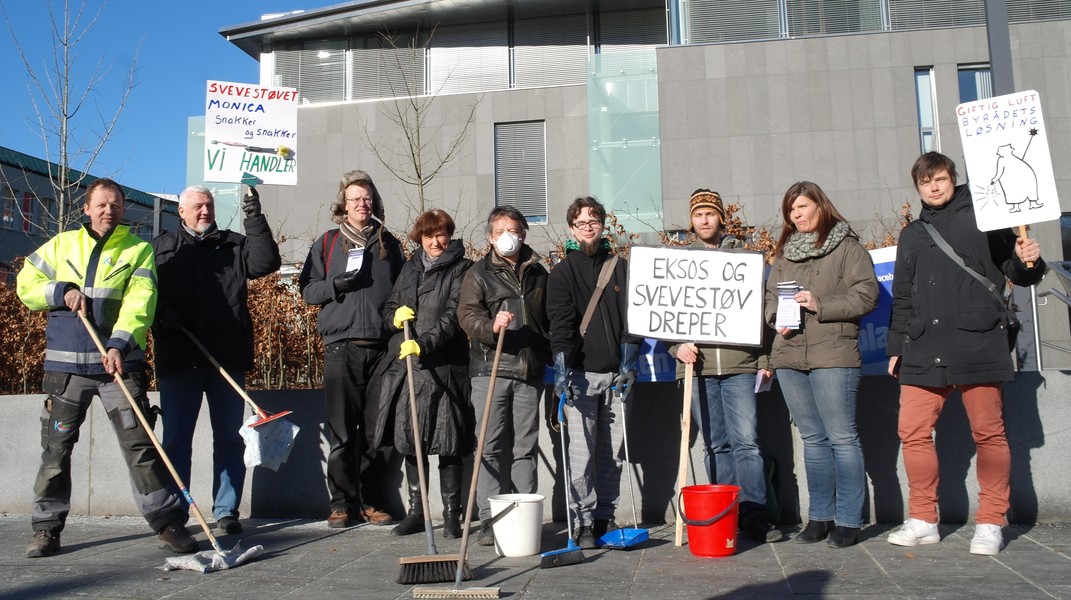
"Green" urge the Bergeners to ride a collective, electric transport or use bicycles. In 2010, the city metro - Bibanen earned in Bergen. The city develops a network of free gas stations for electric vehicles, buyers of electric machines and hybrids have small tax advantages when buying.
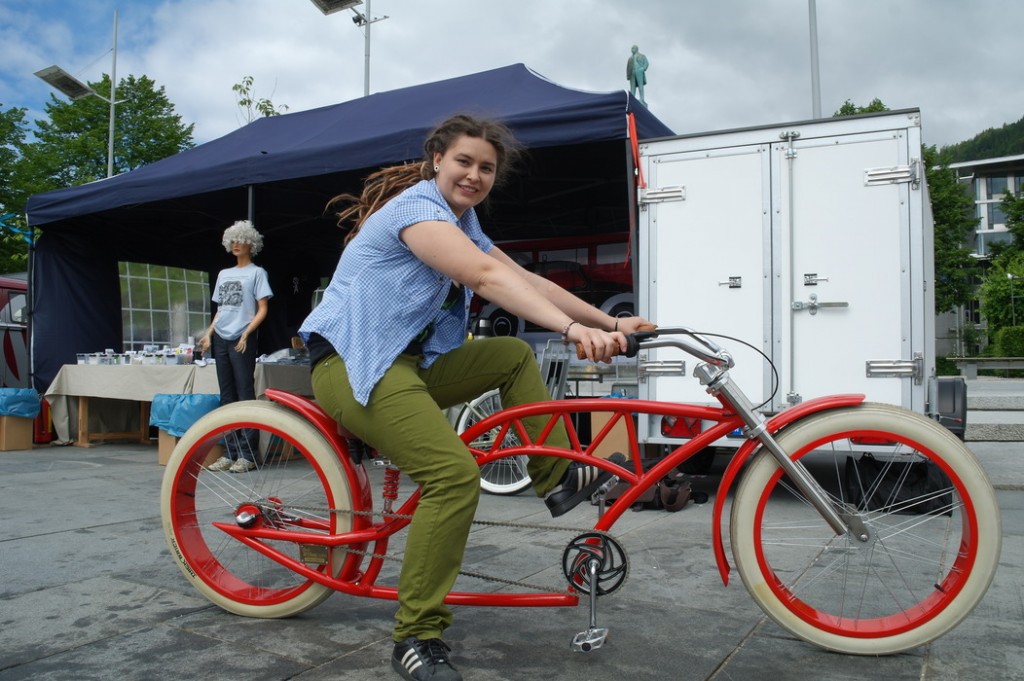
Bicycles are becoming more popular, as there are more bicycle paths, bicycle parking, the price of electric bicycles falls. There are many craftsmen in the city, constructing interesting cycling models on their own. Marta Hammer, who is responsible for the female question in the SV party, recently expressed the idea that uncultural athletes are poorly affected by the image of the bicycle: “The bergenes had the opinion that a cyclist is a merciless man who drives at a frantic speed and poses a danger to himself and others ... This is not a woman who takes children to the garden or school, and then we must go to work. Change this impression if we want the bicycle to help the townspeople cope with eco-prolays, health problems due to the lack of female policy of the bicycle. ”
Another group of ecologists is fighters with a consumer society . They conduct festivals "Feast against Hunger" ( Matgilde Mot Hungeersnency ), protesting against throwing high -quality food and in order to help starving in third world countries. Is there really a similar problem? Researchers of garbage in Fredrickstad and Hallingdale found out that each family throws up an average of 51 kilograms of edible food in an average of a year. On the scale of Norway, for a year it is 260,000 tons of food worth 12.5 billion kroons thrown directly into a bucket. In addition, it is known that 65,000 tons are ejected by shops, 2000 - wholesalers and 50,000 - manufacturers. An increase in the range of goods leads to the fact that these figures increase.
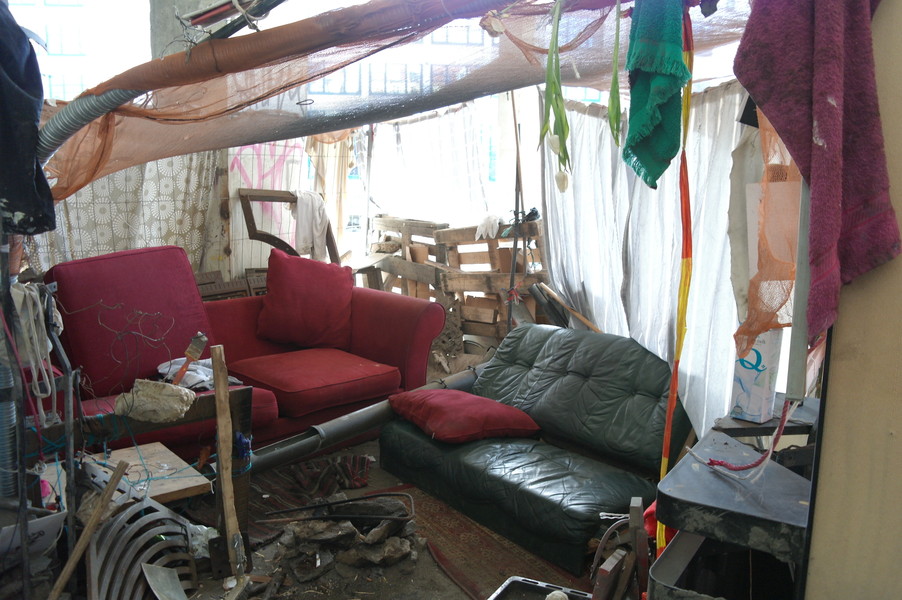
German artist Mark Hubertus von Samson Khimmelstyern for the sake of fighting "consumerism" built a dwelling under the bridge on Dunmarkplass. Using the thrown things, he created the installations in which he lived. He also found products in garbage tanks. Mark installed quite interesting garbage installations in Bergen. Returning under the bridge after a spring trip, Mark increased the number of seats for sleep and brought old sofas, arranged parties with songs, invitations to which he wrote with colored crayons on the walls of the city. Journalists and artists became interested in the project. The only one who did not rejoice in the house of garbage was the master of the territory. At the request of April 2, 2012, the artist was arrested and fined, and the installation was demolished, as she "prevented him from starting development." After the artist left our city, the place was empty for two years before some work began there.
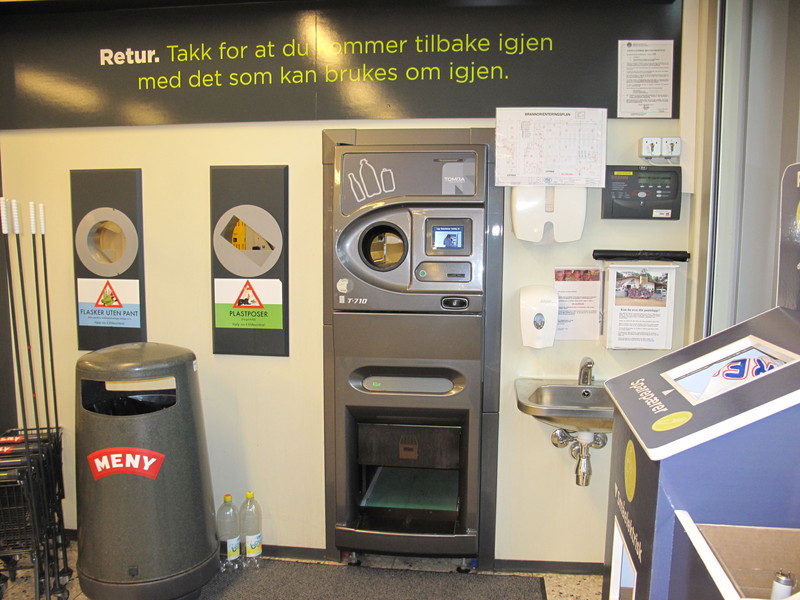
The development of a responsible attitude towards things - to products, goods, and garbage - of course, increases the level of culture of society. An ordinary Bergen family has the opportunity to sort plastic, glass, paper, cardboard, electrical appliances, batteries, lamps. Some communes conclude an agreement on compost sorting. There are several waste collection points in the city where construction and bulky garbage should be brought. Old clothes and shoes can be brought in a second hand or thrown into special containers. There are several network venues "I will give in vain . "
The sorting and disposal of garbage in Norway was so interested in me that I visited the local garbage processing plant, investigated a landfill and went on a flight on a garbage cleaner.
Children's excursion to the garbage plant: how the furnace operator works
In order to become the Norwegian scorner, you must be absolutely healthy, physically strong, have a driver’s license, Citizenship of the European Union or Norway, to be prepared for constant extreme driving of a truck that depletes work, professionally harmful production and atmosphere, be able to oriented in vast areas, endure unsanitary conditions and terrible smell. The driver of the garbage truck from a small company, an emigrant with a higher education, who came to Norway due to unemployment in his homeland, agreed to ride me. From five in the morning to noon without breaks to rest, without a partner, without a good uniform, shoes and even without normal gloves, in the rain, in mud and snow, moving along the icy roads, he collected 6 tons of garbage from 218 containers, and then risking to cripple. What I learned during the trip allows us to say that on a national scale, garbage sorting in Norway is still unequal and economically does not justify itself.
Working conditions in the largest in Bergen garbage harvesting BIR are better than conditions in small firms. Trade unions and environmental organizations try to change the situation, but this will not happen as soon as we would like.
On May 10, 2014, the defenders of the ocean brought an impressive action to clean the Bergen coast . 35 people in half a day gathered ¾ tons of garbage on the coast in the city center and sorted half.
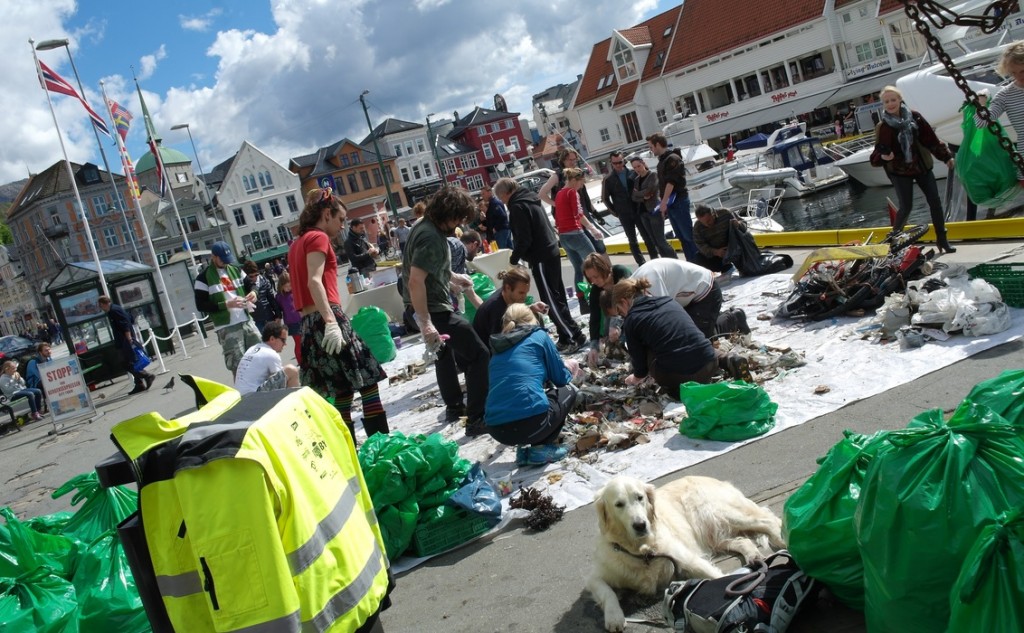
The day of cleaning the coast. Garbage sorting on the Berggen embankment
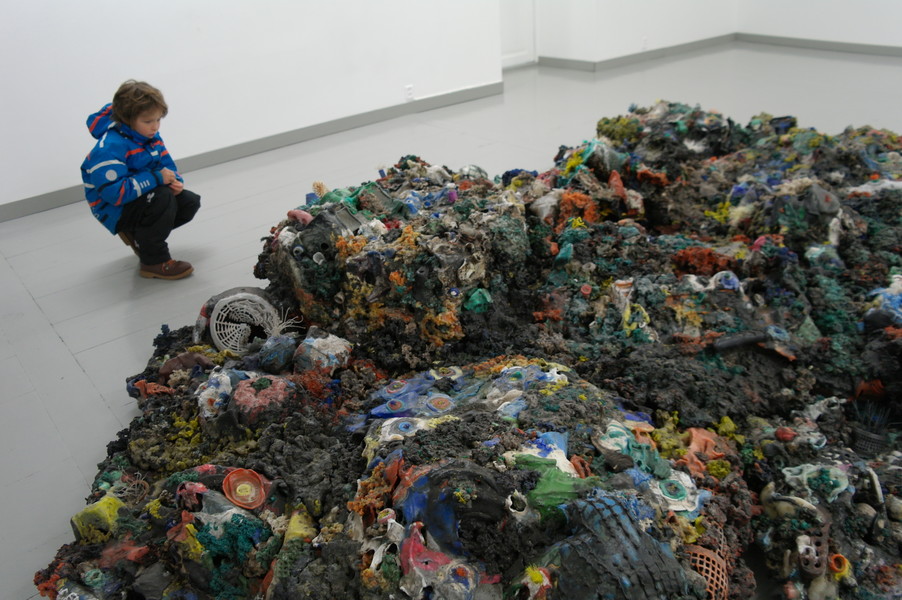
Art project "Plastic RIF". 2013
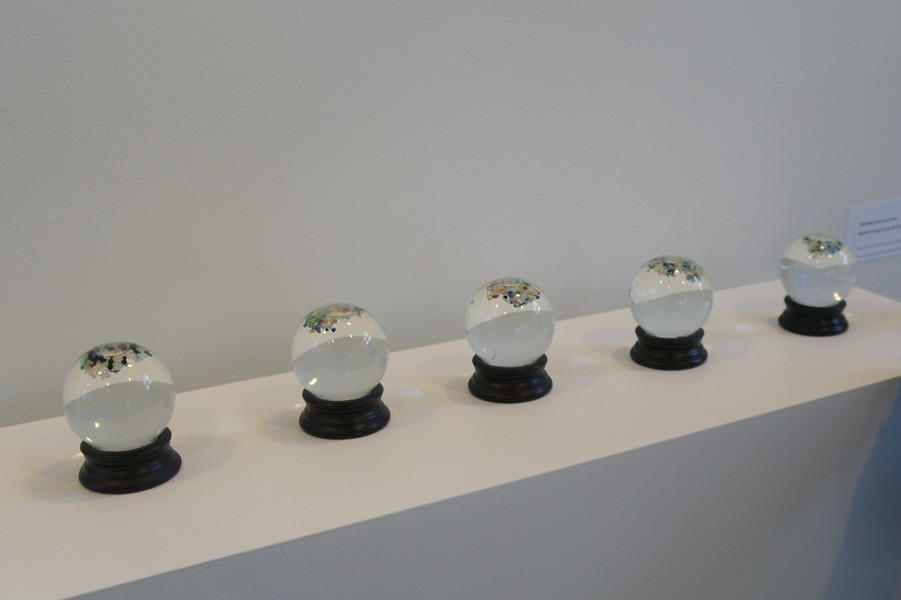
Art project on plastic garbage in the oceans "1000 miles from home"
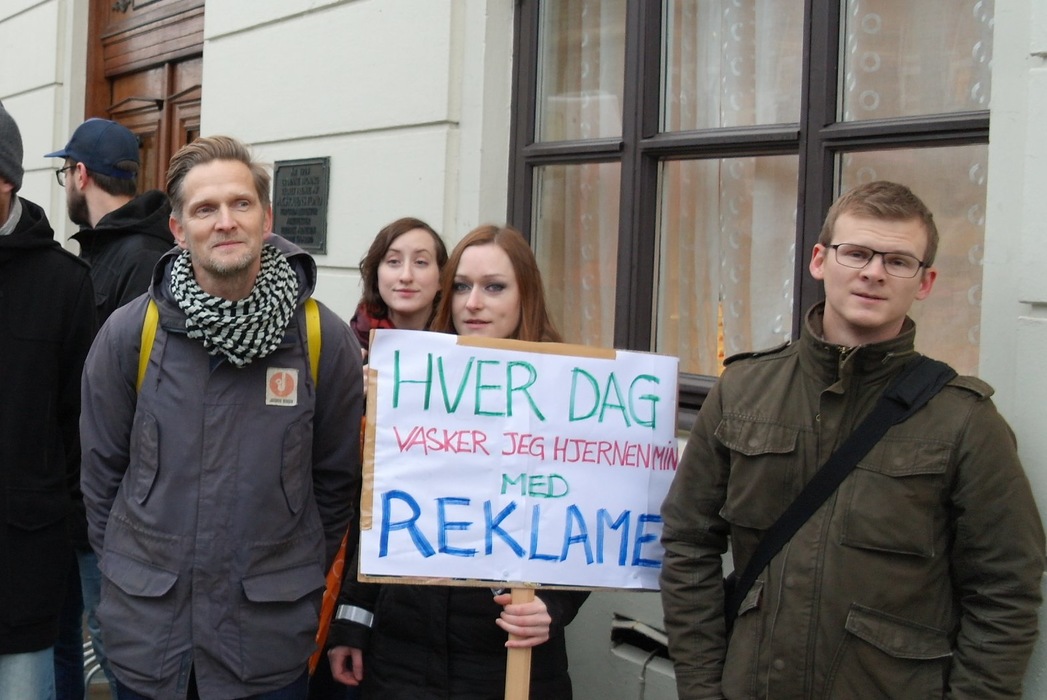
Advertising is perceived as information garbage. For a local struggle with advertising in urban space, activists turn the bags and packages with logos inside out. They also perform in the press and participate in the debate about advertising in the city.
The smallest group of green are zoo defenders. The only organization that submits in our city applications for promotions in defense of animal rights is called Noah ("Noah"). The annual anti-mockery procession collects up to 500 activists, since left-wing parties, volunteers from shelters, lovers of animal companions are opposed to fur.
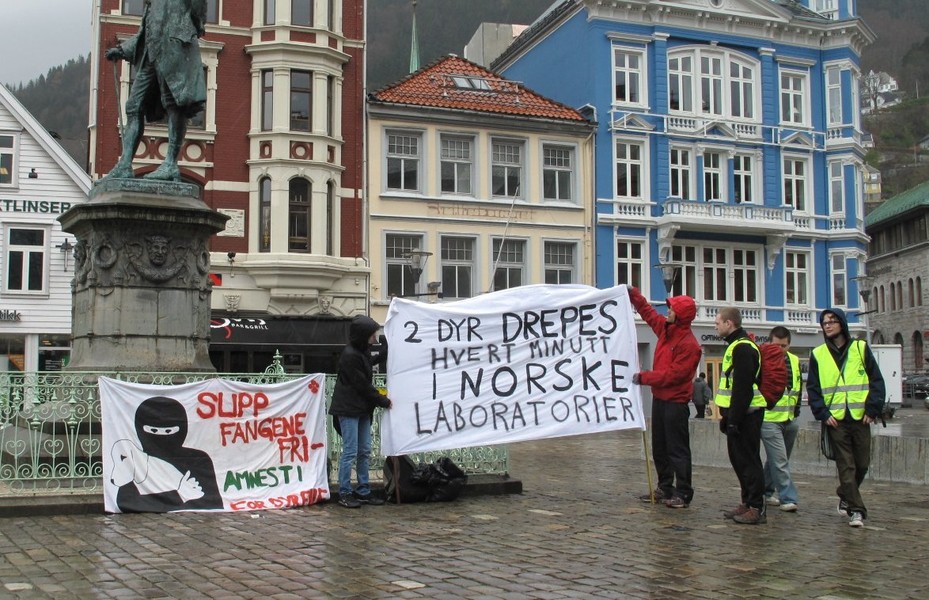
Protests against testing cosmetics on animals, against cruel entertainment, against industrial animal husbandry are small, this is the distribution of leaflets or vegan foods. I stopped helping Noah when I found out that the organization had nothing against participation in the zoopetics of people associated with Islamophobes from SIAN . There is no vegan cafe in our city, but in many healthy food stores, goods with the vegan brand are sold.
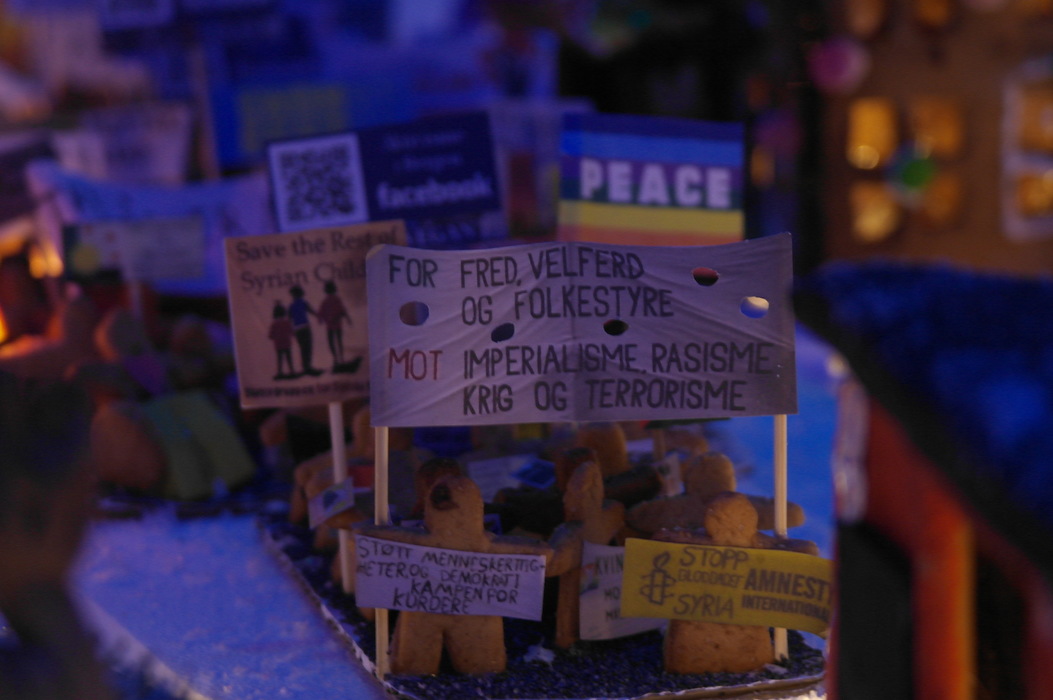
For several years, my family has been working on the vegan project "Gingerbread activism" for a huge Christmas town, we also distribute an ethical recipe for gingerbread, there are no animal components without using. In 2012, we built a house with a bean roof and baked the "Anti -Mo -Mechanical Processing" . In 2013, gingerbread men carried copies of banners from the first of the first, feminist, environmental, anti -war and zooproting actions, protests for refugee rights and from the pride. The project was photographed for his newspaper, journalist Bergens Tidende .
This year, in order to draw people's attention to the dominance of men in the city, culture and history, we came up with the installation of “10 years of female historical night” - they showed to what extent to shorten the pedestal of the monument to the Prime Minister of Norway, Christian Michelsen. Now the high column on which the monument stands is made of 12 stone blocks.
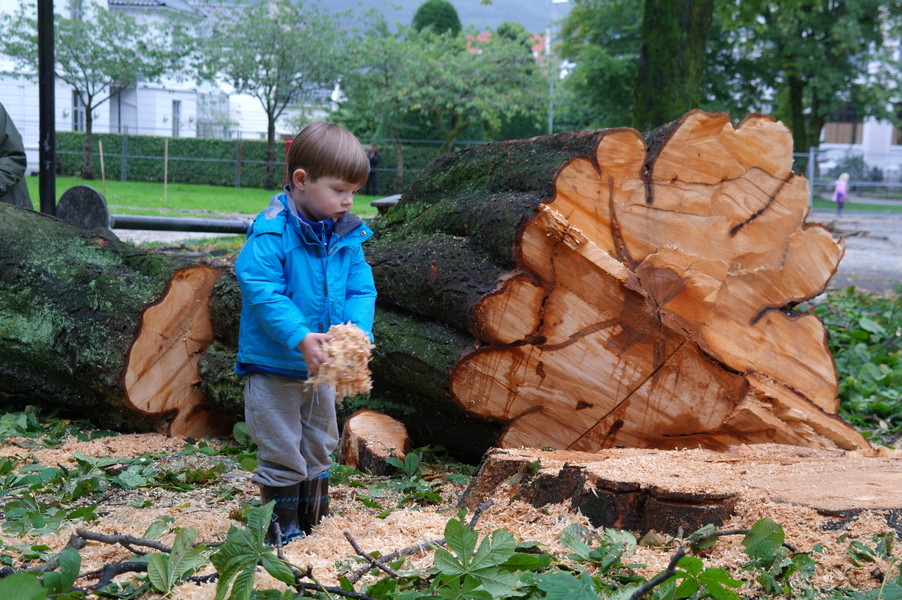
On December 16, 2012, Green Bergena protested, as the construction company cut down one of several 200-year-old chestnuts in the very center of Bergen. Nobody hissed the tree, no one riveted and climbed into the crown to save the chestnut from cutting down. And I also did nothing, because then I did not know how to read in a non-Twesie and did not know that they were going to cut down it.
Now where the Kashtan grew up, a school is built, a gray wooden barn, about which one of the local architects wrote an article entitled "Shitty Architecture", and instead of a generally accessible clearing with green grass in the park, a continuous wooden flooring and a fence. I really hope that over time, the gray shed and the flooring will be demolished, only the chestnut can no longer be returned.
Detailed reports about shares, contacts of organizations and activists will be found on the Bergen hare website. See the book "The city says. Activism in Bergen."
And remember: freedom disappears immediately, as soon as its boundaries cease to protect.
Photo by the author .
Lyubava Malysheva-a civil activist, a photographer-documentary, lives in the Norwegian city of Bergen
Read other texts from the cycle about activism in Bergen:activism in Bergen (feminist organizations), rainbow days (LGBT movement).