
Translated material
Shave or not to shave?
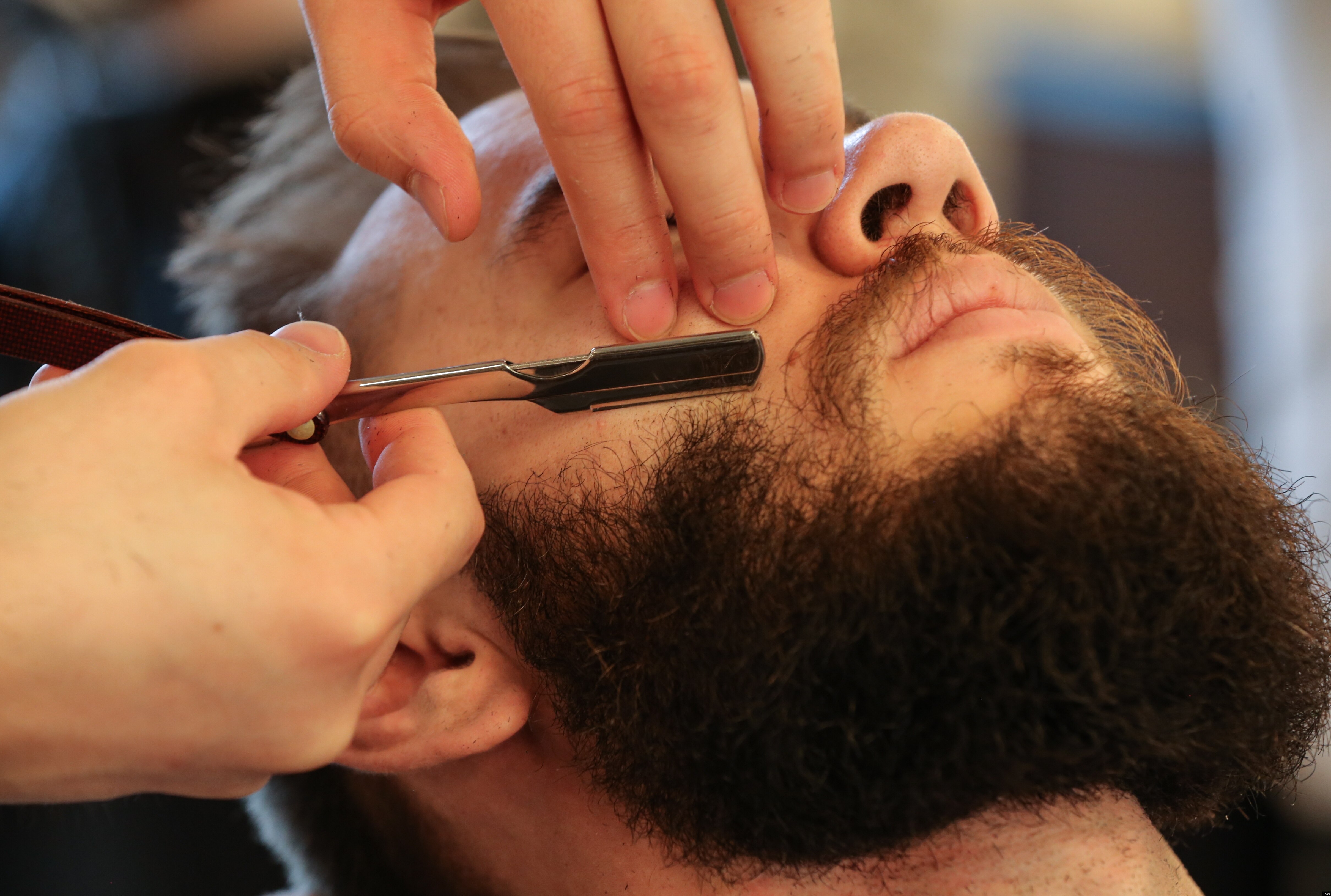
Beard and masculinity in the modern world
Sergey Medvedev: It would seem that not only men serve in the army, however, it is believed that on February 23 is a male holiday. And this is a good reason to make a conversation about one of the main attributes of masculinity - about the beard. What is the role of a beard in history and in modern life? To what extent does it correlate with our concepts of masculinity, masculinity? We called this topic to the fashion historian Olga Weinstein , a leading researcher at the Institute of Higher Humanitarian Research of the Russian State Humanitarian University, and Maxim Livsi , restaurateur, founder of the Ferma At Home project, owner of a beard.
For you, a beard is some kind of sign, do you associate some kind of identity with this?
If you start a beard once, then you cannot then shave it, because you just don't recognize yourself
Maxim Livsi: It was at the beginning when I stopped shaking my beard. If you start a beard once, then you cannot then shave it, because you just won’t recognize yourself (how many attempts I had!). After pushing the beard for three years, you shave it, go to the mirror and find that you, it turns out, do not have a chin and you are much rounder than it seemed a day ago. As the rowers sang, "when we were young, we all wore beards." I know little people who wore beards, and then shaved. There are stereotypical opinions. Guess how many times I heard the questions: food does not get stuck, does not interfere with kissing?
Everyone has differently ... My comrade decided to grow a beard, but when he began to grow, he began to recover wildly and turned not into a hipster, as he probably wished, but simply into the priest. Here you need very carefully ...
Sergey Medvedev: Olga, is the current fashion for you connected with the hipster movement? Increasingly, I see young people and middle -aged people with a beard in the city. What is the next fashion period? In history, the periods of beards and beadlessness are constantly replaced.
Olga Weinstein: I think now it's really a trend. About a year ago, in the fashion press, such a term flashed - "Lambertsexal" . This is a new type, which is already described by analysts, relatively speaking, the Canadian lumberjack, its other signs are a checkered flannel shirt, tight -fitting jeans, suspenders, often a backpack, tattoos, working boots, a penny knife in a pocket. That is, it is a symbol of new masculinity. It used to be said that “feminine men, metroxuals ” went now, but the fashion is cyclical, develops according to the laws of dialectics, and when one gets bored, it is necessary to slightly move the emphasis.
In history, the periods of beards and beads are constantly replaced
Sergey Medvedev: That is, this is a response to metroxuality?
Olga Weinstein: I think one of the factors is a response to metroxuality. It is no coincidence that many celebrities (Johnny Depp, for example) grow beards and appear in public in this style of lambersxual. But there is a second factor. It seems to me that now in many ways there is an erosion of gender boundaries in culture, they become less defined. Women often master certain male professions, men - on the contrary, lose traditional attributes of masculinity (culture of white collarbones). Therefore, we need a new system of signs. Just beard is a new return of masculinity.
Sergey Medvedev: The beard has always, originally, was a symbol of masculinity. The function of the beard is such a hypertrophied masculinity, the showing ability of a person to hunt, to extract. She probably emphasizes such the main masculine features: say, teeth, a strong chin, an outstanding jaw.
Take Lenin, Trotsky, take Aibolit beard - this is clearly a sign of intellectuality, such an intelligent beard
Maxim Livsi: I do not agree. Take Lenin, Trotsky, take Aibolit beard - this is clearly a sign of intellectuality, professors, and so on - such an intelligent beard. Remember how our leader said: "The beards will be shaved, and let's beat with hoes." He had in mind the intellectual beards. Of course, what we describe now are other beards - beards of lumberjacks. We were at the headquarters of hipsters around the world in the city of Portland in America, there is no store where feather knives, windbreakers, backpacks would not be sold. All this came from Canada. When the Intel plant was opened there, they called up a lot of young people from Canada. And since this is a French country, they are all culinary specialists. Therefore, I would describe a modern lumberjack as follows: a terrible, but very kind inside. This is a dude with a beard, muscles, clogged with tattoos, but he loves to make desserts or, say, grow flowers. He is so kind and big.
Sergey Medvedev: It works in contrast. Is a beard a reaction to metroxuality? Very often I see that a salary, brutal beard is combined with an absolutely hipster look - a man in narrowed pants, without socks, with naked ankles, in salting shoes. This is very interesting: on the one hand, the appearance implies a certain masculinity, and the lower half of the body - narrowed pants, fitted jackets from another, metroxy, hipster theme.
Borousiness is a new return of masculinity
Olga Weinstein: This is a shift in the accents that I spoke about. I think that Lambertsexual is the evolution of hipster, just the lower part is the legacy of hipster narrow trousers, sneakers-converes. True, if you take other attributes of hipsters (say, a computer is always with you, glasses in a solid horn frame), then this is such a slow evolution. Here the question is why. Maxim said: lumberjacks came, many young people came. Why was the style that they brought? Not every style is widespread, which means that there is some vitamin that modern culture is needed, since it is in demand.
Sergey Medvedev: Vitamin Masculinity?
Olga Weinstein: I think yes.
Maxim Livsi: I decided to start a beard after one case. My wife came from a business trip (in my opinion, from France or from New York) and showed me a photo that she accidentally took somewhere in the city center. In a sunny day near the monument, an absolutely overgrown dude - with a beard, in tattoos - sat and knitted.
Sergey Medvedev: This, it seems to me, is an absolutely postmodern, post -industrial, post -material civilization, which shifted all the codes and mixed knitting on knitting needles and beard.
In a sunny day near the monument, an absolutely overgrown dude - with a beard, in tattoos - sat and knitted
Maxim Livsi: Imagine if he had yet knitted some kind of blouse for a dog ...
Sergey Medvedev: If you return more than a hundred years ago, in the era of Lawrence , then Lady Chaterley's lover is a brutal bearded man, the same Lambert, and on the other hand - a sophisticated Lady of the Victorian era.
I want to return to the initial historical context. The beard was a very strong male marker.
Olga Weinstein: It was a symbol, but not necessarily with status. At least this is the image of an independent, stubborn, active man, a man-percent. And as part of this general meaning - a man who is clothed with power. Here is the status as a special case, as a synonym for the possibility of performing fate, command, it can be secular power, there may be spiritual power - a priest. For many centuries, the beard remained just such a sign of man in power. But there were periods when the beard suddenly left the stage. If we recall, say, the 18th century, then, as a rule, these are smooth chin. However, this is not surprising, because at that time people wore high wigs, and the beard and wig are incompatible.
Maxim Livsi: If Peter I had come to power now ... At that time he ordered everyone to shave his beards, and now, I have no doubt, he would force everyone to wear beards so that the people were closer to Europe.
Sergey Medvedev: A very interesting moment is the Renaissance era, and then Baroque. At the court of Louis XIV, it is impossible to imagine anyone with a beard.
Olga Weinstein: A large high wig and beard is impossible.
Sergey Medvedev: That is, these centuries of Russian culture were based on shaving beards?
Beard and wig are incompatible
Olga Weinstein: You can even say for sure that it is the XVII century, in culture it is the type of "macaroni" - a flirty dandy. Then the era of dendism begins, and just the handsome Brano was the first to introduce the fashion for the lack of a wig, and at the same time - a smoothly shaved chin, a thorough hygiene. That is, it was a new bodily canon. The general image of a man at the beginning of the 19th century (remember portraits of romantic poets)-a thin young man, "pale, with a burning eyes." Of course, no beards are implied here. This is a neoclassical image, so minimalist: spiritual life, burning eyes. But then, throughout the 19th century, this image changes.
Sergey Medvedev: What happens in the second half of the 19th century, when beards are actually affirmed? Victor Hugo, Tchaikovsky ... Yes, and the last two Russian tsar returned several centuries ago: Alexander the Third and Nicholas the Second wear a beard. What happens to the beard, why does it return so sharply at the end of the 19th century? Maxim mentioned Lenin. The Bolsheviks, the Mensheviks ... Only Stalin wore a mustache, and the rest, those who made the revolution, are very many bearded.
Olga Weinstein: In the 19th century, fashion historians noticed a kind of growing up both male and female ideal. The ideal of beauty becomes older. If the beginning of the 19th century is a bet on youth, then in the middle of the century there is already an image of a mature man, a mature woman. Historians of English culture associate this with the reign of Queen Victoria: at first she was a girl, then-a middle-aged lady, the end of the 19th century-already an elderly Victoria, and subjects somehow followed this fashion for age, tried to reproduce her. Of course, this is only a partial explanation. Indeed, English writers: Dickens, Arnold or Darwin - these are all such bearded people. Apparently, here the beard becomes a symbol.
Sergey Medvedev: Marx. The entire Soviet pantheon is bearded people.
Olga Weinstein: Leo Tolstoy ... Apparently, this becomes a symbolic attribute of wisdom, which is associated with life experience, with age. Again, a beard that appears in the middle of the 19th century remains enough.
Sergey Medvedev: That is, some kind of growing up society occurs, in comparison with the eras of romanticism and sentimentalism. Apparently, the cult of Ruio comes, science in connection with the industrial and scientific revolution. The emphasis of the company is shifted to age -related, serious representations.
In the 19th century, fashion historians noticed a kind of growing up both male and female ideal. The ideal of beauty becomes older
Olga Weinstein: In addition, in the middle of the 19th century there is a sharp polarization of gender roles, completely clear attributes of femininity and masculinity appear. This is reflected in a suit. Victorian Crinoline - in any other era there was no such amazingly bulky attribute of femininity, when the female body was chained in a real, very heavy metal cage.
Sergey Medvedev: The return of the beard falls on the era of conservatism, the return of traditional patriarchal norms and rituals of sexism .
Olga Weinstein: At least, in relation to Victorianism, this is true.
Sergey Medvedev: I want to talk about the beard as a stereotype of masculinity. How attractive for women in modern society? Are a beard, a mustache of a kind of attitudes ?
Maxim Livsi: Yes, they are.
Sergey Medvedev: Maxim informed us ...
Olga Weinstein: Probably from her own experience.
Sergey Medvedev: A person in any case notices interest in himself, views and so on.
Maxim Livsi: both men and women have different tastes. Half half. I noticed: women who do not like the beards are also uninteresting to me, too, for us, the life pulse does not coincide with them. But when I began to wear a beard, I noticed a clear respect from people. Suppose, I have never heard from the traffic cop. "What are the proposals?" They are simply shy to say this. You seem to have shoulder straps. Even in the bathhouse - you tear off the door, and you are always missing. This is really some kind of subconscious respect of the male for the male.
I noticed: women who do not like the beards, for some reason, are also not interested in me
As for women, my wife likes it, many too. I have repeatedly heard her friends said: "Oh, how are you with such a beard?" The clutch and the Yorkshire Terrier are terrible for me, and for some-a beard. One way or another, we live in this city at one time, and we have to get along.
Sergey Medvedev: Interesting: a beard begins to play a status role, especially in relations between men, between males, a person carries male status with him. This, too, may emphasize the status nature of transactions in Russian society. After all, the main question is in Russian life: "And who are you?" In this regard, beard is very important. Lysin makes a man more attractive? Many young owners of good hair shake baldly.
Olga Weinstein: There was such a fashion, now, in my opinion, she is coming to naught. At one time, Lysin was considered a symbol of intellectualism. I recall the French philosopher Michel Foucault, who always flaunted a shaved bald bald head. One girl asked him: "Uncle, why are you without hair?" Michelle Foucault replied: "I actually have a lot of hair, they just grow inside the head."
The clutch and the Yorkshire Terrier are terrible for me, and for someone-a beard
Maxim Livsi: To be bald goes to people who are bald. How many times have I noticed from my friends: if he bald and begins to shave in baldly, then it goes very much. There is nothing worse than saving your "lake", combing the hair from the back of the head forward. Both a beard and a bald head emphasize that a person is not afraid to say something or look in a certain way. It is clear, the beard makes you older, but this means that if I wear a beard, then I'm not afraid to look older. If you are bald, then you are not afraid to seem ridiculous, you do not wear some kind of shinon, a lining, you just shave the head, and this is excellent.
Sergey Medvedev: There is some kind of adventure in this: a person-what he is, he will present himself.
Maxim Livsi: That is, he is comfortable, and when a person is comfortable in something, it is already fashionable.
Olga Weinstein: There is still a different meaning of the bald head - recall the skinheads.
Maxim Livsi: That's why they are not going to shave, although not bald.
Olga Weinstein: Prisoners, for example, or new soldiers ... Here Lysin acquires the semantics of some militaryness, masculinity, perhaps potential aggression. This is also an interesting sign pole.
Sergey Medvedev: And a symbol of intellectualism. It was believed that in many hours of training the head was bald, bald - more smart and successful. The image of a scientist, a banker is also often associated with a bald head, is a symbol of a certain financial or intellectual achievement.
Olga Weinstein: In general, yes. And, by the way, the age symbol. But the beard is also often associated with some bohemian, people of creative professions often wear a beard. Here, on the contrary, the bet goes to some naturalness, carefree: you do not go to the office from 9 to 5.
The image of a scientist, a banker is often associated with a bald head, is a symbol of a certain financial or intellectual achievement
Sergey Medvedev: It seems to me that a very interesting shift occurred in Russia in the 60s. Who in the Stalin era could afford a beard? Yes, no one. Some university professor from the film or polar explorer Schmidt-these were some piece cases. Maybe a peasant from a poster, an old -regime, but cheerfully looking at a new life ... The average Soviet man was supposed to be smoothly shaved. An unexpected coming of beard in the 60s is tourists, geologists, and non-conformist artists. Recall Hemingway - in every intelligent family on the wall there was a portrait of Hemingway.
Maxim Livsi: The film with Mironov, where they went to rest at sea and beards, live in tents - this is pure hipsters. They sit in these sweaters in the evening with deer ...
Sergey Medvedev: did the first hipsters appear at the same time?
Olga Weinstein: A little earlier. It is believed that this is due to the 40s, with the era of jazz. The first hipsters are a musical environment.
Sergey Medvedev: This is demilitarization, a reaction to militarism, mobilizing the last decade: the war is played out, can men already play with their own appearance?
Olga Weinstein: Still, there is a musical culture, bohemian environment-I think it was more important. The first famous jazzmen - Frank Sinatra, Benny Goodman - are considered the first hipsters. Then this has already gone in the 50-60s as a sign of bohemia and, again, a symbol of non-conformism.
Who in the Stalin era could afford a beard? Yes, no one
Sergey Medvedev: On the other hand, other bearded men flew up - Barbudos : a vow not to shave his head until the end of the Cuban Revolution, also a symbol of non -conformity.
Olga Weinstein: Often people give such a vow: I will not shave until I do it or that-until I finish the dissertation, for example. This is a sign that a person has devoted himself to the great cause, and he is no longer up to such trifles as shaving.
Maxim Livsi: Many hockey players do not shave when they have a season.
Sergey Medvedev: But still they do not let go of beards.
Maxim Livsi: If you look at the NHL , then many are already chasing with beards.
Сергей Медведев: Спорт – это отдельная тема. Невозможно представить бородатого пловца (не та гидродинамика) или бородатого легкоатлета, лыжника. Хотя сейчас самый лучший в мире лыжник – бородатый, но он один из немногих в циклических видах спорта. В велоспорте я тоже не могу такого представить.
Максим Ливси: Мне кажется, это будет со дня на день.
Сергей Медведев: Велоспорт – это вообще отдельная тема. В поисках идеальной аэродинамики люди всячески борются с волосами, мужчины-велосипедисты уже и ноги бреют, как в том анекдоте. Во-первых, это красиво, как это считается среди велосипедистов, а во-вторых, это просто чисто функционально при падении, гораздо проще падать, и получается меньше ссадин, когда ты падаешь на асфальт обритой ногой. Велосипедист все равно рано или поздно окажется на асфальте, в завале, есть риск ссадин, а так ссадины гораздо быстрее заживают.
Борода как признак нонконформизма – это остается и сейчас. В художественной, богемной среде – тоже: вспомним "митьков" , например.
Ольга Вайнштейн: Да, это остается знаком богемного человека, представителя творческой профессии.
У художника, работающего над скульптурой, одна борода, это признак того, что ему некогда отвлекаться. А есть щегольские бороды
Максим Ливси: У всех разные бороды. Действительно, у художника, работающего над какой-то скульптурой, одна борода, это признак того, что ему некогда отвлекаться. А есть щегольские бороды. Смотрите, какое количество барбер шопов (мужских парикмахерских) появилось в последнее время в России – они растут как грибы.
Ольга Вайнштейн: Это тоже новый тренд.
Максим Ливси: Первые – "Чоп-Чоп" – сделали мои друзья буквально три-четыре года назад, а сейчас их тысячи. Мы ездим по разным городам России, и везде есть барбер шопы, у них есть свои признаки. Этот фонарик, который крутится по всему миру. Куда бы я ни приехал, конечно, я пойду в барбер шоп.
Сергей Медведев: А постричься в барбер шопе тоже можно?
Максим Ливси: Там два вида услуг – борода и голова.
Сергей Медведев: Они только мужские?
Максим Ливси: Да. This is cool. Для меня как раз поход в какой-нибудь салон красоты или парикмахерскую всегда был стрессом. Я всегда ужасался: меню – как в ресторанах, я не знал, как отвечать на вопрос, укладывать или не укладывать, пока не возникли ребята, которые сказали: борода – 600, голова – 1200. Меня побрили опасным лезвием за 15 минут. Разумеется, это подкупает. Я жду таких же ребят в стоматологии и в других услугах. Это должно быть проще. Барбершопы в этом плане очень сильно повлияли на бороды.
Мужчины, не смущаясь, выходят в сферу красоты, которая раньше являлась по преимуществу женской
Сергей Медведев: Мужчины, не смущаясь, выходят в сферу красоты, которая раньше являлась по преимуществу женской. Ведь идя в салон красоты, ты все равно как бы немножко поступаешься мужским, идешь в женское царство: мягкие кресла, какие-то журналы… А тут как бы мужики приходят к мужикам. Может быть, то, что мы разводимся по гендерным ролям, размывает метросексуальность и андрогинность городского образа жизни?
Ольга Вайнштейн: Наверное, да. Я еще помню, как мой папа (он 1921 года рождения) ходил в такую парикмахерскую, где были мужские и женские мастера – ничего особенного, это было вполне нормально. Наверное, современный мужчина при нынешнем положении экономики становится более разборчивым потребителем.
Появление мужских парикмахерских – это только один симптом того, что происходит на рынке. Появляются многочисленные продукты косметики, которые ориентированы только на мужчин: мужские шампуни, краски для волос, чего там только нет. Современный мужчина должен в этом ориентироваться.
Максим Ливси: Помада для усов… Я только что из барбер шопа, купил зубную пасту, которая продается во всех барбер шопах мира, хотя это самая дешевая в Италии паста, ее придумали во время войны, она хорошо отбеливала зубы у тех, кто много курил.
Сергей Медведев: Очень интересная вещь происходит в том, что касается российских ритуалов маскулинности: мужчина начинает ухаживать за собой, сознательно инвестировать в сферу, которая изначально не считалась мужской. У меня такое ощущение, что на протяжение десятилетий, по крайней мере, всего ХХ века не считалось, что мужчина должен ухаживать за собой. Мужчина был хорош сам по себе, потому что в российской культуре существовал дефицит мужчин. Пусть женщины ухаживают за собой, предлагают себя на рынке, а мужчина не должен за собой ухаживать. Минимальная гигиена: чистая рубашка, чистые ботинки, вычищенные зубы.
Ольга Вайнштейн: Мужской одеколон.
Мужчина начинает ухаживать за собой, сознательно инвестировать в сферу, которая изначально не считалась мужской
Сергей Медведев: Да, "Шпир", "Тройной". Такой презентации маскулинности как того, за чем ты ухаживаешь, по-моему, не было. Сейчас это появляется с барбер шопами.
Ольга Вайнштейн: Не забывайте, что в российской культуре тоже были денди. Поколение Пушкина – это русские денди. А также Гончаров, "мирискусники" … Были мужчины, которые ухаживали за собой. Возможно, это было меньшинство, тем не менее, российские щеголи и денди существовали. Как правило, они были европейски ориентированы.
Сергей Медведев: Мы, наверное, всех этих щеголей и денди знаем по именам. Если в Англии дендизм каким-то образом влиял на культуру джентльменства, то в России он оставался абсолютно изолированным явлением.
Ольга Вайнштейн: Это было, конечно, в основном достояние дворянских классов. Дендизм подразумевал увлечение западными модами, какую-то начитанность.
В российской культуре был такой период, когда пытались вводить бороду. В середине XIX века был очень интересный эпизод, когда наши славянофилы – Аксаков, Хомяков – начали носить бороду как знак своих патриархальных настроений, желания вернуться в прошлое (какая-то ностальгическая крестьянская культура). Борода, стилевая примета, у них органично сочеталась с русским платьем. Хомяков появлялся на публике в армяке, он любил носить зипун, поддевку вместо жилета. Его достаточно иронично воспринимали как раз собратья-дворяне, Чаадаев над ним иронизировал: "Что это за странное явление?". Про Константина Аксакова говорили, что на улице народ принимал его за персиянина.
Сергей Медведев: Да, вспоминаю: за мужика его все равно никак нельзя принять, как за извозчика…
Ольга Вайнштейн: Очень любопытна здесь реакция властей. Казалось бы, они должны были благосклонно к этому отнестись, но царь рекомендовал Хомякову сбрить бороду, чтобы не смущать народ.
Сергей Медведев: В этом виделась какая-то ирония.
Ольга Вайнштейн: Некая фронда.
Я удивляюсь, почему сейчас славянофилы, русофилы все сплошь не носят бороду
Сергей Медведев: Я удивляюсь, почему сейчас славянофилы, русофилы все сплошь не носят бороду. Понятно, у нас есть пример Александра Дугина или консервативного публициста Холмогорова с бородой-лопатой. Но почему Никита Михалков носит не бороду, а всего лишь усы? Как ему это шло, когда он играл царя в "Сибирском цирюльнике" – прямо русским духом пахло! Учитывая консервативные традиции брадоношения, я бы порекомендовал ему отпустить бороду. Кто-то из церковных русских писателей написал, что это как раз атрибут боговдохновенности народа: мужчины носят бороды, это дано богом, и это отличает подлинный русский народ от развратных европейцев.
Ольга Вайнштейн: Это такой стереотип.
Максим Ливси: Мы собираемся весной поехать в Пенсильванию к амишам , людям, застывшим во времени. Они сейчас в абсолютном тренде. Мы едем специально посмотреть, как они живут, как одеваются.
Сергей Медведев: Российские старообрядцы тоже остались при бороде. У беспоповцев точно нельзя брить бороды. Кстати, купечеству из всех сословий и духовенству было разрешено носить бороду, потому что в купечестве было много старообрядцев.
Это отдельная большая тема – ритуал ношения бороды в царской России. Были налоги, мужик при въезде в город платил копеечку за бороду. Кстати, эта тема может быть интересна нашим властям: новый сбор – налог на бороду.
Хотелось бы поговорить даже не столько о бороде в России, сколько вообще о ритуалах русской маскулинности. Русский мужчина – кто он такой? Как бы вы охарактеризовали традиционную русскую маскулинность – как более брутальную, более агрессивную?
Ольга Вайнштейн: Я опасаюсь таких широких вопросов, потому что все мужчины разные. Единственное, что можно сказать: в России все еще очень сильны традиции консервативной мужественности. Это видно в традициях публичного поведения мужчин, в их отношении к женщинам. Это заметно, и на это всегда обращают внимание иностранцы. Такие консервативные патриархальные установки действительно есть, они по-прежнему очень сильны в нашем обществе.
Были налоги, мужик при въезде в город платил копеечку за бороду
Сергей Медведев: Максим, а для вас борода является символом русского мужчины, или это, скорее, признак европейца, западного человека в российском обществе? Или вы вообще никак не маркируете это этнически?
Максим Ливси: Не маркирую этнически. Меня же нельзя сравнить с последователем Льва Николаевича Толстого, у нас же разные бороды, как бывают разные волосы на голове. Мне кажется, это сейчас символ времени.
Я путешествую по миру. Мы с супругой были на Тенерифе, я говорю ей: "Ты заметила, что я здесь один на всем острове с бородой?". Они на меня смотрели очень странно. А когда я приезжаю в Бруклин, я там не могу найти человека без бороды, это только азиаты, у которых она просто не растет. Видимо, ментально мне ближе та культура, поэтому подсознательно, сам того не желая, я реализовал это в своей бороде. Мне ближе эта музыка, этот стиль поведения, такая еда, такое общение между людьми.
Мы с ребенком недавно были в аквапарке в Медведково, и я там один был с бородой. А как-то раз мы отдыхали в Греции, я смотрю: возле бассейна еще один мужчина с бородой. Мы с ним разговорились, и оказалось, что он русский, священнослужитель.
Сергей Медведев: Вернемся к тому, что Ольга говорила о традиционных ритуалах сексизма в поведении российских мужчин. Это уходит, или, может быть, наоборот, усиливается в связи с консервативными трендами в российской жизни последних лет?
В России все еще очень сильны традиции консервативной мужественности
Ольга Вайнштейн: Мне трудно отвечать за всех. По моим наблюдениям, в российском обществе есть такие небольшие приятные ритуалы: если женщина выходит из машины, то мужчина всегда подаст ей руку. Или, скажем, если скользко, то он поддержит ее под ручку. Роль мужчины-покровителя, более сильного физически – это остается.
Тренд на бородатость связан, может быть, с более общим увлечением медленной модой, возвращением к природе, желанием играть роль естественного человека, который не оторвался от своих корней. Это ставка на потребление органических продуктов, отказ от фаст-фуда, отказ от быстрой моды, когда человек каждый сезон приобретает себе некачественную тряпку, произведенную где-нибудь в Азии. В этом смысле, наверное, происходит глобальный поворот современного общества к медленному потреблению, к медленному ритму жизни. Здесь борода как раз встраивается в более широкий ряд маркеров некоторой неторопливости. Медленная еда, медленное родительство, когда вы уделяете, что называется, качественное время своему ребенку, реально с ним общаетесь, а не глядя одним глазом в телефон. Это все очень важные процессы в современной культуре.
Сергей Медведев: Как раз по этому поводу мы делали программу с социологом Полиной Колозариди , она говорила, что сейчас происходит возвращение медленного стиля жизни: медленное чтение, просмотр, времяпровождение. Это ответ убыстренному городскому ритму, пространству потоков. Борода, которая медленно растет, за которой нужно ухаживать, в отличие от быстрого бритья, конечно, тоже отвечает этой тенденции.
Максим Ливси: Взять Нью-Йорк: у них есть Манхеттен, где быстрота, все бегут, все гладко выбриты, пиджаки, воротники… Переезжаем мост – Бруклин, там стиль жизни – "жизнь хороша", все не спеша". И одним, и другим – все ок. Там работают, а здесь отдыхают. Там, на Манхеттене, люди из фильма "Американский психопат": загоняют сами себя, а здесь в стиле жизни больше читается самодостаточность. Природные материалы… Почему перочинные ножи, почему доски? Потому, что можно использовать дерево, камень, воду. Посмотрите любой сайт продажи одежды – там все фотографии на фоне озер, гор, рек.
Тренд на бородатость связан с более общим увлечением медленной модой, возвращением к природе, желанием играть роль естественного человека, который не оторвался от своих корней
Ольга Вайнштейн: Или на фоне каких-нибудь грубых природных материалов – скажем, дерево или кирпичная стенка.
Сергей Медведев: Возвращение к природе– это, конечно, прежде всего, для Запада: постматериальная цивилизация, которая насытилась бесконечным потреблением, бесконечным ростом ВВП, задумывается о качестве роста, качестве потребления, качестве собственных дней. За бородой в данном случае, наверное, стоит целый цивилизационный сдвиг, который не первое десятилетие происходит в постиндустриальных, постматериальных странах. С другой стороны, в России, видимо, борода остается таким оазисом западничества (кроме случаев Хомякова и Дугина).
Максим Ливси: Типа бородатые белоленточники ...
Сергей Медведев: В том числе. Если взглянуть на депутатов Госдумы, много ли там бородатых людей, кроме Чилингарова?
Максим Ливси: Если ты – депутат Госдумы, то ты должен носить униформу. На кого работает депутат Госдумы? На бабушек. Для бабушек борода – это признак неопрятности. Так что человек должен выглядеть опрятно. Когда я работал в корпоративном бизнесе и приходил с трехдневной щетиной, мне тихо задавали вопрос: где ты гулял, что происходило?
Сейчас трехдневная щетина – это уже значит, что ты в тренде
Ольга Вайнштейн: Сейчас, наоборот, трехдневная щетина – это уже значит, что ты в тренде.
Сергей Медведев: В корпоративном кодексе могут этого не понять, не утвердить. С другой стороны, я думаю, что борода, по крайней мере, в том виде, как ее представляет Максим в своих рассказах, – это некий атрибут свободы, западничества и нонконформизма, который, может быть, унаследован еще от бурных 60-х годов.
Максим Ливси: Может быть, тут еще приплелись и хиппи.
Ольга Вайнштейн: Бородатые хиппи – конечно, тут и длинные волосы…
Сергей Медведев: Я думаю, современное общество в очень большой степени вышло из 60-х годов, когда были заданы основные тренды. Оттуда пришло и понятие групповых прав.
Максим Ливси: Представляете, какое количество людей в мире отпустили бороды после того, как их отпустила вся ливерпульская четверка?
Сергей Медведев: Помните, когда Форрест Гамп отпускает бороду? This is very important.
Максим Ливси: Мне кажется, борода идет 90% людей. Брэд Питт всегда был для меня слащавым, с неинтересным, не фактурным лицом, а когда он отпустил бороду, у него даже роли улучшились, потому что сценаристы и режиссеры видят его в других ролях – не просто Кен, но и другие роли…
Ольга Вайнштейн: Он сразу стал более зрелым мужчиной.
Борода облагораживает людей
Сергей Медведев: Борода облагораживает людей. Может быть, действительно рекомендовать ее не только Михалкову, но и всем депутатам Госдумы? Будут сидеть, как, помните, на старой картине "Заседание Госсовета"… С другой стороны, это будет как Синод Русской православной церкви.
Ольга Вайнштейн: Видите, как много смыслов в бороде.
Максим Ливси: Но с бородой нельзя поправляться, борода идет только худощавым людям.
Сергей Медведев: Я видел фотошоп, где Путину активно предлагают отрастить бороду, более значительное лицо…
Ольга Вайнштейн: Отец нации…
Не борода на человеке, а иногда человек при бороде. Мне часто кажется, что люди приставлены к усам, а не усы к людям
Сергей Медведев: Не борода на человеке, а иногда человек при бороде. Есть носители усов – мне часто кажется, что люди приставлены к усам, а не усы к людям (не будем их называть).
Тренд заключается в том, что по мере того, как ВВП и производительность труда растут, страна переходит в состояние постэкономики, постиндустриальной цивилизации, замедляется безудержный рост производства и потребления. Тут возникает образ бороды как некоей традиции, возвращения к природе, к истокам. В российских условиях борода, может быть, является и своего рода символом протеста, фронды, нонконформизма и маленьким оазисом либерализма.