
Translated material
How much is human rights
Soon autumn-this means that the Ministry of Justice of Russia is about to again end with the money for the payment of compensations on the decisions of the European Court of Human Rights (ECHR). It happened last year in June. When lawyer Andrei Lepakhin once again asked the department’s accounting department about the reasons for the delay in the payment of compensation to his client, he was informed that there was no money. 450 million rubles planned for 2016 were enough for less than six months, after which the officials had to contact the Ministry of Finance with a request to allocate additional funds.
A hitch with the payment of their absence of money is not the first time. For example, in 2009, the budget under this article of expenses was also exhausted by mid -summer. At that time, payments were supposed to spend much less - about 97 million rubles.
At the same time, officials regularly announce a decrease in the number of appeals of Russian citizens in the ECHR. In July, speaking at one of the pro -Kremlin youth forums, the Commissioner for Human Rights under the President Tatyana Moskalkova said that the European Criminal Court (probably the European Court of Human Rights. - RS) began to come four times less Russian citizens, because the European court today does not meet our ideas about justice. "
A year earlier, the chairman of the Supreme Court Vyacheslav Lebedev argued that "since 2013, the number of appeals has been reduced by half, to 600 thousand appeals." And here, either the state agency distorted Lebedev’s words, or he poorly owns information that is directly related to the department he headed. According to the statistics of the ECHR itself , for the entire time of the court, they received only 794 350 appeals in relation to all 47 countries - members of the Council of Europe. As you can see, not everything is so simple.
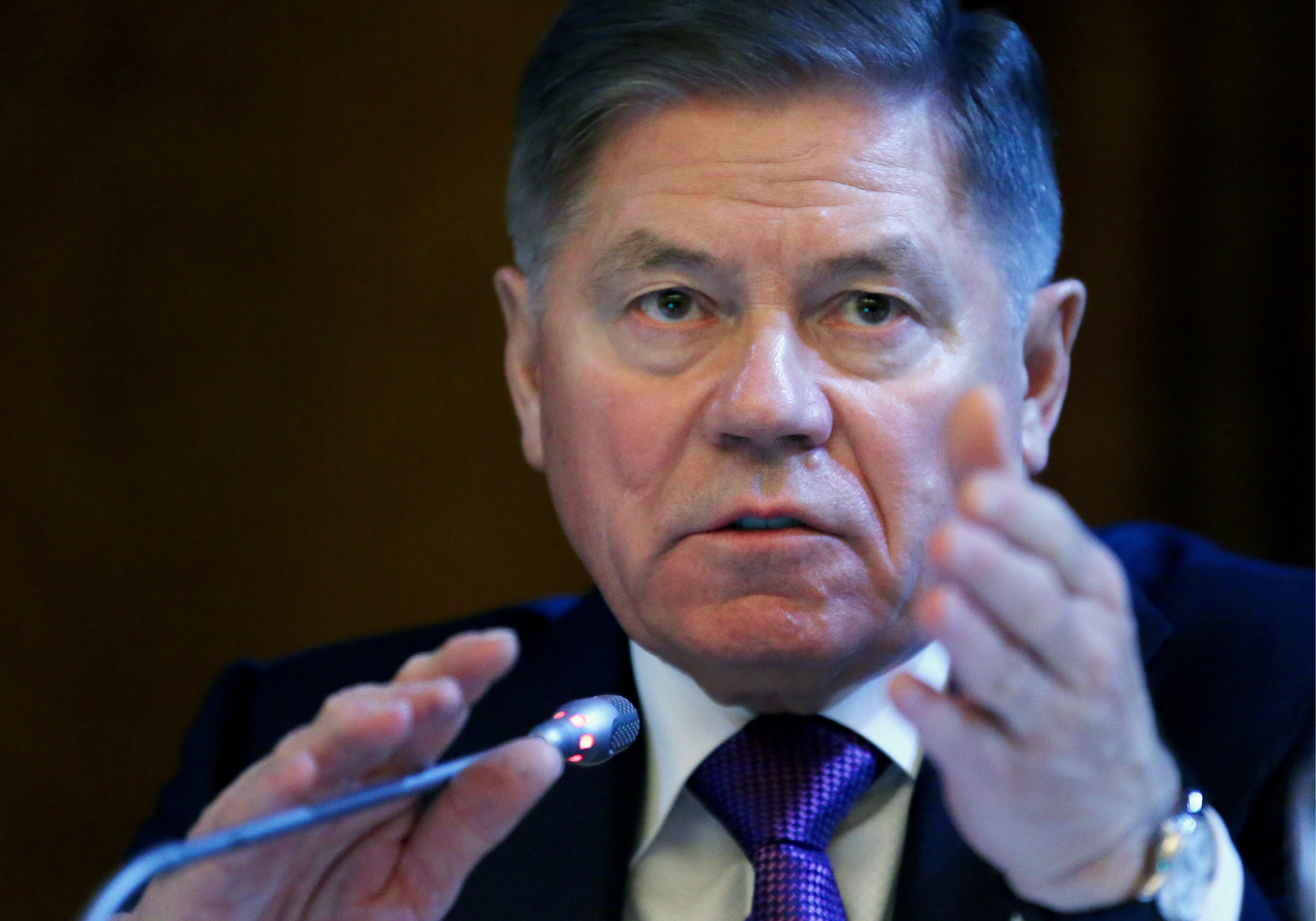
Currently, the European Court is virtually the main instance that considers the complaints of violation of human rights by the Russian authorities - for the period from 1998 to 2016, 140,731 complaints were filed against Russia and 1834 resolutions were adopted on the recognition of the convention. The first such decision in the Burdov against Russia case was issued on May 7, 2002 - the applicant (participant in the liquidation of the consequences of the Chernobyl accident. –Ir) awarded compensation for non -pecuniary damage in the amount of 3 thousand euros for violation of the right to a fair court and protection of property.
Over the past 10 years, a total of complaints against Russia has been awarded almost 1.935 billion euros of compensation (of which 1.866 billion - on the complaint of the Yukos oil company in 2014). If you do not take into account this record for the Council of Europe, the amount of compensation, it turns out almost 68.5 million euros.
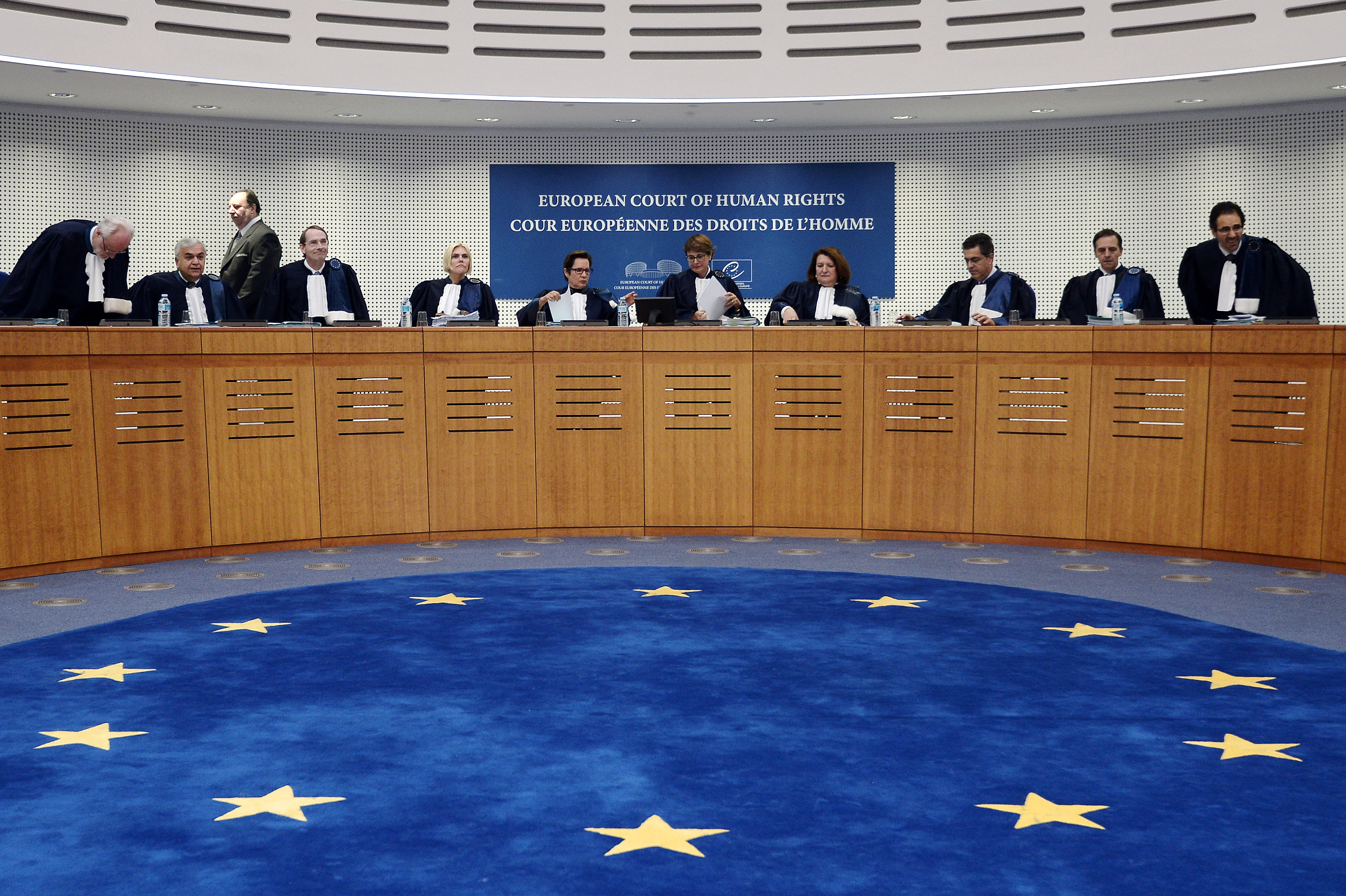
The statements of officials to reduce the number of appeals in the ECHR, of course, should be treated with caution. Firstly, it is impossible to determine the total number of initially initially submitted complaints, since only those appeals that the court made at least any formal decision fall into official statistics for the year.
Individual complaints about violations committed in the Crimea have already been sent
Secondly, not only Russian citizens can file complaints against Russia, but everyone who believes that their rights are violated by the authorities of our country, including foreign states. So, for example, the court recognized violations of the Convention during the collective expulsion of Georgians in 2006 on the interstate complaint of Georgia (the second complaint related to the Russian-Georgian armed conflict in August 2008 was recognized as acceptable, but the decision on it has not yet been made). The consideration of the interstate complaints of Ukraine "in connection with violations of human rights in the Crimea and the occupied regions of the Donetsk and Lugansk regions of Ukraine" are also under consideration.
Russia has already been recognized as responsible for violations of human rights in the territory of Moldova actually controlled by it (in Transnistria), complaints of the inhabitants of Abkhazia filed to Georgia and Russia were communicated in May. Individual complaints about violations committed in the Crimea have already been sent.
In January 2017, the ECHR issued a decree regarding the ban on foreign adoption (the subject of consideration was 16 complaints from 45 US citizens and 27 Russian children).
Finally, thirdly, according to the European Court itself , in relation to Russia, the number of appeals considered since 2015 changed slightly (in 2015-6712, in 2016-7010, for 7 months of 2017-3817 appeals).
The number of complaints considered against Russia (that is, those that are at least not recognized as clearly unacceptable in the early stages of production), on the contrary, increases
At the same time, commentators lose sight of an important circumstance - since last year, the ECHR began to actively combine the same complaints, making general decisions on them. Such decisions, as a rule, are attached tables with the distribution of compensation amounts to individual applicants. That is how 160 complaints were considered in 2015 (with the adoption of 116 decisions), in 2016 - 645 complaints (228 decisions), and for 7 months of 2017 there are already 495 complaints. Thus, the number of complaints considered against Russia (that is, those that are at least not recognized as clearly unacceptable in the early stages of production), on the contrary, is increasing.
The unification of the same complaints took place earlier, first of all, in cases of abductions and murders of civilians during the Second Chechen War. As a rule, large amounts of compensation are associated with this: for example, in the case of Esmukhambet and others against Russia (2011), the total amount of compensation amounted to 1.5 million euros; in the case "Pitsaev and others against Russia" (2014) –1.9 million euros; In the case "Odceuev and others against Russia" (2016) - 1.129 million euros. However, recently, such a practice applies to other matters: for example, under Articles 5 and 10 of the Convention, in cases of detentions on mass protests, persecution for reposts in social networks.
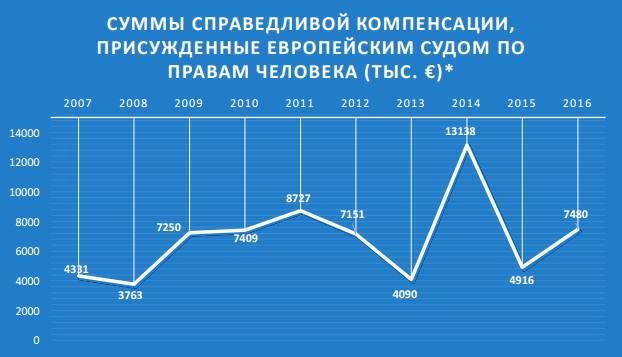
The need to increase expenses in connection with compensation payments also realize the financial authorities of the country. After last year's scandal with delay in payments, budget expenditures in the period from 2017 to 2019 were increased immediately by a third - up to 600 million rubles a year.
Thus, the amount of planned payments for payments over ten years increased by more than four times, despite the fact that the total amounts of compensation increased by no means so significantly (excluding the "case of Yukos").
Not all amounts awarded by the European court are paid immediately - the authorities have three months
It should also be taken into account that in addition to the compensation awarded by the decisions of the European Court of Human Rights, the court regulations provides for the possibility of the parties to conclude a settlement agreement or (in case the applicant refuses the conditions proposed by the authorities) payment on the basis of a one -sided declaration. In both cases, the respondent state recognizes the violation of the rights of the applicant and, if possible, eliminates them, and also, as a rule, pays the applicant compensation. At the same time, the complaint is excluded from the number of cases subject to consideration, and the indicated amounts do not appear in the annual reports of the Committee of Ministers of the CE or the published statistics of the ECHR. It is only known that in 2016 the total number of such acts decreased by 18 percent.
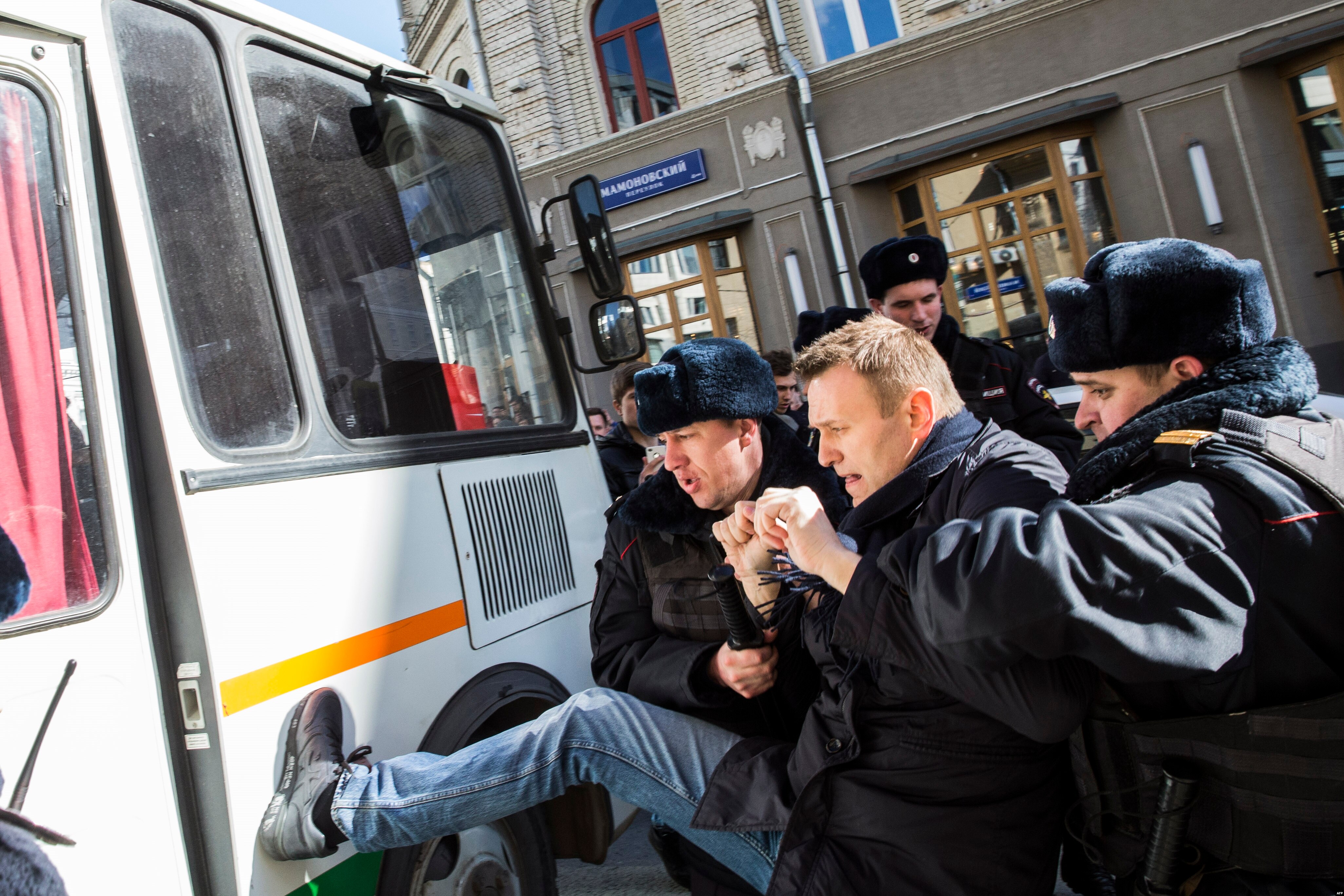
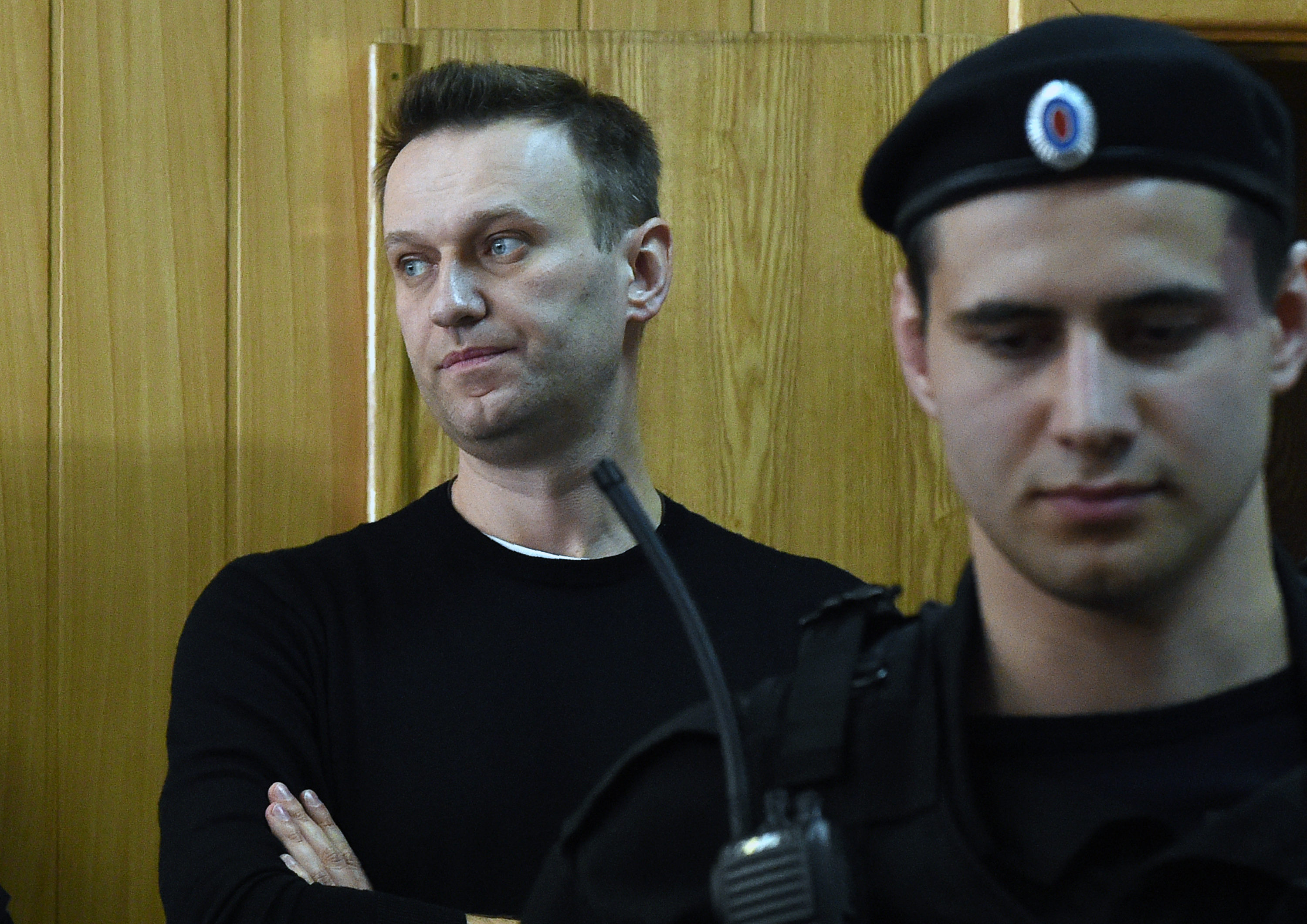
Not all amounts awarded by the European court are paid immediately - the authorities have three months after the entry of the corresponding decision. This period is suspended if the case is referred to a large ward, which is often used by the Russian authorities - for example, on December 13, 2017, the large chamber of the European Court will consider five complaints about the illegal detention of Alexei Navalny , the violations by which were already recognized as a court in January.
Apparently, recently, Russia has been seeking to appeal all decisions as much as possible, especially those by which significant compensation has been awarded-to at least delay their payment. Perhaps this is due to the desire to transfer payments to the next financial year and avoid overrun of funds, as happened in 2009 and 2016.
According tothe report of the CE Committee , overseeing the decision of the European Court, as of August 9, 2017, there is no information on the payment of compensations for 387 cases, which is about a third of the total number of delays.
The Russian authorities have every reason to say that the payment of compensation is delayed due to circumstances independent of them
But sometimes non -payment of compensation occurs due to the fault of the applicant, who does not tell the authorities the details of the account for transferring money or simply disappears. In 2016, the ECHR issued a decision in the Bagdonavichus case and others against Russia, in which he recognized violations of human rights committed during the demolition of houses of 33 representatives of Roma - residents of the Kaliningrad region - in 2006. Each of the applicants was awarded compensation for moral and material damage in the amount of 8 thousand euros. However, for ten years that passed after the demolition of the village, some applicants died, others left for Russia and the connection with them was lost. As a result, the Russian authorities have every reason to say that the payment of compensation is delayed due to circumstances independent of them.
In some cases, apparently, the Russian authorities made a fundamental decision not to execute the court decision. This primarily applies to the Yukos case , for which special amendments were made to the Federal Constitutional Law "On the Constitutional Court of the Russian Federation." Russia's full refusal of the implementation of the decision regarding the payment of compensation will be discussed by the CE Committee in September 2017. The prospects for the payment of this amount are currently foggy, however, undoubtedly, this issue will sooner or later have to resolve.
In addition to the European court, decisions on violations directly or indirectly related to attacks on human rights are also taken by other international bodies.
The ship returned to Amsterdam only on August 9, 2014, part of the equipment was not returned
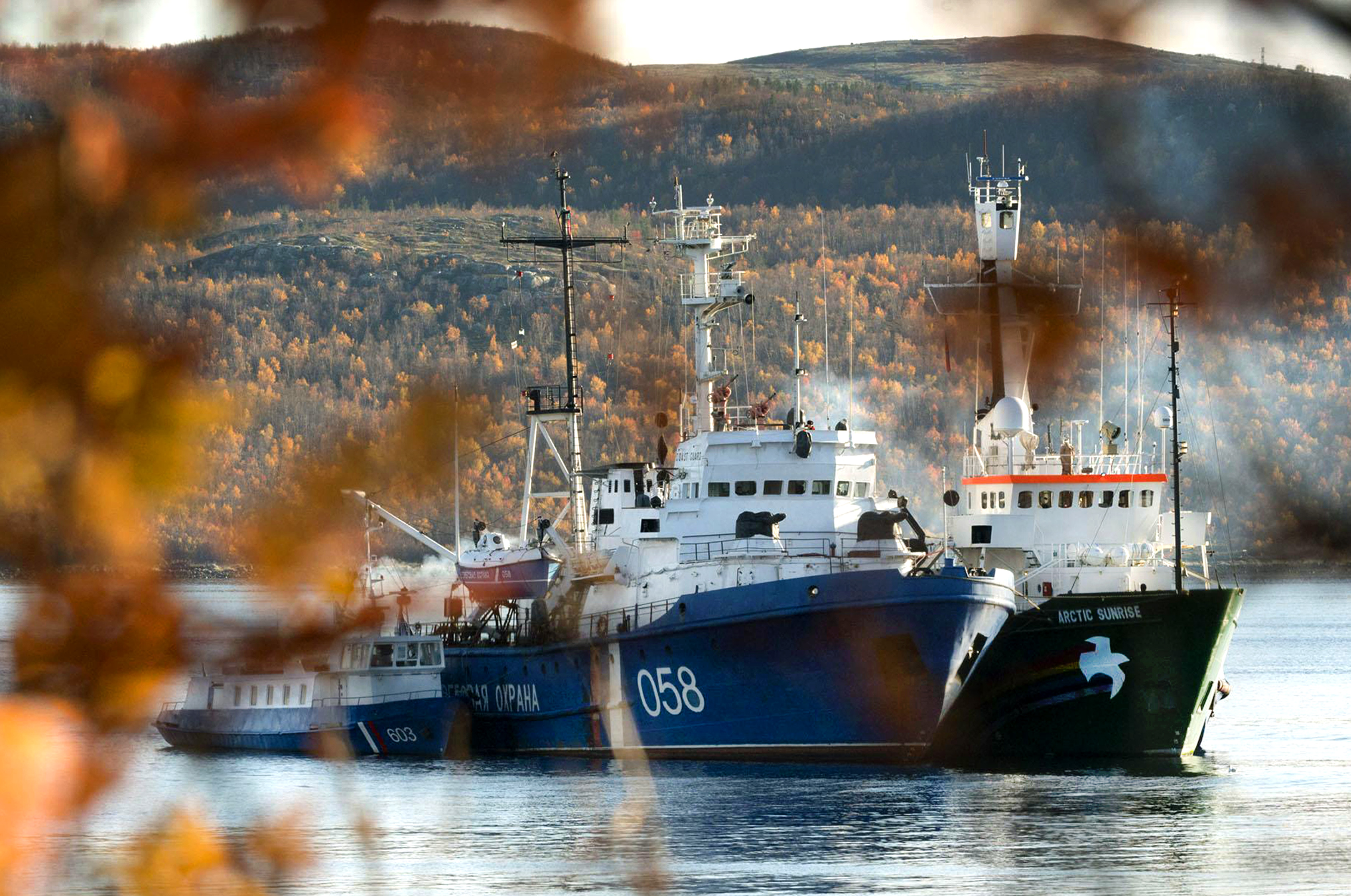
In July of this year, the International Arbitration in The Hague, for example, recovered 5.38 million euros of compensation from the Russian Federation for the detention of Arctic Sunrise, owned by Greenpeace in 2013. This amount included compensation for property and moral damage to the crew, compensation for the damage caused to the vessel, and legal costs. The vessel was detained on September 19, 2013 in the Barents Sea during a peaceful protest against drilling in the Arctic and passed to Murmansk, the activists of the environmental organization were detained and accused of piracy. Later, the prosecution was re -qualified for hooliganism, and subsequently the criminal case was terminated in connection with the amnesty. The ship returned to Amsterdam only on August 9, 2014, part of the equipment was not returned .
They award compensation for violations committed by authorities and Russian courts. Ten years ago, speaking at the board of the General Prosecutor's Office, the then Minister of Finance Alexei Kudrin spoke about 120 million rubles paid in 2007 at the claims of 1.2 thousand citizens who suffered from law enforcement agencies.
According to the data given by the Prosecutor General Yuri Chaika , in 2015 the courts satisfied the claims of 5.5 thousand people for illegal criminal prosecution already in the amount of 665 million rubles.
The neglect of human rights costs the Russian budget about 1.5–2 billion rubles a year
At the same time, according to the statistics of the Judicial Department under the Supreme Court of the Russian Federation, in 2015 the total number of persons in respect of whom acquittals were issued or a criminal case was terminated on rehabilitating grounds, amounted to 15,217 people. In 2016, there were 18,911 people, and if we assume that the ratio did not change, the amount of compensation can amount to about 820 million rubles.
In addition, in 2016, Russian courts satisfied 279 claims about compensations for violation of the right to consider the case or to enforce a judicial act within a reasonable time.
Thus, if you add these amounts, it can be assumed that neglect of human rights costs the Russian budget about 1.5–2 billion rubles a year. An expensive pleasure, but the Russian authorities are still affordable - the indicated amount of payments only slightly exceeds 0.01 percent of the planned amount of federal budget expenditures for 2017, which is approximately 16.6 trillion rubles .
The costs of labor of lawyers who defended the position of the Russian authorities in the arbitration in the case of the suit of the shareholders of the Yukos amounted to $ 37 million
Even the payment of compensation awarded by the ECHR applicants in the Yukos case would hardly have seriously affected the stability of the financial system. But here is a matter of principle. A serious problem for the authorities could be the Hague arbitration solution to recover more than 50 billion dollars in the suit of the shareholders of the Yukos, but it was canceled and the prospects for the new proceedings remain unclear.
In the price that Russia pays for violation of human rights, it is necessary to take into account the costs of legal support of cases in international bodies. For example, the costs of paying for lawyers who defended the position of the Russian authorities in the arbitration in the case of the suit of the shareholders of the Yukos amounted to $ 37 million . And only for the period from 2012 to 2015 under the article “Ensuring measures related to the direction of Russian lawyers to participate in the work of the European Court of Human Rights” from the federal budget allocated about 145 million rubles.
Damir Gainutdinov - legal analyst of the international human rights group "Agora", candidate of legal sciences