
Translated material
From A to H
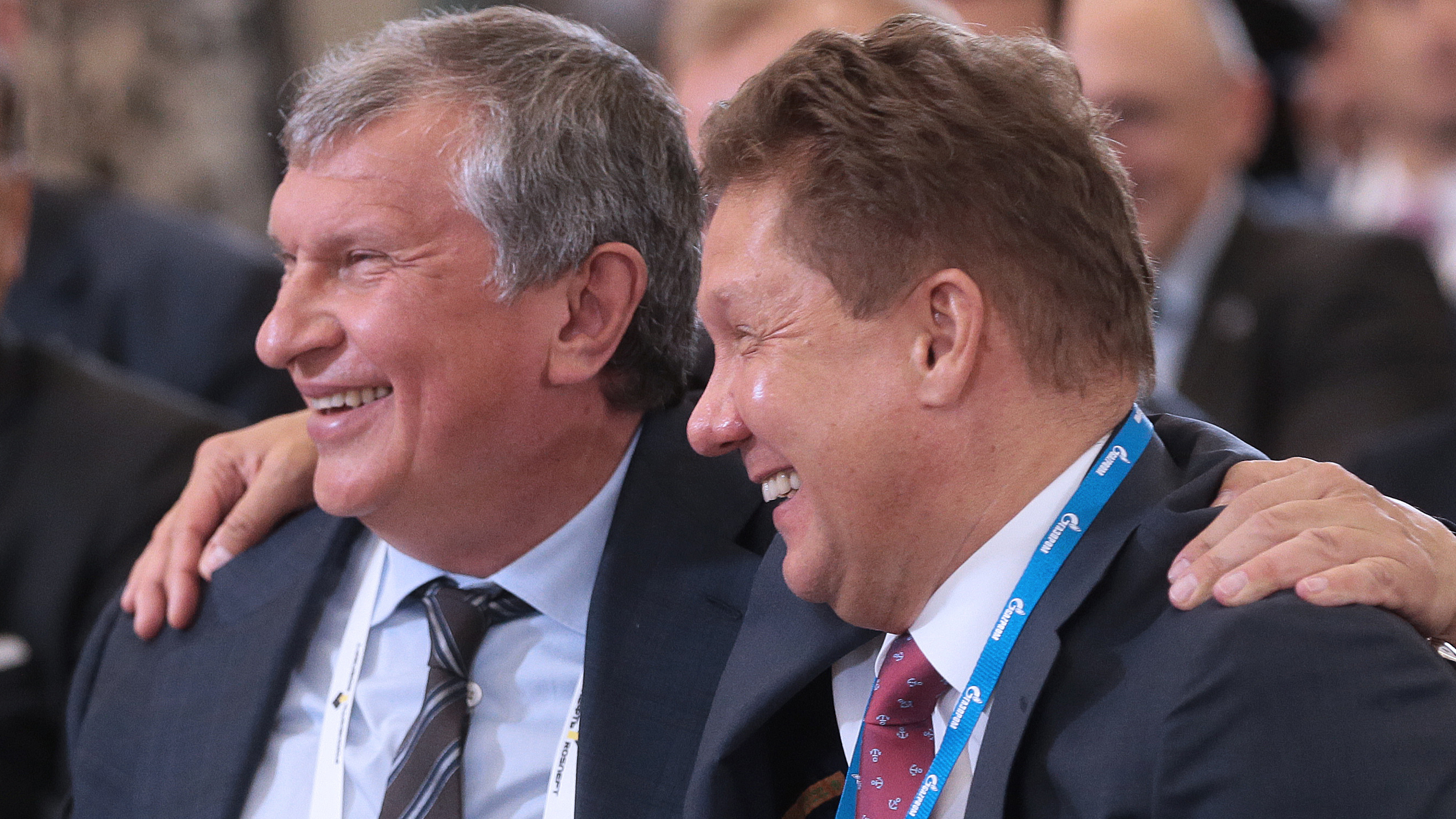
Putin's meeting the day before with the heads of state-owned companies and large businessmen (however, it is not always easy to distinguish one from the other) attracted increased attention - after all, elections are just around the corner. Perhaps because of this attention, some “insights” from the meeting have not yet leaked even to anonymous Telegram channels. The opening statement by Putin himself, published on the Kremlin website, is also not particularly revealing:
Russia's economy is stabilizing. As you know, it is quite obvious, one might say, that it has emerged from the recession, is gaining momentum, and has been demonstrating growth for several quarters in a row.
You can only pay attention to the fact that Putin does not rule out tightening sanctions:
Bearing in mind, by the way, the continuing external restrictions and even the threat of their expansion, I would like to hear your opinion on this matter, your assessments and suggestions.
In the absence of inside information, the proven method of old Kremlinologists remains - to discuss trends in the Kremlin elites based on the arrangement of Politburo members at the Mausoleum (in current realities, the seating arrangements of businessmen at the table headed by Putin). But here the Kremlin confused the cards for Kremlinologists by seating billionaires and top managers in alphabetical order.
The seating chart was published by RBC , providing it with the following comment:
At the president's table there were 40 businessmen sitting in alphabetical order, whose combined wealth exceeded $225.95 billion.
The photo gallery can be viewed here.
Roman Abramovich, as well as the leaders of the Russian Union of Industrialists and Entrepreneurs Shokhin and Yakobashvili, however, ended up on the “presidium” along with Putin himself and the ministers. And directly at the table sat prominent business figures from A to C - from Pyotr Aven to Anatoly Chubais. Aven and Chubais ended up being close to Putin, therefore, Igor Sechin was further away, but, for example, Vladimir Yevtushenkov was almost opposite. The concentration of wealth and proximity to power in the room was so great that it aroused class hatred among some:
September 21. Meeting of businessmen with Putin. The meeting was attended by 40 authorities, whose fortune amounted to more than $225 billion. pic.twitter.com/XzskhPYf10
- Rev. Calendar (@365data_rvk) September 22, 2017
Personally, what I like most on the diagram is the “EXIT” designation.
There are also more offensive opinions:
The seating arrangement of 220 billion... is somehow a bit poor...)) And a bit thin. ..))) even half of Alibaba is not enough all together. ..
The alphabetical seating provided little food for thought:
What does the seating arrangement of businessmen at a meeting with the President indicate? Firstly, about the good knowledge of the Russian alphabet of the Protocol staff. And secondly, in fact, it doesn’t say anything
“And you, friends, why don’t you sit down...” (c)
Another question is the composition of those gathered. Very representative composition.
For the first time, members of the Russian Union of Industrialists and Entrepreneurs and state corporations were seated at the same table. Therefore, they were seated alphabetically, so as not to divide them by type of property: private and state. For private traders this is a good signal, for statists it is unpleasant and alarming. What did BB mean by this?
...
That everyone is in the same boat and now the rules will be the same for everyone.
Alphabetical seating.
However, if we take large groups, the picture is as follows, in descending order of representation:
- Medvedev;
- Yeltsin family;
- Chemezov;
- Timchenko;
- Gref;
- Sechin;
- Rotenbergs;
- Kovalchuk;
- Sobyanin.
Next are smaller groups.
If you calculate by financial resources, the weights will undoubtedly change. Sechin, Rotenberg and Kovalchuk will grow up.
Medvedev himself, however, was not at the meeting, and this was also noted.