
Translated material
Gorchakov and Khlestakov
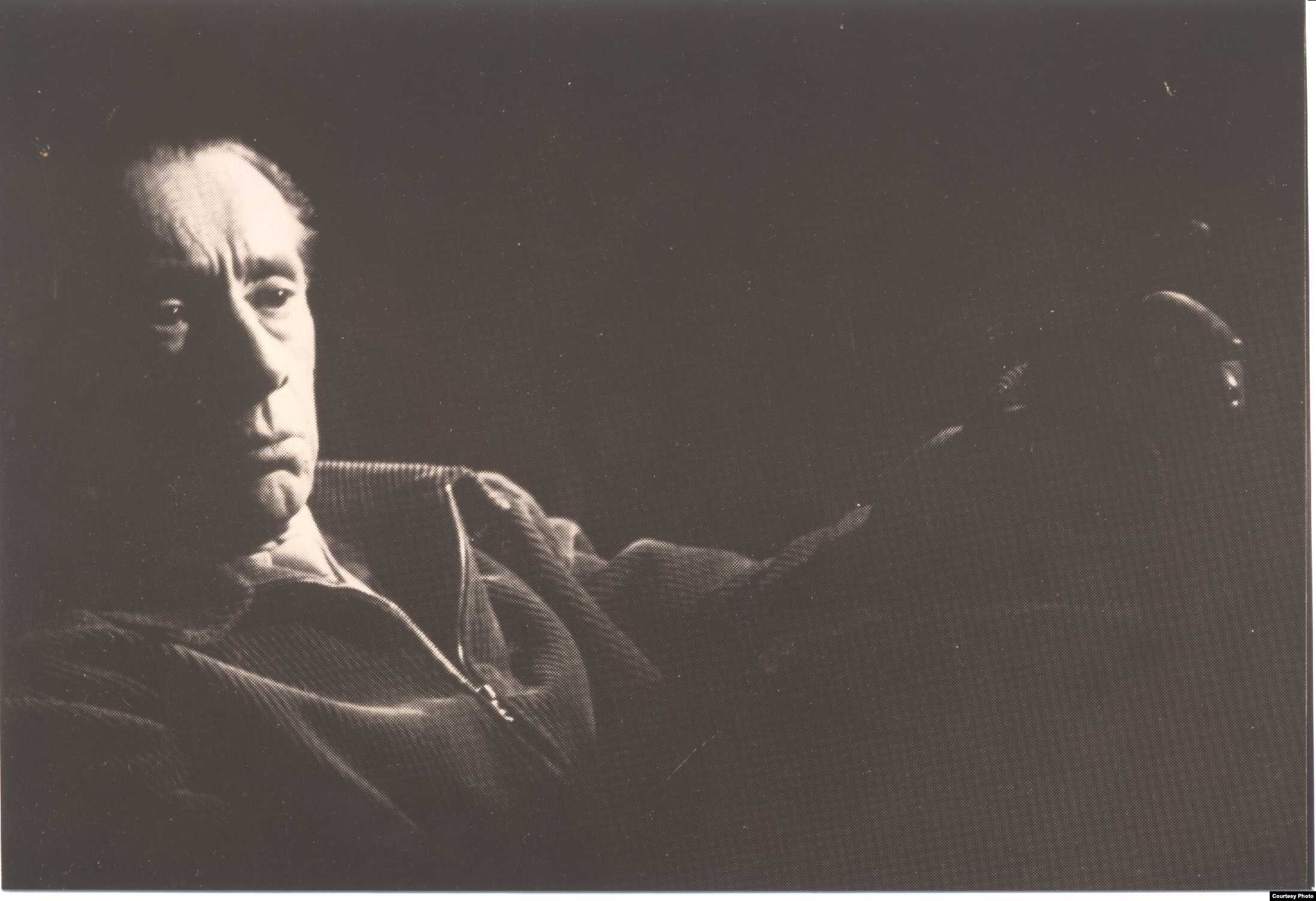
Cold war masks
Whoever worked on Radio Liberty! Left and right, right and wrong. I won’t judge anyone, but I’ll tell you better an adventure story about one mysterious person, for a clue to which I took a lot of time.
The writer, playwright, essayist, theater historian Nikolai Gorchakov, in his cultural experience, belonged to the very narrow category of those figures of the second wave who was in exile, already having a considerable literary experience in the USSR. In this sense, it can rather be compared with those displaced persons (DI-Pi) who came to Germany from quite prosperous places-Limitrof countries, from Czechoslovakia or France. But he does not look like them from political or strange experience, but from cultural experience, in the wealth of intellectual and spiritual impressions that are given to a person in communicating with such figures as Meyerhold, Tairov, Jewish, Alexander Exter, Mikhail Bulgakov.
My hero is a forgotten participant in the pre-war and post-war literary and theater life, hidden under the pseudonym and, one might say, under this pseudonym, who disappeared. But not forever.
If the writers and journalists of the first and third waves of the reason to act at the microphone Radio Liberty under other people's names were very diverse, then their colleagues from the second wave was caused, as a rule, by one motive: fear for their lives and for the life of relatives who remained in the Soviet Union.
There are multi -layer covers of invented names. Gennady Khomyakov was both Andreev and Otadin. Vladimir Yurasov - Zhabinsky and Rudolf. In the real name of Leonid Pulaev (Pavlovsky?) There is no confidence at all.
Radio employee Nikolai Aleksandrovich Gorchakov (so he imagined himself and entered himself in all the documents) was one of the best announcements, with a professionally set voice, low baritone, rich modulations, capable of playing the prosecutor of the past, master, nobleman. No wonder colleagues behind him called him a "prince", and not only Russians, but also the Germans - "Herr Fürst." Gorchakov was not offended, but rather encouraged.
Colleagues behind his back called him a "prince", and not only Russians, but also the Germans, - "Herr Fürst"
At first, he insisted that his surname Gorchakov was genuine, and in private conversations he casually referred to his fame in Moscow theater circles. Indeed, those who wish could make sure: the director and teacher Nikolai Gorchakov worked at the Art Theater, where he came from the third (Vakhtang) studio. Stanislavsky in 1925 attracted Gorchakov to restore "grief from the mind." Nikolai Gorchakov was a co -player of the performances "Sellers of Glory", "Sisters Gerard", "Three Fat Men", gravitated to the satirical genre, historical melodrama, modern fairy tale. Vaudeville Valentina Kataev “Circle Square” set, and in 1933 on the stage of the Satire Theater - “Alien child” Khkvarkin.
His first signed production was the Bulgakov Moliere, and the death of the performance was seriously reflected in his directorial condition. Later he had to prove his political lawsuit.
And for this, Gorchakova was given himself to Gorchakov-emigrant. Why did he dare to take his almost complete name (the real Gorchakov was called Nikolai Mikhailovich, the self -proclaimed - Nikolai Alexandrovich)? First of all, because the interests of both and creative orbits were surprisingly coincided. But the impostor had another hope: he apparently knew that the genuine Gorchakov was sent to the front at the beginning of the war. It is possible that incorrect rumors about the death of his colleagues could reach Pseudo-Gorchakov. But these are nothing more than assumptions.
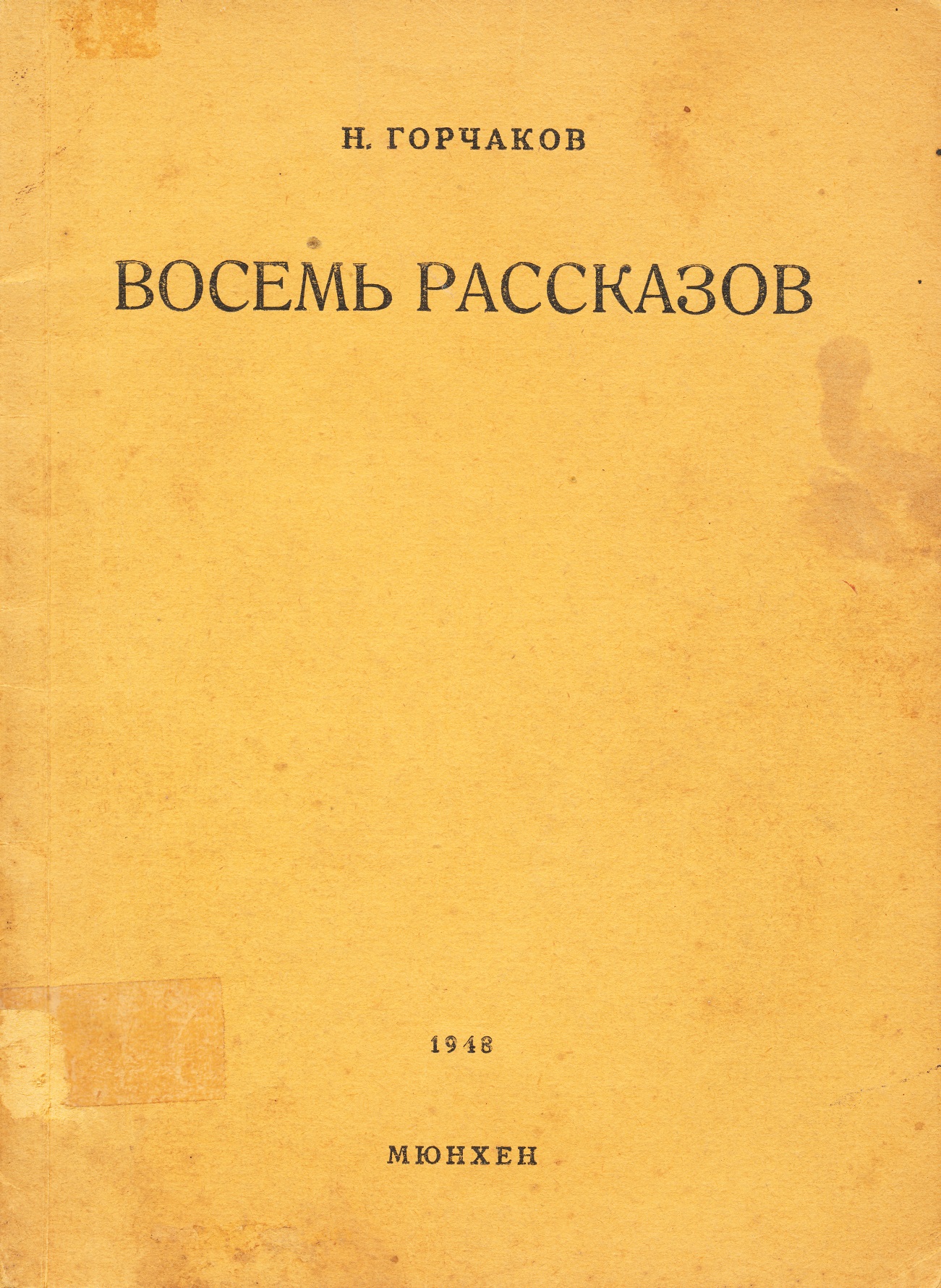
In 1948, in Munich, where Gorchakov was a donkey, his Book of Eight Stories, signed by this, already becoming a familiar surname, was published in the Dipian publishing house Zlatoust.
In the early 1950s, Gorchakov came to Radio Liberation (since 1959 the Radio Liberty called Radio) and served as the announcer in the product department. As expected, the emigrant announcer, he read all kinds of texts - from sports to political, but the transfer of art, literary without a Gorchakovo voice never did. He was not only a high -class master, but also taught the craft of young actors in his own Munich Theater Studio, which, by the way, was a couple of Olga Chekhova at one time.
Together with Gorchakov, other scene professionals were smashed by the same craft, and part -time employees of Liberty - Sergey Dubrovsky (former Mkhatov actor, son -in -law of the famous faith of Pashennaya), Boris Vinogradov (Leningrad, participant in the troupe of Sergei Radlov) and others, in particular Anatoly Skakovsky, to whom we will return.
At the Gorchakov station, he was diligent, but was closed and even rude, sometimes he did not greet it. He sat alone in the work room, without sharing it with anyone, and made the impression of a man with problems in his personal life.
However, Gorchakova softened the drink, and at first he was reluctant to take part in friendly feasts, gradually relaxing, always preserving, however, a parody-satirical mask. In response to the appeal, the “prince” could pick up and respond: “Yes ... I remember, it used to be a sovereign will have a half my cheek and says: Well, Kolya ...”
I remember that it happened, the sovereign will have a half over my cheek and says: well, that, Kolya ...
In addition to the announcer strap, Gorchakov wrote texts for art programs greatly. He owns such, for example, historical and cultural scripts: “Shakespeare is our contemporary”, “On the 700th anniversary of Dante Aligieri”, “Saltykov-Shchedrin and Modernity”, “Friedrich Schiller is a friend of free humanity”, “Gulliver visited where they build communism”, “The death of Mayakovsky”, “Galileo Galileo”, “Galileo Galileo,” "The praise of the stupidity of Erasmus of Rotterdam is not yet outdated."
He was attracted by such a genre as the theater at the microphone. He put the radiovaria of Victor Rozov's play “The Zateik”, adapted his own play “Nikolo Paganini” to the radio, painted the trial of Joseph Brodsky to the voices and took part in the production. For more than twenty years, Gorchakov has been one of the most memorable voices of freedom, a figure with literary and theatal interests.
And not only the figure of the radio. In Salzburg in the early 50s. Gorchakovo comedy "Gasparino" was staged in the Russian theater.
Few of the colleagues at the radio station guessed that their unsociable neighbor was working in parallel on a large book - The History of the Soviet Theater. When she is published in the New York publishing house named after Chekhov, Gorchakov not only does not give her to anyone, but does not show it. Colleagues will learn about this side: the books of the Chekhov publishing house are well known in exile. They are sold and advertised everywhere, and one copy acquires a library of freedom.
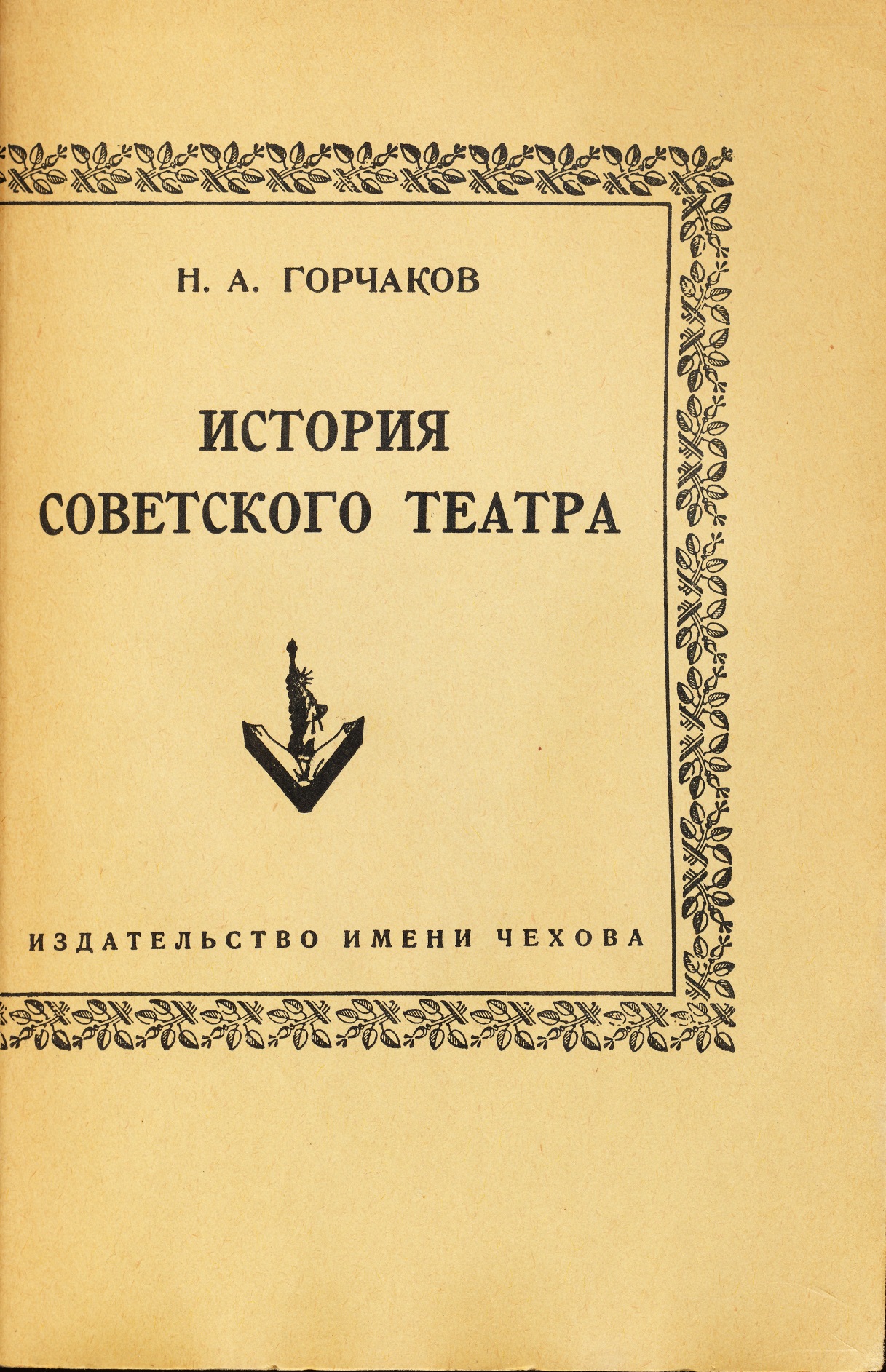
The History of the Soviet Theater is signed by the same name, but Nikolai Gorchakov by this time no longer insisted on the authenticity of the surname. In the editorial correspondence with the Chekhov Publishing House (stored in the Bakhmetyevsky Archive, New York), he asks the editor Tatyana Terentyeva not to insist on the disclosure of the pseudonym: he is not ready for this.
And in a letter, the historian Sergei Melgunov, who at that time, headed the Paris magazine "Renaissance", Gorchakov writes with all clarity:
“With my name, I can’t sign things purely political. Just because of some kind of funny, but the last remaining precautions I have. We live here in the situation, through the impregnated Bolshevik agent. Today it only monitors us and our addresses. But on the day when the warfare is released because of the turn, this agent will begin to join us around the corner and not due to the corner and not From the corner.
We not only did not think of creating counterintelligence and protective organs from the fifth column in exile, we are infinitely careless to all our co -emigrants. We are pushing, easily and thoughtlessly, left and right, the genuine names of the fugitives from the Soviet Union, and they are eavesdrophic by Chekist agents, and from our carelessness-somewhere in Russia-many of these fugitives are thrown into katzets and death. We are very little thinking about protecting others.
I do not replace you with ranting this, but in justification of my apparent cowardice. Signing the anti -Bolshevik thing with its real name is to give dozens of relatives and friends in the USSR into the hands of the NKVD. You did not guess about this by chance? ”(Archive of S.P. Melgunova, London School of Economics).
In addition to the main pseudonym, Nikolai Gorchakov signed his articles and feuilletons by names N. Aleksandrov, A. Nikonov (magazines "Grani", "Renaissance", "Literary contemporary"). In the Munich monthly, "Freedom" was published as anisy shaft.
Among other Gorchakovo names, both Alexander Volkov and Nikolai Volkov are found. The choice of such a pseudonym is unlikely to be accidental: it is possible that the reference to Volkov allowed Gorchakov to connect his past (in the eyes of the emigrant community) with another theater critic, playwright and librettist - the well -known biographer of Vsevolod Meyerhold. The real Volkov was also called Nikolai, and he was also close to Tairov. The Volkovskaya unfinished biography of Meyerhold (in 1929, the Academia published two volumes of three planned) provided another page in the cultural sources of the emigrant biography. Even if he was not the same Gorchakov, the path is not the same wolves, but he was somewhere there, he knew everyone, his judgments and authority are at a venerable height.
Let him not be the same Gorchakov, the path is not the same wolves, but he was somewhere there, he knew everyone
This is how the meaning of this Khlestakov region is seen.
One can imagine the reaction of an emigrant sub-supporter, when he hoped that the genuine Gorchakov and Volkov died at the front, picked up with irritation, preparing his "History of the Soviet Theater", the post-war Moscow monograph "Directory Lessons of Stanislavsky", whose editor was real Nikolai Volkov.
A brief biography of Nikolai Gorchakov and the list of his publications is placed in the directory "Writers of Russian Emigration", compiled by Vladimir Batshev. According to the compiler, Nikolai Alexandrovich was born on June 2, 1901 in St. Petersburg and died on August 31, 1983 in Munich. The source of this information is not indicated, but the date of death needs an amendment: not earlier than 1985.
And on this one could put an end to, if not for the main question: who was still hiding under this pseudonym? To answer, you will have to go in the opposite direction from the fatal autumn of 1941, when the writer was captured.
And who was still hiding under this pseudonym?
Reading the Gorchakovo "History of the Soviet Theater", I caught myself thinking that such a competent and comprehensive competent author, who clearly knew many heroes of his panoramic research personally (in 1958, Gorchakov’s book would be transferred to English and will be released in New York at the Publishing House of Columbia University), he was supposed to leave his real name for history. Somewhere in the subordinate clause ...
And on page 197, in the footnote, we read: "The general artistic leadership of the" Conspiracy of the Equal "was A.Ya. Tairov. The directors of the play were N. Sokolovsky and M. Fedosimov. Artist Ryndin. Dancing was put by Natalya Glast."
That is how the names are hiding: modestly, below the page, but forever. So, as Nabokov wrote in his Enigmatic Katrena:
But how nice that at the end of the paragraph,
Corrector and century, contrary to
The shadow of the Russian branch will hesitate
On the marble of my hand.
This shadow helps to start in search.
Georgy Bakhtarov, who worked in the Leningrad Satire Theater in 1927, wrote in the “Actor's Notes”: “Somehow a young self-confident impudent director from the Stone theater Nikolai Sokolovsky came to us. Very noisy, shouting, but gifted. On our tiny stage, he put the comedy of Yakov Mamontov“ The Republic on Wheels ”on the same village under the name called Buzonivka arranged his republic, and in another village, Staronivka, the man turned out to be the same and created his own.
It was from this performance that the famous song "From the Odessa Kichman" began its life subsequently.
By the way, the role of one of the bandits - Andrei Bubka, the careerist, Zabuldygi, drunkards and Lovelas - was played by Leonid Utesov. It was from this performance that the famous song "From the Odessa Kichman" began its life subsequently. Apparently, the idea with the Utesian intermedance belonged to Sokolovsky.
Small biographical information scattered through autobiographical essays, signed in exile by the name of Gorchakov, allow us to compose, if not a reliable picture of his path, then at least get an idea of constant interests. If the conjecture about his real name (Sokolovsky) is correct, we can look for his personal papers in the archives of Moscow theaters. This work has yet to be done.
So far, from the words of our hero, it turns out that he studied at Gectemas (state experimental theater workshops), was a student of the School of the Chamber Theater, in which he worked as a director in the 1920s. In one of the letters of 1927, Tairov calls Sokolovsky "young theater". On November 8, 1927, as Gorchakov recalls in the footnote of his book, he directs the "Conspiracy of Equal" by Mikhail Levidov. This production ended with a great scandal: this was the first performance in Moscow, closed for political reasons. According to Gorchakov, there were no (and could not be) in the press. After the premiere production, the play was removed from the repertoire, and the production until the 1950s was not mentioned even in the official historiography of the Chamber Theater.
This was the first performance in Moscow, closed for political reasons
The "Conspiracy of Equal" set forth on the stage of the tragedy of Baboe after Termidore. In the crowded hall, the words about the revolution, about repressions, and the guillotine sounded. The goosebumps ran through the backs of the audience: the story of the directory was perceived as dangerous today. Spectators of the "Conspiracy of Equal" thought about provocation. The author of the play - Mikhail Levidov - was a branding Trotskyist.
It is clear why Nikolai Gorchakov was important in the mid-1950s, in the era of the "Crusade against Communism", just in case, to be noted in the free press: he made his contribution to the destruction of the totalitarian system since 1927.
However, after 1927, Sokolovsky’s theatrical traces are sharply lost. Perhaps, fearing persecutions after the unfortunate production, he felt for prudence not to expose his last name for showing.
Two years ago, walking on the search engines, I came across in the living magazine of the famous blogger Igor Petrov (domain name Labas) to his correspondence with the Moscow translator and publisher Evgeny Vitkovsky, who also entered the figure of Sokolovsky, but completely on the other side.
July 23, 2013 Evgeny Vitkovsky wrote:
"Another very significant writer from among those who" perished in the militia. "It was a very brilliant (by current standards) prose writer Eric Ingor.
Suddenly another very significant writer from among those who "perished in the militia"
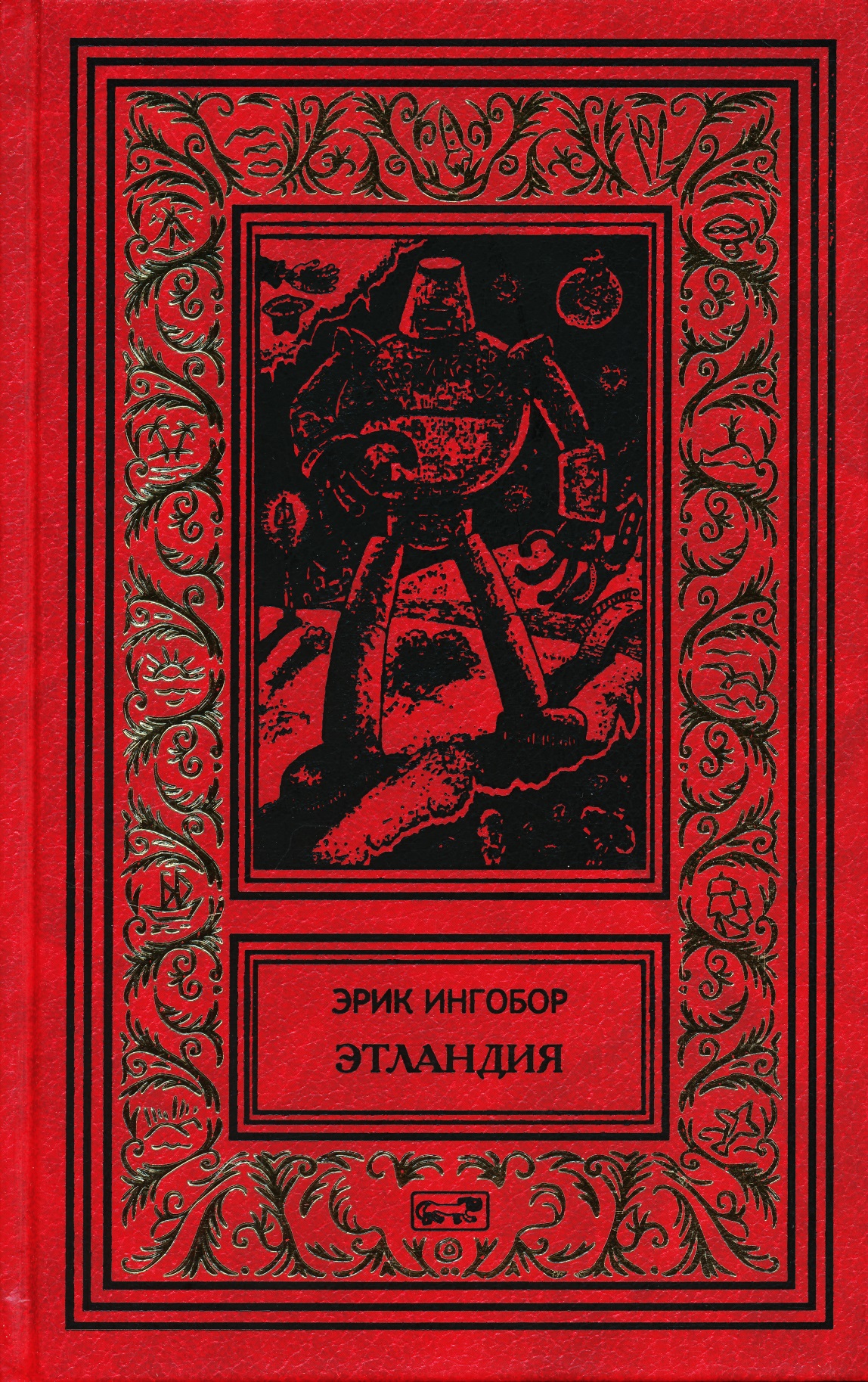
Eric Ingobor [pseudonym Nikolai Arkadyevich Sokolovsky] (born 1902, Chistopol - no earlier than October 1941) - Russian prose writer, playwright, science fiction writer, successor of the traditions of Herbert Wells, author of two books - Fourth Symphony (1934) and Etland (1935), detailed in the article "On Epion" ("October", 1936, No. 5), after which as a prose writer could no longer be printed. Surrealistic prose of Ingobors was valued by its correspondents - such dissimilar writers as A. Makarenko and V. Shklovsky. He was called up to the "writer's militia" of Moscow (as an quartermaster), included in the 8th Infantry Division; He was captured on October 5–6, 1941 near the city of Yelny; On October 10, he was taken to the concentration camp of the lands in Pomerania. Further fate is unknown. To this day has never been reprinted. Eric Ingobor prose is another evidence that social and anti -utopian fantasy continued to exist in the USSR and during the most terrible revelry of censorship.
Like a prose writer and how a science fiction writer is this author (...)
We should try to find out whether he died in the camp or there are some traces after Zemlov (he was not one of the militia).
As a prose writer and as a science fiction writer, this author of Etland, the Fourth Symphony, etc. It is inferior only to S. Krzhizhanovsky. "
Igor Petrov answered at the same time:
"Thank you for the information, Evgeny Vladimirovich.
But here it turns out that something was suspected on the Soviet side, there is no Moscow writers on the commemorative board of Moscow writers.
So far, unfortunately, nothing has been found on the surface. But you will still have to look. And how is it about the lands, if not a secret? "
Vitkovsky's answer:
"I reviewed the lists of prisoners of war. He was taken out and was listed almost as who arrived in the lands. I only fear that this was the date of death in Zemlovo. I did not even know him (even the name from under the pseudonym accidentally, finding his writer's questionnaire). It is important because the writer unexpectedly had the future-if he did not become a religious one, then it is not a religious one, then it is not a religious one, then it is not a religious. It was found, they will be constantly, and the plays, I'm afraid they will go on stage. "
Petrov's answer:
"Yeah, on the OBD [united data bank], I found only the post -war petition of my wife for the search, I did not find lists."
Nevertheless, in the New World magazine (No. 2, 1958, p. 196) the list was printed: “In the fight against fascist invaders, 275 Soviet writers died (according to incomplete data). A list of writers are published below, the time and place of the death of which are not established: [...]”; Among the 64 names cited by the New World are Eric Ingobor (Nikolai Sokolovsky).
Igor Petrov continues: “And in the rgali strange dates [...] extreme dates: July 23, 1941 - December 24, 1946. [...] You don’t know what is there from December 1946? A wife’s letter about the transfer of documents?”
Vitkovsky's answer:
“There is an incomprehensible list-a copy, not the original, with a statement to the Union of Writers from someone and the Writers Union, with the official request for the date of Sokolovsky’s death. And someone was drawn:“ He died in the militia. ”I believe that this is a document on the basis of which his name in the“ New World ”appeared.
With Evgeny Vitkovsky, we were looking for the same person
Thus, with Evgeny Vitkovsky, we were looking for the same person. And both came to the surname Sokolovsky through the literary work of our hero. I did not know about Eric Ingor, Vitkovsky has not yet known about Nikolai Gorchakov.
But what gives me confidence to say that Nikolai Gorchakov was actually Sokolovsky? So what, that he cites this surname in a single footnote in the "History of the Soviet Theater"? As Berlioz said, after all, some evidence is needed.
Со своей догадкой я 15 лет назад в разговоре обратился к ветерану Радио Свобода, режиссеру по первой профессии Анатолию Васильевичу Скаковскому. Как, говорю, настоящая фамилия Горчакова?
Скаковский быстро ответил: "Так он же… Как его?.."
Я замер, боясь спугнуть старика.
"У него такая простая фамилия. На мою похожа".
Я мягко подсказал: "Соколовский?"
"Да! Да! – вскричал Скаковский. – Соколовский! Ну, конечно, Соколовский".
"Да! Да! – вскричал Скаковский. – Соколовский! Ну, конечно, Соколовский"
Когда я закончил свое сообщение на конференции по эмигрантским псевдонимам в Бохуме (2014), присутствовавший в зале Габриэль Суперфин поинтересовался, знаком ли я с архивом Горчакова, некоторое время назад переданным в Бахметевский архив Колумбийского университета в Нью-Йорке? В апреле 2015 года мне удалось поработать там с горчаковскими бумагами (Nikolai Gorchakov Papers).
Творческая биография Горчакова (Соколовского) требует дальнейшей разработки, но некоторые уточнения и дополнения к уже изложенному можно, на основании нью-йоркских бумаг, дать уже сейчас.
В анкете, заполненной на машинке при приеме на работу в American Committee for Liberation (Американский Комитет за освобождение [народов России]) 30 сентября 1958 года, Николай Александрович (так он называет в документе свое отчество) Горчаков отмечает: родился в Санкт-Петербурге 15 июня 1901 года (день 2 июня, указываемый Батшевым, можно, таким образом, счесть той же датой по старому стилю). Среди других использованных фамилий в анкете отмечена одна: Сокотовский (явная опечатка, следует читать: Соколовский). Учился в Николаевском Кадетском корпусе в Санкт-Петербурге (1911-1917), курса не закончил "из-за начавшейся революции". Затем – в Государственном институте театрального искусства (город не указан, 1924-1928), получил диплом режиссера.
Послужного списка советского периода в бумагах Горчакова нет, сам он указывает, что в конце 1930-х работал в редакции журнала "Крокодил".
После гастрольной поездки с одним из московских театров в Баку увлекся фольклорными темами Востока и Азии, что очень заметно в его послевоенном творчестве.
Призван в армию в июле 1941 года (8-я Краснопресненская дивизия Москвы). Попал в плен через три месяца – 30 октября.
С марта 1943-го был интернирован в Вене, после войны до июля 1950-го последовательно находился в лагерях перемещенных лиц в Мюнхене, Фюссене, Шляйсхайме. С 1950-го и до самой кончины жил в Мюнхене.
В эмиграции Горчаков был женат на беженке из Риги Клавдии Кулеминой, с которой к середине 50-х разошелся. Она уехала в Венесуэлу. Сына, родившегося в этом браке, часто вспоминал в дневниках и письмах, но в обнаруженных официальных документах не указывал.
С конца 1940-х до начала 1970-х Николай Александрович (Аркадьевич) руководил собственной частной учебной студией актерского мастерства в Мюнхене, читал многочисленные лекции ("Внутренний монолог", "Внутреннее оправдание", "Действие", "Предложенные обстоятельства", "Публичное одиночество", "Сверхзадача", "Свобода мускулов" и др), выступал с лекциями по истории кино.
Углубляя свои преподавательские познания, постоянно читал классические и новейшие книги и журналы на психологические темы.
В мюнхенский период Горчаков написал (и частично поставил) ряд пьес, машинописные тексты которых отложились в его архиве: "Веронские комедианты", "Гаспарино: Комедия масок в пяти сценах", "Паганини".
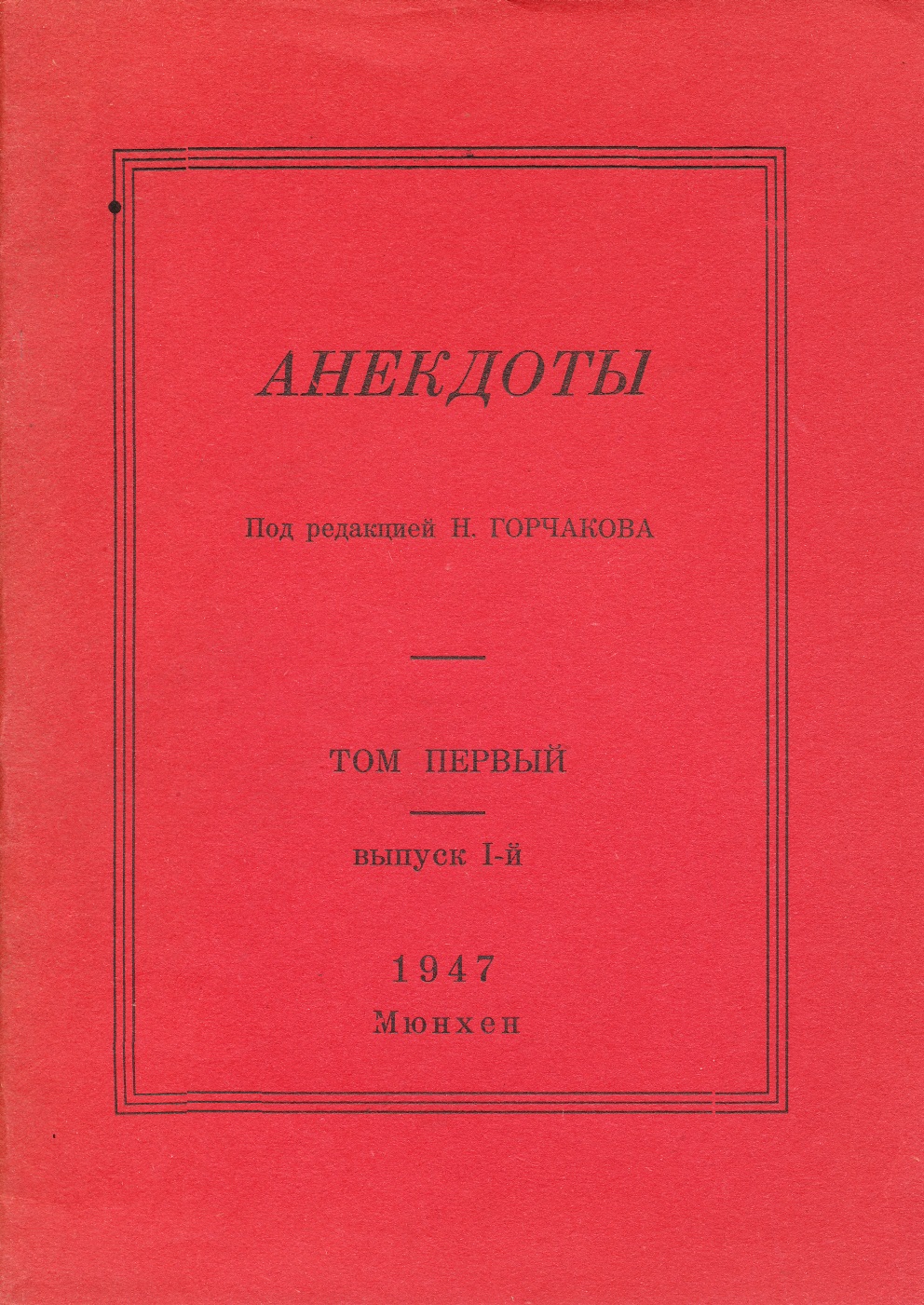
Довоенное увлечение восточными темами привело Горчакова к переделкам известных легенд о Ходже Насреддине и созданию книги полусказочных притч с собственным героем, сатирическим носителем народной мудрости (машинопись "Три тысячи и три шутки веселого моллы Гасана"), перевод которых на немецкий язык, насколько можно судить по бумагам, так и не вышел.
В соавторстве с Н. Мейером написал либретто балета "Похищение Музы".
Закончил киносценарии: "Сервантес", "Таинственная профессия", разрабатывал сценарии сатирических кинокомедий "Шильдбюргеры" и "Таинственная профессия господина Корнера".
В недолговечных послевоенных изданиях Горчаков поучаствовал немало. В основном, эти малотиражные книжки, сборники и журналы погибли, затерялись, стали не нужны потомкам – и отправились на помойку. Можно только фантазировать, что собою представляла такая, например, диковина: Веселый листок: Журнал сатиры и юмора. Редактор-издатель Н.А. Горчаков. Фюссен-Шлейсхейм, Мюнхен, 1946-1948, номера 1-5.
Архив Горчакова полон многочисленных и разнообразных начатых, полузавершенных и полностью законченных рассказов: "В тени руин", "Денди из “Золотого льва”", "Изуродованное поколение", "Неземной дар", "Одиночество", "Освободите место женщине!", "Пролог", "Разговор в ветреную погоду", "Разговор в доме на Вассербургер-штрассе", "Разговор о будущем", "Роковая генеалогия", "Серенада Дриго", "Старик под деревом", "Страх", "Тайна <доктора> Алексиса Андронаки", "Тайна доярки", "Тиранка", "Четвертый пес", памфлеты "Добро и зло богатства: Pro et contra plutos", "Закат нашей цивилизации", "Корова в свободном мире".
По договору с издательством Колумбийского университета (Нью-Йорк) он работал над книгой "История советского театра" (1957). В 1954-м появилось русское издание. Оно в два раза короче рукописного варианта – 400 страниц из 900 с лишним.
Многие годы – вплоть до середины 80-х – Горчаков собирал свидетельства и документы для задуманной им обличительной "Красной книги" о Сталине, составил документально-публицистический трактат "Трагедия инакомыслия" (свыше 500 машинописных страниц).
Постоянно на небольших аккуратных листочках делал выписки различных афоризмов, шуток, анекдотов, бон мо.
Архив рос, но его упорно не печатали ни по-русски, ни по-немецки.
По инерции придумывал все новые псевдонимы – Елена Бар, Иван Семенович Петров, Николай Александров, N.Staggerbush, Предзнаменский, – но нужды в этих масках давно уже не было. Николай Александрович (Аркадьевич) Соколовский был всеми забыт.
У людей Второй волны эмиграции память на прошлое была цепкая. Не совершив никаких преступлений, они знали, что родина на этот счет другого мнения. Кажется, это называют травматическим синдромом.