
Translated material
Locked before the attack?
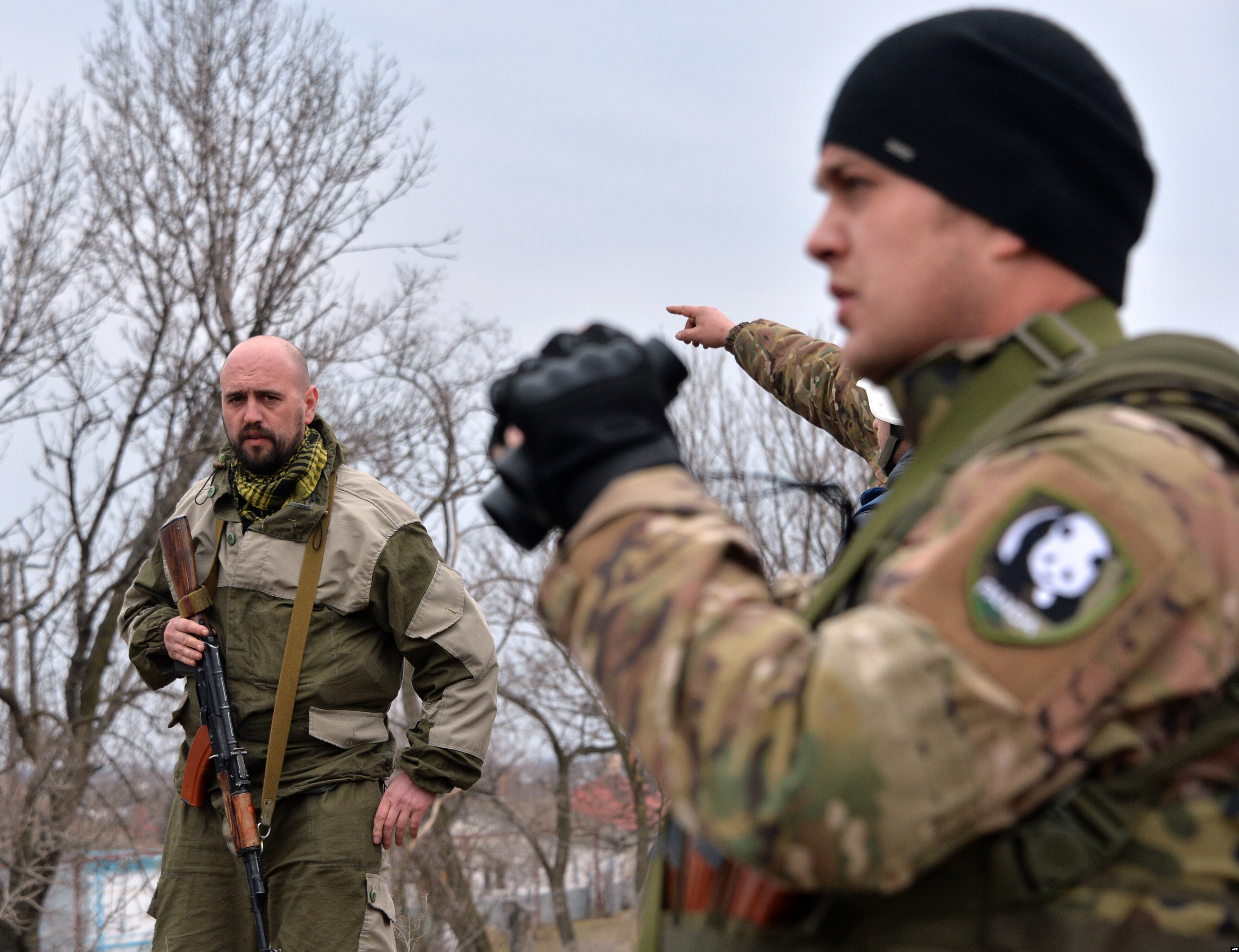
The Ukrainian military and representatives of the separatists continue to withdraw weapons from the front line in the Donbass, not excluding that at any moment a fragile truce can develop into the resumption of large -scale military operations.
One of the main conditions of the Minsk agreements reached following the negotiations on February 12 of the leaders of the Norman Four (Ukraine, Germany, France and Russia) are the ceasefire and the awards of the conflict of heavy weapons. Two days ago, the OSCE confirmed that both the separatists and the Ukrainian military began the withdrawal of heavy weapons from the contact line.
In accordance with the Minsk documents, Ukraine should take weapons from the actual line of the front, and the forces of the so -called "LPR" and "DPR" - from the line recorded on September 19, 2014. The agreements oblige the parties to take heavy weapons to equal distances to create a security zone 50 kilometers wide for artisistes with a caliber of 100 millimeters or more. For more powerful Grad systems, a strip of security should be 70 km 35 km from the demarcation line), and for Tornado-S, Hurricane, Smerch and Point U-140 kilometers (70 kilometers on each side).
On February 26, Ukraine began to divert artillery systems from the front line, in particular 100 mm anti-tank guns of the MT-12 Rapira. Official Kyiv took this step, despite the fact that the enemy did not completely cease the fire. Only on February 27, at least 30 cases of shelling of the forces of the anti -terrorist operation were recorded in the war zone. The militants, in particular, fired from the tank at the checkpoint of the Ukrainian military near the Donetsk airport. As a result, three fighters of the Armed Forces of Ukraine died, another was injured. Before that, there were no victims of the conflict for two days. The head of state Petro Poroshenko warned that Ukraine is ready to return the equipment back "at any time" if the terrorists violate the agreement. The special monitoring mission of the OSCE in the self-proclaimed Donetsk and Lugansk “People’s Republics” accompanied the withdrawal of several artillery columns, military transport equipment and trucks with shells. In total, she counted a 41 122-mm self-propelled artillery installation, four MT-LB with Rockets “Strela” and eight trucks.
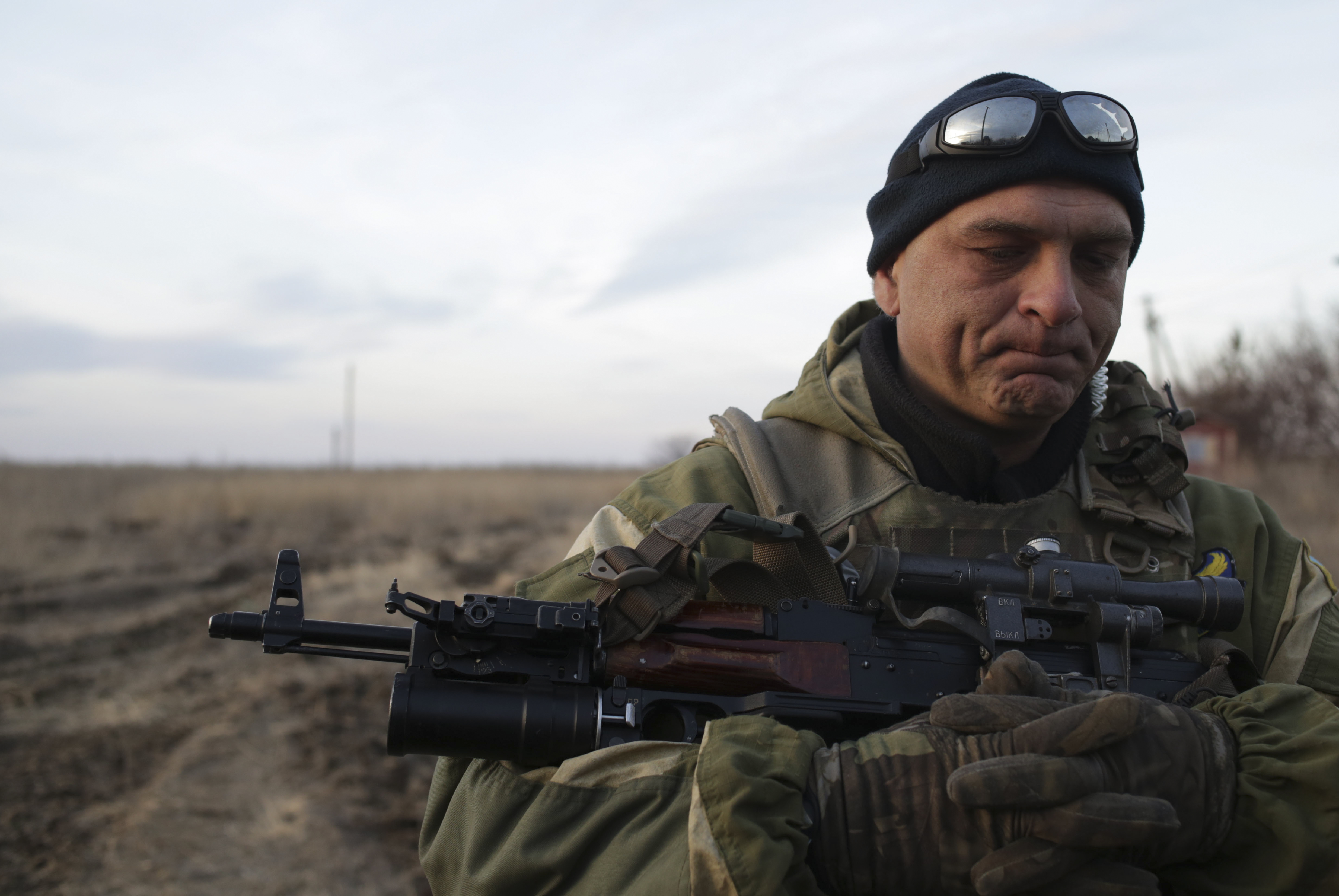
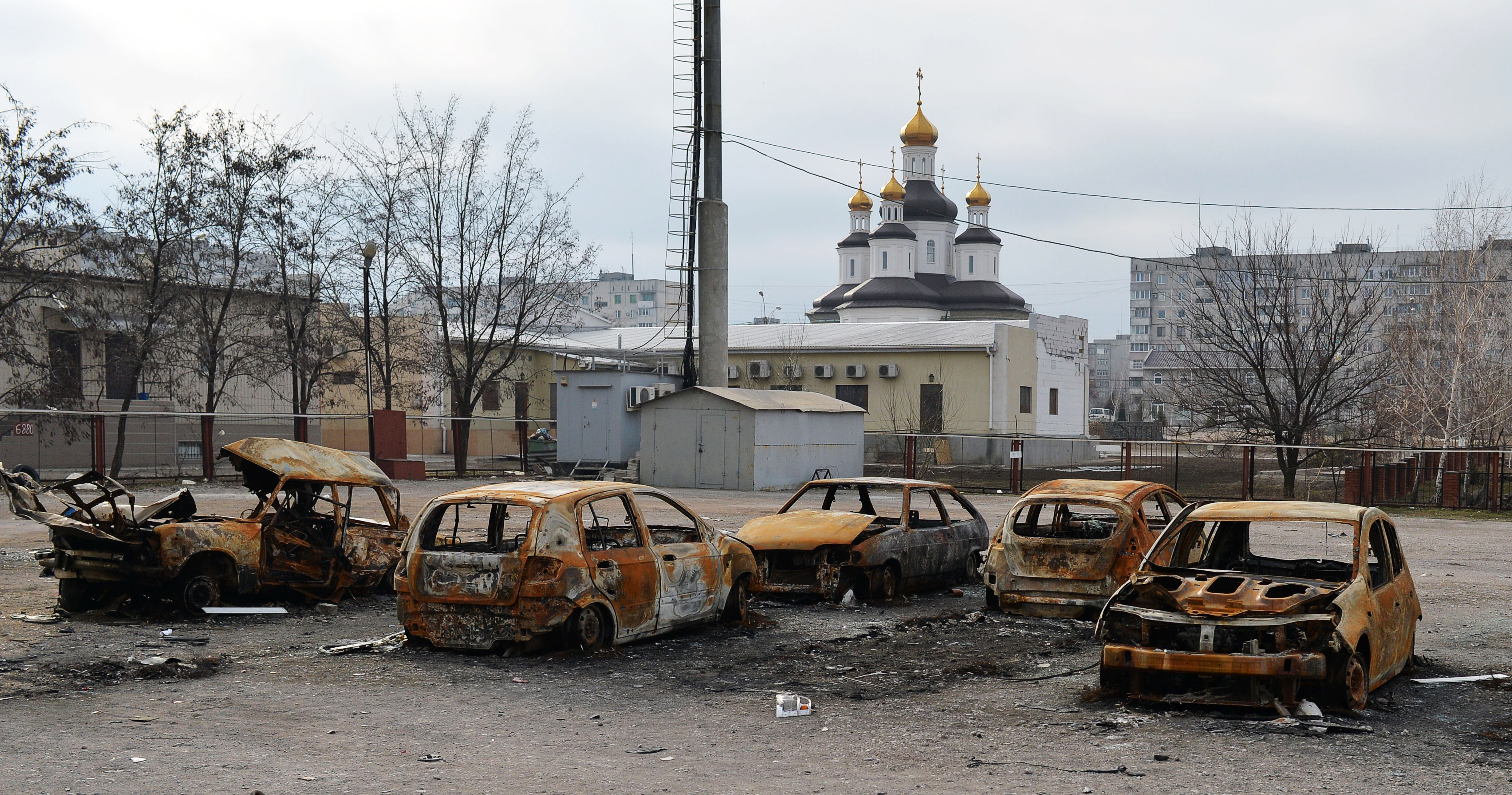
Nevertheless, the Information Resistance group states that the terrorist troops allocated weapons by only 10-15%. According to her, weapons are allocated by terrorists not to the distance agreed by the Minsk agreements, but with the calculation, to return them to their original positions within 30-40 minutes. According to Ukrainian intelligence, from the city of Debaltsevo, militants transferred equipment to the sands, Maryinka and wide and accumulate military equipment and manpower in the cities of Stakhanov, Lugansk and Red Ray, as well as in the area of Popasnaya and Artemovsk. There is a threat of terrorists on Ukrainian positions, in particular, in the direction of the village of Lugansk, happiness, Lisichansk and Mariupol. All this gives reason to assume that the so -called truce is used by the enemy to regroup his forces and prepare for a new attack. Everything indicates that after fierce battles with the participation of units of the regular Russian army near Ilovaisk, Mariupol may become the next hot point on the Donetsk airport and under Debaltseve.
The Kremlin is still considering this port city on the coast of the Sea of Azov as a gate to create a land corridor from Russia to the Crimean Peninsula that had been annexed a year ago. Large groups of Russian troops are now concentrated at the entrances to the Crimea and, obviously, wait in their wings. Vladimir Putin continues to turn the peninsula into a large military base, where nuclear weapons can be located. Without connection with the mainland of Ukraine, which feeds the peninsula with water, electricity and partially gas, such a base cannot exist. And the implementation of projects promised by the Kremlin, in particular, the bridge across the Kerch Strait, due to the economic problems of the Russian Federation, can be delayed indefinitely.
The Information Resistance group calculated that, as of February 27, Russia concentrated 63.5 thousand military personnel in the Crimea and on the border with Ukraine. Most of them are near the border with the eastern regions of Ukraine (almost 22 thousand) and in Crimea (30 thousand). In recent weeks, Russian armored vehicles and artillery systems were transferred closer to Ukrainian positions, in the area of the Perekop Isthmus.
Ukrainian military experts believe that the withdrawal of heavy weapons in the Donbass, which began to conduct the Ukrainian army and imitate the so -called “DPR” and “LPR”, once again proves that Vladimir Putin continues his game, and his plans for further occupation of Ukrainian territories will obviously stop either the possible disconnection from the international system of financial mutual issues of SWIFT, nor other sanctions. Judging by what is happening in the last days in the conflict zone, the separatists and the Russian military supporting them are on Mariupol.
Like the enemy, the Ukrainian side also uses a lull in the Donbass to strengthen its positions. On February 27, Oleg Gladkovsky, First Deputy Secretary of the National Security and Defense Council, said that Ukraine is already receiving lethal weapons from abroad. However, the official refused to call countries and specific weapons, referring to a state secret. It is quite obvious that this is not an American weapon. The United States still has not decided on the appropriateness of its supply to Ukraine, fearing that this could provoke Putin to provide pro -Russian militants to the east of Ukraine with even more modern weapons and military equipment. Against this background, in Washington and London, as noted in Kyiv, the votes of politicians who remind the data of territorial integrity and independence in 1994 in connection with its rejection of nuclear weapons are loudly louder.