
Translated material
New immigration, Riga
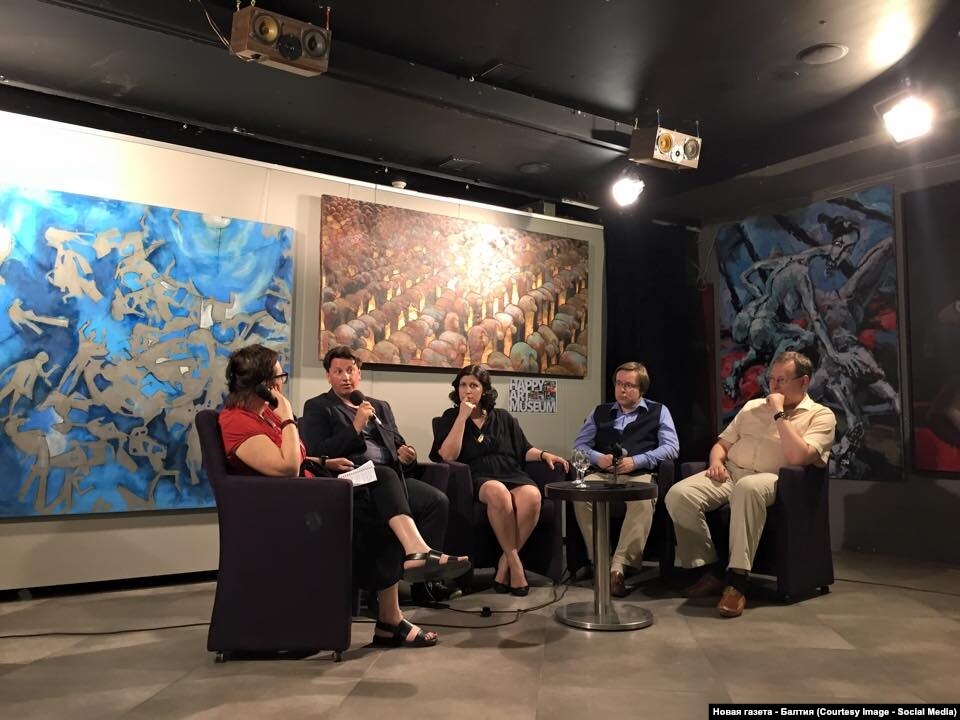
Who are the new Russian Latvians? Or Latvians?
Intelligent opposition to the Russian regime or pragmatists from the Moscow middle class? Political refugees or intellectual migrant workers? “It's time to blame”: is it emigration, or a comfortable temporary evacuation? The law on a residence permit in Latvia and amendments to it, which force immigrants to pay twice: why were the “new Latvians” were indignant? A public agreement on residence permit and legal mechanisms for achieving a compromise between officials and immigrants. Relations between the indigenous Russians and “came up”: antagonism or indifference? Issues of integration and small business.
Maria Shumikhina , Psychologist-KOUSCH; Pavel Pereverzev , personnel management specialist; Alexander Solodov , mathematician, business consultant; Anton Lysenkov , editor-in-chief of the Internet publication “Spectrum” .
Freedom in the gallery Happy Art Museum , Riga.
A joint project of Radio Liberty and Novaya Gazeta -Baltic with the support of the European Russian Initiative and the Spectrum portal.
Elena Fanailova: My interlocutors will be representatives of the organization "New Latvians"-this is Maria Shumikhina, a psychologist-bonus; Pavel Pereverzev , personnel management specialist; Alexander Solodov , mathematician, management consultant; And Anton Lysenkov , editor -in -chief of the spectrum portal.
The definition of new Russian emigration, or "new Russian emigrants", is already subjected to fun criticism. I mean, for example, an article by Ivan Paukov under the name "Muscovites in Latvia: glamorous evacuation." Irony irony, but the author poses serious questions. Is emigration or immigration? Is this political emigration, political choice, or is it just the caution and seniority of people who choose Latvia as more convenient in the linguistic and business comprehension space, as a very friendly space for the political climate in Russia, which is not too pretty to them?
I would ask everyone to tell the story of his move to Latvia. Alexander, when did you move and what prompted you to this? Is the idea that “it's time to blame” has mastered the minds of the Russian educated class?
Alexander Solodov: I arrived in Riga about 2.5 years ago, and the last straw in favor of my decision was the words of the school principal where my child studied. By the end of the fifth year of study, when nothing portended trouble, she said: "I am the director of a private school, so I can do everything I want on my territory, even if it contradicts Russia's laws." That is, its right - the owner and director of a private school - is higher than the laws of Russia. It seemed to me that this is the wrong formulation, clearly not from the world where I would like to raise children and live with my family, and I began to look at other countries, look for an option to move with my family to another place. To where the laws of the state are executed, they are some value where these laws are not adopted arbitrarily, under the influence of the moment, as it was already at that time in Russia.
Elena Fanailova: What are you doing here?
Alexander Solodov: The last year I began to teach children to physics and mathematics and work as a teacher, a teacher of extracurricular and a little school learning process in high school. I work with children from 8 to 15 years old, I like, children, in my opinion, too. I can say that my life has become the most meaningful for me than I was in Moscow. I teach in Russian, in a Russian school.
Maria Shumikhina: We are here for three years. My husband is an economist, he analyzes large indicators of economic data, and for three years certain consequences of decisions made have already become clear. And we began to choose a country in which we want to live, with a more predictable future. They chose from several, came to Latvia, fell in love with Riga and stayed here in fact. It was a very fast solution, in many ways tied on emotions.
Elena Fanailova: Was this due to a change in the political situation, with disappointment in the results of the "swamp business"? I ask obvious issues that were discussed in the circle of the Moscow intelligentsia in 2012-13, and in 2014 reached the peak of discussion and decision-making.
Maria Shumikhina: We even a little earlier made this decision, before the peak, and this influenced. I want to emphasize that this is the totality of reasons. There is such an unconscious (or conscious) expectation that the state should take care of the interests of citizens, and if we see that it does not care in different aspects, then we prefer to choose a place where it will take care.
Elena Fanailova: Are you in Latvia an individual counseling or working in some kind of local company?
Maria Shumikhina: I plan to open my practice here, and while I keep my customers, not only from Russia, but also from other countries, but I will translate it here. Now I advise people on Skype, I go on tour.
Pavel Pereverzev: We first arrived here 5 years ago, in 2011, without an idea to move here, there was simply some kind of technical case that had to be here. Somewhere on the fourth day I had the feeling that I really like here. My daughter was just born, she was less than a year at the time when we tried to move here, and just a few months of life here they showed that it was comfortable, comfortable and so on, the parameters of the quality of life are much higher. And at the same time, these months showed that in Russia the situation is aggravated. I can’t say that we eventually left for political reasons, but I have no doubt that we made the right decision, and for these reasons too. At the time of departure, I have been not a hired employee for several years, I had a small business in Russia. Most of this business I still have remained, and it feeds me, but there are already small projects that we start here, local, including working in the Latvian market and on the Western European market, English -language.
Elena Fanailova: What language do you work in?
Pavel Pereverzev: Russian and English.
Elena Fanailova: Do you have plans to study Latvian?
Pavel Pereverzev: I have an absolutely serious plan to engage in Latvian. Moreover, my whole family, including the parents who moved after us, have already passed the exams, I remained the last in our family, who did not shame the exam. For four years, the whole family managed to learn the language, and, unfortunately, I spend a lot of time in Russia, which does not give me the opportunity to study on a regular basis. I already understand quite a lot, but I still say badly.
Anton Lysenkov: I and I and I moved to Latvia in 2008. It was a business trip. So she dragged on. She was official until 2014, when the editors with which I collaborated ceased to exist, it was the editorial office of Lenta.ru. And I did not so much go to Latvia as I did not return from it. I stay and continue to work here. Because here I can work in my profession as I consider it necessary to do this.
Elena Fanailova: You organized the spectrum portal with colleagues, I understand correctly?
Anton Lysenkov: Yes. To be precise, it was organized by the portal "Delphi", at first as his heading or some kind of subsection, and within a few months the "spectrum" existed within the framework of "Delphi". And then it was decided that this became such a completely independent resource, and we made it an independent resource. This is a Russian -speaking project.
Elena Fanailova: Do they read his Latvians?
Anton Lysenkov: Latvians read it, read both in Russian and Latvian. A significant part of the “spectrum” materials are translated into the Latvian language, to the Estonian language, to Lithuanian and apply both in Russian in the Baltic countries and in national languages there.
Elena Fanailova: A little about the "new Latvians." The most high -profile story that I know about you is that you expressed dissatisfaction with the new law that people who came to Latvia from a certain date of 2014 will have to pay 5 thousand euros for extending a residence permit.
Maria Shumikhina: strictly speaking, this concerned not only the people who arrived after a certain date. This concerned all who received a residence permit on an investor visa.
Elena Fanailova: An investor visa is made for people who have invested a certain amount either in business development, or in the purchase of real estate, or in the banking system, right?
Maria Shumikhina: Absolutely. Changes to the law were a spontaneous proposal from the Sejm, everyone found out about it at the last moment. And there were a lot of consultation with lawyers, we very quickly and thanks to a conversation with deputies created a public organization. As a result, we have taken actions, as a result of discussion with authorities, with deputies and so on, and maybe not only, but, at least, our contribution to this was, the amendments were not accepted in the option, as expected. They were accepted in a more gentle format.
Pavel Pereverzev: There was an attempt by the Sejm to amend the amendments, which we all who came on an investor visa did not like much. We began a discussion with representatives of the Sejm, and began it with the preparation of a letter to the president, where we argued both economically and political and social aspects why we believe that amendments in this format are not entirely correct. We would like to hope that our discussion has influenced the adoption by the deputies of the corresponding decision. The law was adopted in some compromise. Most of us were released for the next five years from paying for those very controversial monetary contributions. And this gives us enough time to learn the language and get permanent residence, which will save us from further payments. But there is a certain group of investors, which you said, those who have acquired real estate since September 2014, which, unfortunately, fell under this law. In this sense, this is not an ideal version of the law, but a compromise, acceptable compromise.
Elena Fanailova: If I were a terry local nationalist, I would say: an excellent law, we will take our 5 thousand euros from these rich Russians! Is there a legal answer for such an idea?
Anton Lysenkov: I can answer only by the fact that it seems to me that the reputation losses of Latvia, and it’s very offensive to me, because I live in this country, and I like it, I am worried about it, from this law at the international level, at the level of attracting investments is so significant than this ghostly benefit that the state budget will receive, and maybe it will not get to the people who fall under it, with them, with them. We can live anywhere. Therefore, I'm not sure that there will be some kind of profit by this law, but reputation damage will be caused, this is obvious.
Pavel Pereverzev: I, as an entrepreneur, are most understandable to the economic arguments. The program "PMC in exchange for investments" was introduced, including to maintain a real estate market in some residential condition. Real estate prices in Latvia are one of the lowest in Europe. Now we will imagine the situation that 40 percent of investors who made these investments suddenly suddenly say: Okay, the content of real estate here is very expensive, we can afford Hungary and a number of other countries in Europe that will provide us with this Schengen visa. We have about 11 thousand investors from Russia, each of which bought one or more objects for 150 thousand, that is, this is a premium segment of the real estate market. If 40 percent of this market is simultaneously put up for sale, the exposure period is growing with terrible force, and the price falls dramatically. Following it, there is a mortgage market, followed by consumer logistics and other markets. From some deputies we heard that reduction in prices is good. But reduction in prices is a market fall. On the fall of the market you can win, but in general, the fall of the market is bad. This is if you take an economic argument, we wrote about it in a very long letter, and it is unfortunate that not all deputies did not read it entirely?
Elena Fanailova: Nevertheless, they have accepted a compromise option now. I was laughed and touched by Ivan Paukov’s formulations when he talks about Moscow Russians, moving to Latvia that this is not emigration, that there is no political moment in this, and this is a comfortable evacuation in an unfavorable economic situation. How do you, as an economist and manager, assess the current Russian economic situation? How comfortable was the evacuation for you? Although in general, in the minds of any person, emigration or immigration does not promise anything particularly comfortable, because it is always a sharp breakdown of social patterns and a circle of communication.
Alexander Solodov: Of course, it was hard for me. It was hard for me in the first one and a half years. It’s hard for me now, and perhaps to me. Harder than in Russia? This is on the one hand.
Elena Fanailova: Nevertheless, you are ready to pay this price ...
Alexander Solodov: Of course! I have already begun to say that these strong changes, this new world, the new environment, they really change something in my head, and I assume that I would never engage in teaching. In Moscow, I was engaged in managerial consulting, helped large companies reduce their internal friction, make them more effective, that is, develop tools for companies to use them and make their companies more effective. Therefore, yes, on the one hand, it’s hard, on the other hand, as I said, it seems to me that my present life is more meaningful for me. Some new faces appeared in it, rather, from such an emotional, from the essential space, and this is on the other side of the scales.
Elena Fanailova: What do you have the most Moscow in Riga? If we talk about a change in a social circle and habits?
Alexander Solodov: I don't know what I miss Moscow. I arrived in Moscow at the age of 17, when I entered the institute, and lived there for almost 20 years. And I feel good here. I am much more comfortable for me from the point of view of life, climate even, oddly enough, the nature of products ... Well, in general, a standard set. And now, thanks to Skype and other IT tools, I practically do not feel that I am somewhere far from those people with whom I really want to communicate, and this does not bother me.
Elena Fanailova: Anton, we talked the day before, and you said that there is a certain antagonism between the “old” Riga Russians and the new ones, especially those who arrived in the last 2-3 years. Can I have a little more? As I understand it, there are old Riga-Russians who live here, their dads and mothers have lived here, who have "come from the beginning of the zero years in search of a favorable investment climate," Europe-Light ", so to speak, in which the Russian language is also in use. But there is also the current third wave. How are relations between these groups built?
Anton Lysenkov: It is a little inconvenient for me to answer this question in the presence of Vadim Radio , who brilliantly designated it in the material for the Spectrum Press, it was called "old and new." Maybe give him a word?
Elena Fanailova: Vadim, please ...
Vadim Radionov: In the Spectra, Anton and I had a topic that was not born spontaneously, in fact. I play in the team "60 seconds", this is an analogue "What? Where? When?" And in this team I am one of the indigenous, you can say so, because all the other guys arrived. And we often discuss these topics, including the relationship between the local Russian population with those who arrived later. And there are a number of moments that, say, to those who arrived, seem more idealistic, in more pink color, maybe than those who live here throughout their lives. Stereotypes interfere.
Anton Lysenkov: I would like to add that anyone who leaves for another country, which he chooses, necessarily accompany the illusions that he builds for himself regarding this place. And this is not surprising. Illusions are destroyed over time, a more realistic perception of the place where you came. This does not mean that it becomes worse, but simply you start to understand and know better. But this takes time.
Elena Fanailova: I correctly realized that one of the nuclei of this antagonism is due to the fact that new emigrants want to integrate as soon as possible? Or is it my illusion?
Anton Lysenkov: We see this, yes, and I think no one will argue that everyone wants to integrate, learn the language ... I don’t know anyone here who would not want to learn the language. He is taught absolutely everything to one degree or another. And many new ones who arrived want, indeed, to join this society, primarily Latvian. And they are ready, they do not have such a serious resentment of a 20-year-old as always former Russians here.
Elena Fanailova: Some of them are not citizens still, as I understand it, and this is a rather significant part.
Anton Lysenkov: Yes, although now it is not difficult to obtain citizenship, and according to statistics, we know that the vast majority of those who are now remain non -citizens, these are people of the advanced, retirement age, who, because of age and, due to the prevailing views, are not so easy to do.
Елена Фанайлова: И у “старых” русских это тоже, видимо, какой-то стереотип поведенческий – трудно преодолеть обиду на латвийское правительство, которое сделало этих людей негражданами, поставило определенные препоны, и были эти сложности в 90-е годы?
Антон Лысенков: Ну, мне не хотелось бы говорить от их лица…
Елена Фанайлова: Я понимаю, что то, что я говорю, это тоже обобщение, но в каждом обобщении есть доля разумного.
Антон Лысенков: Отвечу так: это то, что они отвечают мне в опросах и интервью.
Елена Фанайлова: Переходим к информационному фону. Я слышала , что в связи с украинским кризисом, с Майданом, люди в Риге политически раскололись. В основном это происходит так, что русские старшего поколения, живущие здесь, верят информационное картине, которую выкладывают для них российские телеканалы, а более молодое поколение критично к этому настроено, а латыши все за украинский выбор и опасаются России как потенциального агрессора. Это, конечно, черно-белая картинка, но вы подтверждает мои впечатления?
Антон Лысенков: В целом, да, у меня такое же впечатление. Только я бы не говорил в категориях "все".
Елена Фанайлова: Конечно, я сразу сказала, что это некая карикатура. Не может человек зависеть от национальности в своих политических пристрастиях.
Антон Лысенков: Да, могу с этим согласиться. И еще немалую роль играет то, что русскоязычные люди старшего поколения больше смотрят телевизор, и они здесь больше смотрят российские телеканалы, которые во многом способствуют формированию их представлений о мире и событиях в нем. И это сказывается.
Елена Фанайлова: Все российские телеканалы разрешены к просмотру в Латвии?
Антон Лысенков: Сейчас заблокирован и еще несколько месяцев будет заблокирован телеканал РТР-Планета. Он бывает временами здесь заблокирован. В прошлый раз чуть было ни заблокировали из-за программы "Человек и закон", которая показывала события в Вильнюсе 1991 года так, что это вызвало бурю негодования!
Елена Фанайлова: А под каким углом это было показано?
Антон Лысенков: Ну, под соусом того, что доблестные органы…
Елена Фанайлова: …псковского ОМОНа защищали интересы трудового народа?
Антон Лысенков: Как-то так, да. Но каждый раз, когда блокируется какой-либо канал, резко возрастают продажи спутниковых антенн и просмотры в онлайне.
Elena Fanailova: I see. Бессмысленность запретительных мер и любой цензуры. Александр, а здесь больше политических споров, чем в России?
Александр Солодов: Я категорический против любых обобщений, поэтому я могу судить только по себе.
Елена Фанайлова: Я специально предлагаю вам такой плоский взгляд, чтобы вы его могли каким-то образом усложнить.
Александр Солодов: У меня здесь значительно меньше политических споров, чем в России. Я это связываю с тем, что некоторая иллюзия, которая у меня была, может быть, в 2010 году, в 2011-м, 2012-м, что некоторыми разумными аргументами можно убедить человека изменить свои оценки происходящего, они провалились. Я понял, что разговаривать с людьми, занимающими ярко противоположную позицию, бесполезно. И перестал это делать.
Елена Фанайлова: Павел, ваши представления о политических разногласиях внутри латышского общества? Есть ли водораздел, что русские за Путина, а латыши против?
Павел Переверзев: Мне кажется, этот водораздел существует во многом в стереотипах. То есть латышам кажется, что все русские так себя ведут, что абсолютно не соответствует здешней действительности. Контраст политических дискуссий здесь, мне кажется, не такой острый, как в России. Я учился в школе на Старом Арбате, и у меня часть класса сейчас однозначно в одну сторону, часть класса однозначно в другую, и стороны эти непримиримы.
Елена Фанайлова: Как мы знаем, и по семьям раскол проходит часто.
Павел Переверзев: И по семьям, да. В Латвии своих расколов хватает, но мне пока кажется, что они не такие острые, не такие радикальные. Немножко меня радует, что объединяют россиян простые и понятные вещи, как выступление Исландии или некоторые крылатые выражения российского руководства про "денег нет, но вы держитесь, всего доброго". В последние несколько месяцев это цитирует вся страна. Здесь мы встречали случаи, даже не в Риге, а в регионах, когда мы приезжаем семьей в какой-нибудь гостевой дом, хозяева нас встречают и говорят: "Как, а вы разве не за Путина? Ой, как здорово! А давайте с вами чайку выпьем, садитесь, обсудим. А что вы думаете, а как у нас?" И для них это приятный сюрприз, что мы не проводники псковских танков и всего прочего, что с этим стереотипно опять же связано, но спектр мнений опять же здесь достаточно широк, безусловно, в Латвии представлены все точки.
Мария Шумихина: И я согласна с тем, что накал страстей не того уровня. А в СМИ часто кто-то просто спекулирует политическими стереотипами как раз. То есть в целом на бытовом уровне здесь гораздо проще смотрят на возможность договариваться, какие-то просто другие взаимоотношения, не на основе идеологии.
Елена Фанайлова: А вам не приходило в голову, что эта соглашательская черта общества – такая гипотетическая история, что она и в политике приведет к каким-то уступкам. No?
Мария Шумихина: Я бы предложила рассматривать опять-таки не в общем, а в частности. Может быть, в каких-то случаях больше уступок. В каких-то случаях, наоборот, конфликт будет продолжаться, но мне очень нравится, что в каких-то вещах здесь гораздо больше опираются на здравый смысл.
Елена Фанайлова: Ну, с точки зрения здравого смысла хорошо бы русский язык не забывать, я бы так сказала. Это я латвийской публике с иронией говорю, потому что я по-прежнему думаю, что Латвия остается в зоне интересов так называемого "русского мира", как обозначил это Владимир Владимирович Путин, и представляет определенную если не опасность, то символическую угрозу для независимости всех балтийских стран.
Мария Шумихина: Я так понимаю, что в России сейчас задача – нагнетать паранойю разными способами. И безусловно, благодаря пропаганде это сказывается и на психологическом состоянии других стран. Важно понимать, что это осознанно предпринимаемые действия, и хорошо бы внутри сохранять возможность сравнить на это трезво.
Александр Солодов: с моей точки зрения, если угроза и есть, то она символическая. А объяснить, почему я так думаю, я, наверное, не смогу. Либо это займет очень много времени, для этого нужен подробный разговор.
Елена Фанайлова: Кого это интересует, отсылаю к статье Дмитрия Борисовича Дондурея "Смысловики" , она была в "Ведомостях". Там прекрасно показано, кто эти люди, которые эти смыслы производят и подбрасывают для обсуждения, очень удобные для формирования стереотипов, использующие самые глубокие страхи, национальные в том числе, глубокие фрустрации, и крайне любопытные. И еще я хотела бы поговорить о лозунге "пора валить", как вы его понимаете? Это опасения за будущее детей, некомфортное проживание в стране с точки зрения политического климата, общественного климата, каких-то законов, которые унижают граждан и их права сокращают? Откуда это чувство, что "пора валить", которое возникло именно в среднем классе, среди обеспеченных людей от 25 до 45 лет?
Мария Шумихина: Я бы сказала, что этот лозунг – это симптом, который указывает на небезопасность. Вот в семьях, в которых есть насилие, там единственный способ для ребенка спастись как-то – то выбраться из семьи. Примерно похожие эмоции возникают у граждан страны, в которой усиливаются авторитарные какие-то проявления, в том числе и опасные векторы, типа увеличения количества посадок по политическим мотивам и так далее.
Елена Фанайлова: Особенно если эта страна в течение последних 20 лет все-таки жила свободно и двигалась в совершенно другом направлении.
Антон Лысенков: Я могу то же самое сказать, что общее ощущение, что этот поезд несется в пропасть и только набирает ход.
Елена Фанайлова: Сильно сказано, но идея ясна.
Павел Переверзев: Соглашусь с коллегами. По-моему, года полтора-два назад у нас была в семье некая дискуссия, когда мы вдруг осознали, что абсолютное большинство нашего московского круга, моего возраста и людей постарше, почти все семьи хотели бы уехать из России. Не у всех есть такая возможность, не у всех есть смелость. Кто-то там просто покупает квартиру в Болгарии на всякий случай. Варианты есть разные. И причины у всех разные, и спектр причин самый широкий. Для меня, например, одним из ключевых моментов является абсолютное понимание, что в России судебная система не работает. Любой неправильный закон можно оспорить, любое нарушение, и по налогам, и по уголовным делам. Но при неработающей судебной системе это бесперспективно. И я не вижу ни одной потуги заставить работать судебную систему так, как она должна это делать. Для меня это один из самых сильных индикаторов того, что происходит.
Александр Солодов: Я, собственно, соглашусь с коллегами. Некоторым людям кажется, что нет закона причинности, что сегодня можно делать одно, завтра совершенно другое, и не будет последствий тех действий, которые люди или страну в целом делают сегодня. Мой опыт и бизнес-консультанта, и физика по первому образованию, показывает, что причинность есть. И если люди, СМИ, судебная система и другие государственные структуры на протяжении нескольких делают то, что они делают сейчас, то персональные иски каждого жителя страны с течением времени возрастают. Причем у меня есть ощущение, что они возрастают со все более и более увеличивающейся скоростью. То есть чем дальше, тем больше будет рисков у каждого человека, который остаются в пределах и, к сожалению, за пределами границ России. И дальше взрослые люди принимают решение – управлять этими рисками или минимизировать их. Мы с семьей приняли вот такое решение. Правильное оно или нет – увидим.
Елена Фанайлова: Вопросы из зала, пожалуйста.
Игорь Ватолин, журналист, организация "Европейско-русская инициатива": Ясное дело, в современном мире человек где хочет жить, там и живет. И момент переезда откуда-то куда-то, не важно куда, особенно в формате Европы, не есть предательство или какое-то окаянство. Ну, человек так решил – и окей. Просто объективно Латвия после России является самой русской страной в плане языка и культуры. Если брать в абсолютных цифрах, русских больше, наверное, в Украине, но если брать процент, можно поспорить, наверное. В этом смысле переезд людей из России в Латвию хорошо понятен. И это картина людей, первым языком для которых является русским, но которые, как правило, говорят и по-латышски, и большинство английским владеет. В этом смысле здесь нет такого русского материка, нет русского гетто, но есть такое измерение, можно сказать, такой русский культурный регион. Но вот дальше возникают вопросы, один из которых: насколько четко вы понимаете Латвию? Дело в том, что в Латвии преимущественно русскоязычные и преимущественно латышскоязычные люди. С другой стороны, Латвия и Россия – за время пребывания в Советском Союзе там произошли определенные трансформации сознания, выработался определенный тип коммуникации, общения. Возможно, в Латвии это еще восходит к досоветскому периоду. Был достаточно короткий период Латвийской республики, межвоенный, но уже с 1934 года это диктатура, то есть режим, сопоставимый с советским режимом. И в Латвии и в России живет очень много постсоветских людей, которые не являются европейцами, для мышления которых характерна монологичность, категоричность. С другой стороны, достаточно много людей, как правило, это люди более молодые, которые, возможно, учились в западных вузах, для которых характерен плюрализм мышления, готовность взять на себя ответственность. И когда говорится об интеграции вновь прибывших в латвийское общество, с другой стороны, один элемент этой интеграции понятен – это лытышскость. Вот есть такой концепт, начинающий развиваться. Имеется в виду, что латыш в прямо смысле слова – это тот, кто владеет языком и культурным кодом, историей и так далее. С другой стороны, Латвия, в которую можно интегрироваться, это процесс, это не что-то остановившееся, и здесь происходит сражение между вот этими постсоветскими делами и европейскими ценностями. Собственно, на всем пространстве Европы, как мы видим, даже в Британии это тоже в полной мере происходит. В этом смысле, если просто приехали в Латвии пожить, по формуле Паукова – "комфортная эвакуация", пожил, а потом перебраться дальше в Лондон или вернуться в Москву, - это один способ жизни на этом пространстве, и надо отстаивать свой интерес. Но возможна и другая форма – просто желание жить здесь долго, много и активно участвовать в процессе формирования Латвии как европейского региона. В этом смысле давайте вместе создавать новую европейскую Латвию. Это почти цитата из пьесы Яниса Райниса. И вопрос: какую позицию вы склонны занять в предложенной дилемме?
Александр Солодов: Мне кажется, это был не столько вопрос, сколько призыв.
Елена Фанайлова: Практически угроза, я бы сказала! (laugh)
Александр Солодов: Я думаю, что мы все за этим здесь. Мы же выбрали эту страну, мы живем в ней и хотим, чтобы она была прекрасной, мирной, честной, свободной и все прочее, самое замечательное!
Мария Шумихина: Но Игорь же сам сказал, что фактически все битвы происходят на уровне наиболее ригидной части общества, наиболее закрытой и стереотипно мыслящей. И тем выше уровень конфликта. А по мере гибкости мышления, поиска конструктивных решений напряжение спадает, и можно сотрудничать. Мы полностью за это!
Павел Переверзев: Несколько последних лет мне стала открываться все больше и больше красота тезиса: делай, что должно, и будь что будет. В этом смысле, безусловно, вряд ли кто-то из нас со стопроцентной уверенностью сможет сказать, где он будет и чем будет заниматься через 10 лет. Но место, куда поставить в следующий раз ногу, как правило, видно. Малыми шагами, я думаю, мы попробуем сделать этот мир чуть-чуть лучше вокруг себя.
Антон Лысенков: Среди людей, с которыми мы познакомились благодаря созданию общества "Новые латвийцы", среди инвесторов, получивших ПНЖ, есть люди, которые честно признают себя "дачниками" и говорят: мы здесь живее несколько месяцев в году, и мы будем платить 5 тысяч, и мы не очень хотим учить латышский. Но я знаю довольно много людей, которые, пожив в Латвии, уезжают дальше. Процентное соотношение этих инвесторов мы не знаем, и видимо, не узнаем, это вопрос не к нам. Нам здесь нравится. Латвия не безальтернативный вариант для нашей эмиграции, как мы сегодня говорим, хотя я ее до сих пор таковой не воспринимаю. Были другие варианты, и сейчас они есть, другие европейские страны, которые предоставляют возможности ВНЖ на каких-то коммерческих основаниях. Тбилиси начал делать такую штуку много лет назад, и с тбилисским паспортом можно в Америку ездить. Масса разных вариантов, актуальных сейчас и которые еще будут появляться. Наш выбор – Латвия. А что будет дальше – посмотрим.